Zone 6: Temperate cold

The average annual extreme minimum falls within -10°F to 0°F. Use that limit for perennial winter survival, then add local heat, frost timing, wind, soil, and moisture.

Winter band
-10°F to 0°F
Regional overlap
4 climate regions
Best use
Screen returning plants

Use Zone 6 as a winter limit

USDA Zone 6 has an average annual extreme minimum temperature of -10°F to 0°F. Use it to screen winter survival, then check heat, frost dates, and soil.

Good decision

Use the zone to remove trees, shrubs, and perennials that cannot survive the expected winter low.

Incomplete decision

Do not use the number alone for annual planting dates, summer heat, irrigation, soil drainage, or disease pressure.

The same zone behaves differently across the country

Northeast

Zones 3–7

Four distinct seasons pair cold winters with moderate summers. Hardy perennials and cold-tolerant grasses carry the garden between short weather windows.

Rainfall
35–50 inches annually
Growing season
120–180 days
Frost window
Apr 15 – May 15 to Sep 15 – Oct 15

Midwest

Zones 3–6

Large temperature swings reward cold-hardy plants that can also handle humid summers and late-season dry spells.

Rainfall
25–40 inches annually
Growing season
140–190 days
Frost window
Apr 15 – May 15 to Sep 15 – Oct 15

Mountain West

Zones 3–6

Elevation brings intense sun, low humidity, and large day-to-night temperature swings. The usable growing season can be short.

Rainfall
12–25 inches annually
Growing season
90–150 days
Frost window
May 15 – Jun 15 to Aug 15 – Sep 30

Great Plains

Zones 3–7

Windy semi-arid grasslands combine hot summers, cold winters, drought, and severe storms. Tough prairie plants have the best fit.

Rainfall
15–30 inches annually
Growing season
140–200 days
Frost window
Apr 15 – May 15 to Sep 15 – Oct 15

Regional cautions

  • Heavy snow and ice
  • Late spring frosts
  • Short northern growing seasons
  • Acidic soil in many areas
  • Extreme winter cold
  • Hot humid summers

Check four conditions after winter hardiness

Season plan

  1. Last spring frostSets the earliest practical timing for tender plants.
  2. Summer heat and humidityCan stress plants that survive the winter easily.
  3. Root-zone drainageWet winter soil and dry summer soil create different failures.
  4. Yard microclimatesWalls, slopes, wind, and low pockets can shift exposure inside one property.

Zone 6 next steps

Half zones and temperature bands

USDA splits each 10°F zone into two 5°F half zones. The 1991-2020 map averages the coldest night of each year at 13,412 weather stations; it is not the coldest temperature ever recorded.

Zone 6 at a glance

Half zoneAverage annual extreme minimum (°F)Same range (°C)
6a-10°F to -5°F-23.3°C to -20.6°C
6b-5°F to 0°F-20.6°C to -17.8°C

Frost dates are not part of the zone. Find them for the weather station nearest you with our frost date calculator guide, then count your season with the frost date calculator.

Sources: USDA Plant Hardiness Zone Map, USDA ARS 2023 map release, NOAA NCEI U.S. Climate Normals.

Plants whose published range includes Zone 6

Grouped by plant type. Each note repeats the hardiness, light, and water lines from the plant's own profile. Confirm the exact cultivar before buying.

Plant shortlist

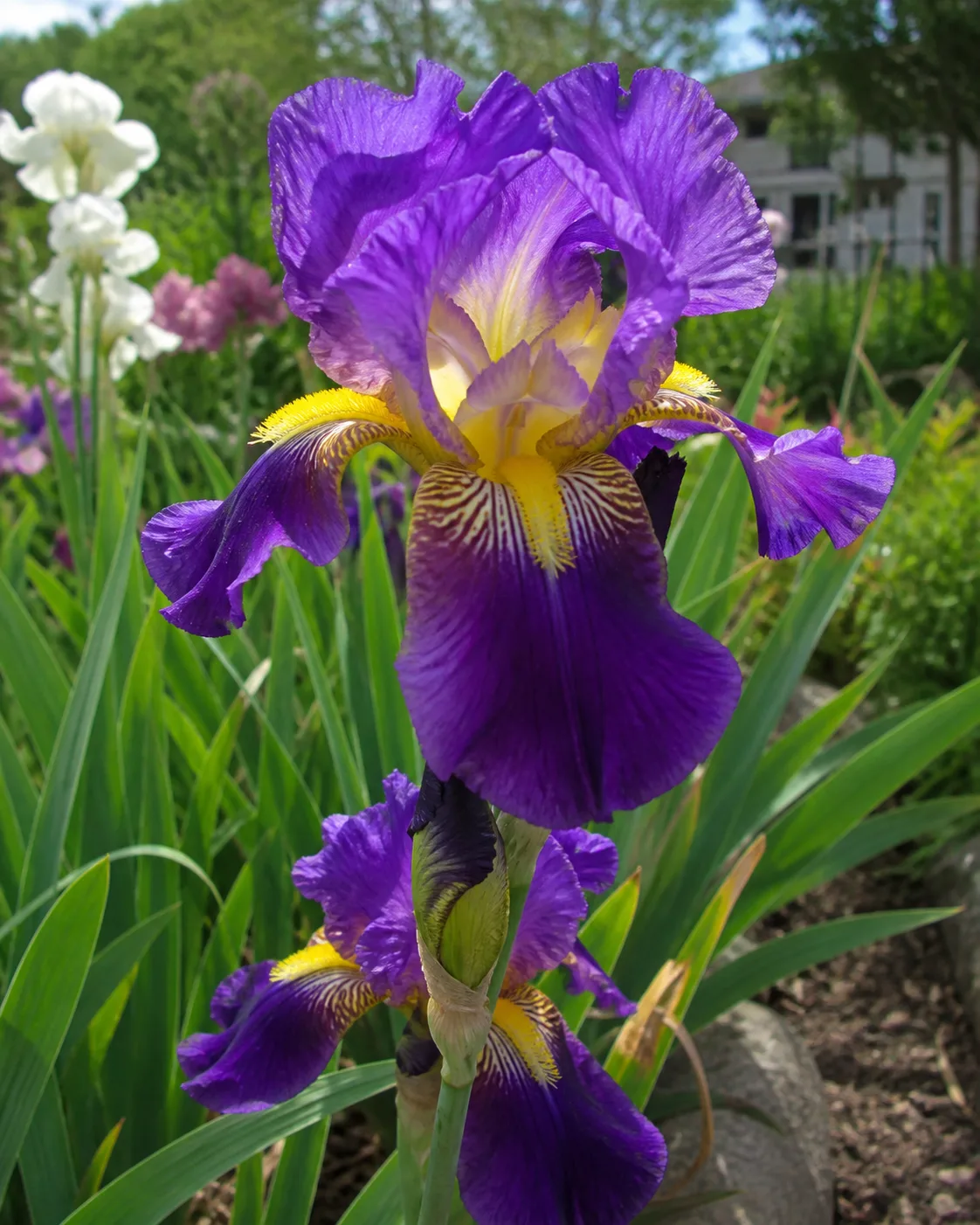
Bearded Iris plant in bloom in a garden setting

Flowers 10

  • Bearded Iris: USDA Zones 3-9 · Full sun, afternoon shade in heat · Moderate while establishing, low once settled
  • Chrysanthemum: Typically hardy in Zones 5-9, cultivar dependent · Full sun, at least 6 hours of direct sun · Consistent moisture in well-drained soil
  • Daffodil: Hardy in USDA Zones 3-8 · Full sun to light shade in spring · Moist after planting, never waterlogged
  • English Lavender: Zones 5-9, protect near cold edge · Full sun, 6 or more hours daily · Low once established; avoid wet crowns

All 10 flowers for Zone 6

Fruits 3

  • Peach Tree: Zones 5-9 (NC State) · Full sun, 6+ hours · Moist, well-drained soil (NC State)
  • Pear Tree: USDA Zones 4-8 · Full sun, 6+ hours · Deep watering while young and during dry spells
  • Plum Tree: Zones 4-9 · Full sun, 6+ hours · Deep watering while young and during fruit sizing

Herbs 1

  • Sage: USDA Zones 4-8 · Full sun to partial shade · Low, and never in wet soil

Lawn Grasses 5

  • Buffalo Grass: USDA Zones 4-8 · Full sun, 6–8 hours · Deep soak about every 2 weeks in hot dry weather (K-State)
  • Fescue: Red fescues Zones 3-6 (NC State) · Full sun (tall) to moderately dense shade (fine) · Deep and infrequent once established
  • Fine Fescue: Red fescues Zones 3-6 (NC State) · Full sun to moderately dense shade · Seldom; 1 in. per week in summer if you irrigate
  • Kentucky Bluegrass: Listed for Zones 3-7 (NC State) · Full sun, 6 or more hours (NC State) · About 1-1.5 in. per week in summer (Iowa State), or allow dormancy

All 5 lawn grasses for Zone 6

Perennials 12

  • Amsonia (Bluestar): Zones 3-9 eastern, 5-8 threadleaf (NC State) · Full sun (6+ hours) to part shade (2-6 hours) · Drought tolerant once established
  • Black-Eyed Susan: USDA Zones 3-8 · Full sun, 6 or more hours · Evenly moist; drought tolerant once established
  • Coneflower: Zones 3-8 (Illinois), 3-9 (Clemson) · Full sun to part shade · Drought tolerant once established, in well-drained soil
  • Coral Bells: Zones 4-9, some varieties to Zone 3 (UVM) · Part sun to part shade for best color; check the plant tag · Moist, well-drained soil; water until established

All 12 perennials for Zone 6

Shrubs 17

  • Barberry: USDA Zones 4-8 · Full sun to partial shade · Dry to average soil once established
  • Beautyberry: USDA Zones 6-10 (NC State) · Full sun to part shade · Tolerates drought and wet soil
  • Boxwood: USDA Zones 5-8 · Part shade with afternoon shelter; full sun is tolerated · A thorough weekly soak when rain is under 1 inch; needs drainage
  • Burning Bush: USDA Zones 4-8 · Full sun to partial shade · Tolerates dry spells (NC State) but prefers steady moisture (UConn)

All 17 shrubs for Zone 6

Trees 15

  • Cherry Blossom Tree: USDA Zones 5-8 (‘Okame’ Zones 6-9) · Full sun with open airflow · Even moisture while young; poorly drained soil is not tolerated
  • Eastern Redbud: USDA Zones 4-9 · Full sun to partial shade · Moist, well-drained soil
  • Flowering Dogwood: USDA Zones 5-9 · Sun with some afternoon shade · Moist, well-drained soil, watered deeply in dry spells
  • Ginkgo Tree: USDA Zones 4-8 · Full sun to partial shade · Water new trees until established, drought tolerant after

All 15 trees for Zone 6

Vegetables 3

  • Corn: Warm-season annual (NC State lists zones 2-11) · Full sun, 6+ hours · At least 1 in a week, soil moist 6 in deep
  • Cucumber: Warm-season annual (NC State lists zones 2-11) · Full sun · About 1 in a week, soil moist 6 in deep
  • Garlic: Zones 4-9, planted in fall · Full sun (6+ hours) · About 1 in. a week, stopped before harvest

Zone 6 questions

What temperatures define USDA Zone 6?

Zone 6 covers an average annual extreme minimum of -10°F to 0°F. Half zone 6a runs from -10°F to -5°F and 6b from -5°F to 0°F. The 2023 USDA map uses 1991-2020 data from 13,412 weather stations.

Does Zone 6 tell me my frost dates?

No. A hardiness zone describes winter lows only. Frost dates come from local weather station records, such as the NOAA 1991-2020 U.S. Climate Normals, so look them up for the station nearest you before you plan planting dates.

How many KnowTheYard plant profiles include Zone 6?

66 published profiles state a hardiness range that includes Zone 6, across 8 plant categories. Hardiness is the first filter; check light, water, heat, and mature size on each profile.