
How to Grow Bearded Iris With Healthy Rhizomes and Blooms
Iris germanica Iridaceae
Bearded iris are tough, sun-loving perennials grown from shallow rhizomes, not deep bulbs. Give them open sun, sharp drainage, exposed rhizome tops, and division every few years, and they reward you with tall late-spring blooms.
Care snapshot
The Rhizome Is the Whole Story
In garden terms, Bearded Iris look delicate in flower, but the plant is built around a tough rhizome that stores water and energy right at the soil surface.
Treat that rhizome like a buried bulb and the plant quickly starts to struggle.
Iris germanica grows fans of sword-shaped leaves with bloom stalks rising above them in late spring.
Tall bearded types can reach 30-40 inches, while dwarf and border classes stay much shorter.
Bearded iris is the type covered here.
Water iris, Siberian iris, and Japanese iris want wetter ground and different care. Those relatives often like more moisture, while Bearded Iris prefer sun on their rhizomes and soil that dries between soakings.
The word iris covers several different growing systems. Bearded Iris grow from rhizomes that want sun on their backs, while Siberian and Japanese iris tolerate more moisture and behave more like clumping perennials.
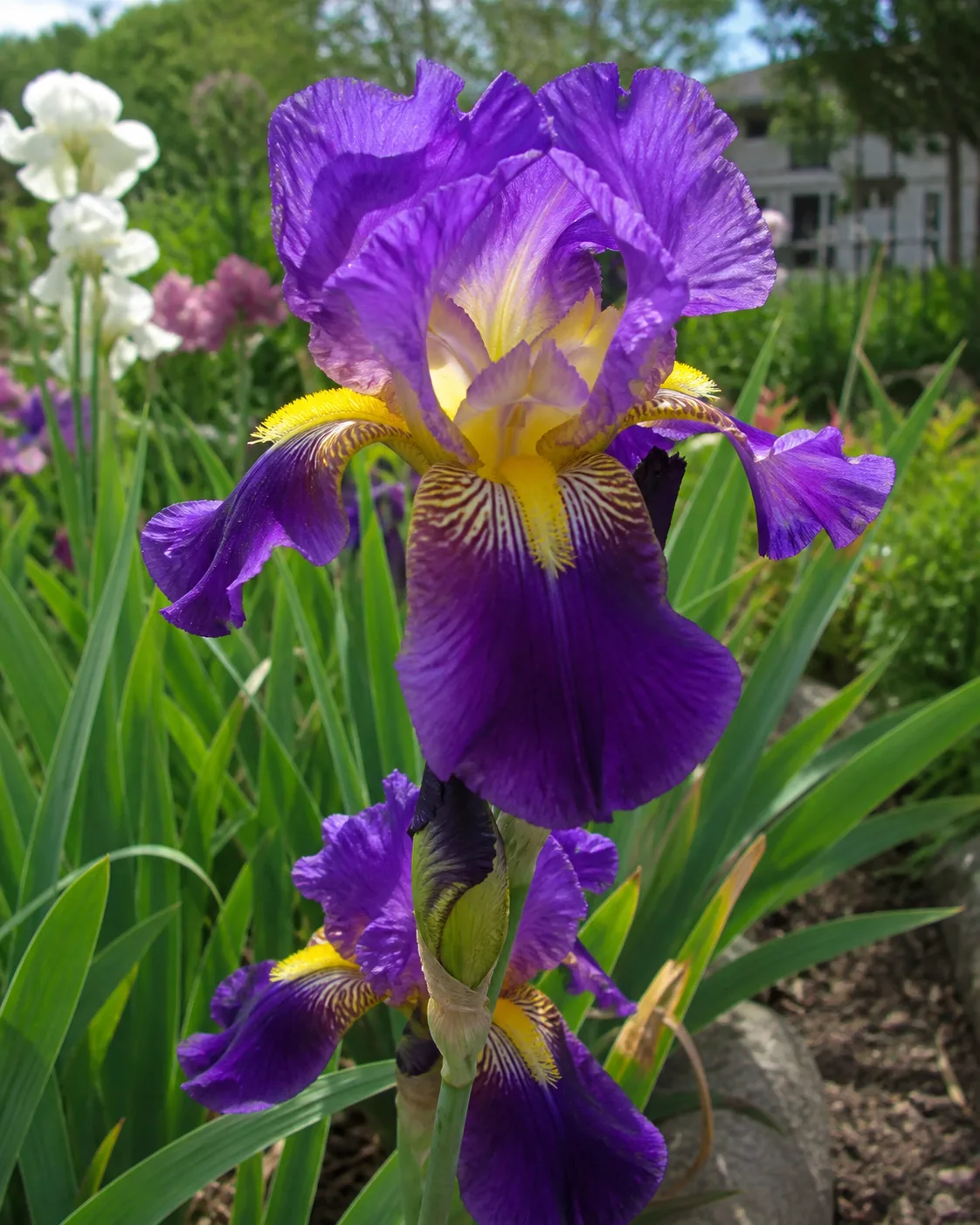
The 'bearded' name comes from the fuzzy strip of hairs running down the center of each drooping petal, called a fall, while the upright petals are called standards. That fuzzy beard is a genuine identifying feature that separates bearded types from beardless relatives like Siberian and Japanese iris at a glance.
Light: Open Sun for Strong Stalks
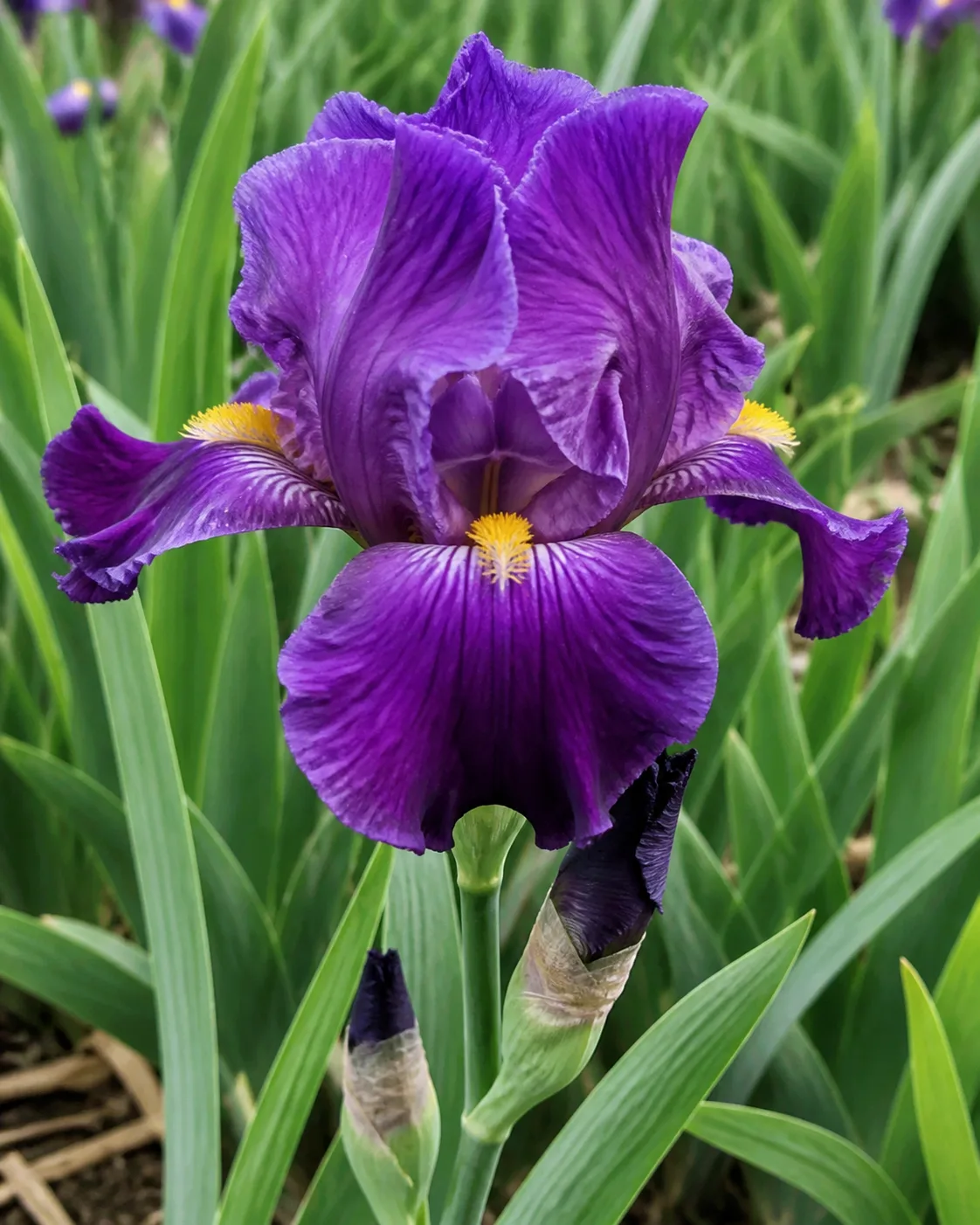
The bloom cue is light, since Bearded Iris bloom best with 6 or more hours of direct sun. In too much shade, fans can look healthy while flower stalks stay short, sparse, or absent.
Morning-to-midday sun is especially useful because it dries leaves and warms the rhizomes.
In very hot climates, a little late afternoon shade can protect flowers without turning the bed into a damp shade pocket.
Watch nearby shrubs as they mature. A bed that once suited Bearded Iris can become too dim when boxwood hedges or foundation shrubs widen and hold moisture around the fans.
- Best bloom: open sun for most of the day.
- Hot climates: light afternoon shade is acceptable if morning sun is strong.
- Poor-light clue: lots of leaves, few stalks, and floppy fans.
- Spacing help: keep taller plants far enough away that air reaches the rhizomes.
Direct sun on rhizome tops does more than trigger flowering, since UV exposure and surface drying make the crown a poor environment for the bacteria behind soft rot. That is the deeper reason light and rot prevention are the same conversation for bearded iris, not two separate topics.
Choosing Bearded Iris by Height and Bloom Window
Choose Bearded Iris by where the plant will sit in the border. Tall types belong behind lower bulbs and edging plants, while dwarf and intermediate types make more sense along paths where wind would snap taller stalks.
Bloom timing also matters. Early, midseason, and late cultivars can stretch the display, while reblooming types may flower again in late summer or fall when the plant is vigorous and the climate cooperates.
Treat rebloom as a bonus, not the buying promise. It depends on cultivar, summer moisture, nutrition, and enough warm season after the first bloom, so if the bed is stressed, the spring flush is the reliable crop.
Reblooming iris can flower again in the same season, but only when light, feeding, and climate cooperate. Buy them as a bonus, not a guarantee, especially in regions with stressful summer heat.
- Tall bearded
- 30-40 inches, dramatic flowers for mid-border or back-border planting
- Intermediate and border
- 12-27 inches, sturdier near paths, small beds, and windy sites
- Miniature dwarf
- 4-10 inches, early bloom for rock gardens and front edging
- Reblooming types
- Late-spring bloom with possible repeat bloom where heat, feeding, and moisture align
The American Iris Society has registered tens of thousands of named bearded iris cultivars, so even a well-stocked local nursery usually carries only a narrow slice of what exists. Visiting a display garden in bloom season is often more useful than a catalog photo, since color can shift noticeably in real light.
Soil, Drainage, and Planting Depth
Drainage matters more than richness.
Bearded Iris would rather sit in lean, open soil than in a deep pocket of compost that stays wet after rain.
Set the rhizome horizontally with feeder roots spread into the soil and the top exposed to light. In hot-summer areas, a whisper of soil over the rhizome is acceptable, but it should never be buried like tulip bulbs.
For clay beds, make a low mound or raised strip and improve the top layer with coarse material. Do not dig a bowl-shaped planting hole that fills with water beneath the rhizome.
Mulch needs restraint. Keep bark, leaves, and compost away from the rhizome top so sunlight and air can reach it, but use mulch between clumps, not over the storage organ.
Bearded Iris fail when gardeners bury the rhizome like a bulb. Keep the upper surface close to the soil line, improve drainage around it, and give the fan room, since a shaded, buried rhizome is much more likely to rot than bloom.
- Planting depth
- Rhizome top at or just above soil level
- Soil texture
- Loose loam, sandy loam, or amended clay that drains quickly
- Spacing
- 12-24 inches depending on cultivar size and division schedule
- Fertilizer
- Light, low-nitrogen feeding in spring; avoid heavy nitrogen
A low-nitrogen fertilizer such as a 6-10-10 blend or bone meal supports root and rhizome development without pushing the soft, rot-prone growth that heavy nitrogen encourages. Feeding right as new growth starts in spring, then again lightly after bloom, covers most bearded iris without overdoing it.
Watering Without Rotting Rhizomes
Newly planted Bearded Iris need moisture while roots grab the soil, but established clumps handle dry spells better than constant irrigation. The rhizome is a storage organ, so wet soil around it is more dangerous than a short dry pause.
Water deeply after planting, then let the upper soil dry before watering again. If you already follow deep watering for perennials, use that same slow-soak mindset here.
If rot is already present, watering advice is no longer enough, since clean tissue and a drier reset matter more than another light sprinkle.
New divisions need moisture while they root, but established bearded iris should not be watered like annual bedding plants. Too much summer irrigation keeps rhizomes soft and more vulnerable to rot.
Dividing Iris When Clumps Stop Blooming
Division is both propagation and bloom repair.
When a Bearded Iris clump forms a crowded ring with a bare center, the newest rhizomes are competing for light, air, and root space.
Divide after flowering, often in midsummer to early fall, so the replanted pieces can root before winter. Each keeper should have a firm rhizome, healthy roots, and at least one strong leaf fan.
Trim leaves into a short fan if they flop badly, but do not strip the plant bare. Replant the divisions shallowly, point fans in the direction you want the clump to expand, and water once to settle soil.
Division is also a bloom reset. Old clumps often flower around the edges while the center turns woody and crowded, so lifting and replanting younger outer fans every few years keeps energy moving into new growth.
- Lift the whole clump with a fork rather than chopping blindly.
- Cut away old, soft, hollow, or borer-damaged rhizomes.
- Keep firm outer pieces with healthy fans and roots.
- Replant shallowly with rhizome tops visible.
- Label colors before moving pieces around the garden.
Freshly divided rhizomes usually skip blooming the following spring while they reestablish roots and store enough energy for a flower stalk. That one-season pause is normal, not a sign of a failed division, and most healthy pieces resume blooming the second spring after replanting.
Seasonal Care for Bloom and Clean Rhizomes
Spring care is simple, since it means clearing heavy winter debris, checking that rhizomes are still exposed, and feeding lightly if the bed is lean. Avoid high-nitrogen lawn fertilizer drifting into the clump.
After bloom, snap or cut spent stalks so the plant does not spend energy on seed. Leave healthy leaves standing because they feed the rhizomes for next year, just as foliage matters after deadheading daffodils.
Think of the year as a rhizome-management cycle, not just a bloom season, since each pass either exposes, cleans, divides, or protects the clump.
Expose rhizomes, feed lightly, and watch new fans for borer streaks.
Remove spent stalks, keep leaves, and mark clumps that need division.
Divide crowded plants and replant shallowly in dry, open weather.
Remove dead foliage and avoid mulch that buries rhizomes.
Iris Borers, Leaf Spot, and Other Problems
The pest that deserves the most attention is the iris borer.
It starts in leaves, tunnels down through the fan, and can end in a rotting rhizome if you miss the early water-soaked streaks.
Sanitation helps because borers overwinter in old foliage and debris. Clean up dead leaves after frost, remove damaged fans during the growing season, and avoid piling mulch over the crowns.
Iris borer damage starts hidden inside leaves and rhizomes. Cleaning up dead foliage in fall and removing mushy rhizome sections early interrupts the cycle better than waiting until the clump collapses.
Early iris borer entry and slug damage get confused at a glance, since both leave ragged, chewed-looking leaf edges on young fans. Borer damage shows narrow water-soaked streaks running down into the leaf toward the rhizome, while slug damage shows irregular holes and a telltale slime trail with no streaking.
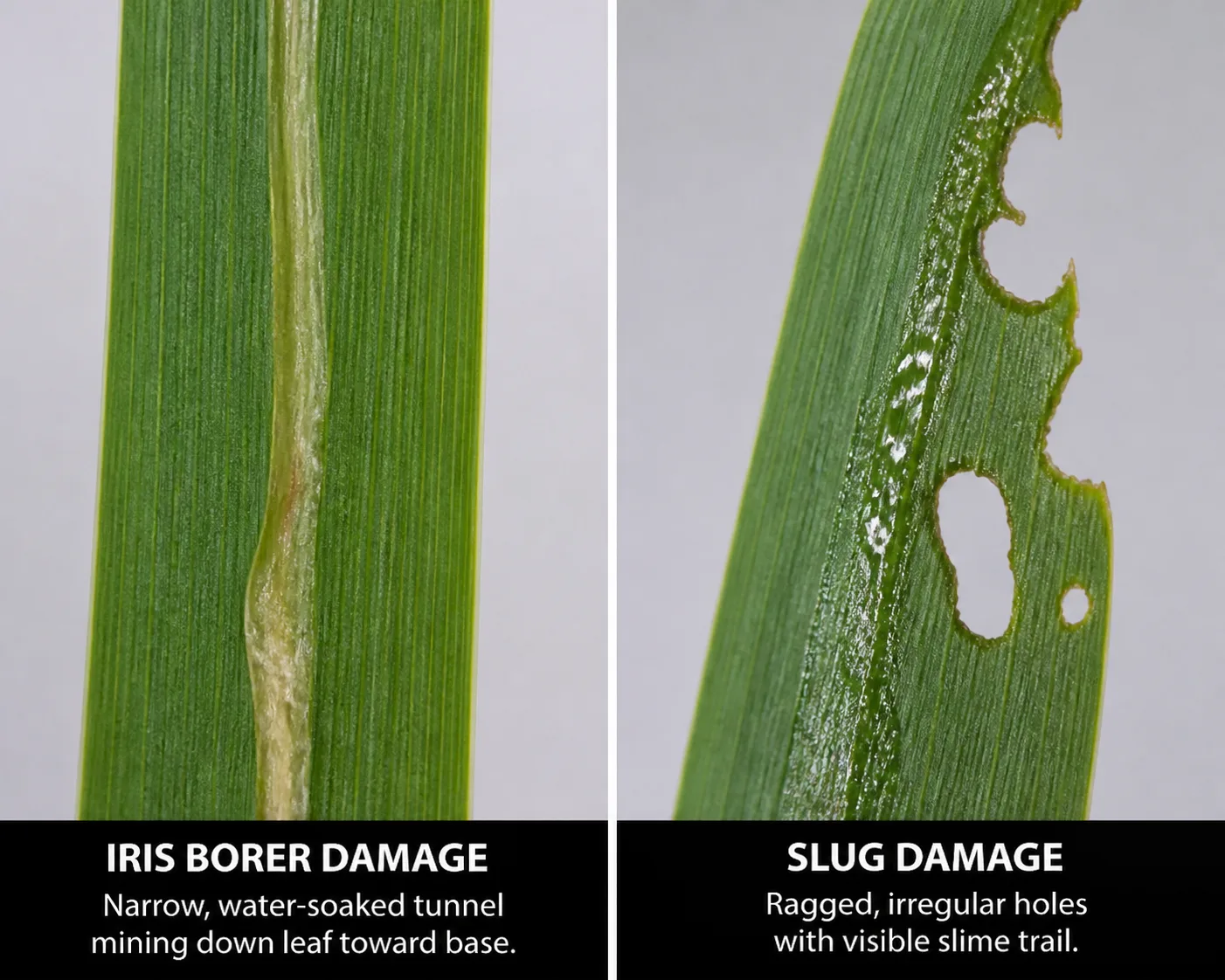
Look for wet streaks, ragged leaves, tunneling, and soft rhizomes.
Brown spotting increases when leaves stay wet and clumps are crowded.
Can scar petals and new growth, especially in dry stressed plantings.
Chew young fans in damp mulch-heavy beds.
Safety and Garden Use
Ecology and safety are separate jobs, since Bearded Iris are ornamental plants and should not be eaten. Rhizomes and foliage can irritate mouths and stomachs, and sap may bother sensitive skin during division.
Wear gloves when cutting or discarding old rhizomes, especially if rot is present. Keep divided pieces away from pets that like to chew garden scraps.
For summer cover after the iris show fades, use salvia or daylilies where each plant has enough sun and air.
Bearded iris are also useful in gardens plagued by deer and rabbits, since the bitter rhizomes and stiff leaves rarely attract browsing the way tender perennials do. That resistance does not extend to voles, which can tunnel along rhizomes underground even though above-ground grazing stays light.
Frequently Asked Questions
Why are my bearded iris not blooming?
Bearded Iris usually stop blooming because they have too much shade, buried rhizomes, crowded clumps, heavy nitrogen, or poor drainage. Start by exposing the rhizomes and checking sun, then divide if the clump is crowded.
How deep should I plant bearded iris rhizomes?
Plant Bearded Iris rhizomes shallowly, with the top at or just above soil level. Cover the feeder roots, but do not bury the rhizome like a bulb.
When should I divide bearded iris?
Divide Bearded Iris after flowering, often midsummer to early fall. Replant firm outer rhizomes with healthy fans so they can root before winter.
Can bearded iris grow in containers?
Yes, Bearded Iris can grow in wide, shallow containers with excellent drainage. Keep the rhizome top exposed, use a gritty mix, and avoid overwatering in cool weather.
Are bearded iris toxic to pets?
Yes, Bearded Iris can cause mouth and stomach irritation if pets chew rhizomes or foliage. Keep divisions and discarded rhizomes away from dogs, cats, and livestock.
Should I cut back iris leaves after bloom?
Remove spent flower stalks after bloom, but keep healthy iris leaves until they yellow or become diseased. The leaves feed the rhizomes for the next bloom cycle.
Sources & References
- University of Minnesota Extension - Growing Bearded Iris
- North Carolina Extension Gardener Plant Toolbox - Iris germanica
- American Iris Society - Care and Culture of Irises
- University of Illinois Extension - Iris Problems, Diseases, and Borers
- Missouri Botanical Garden Plant Finder - Iris germanica
- Toxic and Non-toxic Plants: Iris | ASPCA
Related Plants
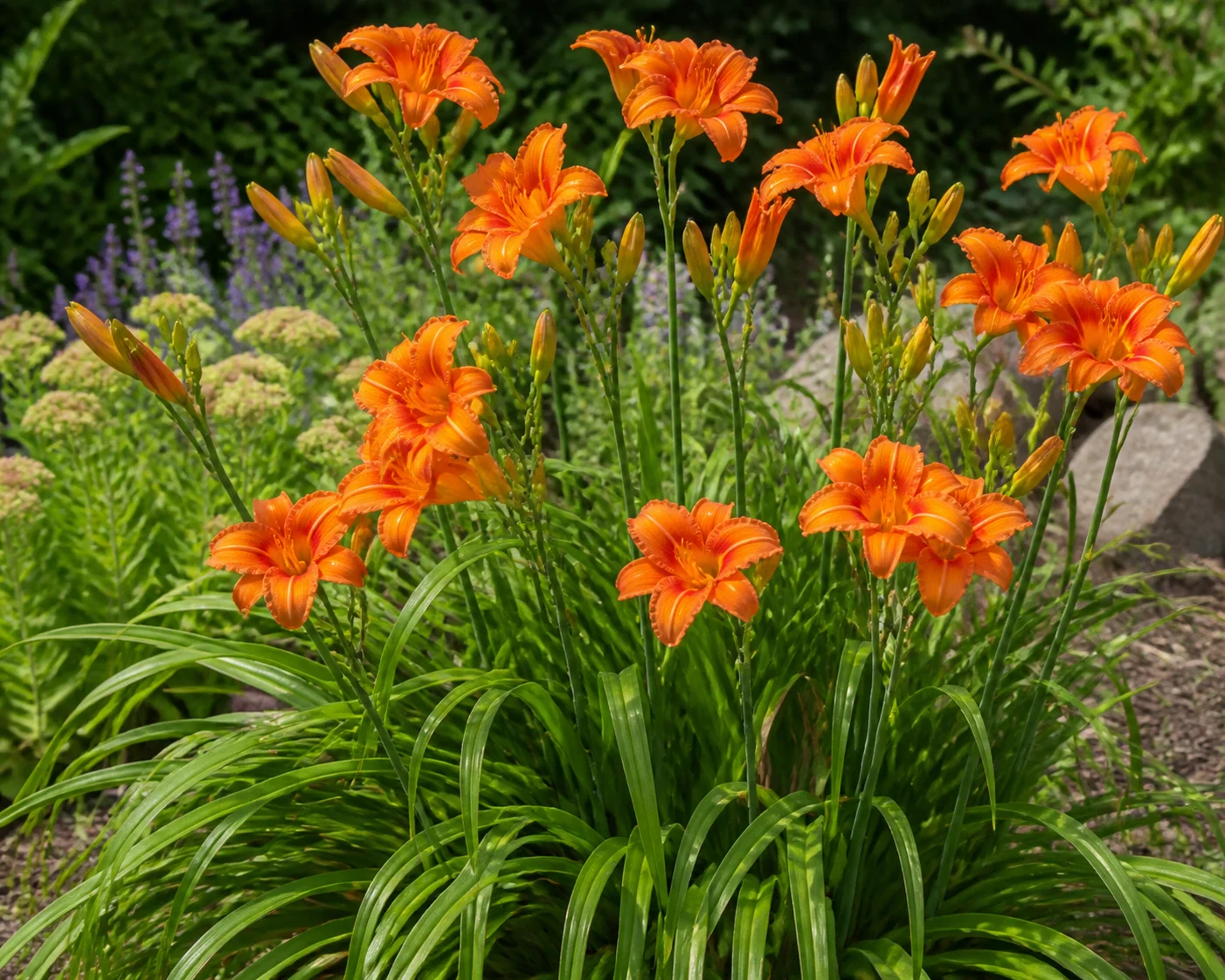
Daylily
Another strappy-leaved perennial for sunny beds, with a later summer bloom window.
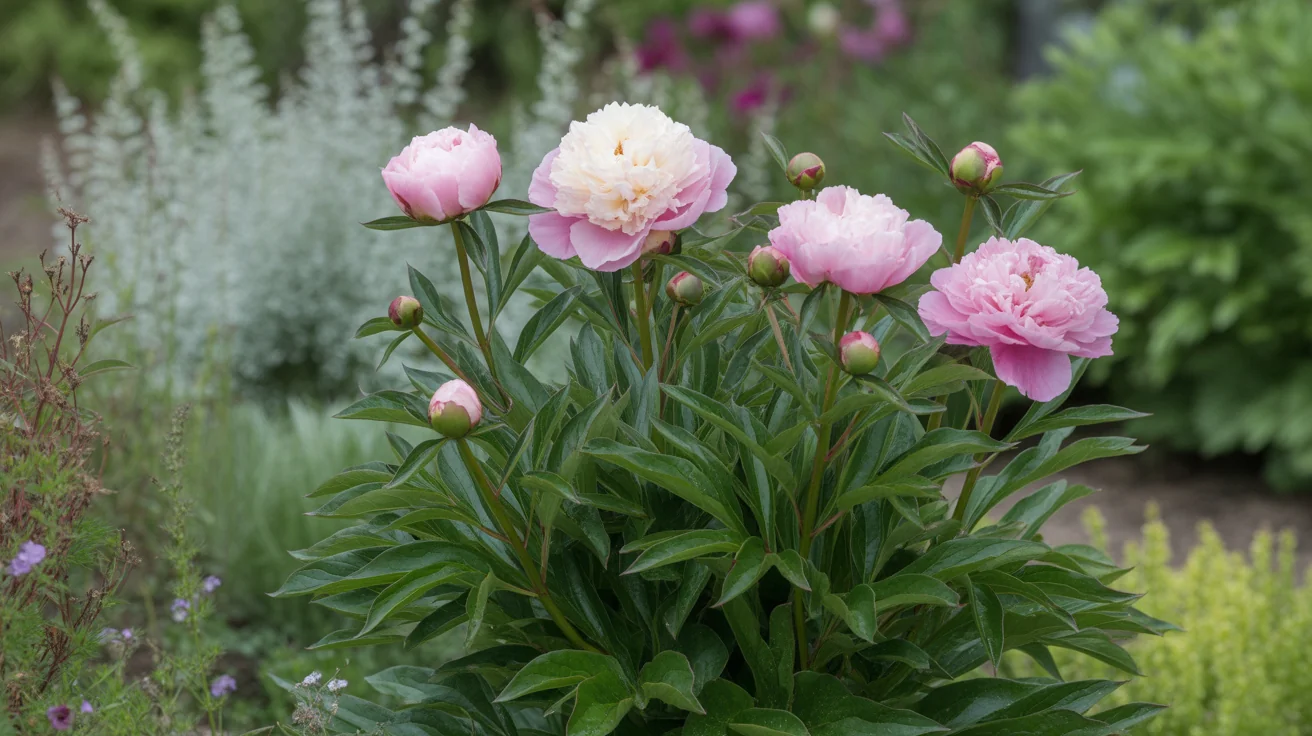
Peony
Long-lived late-spring perennial that shares the sunny border but prefers deeper planting.
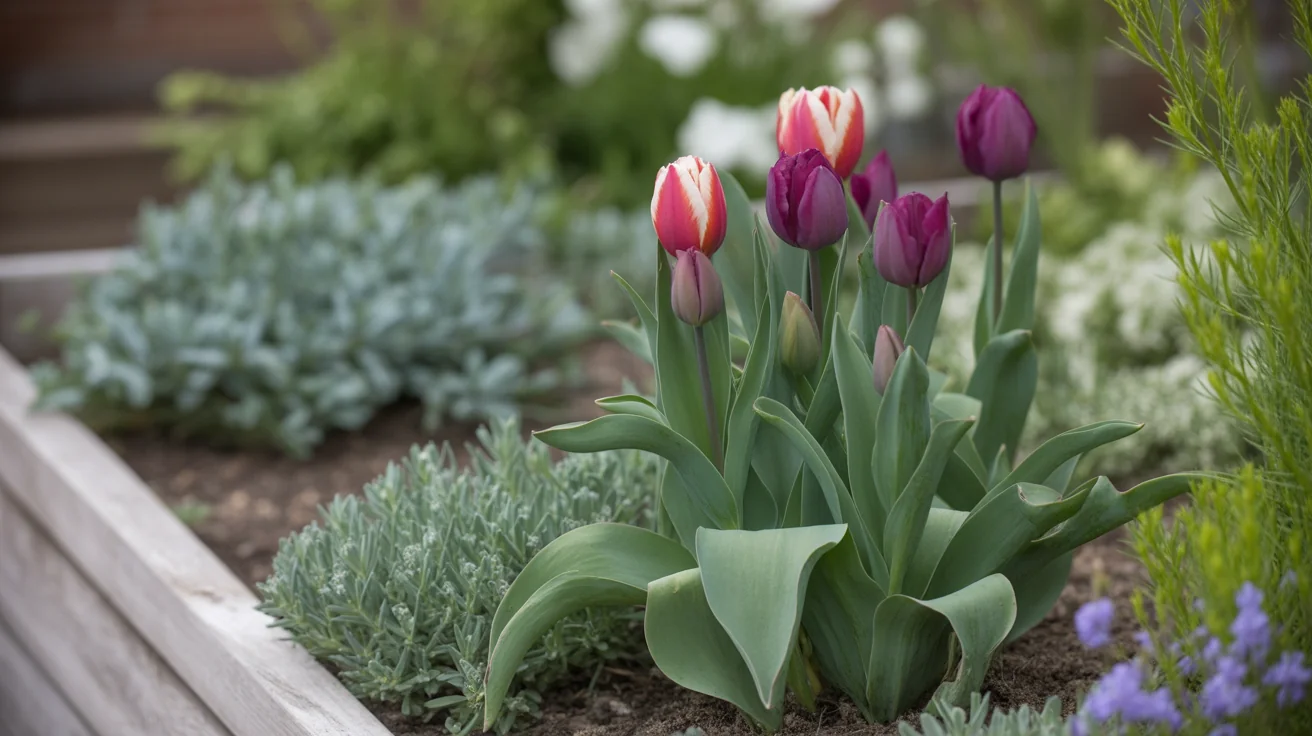
Tulip
Earlier spring bulb that can lead into bearded iris bloom season.
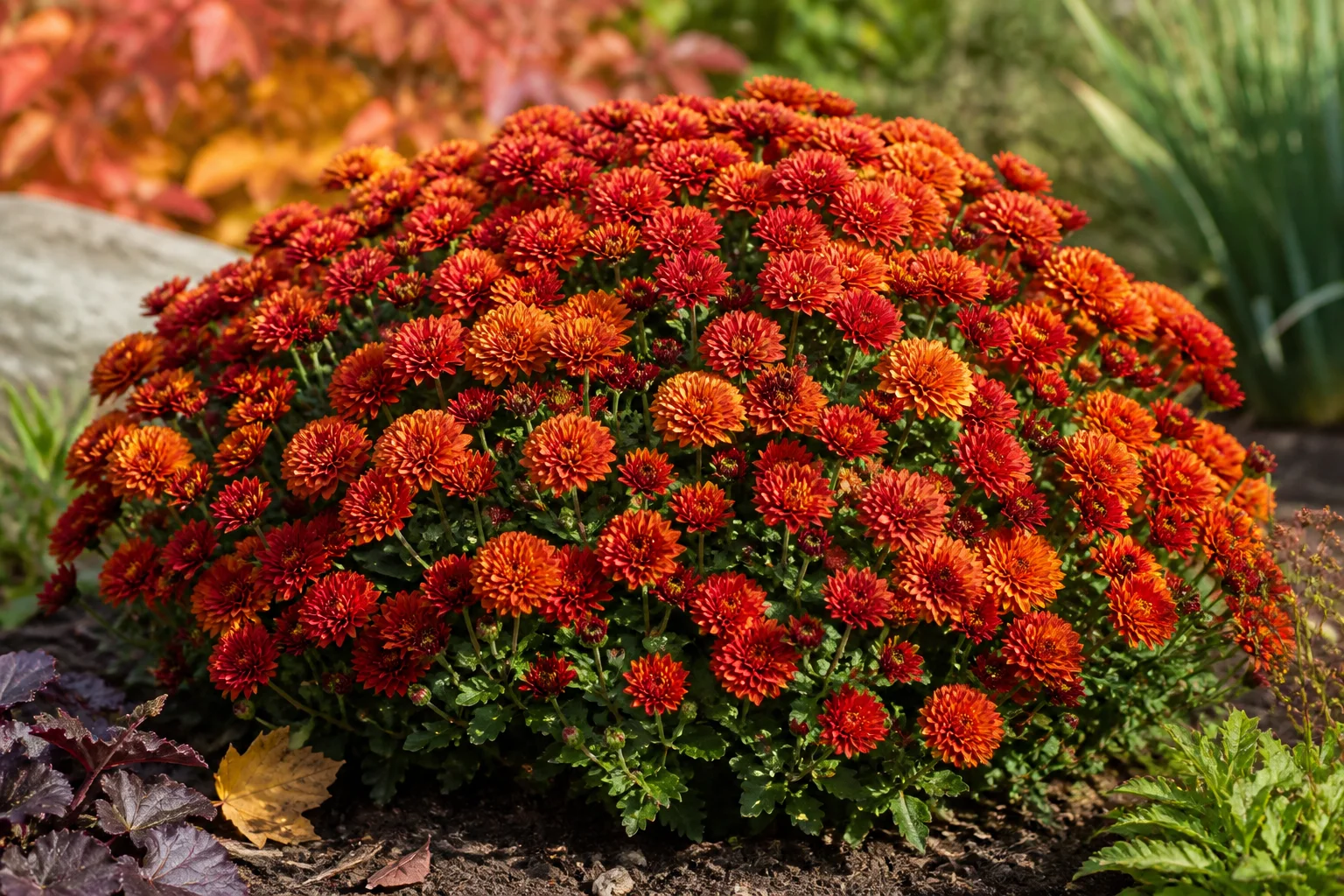
Chrysanthemum
Garden mums are the compact chrysanthemums most people buy for fall color.
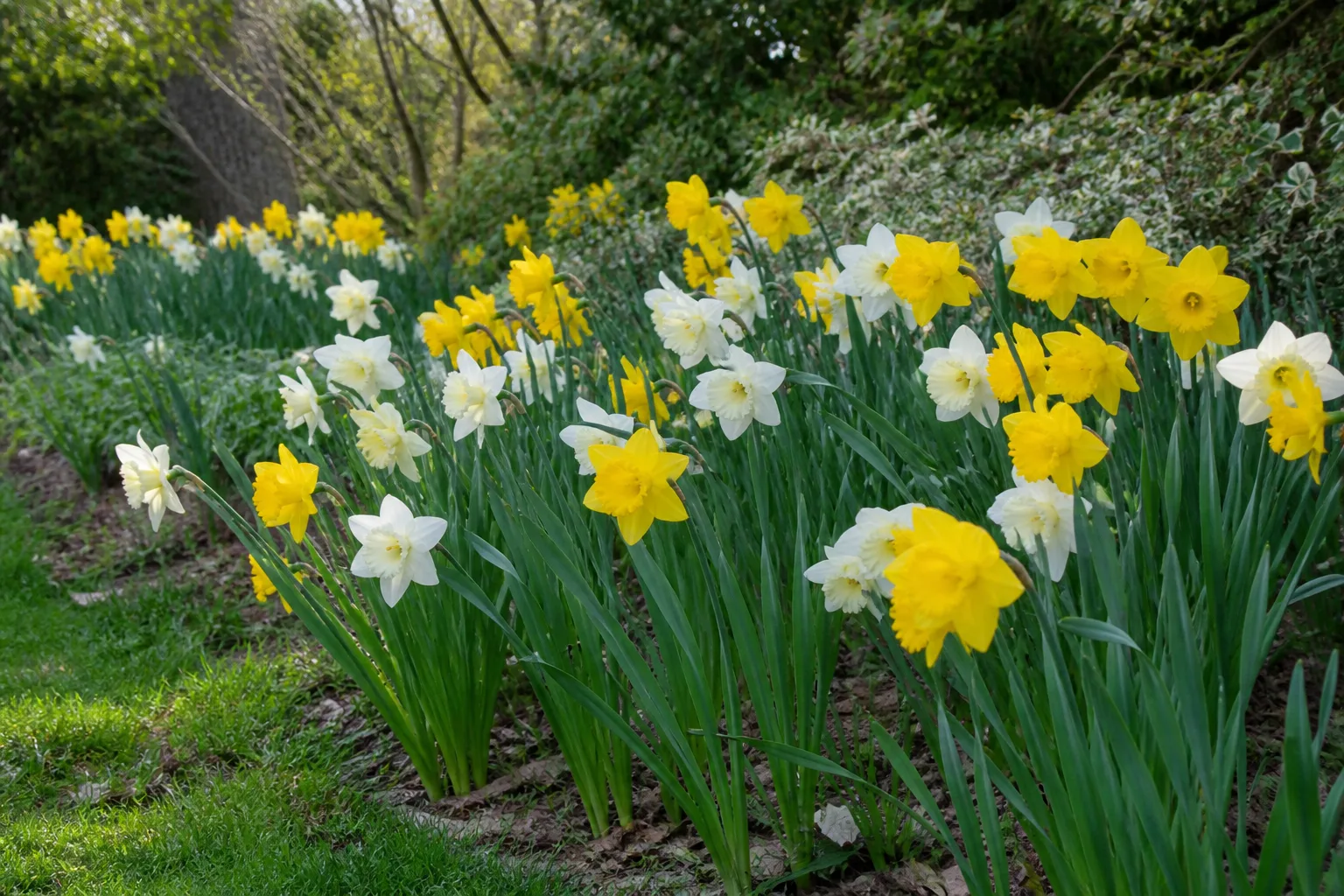
Daffodil
Daffodils are hardy fall-planted bulbs grown for reliable spring flowers, deer resistance, and decades of return bloom…
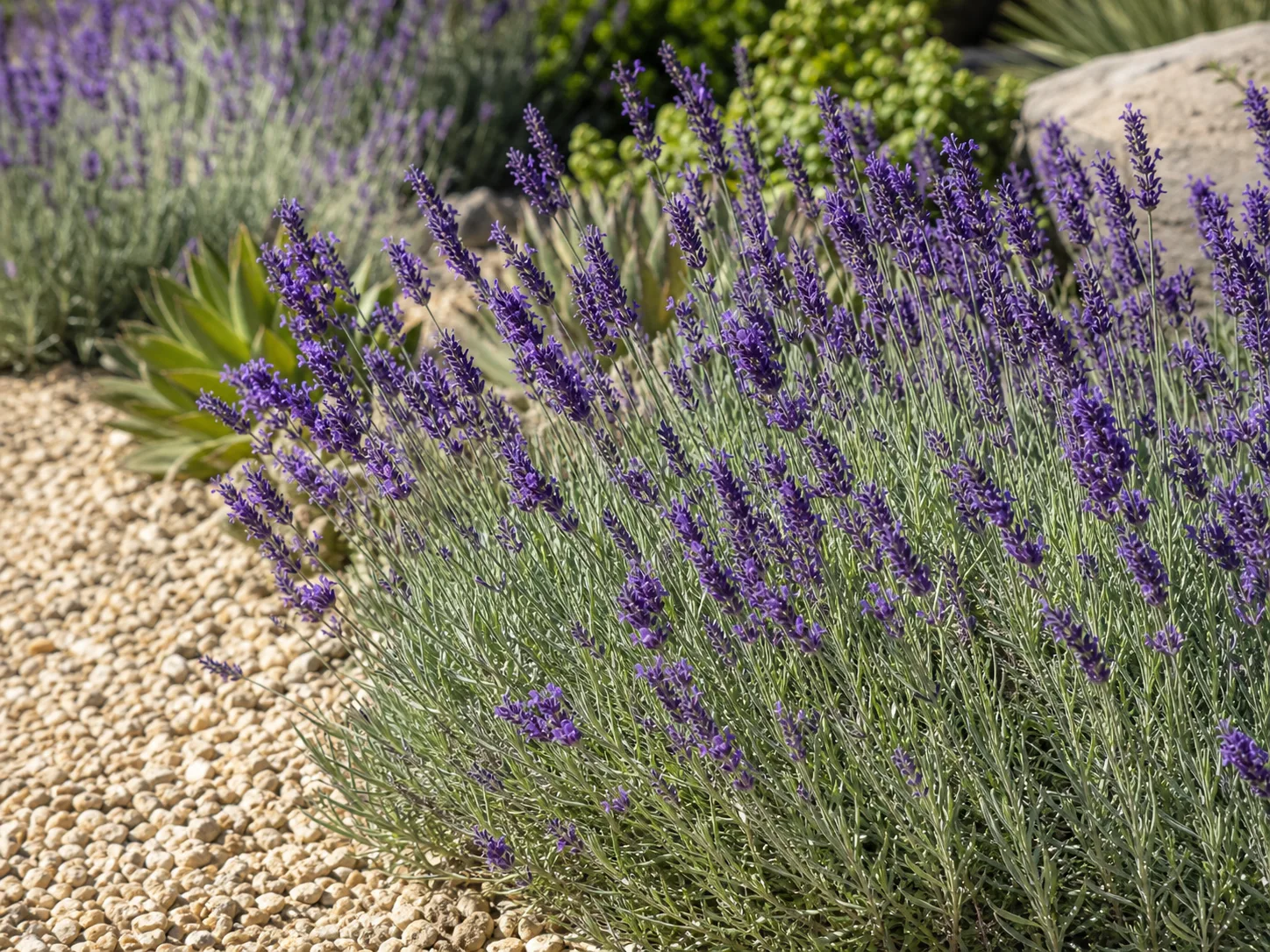
English Lavender
English Lavender is a woody Mediterranean subshrub grown for fragrant purple flower spikes, silvery foliage…