
What's a Coneflower? How Lean Soil Keeps Echinacea Upright
Echinacea purpurea Asteraceae
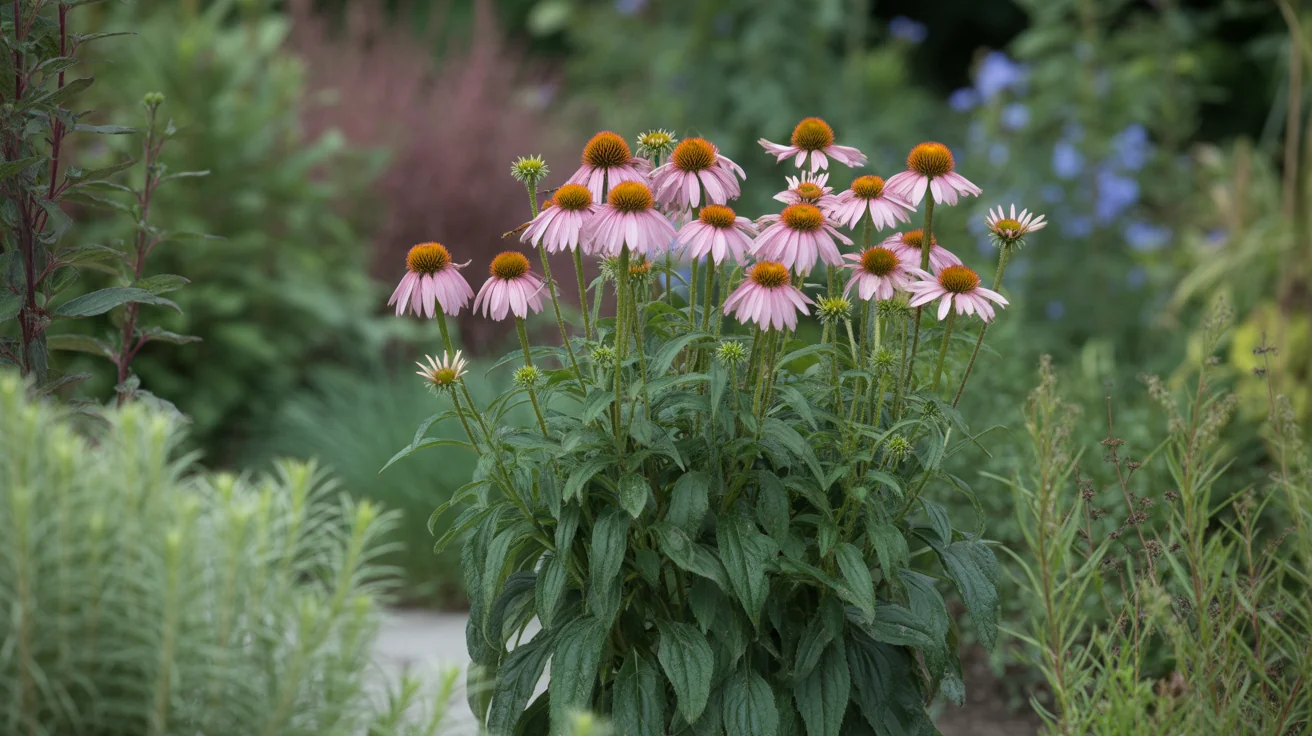
Many gardeners overwater and overpamper Coneflower (Echinacea purpurea), then wonder why it flops or rots.
This tough summer-blooming perennial prefers lean soil, full sun, and occasional deep watering.
Give it those conditions and it rewards you with months of pollinator-friendly flowers from Zone 3-8.
Care snapshot
Let the Prairie Crown Set the Rules
Mid to late summer is when Echinacea purpurea proves why it belongs in every sunny border. While more delicate perennials sulk in the heat, coneflowers keep throwing out fresh blooms for pollinators and cut flowers.
This species is a long-lived herbaceous perennial with upright stems, coarse foliage, and large daisy-like flowers with drooping petals and a raised cone. Clumps usually reach 2-4 ft tall and about 18-24 in wide in average garden soil.
Plants grow from fibrous root systems that handle both summer drought and winter cold better than fussier perennials like hostas in the same bed. In Zone 3-5, it acts as one of the most reliable midsummer color anchors, much like peonies do in late spring.
Native to open prairies and glades of central and eastern North America, coneflowers are built for wind, sun, and lean soil. That prairie background is why they fit right in with other tough Perennials, especially if you are building out a pollinator bed using sun-loving perennials.
The stiff central cone is not just a flower detail. It explains why the plant serves two jobs, providing summer nectar for pollinators and late-season seed for birds, a different role from a tidy bedding perennial such as Shasta Daisy.
Choose for Seed Heads, Stem Height, and Longevity
Early summer is a smart time to choose cultivars, since you can see real bloom color at the nursery. Modern Echinacea varieties range from compact border plants to tall, prairie-style forms, and not all behave the same.
Traditional purple types, like many seed strains, tend to be the toughest and most long-lived. They behave more like Black Eyed Susan in reliability, bouncing back from winters that sometimes thin out fancier doubles and unusual colors.
Newer orange, red, and double-flowered cultivars often stay shorter, around 18-24 in tall, and bloom heavily in the first few years.
Some of these can fade out faster, especially in heavy clay, so we treat them more like short-lived Flowers and mix them with sturdier backbone plants such as white Shasta daisies.
- Height range
- Dwarfs 12-18 in, standards 24-36 in, tall selections to 48 in
- Bloom colors
- Purple, pink, white, yellow, orange, red, bicolors depending on cultivar
- Best for beginners
- Straight Echinacea purpurea and classic purple seed strains
- Best for wildlife
- Single-petaled forms with large open cones for pollinators and birds
Use the table to pick a role first, then decide whether you want seed-grown toughness or a specific named color.
Summer Sun Builds Stems That Do Not Lean
Summer is when coneflowers want full sun to build strong stems and heavy blooms, so aim for 6-8 hours of direct light, including at least a few hours of midday or early afternoon sun, especially in cooler Zone 3-5 gardens.
In hotter climates near Zone 8-9, a bit of light afternoon shade can keep petals from bleaching and foliage from scorching in extreme heat.
Morning sun with dappled shade after 3 p.m. works well in those warmer areas, similar to how we site daylilies in hot yards.
Plants grown in too much shade will stretch, lean, and bloom less. You will see taller, floppy stems with small flowers reaching for the light, just like a sun-loving shrub such as common lilac planted on the north side of a house.
A clump that blooms but leans usually needs more open sky before it needs staking. Move nearby floppy companions back, or place Coneflower beside sturdier prairie plants like Black Eyed Susan instead of soft shade lovers.
- Choose sites with 6+ hours of direct sun for best flowering.
- Provide light afternoon shade in extreme heat, especially Zone 9 patios.
- Avoid deep shade under trees, where plants will lean and flower poorly.
- Rotate pots or adjust plantings if nearby shrubs grow and steal light.
Water New Roots, Then Step Back
Spring and first-year summers are when most people kill coneflowers with kindness. New plants need consistent moisture while they root in, but they do not want constantly soggy soil or daily sprinkles from overhead.
During the first growing season, water deeply when the top 1-2 inches of soil feel dry. In typical beds, that might be once or twice a week, similar to how you would water new shrubs before following a deeper deep watering habit instead of frequent light spritzes.
Once established, usually after one full year in the ground, coneflowers are quite drought tolerant. In average soil they can go 7-10 days without water in mild weather, and even longer in heavier loam, behaving more like yarrow or Russian sage than thirsty annuals.
Overwatering shows up as yellowing lower leaves, floppy stems, and sometimes crown rot, especially in clay. Underwatering usually means wilting in the heat of the day that does not recover by evening.
More coneflowers die from soggy crowns than from short dry spells.
Once roots are established, the practical rule is to water for recovery, not lushness. If leaves are firm by the next morning after a hot afternoon droop, the plant is coping and does not need daily rescue.
- Water new plants when the top 1-2 in of soil are dry, not by calendar.
- Soak at the base, delivering about 1 inch of water per week in dry spells.
- Reduce watering in fall so crowns head into winter on the dry side.
- Skip overhead watering to limit disease, just like you would with peonies.
Drainage First, Fertilizer Last
Spring bed prep is the best time to set coneflowers up with the right soil. They prefer well-drained, moderately fertile ground, closer to what you would give tough prairie species than rich vegetable beds.
In heavy clay, raised beds or wide planting holes amended with 30-40% coarse compost and small gravel improve drainage. That same upgrade helps other sun-loving perennials like border salvias, which also resent waterlogged roots in winter.
Soil pH is not critical, but they do best in slightly acidic to neutral soil around pH 6.0-7.0. Very rich, heavily fertilized soil can make them too tall and floppy, similar to what happens to hydrangeas when overfertilized in a mixed border.
For containers, choose a quality potting mix labeled for outdoor containers and blend in about 20-30% perlite for faster drainage. Avoid using straight garden soil in pots, which compacts and holds too much water, especially in rainy Zone 5-7 seasons.
Divide Named Plants, Let Seedlings Surprise You
Forget buying more plants every year, division and seed saving give you free coneflowers that already fit your garden. Division keeps named varieties true, while seed gives you surprises in color and size.
Unlike tender zone 10-11 flowers that need coddling, coneflowers in Zone 3-8 handle rough handling during division.
Work in early spring or early fall so roots can reestablish in cool, moist soil.
Division is simple. Dig up the clump, slice it into chunks with at least 2-3 buds and some strong roots, then replant at the same depth and water well.
You can direct sow coneflower like you might with yarrow. Scatter seed in late fall or very early spring, since natural winter cold helps break seed dormancy.
Choose division for predictable plants, or choose seed when a loose meadow look matters more than exact matching.
- Water the plant well the day before you divide so the rootball holds together.
- Slice around the clump with a sharp spade, then lift the entire plant out in one piece.
- Cut the clump into 3-6 sections, keeping several stems and healthy roots on each division.
- Replant divisions 18-24 inches apart, at the same soil line they had before digging.
- Water deeply, then mulch 1-2 inches thick to hold moisture and reduce weeds.
If you are saving seed, let only the strongest plants contribute so the next generation keeps good posture.
- Choose seed from strong plants with upright stems and good flower color.
- Let seedheads dry on the stalk, then cut them and crumble to free the seeds.
- Store seeds in a paper envelope in a cool, dry place until stratifying.
- Sow thinly, cover with 1/8 inch of soil, and keep evenly moist until sprouting.
- Thin seedlings so the strongest remain about 18 inches apart.
Check Stress Before Blaming Insects
Unlike vegetable beds that see constant attacks, coneflowers stay mostly trouble free. Problems usually show up only when plants are stressed from drought, cramped spacing, or heavy fertilizer meant for vegetables.
Outdoor coneflowers handle minor chewing and spots without blinking. The goal is not a perfect leaf, it is a healthy clump that still flowers heavily for bees and butterflies.
Start with good spacing and clean-up. That is the same basic strategy used in natural garden pest control, and it works well here too.
Japanese beetle damage and aphid damage both show up on coneflower in midsummer, but they leave completely different marks that point to a different fix.
Japanese beetles chew petals and leaves into a lacy, skeletonized look you can see from across the yard, while aphids cluster tightly on new growth and buds and leave a sticky honeydew film instead of any chewed holes.
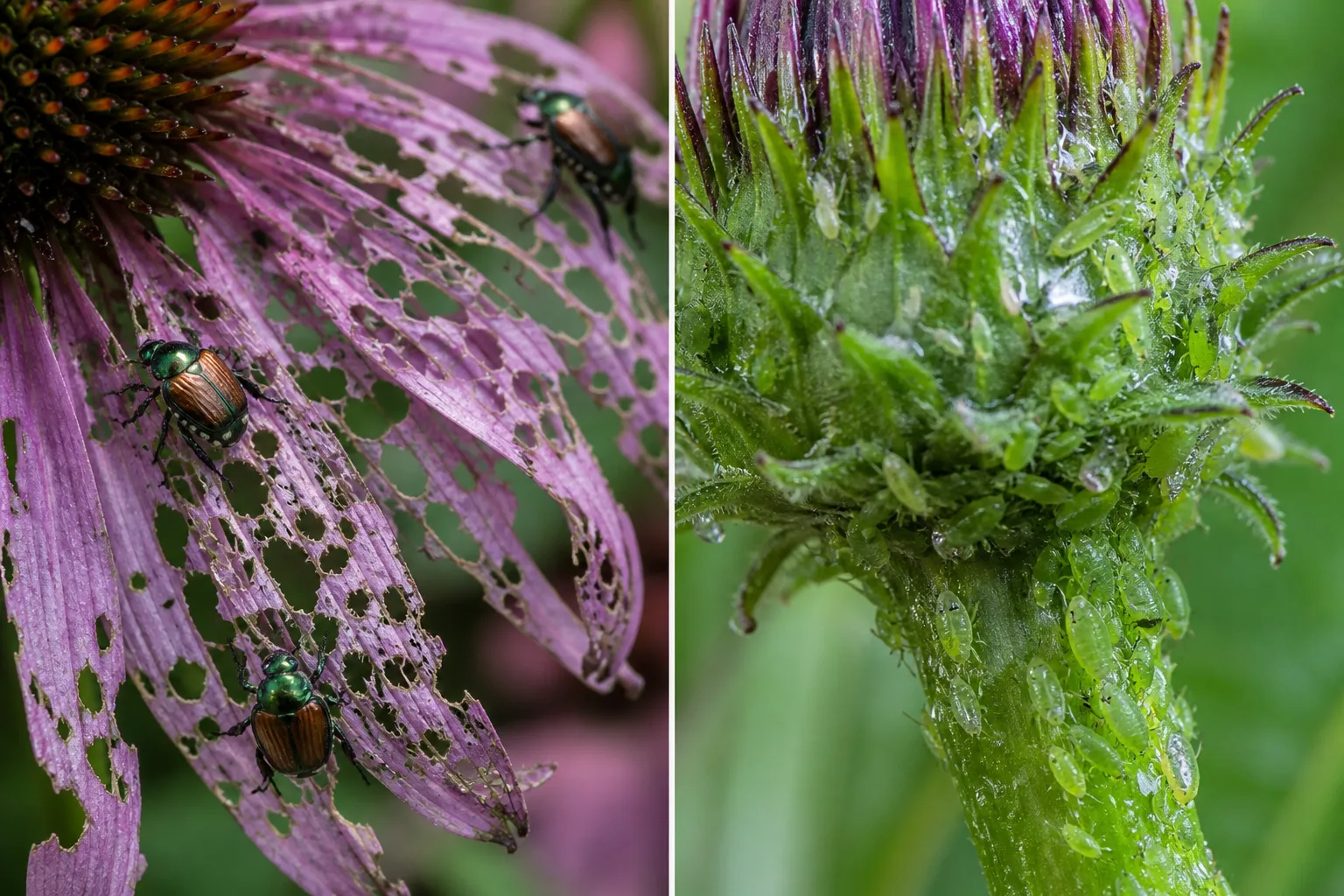
Clusters on new growth and stems, leaving sticky honeydew. Wash off with a firm blast of water, or use insecticidal soap if populations are heavy.
Chew petals and leaves into lace in midsummer. Hand-pick in early morning into soapy water, and avoid broad insecticides that hurt pollinators.
Small, fast insects that hop when disturbed. They can spread aster yellows, so remove oddly distorted plants promptly.
Fine webbing and dusty leaves during hot, dry spells, similar to damage described for indoor plants in the spider mite treatment guide.
Unlike peace lily and other shade plants that sulk if sprayed, coneflowers tolerate a firm hose rinse. Aim for the underside of leaves to knock off mites and aphids in the evening so foliage can dry before night.
Deadhead for Flowers or Leave Seed for Birds
Unlike tender annuals that demand constant fussing, coneflowers ask for different small jobs as the seasons change. Tuning those jobs to your zone keeps them blooming hard and coming back thicker each year.
Coneflowers wake later. In Zone 5, expect green shoots after your daffodils fade, which lines up nicely with many other sun-loving perennials in mixed borders.
Many gardeners leave seedheads standing. Birds eat the seeds, and the dark cones add winter interest beside bones of shrubs like spirea and boxwood.
Remove winter debris, trim old stems to 1-2 inches, and top-dress with a thin half-inch of compost around the clumps.
Deadhead spent blooms back to a side bud to extend flowering, or leave a few for reseeding if you want naturalized drifts.
Cut back flopping stems if you prefer tidy beds, or simply stake a few and leave seedheads for finches and other birds.
In colder regions like Zone 3-4, a light 2-3 inch mulch helps protect crowns from freeze–thaw cycles.
Unlike high-maintenance shrubs that need precise pruning windows, coneflowers are forgiving. If you miss deadheading, the worst that happens is earlier seed set and slightly fewer fresh blooms.
Pollinators, Pets, and Medicinal Assumptions
Unlike truly toxic ornamentals such as oleander, Echinacea purpurea is widely grown for herbal use and is not known as a severe poison. Still, we treat all plants with basic respect and keep kids from chewing on leaves or stems.
Contact issues with coneflower are rare. People with sensitive skin might get mild irritation when handling foliage or seedheads, so gloves are a good habit.
Gardeners usually find coneflower reseeds at a manageable pace. In most North American gardens it behaves as a friendly spreader, not an invasive thug.
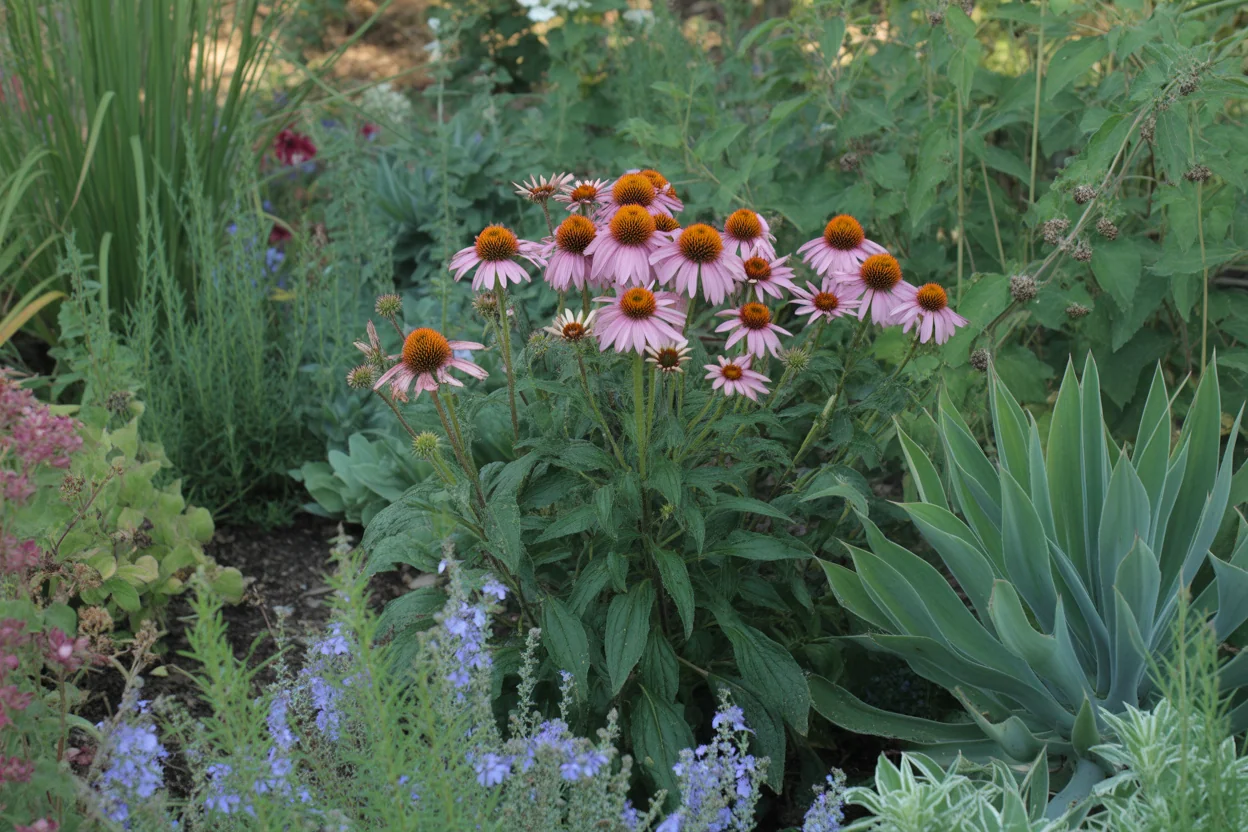
Coneflowers are workhorses in pollinator gardens. Their open centers make it easy for bees and butterflies, and seedheads feed finches much like sunflower heads do in fall.
Because people know Echinacea from supplements, they sometimes treat the garden plant like a kitchen herb. Keep that boundary clear by enjoying the flowers and using purchased preparations if you need measured herbal products.
Frequently Asked Questions
Do coneflowers come back every year?
Yes, Coneflower (Echinacea purpurea) is a true perennial in Zone 3-8. Plants die back to the ground each winter and send up new growth from the crown in spring, often forming larger clumps every few years.
Why are my coneflowers flopping over?
Flopping is usually from too little sun, overly rich soil, or excess water. Move plants to a brighter spot, cut back on fertilizer, and let the soil dry between deep waterings so stems stay sturdier and more upright.
Do I need to deadhead coneflowers?
You do not have to, but deadheading keeps flowers coming. Cut spent blooms to a lower bud for more summer color, then leave some late-season cones in place so birds can eat the seeds through fall and early winter.
Can I grow coneflowers from seed and still get strong plants?
Yes, since seed-grown coneflowers are tough and adapt well, especially in Zone 3-8. Named varieties might not come true from seed, but seedlings are usually sturdy, drought tolerant, and bloom in their second year if sown early.
How often should I divide mature coneflower clumps?
Divide every 3-4 years when flower stalks get shorter or centers of clumps thin out, ideally in early spring or early fall. Replant divisions right away and water deeply so they reestablish before heat or hard freezes hit.
Do coneflowers need fertilizer to bloom well?
Not much, since a light compost top-dress in spring is usually enough and heavy nitrogen makes plants floppy and can invite pests. If soil is poor, use a balanced, slow-release product at half strength, similar to how you would treat low-demand shrubs.
Sources & References
- Echinacea (Coneflower) in the Garden, University of Nebraska–Lincoln Extension
- Perennials for Sun: Echinacea, University of Minnesota Extension
- Growing Coneflowers in the Garden, University of Minnesota Extension
- Echinacea purpurea, Missouri Botanical Garden Plant Finder
- Echinacea, North Carolina State Extension Gardener Plant Toolbox
- Perennial Flowering Plants for Pollinators, University of Wisconsin-Madison Extension
- Echinacea purpurea (Coneflower, Eastern Purple Coneflower, Purple Coneflower, Purple Rudbeckia) | North Carolina Extension Gardener Plant Toolbox
Related Plants
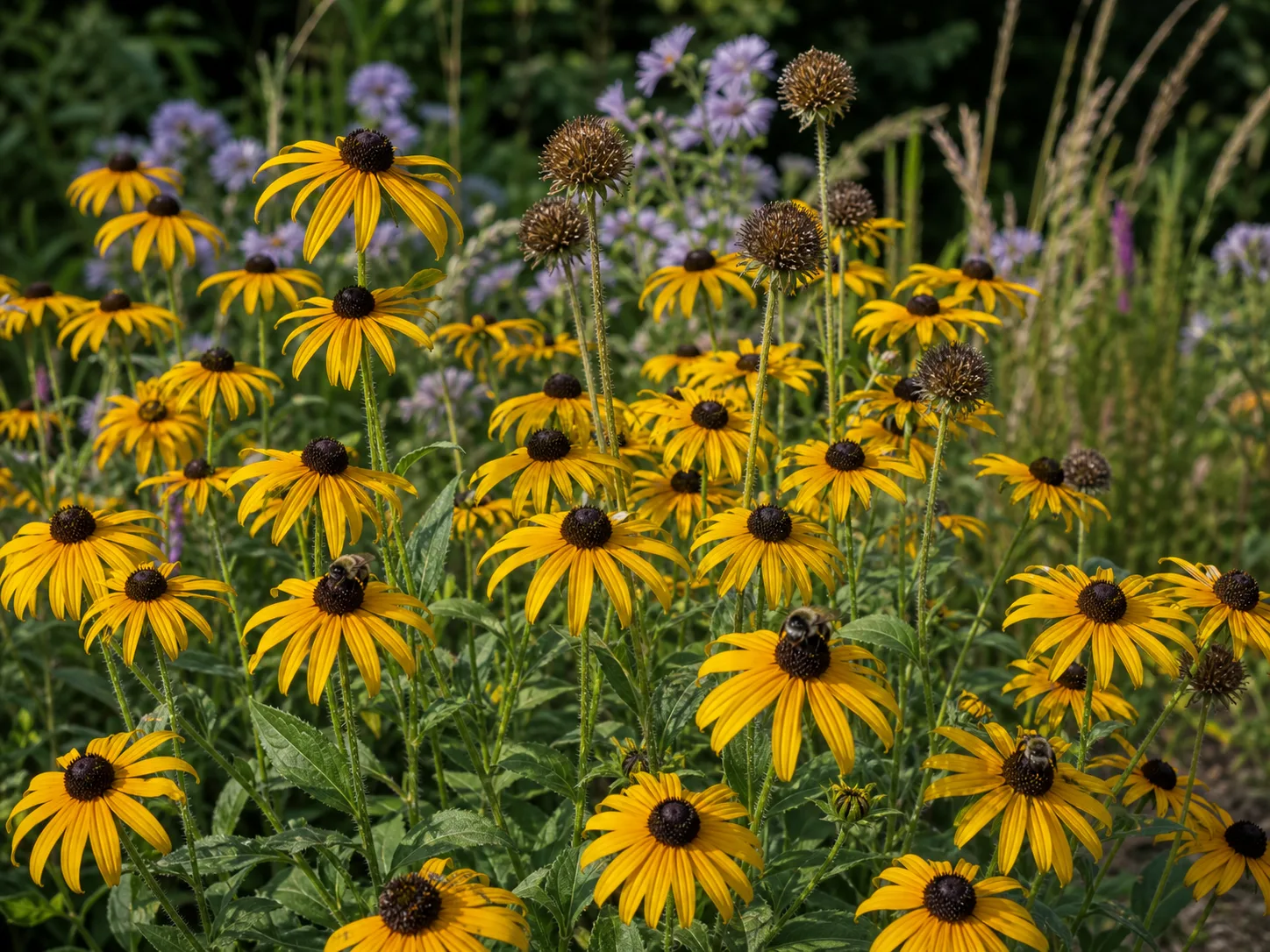
Black-Eyed Susan
Sunny yellow perennial that blooms with coneflowers and pairs well in pollinator beds.
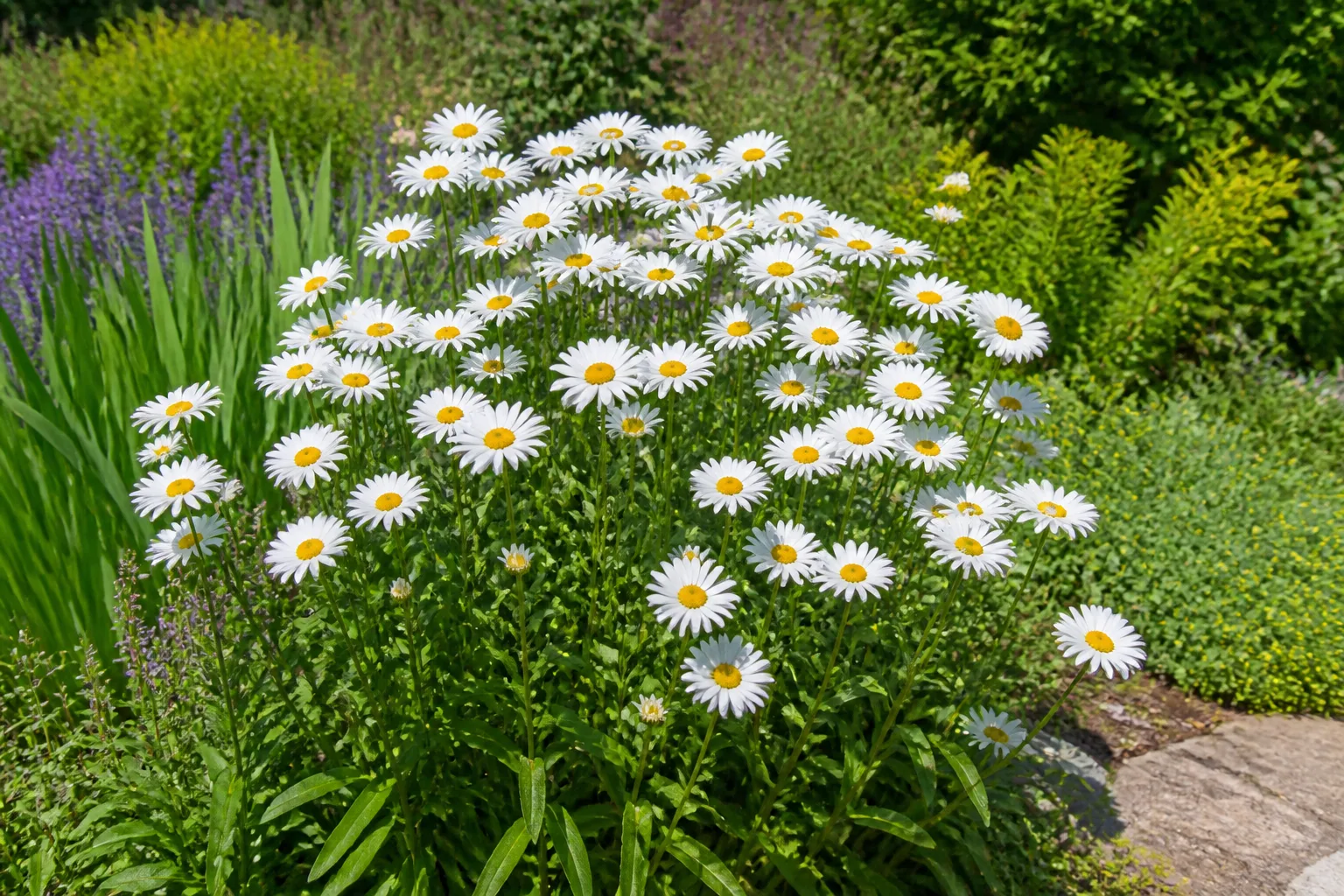
Shasta Daisy
White daisy-like perennial that fills the same sunny border spaces.
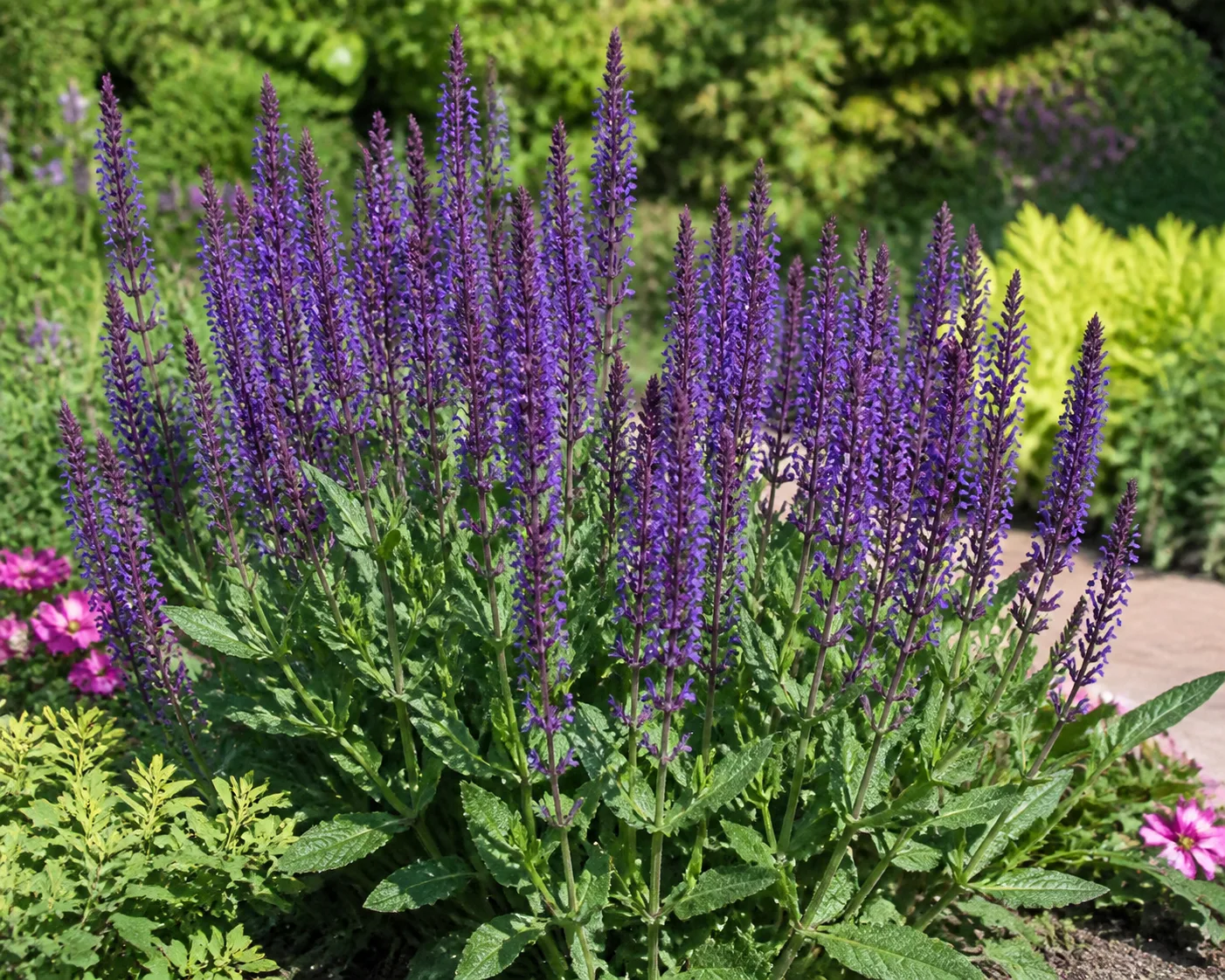
Salvia
Spiky blooms that contrast nicely with coneflower’s daisy shape and draw pollinators.
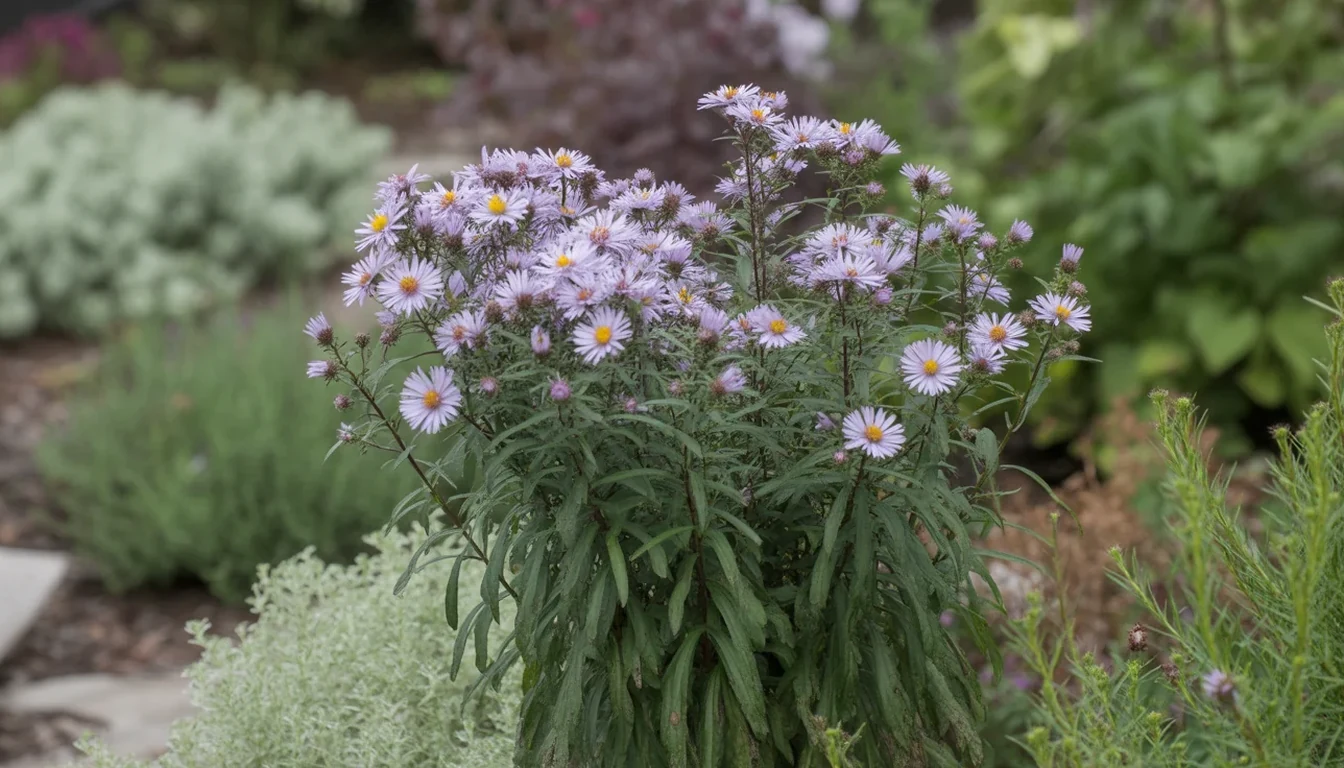
Aster
Gardeners blame the weather when an Aster splits open in September, but the shape was decided in early summer.
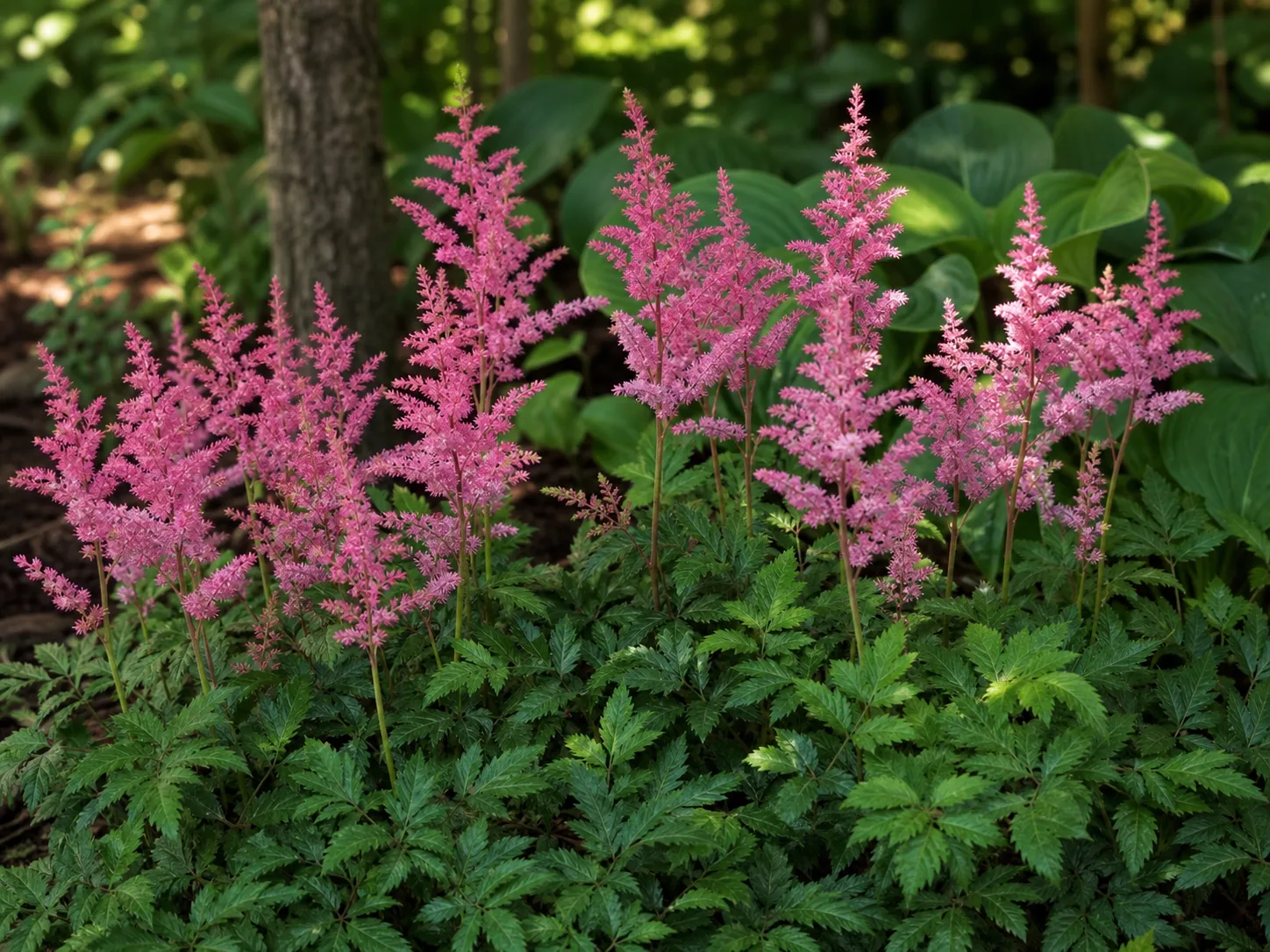
Astilbe
An Astilbe puts real color into a shade bed that would otherwise be green on green, but its shallow roots hold no…
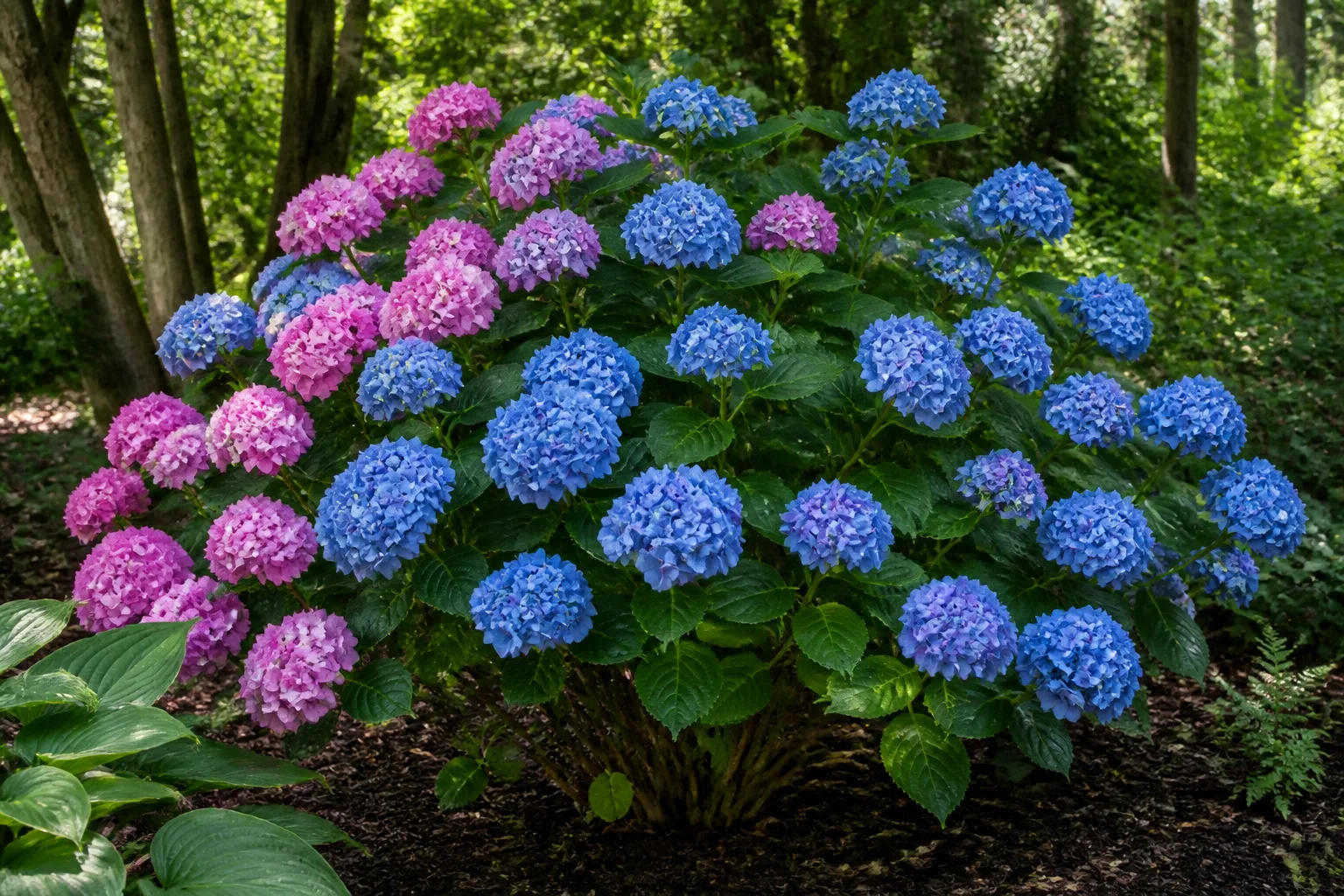
Bigleaf Hydrangea
Bigleaf hydrangea (Hydrangea macrophylla) produces mophead or lacecap flowers, but winter survival and reliable…