
What's Sage? How to Keep It Productive Past Its Third Year
Salvia officinalis Lamiaceae
Sage is sold as a herb but grows as a small evergreen shrub that spreads wider than it grows tall, and it is short-lived. Its stems harden in the second year, it refuses wet ground at any season, and it stops producing if a cut goes into old wood or takes more than half the plant.
Getting those limits right is most of what keeps it usable.
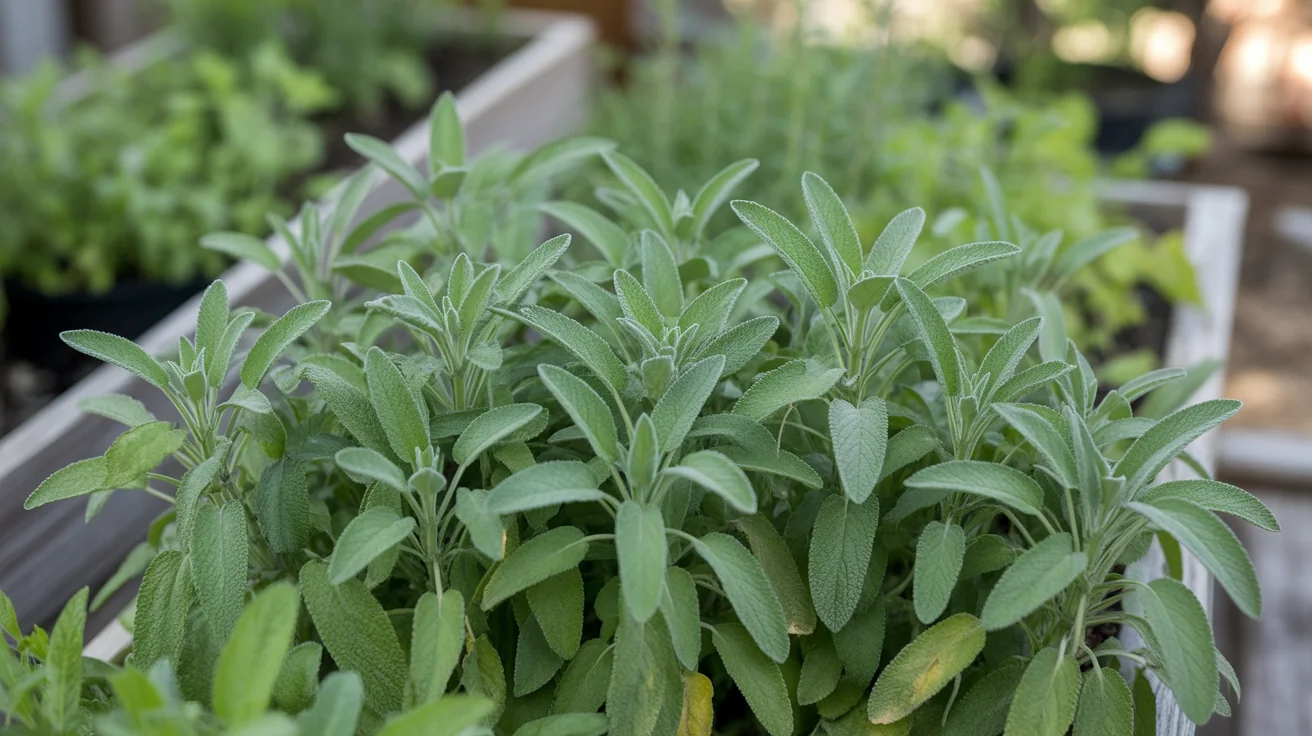
Care snapshot
Is Sage a Herb or a Small Shrub?
Sage is Salvia officinalis, and NC State classes it as an evergreen perennial shrub rather than a soft herb. It holds its gray-green leaves through the year across most of its range.
That also makes it a salvia, in the same genus as the ornamental salvias grown for their flower spikes.
The published sizes do not agree, and the disagreement is worth knowing before a gap is measured. NC State gives 1 to 2 feet tall and 2 to 3 feet wide, while both Iowa State and Maryland put common sage at 2 to 3 feet tall.
Maryland supplies the detail that reconciles them, saying the plant has a tendency to sprawl. A sage that is held up by its neighbors reads as a 3 foot plant and the same sage in the open reads as a 2 foot one, which is why the width matters more than the height in either case.
Either way it spreads wider than it grows. A gap sized for a basil plant will be too small within a season, and Russian sage is a different plant again despite the name, needing far more room than either.
Wisconsin Horticulture describes the stems as green at first, becoming somewhat woody in their second year, and Maryland calls the whole thing a woody, hardy perennial. NC State goes further and calls it short-lived.
All three point the same way. Sage is something you keep going rather than something you plant once, which is why the pruning and the replacement schedule further down matter more here than they do on oregano or thyme.
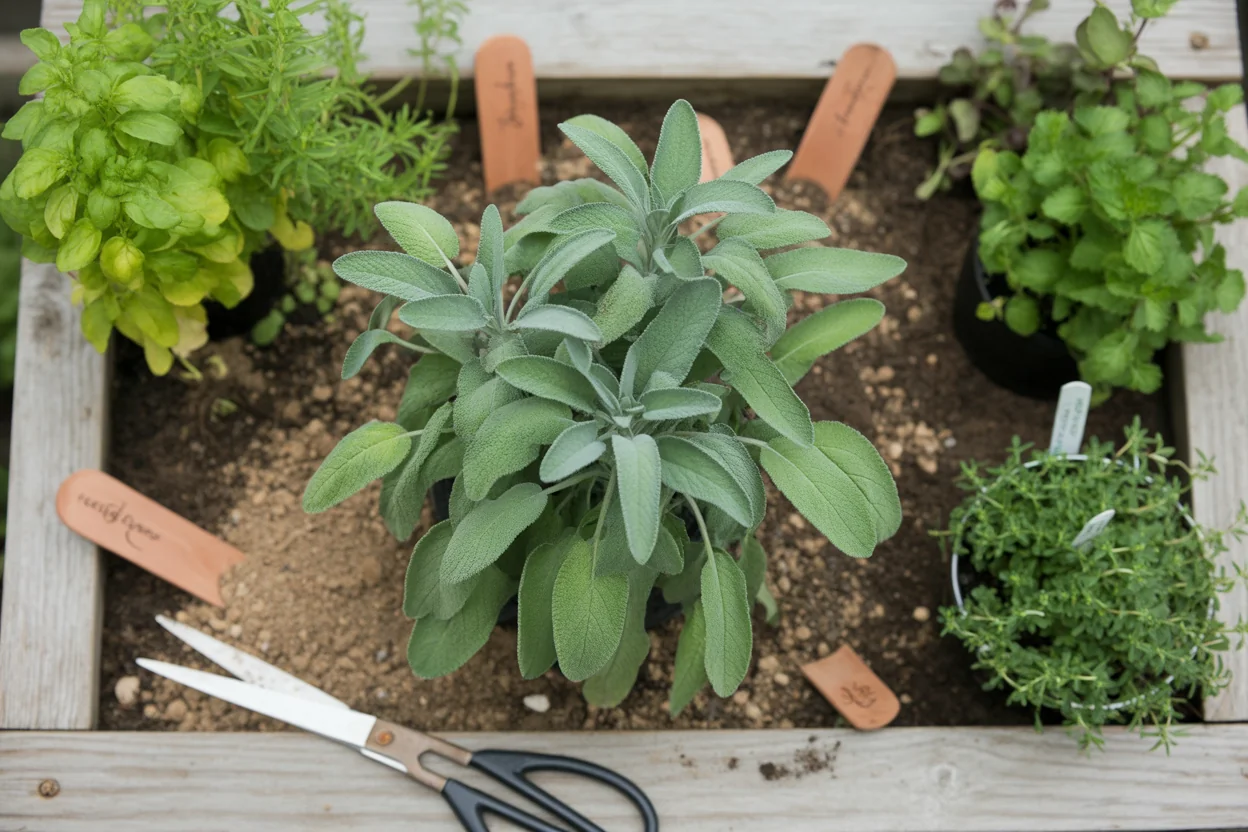
How Much Hardiness Does a Colored Sage Cost You?
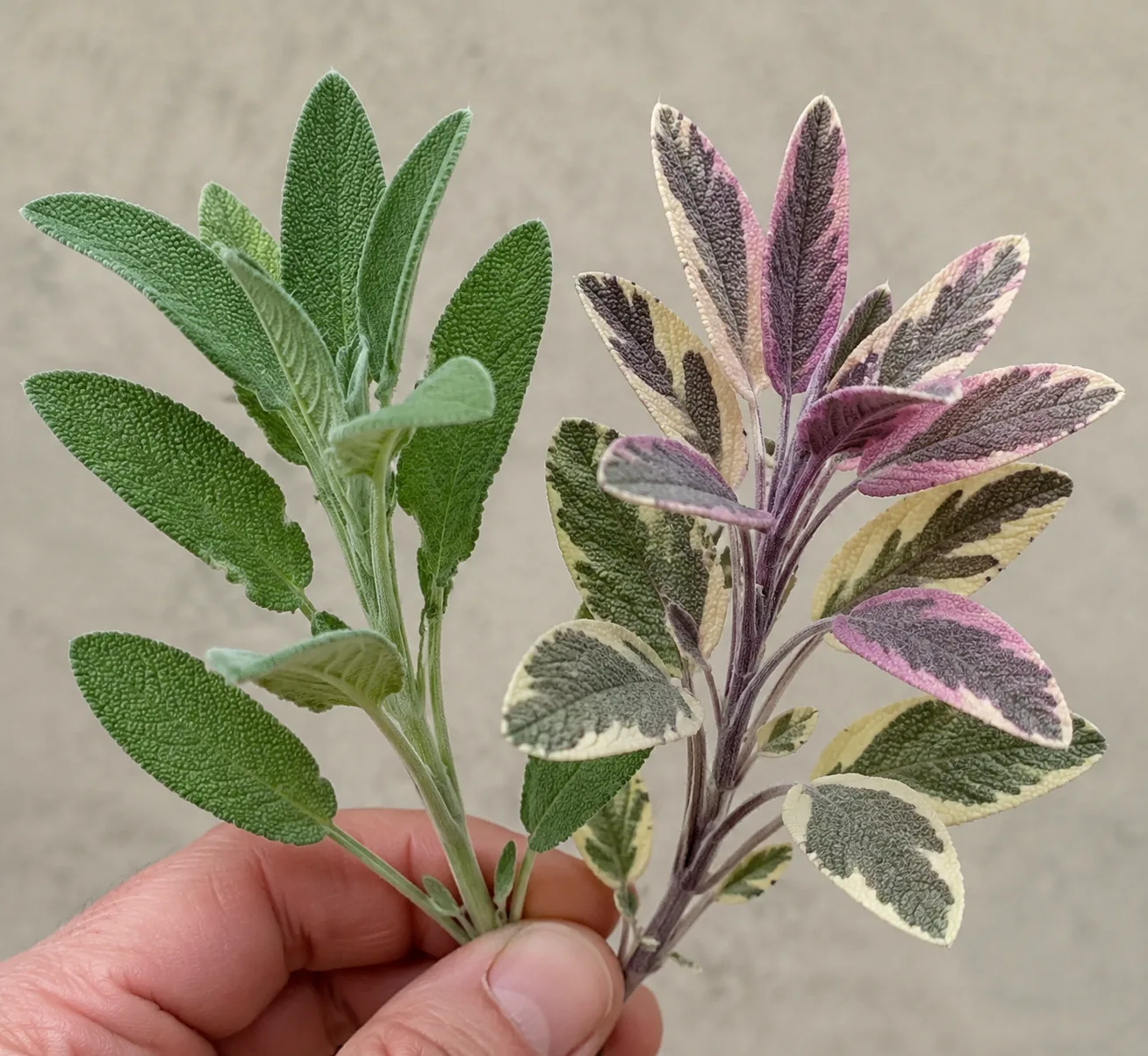
The zone printed against Salvia officinalis belongs to plain green sage. It does not belong to the cream-and-pink plant standing next to it under the same species name, and Iowa State is the source that zones them one at a time.
Two named cultivars hold most of the species hardiness.
Berggarten is a zone 5 plant with large silver-gray leaves and a compact habit, and Sage of Bath is also zone 5.
The hardiest of the named ones is Nana, at zone 4 and only 12 to 18 inches tall.
- Nana
- Zone 4, 12 to 18 inches tall, the hardiest named cultivar and the one for a small bed
- Berggarten
- Zone 5, large silver-gray leaves on a compact plant
- Sage of Bath
- Zone 5
- Purpurascens
- Zone 6, best grown as an annual in colder gardens
- Tricolor
- Zone 6, best grown as an annual, and not as hardy as common sage by Wisconsin's account either
- Aurea
- Zone 6, best grown as an annual
- Pineapple sage
- Salvia elegans, a different species, 3 to 5 feet tall and grown as an annual
The three colored cultivars land together at zone 6, and Iowa State's phrasing is worth taking at face value, since it says all three are best grown as annuals. That is not a warning about a hard winter.
It is a recommendation to plan for one season.
Pineapple sage is the odd entry on that list because it is not the same plant. Salvia elegans reaches 3 to 5 feet, is grown as an annual everywhere it is cold, and is bought for the scent and the red flowers rather than for the kitchen.
Where a favorite cultivar is a zone or two marginal, the answer is not more mulch. It is to root a cutting in summer, keep the young plant under cover, and treat the outdoor one as expendable.
Where Does Sage Need to Be Planted?
Sage takes more light than most Mediterranean herbs will accept. NC State lists both full sun of six or more hours and partial shade of two to six hours as workable, while Iowa State asks for at least 6 hours of direct sunlight each day.
The soil is far less flexible.
Loam, sand or shallow rocky ground all suit it, with a neutral pH between 6.0 and 8.0 and good drainage.
NC State says plainly that sage will tolerate drought and poor soils, and that it is intolerant of wet or poorly drained soils.
Iowa State asks for something slightly different, calling for moderately fertile soils amended with organic matter.
The two are not as far apart as they read, because the word doing the work in both is drainage.
Organic matter that opens a heavy soil helps, and the same material spread on ground that already holds water does not.
- Light
- Full sun of six or more hours, or partial shade of two to six hours
- Soil
- Loam, sand or shallow rocky ground, never heavy and wet
- pH
- Neutral, between 6.0 and 8.0
- Drainage
- Good drainage, which Iowa State calls essential particularly during winter
- Mature size
- 1 to 2 feet tall by NC State, 2 to 3 by Iowa State and Maryland, and 2 to 3 feet wide
- Spacing
- 2 to 2 and a half feet between plants
- Hardiness
- NC State gives Zones 4a to 8b, Wisconsin Horticulture gives 4a to 10b
Sage fails on wet ground faster than it fails on poor ground.
A bed that puddles after rain, a low corner, or a pot left standing in its saucer will each rot the crown from below, and no amount of later care undoes that.
The repair is drainage, and it has to be built before the plant goes in, either by raising the bed or by moving the plant onto a slope.
Give the width in that table real space. Maryland puts the spacing at 2 to 2 and a half feet, which means one plant per gap rather than a row of them, and the full sun perennials guide covers the neighbors that will take the same conditions.
How Much Water Does Sage Actually Want?
Sage that dies in a garden usually drowns rather than dries out.
NC State rates it as tolerating drought and poor soils while being intolerant of wet or poorly drained soils, which is an unusual pairing among the herbs on the same bench.
Watering it the way basil is watered will finish it inside a season.
The right interval changes with the weather, which is why a check beats a schedule. An established plant in well-drained ground rarely needs watering at all once its roots are down, and Wisconsin Horticulture notes that sage has few pests when grown in well-drained soil.
A pot is a different case and dries faster in heat. In lean ground a sage asks for less water than almost anything else on the herb bench, which puts it among the drought-tolerant plants worth building a dry bed around.
What Kills Sage Over Winter, Cold or Wet?
The two extension sources do not agree about how much heat sage will take.
NC State lists Salvia officinalis at Zones 4a to 8b.
Wisconsin Horticulture puts the same species at 4a to 10b.
They agree on the cold end, which is the end that usually decides things. A reader in Zone 9 or 10 should treat sage as worth trying rather than guaranteed, and watch for it struggling through humid summer heat rather than through winter.
The answer to the question in the heading is that the wet does the killing more often than the cold. Illinois Extension says sage needs very well drained soil especially over the winter if it is to perform as a perennial, Maryland says it needs very well-drained soil to overwinter, and Iowa State calls drainage essential, particularly during winter.
Three sources naming the same season is worth pausing on. It means the plant that dies in February usually did so in ground that was fine in July, and that the fix is a change of site rather than a change of care.
- Plant on a slope or a raised bed, because all three sources tie overwintering to drainage before they tie it to cold.
- Keep heavy, moisture-holding mulch off the crown, since saturated ground is what the roots cannot survive.
- Save the cutting back for spring rather than autumn, which is the timing all three sources give.
- Root a cutting in summer where the cultivar is marginal, so a replacement exists before the winter tests the parent.
None of that rescues a plant standing in wet ground through a thaw. Cold at the right zone is survivable, and cold on top of saturated soil is not.
How Do You Prune Sage Without Killing It?
An unpruned sage stretches.
The stems lengthen, the leaves thin out along them, and the plant opens up in the middle.
NC State ties pruning straight to that and says to prune in spring and during the growing season to keep the plant from becoming leggy.
The first limit is where the cut may fall.
NC State says do not prune into mature woody stems, as these seldom sprout new growth.
A cut into last year's hardened wood does not come back, so the blades stay in the green.
The second limit is how much comes off at once. Wisconsin Horticulture puts it at half the plant and says cutting back more than that will stop it producing.
Maryland adds the one exception to the first rule, and it is worth having. It hard prunes when signs of regrowth appear in spring, taking off dead, woody stems but not the new growth.
Dead wood is not the same thing as old wood, and removing it is what stops a plant carrying a season of stubs.
The timing behind that is narrow on purpose. Iowa State prunes lightly in spring as new growth begins, which is the same moment, and waiting for the green to show is what tells you which stems are dead rather than dormant.
- Spring, just as new growth resumes, which is the timing Illinois, Iowa State and Maryland all give for the main cut.
- A few times through the growing season, to encourage young shoots rather than to reshape the plant.
- Never into living hardened stems from previous years, whatever the season, though dead ones come out.
The two limits are separate and can be crossed one at a time.
Taking a third of the plant off but reaching into old wood breaks the first.
Cutting only green growth but taking two thirds breaks the second.
The herb pruning guide covers how this plays out across the woody herbs.
When Do You Harvest Sage, and When Do You Replace It?
Harvesting sage is pruning it, so the same two limits apply. Wisconsin Horticulture gives the working cut as 6 to 8 inches from the top of the plants, taken at least twice during the growing season, and Illinois Extension gives the same 6 to 8 inch stems for drying.
Iowa State names the same length and adds the flavor timing, harvesting throughout the growing season or just before plants bloom. Maryland puts it slightly wider, picking the leaves before or at blooming and cutting the plant back after.
Twice a season is more than most people take, and it is what keeps the plant in young growth. A sage picked one leaf at a time gets leggy anyway, because nothing ever prompts it to branch.
Storage is short either way. Iowa State refrigerates cut sage for several days, or dries it in a warm, dark, well-ventilated location, which is the same treatment the other gray-leaved herbs take.
- Softwood stem cuttings taken in summer root in a moist, well-drained potting mix, and both Illinois and Maryland prefer cuttings because seed is slow.
- Layering pegs a low branch onto the soil in spring or autumn and separates it once it has rooted.
- Seed works but, as Illinois puts it, may take several years to give a harvestable plant.
Even a well-pruned plant does not last. Wisconsin Horticulture says sage tends to be a short-lived perennial, Iowa State says replacement every few years helps maintain foliage quality, and Maryland puts a number on it, saying culinary sage should be replaced every 3 to 4 years.
Rooting a replacement while the current plant is still good is the habit that makes that painless. The other essential kitchen herbs can mostly be carried on the same way, and sage is one of the few where the schedule is published rather than guessed at.
Which Sage Problems Are Really Drainage Problems?
Most of the sage problem list is really a drainage list. Wisconsin Horticulture says sage has few pests when grown in well-drained soil, which puts the choice of site ahead of every treatment.
The diseases that do turn up follow wet ground. NC State names root rot, powdery mildew and verticillium wilt, Wisconsin Horticulture adds wilt and slugs, and Iowa State reaches the same two conclusions independently, naming root rot from wet soils and powdery mildew from poor air circulation.
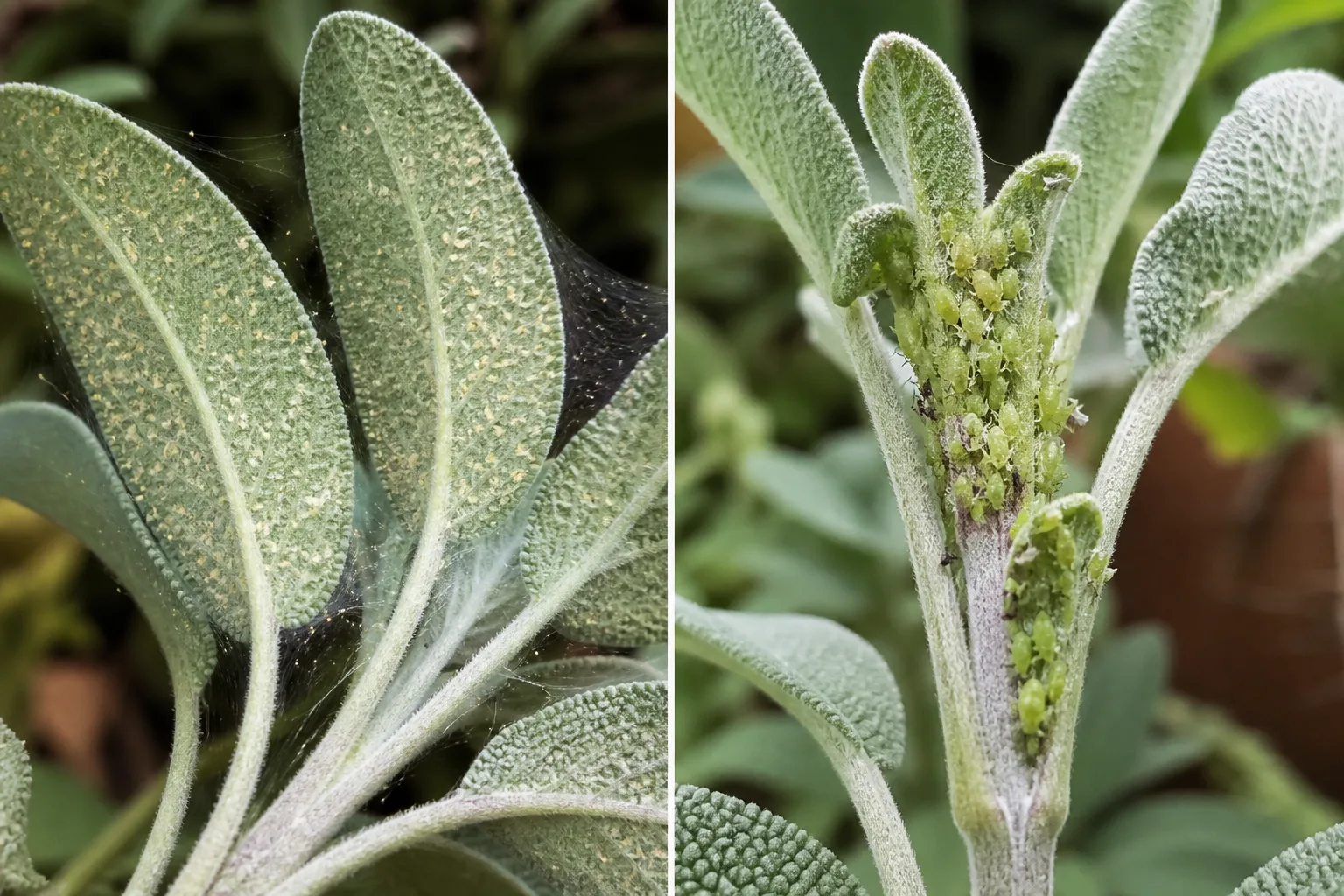
Two pests are worth being able to recognize on sight. Spider mites and aphids both work on sage, they look nothing alike close up, and both hide well against gray fuzzy leaves.
- Root rot and wilt follow soil that stays saturated, so the answer is drainage rather than any treatment.
- Powdery mildew builds where air sits still around a crowded plant, which spacing and pruning both help.
- Spider mites build up in hot, dry, still air and leave stippling with fine webbing.
- Aphids arrive on soft new growth in spring and cluster visibly at the shoot tips.
Naming which one you have decides whether you change the conditions or deal with a colony. Mites call for airflow and moisture on the leaves, and aphids call for washing them off the growing tips before the numbers build.
Spittle bugs turn up as well and look far worse than they are. A blob of froth on a stem is worth rinsing off rather than worrying about.
Larger animals are mostly not the problem here. The oils that make the leaves worth cooking with are the same ones that put sage on the deer-resistant lists, and a plant left to flower is worked hard by bees, which is why it turns up in pollinator plantings as often as in medicinal herb collections.
Frequently Asked Questions
Is sage a perennial?
Sage is an evergreen perennial shrub, but a short-lived one. Wisconsin Horticulture says it is often best replaced every few years, and Illinois Extension adds that aging plants go woody and benefit from replacement to keep the foliage worth cooking with.
Why has my sage stopped producing leaves?
Usually because a cut crossed one of two limits. Wisconsin Horticulture says taking more than half the plant will stop it producing, and NC State says mature woody stems seldom sprout new growth once cut into.
Can you cut sage back hard?
Not in one go. Prune in spring as new growth resumes and again a few times through the season, keeping each cut under half the plant and out of the hardened stems from previous years.
Is variegated sage as hardy as green sage?
No. Wisconsin Horticulture says Tricolor is hardy only to zone 5b or 6a, against 4a for the plain species, and Illinois Extension says Golden Sage and Purple Sage are not dependably winter hardy in zone 5.
How do you propagate sage?
Take softwood stem cuttings in summer and root them in a moist, well-drained potting mix, or layer an established branch in spring or autumn. Illinois Extension prefers cuttings because seed may take several years to give a harvestable plant.
Is sage safe for cats and dogs?
NC State lists sage as non-toxic for cats, dogs and horses. The flowers attract bees, so it is worth waiting for them to move on before cutting a plant in bloom.
Sources & References
Related Plants
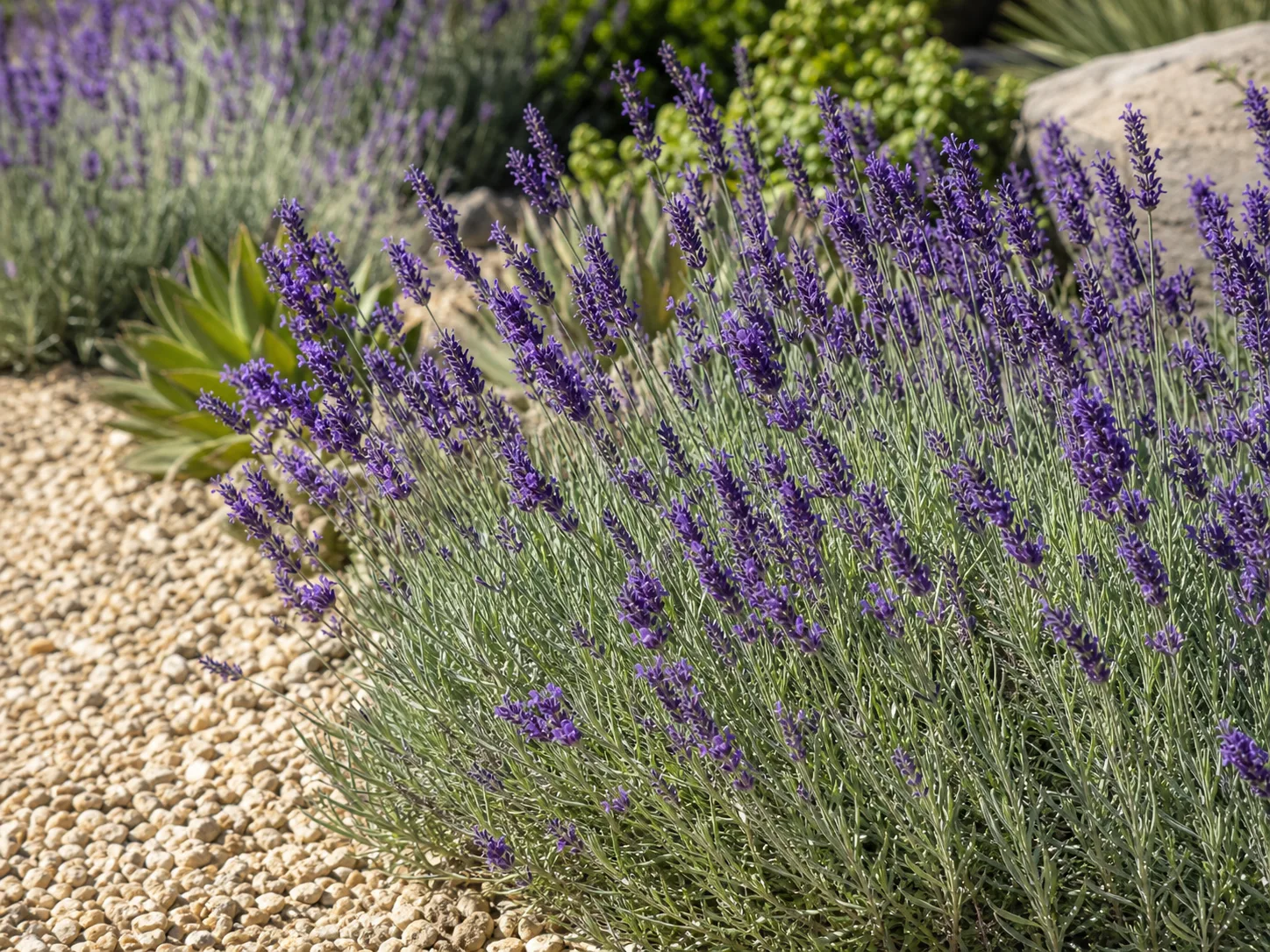
English Lavender
Another woody Mediterranean herb that loves dry, sunny spots and pairs well with sage.
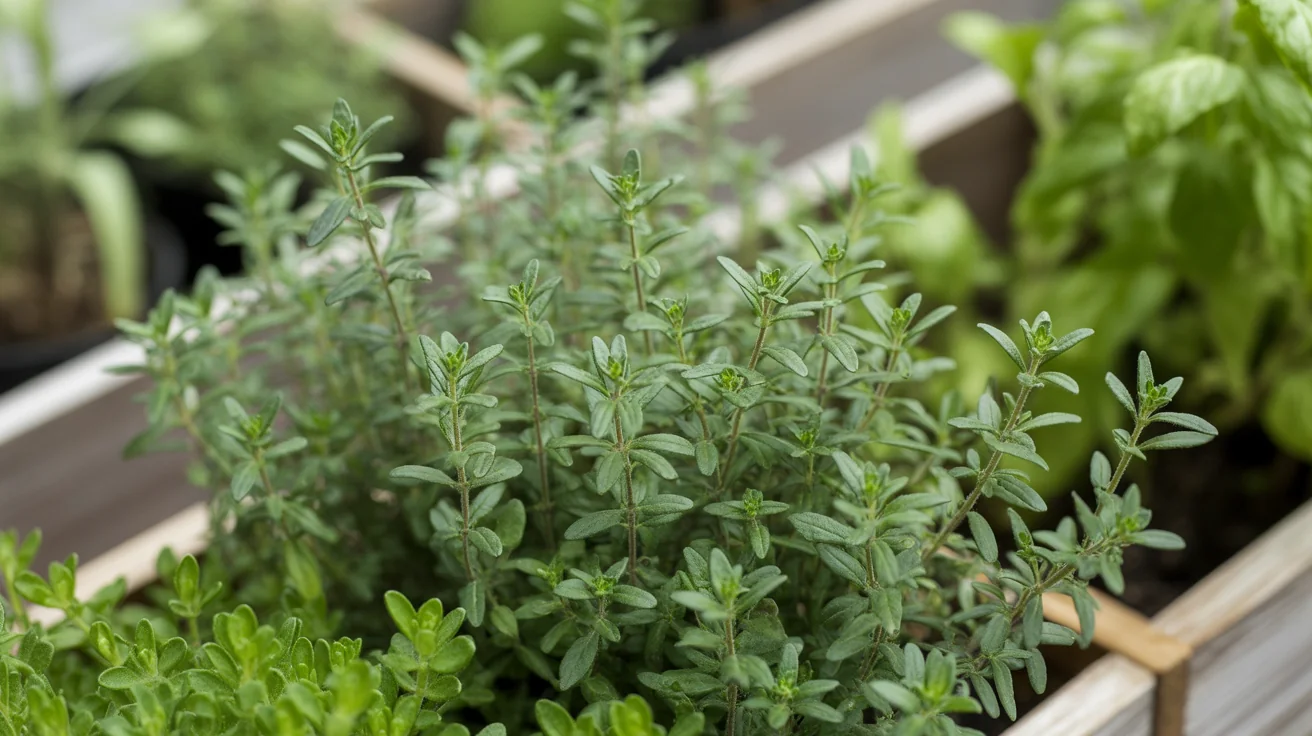
Thyme
Low-growing herb for the same dry, lean beds where sage thrives.
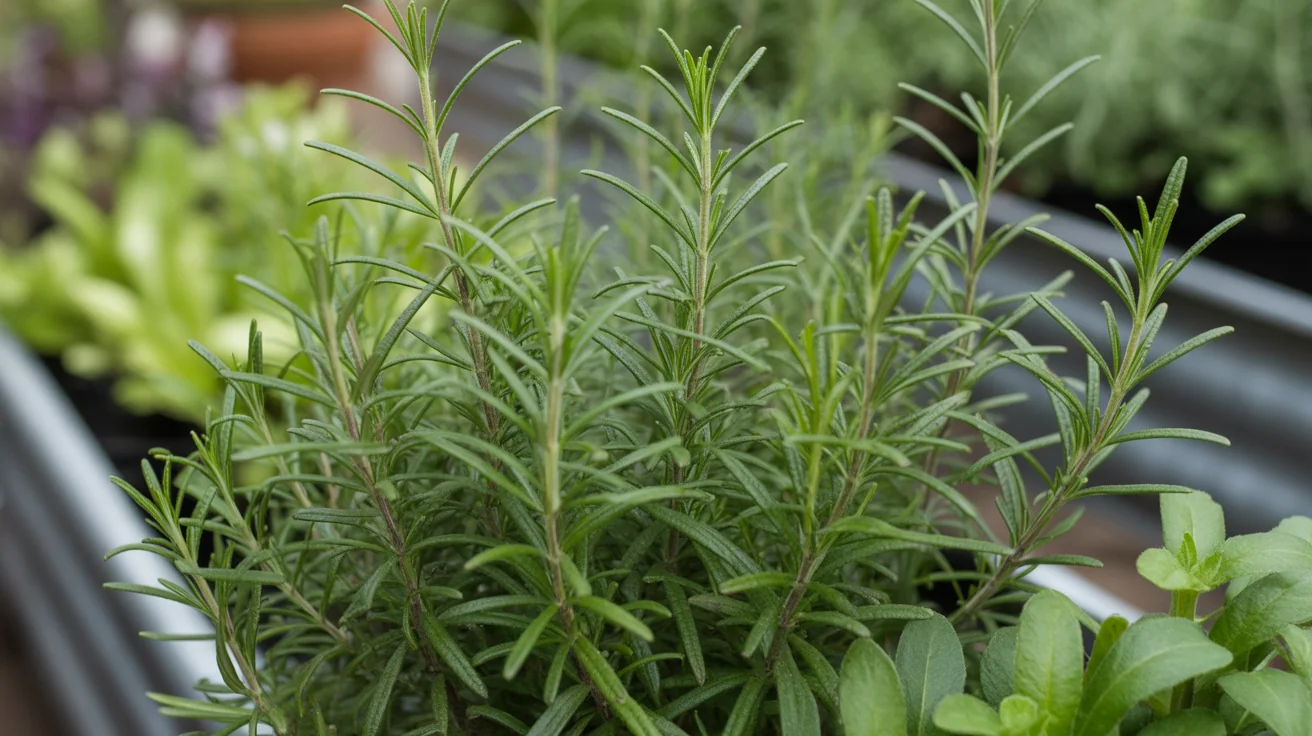
Rosemary
Woody evergreen herb that shares sage’s love of full sun and sharp drainage.
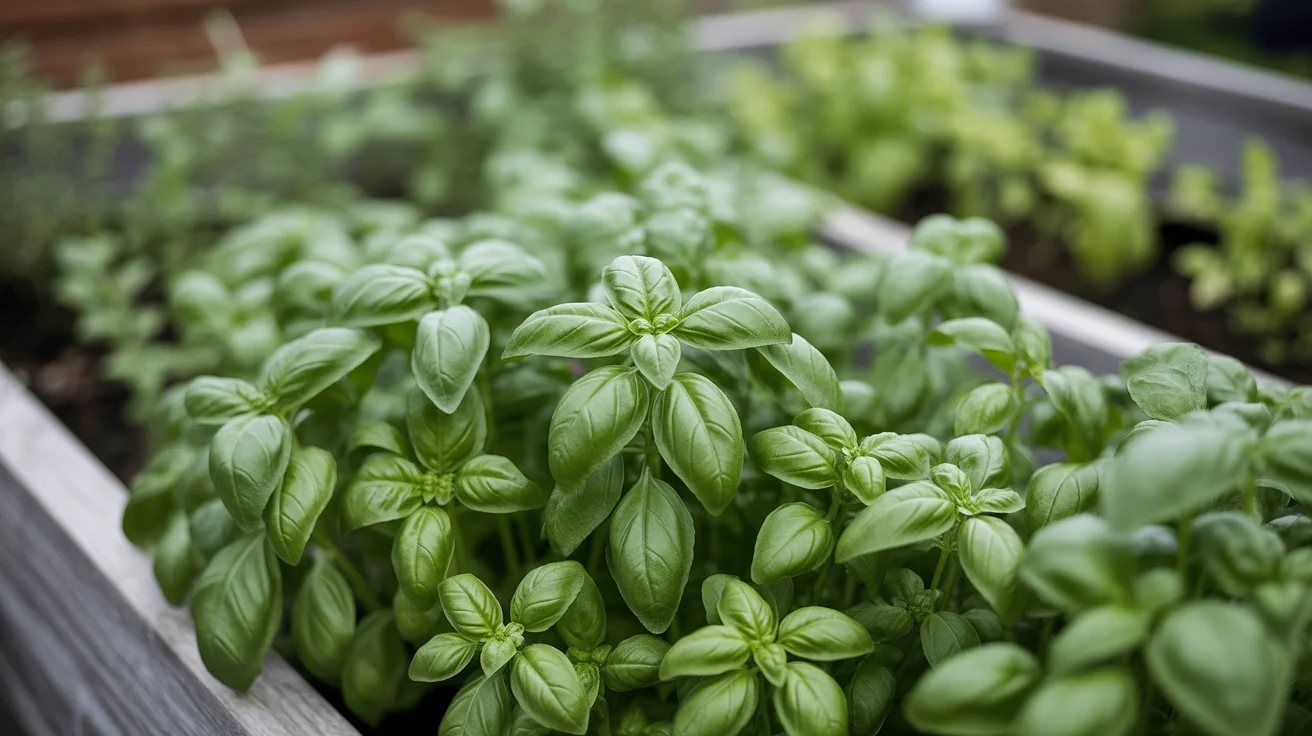
Basil
Basil is a tender annual that turns a warm season into armfuls of soft leaves, as long as it goes out into warm soil…
Bay Laurel
Bay laurel is a tree grown as a container plant, which is why every decision about it looks the way it does.
Chives
Chives are an Allium, in the same genus as onion and garlic, and that explains the flavor, the clump of small bulbs…