
Is Kentucky Bluegrass Right for Your Yard and Lawn Routine?
Poa pratensis Poaceae
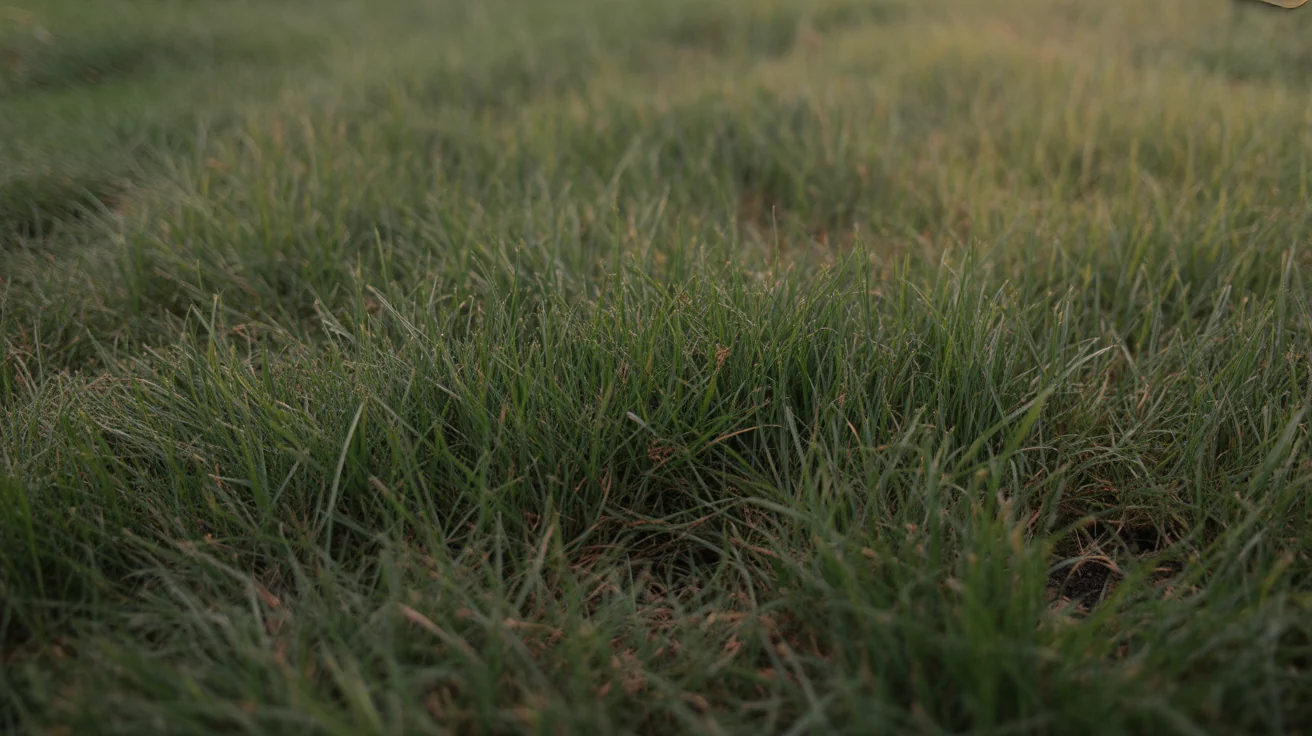
Kentucky bluegrass forms a dense lawn and repairs small worn areas through underground rhizomes. That recovery is useful in a sunny, cool-season yard, but it depends on growing conditions.
Shade, prolonged drought, and heavy traffic can outpace repair. Water and fertilizer needs vary with climate, soil, cultivar, and whether you want summer color or can accept dormancy.
Care snapshot
What Makes Kentucky Bluegrass Repair Itself?
Underground stems. Kentucky bluegrass is Poa pratensis, a cool-season perennial in the family Poaceae, and it is sod-forming, which means it spreads sideways below the surface rather than only thickening where it already stands.
Those stems are rhizomes. They grow horizontally and form new shoots, allowing small gaps to fill from surviving turf. A large bare patch or a site that remains shaded or compacted may still need repair and reseeding.
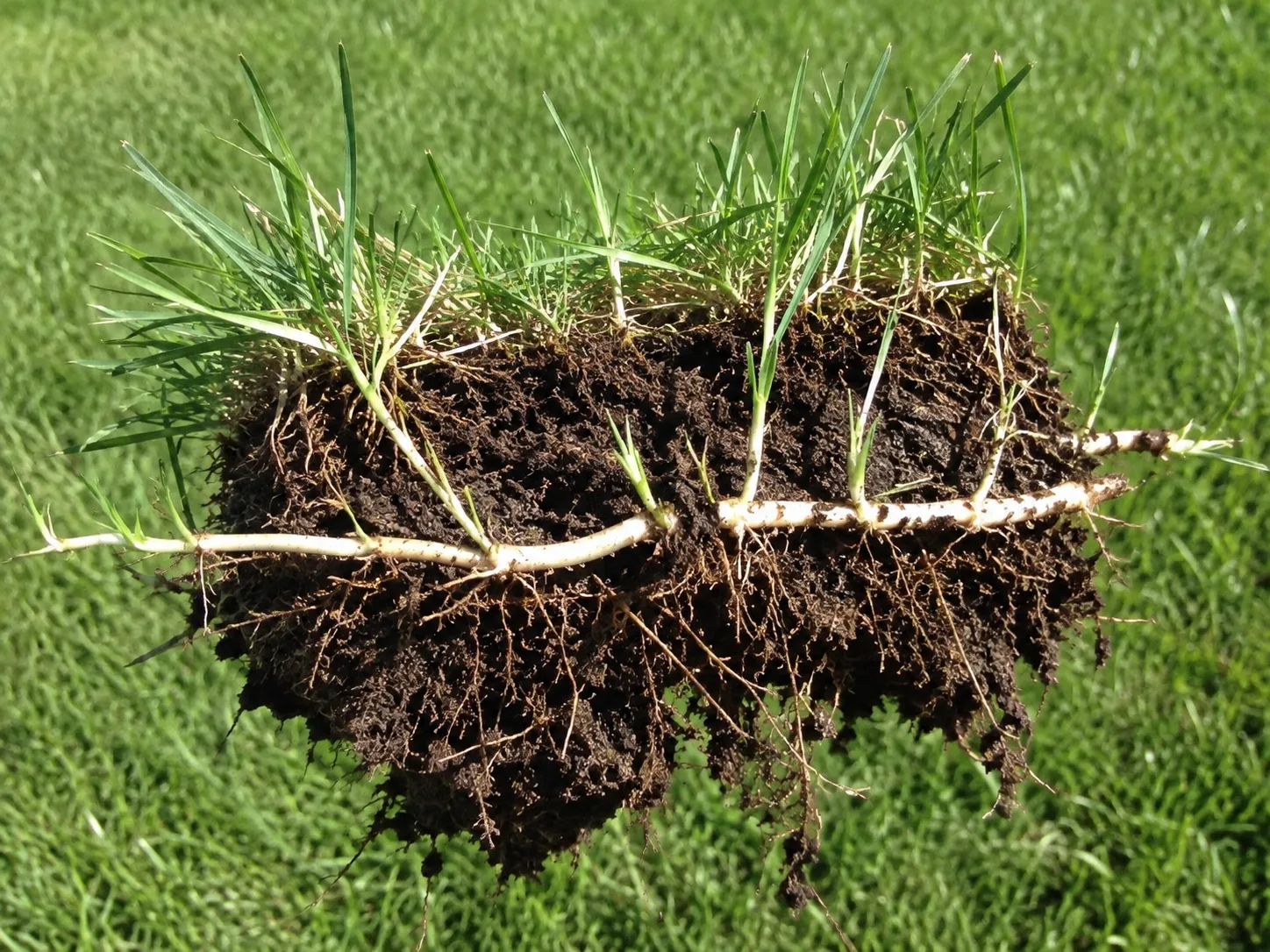
Recovery and wear resistance are different traits. Bluegrass can replace damaged shoots during active growth; that does not make it immune to repeated trampling or summer heat.
- Botanical name
- Poa pratensis, family Poaceae
- Habit
- Sod-forming, spreads by underground rhizomes
- Mowing height
- Usually 2.5–3.5 inches under regional guidance
- Shade
- Generally poor; cultivar and site matter
The name is a historical accident worth correcting. This grass is not native to Kentucky or to North America at all.
It came from Europe and northern Asia with early settlers and naturalized so completely across cool climates that most people assume it always grew here.
What the rhizomes cannot do sets up most of the rest of this page. New growth still needs sufficient light, water, and nutrients. Rhizomes do not remove those constraints.
What Does a Bluegrass Lawn Actually Cost to Keep?
The cost follows the lawn you want and the conditions you have. Fertilizer guidance for established Colorado turf distinguishes higher-input bluegrass from lower-maintenance programs, with optional applications rather than one annual dose for every lawn.
Water is the other major expense. Colorado State describes up to 2.25 inches per week for high-quality turf in hot, dry, windy conditions; this is a regional upper example, not a default watering target.
Set those figures beside the neighbors and the picture is stark.
Those ranges cannot support a fixed three-to-one cost comparison. Local application guidance and the condition of the lawn matter more than a ratio between species.
One habit claws some of that back for free. Leaving clippings on the lawn cuts the nitrogen requirement by a quarter to a third, which on a high-maintenance lawn is more than a pound of nitrogen a year you simply do not have to buy.
A sparse lawn does not automatically need more fertilizer. Shade, compaction, pests, and water stress can leave gaps that extra nitrogen will not correct.
How Should You Choose a Bluegrass Cultivar?
Colorado State ranks twelve turfgrasses for persistence under low maintenance, from 1 for the best to 10 for the worst. Persistence here means surviving reduced water, fertilizer and pest control rather than looking good under full care.
The result is not what the seed aisle implies.
Improved Kentucky bluegrass ranks 8, and common Kentucky bluegrass ranks 6.
That older regional ranking is not a trial result for every cultivar sold today. Improved color or disease resistance does not, by itself, tell you how a cultivar performs with limited irrigation.
- Buffalograss
- 1, best persistence under low maintenance
- Hard and sheep fescue
- 2 to 3
- Creeping and Chewings fescue
- 3 to 5
- Tall fescue
- 5 to 6
- Common Kentucky bluegrass
- 6
- Improved Kentucky bluegrass
- 8, with perennial ryegrass worst at 9 to 10
Read that as a commitment rather than a warning. A cultivar should match the intended care level. Locally evaluated performance is more useful than treating the word improved as either a guarantee or a warning.
There are hundreds of cultivars with vast differences in management needs, so the practical move is a blend rather than a single name. A suitable blend can reduce reliance on one cultivar, although it cannot prevent all disease or heat damage.
Perennial ryegrass establishes faster and can improve wear resistance in a suitable mixture. Seed percentages by weight are not the same as eventual lawn composition, so a locally recommended mix is preferable to one universal ratio.
How Often Does Bluegrass Need Cutting in Spring?
Growth determines the interval. During a spring flush, mowing may be needed every three or four days to avoid removing more than a third of the blade at once.
Once growth slows, the interval lengthens. A dormant lawn needs no mowing, and traffic from a mower can damage stressed turf.
Regional recommendations differ slightly: Colorado State favors 2.5–3 inches, while Iowa State gives 2.5–3.5 inches for bluegrass. The useful rule is to keep an appropriate height and avoid scalping, not promise fewer cuts after changing the mower setting.
Why Does Bluegrass Build Thatch?
The same rhizomes that repair the lawn are stems, and stems break down more slowly than leaves do. Colorado State lists thatch-forming as one of this grass's disadvantages, next to tall fescue being a slow thatch former and the bunch-type fine fescues building very little.
The threshold is half an inch. Below that the layer is doing useful work as cushioning and insulation, and above it the lawn starts holding moisture against the crowns and sheltering insects.
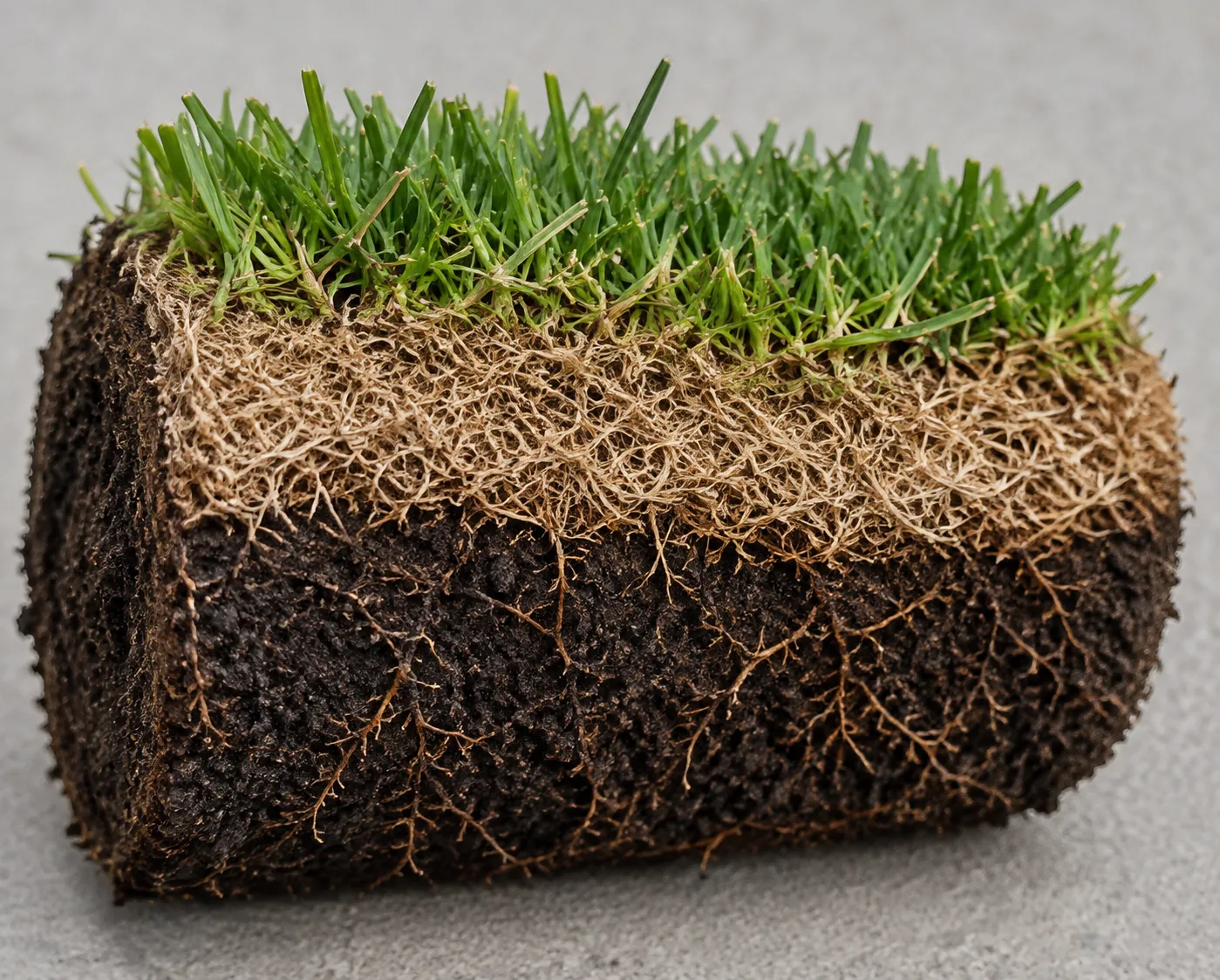
Core aeration is more beneficial than power raking for dealing with it, because it pulls plugs that remove organic matter and relieve compaction in one pass, while power raking tears the turf and leaves the compaction untouched. The two jobs are not interchangeable, and timing aeration matters as much as choosing it.
Should You Water Bluegrass Through a Summer Drought?
A healthy, established lawn can be allowed to turn brown during drought, but dormancy has limits. Newly seeded, shallow-rooted, or already damaged turf is less dependable than a mature lawn in good condition.
Iowa State describes roughly four to six weeks of dormancy for healthy bluegrass before the risk of loss rises. That is a regional planning guide, not a guarantee through any heat wave or soil condition.
The choice is between maintaining green growth and managing survival during stress. Repeated light sprinkling may wet leaves without reaching roots; a measured application needs to reach the actual root zone without running off.
- Still green: Local irrigation guidance, rainfall, and soil moisture help set the amount.
- Dormant: Reduce foot and mower traffic; follow local advice if dry weather persists.
- Uneven brown patches: Check dormancy and other causes before assuming every brown area needs the same treatment.
Wet-soil warning signs matter too. Low spots and sunny slopes may need different irrigation settings.
How Much Does Shade Limit Bluegrass?
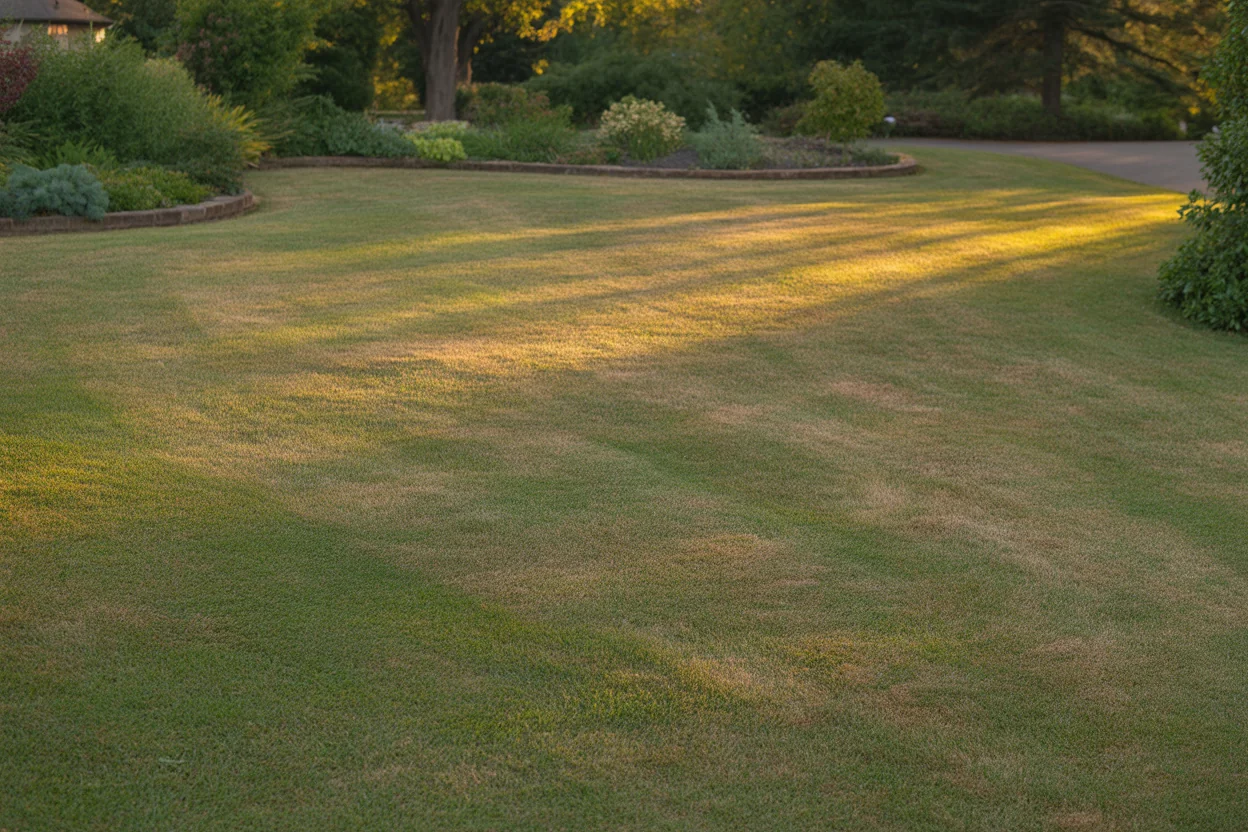
Kentucky bluegrass generally performs poorly in shade, although cultivars differ. Fine fescues are often more suitable where a lawn receives less light.
There is no single hour cutoff at which every cultivar stops spreading. Light intensity, season, tree-root competition, and traffic together determine whether the turf can replace lost shoots.
- Sunny areas: Usually the best fit for dense bluegrass turf.
- Partial shade: Cultivar selection and reduced traffic can matter as much as care.
- Dense shade: A path, mulch, or suitable shade planting may work better than repeated seeding.
Moss and thinning near trees are reasons to inspect light, moisture, drainage, and compaction. They do not identify one cause, and fertilizer alone cannot fix insufficient light.
Why Is Bluegrass Seed So Slow to Come Up?
Germination takes about 14 days, and depending on soil temperature it can run anywhere from 6 to 30. That is slow, and it is slow in a way that fools people.
In a mixture with faster-germinating perennial ryegrass, the first visible seedlings may not be bluegrass.
Early green cover does not prove that all species in the mix have emerged. Conversely, missing seedlings still warrant checking soil moisture, planting depth, and seed quality.
Establishment takes longer than the first visible germination, and young seedlings cannot immediately repair traffic damage.
Sow 3 to 5 pounds per 1,000 square feet in late summer to early fall, while the soil is still warm and the nights have started cooling. Resist the urge to go heavier, because seeding rates that are too high produce weak, thin stands that are more prone to disease and heat stress, not thicker ones.
- Seed-to-soil contact: Follow the seed label and local establishment guidance; do not bury this small seed deeply.
- Establishment moisture: Keep the seed zone moist without runoff, then adjust as roots develop.
- Existing turf: Overseeding needs a rate and preparation suited to the remaining stand.
Traffic should remain limited while seedlings establish. The pace of spreading depends on growing conditions; a calendar date alone does not prove the turf is ready for heavy use.
Grubs, Billbugs, or Necrotic Ring Spot?
Bluegrass gets more of both than the alternatives, which is the other side of the density that makes it attractive. Colorado State lists more disease and more frequent insect problems among its disadvantages, and names them.
The three diseases are leaf spot, necrotic ring spot and Ascochyta leaf blight.
The three insects are billbugs, grubs and mites.
All of them can present as irregular brown patches in an otherwise good lawn, which is why the first step is a test rather than a purchase.
Start with a tug.
Loose turf with damaged roots and grubs beneath it supports a grub investigation. Finding a few larvae does not establish that they caused all the damage.
Stems that break near the crown with sawdust-like frass suggest billbug feeding; confirming the insect and seasonal context helps separate it from other damage.
A ring or arc can have several causes. Patch shape and a tug test alone cannot select a disease treatment.
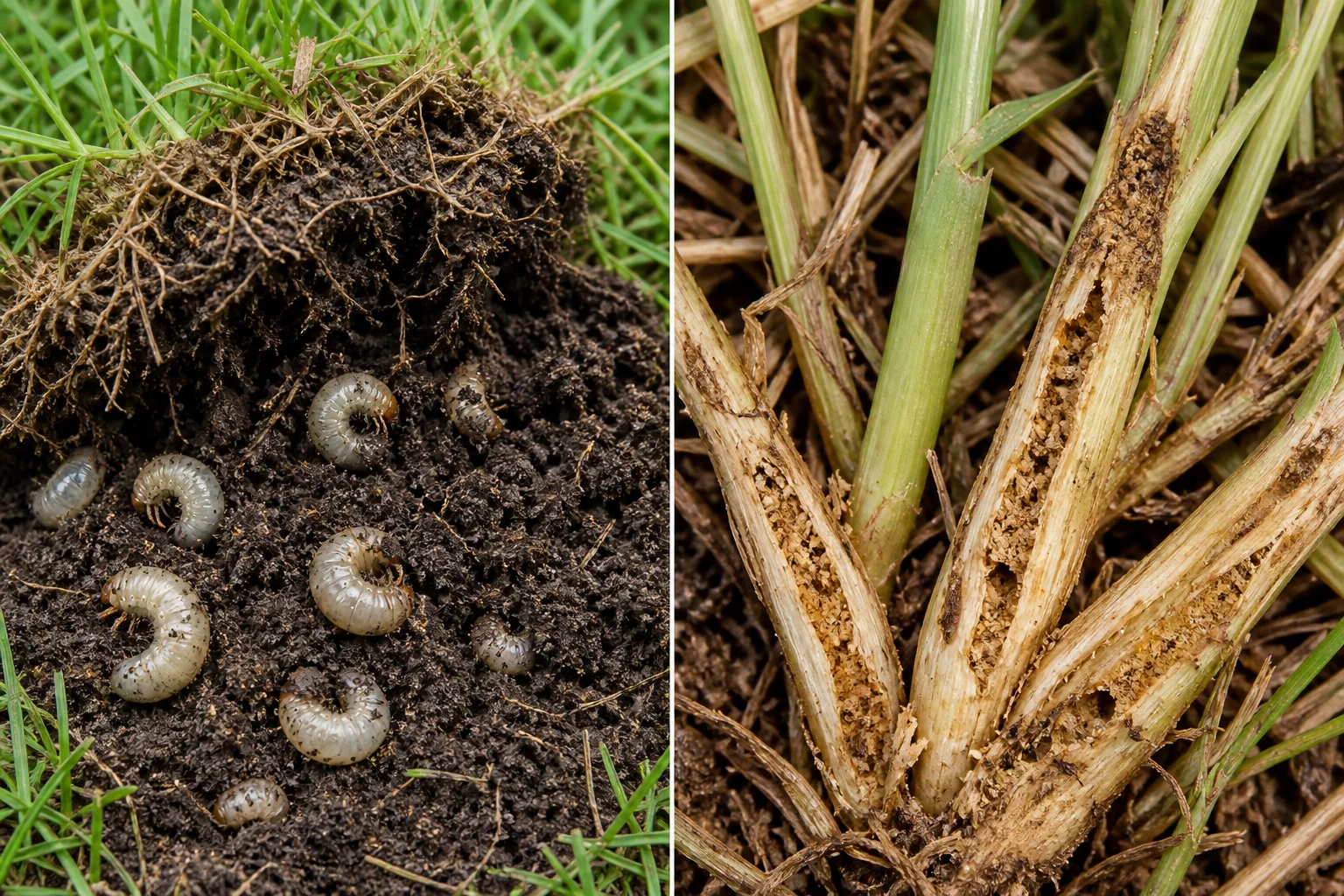
Identify the larvae and compare their abundance with local treatment guidance for the species and turf condition.
Check damaged stems, frass, and insects together; an extension diagnostic service can help confirm uncertain damage.
Identify the cause before choosing a fungicide, while correcting irrigation, mowing, or drainage problems that are actually present.
Salt injury is another possibility near de-iced paths. Exposure and drainage need attention before treating that strip for pests.
Who Should Choose Bluegrass, and Who Should Not?
In a cool-season yard with reliable irrigation, full sun, and an owner who wants a lawn that repairs itself and is willing to pay for that in water and nitrogen.
There is a consequence of the rhizomes that nobody mentions at the garden center. This grass will invade flower and vegetable gardens, and it does it underground, which means pulling the visible shoots achieves very little.
A physical edge sunk at the bed line is the fix, and it is far easier to install before planting than after.
On safety, the honest answer is narrower than most pages give.
Forage use does not establish safety for every pet or exposure. Fertilizers and pesticides have separate risks and label restrictions, regardless of the grass species.
Layered weed-and-feed plus grub control leaves more residue than the lawn needs, so spot-treat where you can and keep everyone off treated turf for as long as the label says.
Where the yard is dry, shaded or unirrigated, a different grass is the better answer rather than a harder-worked bluegrass.
Tall fescue and the fine fescues both persist further down the maintenance scale, and drought-tolerant planting beats turf outright in the hot corners.
The head-to-head on fescue against bluegrass puts the two side by side.
Frequently Asked Questions
Is Kentucky bluegrass good for a play yard?
Rhizomes help it recover during active growth, but recovery differs from resistance to wear. Constant traffic on dormant or shaded turf can overwhelm that repair; a locally suitable ryegrass mixture may improve wear resistance.
Does a USDA zone show whether bluegrass will handle summer?
No. USDA zones describe winter cold, not summer heat, rainfall, or irrigation demand. A locally recommended cool-season or warm-season grass is a better guide than choosing bluegrass from a zone number alone.
Does bluegrass need overseeding every few years?
A healthy stand can fill small gaps without routine reseeding. Persistent bare areas need a cause check first; reseeding into unchanged shade, compaction, or pest damage may repeat the failure.
Sources & References
- CMG GardenNotes #561: Turfgrass Species Selection Guidelines, Colorado State University Extension
- Lawn Care Basics, Colorado State University Extension
- All About Tall Fescue: A Low-Maintenance Alternative to Kentucky Bluegrass, Iowa State University Extension
- Choosing the Right Turfgrass for Your Lawn, Iowa State University Extension
- Summer Lawn Care, Iowa State University Extension
- North Carolina Extension Gardener Plant Toolbox - Poa pratensis
Related Plants
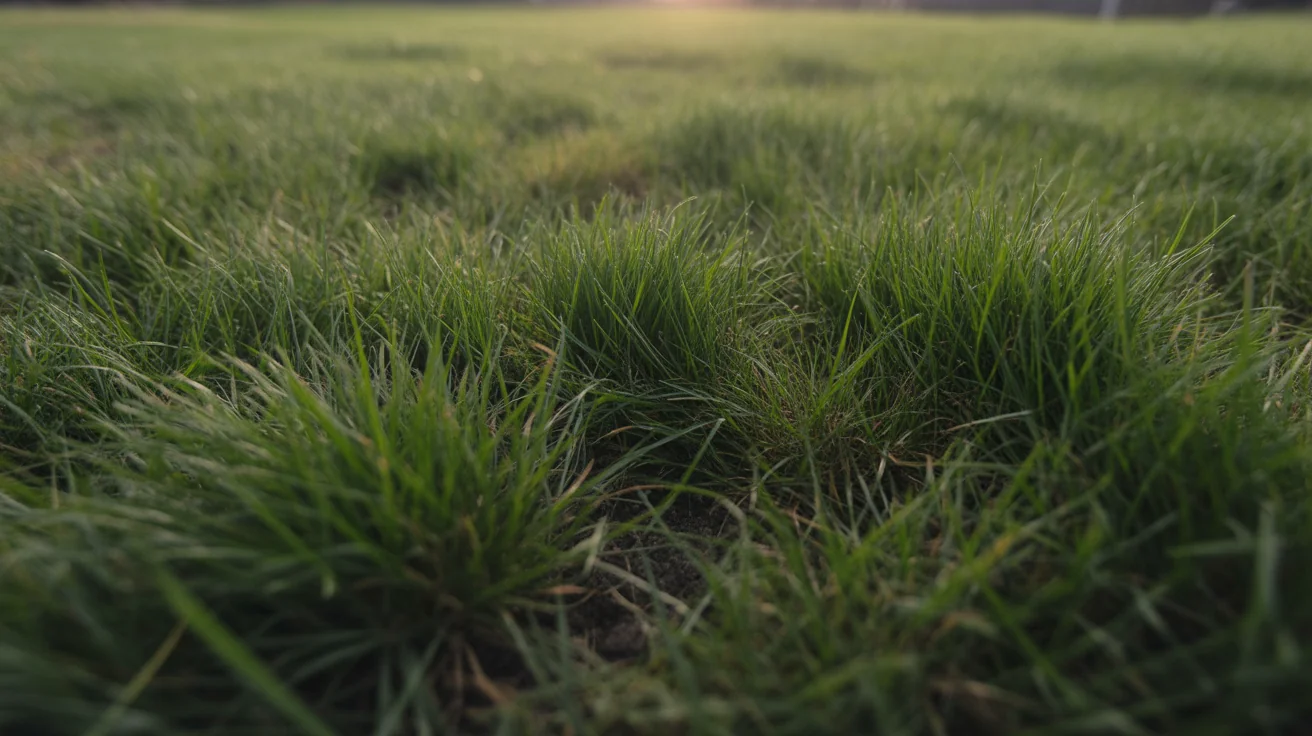
Perennial Ryegrass
Fast-germinating cool-season grass often mixed with bluegrass for quick cover.
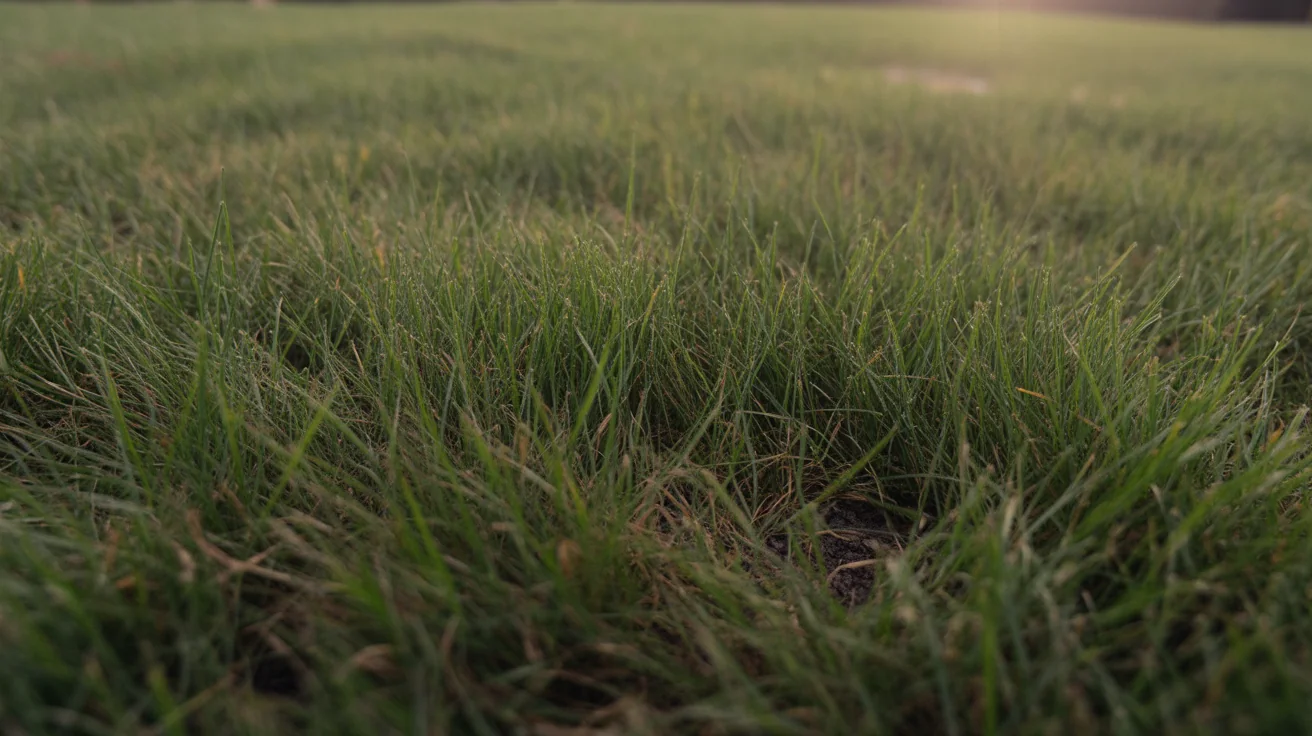
Tall Fescue
Deep-rooted cool-season grass that handles heat and drought better than bluegrass.
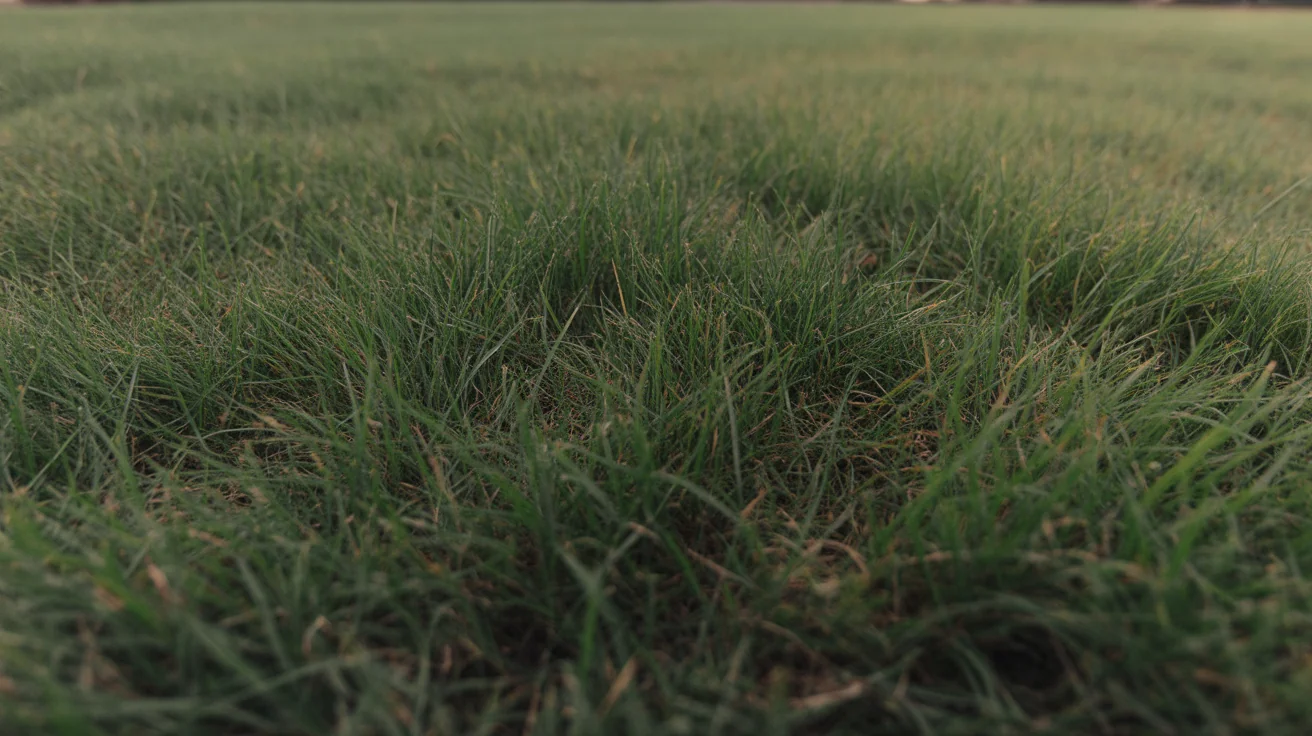
Bermuda Grass
Warm-season alternative for hot climates where bluegrass struggles.
Bahia Grass
Bahia grass is a warm-season utility lawn built for sandy, hungry ground where fussier grasses give up.
Buffalo Grass
Many people treat buffalo grass like a regular high-input lawn, then wonder why it looks thin and weedy.
Centipede Grass
Centipedegrass is a slow-growing, light-green lawn grass for suitable warm-climate sites.