
What's Corn? How to Grow Full Ears in a Backyard Block
Zea mays Poaceae
Sweet corn only earns its space when the patch is big enough to pollinate itself and strong enough to stay watered through tasseling. Full ears come from block layout, nitrogen timing, and a protected silk window, not from luck.
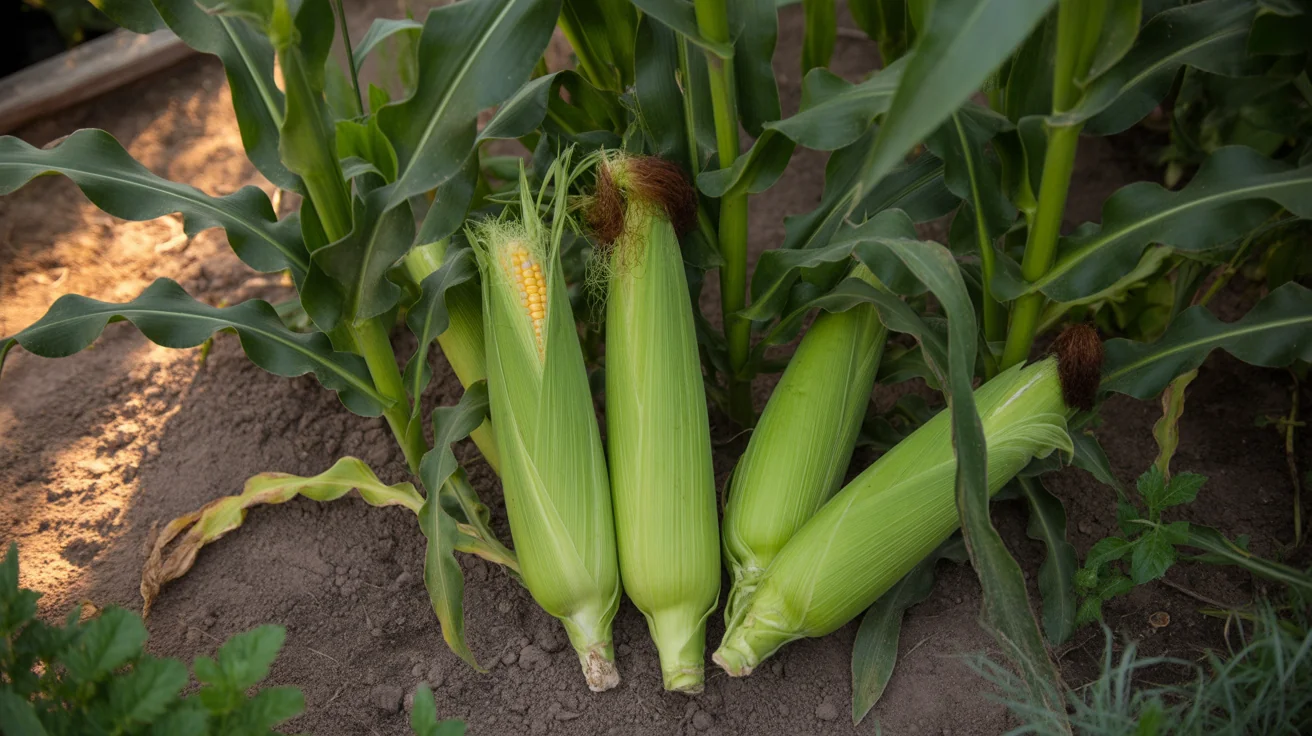
Care snapshot
Why Should You Plant Corn in a Block?
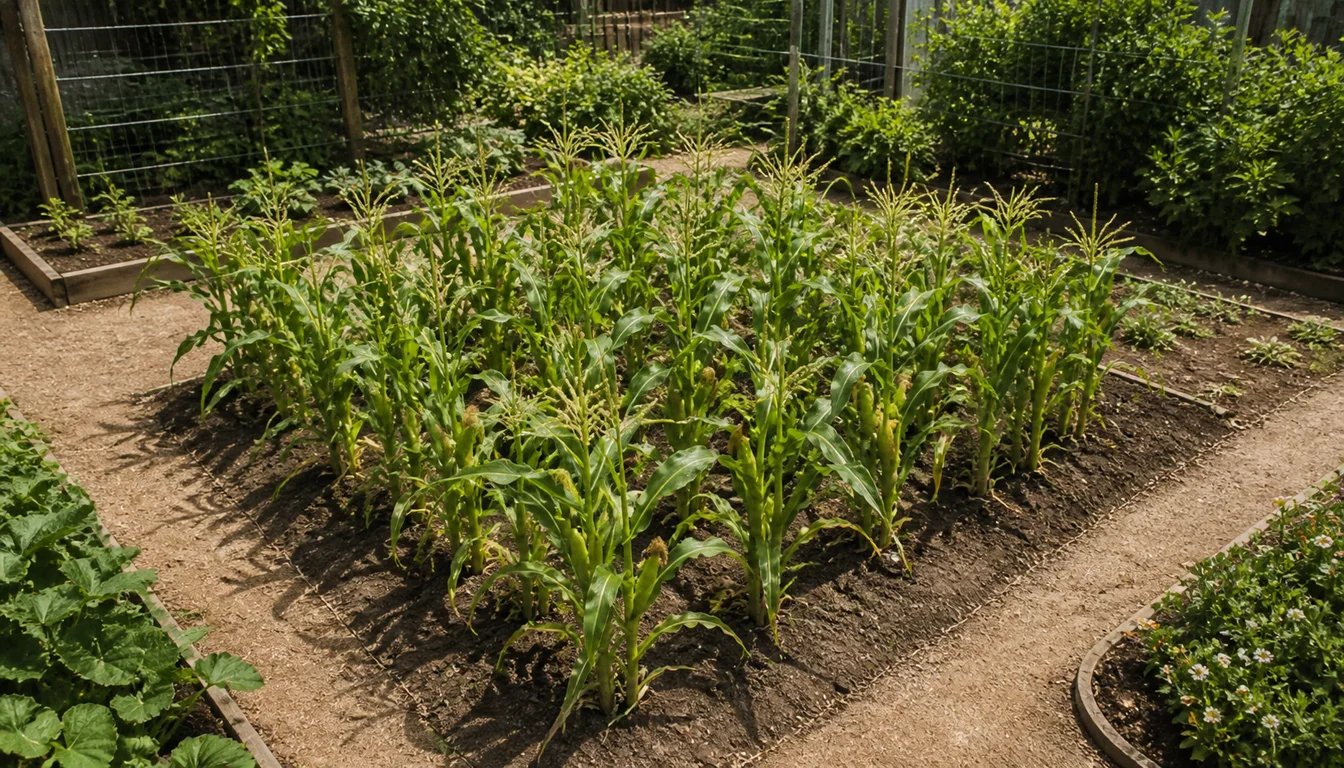
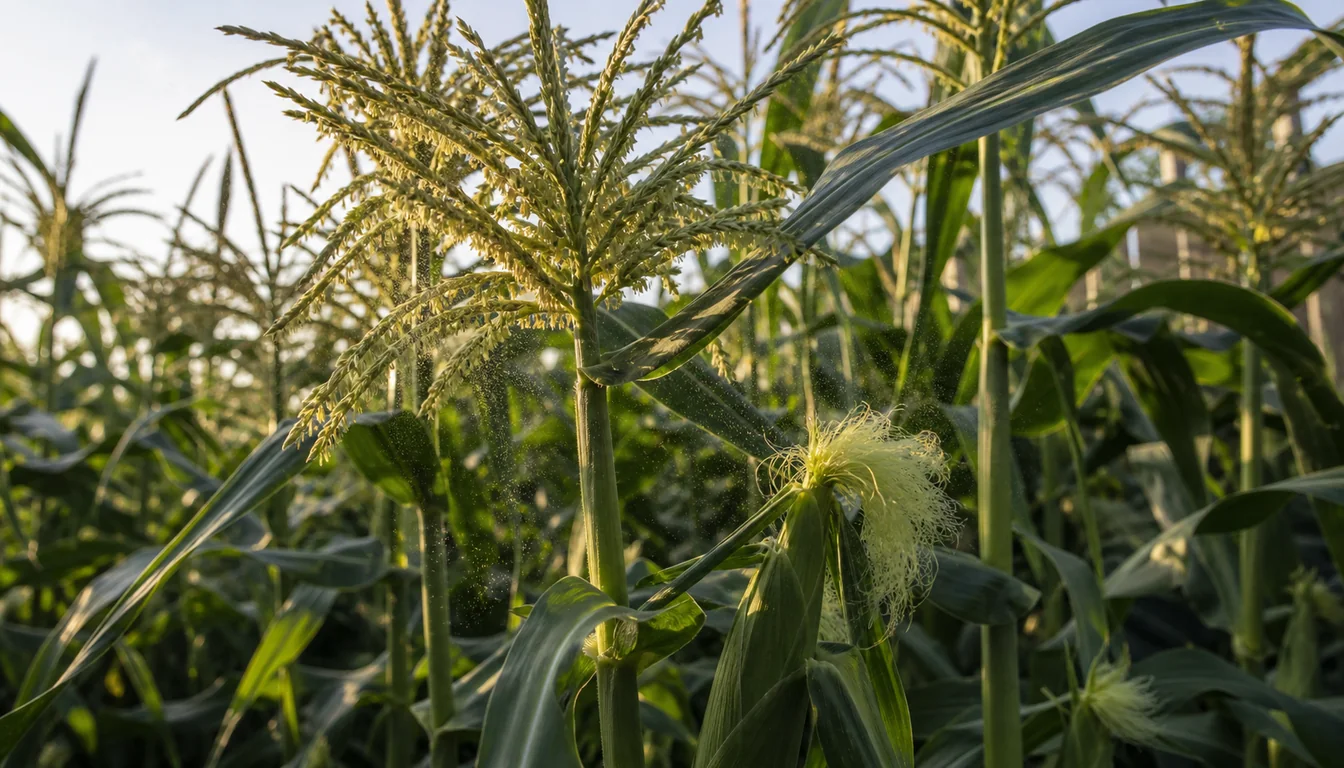
Plant backyard corn in a block rather than one long row. Wind must move pollen from tassels onto every silk, so neighboring stalks on several sides give each ear a better chance to fill.
Corn is Zea mays, an annual grass in the Poaceae family grown here for sweet kernels harvested before they turn starchy. Wind carries pollen from the tassels to individual silks, so the plant's identity makes bed shape part of basic care.
A small but useful patch starts at about 4 short rows or a square that holds at least 16 plants. If your bed cannot spare that footprint, beans will usually reward the space more reliably.
Corn tassels typically begin shedding pollen a day or two before silks on the same plant are ready, an evolved timing gap that pushes plants toward cross-pollinating their neighbors rather than themselves.
Best small patch
- A square or block with at least 16 plants.
- Short rows facing the same wind path.
- Easy to shake by hand if pollination help is needed.
Weak layout
- One long skinny row.
- Plants scattered between unrelated crops.
- Too few stalks shedding pollen at the same time.
If space is tight
- Grow a smaller block once, not a token row every year.
- Use the rest of the bed for beans or other reliable crops.
- Hand-pollinate only as backup, not as the main plan.
When Should You Plant Sweet Corn?
Plant sweet corn after the bed has warmed, not merely after the calendar says spring. Standard sugary types can emerge in soil near 55-60 F, while supersweet seed is safer near 65 F because cold, wet soil makes it rot or emerge unevenly.
Direct-sow kernels about 1-1.5 inches deep in moist, settled soil. Space plants according to the packet, then thin rather than leaving doubles that compete for light and water.
For a longer harvest, sow a second block 10-14 days later or choose varieties with different maturity dates. Do not scatter successive plantings through one narrow row because each group still needs enough neighbors flowering at the same time.
- Measure soil temperature in the morning at planting depth.
- Wait when the bed is cold and saturated after rain.
- Plant into a weed-free block with a clear irrigation path.
- Mark each sowing date so later harvest windows stay distinct.

Which Sweet Corn Type Fits Your Season?
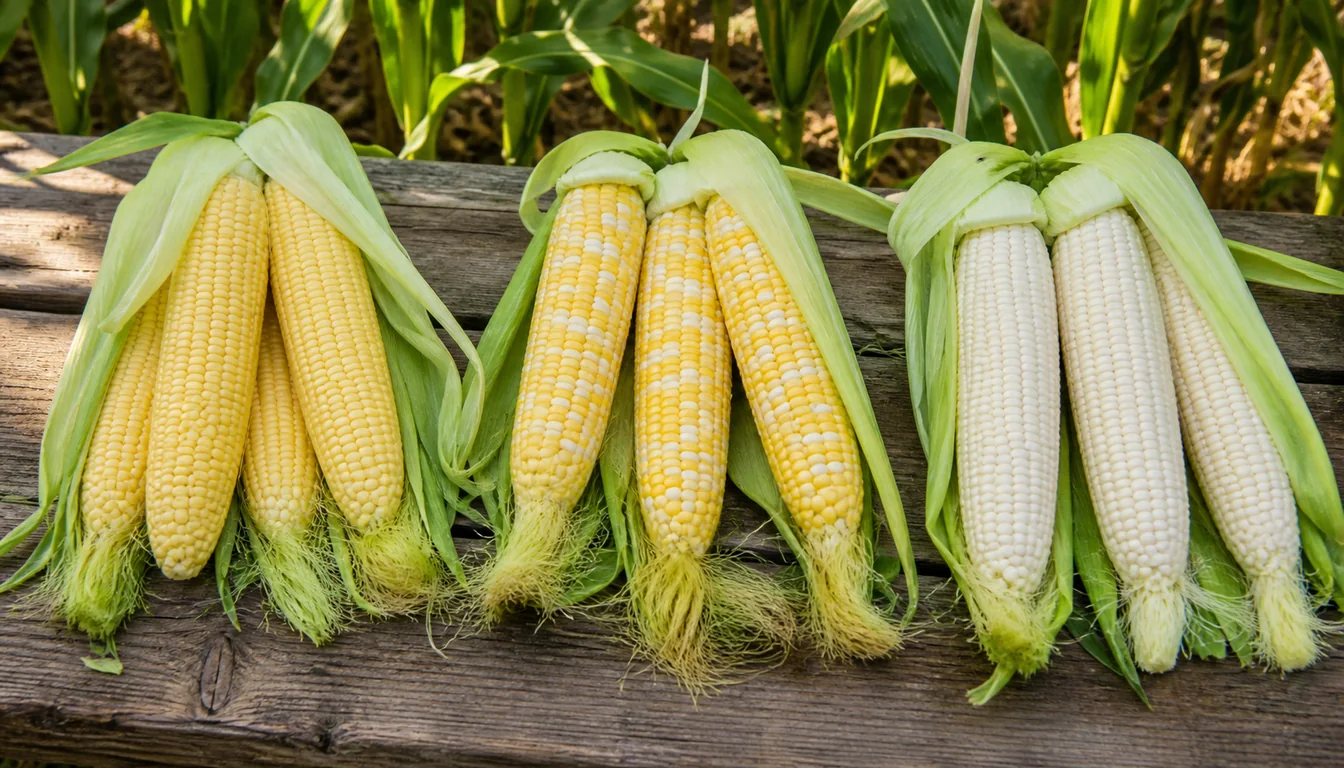
Most backyard confusion starts with the letters on the seed packet. Standard sugary, sugar-enhanced, and super-sweet types all taste good, but they do not sprout or store the same way.
Planting different sweet corn types too close together, especially super-sweet varieties, can cross-pollinate and make ears starchy instead of sweet.
Cool-spring gardens do better with varieties that germinate well in less-than-perfect warmth and finish in about 65-75 days. Long-season gardens can stagger plantings and chase extra sweetness because they are less likely to run out of warm days.
Days-to-maturity numbers on seed packets count from direct sowing, not from transplant, so gardeners starting seedlings indoors should adjust their harvest expectations accordingly.
Type choice also changes how fast you need to eat the harvest. Standard sugary ears lose sweetness sooner, while super-sweet types hold flavor longer in the fridge, which matters if your patch ripens more ears than one dinner can handle.
- Standard sugary (su)
- Classic sweet corn flavor; easier germination, shortest storage life after harvest.
- Sugar-enhanced (se)
- Sweeter and a little better in the fridge; a solid middle ground for home gardens.
- Super-sweet (sh2)
- Very sweet and good for storage, but seed wants warmer soil and cleaner germination conditions.
- Short-season cultivars
- Best where summer runs short or cool nights arrive early.
When and How Should You Feed Sweet Corn?
Corn is a grass building a huge leaf canopy before it ever fills an ear. If the patch runs short on nitrogen early, no late feeding will fully make up for the lost leaf area.
Work compost into the bed first, then plan to side-dress when plants reach about 12-18 inches tall. A second light feed as tassels form often helps keep color and vigor steady through ear fill.
Do not assume a bed that carried broccoli last spring is still full of food. Heavy feeders empty the pantry fast, and corn is one of the hungriest crops in the whole vegetable garden.
A soil test before planting can catch a nitrogen shortfall before the crop ever shows visible stress, saving a season of guesswork.
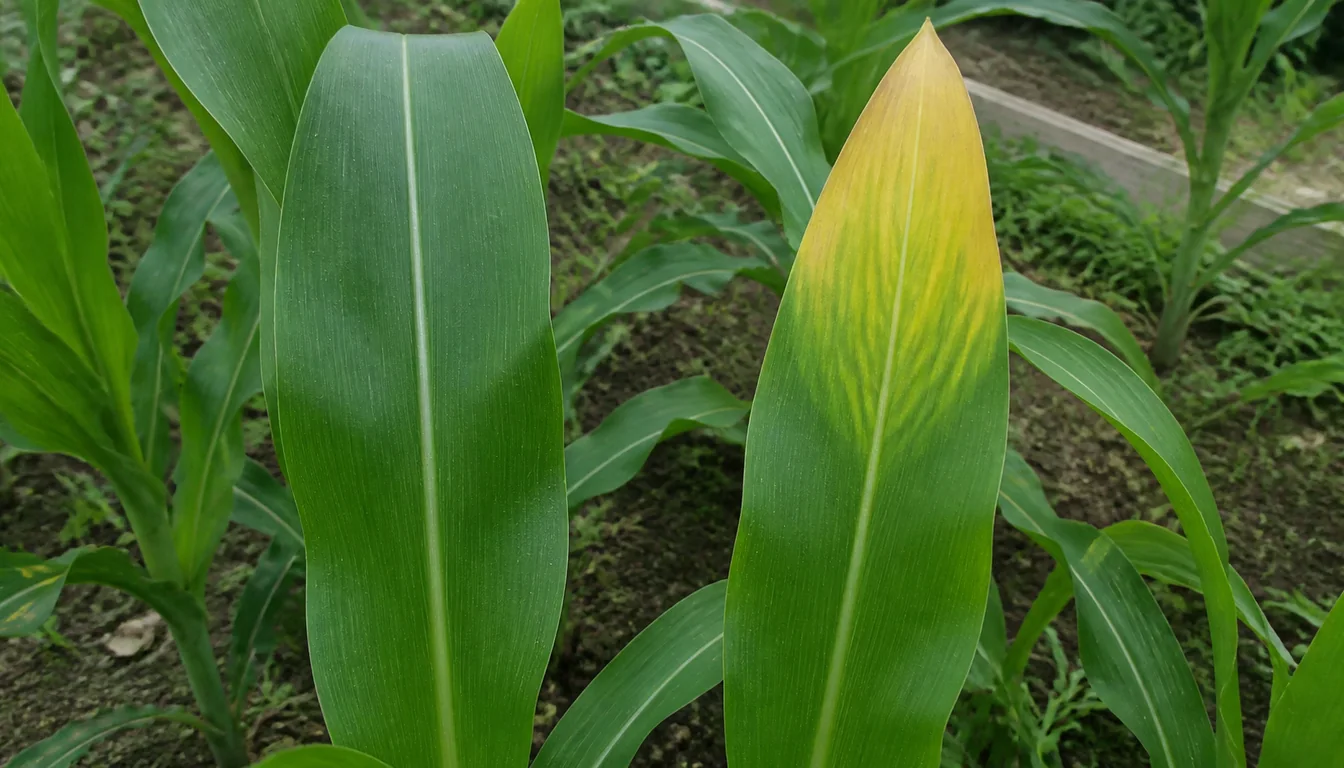
Leaf color tells you sooner than ear size ever will. When the lower leaves pale and the patch looks thin before tassels, the feed program is already lagging behind the crop.
Yellowing that starts as a V-shape at the leaf tip and moves down the midrib is a classic nitrogen-deficiency pattern worth checking for specifically, not just generic pale color.
- Mix in compost before sowing or transplanting.
- Side-dress once plants reach knee height.
- Keep weeds out early so they do not steal water and nitrogen.
- Watch leaf color; pale lower leaves often show the patch is falling behind.
- Feed the bed before planting so young roots never start hungry.
- Top up around 12-18 inches tall while the canopy is still building fast.
- Add the light tassel-stage feed only if the patch still has good moisture to use it.
How Do Tassels and Silks Fill a Corn Ear?
The most expensive dry spell in a corn patch is the week when tassels are shedding and silks are fresh. That is when missing water turns into missing kernels.
Each individual silk strand connects to exactly one kernel, so an unpollinated silk leaves that one kernel blank on the finished ear.
Give the patch deep moisture instead of shallow daily sprinkles. Most gardens need about 1-1.5 inches of water each week, and sandy beds may need more when heat stacks up.
Silks stay receptive to pollen for about a week after they emerge, which is the exact window that steady moisture needs to cover.
Mulch helps, but patch placement helps too. A thirsty block wedged beside sprawling watermelon can become a constant irrigation fight, especially in hot inland summers.
If you use overhead irrigation, run it early in the day and gently. You do not want a hard blast tearing or matting the silks just when they need loose pollen contact.
Container-grown corn dries out far faster than an in-ground block during the silk window, so patio growers should check soil moisture daily rather than relying on a weekly schedule.
- Check moisture before tassels open, not after kernels start missing.
- Favor deep soaking over shallow daily spray.
- Keep the silk week free from drought, mowing stress, and root disturbance.
How Do You Keep Tall Corn From Falling Over?
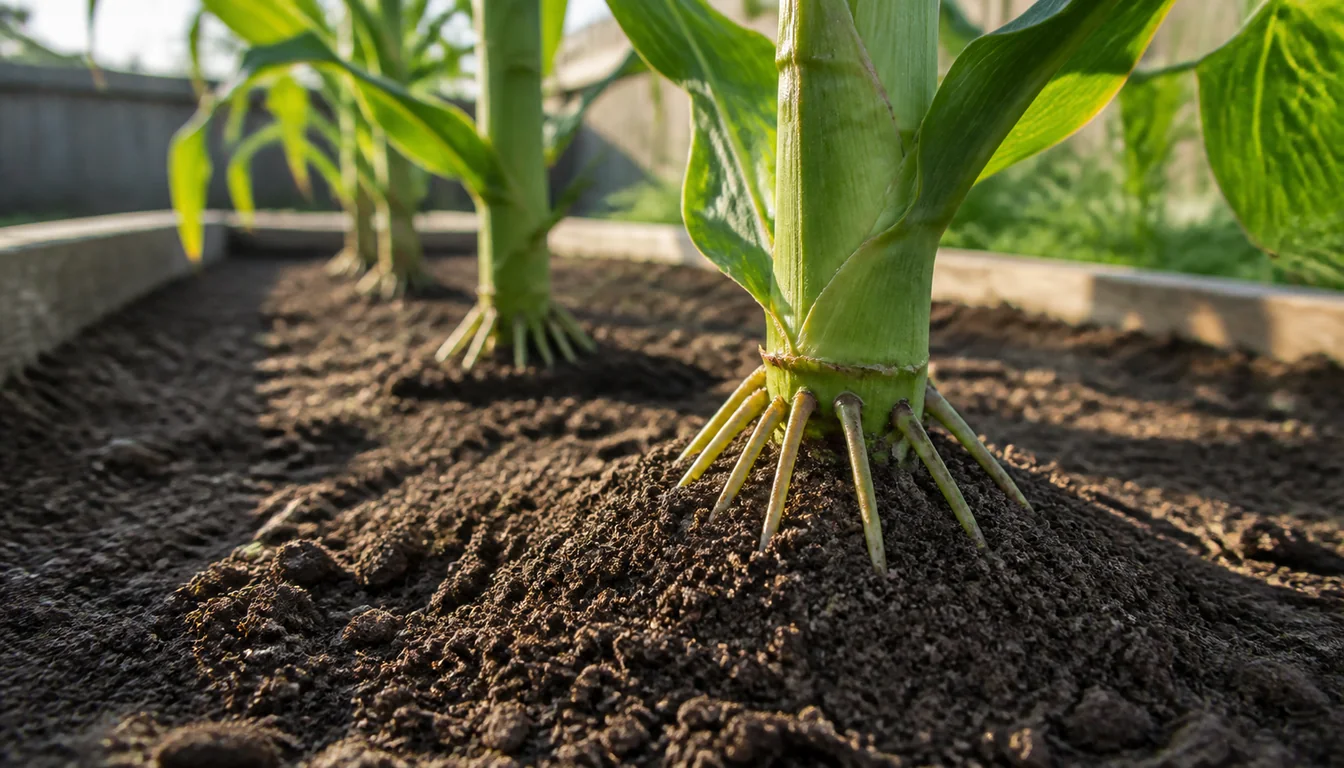
A good corn patch should look anchored before the first storm rolls through. Wide spacing between rows, good soil depth, and a little hilling at the base matter because tall stalks catch a lot of wind.
Corn roots include above-ground brace roots that emerge from lower stem nodes specifically to anchor the plant against wind once it gets tall.
Hilling loose soil around the stems once plants are established helps brace roots grab better. That matters even more in raised beds, where the edge dries and shifts faster in the raised-bed versus in-ground debate.
The patch also changes the light map of the garden. Put corn where it will not steal midday sun from shorter heat lovers like peppers or bury low crops in a wind shadow they cannot use.
Wind damage during tasseling can knock loose pollen away before it ever reaches nearby silks, turning a stability problem into a pollination problem too.
- Keep plants about 8-12 inches apart within the row.
- Use rows wide enough to walk, weed, and irrigate without snapping roots.
- Hill lightly once stalks are strong; do not bury the crown too deeply.
What Causes Blank Ear Tips, Earworms, or Corn Smut?
Not every bad ear points to the same mistake. Blank tips usually mean pollination failed late, while patchy gaps through the whole ear often mean the silk window never lined up with enough pollen in the first place.
Chewed tips and frass under the husk point toward earworms, not feeding problems. Those pests show up faster in mixed summer beds where nearby zucchini and other warm crops keep the area busy and humid.
Corn earworm moths are drawn to fresh silks by scent, which is why the same patch can see repeat egg-laying throughout the silking window.
Large gray galls on ears or stems are corn smut. Some cooks use it, but most backyard gardeners see it as a signal to clean up carefully and rotate the patch rather than leaving infected tissue in place.
Birds and raccoons come later and look different. They shred husks and pull at the ear from outside, which is messy but much easier to recognize than a nutrition or pollination problem.
Raccoons often test ears a day or two before they are fully ripe, which is why growers in raccoon-heavy areas sometimes harvest slightly early rather than lose the whole patch overnight.
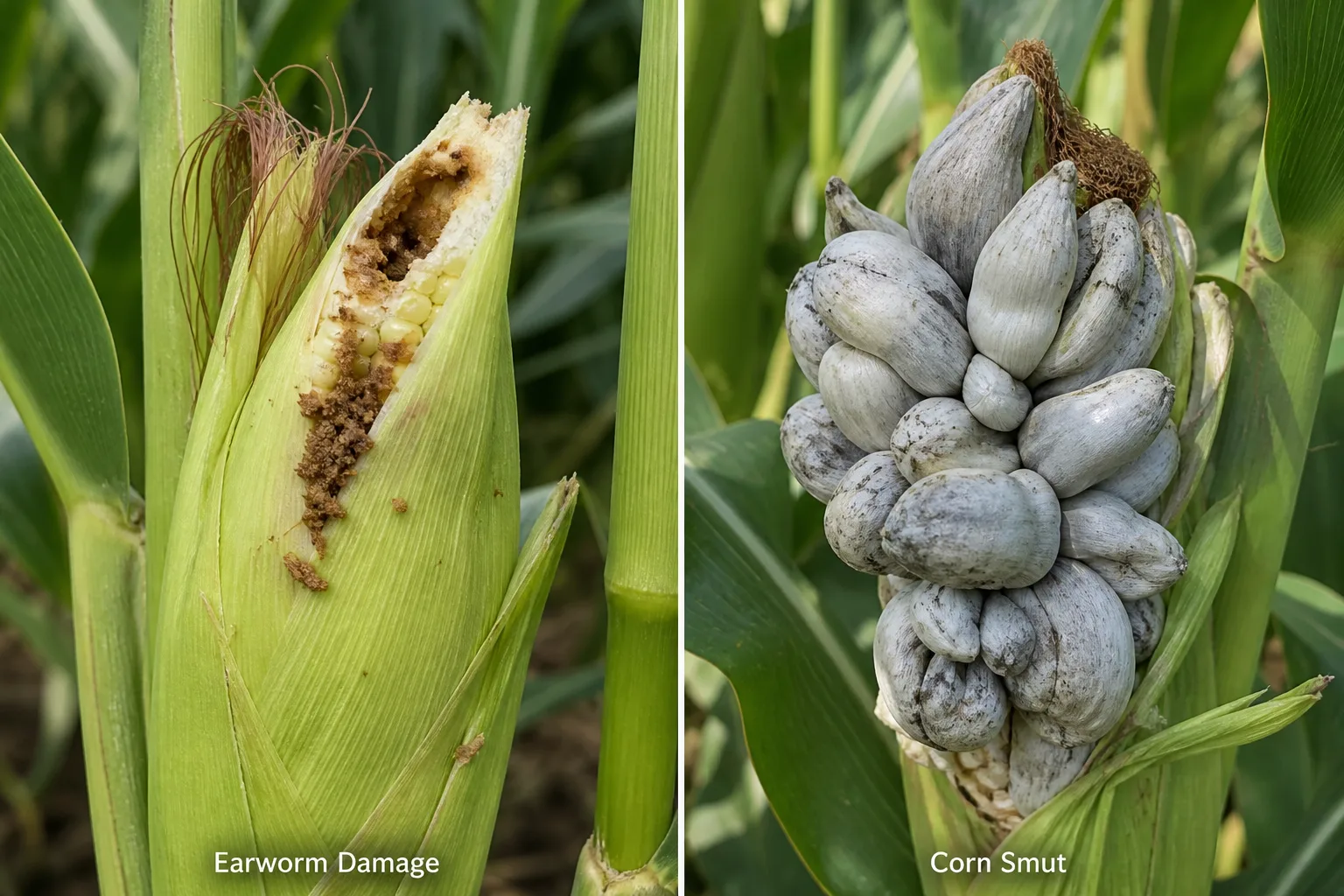
Late or weak pollination, often from heat or dry silks.
Usually low fertility, crowding, or drought during ear fill.
Most often earworms feeding from the silk end.
Smut tissue that should be removed and cleaned up, not composted casually in place.
When Is Sweet Corn Ready to Pick?
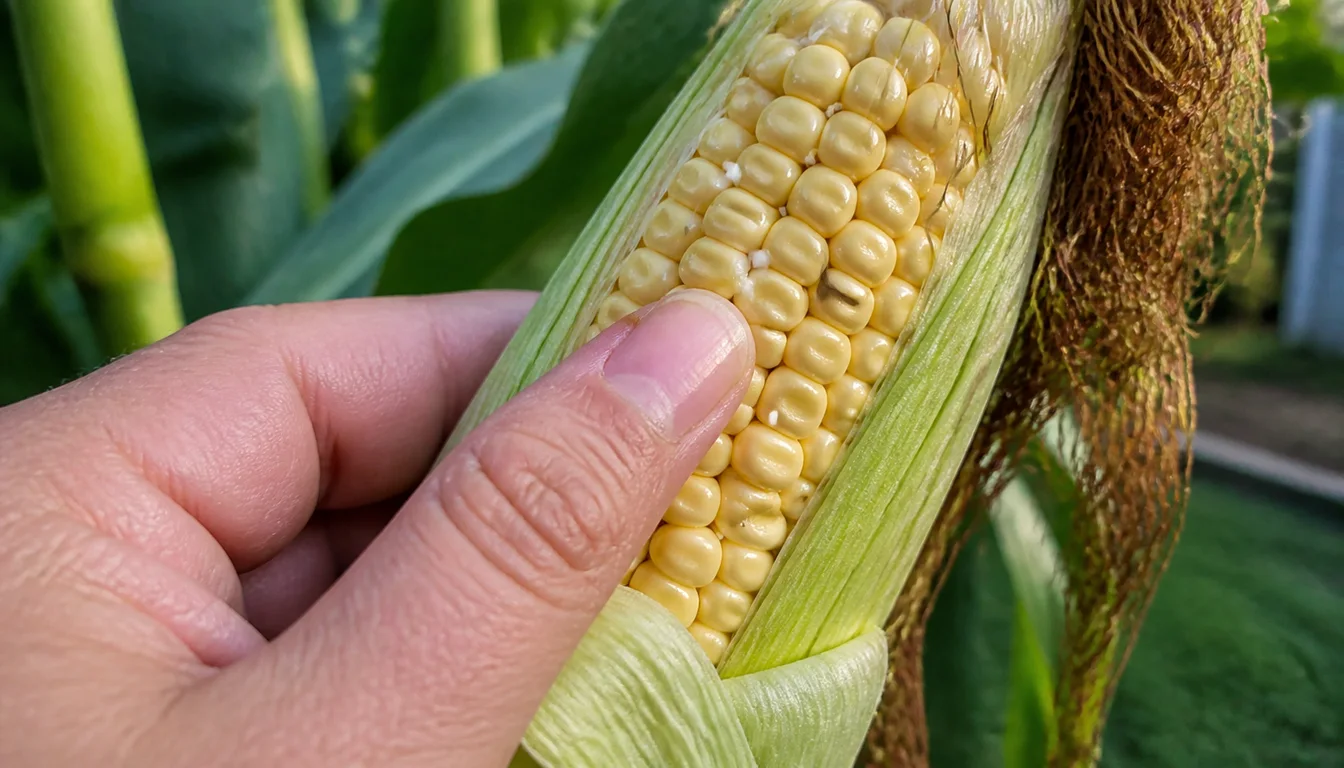
The best ear is usually ready before gardeners trust it. Fresh silks turn brown, the husk still looks green, and a pierced kernel releases milky juice instead of clear liquid.
A properly filled ear should feel plump and heavy for its size, with kernels reaching almost to the tip of the cob.
After that point, sweetness starts falling right away. The patch can stand a little while, but the eating quality drops much faster than it does on a vine crop like cantaloupe.
Harvest early in the morning if you can, chill ears fast, and either eat or process them the same day. That habit does more for flavor than chasing one more day of size.
A dull, dry cut end on a stored ear, instead of a moist pale one, is a simple visual cue that sweetness has already started fading before you even taste it.
- Peel back a small piece of husk only after silks have browned well.
- Pierce one kernel; milky juice means the ear is in the sweet spot.
- Pick and chill quickly because sweetness falls almost immediately after harvest.
Frequently Asked Questions
Can I grow corn in just one row?
You can grow the stalks, but you usually will not get full ears. Corn needs a block so wind can move pollen across many silks at the same time.
What is the smallest useful backyard patch for sweet corn?
A square or short block with about 16 plants is the practical minimum for most home gardens. Bigger patches pollinate more reliably, but that size can still work if light and moisture are good.
Why are my ears only half filled?
Half-filled ears usually mean poor pollination during the silk stage. Dry weather, weak block layout, or too few plants are more common causes than bad fertilizer.
When should I side-dress corn with nitrogen?
The first side-dress usually goes on when plants reach 12-18 inches tall. A second light feed near tasseling helps if the patch starts looking pale or slow.
Can I hand-pollinate sweet corn?
Yes. In a tiny patch, shaking tassels over fresh silks or dusting pollen by hand can improve fill, but it still works best as a backup for a proper block, not as a replacement for one.
How far apart should different types of corn be planted?
Different sweet, ornamental, or popcorn types can cross if they shed pollen together. Separate them by distance or stagger planting dates so tasseling does not overlap.
Sources & References
- Growing Sweet Corn in Home Gardens – University of Minnesota Extension
- Sweet Corn in the Home Garden – Iowa State University Extension
- Illinois Extension: Corn
- Corn (Zea mays) Growing Guide
- Sweet Corn in the Home Garden
- Sweet Corn Production
- Sweet Corn – University of Illinois Extension Vegetable Garden Guide
- Growing Sweet Corn in Home Gardens
- Zea mays (Corn, Indian corn, Maize) | North Carolina Extension Gardener Plant Toolbox
Related Plants
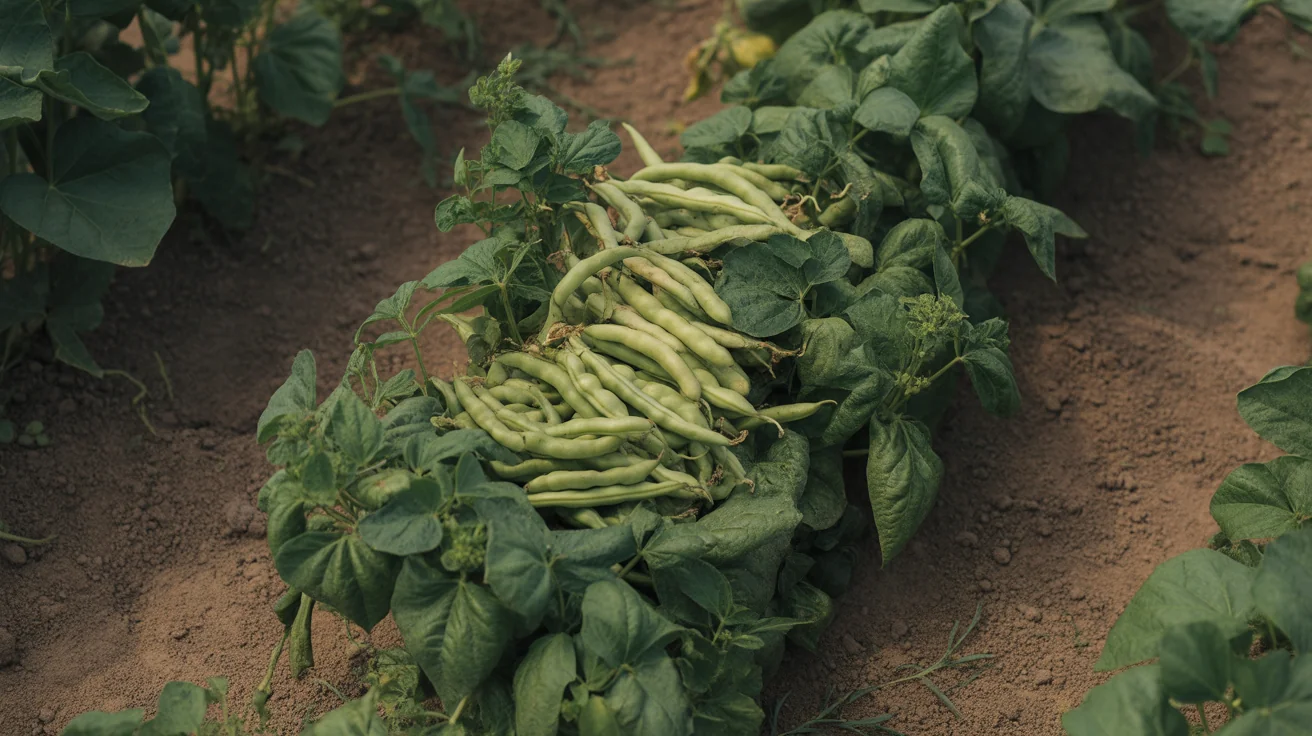
Beans
A better fit for small beds, since a single plant fruits reliably without needing a pollinating block.
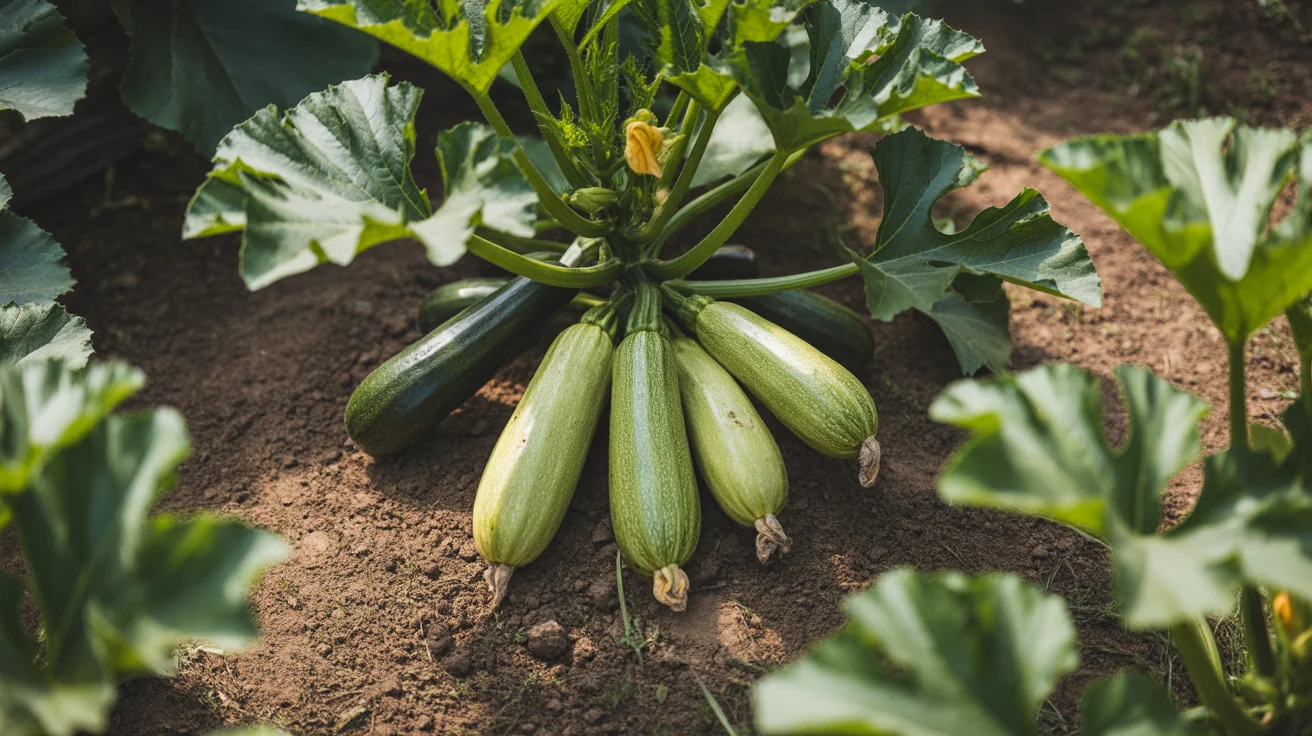
Zucchini
A classic companion in warm summer beds that shares corn's heat and water needs.
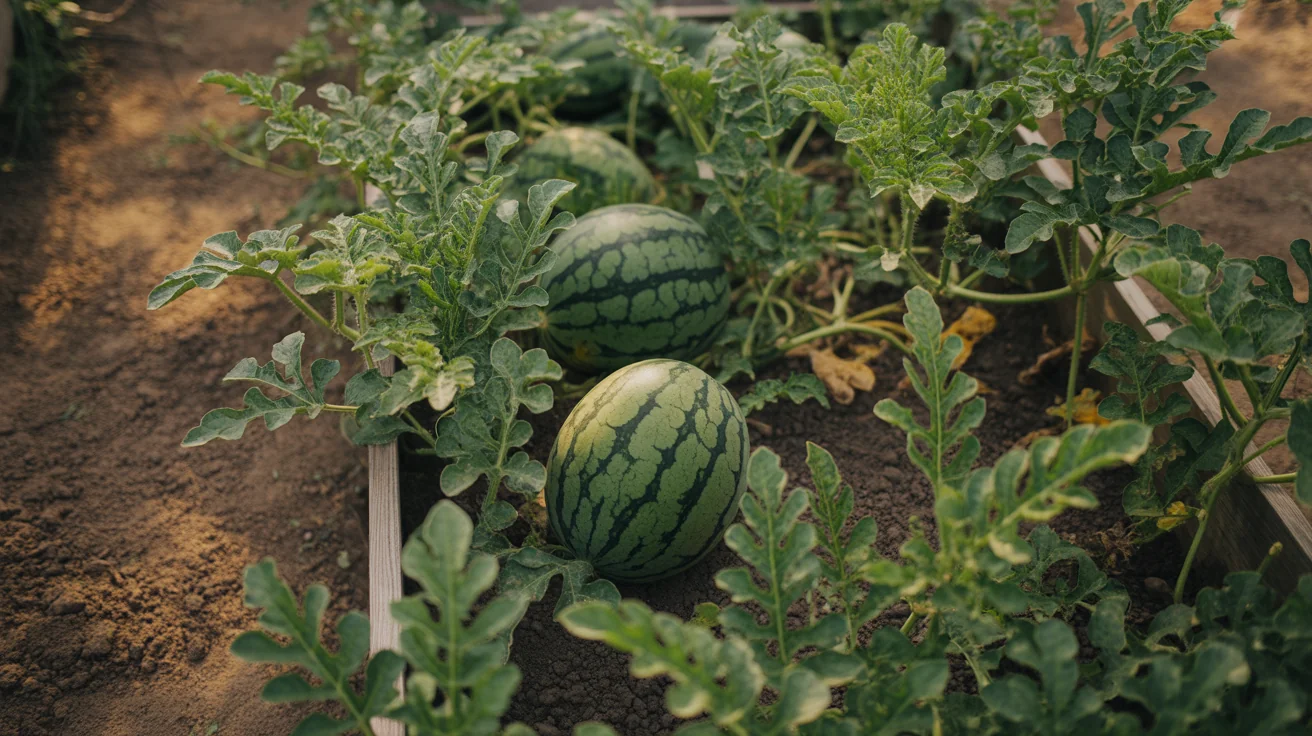
Watermelon
Another sprawling warm-season crop, though its water needs can compete with a thirsty corn block.
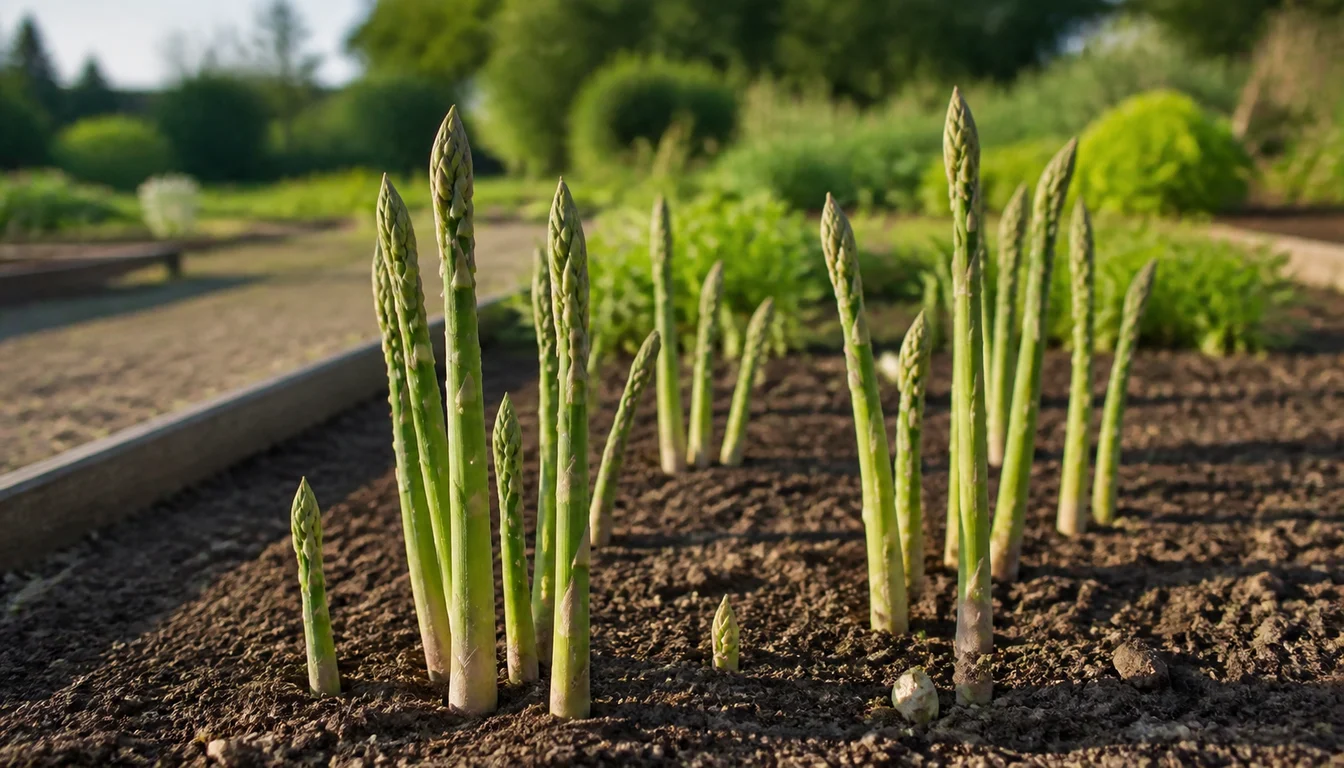
Asparagus
Asparagus rewards careful establishment with spring harvests for many years.
Beet
Beet care starts with one unusual fact. Each seed ball can make several seedlings, so the crop needs early thinning…
Bell Pepper
Bell Pepper rewards growers who manage flowers, roots, and heat together.