
What's a Black-Eyed Susan? How to Keep the Patch Coming Back
Rudbeckia hirta Asteraceae
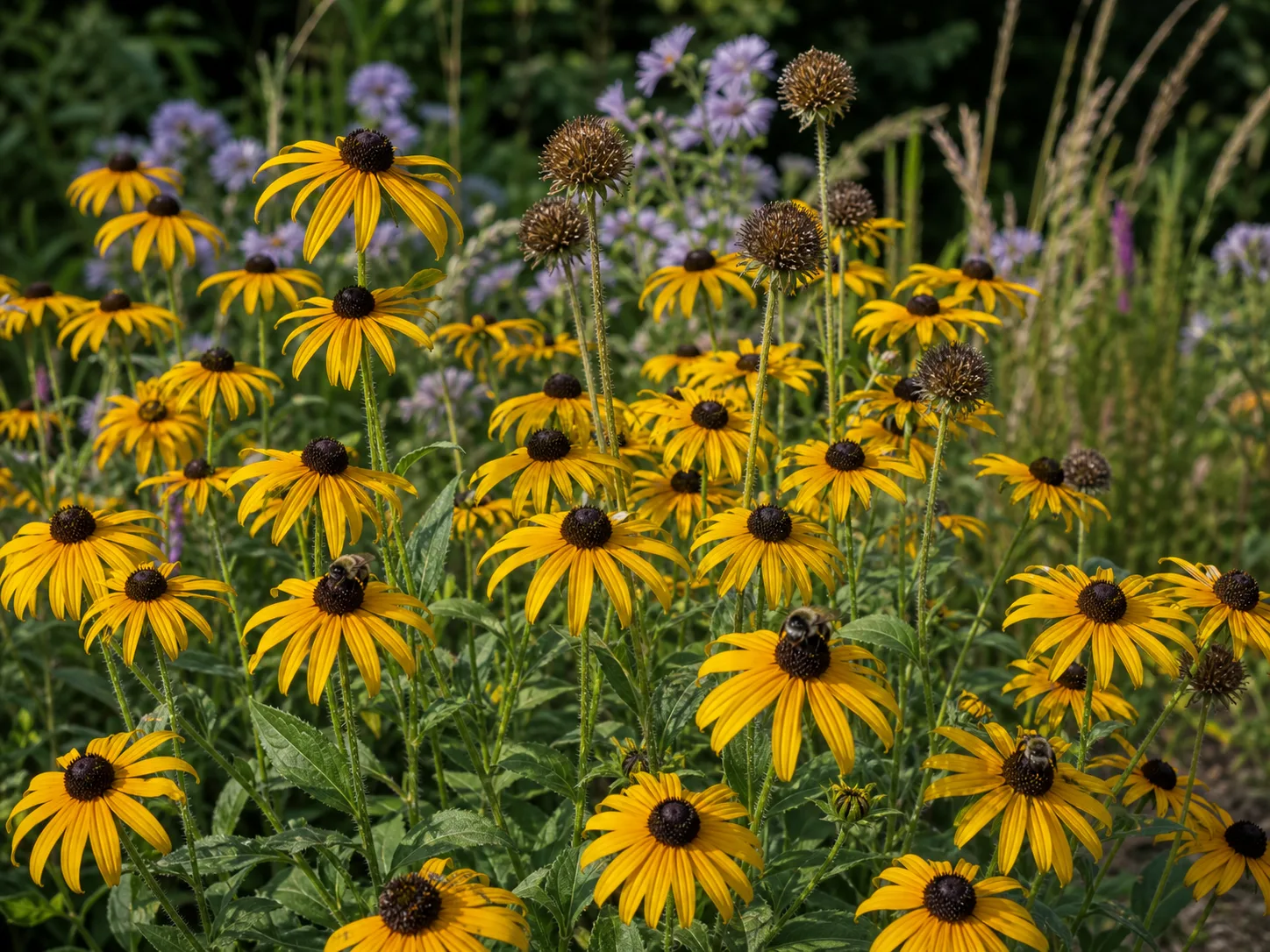
A Black-Eyed Susan patch outlives the plants in it. The common garden species lives one to three years and restocks itself from seed, so the real skill is choosing the right species and setting how much it reseeds.
Care snapshot
Is Black-Eyed Susan a Perennial or an Annual?
The answer depends on which species you bought.
The common garden species, Rudbeckia hirta, is a biennial or short-lived perennial that often behaves like a reseeding annual. A single plant rarely lasts beyond a year or two, and what keeps the display going is the seedlings it drops around itself.
The patch outlives every individual plant in it. Miss that and an ordinary handover reads as a failure you caused.
Everything below follows from that one habit, because you are managing a patch that renews itself rather than a clump that holds one footprint for a decade.
Which Black-Eyed Susan Should You Buy?
Settle the lifespan question before height or color, because it decides whether the plant is still there in year four. A gardener who wanted a permanent clump and went home with Rudbeckia hirta will conclude the plant died on them.
Two different species share the common name and the shelf.
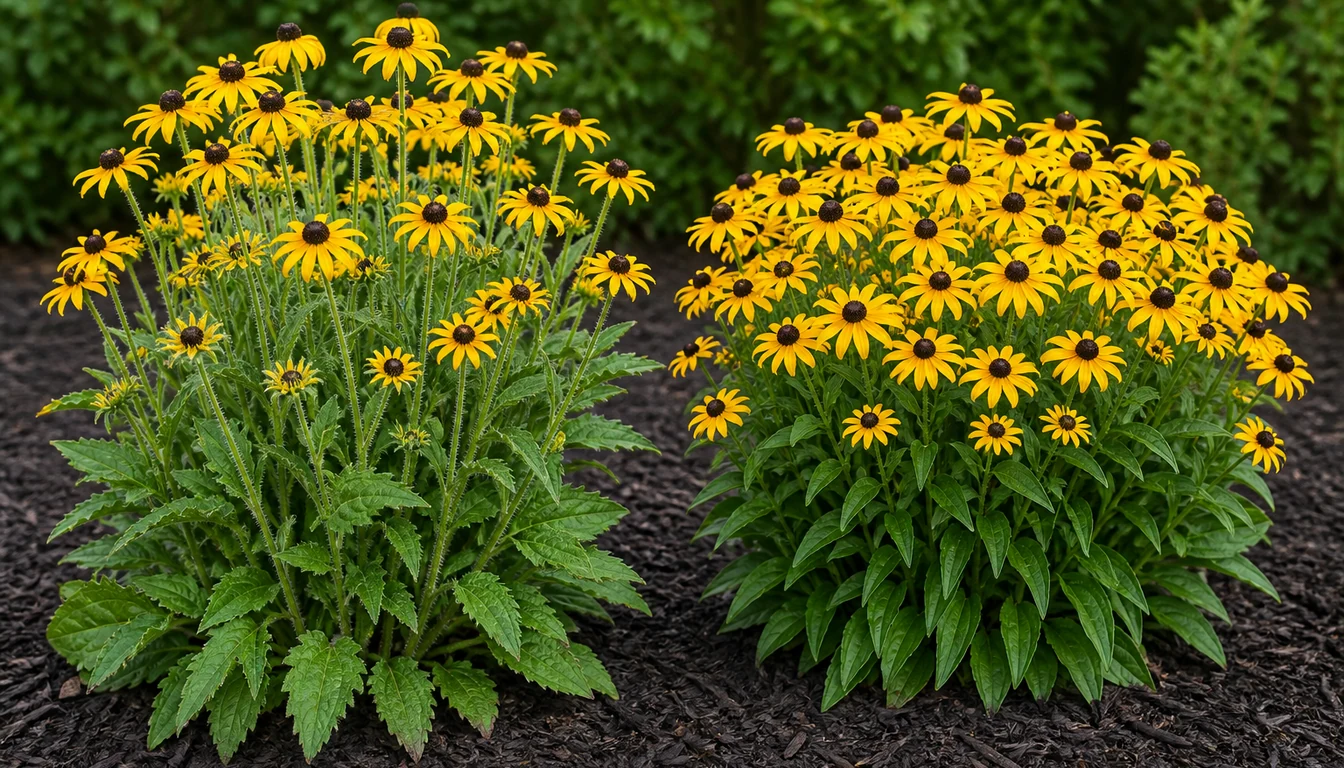
Rudbeckia fulgida, usually sold as Goldsturm, is the long-lived one. It returns from the same crown for years and spreads by underground stems called rhizomes into large clumps, and it can also self-seed. Rudbeckia hirta is the short-lived seeder, and you can tell them apart in the pot because hirta carries much hairier, coarser foliage.
Height and color close out the choice. The straight species of hirta runs 2 to 4 ft while dwarf selections stay much shorter, and modern cultivars add bronze and mahogany eye-zones to the plain gold.
- Rudbeckia fulgida
- The long-lived choice. Returns from the same crown for years and widens into a clump through underground stems.
- Rudbeckia hirta species
- 2 to 4 ft, lives one to three years, and seeds freely enough to keep a drift going.
- Dwarf selections
- Much shorter plants that sit neatly at a front edge or in a container.
- Bicolor cultivars
- Gold petals marked with bronze or mahogany, useful beside purple partners, sold across both species.
Where Does Black-Eyed Susan Actually Want to Grow?
Six hours of direct sun is the working minimum, and more is better.
Below that you still get plants, but the stems stretch toward the light and you end up looking at foliage rather than flowers by August. In hot regions a little shade after three in the afternoon keeps the color from bleaching, at the cost of fewer volunteers along that edge.
This is a prairie plant, and a heavily enriched bed works against it. Extra nitrogen produces tall, soft, leafy growth that leans and flowers less. NC State Extension notes that moderate fertility gives the best flower show.
Clay, loam, or sandy ground all work as long as it drains. What the plant will not survive for long is a low pocket that stays wet for days.
Water accordingly, which mostly means leaving it alone once it is established.
- Soil texture
- Clay, loam, or sandy loam, as long as water drains through. Heavy clay needs drainage improved first.
- Drainage
- Standing water should clear within a day of heavy rain. Low pockets that stay wet are the wrong spot.
- Soil pH
- Acid, neutral, or alkaline soil is tolerated, so pH rarely needs adjusting.
- Feeding
- Moderate fertility at most. High nitrogen produces leaning, leafy plants with fewer flowers.
Should You Deadhead or Let It Self-Seed?
Deadheading a Black-Eyed Susan keeps flowers opening into the middle of fall, and it is also the dial that sets how much the patch reseeds. Remove every spent flower and you get a tidy bed that quietly runs out of plants within a few years.
Leave every seedhead standing instead and volunteers will come up through the paths and between the neighbors. The setting most gardens want sits in between, with the bulk deadheaded through summer and a handful of heads left to ripen in autumn.
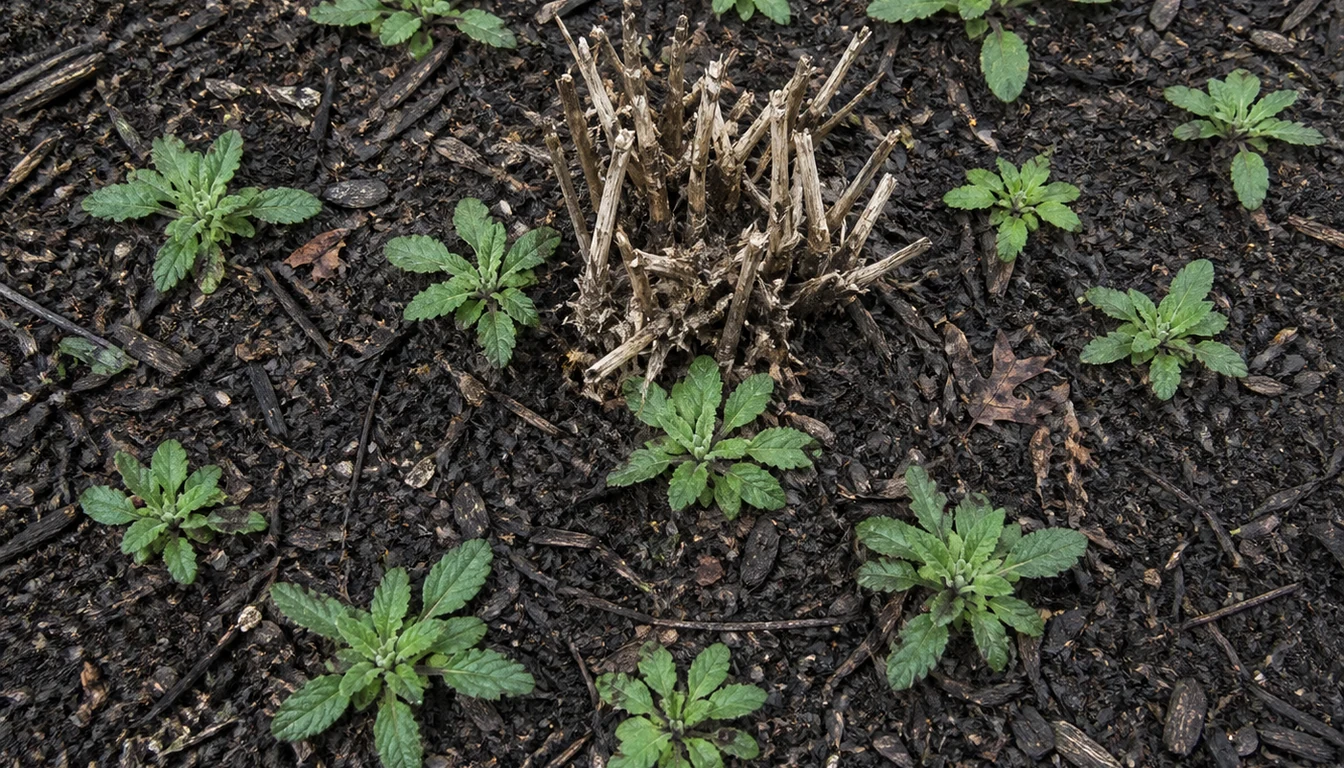
Learn what the volunteers look like before spring weeding.
A first-year seedling is a low rosette of rough hairy leaves sitting flat against the soil, and it looks enough like a weed that most people pull it. If you would rather place the next generation deliberately, collect the seed instead and sow it where you want it.
- Wait for ripenessLeave the seedheads until they have dried and gone dark brown on the stem.
- Clean the seedDry the heads in a paper bag, then rub them apart and separate the seed from the chaff.
- Sow outdoorsScatter the seed where you want plants in fall or spring and cover it only lightly, the way dropped seed would land.
- Or start indoorsCover the seed lightly and keep it at 68 to 72°F. Wisconsin Extension gives 10 to 21 days for germination.
- Thin the survivorsSpace the young plants twelve to eighteen inches apart so the clumps stay open to the air.
What Are the Spots and Gray Film on the Leaves?
Powdery mildew is a fungus that lies over the leaf surface as a white to gray film, and it looks far worse than the harm it does to an established clump. Leaf spot arrives as dark blotches starting low inside a crowded clump, and it is usually fungal, though bacterial spot and plant bug feeding can look similar.
Position helps separate disease from insect feeding.
Disease begins low and inside, where the foliage stays wet and the air never moves. Insect feeding turns up on the tender tips and the undersides of individual leaves instead, which is a different place to be looking.
Neither one is a spraying problem first. Wisconsin Extension points to spacing plants for air circulation as the way to prevent mildew. Thinning the clump, watering at the base, and clearing fallen foliage in autumn all reduce the wet, still conditions where both diseases start.
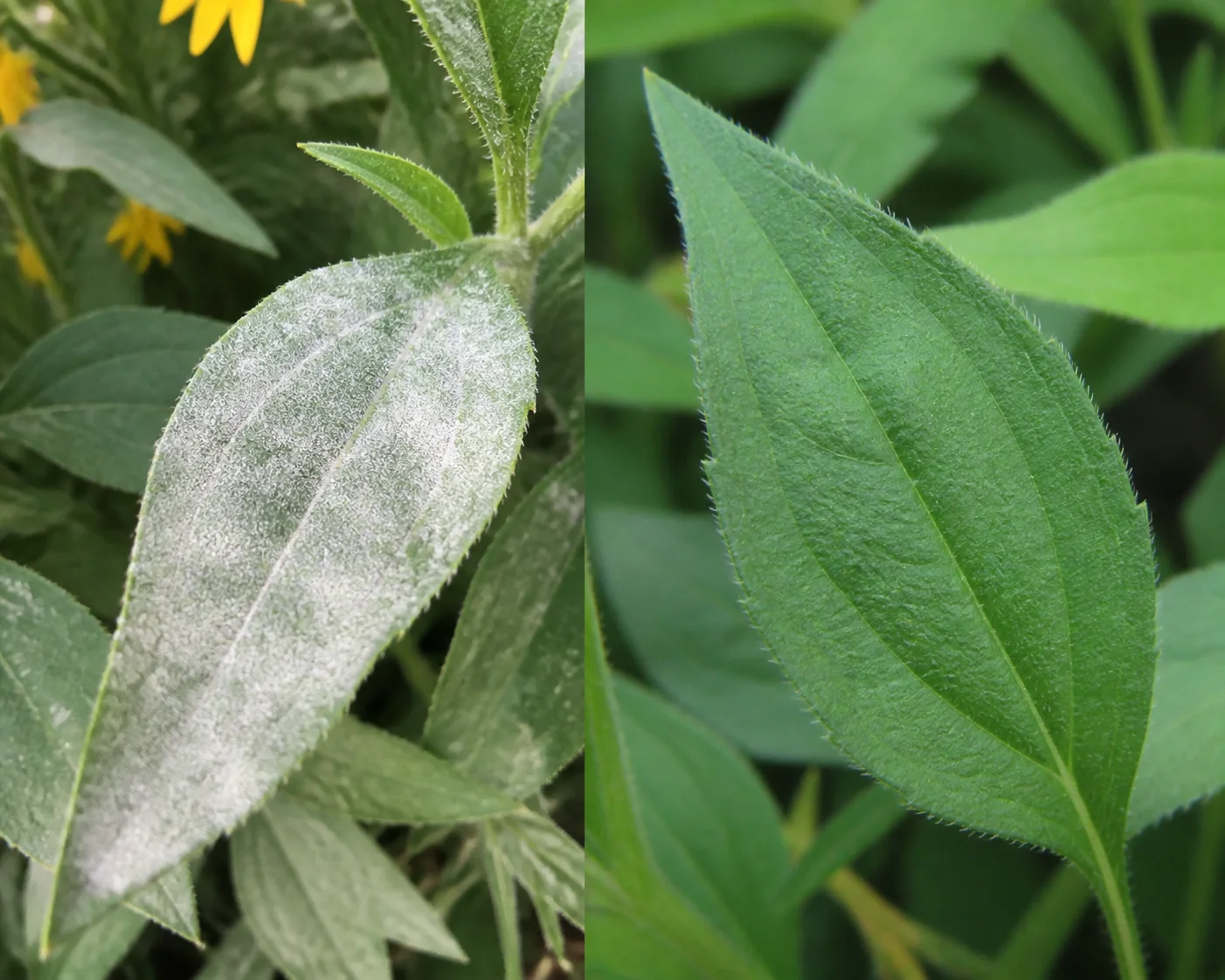
A gray film across the leaf surface in humid, still weather. Thinning the stems and watering at the base help, and on an established clump the damage is mostly cosmetic.
Dark angular blotches starting on the lowest leaves. Remove affected foliage, clear fallen leaves in autumn, and open up the spacing.
Ragged holes and chewed edges on young plants, often after damp nights. NC State and Wisconsin Extension both list them as pests of this plant.
Young shoots bitten off cleanly near the ground. A fence at least 2 feet high keeps them out, according to Wisconsin Extension.
What Should You Cut Back, and Is It Safe Around Pets?
Leaving the stems standing through winter feeds finches, since those dark cones are full of seed exactly when little else is.
Cutting the bed flat in November takes that away and buys you a tidier garden. It also removes the seed that would have restocked the patch, which matters more here than on a long-lived perennial.
One condition overrides the choice. In cold wet regions the freeze and thaw cycle lifts crowns clear of the soil, so cutting lower and mulching 2 to 3 inches after the ground freezes protects the plant more than the birds lose.
The pet question has no settled answer. Rudbeckia has no entry on the ASPCA's toxic and non-toxic plant lists for dogs, cats, or horses, and NC State's Rudbeckia hirta record carries no toxicity rating, so whether it harms a pet that chews it is unknown.
Frequently Asked Questions
Why did my black-eyed susan not come back this year?
If it was Rudbeckia hirta, it very likely reached the end of a normal one to three year life rather than failing. Check the ground nearby for low rosettes of rough hairy leaves, because the replacement generation is usually already there.
Can I grow black-eyed susan in a container?
A dwarf selection does well in a pot of twelve inches or more, given full sun and free drainage. Container plants rarely self-seed usefully, so treat a pot as a display that you replant rather than a patch that renews itself.
Do black-eyed susans spread aggressively?
Rudbeckia hirta spreads by dropping seed, which makes it easy to control at the deadheading stage. Rudbeckia fulgida also widens through rhizomes, so a Goldsturm clump grows broader each year even when every seedhead is cut.
When do black-eyed susans bloom?
Flowering usually opens in early summer, and with deadheading it carries on into the middle of fall. Plants raised from a spring sowing often flower in their first season.
Are black-eyed susans good cut flowers?
They make good cut flowers, and the sturdy hairy stems take handling better than most daisies. Cutting also removes the developing seedhead, so heavy picking works like heavy deadheading on next year's seedlings.
Will deer eat black-eyed susan?
Deer generally pass it over. NC State rates it moderately deer resistant and Wisconsin Extension notes that deer do not favor it. Rabbits are less put off, and Wisconsin Extension suggests a fence at least 2 feet high where they browse.
Sources & References
- Rudbeckia, North Carolina State Extension Gardener Plant Toolbox
- Rudbeckia hirta, Missouri Botanical Garden Plant Finder
- Black-eyed Susan, Rudbeckia hirta, University of Wisconsin-Madison Extension
- Toxic and Non-Toxic Plant List: Dogs, ASPCA Animal Poison Control
- Rudbeckia fulgida, North Carolina State Extension Gardener Plant Toolbox
Related Plants
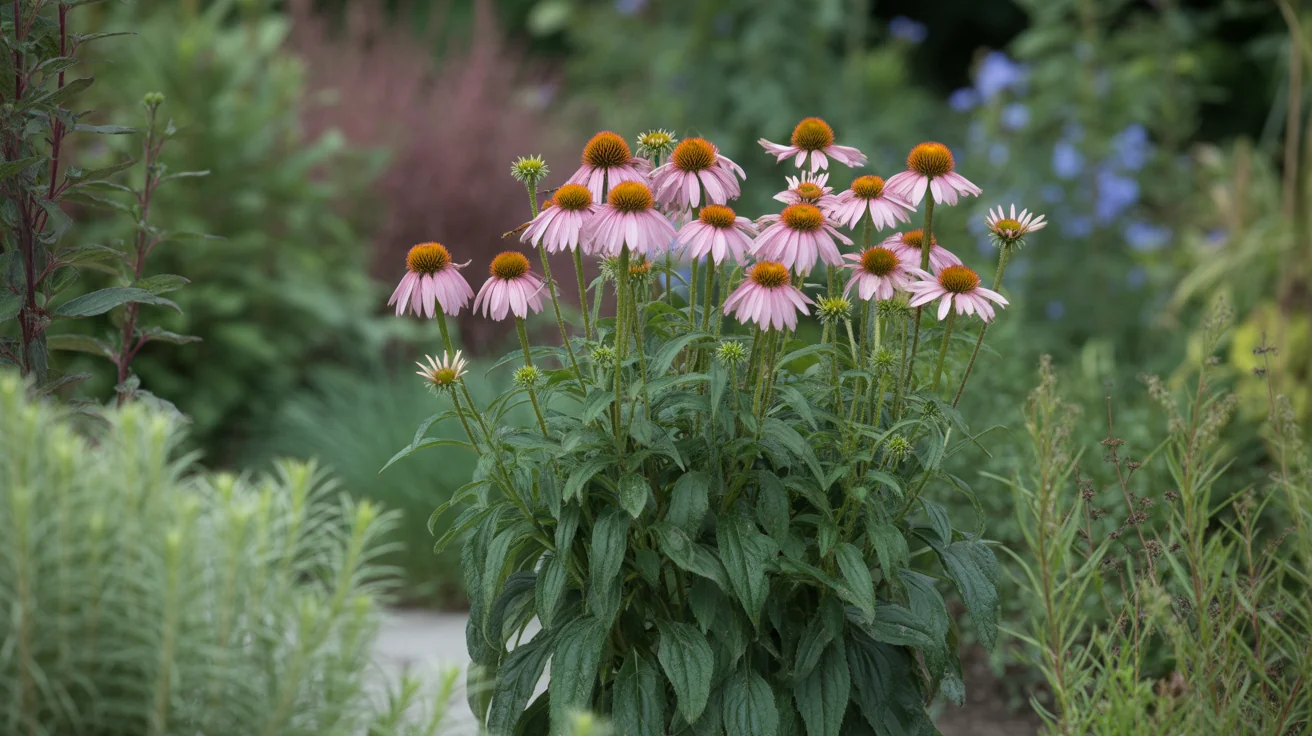
Coneflower
Another prairie perennial for full sun and pollinators, pairs well with Black Eyed Susan.
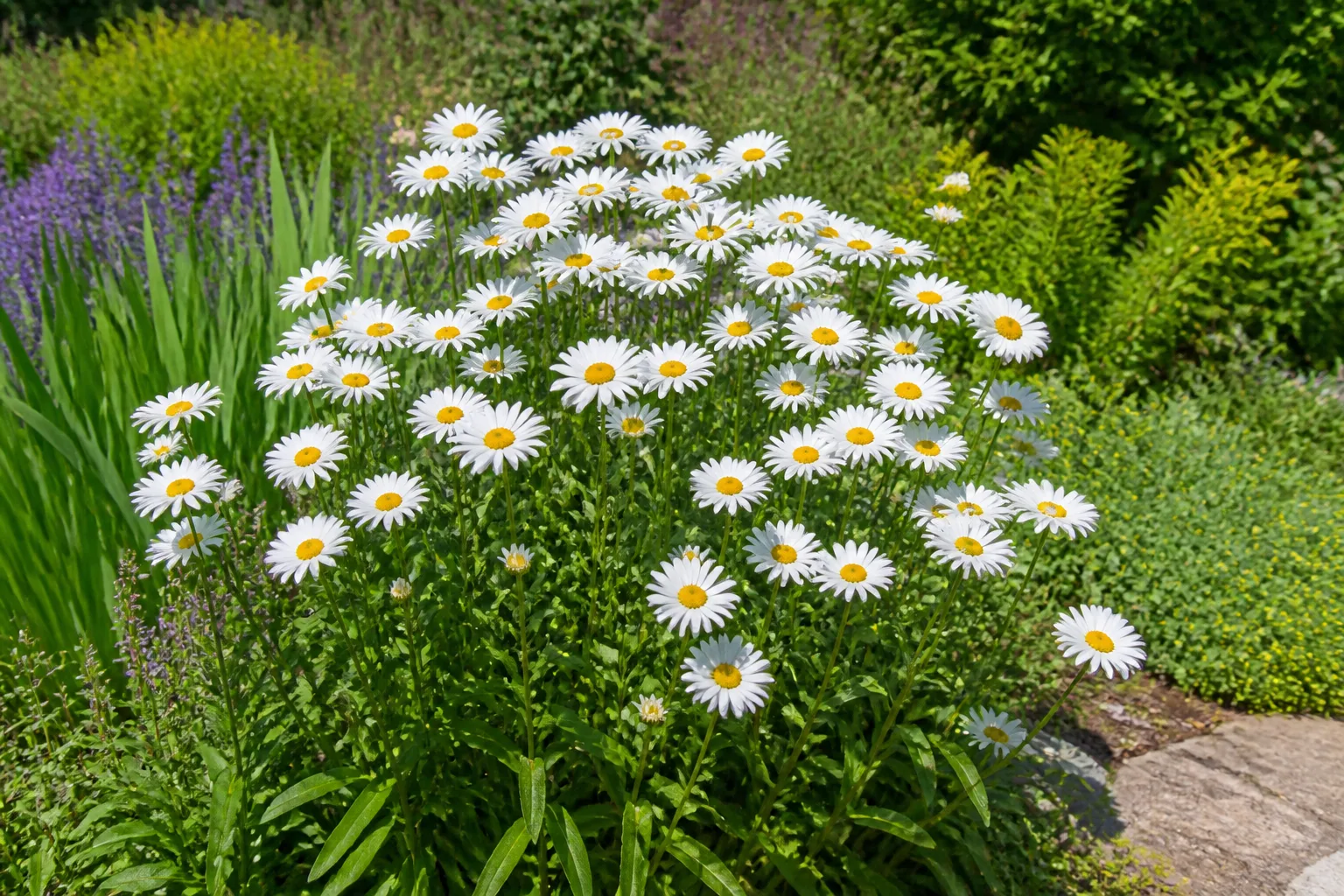
Shasta Daisy
White daisy-style blooms that flower alongside Rudbeckia in summer borders.
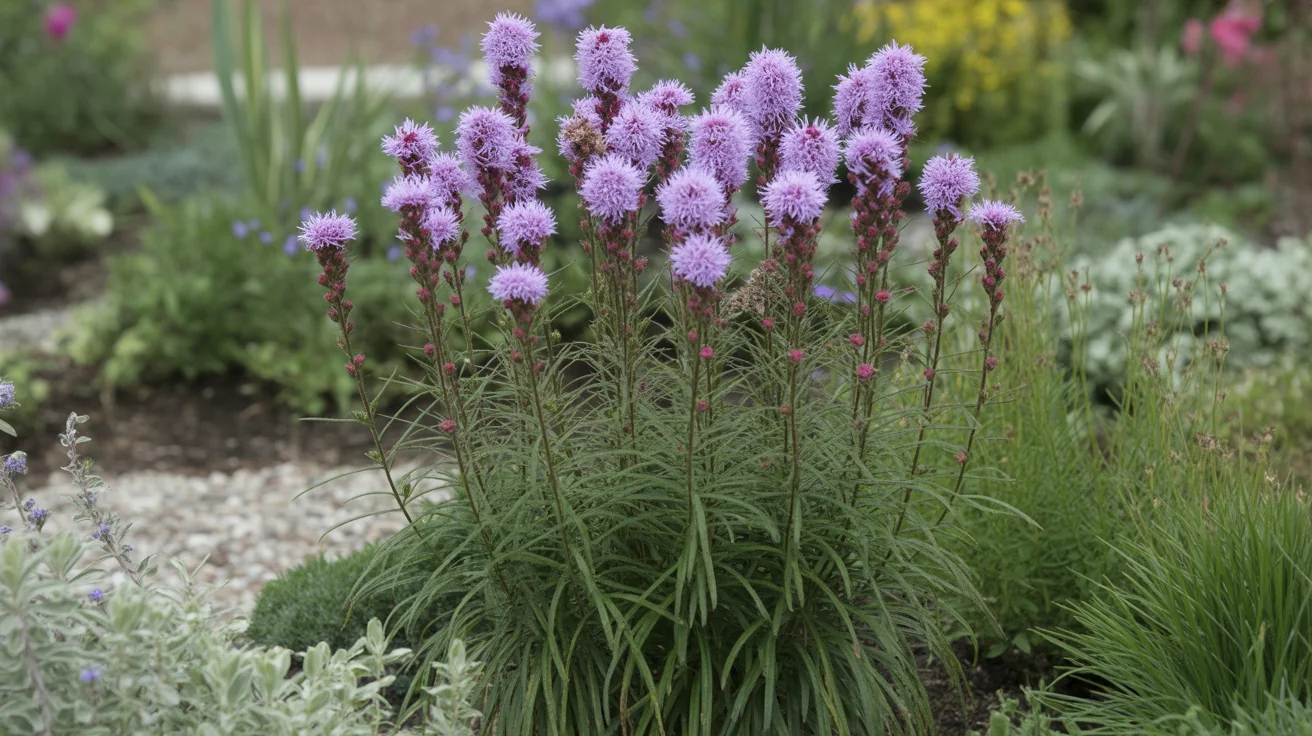
Liatris
Vertical purple spikes that contrast the yellow flowers in prairie plantings.
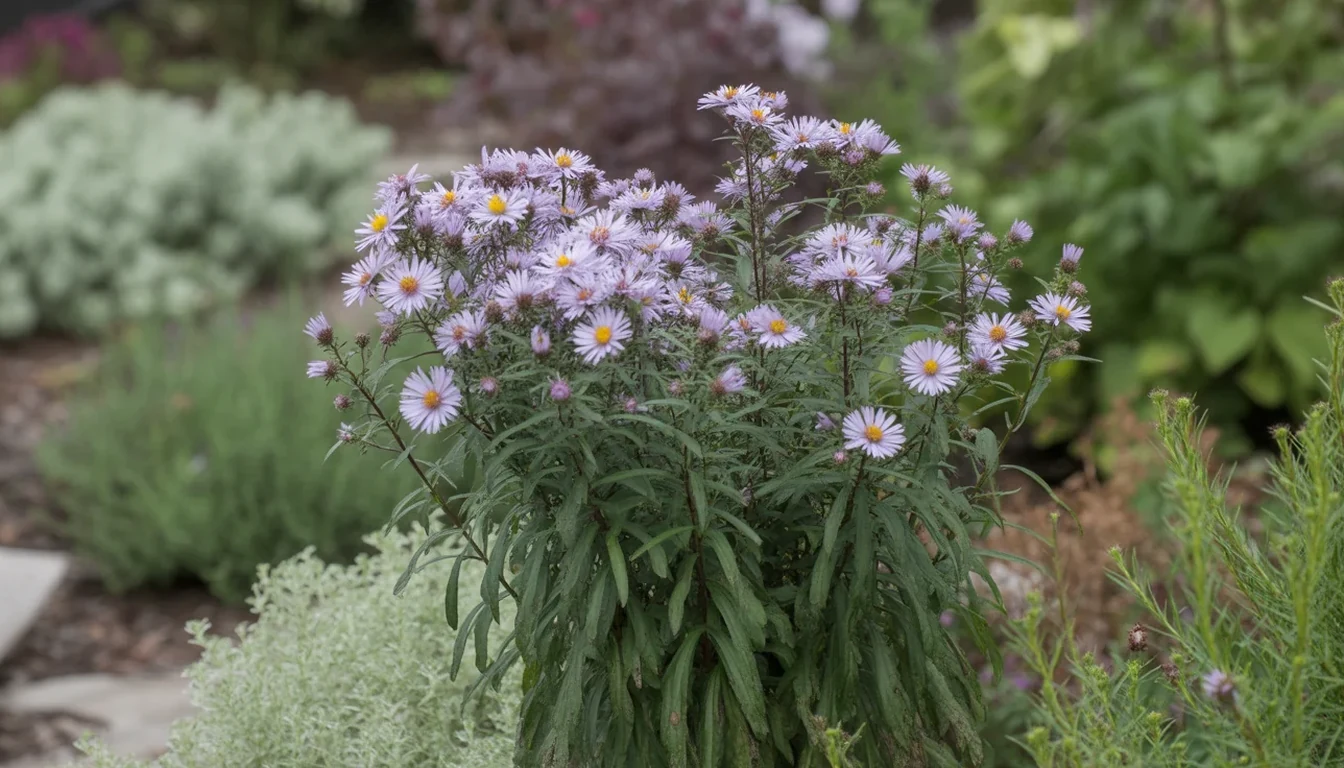
Aster
Gardeners blame the weather when an Aster splits open in September, but the shape was decided in early summer.
Astilbe
An Astilbe puts real color into a shade bed that would otherwise be green on green, but its shallow roots hold no…
Bigleaf Hydrangea
Bigleaf hydrangea (Hydrangea macrophylla) produces mophead or lacecap flowers, but winter survival and reliable…