
What's Japanese Barberry? How to Check Where It's Banned Before Planting
Berberis thunbergii Berberidaceae
Japanese barberry (Berberis thunbergii) is a thorny, deer-resistant shrub whose berries birds carry into woods, so several states now ban or phase out its sale. Where it is still legal, a few seedless cultivars keep the leaf color without the seed, and the plant needs little more than sun, drainage, and thick gloves.
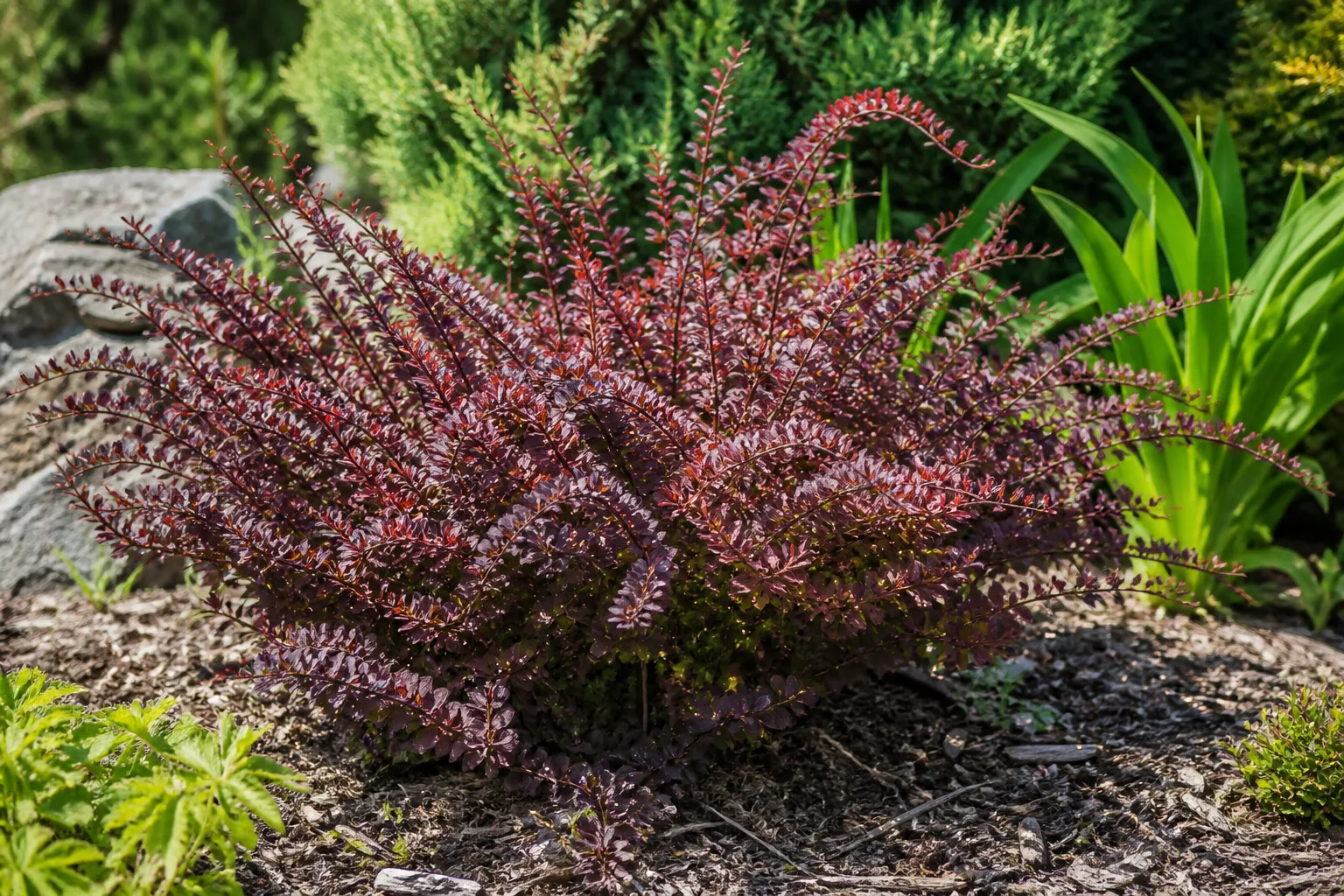
Care snapshot
Is Japanese Barberry Legal to Plant Where You Live?
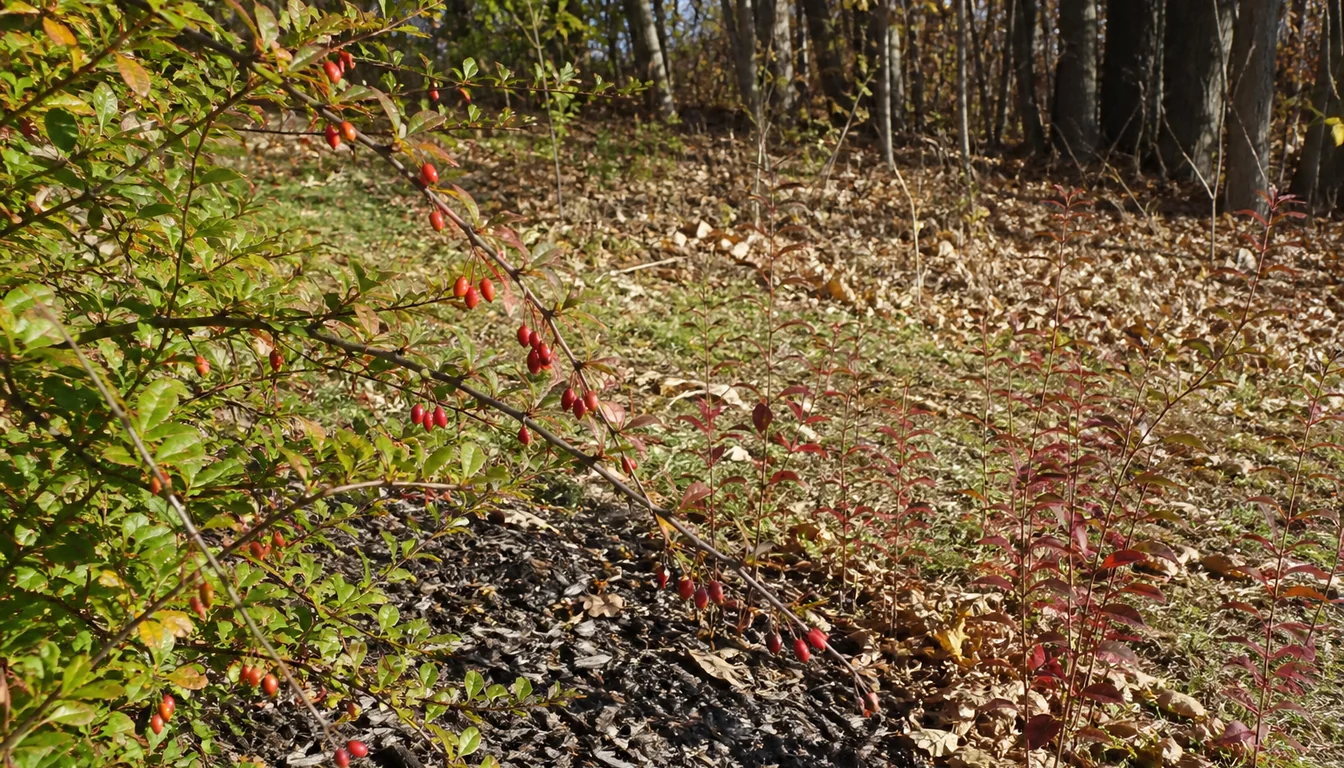
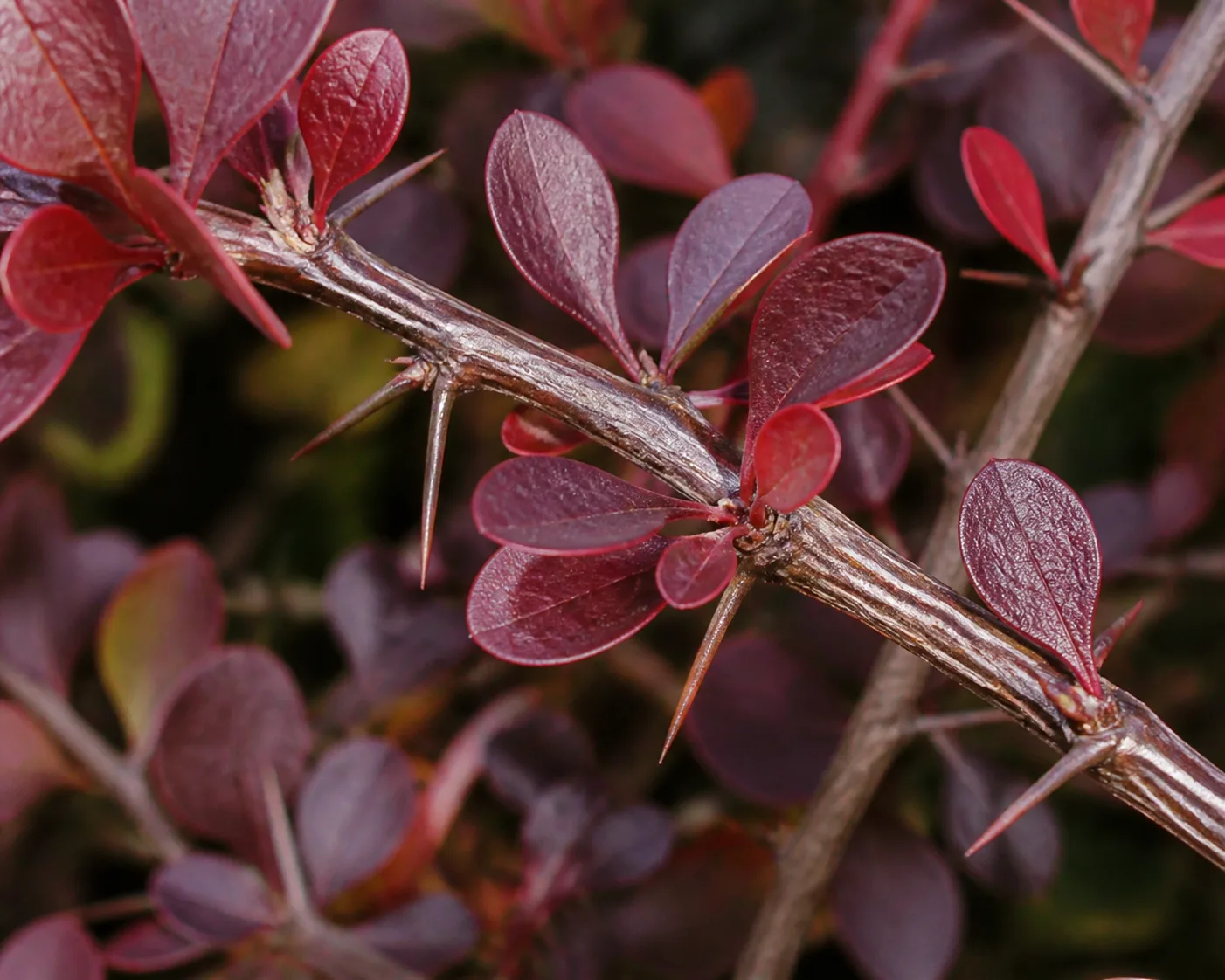
Japanese barberry is a dense deciduous shrub in the barberry family, Berberidaceae. Penn State Extension describes small spoon-shaped leaves, a single spine at each node on rusty-brown stems, yellow inner bark, creamy yellow spring flowers, and bright red oval berries that hang on through winter.
Those berries are the reason the plant is regulated. Birds eat them and drop the seed in woods and fields, and the Wisconsin DNR adds that low branches root where they touch the ground. The shrub is shade tolerant and drought resistant in the wild, so a woodland edge does not slow it down the way it slows many garden shrubs.
State rules differ, and they change. The table lists the rules we read as of October 2026. A state that is missing from it has not been checked here, so the state department of agriculture is the place to confirm the current list before buying.
- Maine
- Sale and import of the species and all of its cultivars, varieties and hybrids are prohibited. Variances are possible for cultivars shown by research to be non-invasive.
- Pennsylvania
- Listed as a noxious weed. Selling, propagating, or intentionally planting it is illegal except for a few exempted sterile varieties.
- Minnesota
- A three-year phase-out began January 1, 2026. After December 31, 2028, only five exempt seedless cultivars stay legal to sell.
- Wisconsin
- Restricted under NR 40 for the species, variety atropurpurea, B. thunbergii x B. koreana hybrids, and a long list of named cultivars such as Sparkle, Angel Wings, and Painter's Palette.
- North Carolina
- Listed by the NC Invasive Plant Council, which is a guidance list rather than a sales ban.
The rules above govern selling, propagating and, in Pennsylvania, planting. None of the pages we read orders homeowners to dig out an existing shrub, so an inherited barberry becomes a choice between containing it and removing it.
There is also a health reason behind the bans. In a Connecticut study published in Environmental Entomology in 2009, adult blacklegged ticks were more numerous in dense barberry than in areas where the barberry had been controlled or was absent. By the second year, the share of ticks carrying the Lyme disease bacterium in the controlled plots had dropped to match the plots with no barberry. The Minnesota Department of Agriculture cites the same line of research, noting that tick counts were about twice as high inside infestations.
Which Seedless Barberry Cultivars Are Still Allowed?
A seedless cultivar keeps the reason people plant barberry, which is the red, purple, gold, or green leaf color, while setting little or no seed. The Minnesota Department of Agriculture lists five cultivars that research showed produce little or no seed, and it allows them for sale beginning January 1, 2026.
- Crimson Cutie
- WorryFree series, cultivar 'UCONNBTCP4N'. Exempt in Minnesota.
- Mr. Green Genes
- WorryFree series, cultivar 'UCONNBTB039'. Exempt in Minnesota.
- Lemon Glow
- WorryFree series, cultivar 'UCONNBTB048'. Exempt in Minnesota.
- Lemon Cutie
- WorryFree series, cultivar 'UCONNBTB113'. Exempt in Minnesota.
- Mini Maroon
- Sunjoy series, cultivar 'NCBT1'. Exempt in Minnesota.
The series name alone is not enough. NC State Extension describes both the Sunjoy and WorryFree groups as sterile, but Minnesota's exemption covers only one Sunjoy cultivar, Mini Maroon. A Sunjoy plant with a different cultivar name is not on that list, so it falls under the phase-out like any other barberry.
Older favorites such as 'Crimson Pygmy', 'Rose Glow', 'Admiration', 'Concorde', and 'Orange Rocket' are ordinary seed-setting forms. They are the plants that state lists are phasing out, so a garden-center tag showing one of those names is not a seedless choice even if the shrub is small.
Size still matters after the legal check. NC State lists the species at 3 to 6 feet tall and 4 to 7 feet wide, while dwarf forms stay lower. A tag height that fits under a window is the reason to choose a dwarf, because a full-size shrub cut back every year keeps producing stiff, spiny regrowth at the cut.
Where Does a Thorny Barberry Work in a Yard?
Barberry handles the hard spots that defeat softer shrubs. NC State rates it for full sun or partial shade, clay, loam, or sand, and soil that ranges from well drained to very dry. It also notes that deer seldom damage it, which is the main reason people in heavily browsed yards keep planting it.
The spines decide placement more than light does. Penn State notes how fine and sharp they are and advises protection when handling the plant. A dry bank, a sunny strip along a drive, or a bed that people should not cut through suits the plant. Beds beside a narrow walk, a hose bib, or a play area turn every trim into a scratched forearm.
- Good sites include a sunny bank, a low mass under a window, and a strip where foot traffic should stop.
- Poor sites include narrow paths, pet runs, and any bed that must be pruned from both sides.
- Keep the plant out of woodland edges and hedgerows, where dropped seed and rooting branches escape fastest.
- Wear leather gloves, long sleeves, and eye protection for any pruning.
If the state list rules barberry out, the same jobs have other answers. Spirea covers a low sunny bed with flowers and no spines. Ninebark has dark-leaved cultivars on a larger frame, and in warm zones loropetalum carries purple leaves through the year.
How Much Water, Feeding, and Pruning Does Barberry Need?
An established barberry needs very little. NC State lists drainage that runs from good to very dry, and root rot appears on its list of problems, so the realistic risk is too much water rather than too little. A new plant needs a deep soak whenever the top few inches of soil dry during its first season, and after that only long droughts call for a hose.
Fertilizer is rarely the answer to dull growth. In a dry, sunny bed the plant already has what it needs, and the color comes from the cultivar and the light it receives.
Pruning is mostly about access. Barberry flowers in spring, and the berries form from those flowers, so cuts made right after flowering remove some of the coming fruit. That does not make pruning a seed-control method, because missed stems still fruit, but it is a reasonable time to shorten stems that reach into a path.
For an overgrown shrub, Clemson Extension's renewal method spreads the work over three years. The first year removes about one-third of the oldest stems at the base, the second year takes half of the remaining old stems, and the third year removes the rest. Each year the plant fills in from younger shoots instead of from a sheared outer shell.
One check is specific to barberry. Because low branches root where they touch soil, lifting or removing stems that lie on the mulch keeps the plant from walking outward into the lawn or the next bed.
What Pests and Diseases Show Up on Barberry?
Barberry has few serious problems in a garden, but the list is specific. NC State names anthracnose, root rot, bacterial leaf spot, Indian wax scale, the two-banded Japanese weevil, barberry webworm, and aphids. Root rot points back to wet soil, while the leaf spots and anthracnose are worse in crowded, humid plantings.
Chewing damage has one well-documented cause in the Northeast. In the summer of 2007, a native moth called the barberry geometer (Coryphista meadii) defoliated barberry across central and northern New Jersey. Of almost 4,900 current-year shoots sampled, about 12 percent were stripped completely and 65 percent were partly eaten, and similar damage was reported from southern New York.
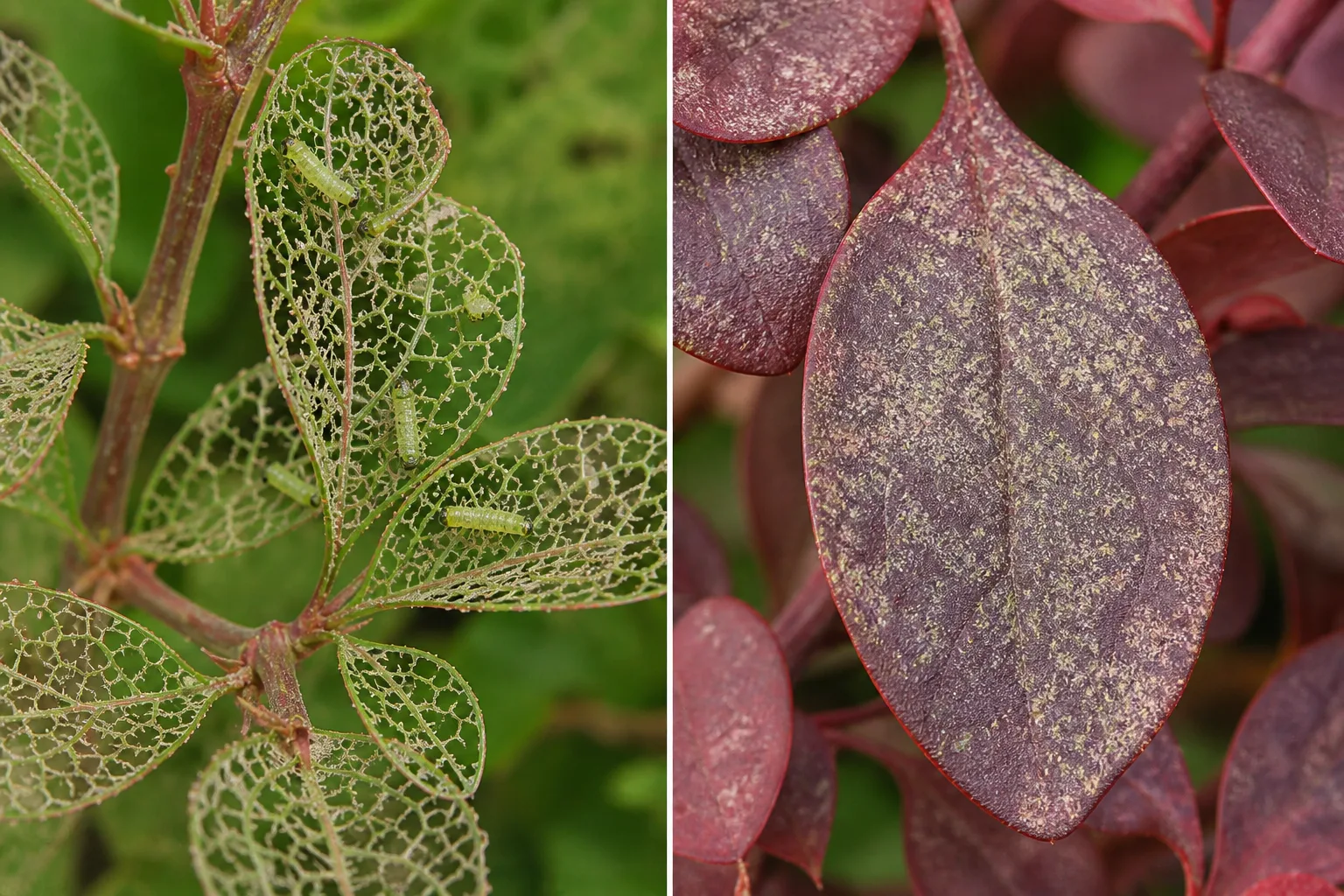
Fine pale specks with no holes look different from chewing, and they send the check to the leaf undersides and stems, where sap feeders such as aphids and scale sit. Treating a chewing caterpillar with a product meant for sap feeders, or the reverse, wastes the effort.
- Leaves eaten to the veins
- Look for caterpillars such as barberry webworm or the barberry geometer on the shoots.
- Sticky, curled new tips
- Check for aphids on the tender growth.
- White waxy bumps on stems
- Check for Indian wax scale.
- Brown spots in a crowded bed
- Thin stems for airflow, since anthracnose and leaf spots favor humid plantings.
- Whole plant yellowing in wet soil
- Suspect root rot before any spray.
How Do You Remove Barberry and Keep It Gone?
Removing an old barberry is a two-part job. The shrub comes out once, and then the seedlings that come up from seed already in the soil have to be pulled for a couple of years. A 2009 USDA barberry program briefing reported that most Japanese barberry seed germinates in its first year, about 20 percent the next year, and a small share each year after.
Penn State Extension outlines the main methods. Small plants pull out by hand, ideally before they set seed, and gloves matter because of the spines. For larger shrubs it lists herbicide options, and the product label is the authority on rate, timing, and where a product may be used.
- Hand pulling
- Small plants, best done before seed set.
- Foliar spray
- Glyphosate or triclopyr, applied from mid-May until fall color begins.
- Cut-stem or basal bark
- Usable year round. Oil-based triclopyr can be applied any time after cutting, while water-based products go on right after the cut.
- Flame weeding
- Killed about 40 percent of plants in the work Penn State cites, compared with about 93 percent for a triclopyr foliar spray.
Cutting a shrub to the ground without treating the stump usually leads to regrowth from the base, which is why the cut-stem method pairs the cut with an application.
Propagating barberry makes sense only for a legal seedless cultivar. Pennsylvania's rule bans propagation of non-exempt plants outright, and seedlings from any barberry can differ from the parent and may set seed even if the parent did not.
A replacement can take over the barrier or color job. If the old shrub was meant to stop deer, the same rules that apply to barberry also apply to burning bush, which is banned in several of the same states. Penn State Extension suggests native viburnums as burning bush replacements for their spring flowers and maroon fall leaves, and viburnum fills the same role where barberry comes out.
Is Barberry Safe Around Pets and Children?
We found no ASPCA or other veterinary toxicity record for Japanese barberry, so its toxicity to dogs, cats, and horses is unknown rather than established either way. The ASPCA database does list creeping mahonia, a different plant sometimes called holly-leaved barberry, but that entry does not cover Berberis thunbergii.
The hazard that is documented is physical. The fine spines catch skin and fur, and Penn State's removal advice starts with protective gloves and sleeves. That makes a barberry hedge a poor choice for the edge of a dog run or a play area even before the question of eating the berries comes up.
Ticks are the other household reason to think about placement. The Connecticut research found more blacklegged ticks in dense barberry stands, so a thicket at the back of the yard where children or dogs push through is the setting with the most risk.
Frequently Asked Questions
Is Japanese barberry illegal to plant?
It depends on the state. Maine bans sale and import of all cultivars, Pennsylvania lists it as a noxious weed with a few sterile exemptions, and Minnesota is phasing it out through 2028. Check your state department of agriculture before buying.
Which barberry cultivars are seedless?
Minnesota exempts Crimson Cutie, Mr. Green Genes, Lemon Glow, Lemon Cutie, and Sunjoy Mini Maroon because research showed little or no seed. Other Sunjoy cultivars are not on that list.
Do deer eat barberry?
NC State Extension says deer seldom damage it, which is why it is common in heavily browsed yards. That same toughness helps it spread into woods.
Is barberry toxic to dogs?
We found no ASPCA or veterinary toxicity record for Japanese barberry, so its toxicity is unknown. The fine spines are the documented hazard around pets.
Does barberry increase ticks?
A 2009 Connecticut study found more blacklegged ticks in dense barberry, and controlling the barberry lowered the share of ticks carrying the Lyme disease bacterium.
Sources & References
- Berberis thunbergii, NC State Extension Gardener Plant Toolbox
- Japanese Barberry, Penn State Extension
- Japanese Barberry, Minnesota Department of Agriculture
- Japanese Barberry, Wisconsin DNR Invasive Species
- Invasive Plants Prohibited from Sale or Import in Maine, Maine Department of Agriculture, Conservation and Forestry
- Managing Japanese Barberry Infestations Reduces Blacklegged Tick Abundance and Infection Prevalence with Borrelia burgdorferi, Environmental Entomology (2009)
- Extensive Defoliation of Japanese Barberry in New Jersey by a Native Moth, Coryphista meadii, Natural Areas Journal (2009)
- Black Stem Rust/Barberry Program Technical Meeting Discussion Points, USDA APHIS PPQ (2009)
- Burning Bush, Penn State Extension
- Pruning Shrubs, Clemson Cooperative Extension Home & Garden Information Center
Related Plants
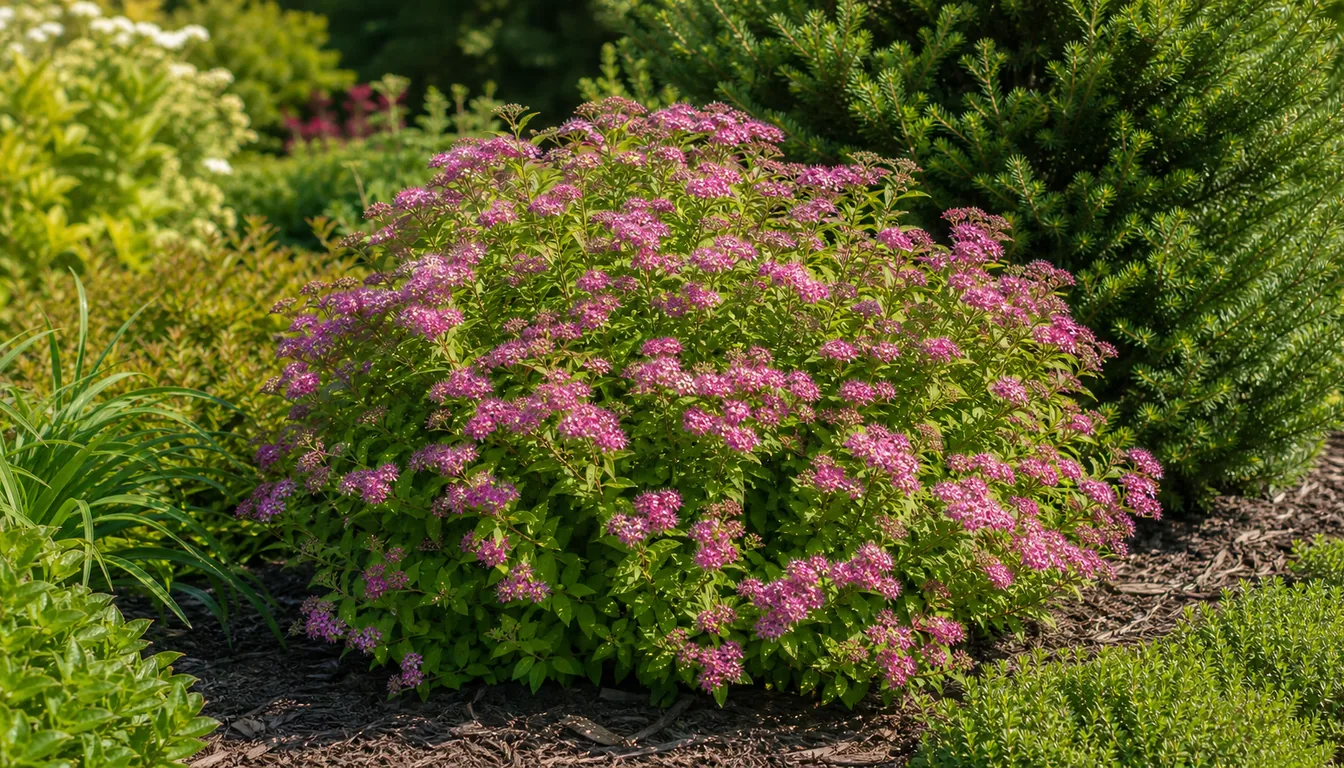
Spirea
Flowering shrub with similar size but softer texture and no thorns.
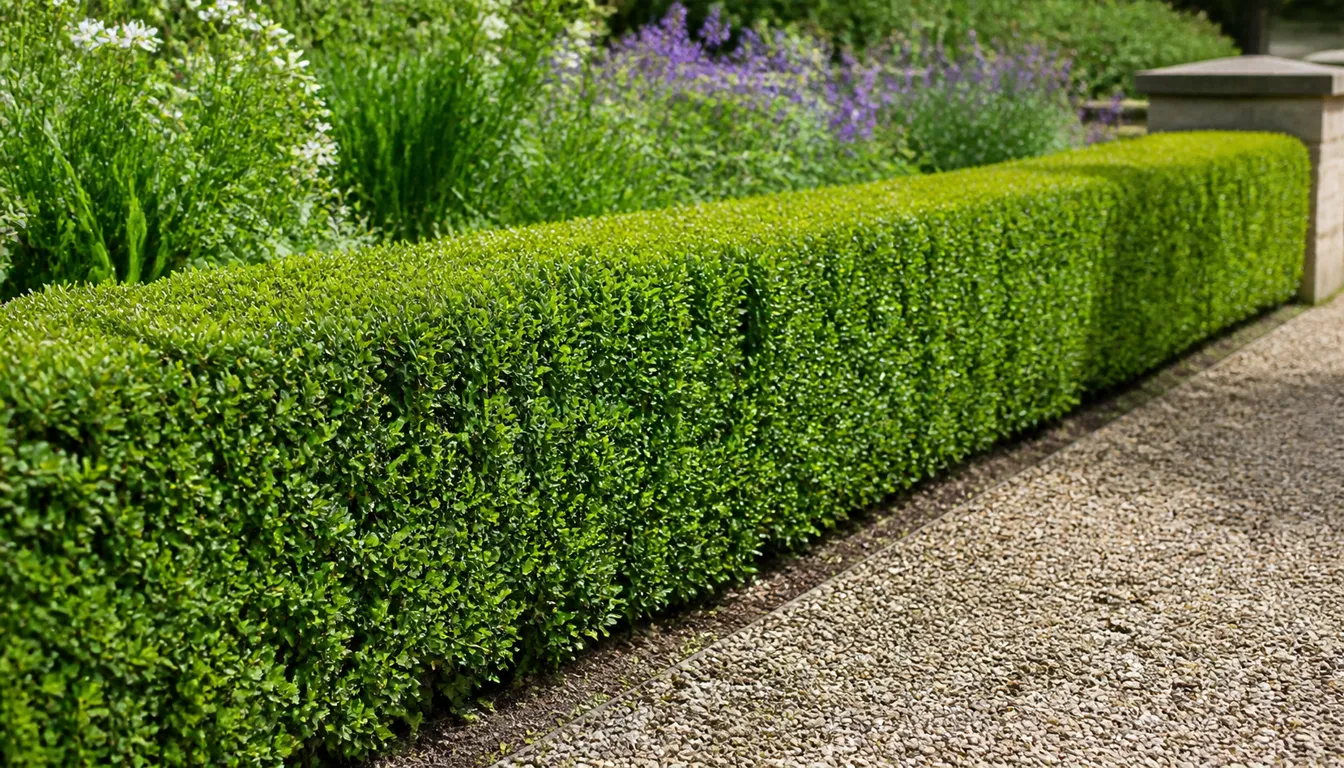
Boxwood
Classic evergreen for low hedges if you do not want sharp thorns.
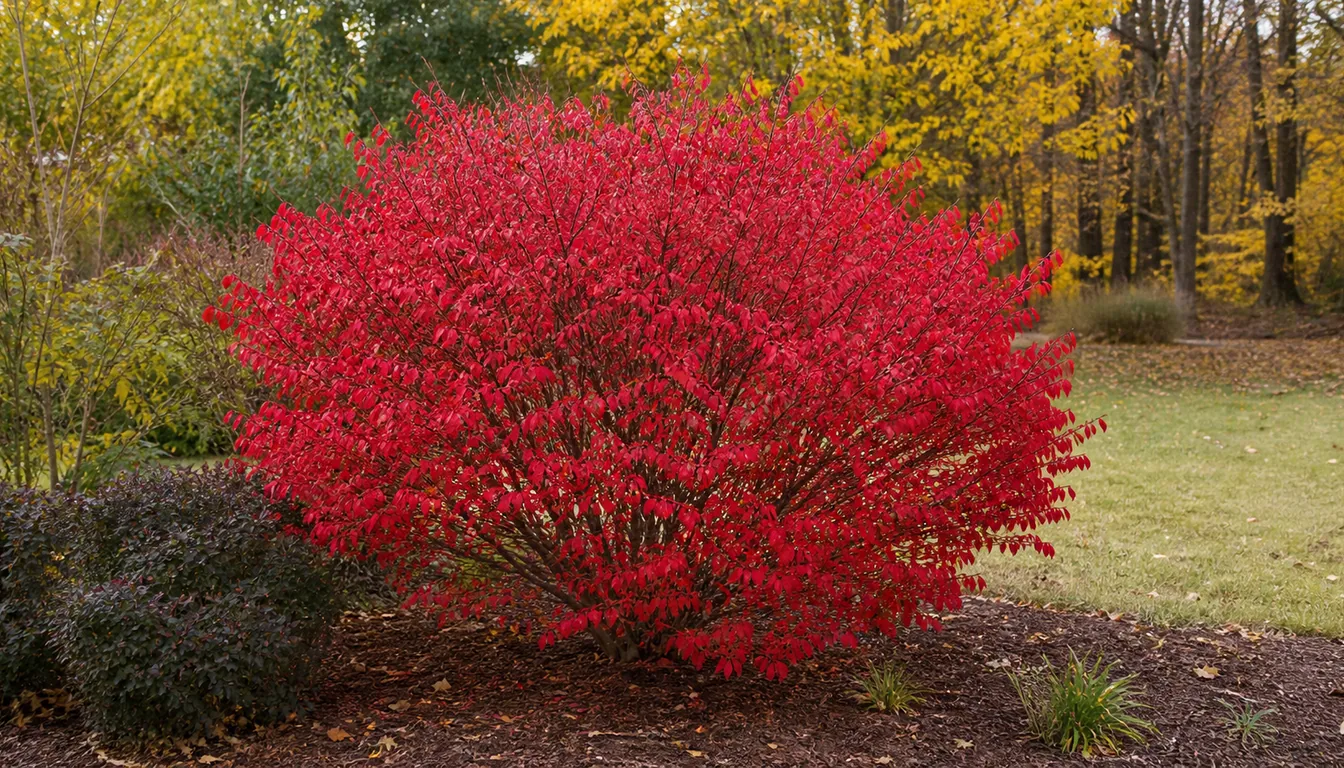
Burning Bush
Another red fall-color shrub that several of the same states ban or phase out.
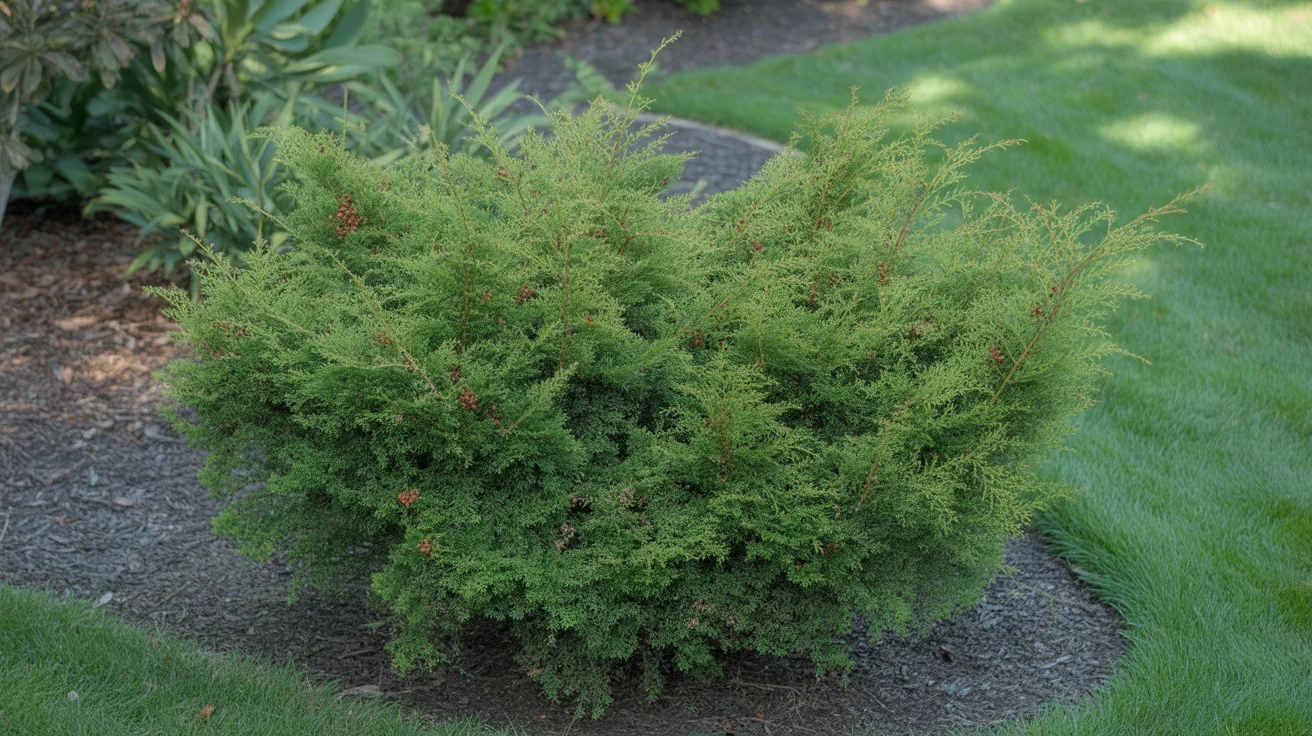
Arborvitae
Arborvitae can form a dense living screen where its mature width, exposure, and water needs fit the site.
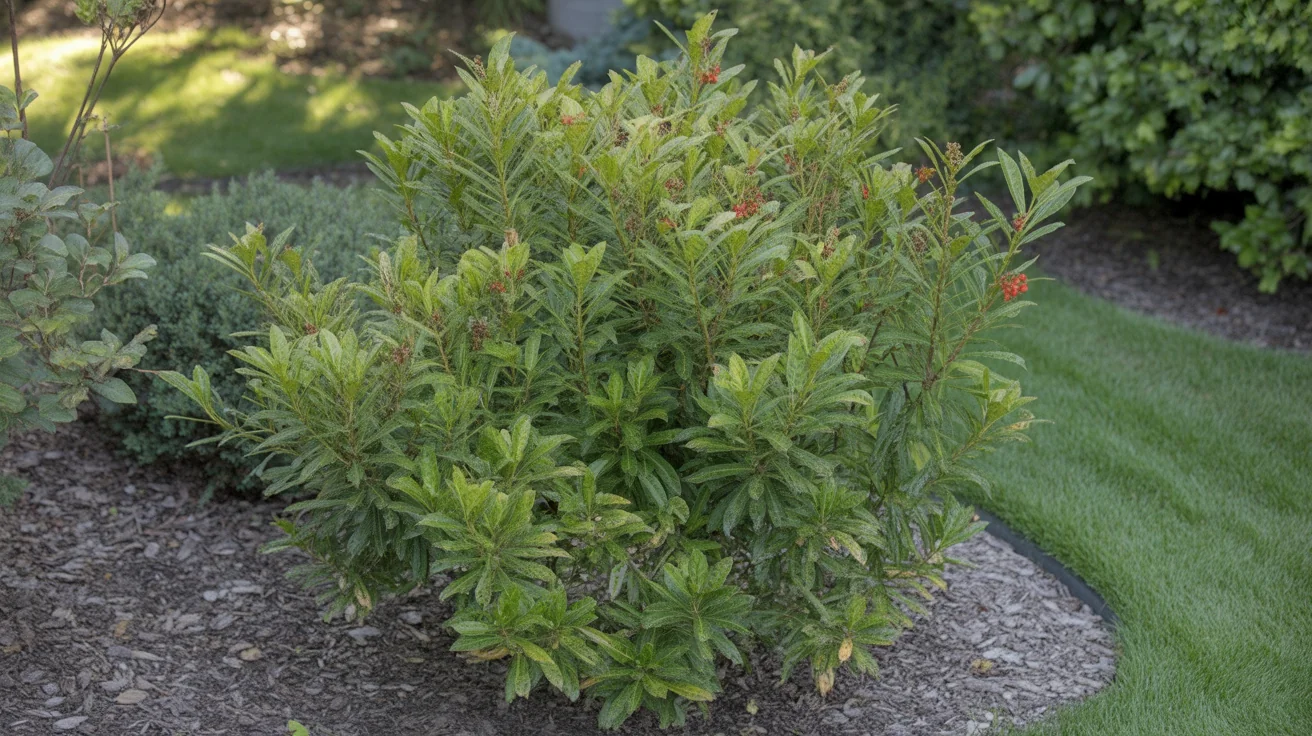
Aucuba
Aucuba is the shrub for bright shade with dry root competition. It keeps evergreen structure near north walls, porches…
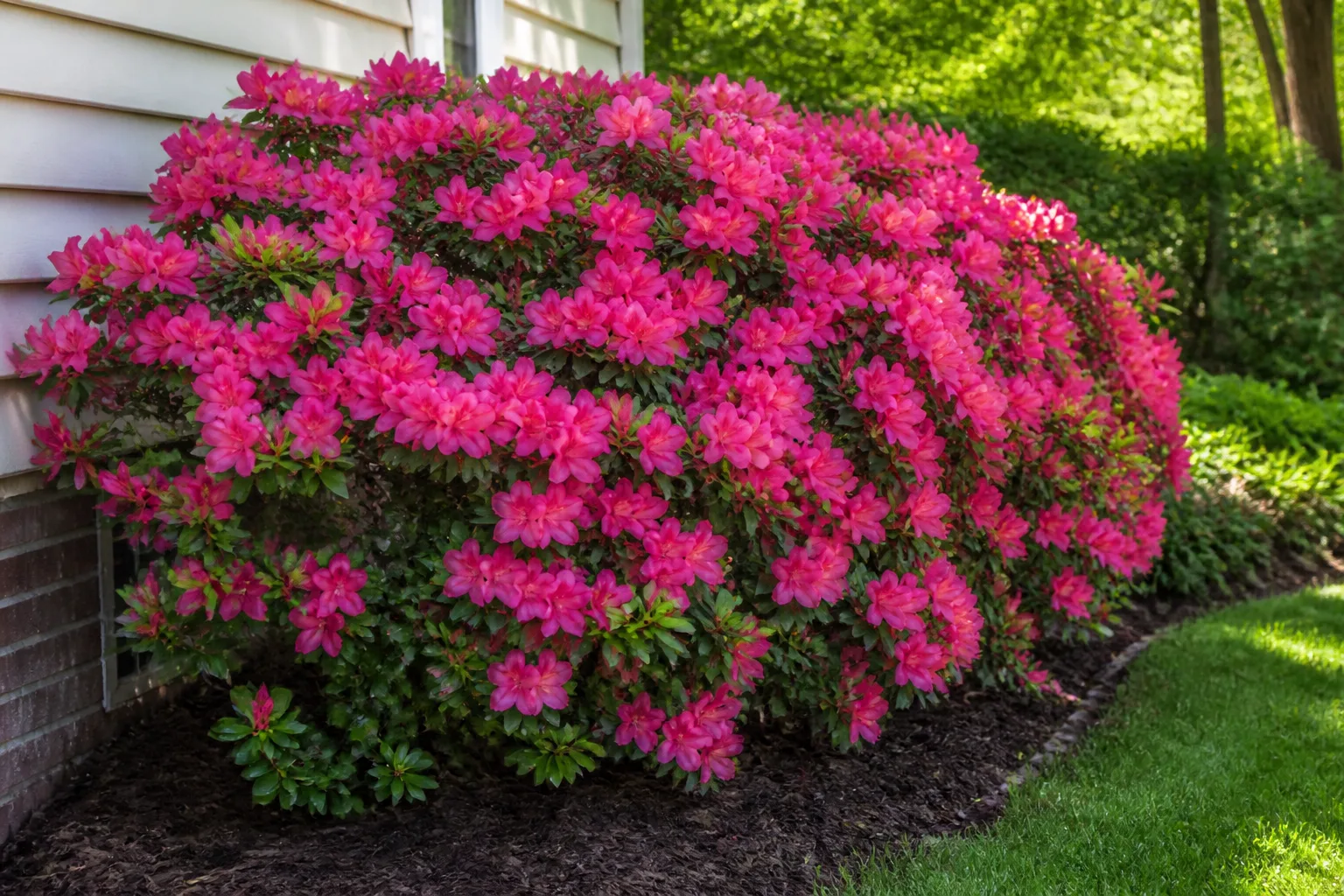
Azalea
Azaleas bring spring flowers, and some cultivars bloom again later in the year.