
What's Fine Fescue? How to Tell the Five Apart
Festuca spp. Poaceae
Fine fescue is not one grass. Five species and subspecies share the name and the very fine, needle-like leaf, and they differ in shade tolerance, drought resistance, fertilizer need and whether they spread at all.
Which one is in your bag was mostly decided by the seed trade, so the useful first step is reading the species list on the back of the label.
Care snapshot
Is Fine Fescue One Grass or Five?
Five. The name fine fescue covers five different grasses in the genus Festuca, and they are sold together, mixed together and written about together as though they were one.
There are more than 450 fescue species, of which only about 10 are suitable for turf at all. Five of those are the fine fescues, and the rest of the useful list is the coarse group that includes tall fescue and meadow fescue.
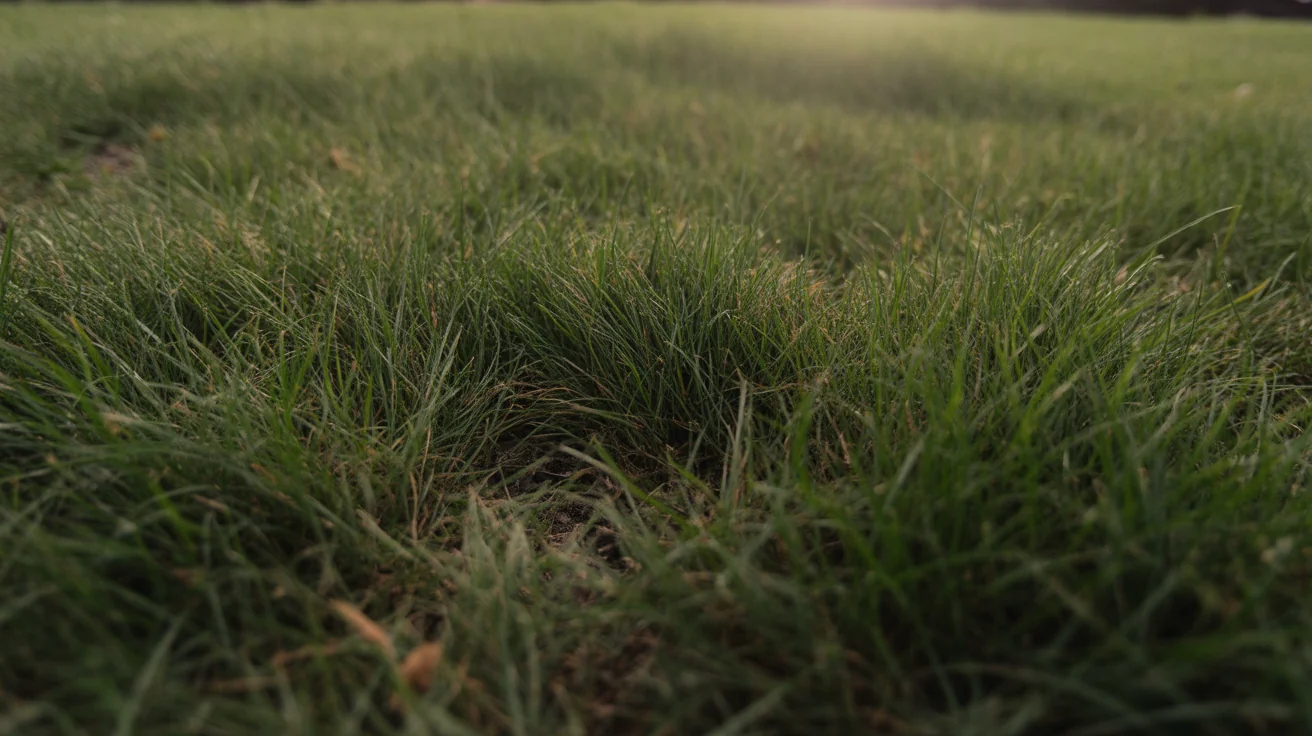
What the five share is the leaf. It is very narrow and almost bristle-like, closer to a pine needle than to a lawn blade, and it is the reason a fine fescue lawn feels soft underfoot and looks finer than anything else in a cool-season yard.
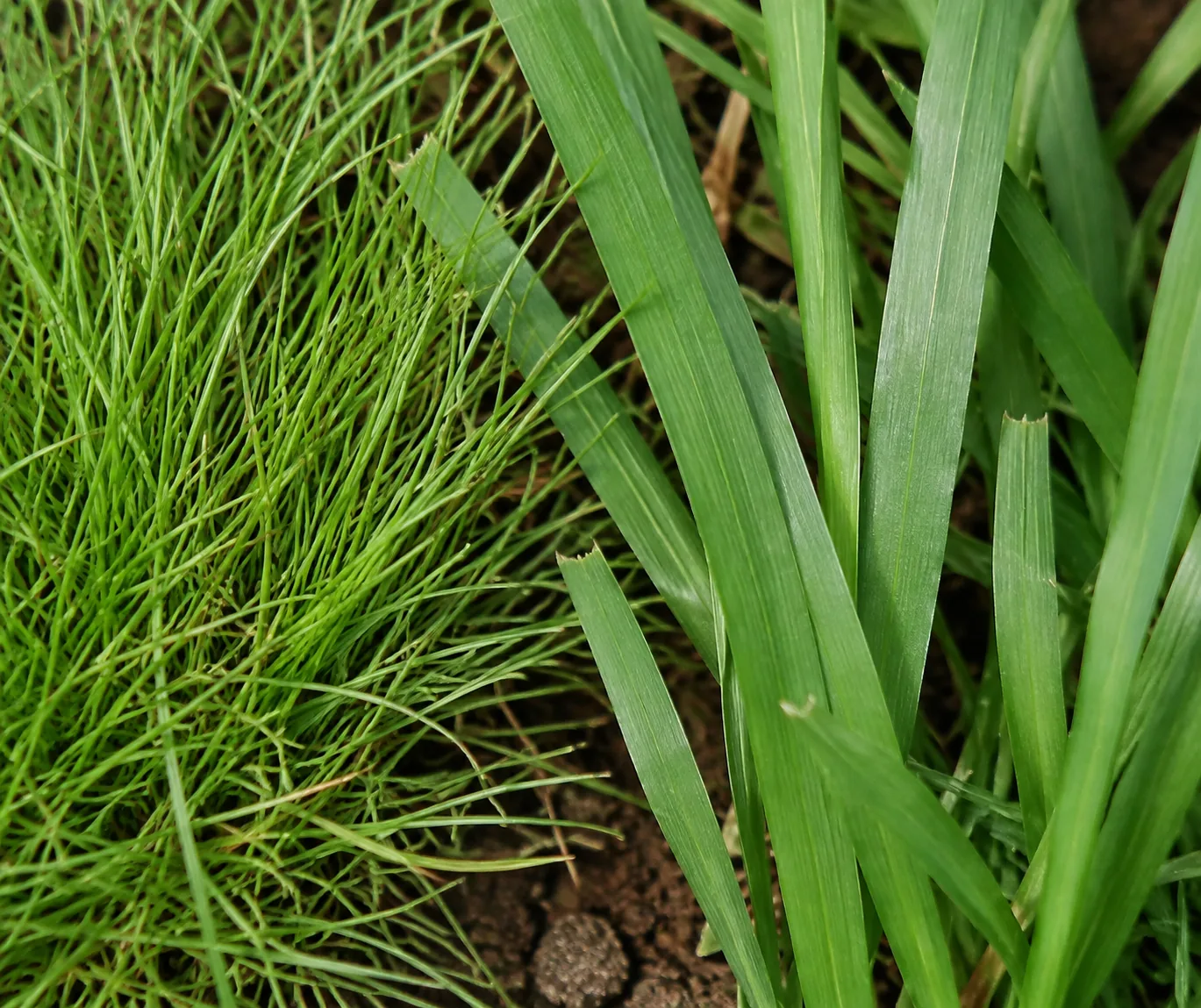
- Strong creeping red
- Festuca rubra ssp. rubra. Thick, long, numerous rhizomes, so it spreads
- Slender creeping red
- Festuca rubra ssp. littoralis. Few short rhizomes, excellent salt tolerance
- Chewings
- Festuca rubra ssp. commutata. Bunch type, the best shade rating of the five
- Hard
- Festuca brevipila. Bunch type, excellent drought and disease resistance
- Sheep
- Festuca ovina. Bunch type, powdery blue-green, the lowest nitrogen need
The scientific names carry more weight here than they normally would, because three of the five are subspecies of the same plant. Strong creeping red, slender creeping red and Chewings are all Festuca rubra, separated only by subspecies, and yet one spreads aggressively, one barely spreads, and one does not spread at all.
The distinction is not academic. Purdue's researchers describe grouping the five together as a significant barrier to using these grasses well, because it leads people to assume all five respond the same way to shade, drought, mowing and fertilizer.
They do not, and the rest of this page is mostly about where they part company.
Which Fine Fescue Is Actually in the Bag?
Somebody has already decided that for you, and it was not the person who wrote the front of the bag.
In 2018 Purdue and the University of Minnesota examined 232 retail lawn seed products in Indiana and Minnesota.
66 percent of northern lawn seed products contained at least one fine fescue, which is a lot of lawns.
What varied was which one.
- Strong creeping red fescue, 64%. Far and away the one you are most likely to be buying.
- Chewings fescue, 27%. The second most common, and the best of the five in shade.
- Hard fescue, 7%. Uncommon, despite excellent drought and disease resistance.
- Slender creeping red fescue, 2%. Effectively a specialty order.
- Sheep fescue, 0%. It appeared in none of the 232 products.
Read that list next to the previous section and something awkward falls out.
Sheep fescue has the lowest fertilizer requirement and excellent drought resistance of the five, and it was in nothing on the shelf.
The taxa sold to most people are the two that want the most attention.
Labels make it harder still.
Some bags say only red fescue or creeping red fescue without telling you which subspecies is inside, and those two behave differently enough that the distinction changes how the lawn repairs itself.
Read the species list on the back rather than the picture on the front, and if you want hard or sheep fescue, expect to order it rather than find it.
Does Fine Fescue Really Beat Every Other Grass in Shade?
More than any other lawn grass in common use. Fine fescues are described as having potentially the best shade tolerance among commonly used turfgrass species, and that is why most people arrive at them.
The rating still differs across the five, and it differs in a direction that suits the buyer for once.
- Chewings fescue, excellent. The best of the five, and the second most likely to be in a retail bag.
- Strong and slender creeping red, good to excellent. Close behind, and easy to buy.
- Hard fescue good, sheep fescue only fair to good. The drought specialists give up some shade tolerance for it.
They grow across the full range from open sun to moderately dense shade, which is a useful boundary to hold onto. Moderately dense is not the deep, dry, root-filled shade directly under a mature maple, and no grass solves that.
There is a regional limit most pages leave out. In the hotter southern half of the cool-season range, fine fescues are recommended for moderately dense shade only, because summer heat and humidity thin them out, and there tall fescue is often the better shade grass.
Will a Fine Fescue Lawn Fill In Its Own Bare Spots?
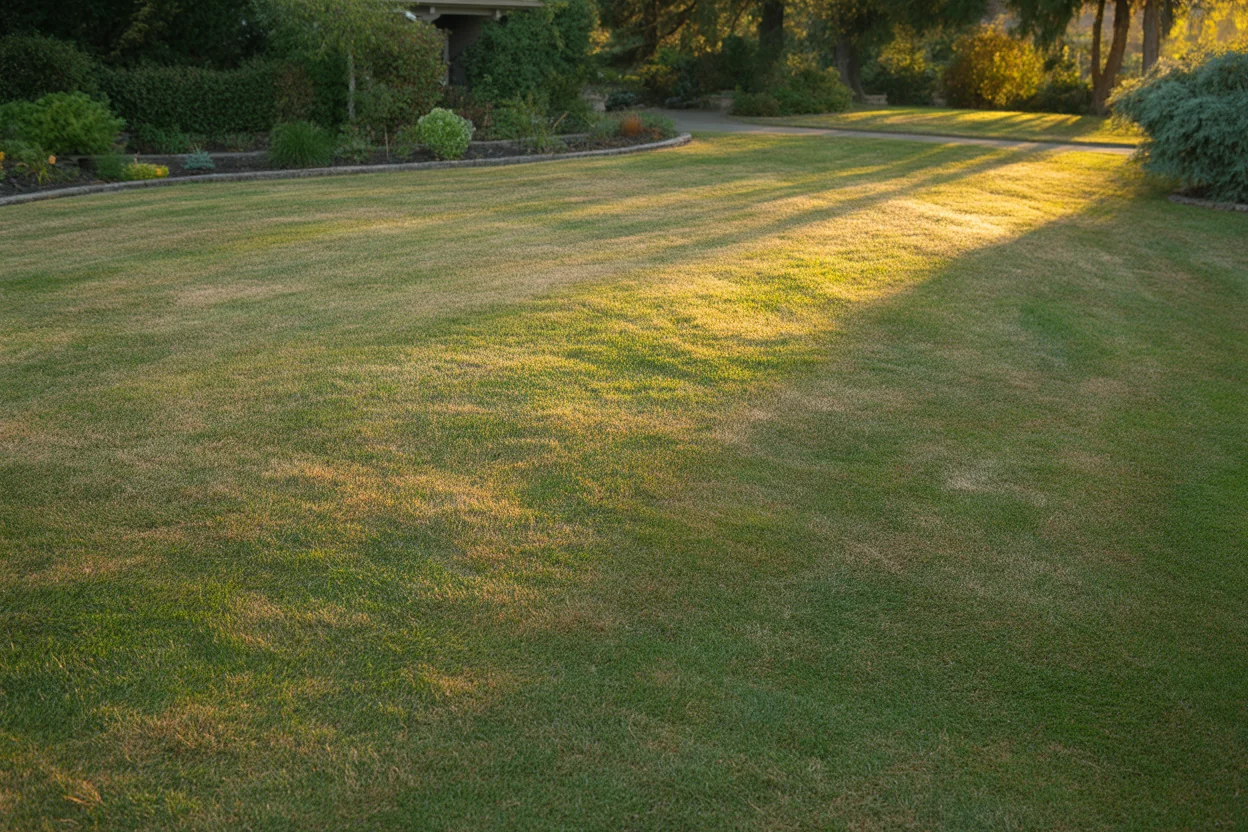
Only if it contains a creeping red, and by the seed-bag numbers there is a fair chance it does.
Strong creeping red fescue makes thick, long and numerous rhizomes, underground stems that push out sideways and send up new shoots, so a thin patch closes on its own. Slender creeping red does the same thing with fewer and shorter rhizomes, so it closes more slowly.
Chewings, hard and sheep fescue are bunch types. They get bigger by thickening the clump they are already in, which means a bare patch stays bare until you put seed on it.
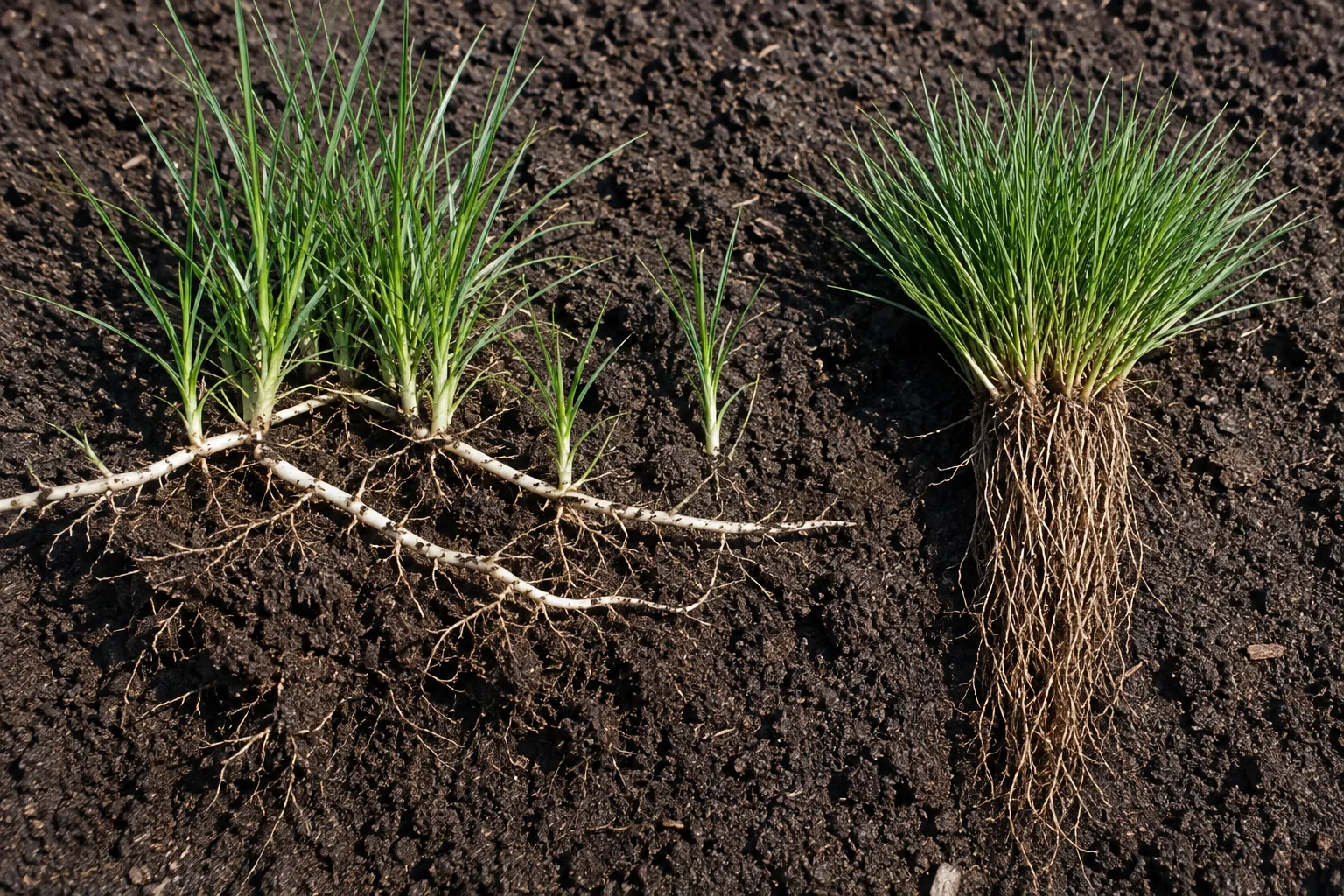
For most people that is the most practical difference on this page. A bunch-type lawn needs overseeding to close a worn strip or a pet spot, and it needs it every time, while a strong creeping red lawn usually handles the same damage on its own given a season.
- Strong creeping red
- Spreads well. Excellent sod potential, and thatch to manage
- Slender creeping red
- Spreads slowly. Good to excellent sod, some thatch
- Chewings
- Bunch type. Poor to good sod, little thatch
- Hard
- Bunch type. Weak sod, little thatch
- Sheep
- Bunch type. Weak sod, little thatch
That habit decides two other things people do not connect to it. The creeping reds hold together well enough to be cut and sold as sod, with strength similar to kentucky bluegrass, while bunch-type fine fescue sod falls apart in handling.
It also decides thatch. A lawn containing creeping reds may want thatch removal every 2 to 4 years, while the bunch types build very little.
Where removal is needed, core aeration beats power raking, since it relieves compaction at the same time and the two jobs are not interchangeable. Do it in April, early May, September or early October, and never in high summer, when heat stress and slow recovery turn the repair into the damage.
How High Do You Mow Fine Fescue, and When Should You Not?
Keep it above 2 inches, and prefer 2.5 to 4 inches for a home lawn.
Height is doing real work here beyond appearance. A higher cut reduces common weed invasion, which matters on a grass whose whole appeal is not needing herbicide, and it matters more in shade where the turf is thinner to begin with.
Two of the five take a closer cut than the rest.
Chewings and slender creeping red tolerate low mowing well, which is why they turn up on golf fairways and even putting greens, while sheep and hard fescue only manage it fairly.
Frequency follows growth rather than the calendar, so expect more cuts in spring and late fall and fewer in high summer, and know that these grasses sit happily as a minimal-mow or no-mow planting too.
How Little Fertilizer Does Fine Fescue Need?
0.5 to 2 pounds of nitrogen per 1,000 square feet per year, in one or two applications. Sheep and hard fescue persist on under a pound.
- Best. September to October, when the grass is building roots rather than top growth.
- Second best. April or May, once growth has genuinely started.
- Avoid. June, July and August, when feeding adds heat stress to a grass already under it.
The ceiling is not a suggestion. Going above 2 pounds a year actually lowers turf quality on these grasses, and it raises disease and weed pressure at the same time, so some years a mature stand is best left alone entirely.
Never put down more than 1 pound of quick-release nitrogen in one application. These grasses tolerate a wide range of soil pH and genuinely poor soil, so a soil test is worth more than a fertilizer plan here, and standard lawn feeding schedules are written for hungrier turf.
When Does a Fine Fescue Lawn Actually Need Water?
Seldom, and almost never in spring or fall. Supplemental irrigation is only worth running in an unseasonably warm dry stretch outside summer.
If you do irrigate through summer, 1 inch of water a week is the figure, applied deeply enough to soak the top 4 to 6 inches of soil rather than in short frequent bursts. Depending on your system and soil that can take over an hour, split into cycles so the water soaks in instead of running off, which is the same deep and infrequent approach beds want.
The test is a screwdriver rather than a schedule. Push one into the soil, and if it will not go in more than 1 to 2 inches, the lawn needs water.
- Creeping reds and Chewings prefer well-drained, droughty soil.
- Hard and sheep fescue prefer well-drained, droughty, sandy soil with very low fertility, and have the best drought resistance of the five.
- None of them want the wet, rich, frequently watered conditions a conventional lawn program produces.
A brief summer drought needs no response at all. The stand thins, then recovers with fall rain and cooler weather.
A long drought reverses that advice.
In an extended dry spell, do not stop irrigating completely in midsummer, because a stand that dries out fully at that point may not come back.
Water deeply and let the grass get slightly stressed between soakings rather than keeping the surface damp, since an overwatered lawn fails here faster than a dry one.
When and How Heavily Do You Seed Fine Fescue?
Late July to late September is the best window, and mid-March to mid-April is second best. Those are research findings rather than tradition, and they put late summer ahead of spring.
Seeding outside those windows costs you twice. A late spring or summer sowing puts young seedlings into heat and drought while summer annual weeds are germinating alongside them, and sowing too late in fall leaves the stand without time to mature before winter.
Rate depends a little on which taxon you bought, though the range is narrow enough to be easy. 3.5 to 6 pounds per 1,000 square feet covers all five.
- Seed at 3.5 to 6 pounds per 1,000 square feet for a lawn, or 0.25 to 1 pound for a no-mow or natural area.
- Expect germination in 5 to 12 days under favorable conditions.
- Give 0.25 to 1 pound of nitrogen across the first two months to speed fill-in. More than a pound adds nothing.
- Drop to the normal rate once the stand has closed and regular mowing has started.
Hard and sheep fescue establish more slowly than the other three, so a bag heavy in those will look thin for longer without anything being wrong.
Overall the group establishes faster than kentucky bluegrass and slower than perennial ryegrass. That is worth knowing before you judge a new lawn against a neighbor's, because the same seeding date produces visibly different lawns depending on what went down in each yard.
Hold the mower off until the new grass is tall enough to take it, which the first cut on new grass covers properly. On a stand this fine, cutting early pulls seedlings out rather than trimming them.
Which Weed Killers Are Safe on Fine Fescue?
Three of the common preemergence products are safe, and two will hurt the lawn. Buy on the active ingredient, which is printed small, rather than on the name across the front.
Dithiopyr, pendimethalin and prodiamine can be used safely on fine fescue. Put them down late March to mid-April if crabgrass, goosegrass or foxtail are a problem where you are.
Broadleaf weeds want the opposite season. An October application of a product containing 2,4-D, dicamba or mecoprop is both safer for the grass and more effective on dandelion and other perennials than the same spray in spring, and identifying the weed first decides which of the two jobs you are doing.
Some of the five also help themselves, through density, quick establishment and allelopathy, the chemical suppression of neighboring plants. That is part of why a well-chosen fine fescue lawn needs less herbicide than the yard next door.
Red Thread, Summer Patch, or Just Wear?
Disease rather than insects, and wear rather than either. The common ones are summer patch, snow molds, red thread, pink patch and dollar spot, and each shows up in its own season when conditions suit the pathogen.
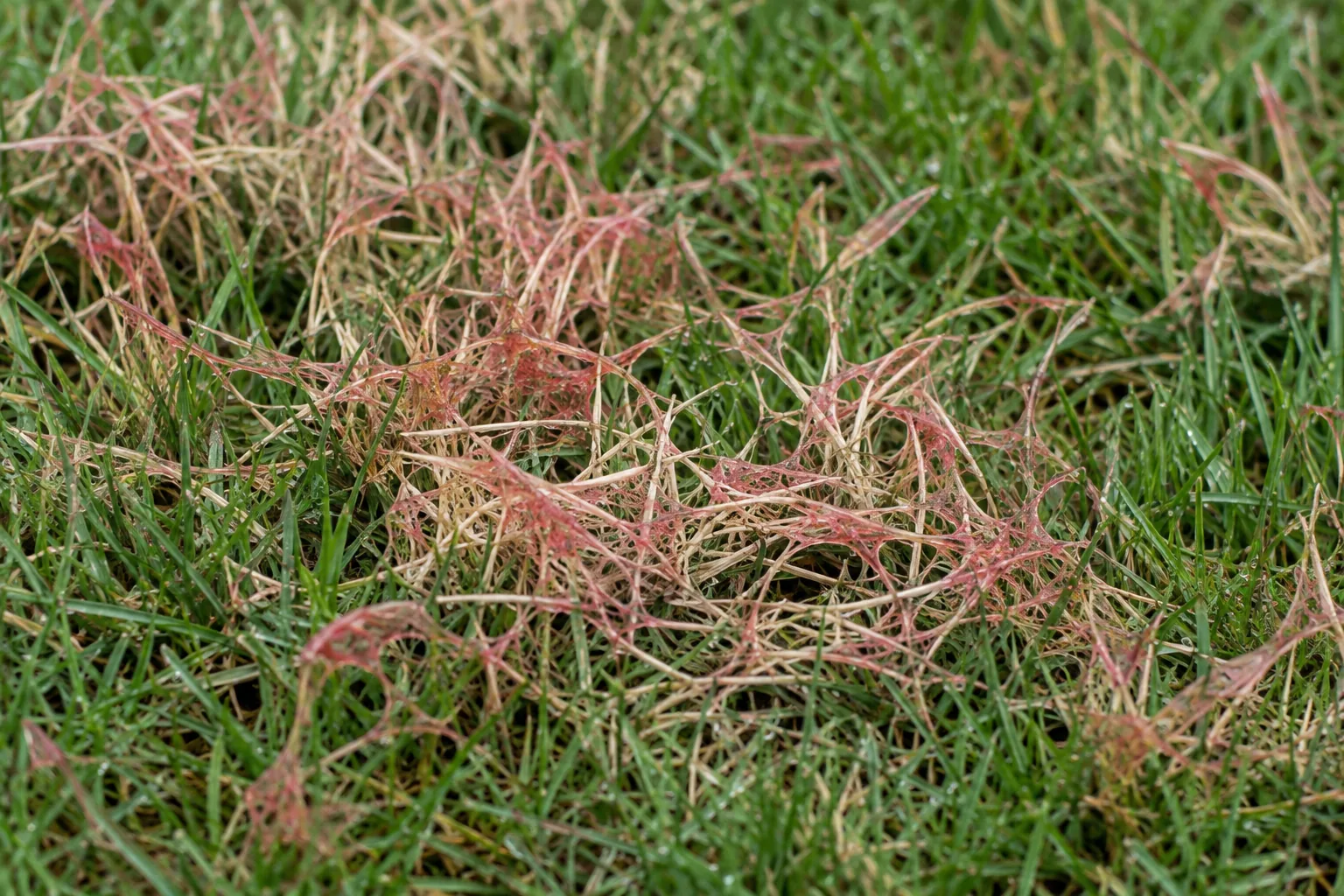
Good to excellent resistance to both dollar spot and red thread, which is a large part of its low-input reputation.
Resists red thread well, resists summer patch poorly. A trade rather than a free win.
The one most people buy, and only poor to fair against summer patch.
Wear is the harder limit.
Traffic tolerance runs from poor to fair for the creeping reds up to fair to good for hard fescue, and none of the five is a play surface.
Damage from feet and mower wheels during summer heat and drought leaves pitted marks and straight mower lines that the grass is slow to grow out.
Most of the fixes are things this page has already asked for. Keep nitrogen under 2 pounds a year, mow high, stay off the lawn when it is stressed, and the disease pressure drops without a fungicide entering the conversation.
Frequently Asked Questions
Is Fine Fescue good for high-traffic lawns?
Fine Fescue is best for low to moderate foot traffic. It works well in front yards, shady side yards, and lightly used spaces, but it is not ideal for constant sports or dog wear like some tall fescue or bermuda lawns.
Will Fine Fescue stay green all summer in warm climates?
In hotter zones, Fine Fescue often goes semi-dormant during peak heat, especially in full sun. With light shade and deep, infrequent watering, it can hold color better, but expect slower growth and some thinning in long, hot summers.
How short should I mow a Fine Fescue lawn?
Keep Fine Fescue at 2-3 inches for a traditional lawn, never removing more than one-third of the blade at a time. In no-mow or meadow areas, you can let it reach 4-6 inches and mow only a few times per season.
Can fine fescue be mixed with other grass types?
Yes, since many seed blends mix fine fescue with Kentucky bluegrass or perennial ryegrass. Fine fescue handles shade and lower inputs, while the other species fill sunny, higher-traffic spots for a more balanced lawn.
How often should I dethatch a fine fescue lawn?
Fine fescue usually builds less thatch than some other cool-season grasses. In most yards, light raking or power raking every 3–4 years, or when thatch tops 1/2 inch, is plenty.
Is fine fescue a good choice for kids and dogs?
It is safe and soft underfoot, but it does not love heavy wear. For rough play areas or energetic dogs, many of us mix in more durable grasses or reserve fine fescue for lower-traffic zones and shaded side yards.
Sources & References
Related Plants
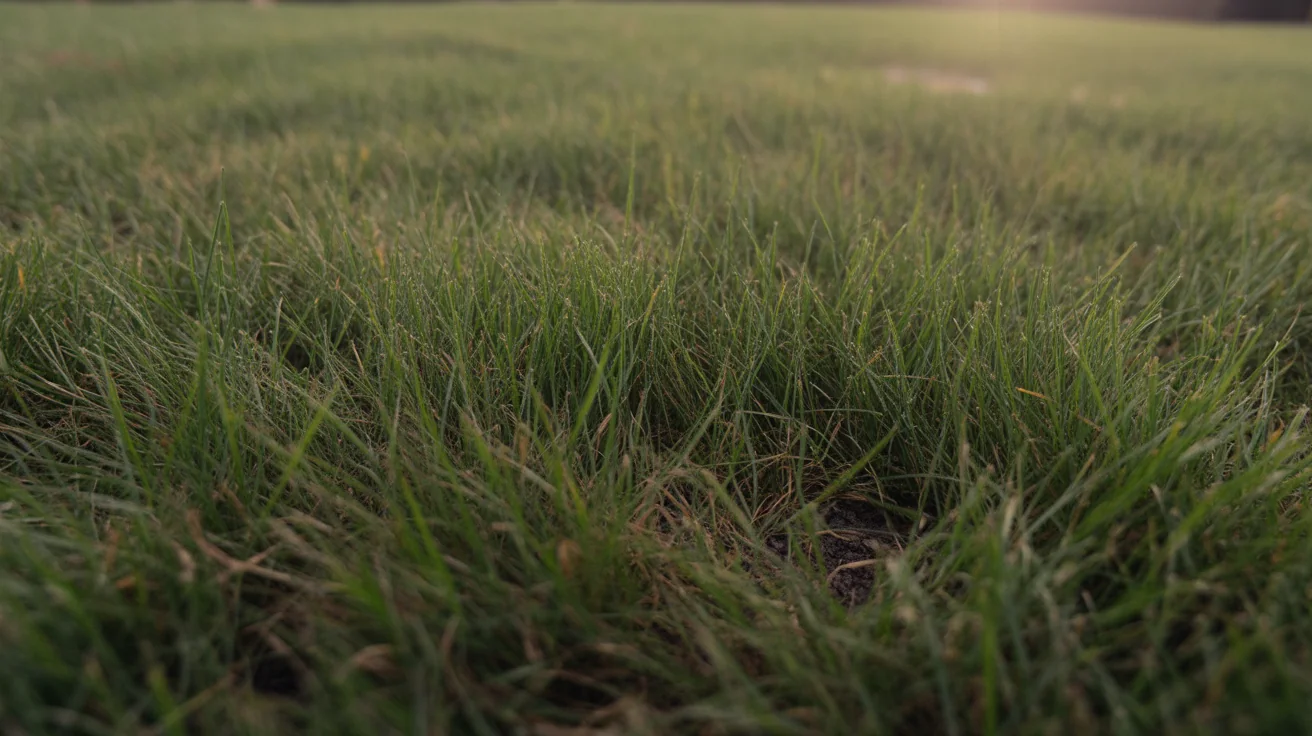
Tall Fescue
Coarser-bladed cool-season grass with deeper roots and much better traffic tolerance.
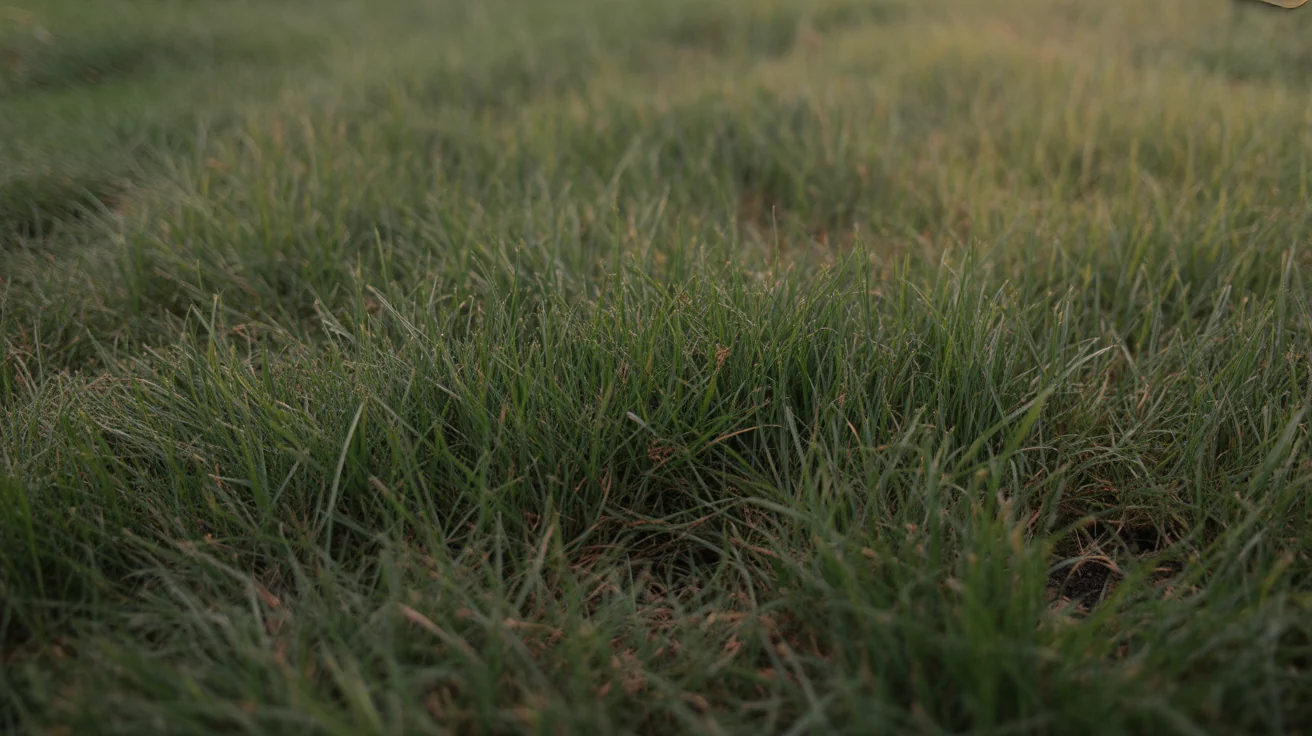
Kentucky Bluegrass
Denser, self-repairing cool-season turf that needs more sun and fertilizer than fine fescue.
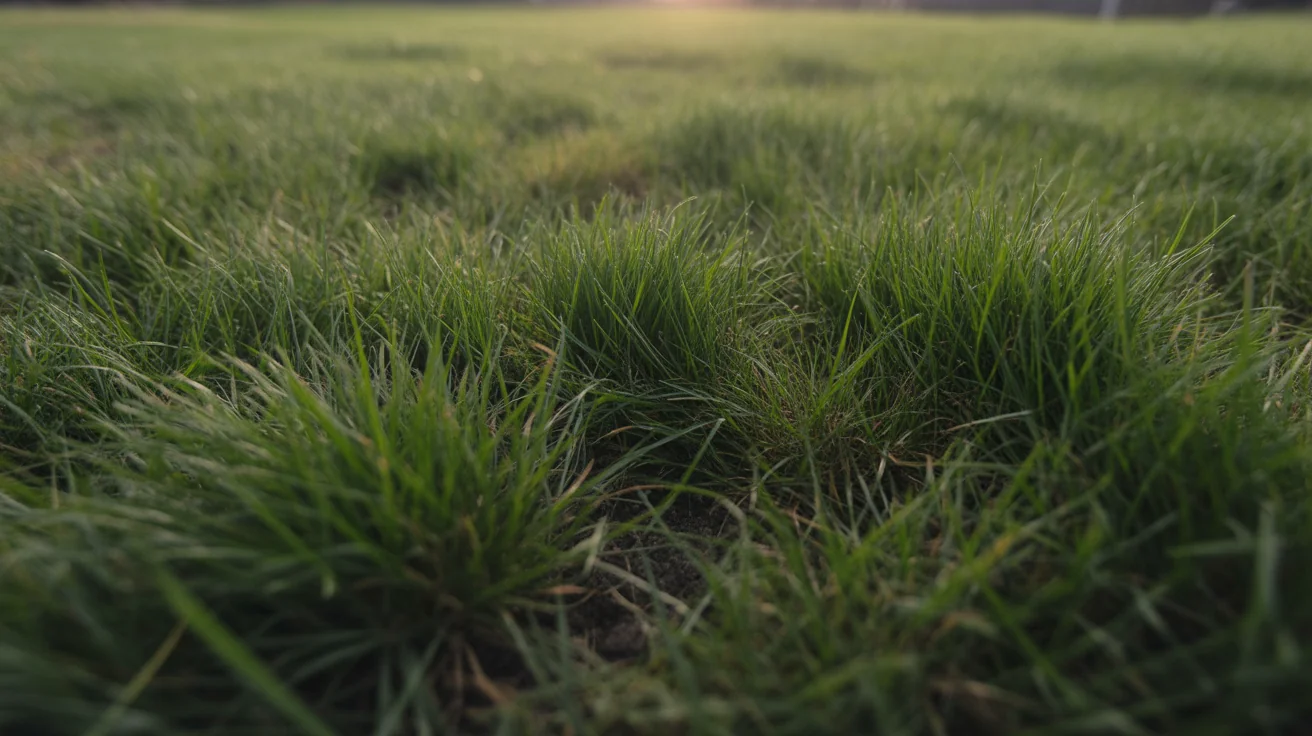
Perennial Ryegrass
Fast-germinating cool-season grass often blended with fine fescue for quicker establishment.
Bahia Grass
Bahia grass is a warm-season utility lawn built for sandy, hungry ground where fussier grasses give up.
Bermuda Grass
Grow Bermuda grass if you want a dense, sun-loving lawn that shrugs off heat, foot traffic, and summer drought.
Buffalo Grass
Many people treat buffalo grass like a regular high-input lawn, then wonder why it looks thin and weedy.