
What's a Burning Bush? How to Replace It Where It's Banned
Euonymus alatus Celastraceae
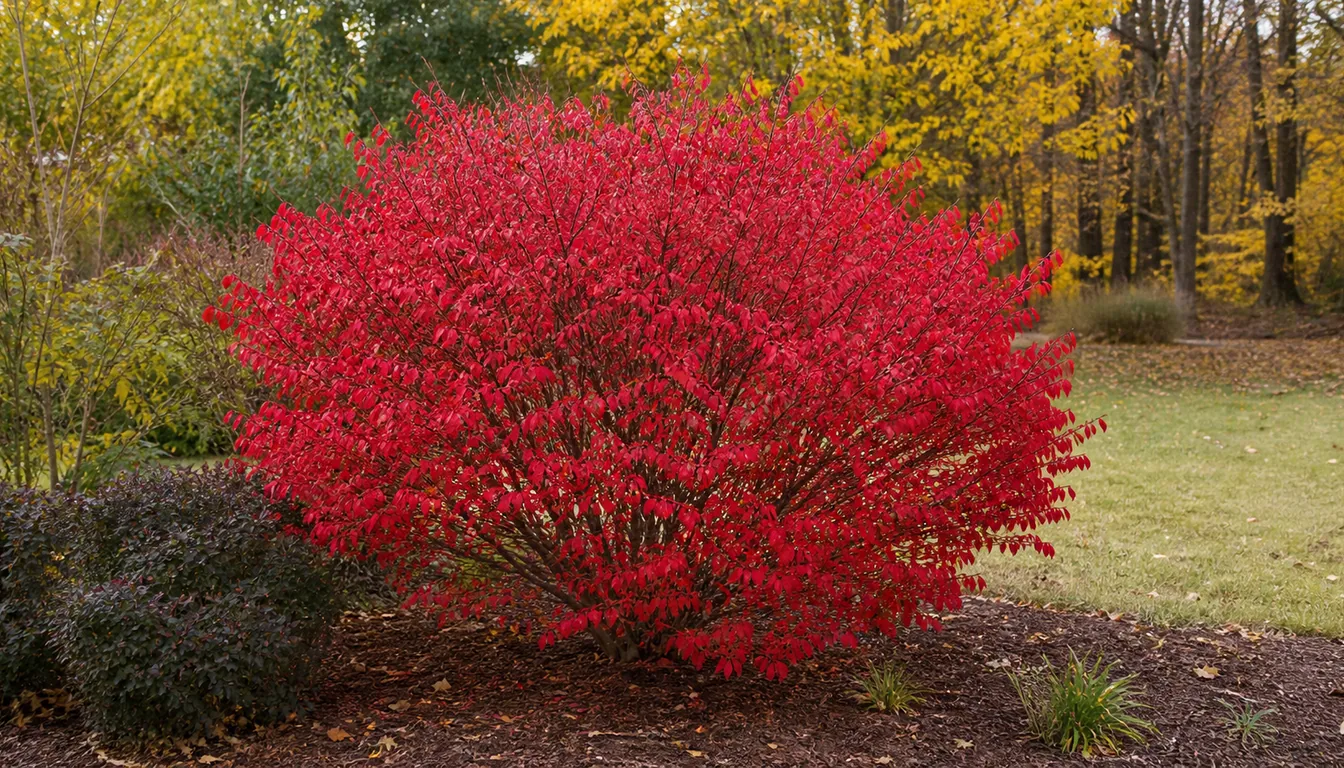
Burning bush (Euonymus alatus) is the winged-stem shrub planted for red fall leaves, and birds spread its seed so widely that Pennsylvania, Maine, and Minnesota now restrict it. An existing shrub can stay where state law allows, but it grows 15 to 20 feet wide when left alone and needs seedling checks every year.
Care snapshot
How Do You Identify Burning Bush, and Why Is It Restricted?
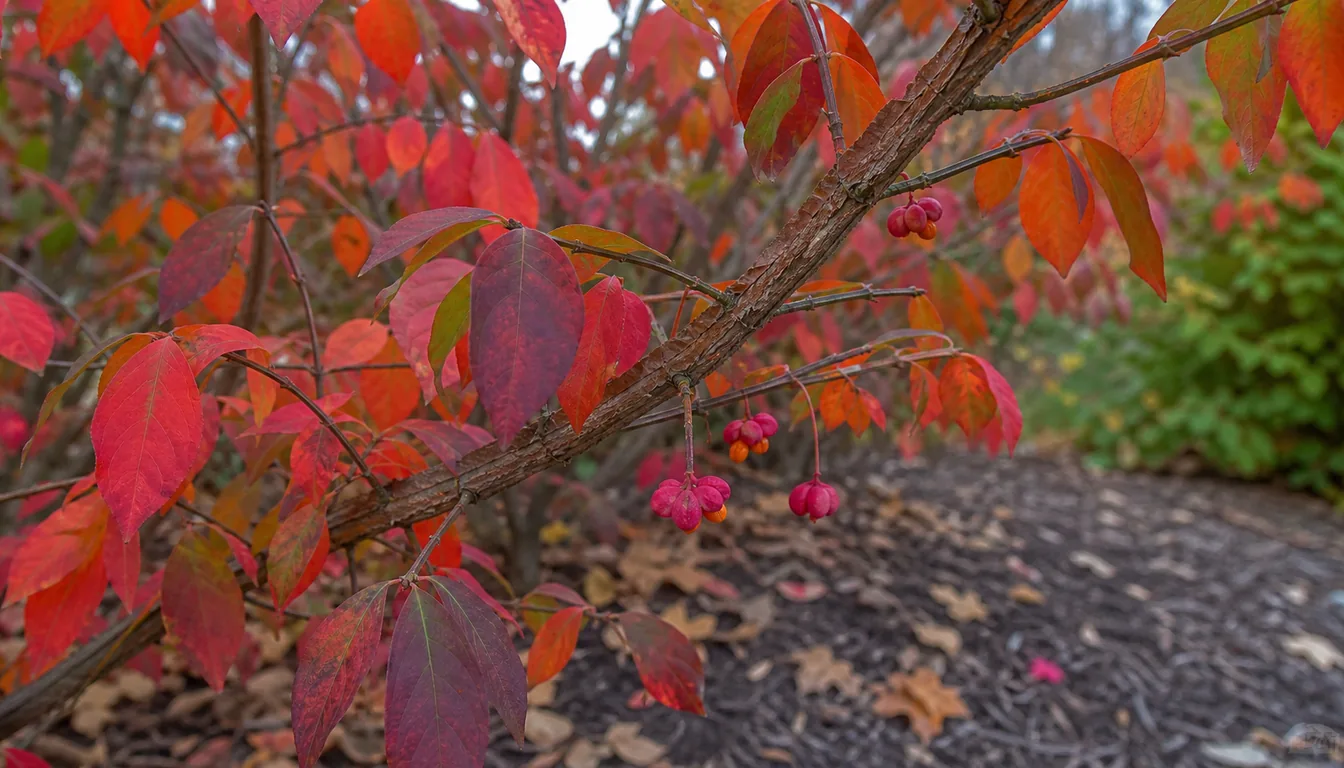
Burning bush is easiest to confirm in winter, when the corky wings along the green stems are the most visible feature. Penn State Extension lists the other marks as football-shaped leaves with fine teeth, small greenish spring flowers, brilliant red fall leaves, and purplish husks that split to show red-orange seeds.
Those seeds are the problem. NC State Extension notes that birds eat the fruit readily and carry the seed beyond the garden, and UConn's invasive plant factsheet adds that escaped plants form dense thickets whose shade blocks light to the native plants beneath them. The shrub also tolerates full sun to partial shade and many soils, so it establishes in woods as easily as in a foundation bed.
The common name causes confusion. Several plants are sold or described as burning bush, and the ASPCA's poison-control entry under that name is a different species, the native wahoo (Euonymus atropurpureus). The shrub on state invasive lists is the winged Asian species, Euonymus alatus. A broader look at the genus, including the evergreen hedge species, is on the euonymus profile.
Where Is Burning Bush Banned or Restricted?
No single national rule covers burning bush, so the answer depends on the state. These are the rules we read as of October 2026.
- Pennsylvania
- Declared a noxious weed. Penn State Extension says it is illegal to purchase, intentionally plant, or propagate it in the state.
- Maine
- Sale and import of the species and all cultivars, varieties and hybrids are prohibited, with variances possible for cultivars shown not to be invasive.
- Minnesota
- A restricted noxious weed. Propagation and sale are prohibited except for two seedless cultivars, Fire Ball Seedless ('NCEA1') and ZeroSeed ('ZeroSeed Blaze').
- Connecticut
- On the Connecticut Invasive Plant List, according to UConn Extension.
- North Carolina
- Listed by the NC Invasive Plant Council, and NC State Extension recommends alternatives.
- Arkansas
- The University of Arkansas extension service says invasiveness is not an issue there, while noting the plant is considered weedy in many eastern states.
A state missing from the table has not been checked here. The state department of agriculture keeps the current list, and lists change. Pennsylvania added burning bush after years of sales, so a plant that was legal when a neighbor bought it may not be legal to buy now.
Is 'Compactus' Actually Compact?
'Compactus' is the burning bush most garden centers sold, and its name promises more than it delivers. UConn's plant database puts the species at 15 to 20 feet tall with an equal spread and 'Compactus' at about 10 feet, while NC State gives 'Compactus' a range of 4 to 10 feet. That is smaller than the species but still far larger than most foundation beds allow.
- Species
- 15-20 ft tall and wide when left unpruned (UConn, NC State).
- 'Compactus'
- About 10 ft in UConn's listing, 4-10 ft in NC State's, and still a seed-setting plant.
- 'Timber Creek'
- 8-10 ft high and 6-8 ft wide (UConn).
- 'Pipzam'
- About 5 ft high (UConn).
- 'Rudy Haag'
- About 3 ft high and 3.5 ft wide after 15 years (UConn).
- 'Odom'
- About 30-36 in high (UConn).
A small cultivar changes the pruning problem but not the legal one. In Maine every cultivar is covered, and in Minnesota only Fire Ball Seedless and ZeroSeed are exempt. A shrub that fits under a window and still drops seed is still the plant those rules target.
Should You Keep, Contain, or Remove an Existing Burning Bush?
The rules we read govern buying, selling, propagating, and in Pennsylvania intentional planting. They do not order homeowners to dig out an existing shrub. That leaves a practical question about how much seedling control the plant is creating.
Keeping it is reasonable when the shrub has room for its full size, no woods, hedgerow, or unmanaged lot sits nearby for seed to escape into, and no seedlings turn up in the surrounding beds. It becomes a removal candidate when seedlings keep appearing along fences or in nearby woods, or when it has to be cut back hard every year to clear a window or walk.
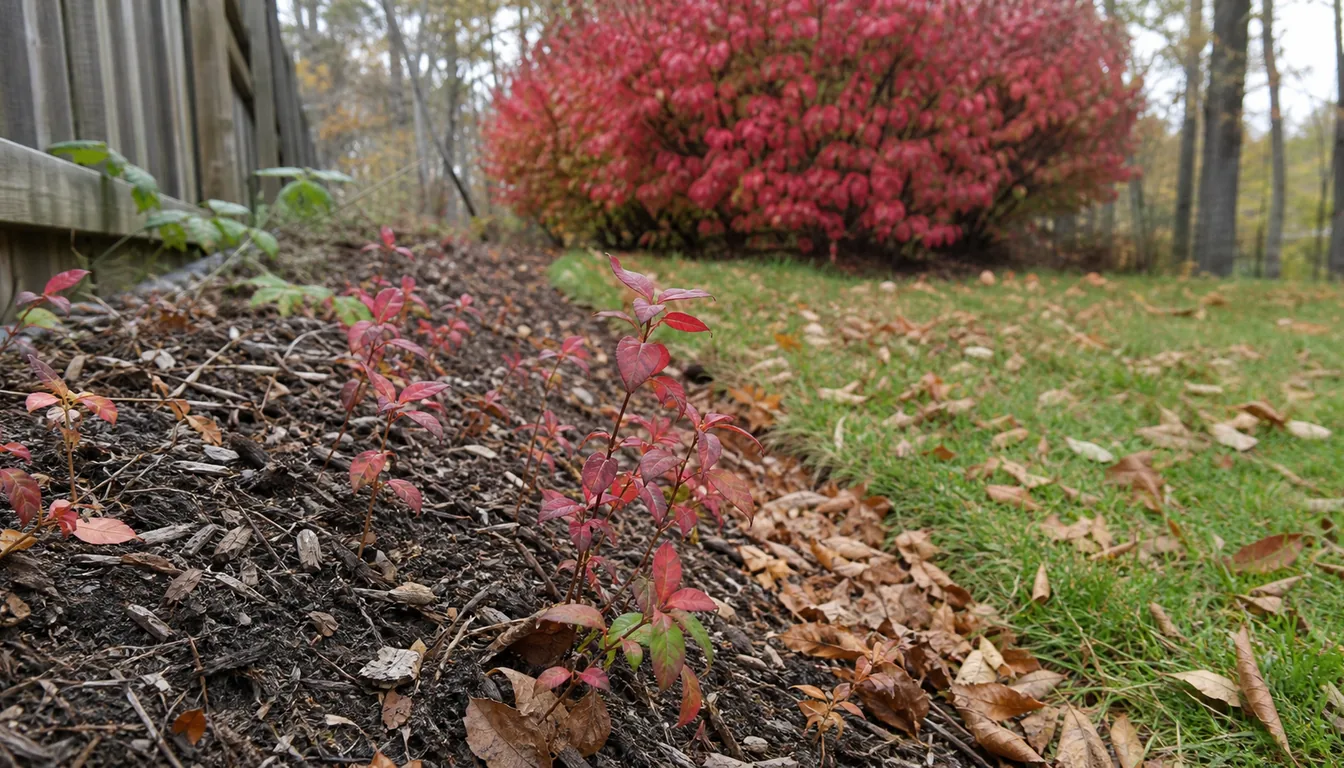
UConn's factsheet describes how to remove it. Saplings pull out by hand when the soil is moist, and larger shrubs can be dug with a spading fork. Cutting a shrub to the ground works only with follow-up, because the stump resprouts, and UConn lists a systemic herbicide such as glyphosate, sprayed on leaves or painted on cut stems, as the chemical option. The product label sets the rate and the conditions for any herbicide use.
- Pull seedlings while the soil is moist and the stems are thin enough to come out with the root.
- Dig larger plants with a spading fork rather than snapping them at the soil line.
- Treat or keep cutting resprouts after a shrub is cut down.
- Check fence lines and bed edges for new seedlings for more than one season after removal.
How Do You Care for a Burning Bush You Keep?
A burning bush that stays needs little care beyond size control. NC State and UConn describe it as tolerant of full sun to partial shade, adaptable to soil pH, drought tolerant once established, and easy to transplant.
Light affects the timing of the red, and regional advice differs. The University of Arkansas extension service recommends partial sun to dense shade in Arkansas because plants in full sun there color too early, and it describes the fall color as a soft pink. In the Northeast, where most of the restrictions are, the same shrub is usually grown in full sun or part shade.
Pruning is where most of the work goes, because a 15-foot shrub in a 6-foot space has to be cut every year. UConn calls it prune tolerant. Clemson Extension's renewal approach removes about one-third of the oldest stems at the base in the first year and continues over three years, which keeps the plant open instead of turning it into a twiggy sheared ball. If the shrub still has to be cut hard every year to fit, removal usually costs less work over time.
Pest problems are modest. NC State lists spider mites and twig blight, and UConn names euonymus scale, which shows up as small bumps on the stems and is covered in more detail on the euonymus profile.
What Can You Plant Instead of Burning Bush?
Penn State Extension and UConn both suggest native replacements that cover the red-fall-color job without the same seed spread. The best pick depends on whether the shrub was there for leaf color, flowers, or fruit.
- Red fall leaves
- Red chokeberry, fragrant sumac, or highbush blueberry, all named by Penn State or UConn for fall color.
- Spring flowers and fall color
- Native viburnums, which Penn State notes for spring flowers and maroon fall leaves.
- Shrubby dogwoods
- Silky, gray, and red stem dogwoods from Penn State's list, with red twig dogwood also on UConn's fall-color list.
- Berries that hold into winter
- Highbush cranberry and winterberry, which UConn lists for persistent fruit.
Several of these have profiles here. Viburnum covers the large-shrub replacement with flowers and fruit. Highbush blueberry gives red fall leaves and a crop, and winterberry is covered on the holly profile, since it is a deciduous holly that needs a male plant nearby to set berries.
Is Burning Bush Toxic to Pets?
Its toxicity to pets has not been documented for this species. The ASPCA's burning bush entry is the native wahoo, Euonymus atropurpureus, which it lists as toxic to dogs, cats, and horses because of alkaloids and cardenolides, with vomiting, diarrhea, abdominal pain, and weakness, and heart rhythm problems at large doses. We found no ASPCA record for Euonymus alatus itself.
NC State Extension's toolbox entry for Euonymus alatus lists all parts as poisonous to people, with low severity and symptoms that include nausea, vomiting, and diarrhea when large quantities are eaten. Neither source makes the plant safe to chew. A dog that eats the fruit or leaves is a reason to call a veterinarian or the ASPCA Animal Poison Control Center.
Frequently Asked Questions
Is burning bush illegal to plant?
In some states. Pennsylvania lists it as a noxious weed, Maine bans its sale and import, and Minnesota restricts it except for two seedless cultivars. Other states may only advise against it.
Is 'Compactus' burning bush allowed where the species is banned?
Not in the states we checked. Minnesota names 'Compactus' as not exempt, and Maine's ban covers all cultivars.
How big does burning bush get?
The species reaches 15 to 20 feet tall and wide when unpruned. 'Compactus' still reaches about 10 feet in UConn's listing.
What can I plant instead of burning bush?
Penn State and UConn suggest native viburnums, red chokeberry, fragrant sumac, highbush blueberry, shrubby dogwoods, and winterberry, depending on whether you want fall color, flowers, or fruit.
Is burning bush poisonous to dogs?
No veterinary record covers Euonymus alatus itself. ASPCA lists the related wahoo as toxic to dogs, cats, and horses, and NC State lists all parts of burning bush as poisonous to people in large amounts.
Sources & References
- Euonymus alatus, NC State Extension Gardener Plant Toolbox
- Burning Bush, Penn State Extension
- Winged Burning Bush, Minnesota Department of Agriculture
- Invasive Plants Prohibited from Sale or Import in Maine, Maine Department of Agriculture, Conservation and Forestry
- Invasive Plant Factsheet: Burning bush/Winged Euonymus, UConn Extension
- Euonymus alatus, UConn Plant Database
- Winged Euonymus (Burningbush), University of Arkansas Cooperative Extension Service
- Burning Bush (Euonymus atropurpurea), ASPCA Toxic and Non-Toxic Plants
- Pruning Shrubs, Clemson Cooperative Extension Home & Garden Information Center
Related Plants
Ninebark
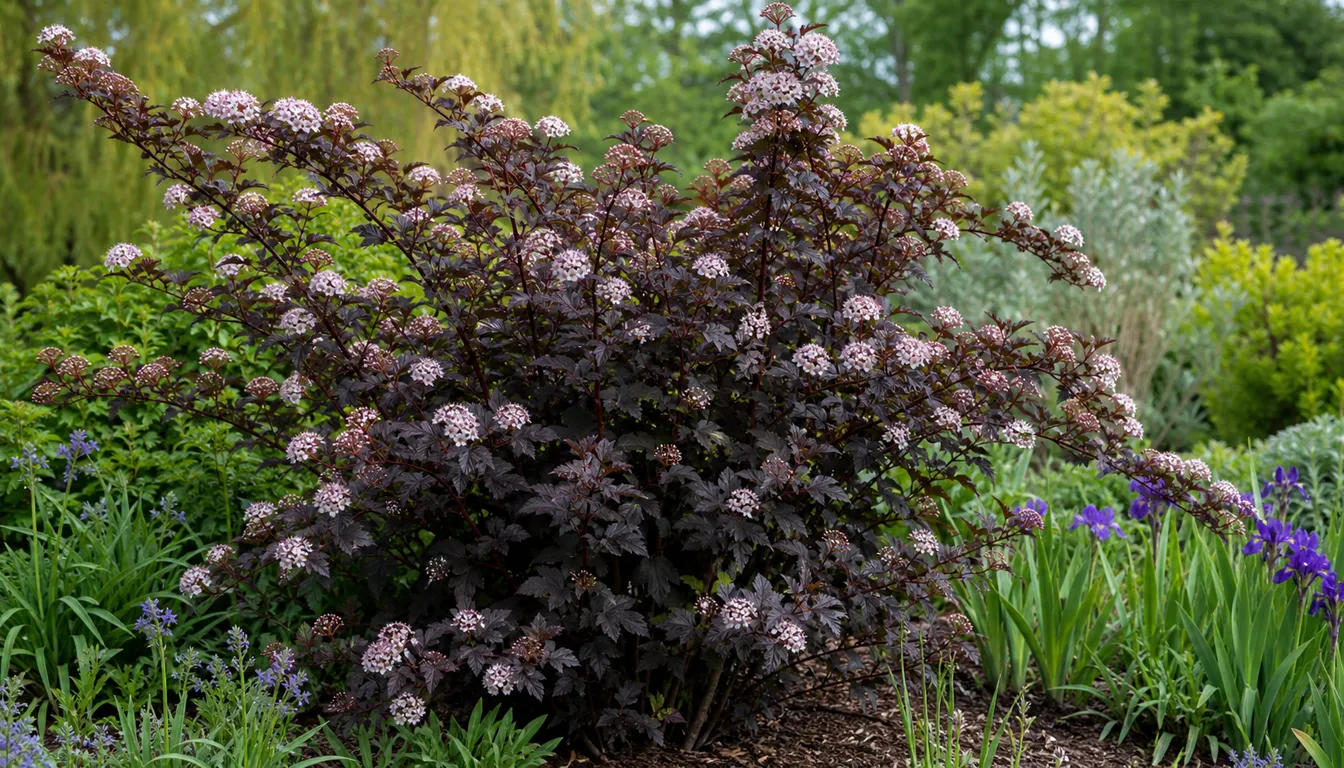
A tough shrub with colorful foliage and useful structure where burning bush is discouraged.
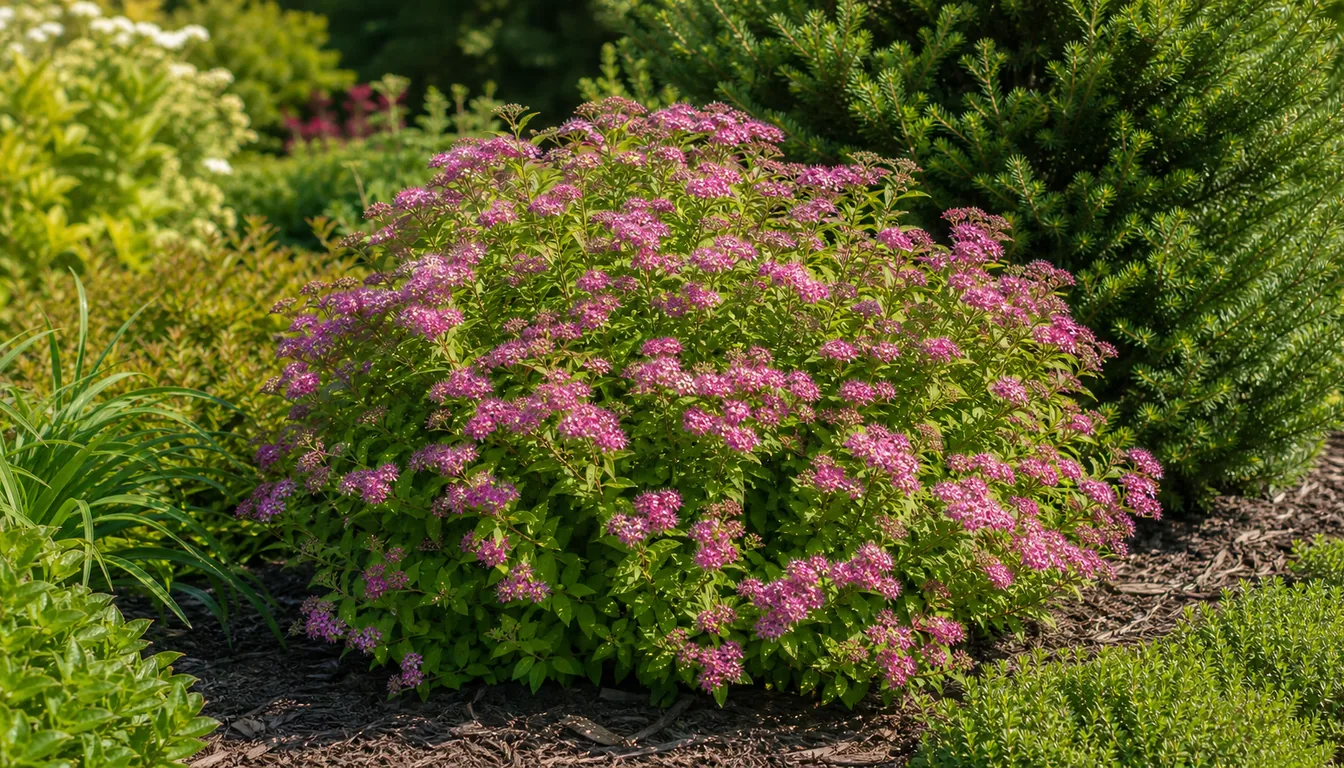
Spirea
A smaller flowering shrub for beds that cannot hold a broad burning bush.
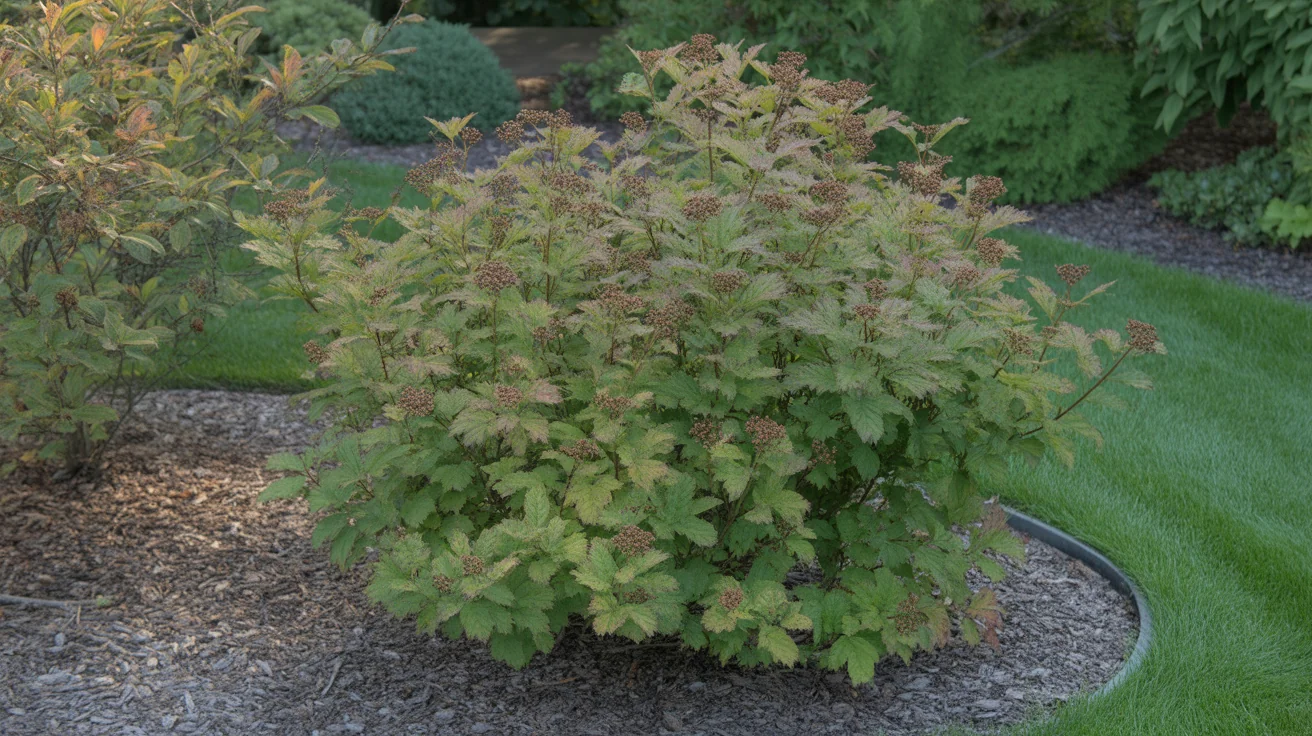
Viburnum
A broad shrub group with flowers, berries, and fall interest depending on species.
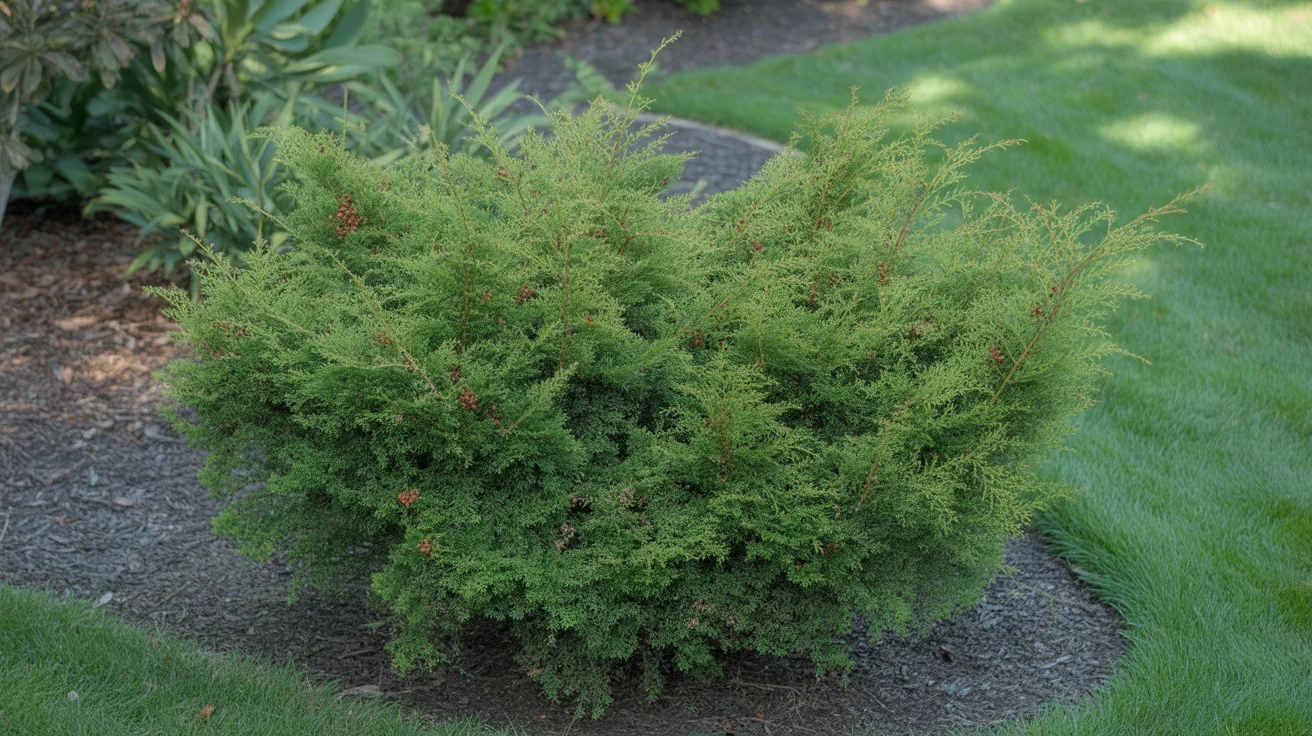
Arborvitae
Arborvitae can form a dense living screen where its mature width, exposure, and water needs fit the site.
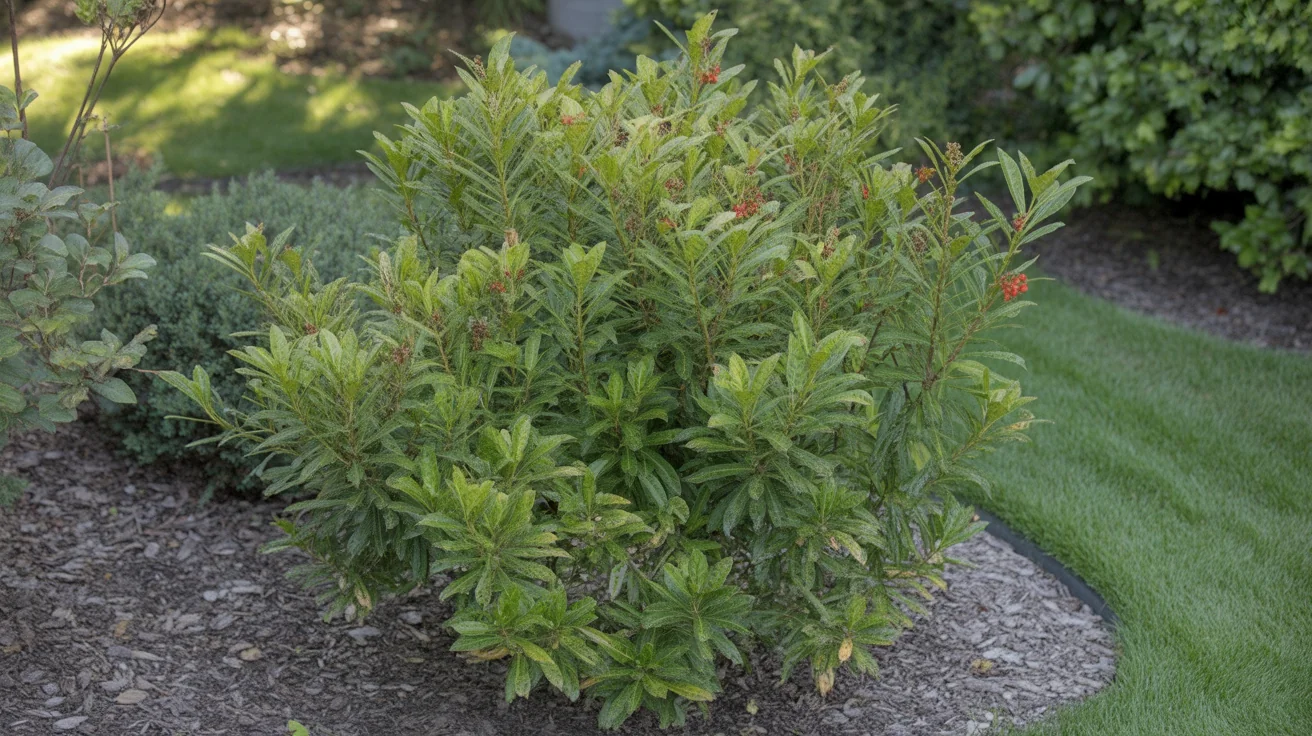
Aucuba
Aucuba is the shrub for bright shade with dry root competition. It keeps evergreen structure near north walls, porches…
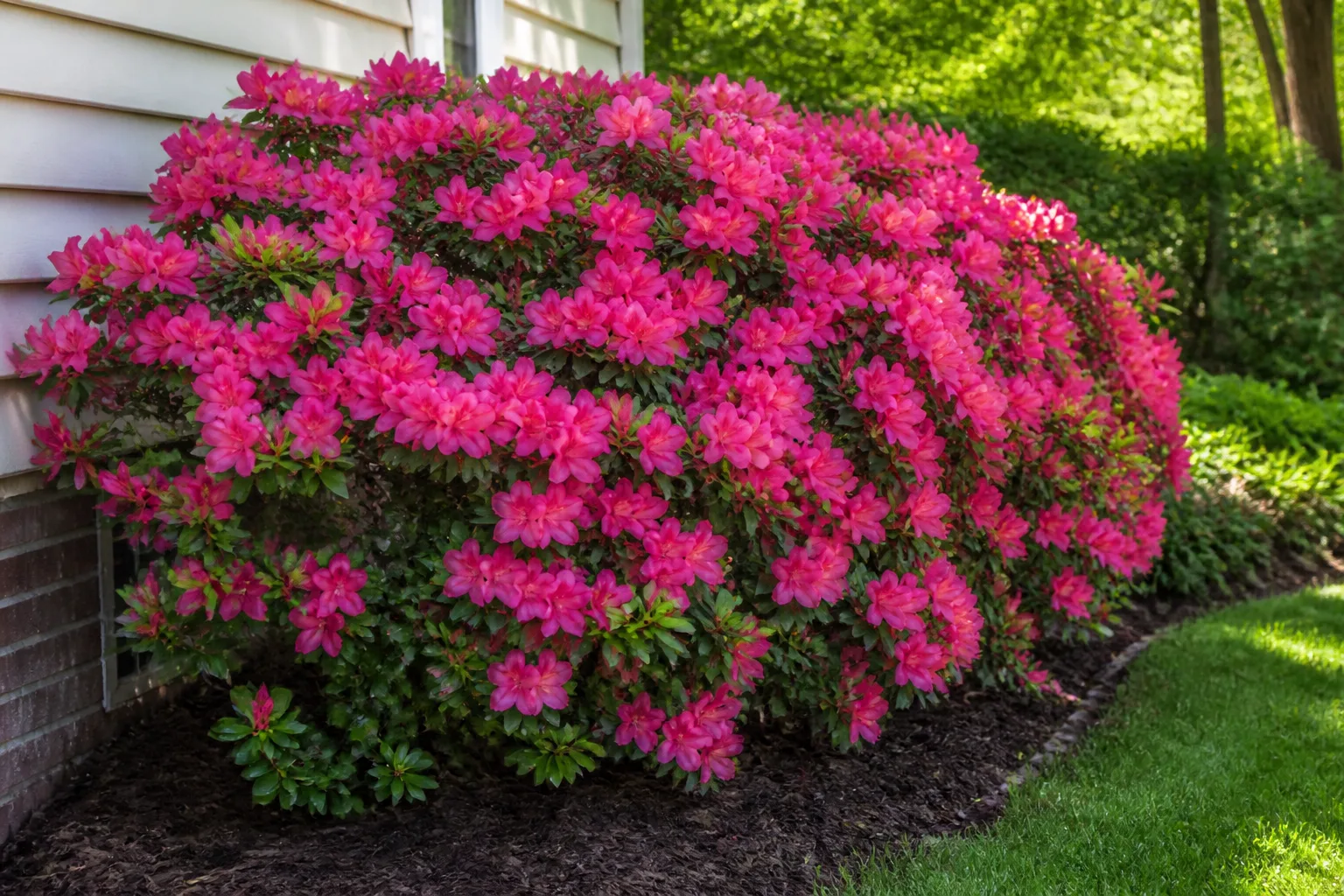
Azalea
Azaleas bring spring flowers, and some cultivars bloom again later in the year.