
How to Grow Flowering Dogwood in a Site That Protects Its Roots
Cornus florida Cornaceae
Flowering Dogwood is easiest to grow when you copy the place it wants to live. It likes bright woodland-edge light, cool root soil, leaf-rich drainage, and gentle pruning.
It struggles when people plant it in hot reflected sun and treat it like a hard-surfaced street tree.
Care snapshot
Where Does a Flowering Dogwood Grow Best?
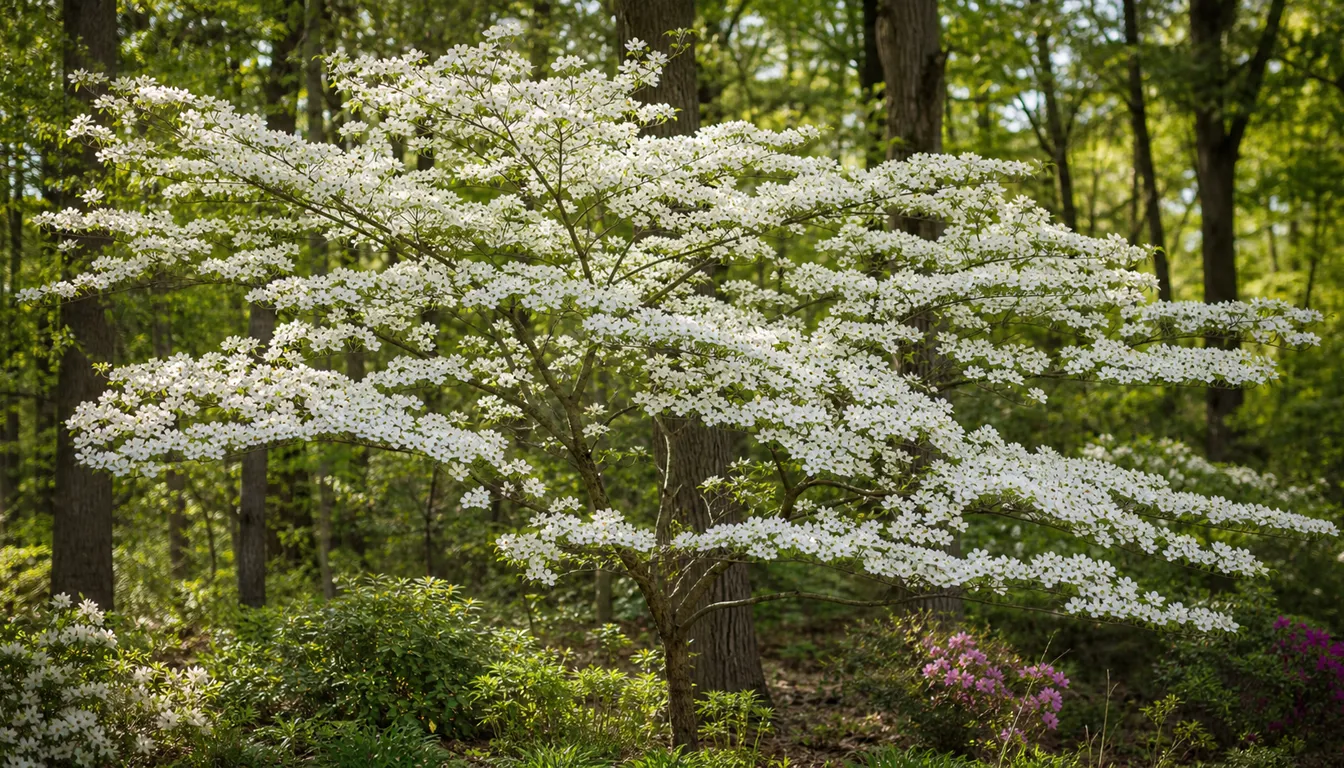
Flowering dogwood (Cornus florida) is a small deciduous understory tree with tiered branches and showy spring bracts. It grows best at a bright woodland edge without the reflected heat and pavement stress of a parking strip or open lawn.
Full sun works in cooler climates with reliably moist soil, usually six or more hours a day.
In warmer regions, morning sun with afternoon relief performs better than all-day exposure.
Morning light warms and dries the canopy without the added heat load a hot afternoon builds. That heat load, more than raw sun exposure, is what pushes leaf temperatures high enough to trigger scorch.
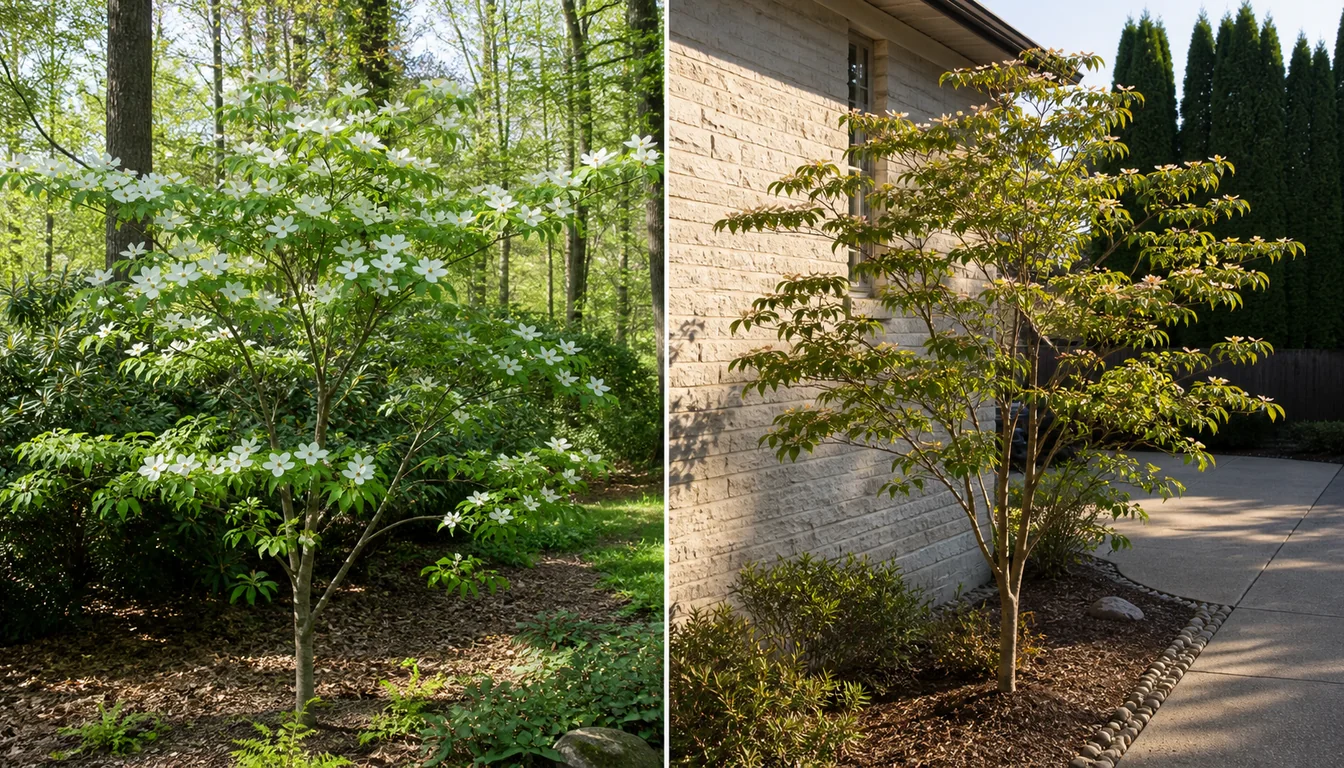
Reflected heat from walls, driveways, and open turf is the most common site mistake for this species.
The damage builds slowly, showing up as leaf scorch and thin bloom for years before most people trace it back to placement.
Give it distance from taller canopy trees rather than planting directly under a dense crown. Too little overhead clearance cuts off the morning light this tree needs to bloom well, even in an otherwise shaded yard.
A young tree benefits from afternoon shade even in a naturally cooler climate, since establishment stress lowers its heat tolerance until the roots take hold.
In the coldest parts of its hardiness range, even a well-sited tree benefits from wind protection during establishment. Cold combined with wind desiccates young wood faster than either factor alone.
A yard that already grows healthy azalea or rhododendron is a strong hint the site suits Dogwood too. Both share the same acid, well-drained, part-shade preference this tree wants.
For a hot, open lawn with no natural shade relief, ginkgo or red maple usually performs better than forcing this tree into the wrong spot.
What Are Dogwood Bracts, and When Does the Tree Bloom?
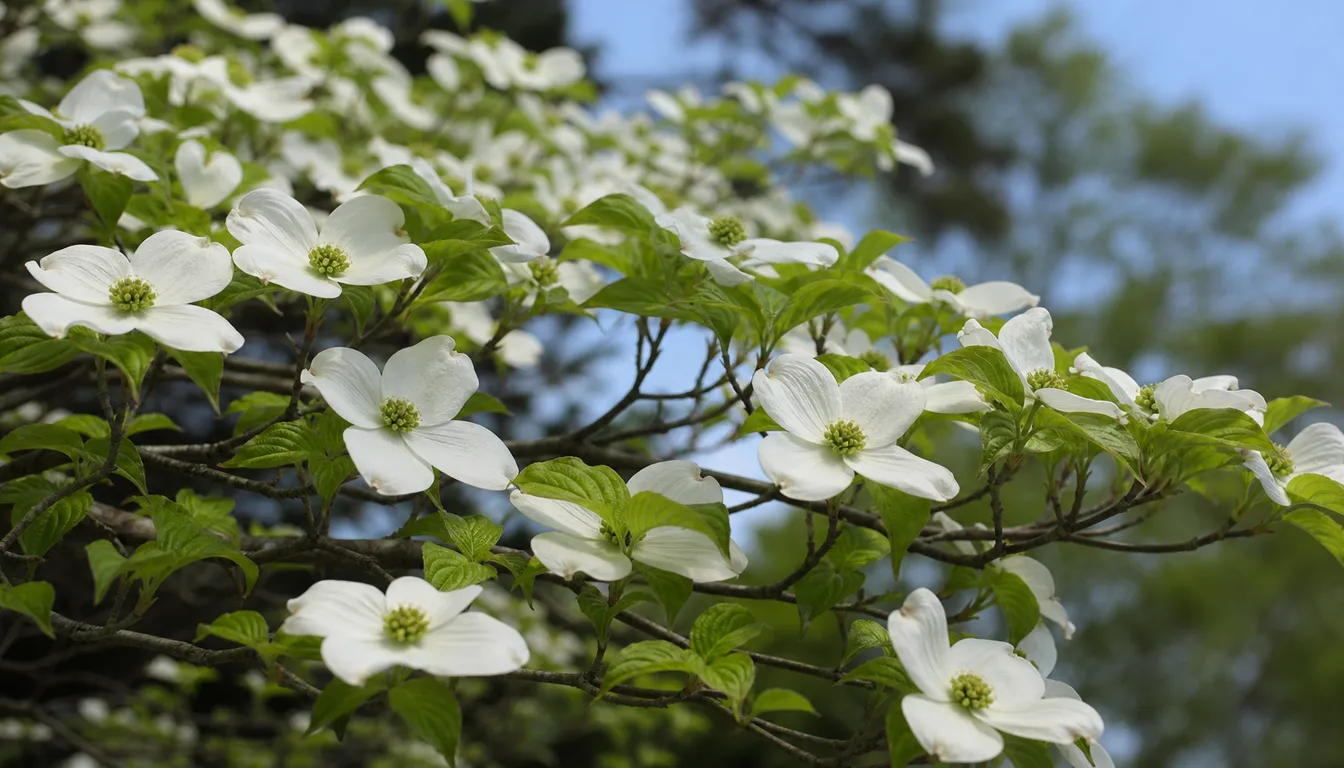
Most people call the big white or pink display the flower, but the showy parts are bracts, modified leaves that ring the true flowers. The true flowers sit small and yellow-green at the center of each cluster.
Bloom opens before or alongside new leaf growth in early to mid spring. The exact week shifts by region and by how warm that particular spring runs.
Individual bracts commonly reach two to four inches across, arranged in fours around each flower cluster.
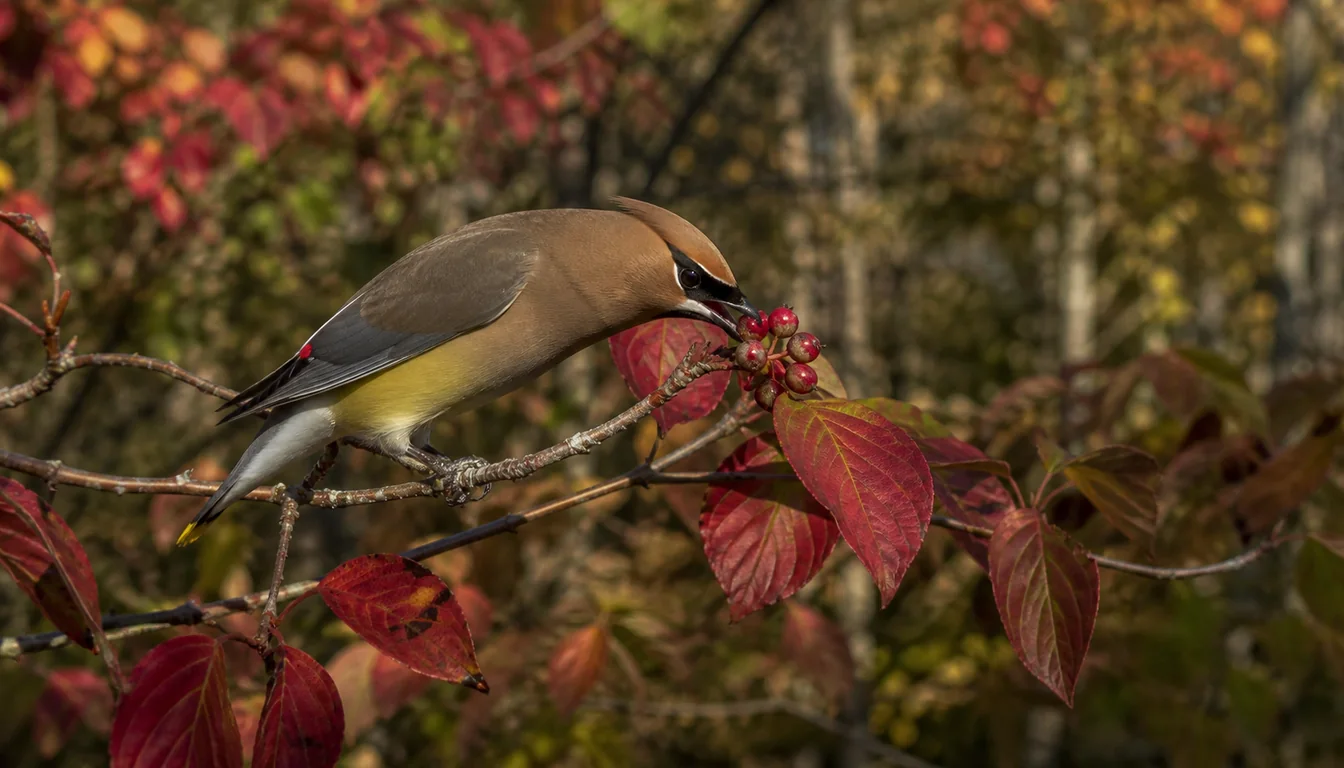
The tree keeps earning its place after bloom fades. Red fruit ripens in fall and draws birds, while the foliage often turns red to reddish-purple before it drops.
That multi-season value sets Dogwood apart from a brief-bloom tree like cherry blossom.
Layered horizontal branching keeps winter structure visible long after leaves and fruit are gone. That structure is also why this tree reads well at close range near a house or path instead of needing a big setback.
- Spring
- Large bracts around small true flowers
- Summer
- Layered green canopy and developing fruit
- Fall
- Red fruit for birds and warm foliage color
- Winter
- Tiered branch structure still reads clearly
Which Dogwood Species and Cultivars Resist Disease?
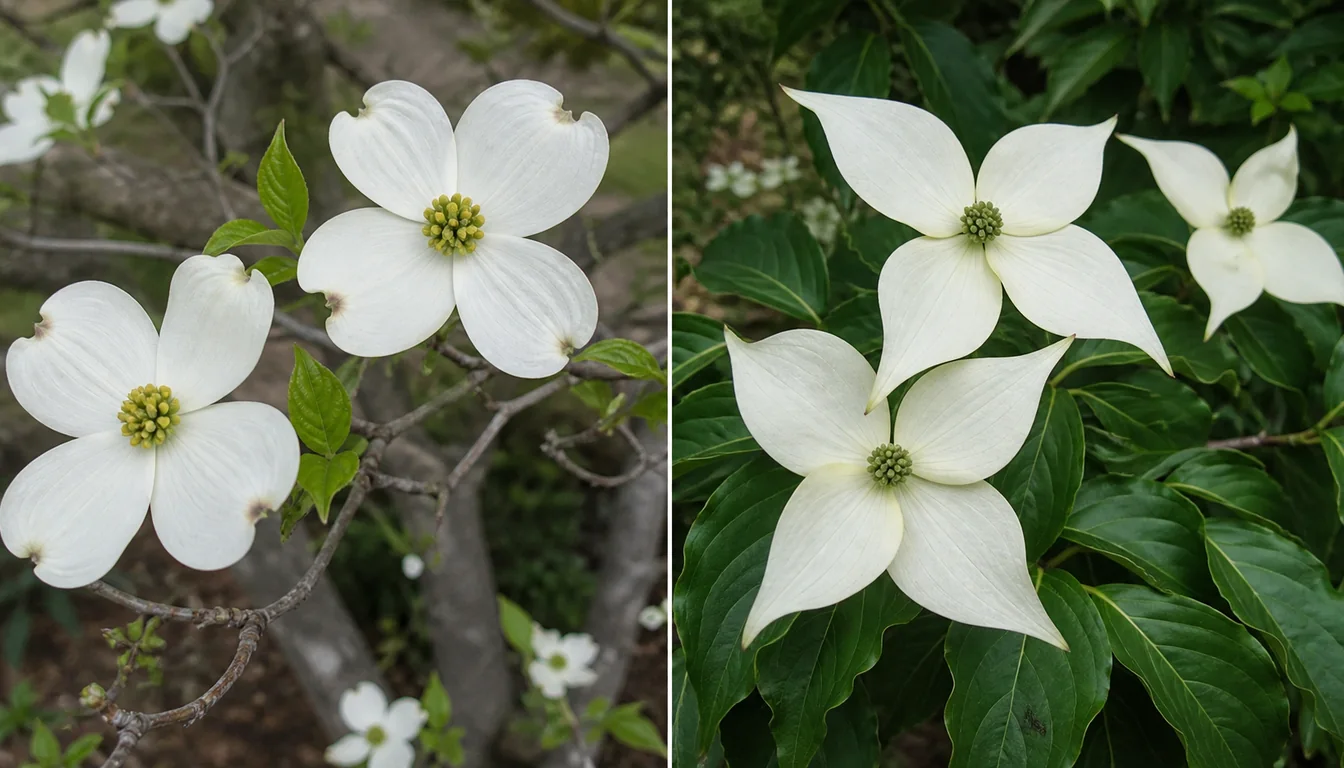
Not every dogwood at a nursery is the same species, and the difference matters more than bract color. Kousa Dogwood blooms several weeks later than native Flowering Dogwood and carries far stronger resistance to anthracnose.
In cool, damp, high-elevation regions where anthracnose pressure runs highest, kousa dogwood is usually the safer long-term choice.
Native flowering dogwood still performs well in lower-elevation and warmer regions where that disease pressure eases.
Cultivars bred specifically for anthracnose tolerance, such as Appalachian Spring, give another path to a native tree in a high-pressure region. They cost more than a generic seedling but carry a real resistance advantage.
Bract color is a simpler choice once site and disease risk are settled.
Cherokee Chief and Rubra offer pink bracts against the species' usual white, with no meaningful care difference between color forms.
Choosing native flowering dogwood over kousa still matters for a wildlife-focused planting. The native species carries a longer regional relationship with local pollinators and birds than the introduced kousa does.
Straight native seedlings cost far less than named cultivars and still perform well outside high-pressure disease regions.
Save the cultivar premium for a site where the resistance genuinely matters.
Bare-root native seedlings are usually sold and planted in late winter or early spring while dormant. Container-grown trees, native or kousa, can go in the ground through most of the growing season instead.
A local county extension office can confirm the anthracnose pressure history for a specific area before you choose between species.
- High anthracnose pressure (cool, damp, high elevation)
- Choose Kousa Dogwood or a resistant cultivar like Appalachian Spring
- Warmer, lower-elevation region with average disease pressure
- Native Flowering Dogwood performs well without special resistance breeding
- Wildlife value is the priority
- Native Flowering Dogwood, for its longer relationship with local birds and pollinators
How Should You Plant and Mulch a Dogwood?
A stressed Dogwood often starts underground. The roots want leaf-rich, slightly acidic to neutral soil, generally under pH 7, that drains steadily without baking hard or holding standing water.
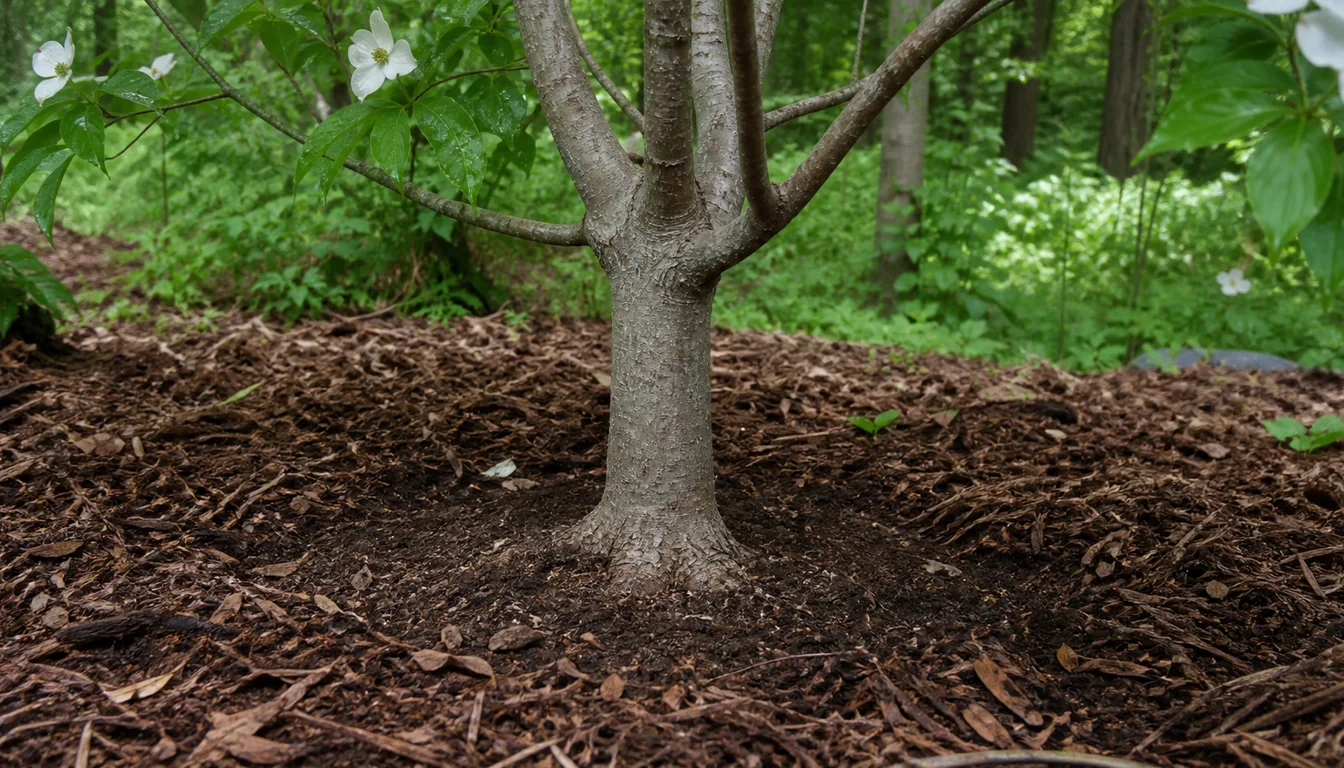
Plant so the trunk flare, where the trunk visibly widens into the root system, stays above the soil line.
A tree planted too deep can decline for years with symptoms that look confusing because leaves, bloom, and twigs all fail differently.
Grass growing right up to the trunk causes mower and trimmer wounds that open the bark to disease. A mulch ring two to three inches deep, kept off the bark, mimics the leaf-litter floor this species evolved in.
A mulch volcano piled against the trunk creates the same rot risk as planting too deep.
Keep the flare visible and the mulch pulled back a few inches from the bark.
If the native soil is badly compacted, use the same approach covered in fixing compacted soil before planting rather than fighting it season after season.
If you're unsure what texture you're aiming for, picture loamy soil as the target.
Alkaline clay is a common mismatch in parts of the country, and it shows up as pale, yellowing leaves called chlorosis rather than outright decline. Elemental sulfur worked into the topsoil before planting can bring pH down into the range this tree actually wants.
A simple soil test confirms pH before adding sulfur, since guessing wrong can push pH too far in the other direction.
Staking a young tree loosely for its first year helps it hold a straight trunk in a windy site. Remove the stakes once the tree can stand on its own, typically after one full growing season.
How Often Should You Water a Dogwood?
Dogwood roots run shallow and wide, so they show drought stress earlier than deep-rooted trees even when nearby plants look fine. Light daily sprinkling never reaches the whole root zone this tree depends on.
The deep watering approach, an infrequent soak that wets the full root zone, works better than frequent shallow watering.
Let the upper surface dry slightly before the next round instead of keeping it constantly damp.
Newly planted trees need steady watering through their first two to three growing seasons while roots establish into the surrounding soil. Established trees mainly need extra water during long dry spells or in reflected-heat sites.
Some afternoon droop in hot weather is normal and not a sign of trouble.
Wilt that persists into the morning is the real warning, meaning the root zone is no longer keeping up.
A consistent mulch layer moderates soil temperature swings as much as it holds moisture, which matters most during the tree's first two summers in the ground.
A soaker hose or a slow trickle at the drip line delivers water more evenly than a hose aimed at the trunk.
Push a finger or a trowel a few inches into the mulch, and water again once that layer starts to dry.
- Water new trees steadily through the first two to three seasons after planting.
- Keep mulch two to three inches deep over the root zone, pulled back from the bark.
- Avoid watering patterns that keep foliage wet late into the evening.
- Watch for morning wilt, not afternoon droop, as the sign a deep soak is overdue.
Is It Anthracnose, Heat Scorch, or a Bloom Problem?
This is the section that usually saves the tree. Many owners see damaged leaves and assume insects, when the real split is between fungal disease, heat stress, and a separate bloom problem.
Dogwood anthracnose is caused by the fungus Discula destructiva.
It hits hardest in cool, damp spring weather and at higher elevations, producing leaf blotches, twig dieback, and cankers that can kill branches or the whole tree over several seasons.
Spot anthracnose is a different, more common fungus that stays mostly cosmetic. It shows as small leaf spots without the dieback that makes Discula anthracnose genuinely dangerous, and it favors lower elevations.
Heat scorch looks different again.
Brown leaf edges concentrate on the sun-exposed or pavement-facing side of the canopy, tracking site exposure rather than a wet spring.
A stressed tree with mower or trimmer wounds in the bark is also more likely to attract dogwood borer, a pest that tunnels into damaged bark rather than healthy tissue.
Protecting the trunk from mechanical damage prevents this pest too, not just rot.
Poor bloom is a separate question from any leaf disease. Too much shade, a hard pruning cut that removed flower buds, or a tree still recovering from drought can all reduce the spring show even when the leaves look fine later.
Because the causes differ, the fixes differ too.
More spray will not solve a heat-baked site, and more water will not solve a shaded canopy that never gets enough energy to bloom.
A high-value tree in a known anthracnose region can benefit from a preventive fungicide program timed to bud break. Treat that as a targeted exception rather than a routine habit.
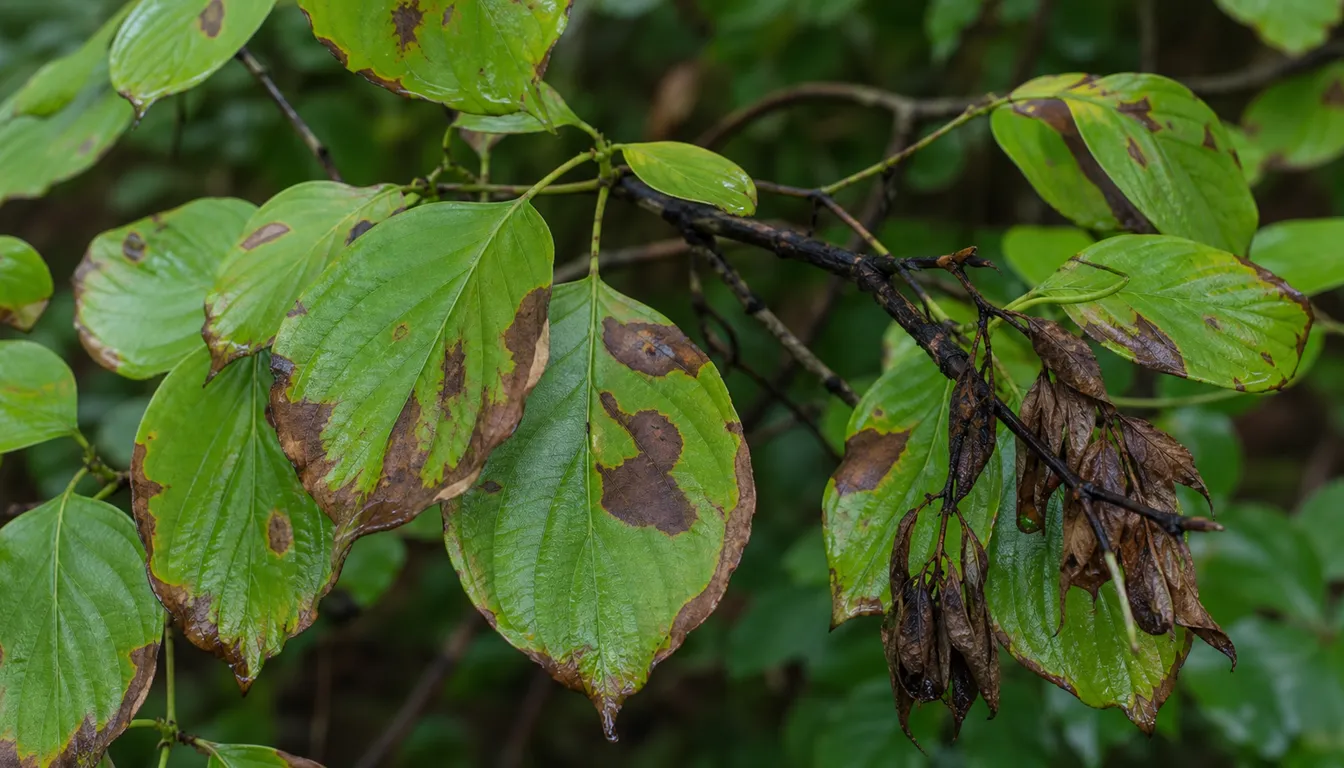
Likely Discula anthracnose, worse in cool damp spring weather and at higher elevations.
Likely the more cosmetic spot anthracnose, more common at lower elevations.
Likely heat scorch from reflected heat or an overly exposed site.
When and How Should You Prune a Dogwood?
Dogwood looks best when its natural tiers stay visible. Most of the time that means removing dead, rubbing, or awkward shoots rather than reshaping the whole canopy.
Prune during dormancy when possible.
Cutting during a wet, active spring raises the chance of spreading anthracnose spores through fresh wounds.
This is not a hedge plant and does not improve from repeated heavy shaping the way some spirea varieties do. Major cuts on a healthy tree usually do more harm than good.
Clean cuts with sharp, sanitized tools heal faster and give anthracnose less opportunity to enter through torn tissue.
Wound paint is not necessary and can trap moisture against the cut instead of helping it close.
Avoid pruning in wet weather, when fungal spores spread most easily.
The most common damage actually comes from the ground, not the pruning saw. Mower strikes, string-trimmer scars, and mulch piled on the bark cause more long-term decline than a missed pruning season ever does.
Hold off on corrective shaping for the first year or two after planting and let the tree establish first.
Why Is Flowering Dogwood Valuable for Wildlife?
No ASPCA or NC State pet toxicity record was found for flowering dogwood, so its safety near play areas and dog runs is unknown, while oleander is listed by ASPCA as toxic to dogs, cats, and horses. If a pet eats dogwood leaves or berries, contact a veterinarian or ASPCA Animal Poison Control.
It also contributes real wildlife value. Birds use the fall fruit, and the native species' long regional history gives it a stronger ecological role than many purely ornamental import trees.
Robins and cedar waxwings are frequent visitors to a fruiting tree in fall.
Early spring bloom also makes it one of the first nectar sources native bees find each year.
Squirrels and other small mammals feed on the fall fruit crop alongside songbirds.
The native identity also helps it fit well into layered plantings with hosta.
The tree rewards close-range viewing near a house or path, since its branch and bract detail holds up at short distance. A large shade tree needs real setback to appreciate, but this one does not.
It is not a fast privacy screen and it is not suited to a hot parking-strip planting. Expecting either role from it usually leads to disappointment and a stressed tree.
Best Yard Roles
- Woodland-edge focal tree near paths or windows
- Native small tree in layered shade gardens
- Bird-friendly ornamental with close-range detail
Wrong Expectations
- Fast privacy tree for a fence line
- Heat-baked parking-strip tree
- Plant that stays happy in turf and reflected pavement glare
Frequently Asked Questions
Can I grow a Dogwood in full sun?
You can in cooler climates or with very good soil moisture, but Dogwood usually performs better with morning sun and some relief from the hottest late-day exposure.
Should I plant Kousa or Flowering Dogwood?
Kousa Dogwood resists anthracnose far better and suits cool, damp, high-elevation regions, while native Flowering Dogwood performs well and offers stronger wildlife value where disease pressure is lower.
Do Dogwood trees have invasive roots?
No, Dogwood roots are not usually classed as invasive in the way large aggressive shade trees can be. They are, however, shallow enough to dislike competition from lawn and pavement heat.
Why is my Dogwood not flowering well?
Too much shade, drought stress, or rough pruning are common reasons. A tree that is spending energy just surviving will usually cut back on bloom.
How fast does a flowering Dogwood grow each year?
Dogwood usually grows at a moderate pace, especially when young and well-sited. It is not a fast privacy tree, but it reaches useful small-tree size without taking decades.
Can I grow flowering Dogwood in a container?
Only for a short time while the tree is young. Long-term container culture is difficult because Dogwood prefers a cool wider root zone and even moisture.
Sources & References
- Flowering Dogwood for American Gardens, NC State Extension
- Dogwood Diseases and Their Control, University of Georgia Extension
- Cornus florida, Missouri Botanical Garden Plant Finder
- Flowering Dogwood, University of Tennessee Extension
- Cornus florida, Flowering Dogwood, Missouri Botanical Garden Plant Finder
- Flowering Dogwood in the Landscape, North Carolina State Extension
- Cornus florida, Flowering Dogwood, USDA NRCS Plant Guide
- Toxic and Non-toxic Plants: Oleander | ASPCA
Related Plants
Japanese Maple
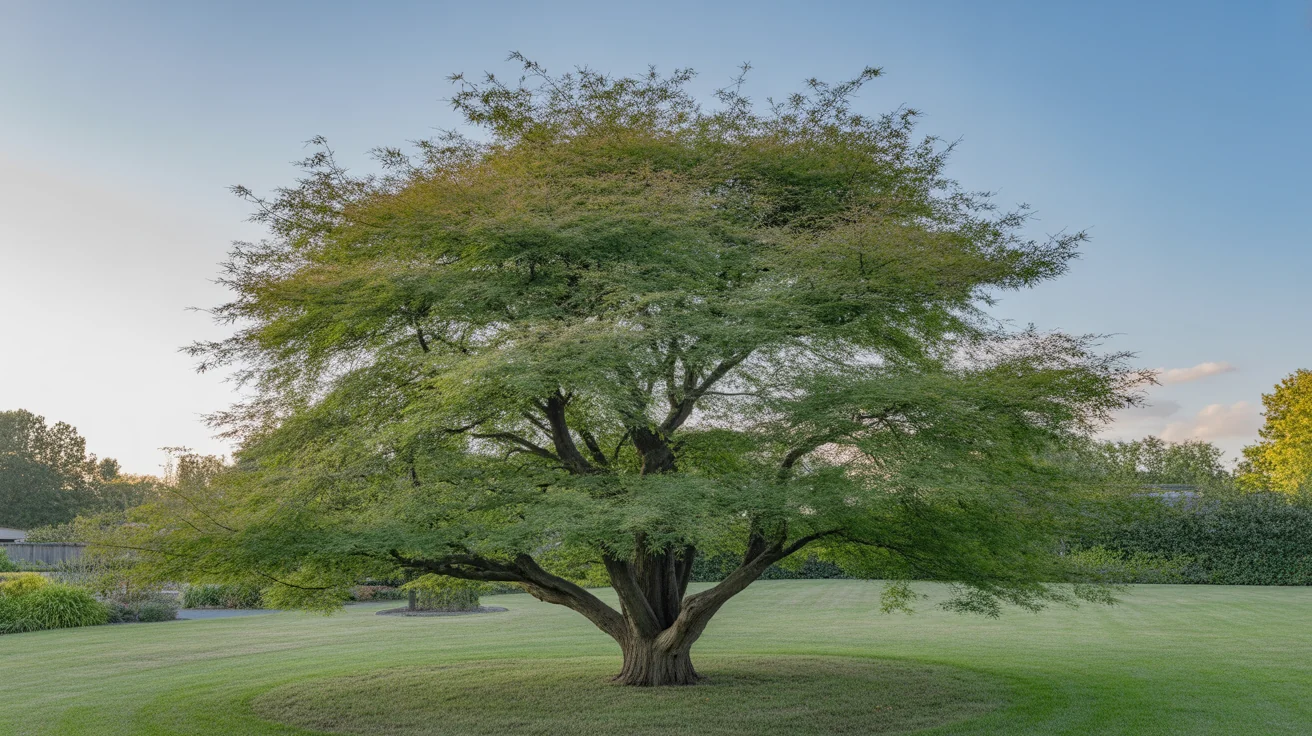
Another small tree for filtered light, but grown more for foliage and structure than spring bracts.
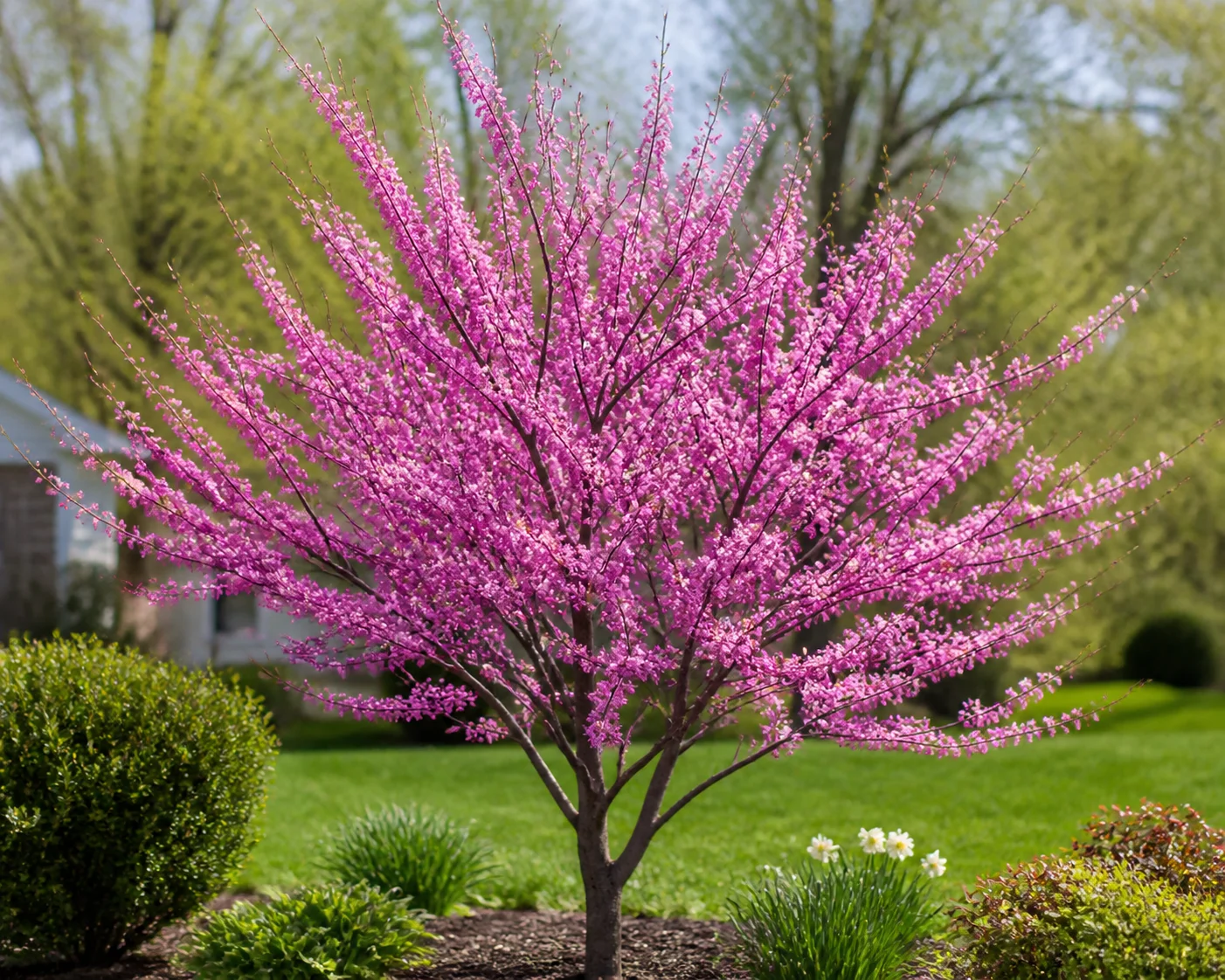
Eastern Redbud
Native spring bloomer with a looser habit and a stronger tolerance for sunnier spots.
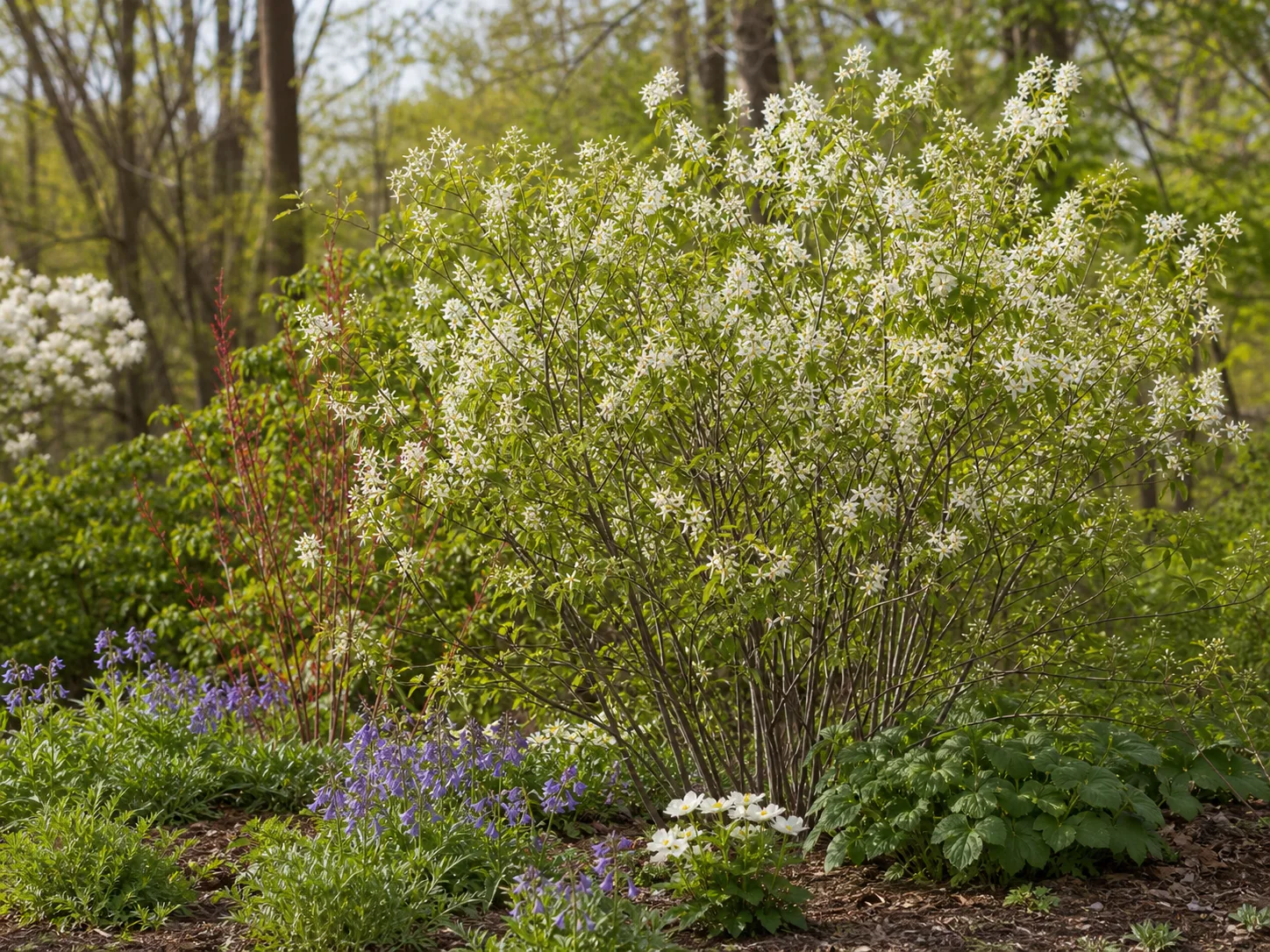
Serviceberry
Another small flowering tree that adds edible fruit and stronger multi-season wildlife value.
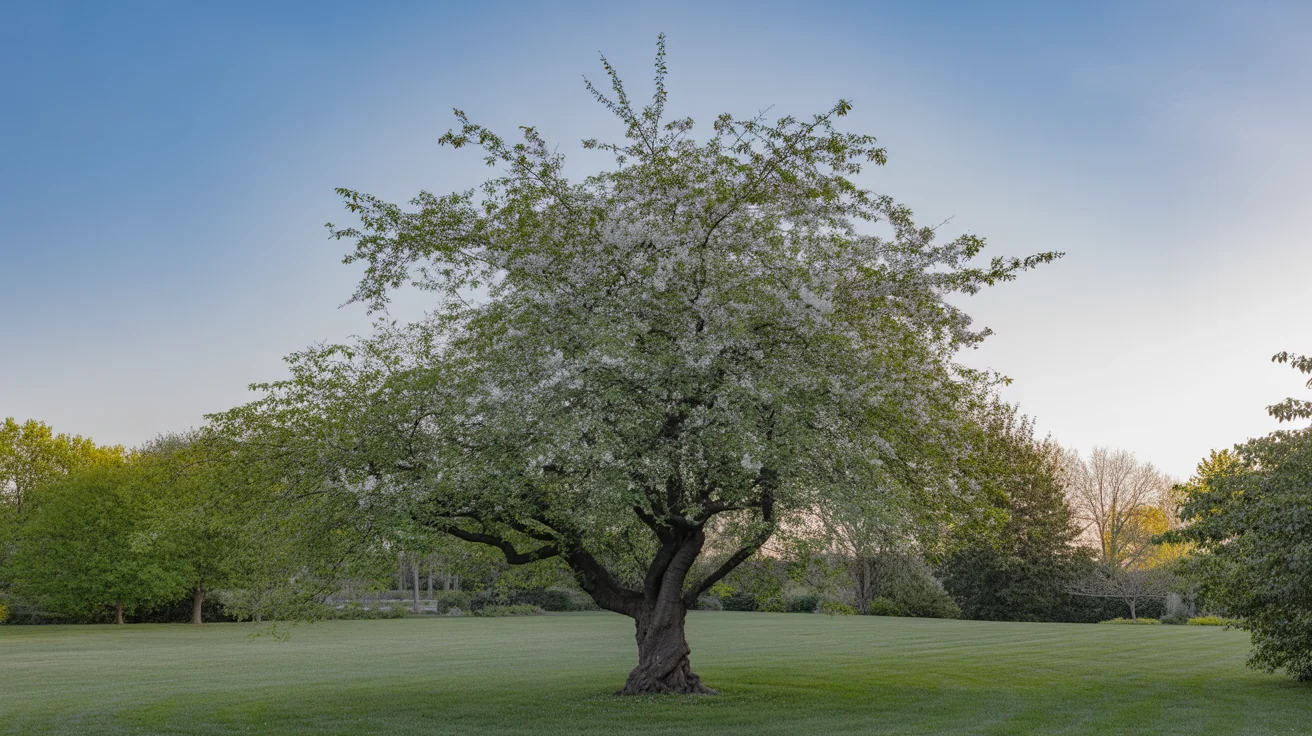
Cherry Blossom Tree
Cherry blossom tree is a common name for ornamental cherries grown for spring flowers rather than a useful fruit crop.
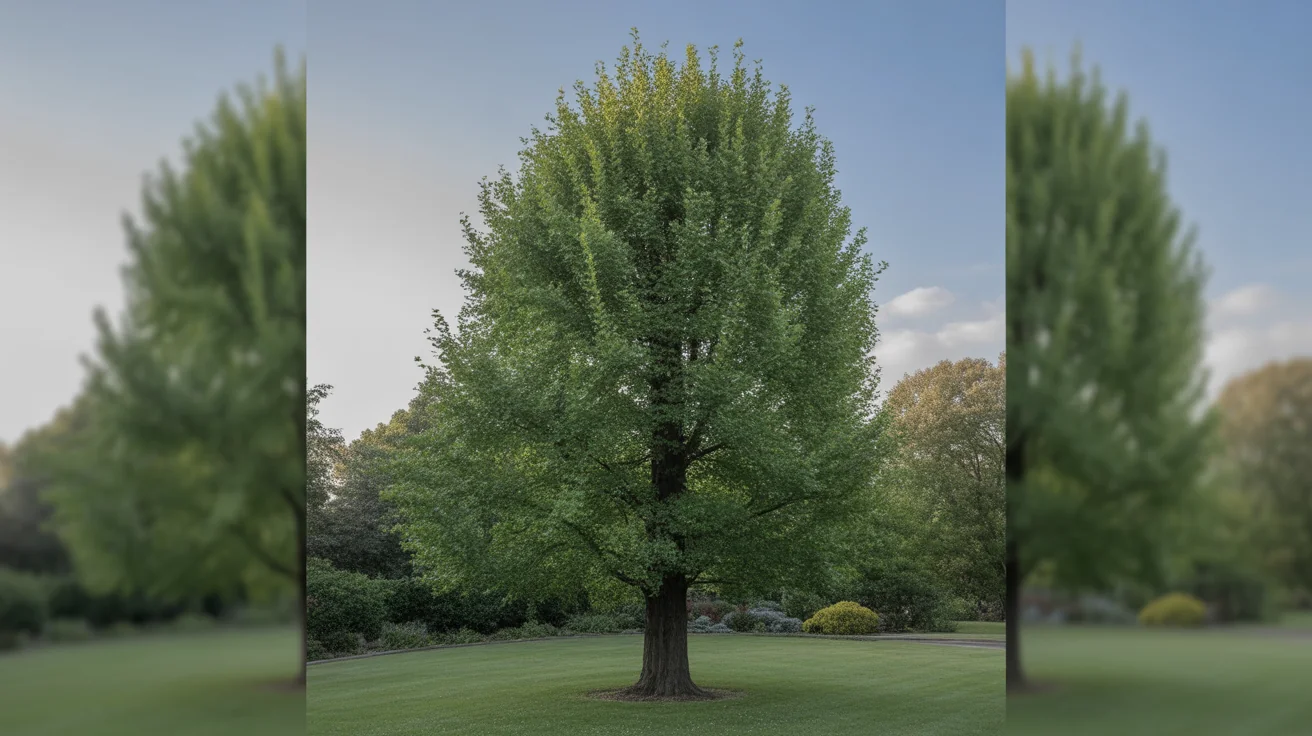
Ginkgo Tree
Ginkgo is not a plant for instant gratification. It is a patient tree that rewards the right buyer decision up front…
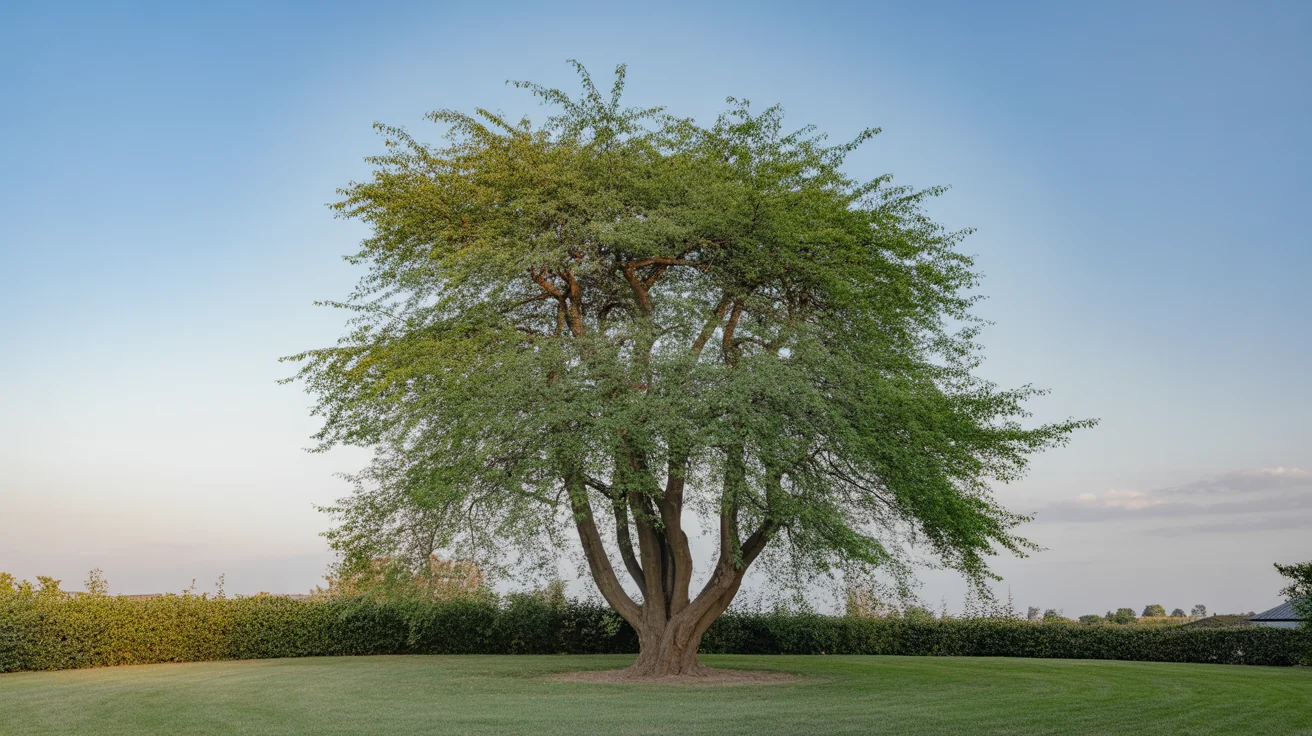
Japanese Cherry Tree
Japanese Cherry is a short-season show tree with real structural limits. The best care is not chasing bigger growth.