
Is Buffalo Grass Right for a Sunny, Low-Water Lawn?
Bouteloua dactyloides Poaceae
Many people treat buffalo grass like a regular high-input lawn, then wonder why it looks thin and weedy.
This warm-season Great Plains native wants sun, heat and very little water, and the extra fertilizer and sprinkler time feed the weeds instead. Set it up right and it gives you a soft, short, gray-green turf that mows every week or two and asks for almost nothing else.
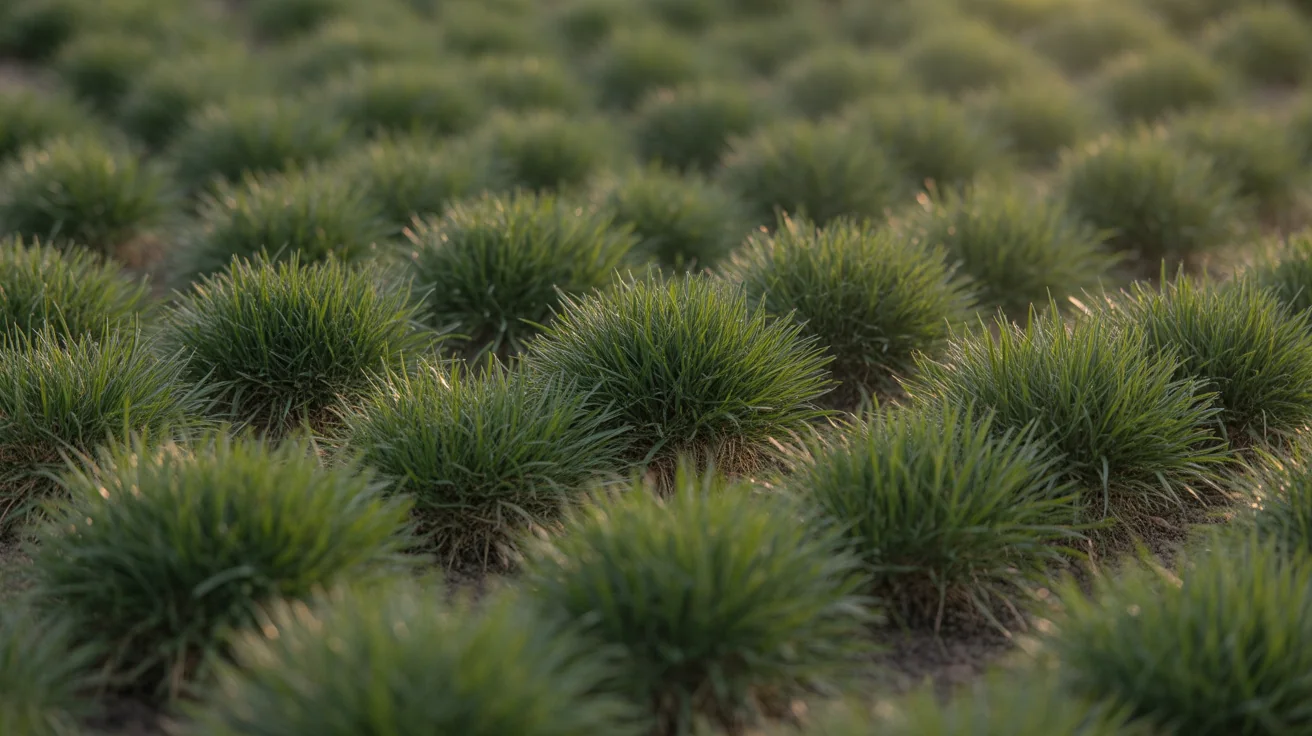
Care snapshot
Why Does Buffalo Grass Need So Little Water?
Buffalo grass is Bouteloua dactyloides, a warm-season perennial in the grass family Poaceae and the one prairie grass that makes a genuinely good lawn. It evolved on the Great Plains with hot summers, grazing bison and long dry spells.
That history is the whole answer. It has one of the lowest water requirements of any turfgrass native to the United States, which is why it once carried enormous herds across open country with no irrigation at all.
Left alone it reaches 4 to 8 inches tall. It spreads by above-ground stolons that root where they touch soil, slowly, and nothing like as aggressively as bermuda grass does at a bed edge.
- Type
- Native warm-season perennial, spreads by stolons
- Zones
- 4 to 8, best growth at 70 to 90°F
- Light
- Full sun, 6 to 8 hours of direct light minimum
- Unmowed height
- 4 to 8 inches, naturally low-growing
- Water
- A deep soaking every 2 weeks in hot dry summer weather
- Nitrogen
- 0 to 2 pounds per 1,000 square feet per season
- Soil
- Well-drained loam is ideal, clay is tolerated, sand is not
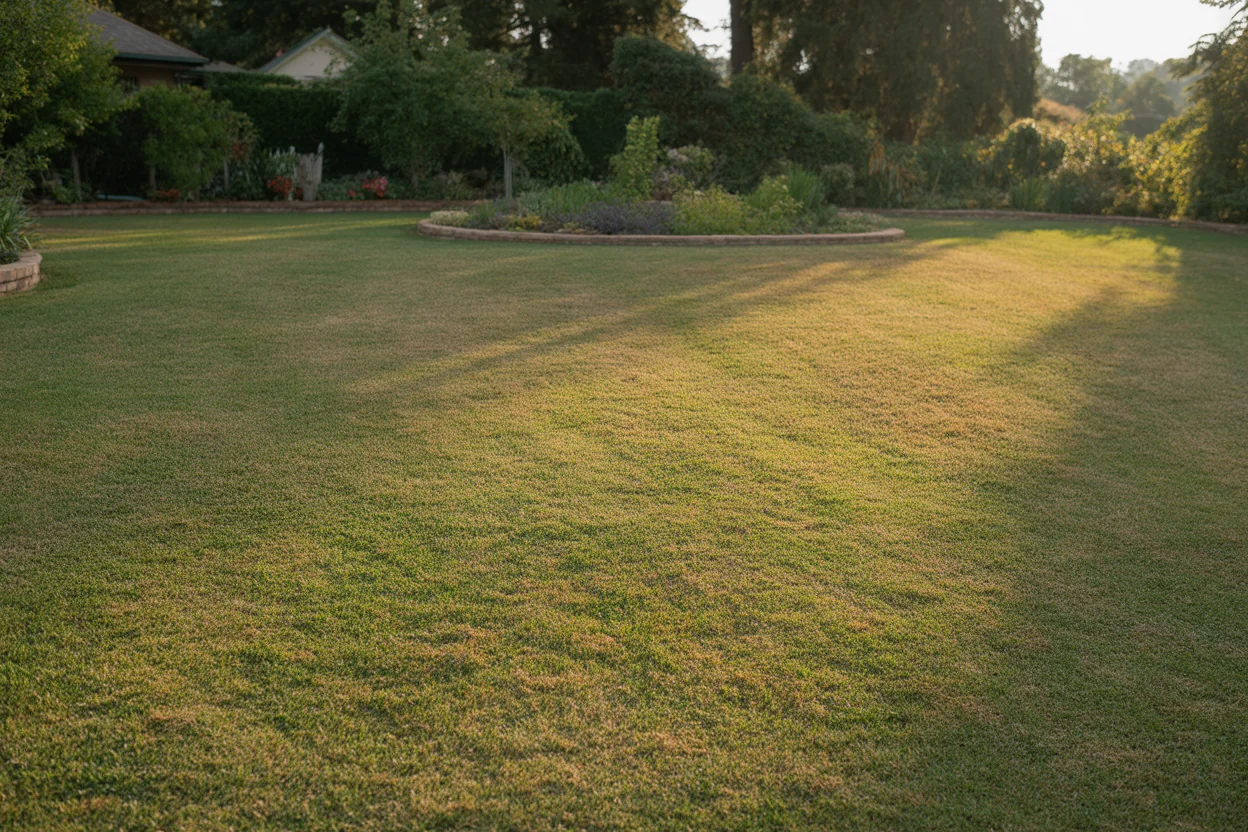
The color is gray-green rather than dark, and the growing season is short at both ends. It greens up earlier than bermuda but several weeks later than kentucky bluegrass or tall fescue, then turns brown after the first fall freeze.
That tan is the mechanism rather than a failure, since the crowns hold on through drought and cold on far less water than a conventional lawn needs to stay green.
Two limits decide whether it belongs in your yard at all, and neither is about effort. It struggles where annual rainfall runs above about 30 inches, because wet years feed weeds faster than slow native turf can close over them, and in Colorado it is not recommended above roughly 6,500 feet of elevation.
Can You Kill Buffalo Grass by Watering It?
Yes, and it is the most common way a buffalo grass lawn is lost. In higher-rainfall regions watering too much is a bigger risk than watering too little, except during a genuinely prolonged drought.
The mechanism is worth understanding rather than just obeying. Frequent shallow irrigation keeps roots near the surface, which throws away the deep root system the whole low-water argument rests on, and it hands faster-growing weeds the advantage.
When you do water, soak the ground properly.
A deep watering every two weeks carries most lawns through hot dry summer weather, and another way to reach the same place is 1 to 2 inches of rain or irrigation every two to four weeks.
For a genuinely low-maintenance area, one or two deep soakings across the whole summer is enough.
Timing matters as much as volume, and it is not spread evenly through the year.
- June, July and August are when watering actually helps, since that is when drought bites.
- Spring watering feeds weeds more than it feeds the grass, so skip it outside real drought.
- One good soaking at the end of a dry fall helps roots and crowns through winter and produces stronger growth the following spring.
New plantings are the exception to all of it.
Keep the top half inch of seedbed consistently moist until seedlings are up, water new plugs or sod daily for the first week and then every two or three days, and only then start stretching the intervals out.
Deep against frequent watering covers why the stretch matters more than the total.
Cutting back or stopping entirely does no harm, provided the lawn was never on a frequent schedule in the first place.
A lawn trained on light daily water has shallow roots and will genuinely suffer when you stop, which is the trap.
Even a fully dormant stand resumes normal growth quickly once rain or irrigation returns, and the signs of an overwatered lawn show up long before the dry ones would.
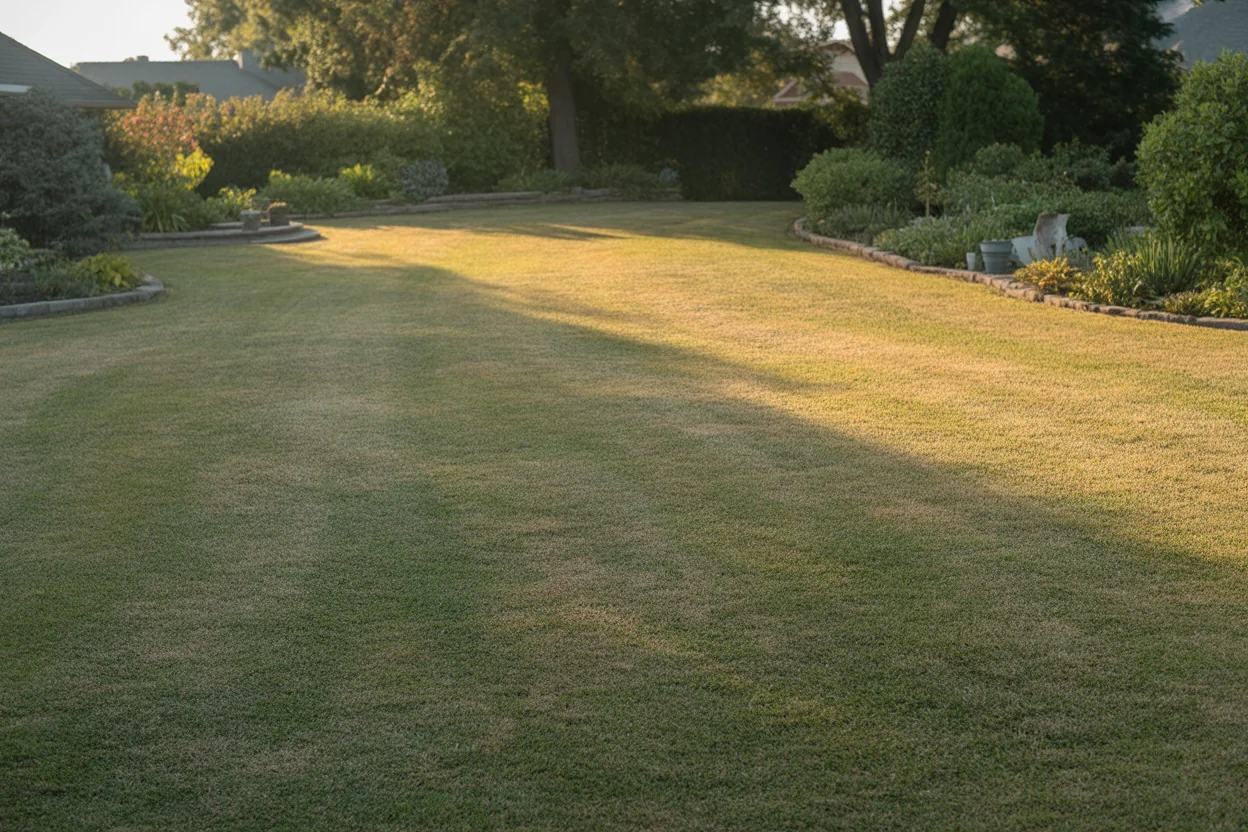
Why Do Buffalo Grass Lawns Fail in Shade?
Most failed buffalo grass lawns are shade problems wearing a seed or soil disguise. The owner buys better seed, adds compost, waters more, and the patch stays thin because none of those were the problem.
This is a full-sun prairie species.
6 to 8 hours of direct sunlight a day is enough for acceptable turf, stands come in visibly thinner in semi-shady areas, and in heavy shade there is almost no growth at all.
More than half a day of heavy shade rules the site out.
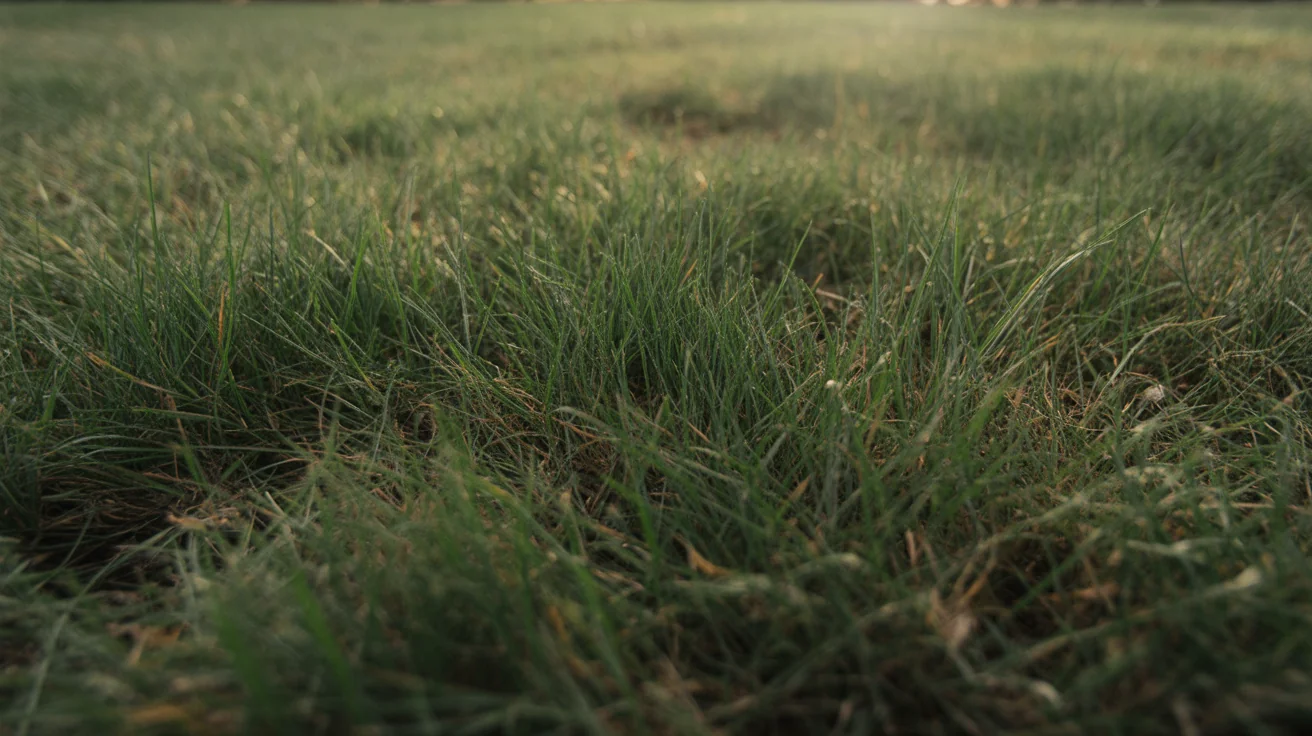
The leaf explains part of the requirement. Buffalo grass carries a fine blade with hairs on both surfaces and ridges on top, an adaptation for holding moisture in open sun that broader-bladed lawn grasses do not have and cannot borrow.
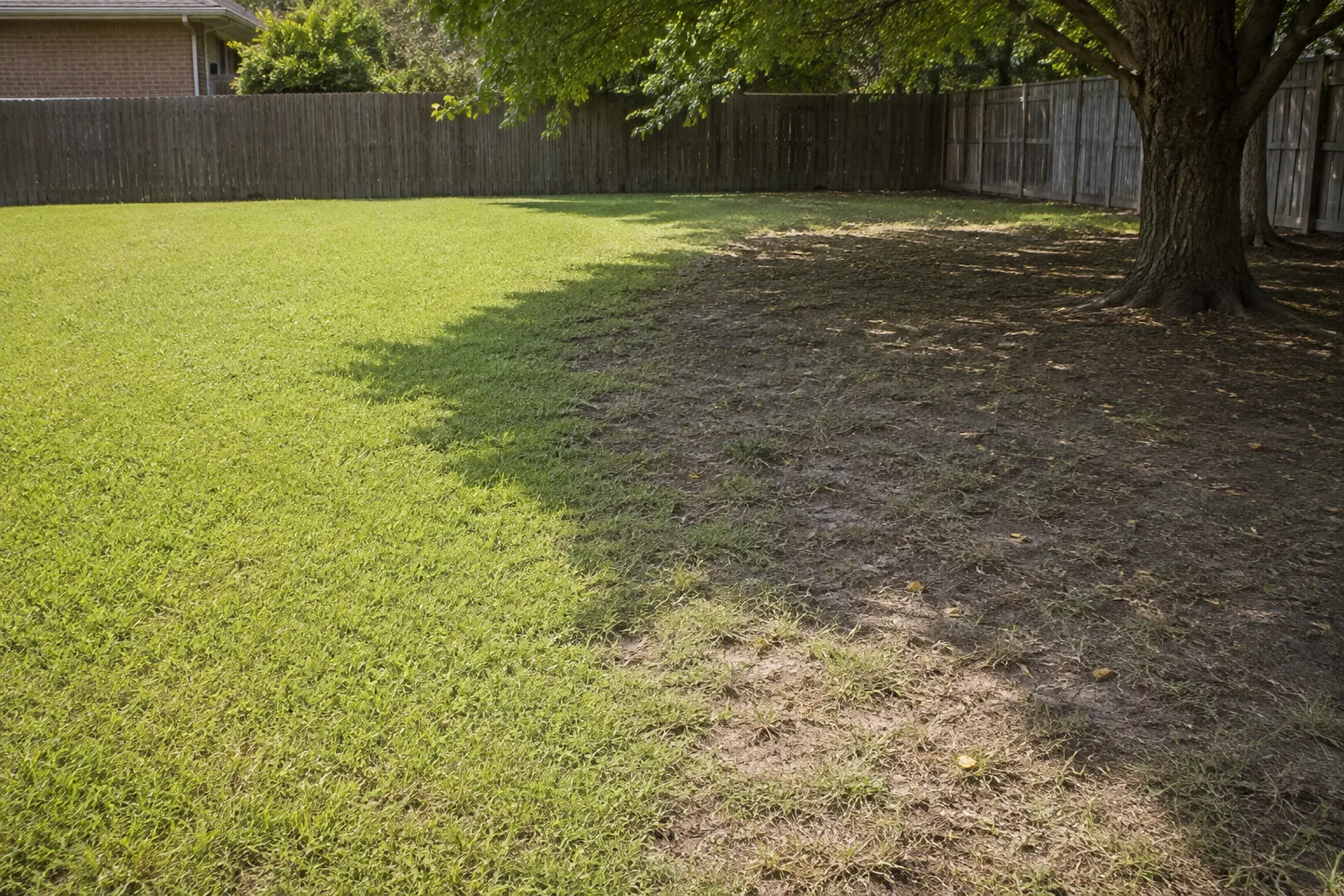
- Ideal. Open areas with full sun and no more than light morning or late-day shade.
- Borderline. Dappled shade for part of the day, provided six hours of strong sun remain.
- Poor. North-facing yards, dense tree cover, and narrow gaps between houses or large shrubs.
Where the light is not there, change what is there instead of fighting for turf.
Mulch paths, shade beds and gravel all beat years of reseeding.
The bright open ground is where this grass earns its place, including driveway edges, parking strips and south-facing slopes that cook ordinary planting, and it is the same reasoning behind most drought-tolerant planting choices.
How Often Do You Actually Mow Buffalo Grass?
As often as the look you want demands, and no more. A short tidy lawn wants a rotary mower every 7 to 14 days, while a naturalistic stand may not need cutting at all beyond a spring clean-up.
- Home lawns
- 2.5 to 4 inches
- Golf fairways
- 1 inch, with far more frequent mowing
- Parks and low-maintenance grounds
- 4 inches or higher
- Naturalistic areas
- None, except a spring clean-up as growth begins
Height is a real trade rather than a matter of taste. Taller grass resists drought and weeds better than short turf, and cutting shorter commits you to mowing more often, so the neat look costs you some of what you bought this grass for.
Never take more than a third of the leaf in one pass, whichever height you settle on.
One job is specific to this species. Mowing removes the male pollen flowers that stand on thin stalks above the foliage, which some people want gone from a front lawn and others consider the best thing about a native planting.
Seed, Plugs or Sod, and Why Do the Seedheads Differ?
There is a difference between seeded and vegetative buffalo grass that almost nobody is warned about, and it changes how the finished lawn looks.
Male and female flowers sit on separate plants in this species, so a seeded stand contains both and the male plants push seedheads up above the turf.
Vegetative types are propagated from a single selected plant, which is how a sod lawn ends up smooth.
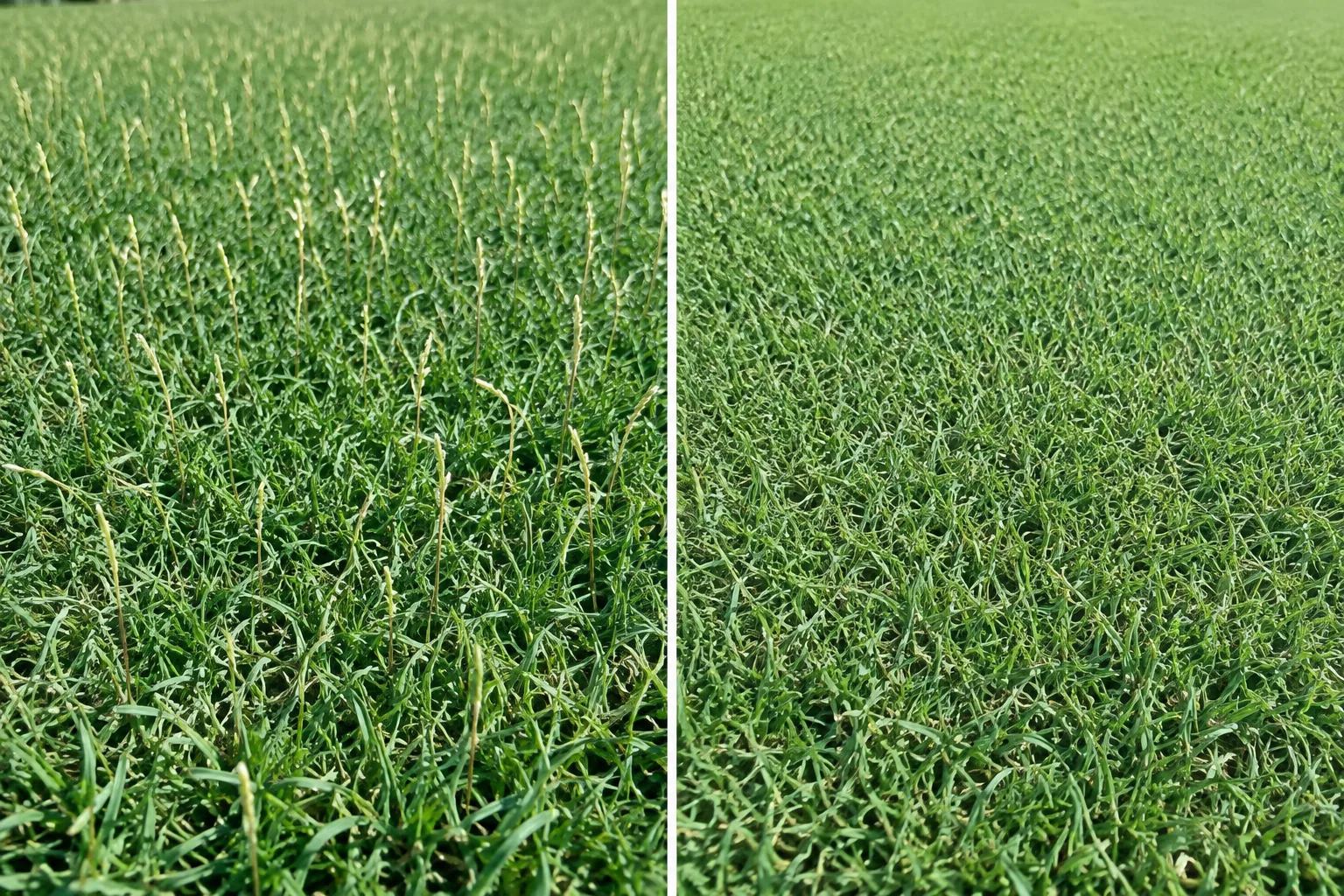
Plant in late spring to early summer, and later is usually better than earlier.
Seed sown in mid-June germinates in about a week, while an early spring sowing can take 2 to 3 weeks and spends all of it competing with cool-season weeds.
Where there is no irrigation, April and May rainfall does the job instead.
Seed rates vary more than you would expect, because they buy different amounts of patience.
- 1 pound per 1,000 square feet gives solid turf in about a year and a half.
- 1.5 to 2 pounds closes a stand within a single season.
- 3 to 5 pounds is the faster Colorado recommendation where you want cover quickly.
Set that against the 6 to 8 pounds per 1,000 square feet a fescue lawn needs and the seed cost comes out about level, which surprises people who assume a specialty grass costs more to start.
Sow a quarter inch deep under irrigation, or up to half an inch where soil moisture is limited, then roll or walk the area so seed meets soil rather than sitting on it. Buy treated seed from a dealer who will tell you how it was treated, since chilling or chemical treatment breaks the burr dormancy and untreated seed comes up thin and uneven.
Pre-soaking speeds things further and uses far less water than keeping a whole seedbed damp for the same stretch. Put the seed in a porous bag, submerge it, change the water daily for three days, then dry the seed for about five hours and plant it with water going on immediately.
Plugs go in on 12 to 18 inch centers once soil is above 55°F, which gives drought-tolerant turf for less than the price of full sod. Sod seams are staggered like brickwork so no long dry crack runs across the lawn, and the sod is kept moist for the first couple of weeks before the watering interval stretches out.
Slow early coverage is normal. The grass spends its first season rooting and running stolons sideways, and it does not come up as a dense stand the way fescue does, so bare seams close later than on a faster lawn.
Mowing often is the best weed control you have that first year, because seedlings stay sensitive to weed killers for most of it. Filling bare lawn patches covers the repair once the stand is old enough to take it.
Why Does Rich Soil Hurt Buffalo Grass?
Fertility helps the competition more than it helps this grass. Rich, heavily fed soil grows weeds that outrun slow native turf, so the usual lawn makeover of compost and monthly fertilizer works against the thing you planted.
Drainage matters more than richness.
Well-drained loam is ideal, and while establishment runs slower on clay and compacted sites the grass tolerates them fine.
Sandy soils, wet areas and poorly drained ground are not suitable, which is the one soil restriction worth checking before you spend anything.
One tolerance is unusual enough to name.
Buffalo grass takes the alkaline soils common across much of the Great Plains better than most popular lawn grasses, which generally want more acidic ground.
Aim for a loose top 2 to 3 inches over a firm base so seed and plugs can root while water still drains away.
The feeding numbers are where people go wrong, and the range is wide on purpose.
0 to 0.75 pounds of nitrogen per 1,000 square feet per season, and zero is a real answer.
1 pound per 1,000 square feet per season is about right for most yards.
2 pounds per season. Past that you have given up the low-maintenance advantage and bought weed problems.
Feed in June, after stolon growth has begun, rather than on the calendar a general lawn care calendar sets for cool-season turf.
Early feeding and watering encourage weeds at exactly the moment the grass is least able to compete.
A controlled-release formulation is worth the small extra cost, and anything above a pound should be split into two applications.
Skip the balanced bag.
Regular 10-10-10 or 13-13-13 puts down more phosphorus than this grass wants, which encourages broadleaf weeds and locks up micronutrients in the soil, so use a nitrogen-only product or run a soil test first.
Standard lawn fertilizer rates are written for hungrier grasses than this one.
Why Do Weeds Take Over a Buffalo Grass Lawn?
Weeds are the most frequent problem, not insects and not disease. They show up hardest during establishment, and cool-season weeds move in through spring and fall while the grass is still dormant.
The uncomfortable part is that weeds here are usually a symptom of care rather than neglect. Four habits cause most of them.
- Light, frequent watering instead of an occasional deep soak.
- Early-season fertilizing and watering, before the grass is growing enough to use either.
- Extremely short mowing, which strips away the shade that suppresses weed seed.
- Excessive fertilizer, which grows the weeds at least as well as it grows the lawn.
Tolerating a few weeds beats chasing a weed-free stand with repeated herbicide, and the cultural fixes above do more than any spray will.
Where you do spray, two timing rules apply. Keep 2,4-D off the lawn above 85°F, and use glyphosate only when the grass is fully dormant, which across much of the plains means a sunny winter day above 45°F. Identifying the weed first decides which of those you are choosing between.
What Insects Turn Up, and How Do You Check?
Far fewer than on a fed and irrigated lawn, and the check starts with a shovel rather than a bottle. Cut small inspection squares 2 to 3 inches deep at the edge of a damaged area, where living turf meets dead, and look at what is actually in the root zone.
Spongy turf that lifts like a carpet and browns in irregular patches, often where skunks or birds have been digging.
Dry sunburned spots in full sun that stay brown even when watered, commonly along sidewalks.
Cyclic and localized. Outbreaks come and go in patches rather than spreading across a whole lawn.
Disease barely registers on this grass, and where it does appear it is usually the result of improper watering or fertilizing rather than bad luck. A dense stand kept on the dry side resists all of this better than a pampered one, which is the same answer as every other section on this page.
Where Does Buffalo Grass Belong?
In Zones 4 to 8, in open sun, on well-drained ground, as a water-saving alternative to a thirstier lawn. It suits home lawns, parks, roadsides, cemeteries, erosion control and golf roughs, which is a wider list than most people expect from a grass sold on drought alone.
The safety answer is short. Neither the ASPCA nor NC State gives a pet toxicity rating for buffalograss, so its safety for pets is not established. Light play recovers once traffic is spread around rather than concentrated on one line.
What you give up is worth stating in the same breath.
Traffic tolerance, salinity tolerance and shade tolerance are all listed weaknesses, and this is not the dark uniform carpet a fed and irrigated lawn produces.
Where you want turf that repairs itself under constant use, zoysia grass or bermuda is the honest answer, and buffalo against bermuda puts numbers on that trade.
Among the other low-input lawns it has a clear niche. It takes cold that centipede grass cannot, and it wants a drier climate than either centipede or bahia grass is built for.
Frequently Asked Questions
Will buffalo grass stay green all year?
No, buffalo grass is a warm-season species and naturally goes tan and dormant in cold weather. In most zones it greens up in late spring and holds color through summer, then browns after the first hard frost or extended cool spells.
How often should I mow buffalo grass?
That depends on the height you want.
A short tidy lawn wants a rotary mower every 7 to 14 days at 2.5 to 4 inches, while a naturalistic stand can go unmowed apart from a spring clean-up.
Whichever you choose, never take more than a third of the leaf in one pass, and remember taller grass resists drought and weeds better than short turf.
Is buffalo grass good for high-traffic yards?
Buffalo grass tolerates light to moderate foot traffic but is not ideal for constant play like a sports field. For heavy use, many homeowners pair buffalo in low-traffic areas with tougher turf such as Bermuda in designated play zones.
Can Buffalo grass be grown in partial shade?
Buffalo grass really wants full sun, since it thins badly with less than 6 hours of direct light and may die out in dense shade. For shadier yards, a cool-season grass like tall fescue usually performs better.
How often should I fertilize Buffalo grass?
Very little, and possibly not at all.
A low-maintenance area wants 0 to 0.75 pounds of nitrogen per 1,000 square feet per season.
An average home lawn wants about 1 pound, and 2 pounds is the ceiling.
Past that you have given up the low-maintenance advantage, because extra fertility feeds weeds faster than it feeds this slow native turf.
Will Buffalo grass take over my flower beds?
Buffalo grass spreads by stolons, but it is easier to edge than aggressive runners like Bermuda. A simple 4-6 inch deep edging trench or metal edging usually keeps it out of beds if you maintain it a couple of times per season.
Sources & References
- Buffalograss Home Lawns, Colorado State University Extension
- Buffalograss Lawns (MF658), Kansas State University Research and Extension
- Buffalograss, Texas A&M AgriLife Turfgrass Science
- Buffalograss, Oklahoma State University Extension Fact Sheet
- North Carolina Extension Gardener Plant Toolbox - Bouteloua dactyloides
Related Plants
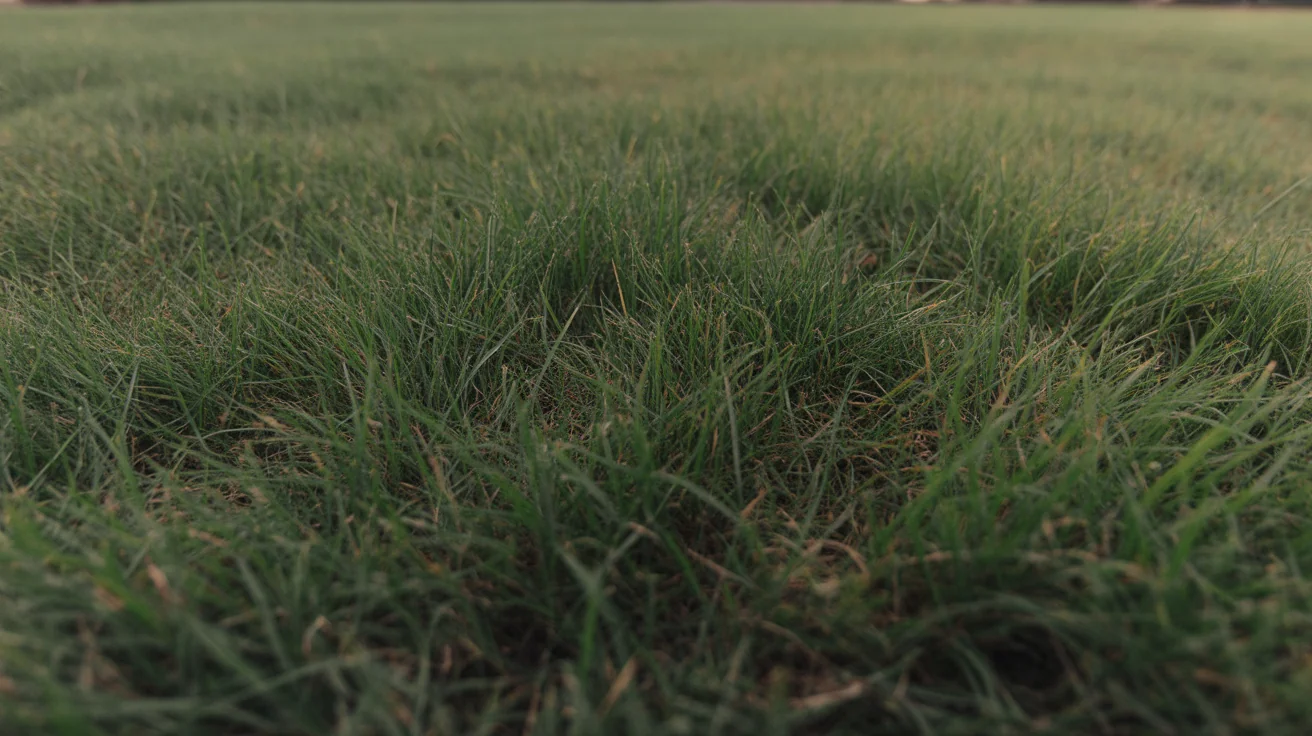
Bermuda Grass
Another warm-season lawn option, more aggressive and higher maintenance than buffalo.
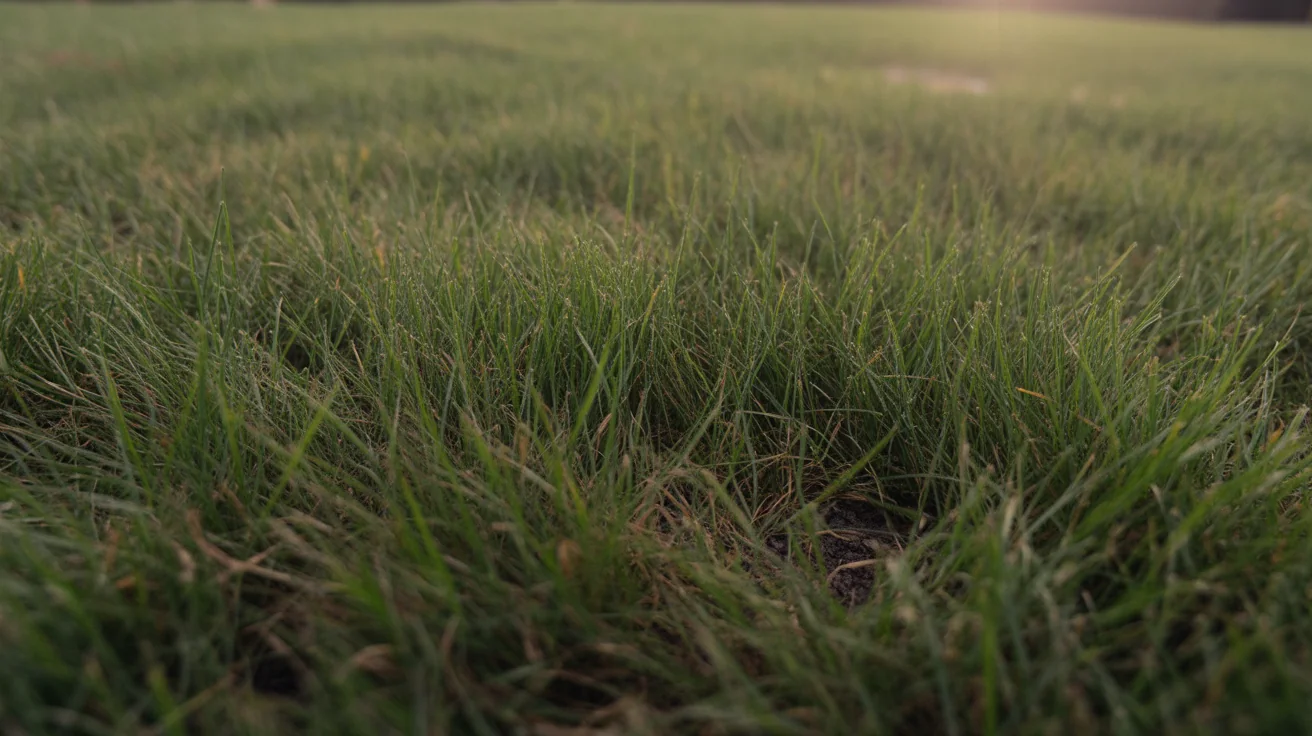
Tall Fescue
Cool-season lawn that stays greener in cool climates but needs more water.
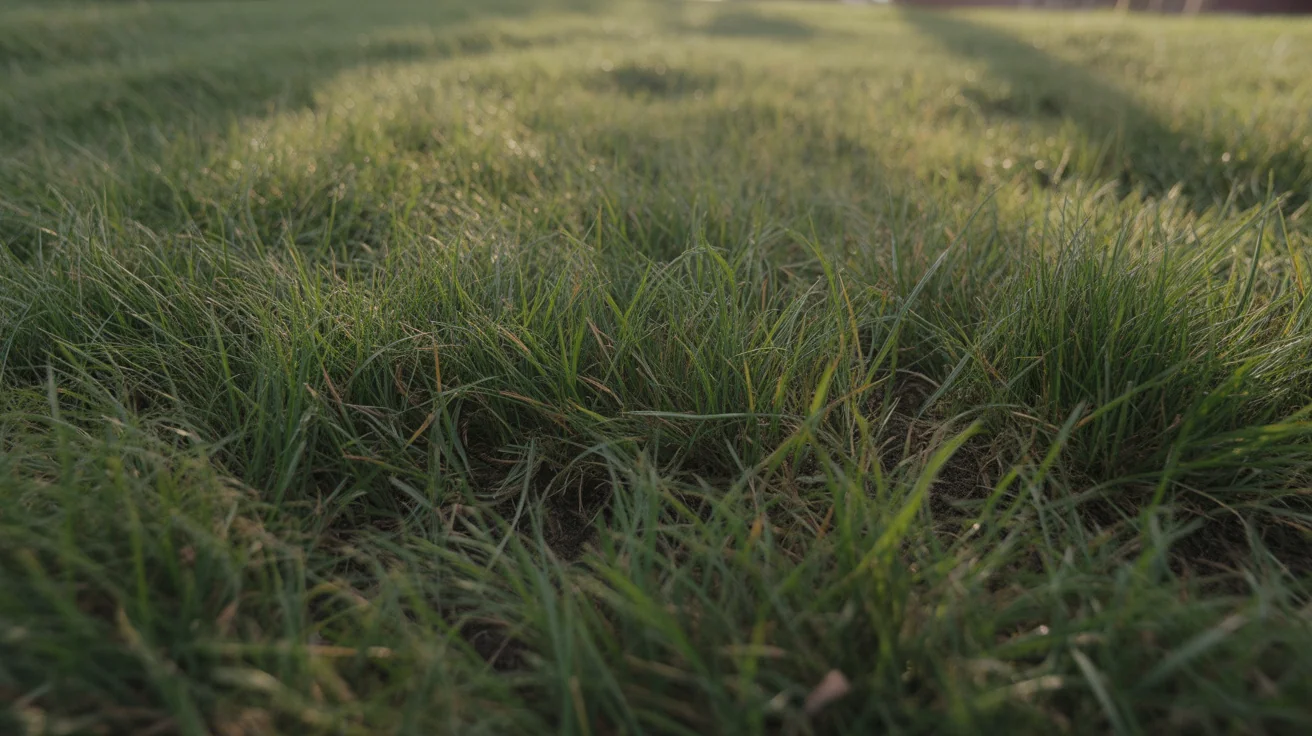
Zoysia Grass
Dense warm-season turf with higher thatch risk and slower green-up.
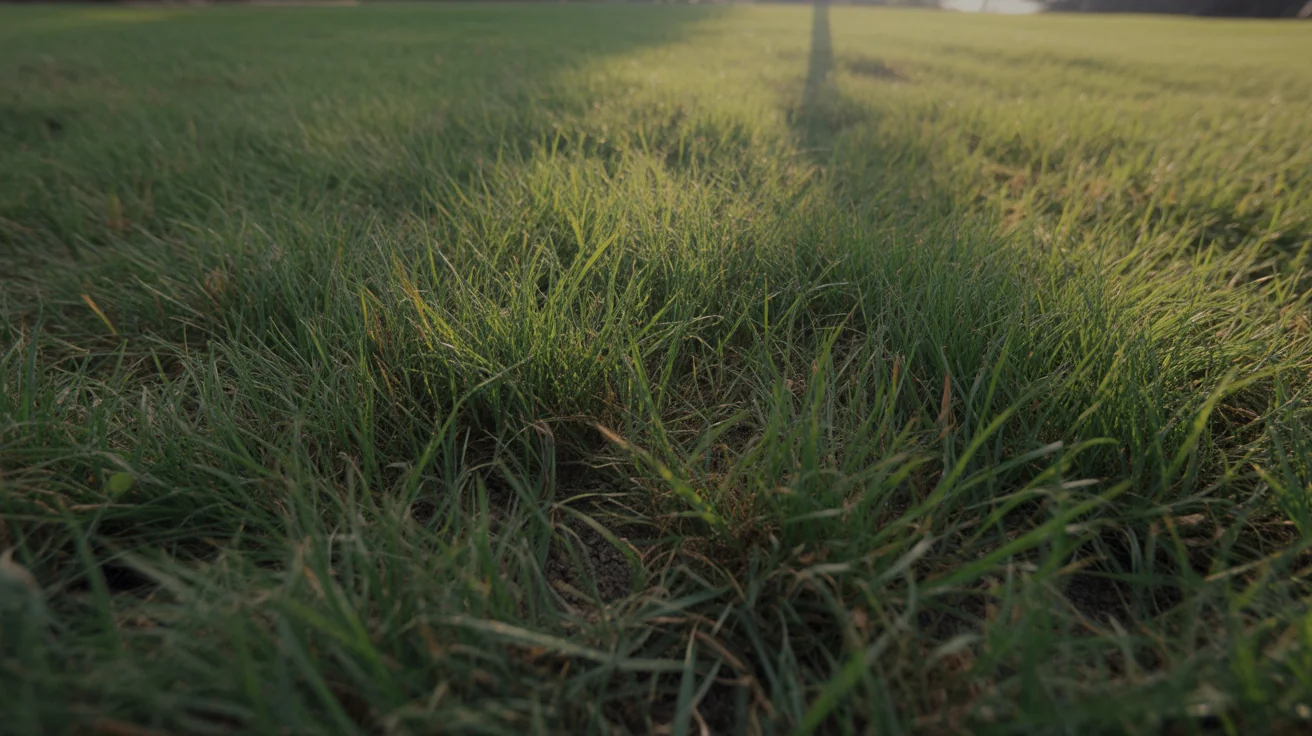
Bahia Grass
Bahia grass is a warm-season utility lawn built for sandy, hungry ground where fussier grasses give up.
Centipede Grass
Centipedegrass is a slow-growing, light-green lawn grass for suitable warm-climate sites.
Fescue
Fescue is not a grass, it is a genus. More than 450 species carry the name and about ten make turf, split into a coarse…