
The Ultimate Lawn Care Calendar by Grass Type and Season
A lawn calendar that runs on months is wrong somewhere every year, because April in Georgia and April in Michigan are different seasons for grass.
This one runs on soil temperature instead, which is a number you can take yourself for the price of a probe thermometer.
Cool-season and warm-season lawns split here. Each job starts at a soil temperature rather than a date, and each one carries its own mowing height, fertilizer rate, and watering amount.
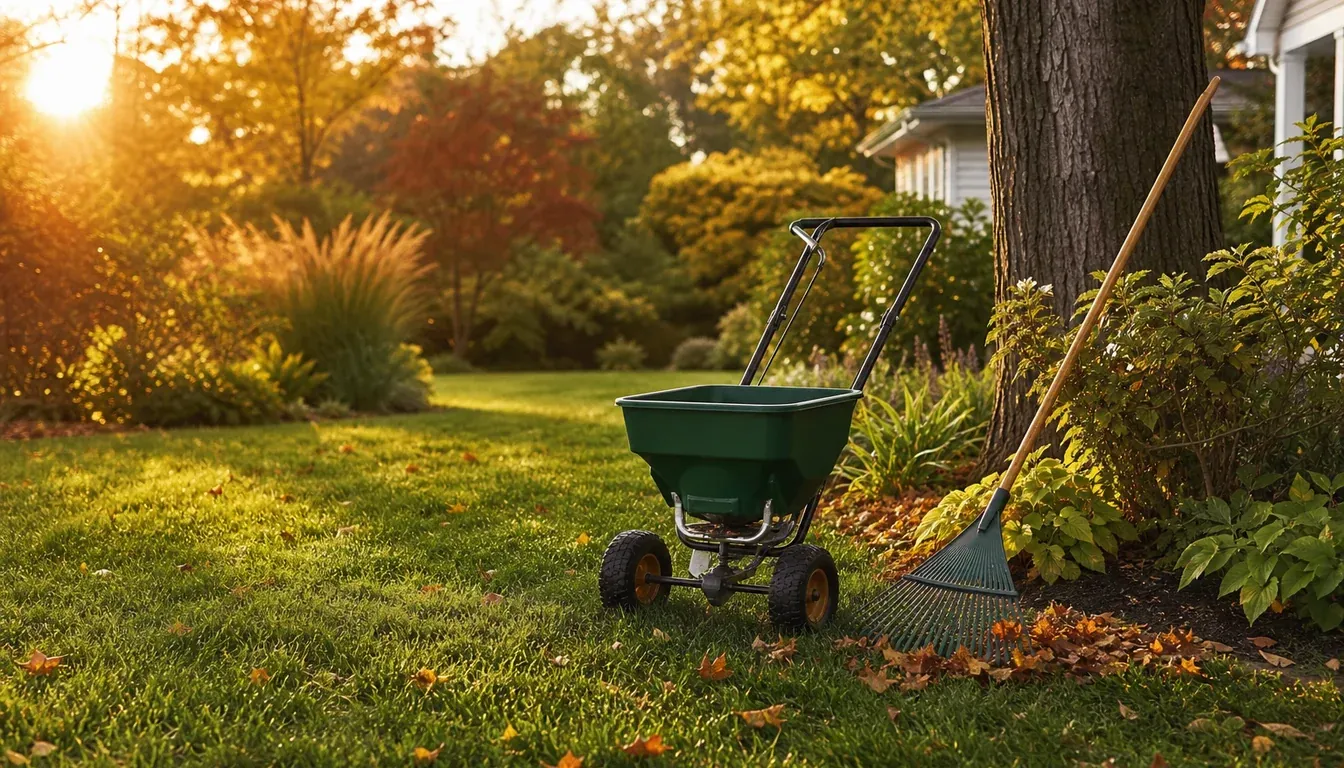
At a glance
Find Your Grass Type Before Anything Else
Everything below forks on this one fact, and getting it wrong means doing the right job in the wrong month all year.
You do not need to identify a species to sort it. A lawn that is green in April and struggling in August is cool-season, while a lawn that stays brown until May and looks its best in July is warm-season.
The type also sets the cutting height, which is the first number that matters. A tall fescue lawn wants 3 to 4 inches while a bermuda lawn wants 1 to 2.5, and cutting either one at the other's height is the most common lawn mistake there is.
| Grass | Group | Mowing height | Peak season |
|---|---|---|---|
| Tall fescue | Cool | 3-4 in | Spring and fall |
| Kentucky bluegrass | Cool | 2-3 in | Spring and fall |
| Fine fescue | Cool | 2-3 in | Spring and fall |
| Perennial ryegrass | Cool | 1.5-3 in | Spring and fall |
| Bermuda | Warm | 1-2.5 in | Late spring to summer |
| Zoysia | Warm | 1-2 in | Late spring to summer |
| St Augustine | Warm | 3-4 in | Late spring to summer |
| Centipede | Warm | 1-2 in | Late spring to summer |
Soil Temperature Is the Trigger, Not the Month
Published month-based schedules are written for somewhere, and that somewhere is almost never your yard. Soil warms at different rates by latitude, by aspect, by soil type and by how the particular year is going, which is why the same date can be three weeks early in one garden and two weeks late in the next.
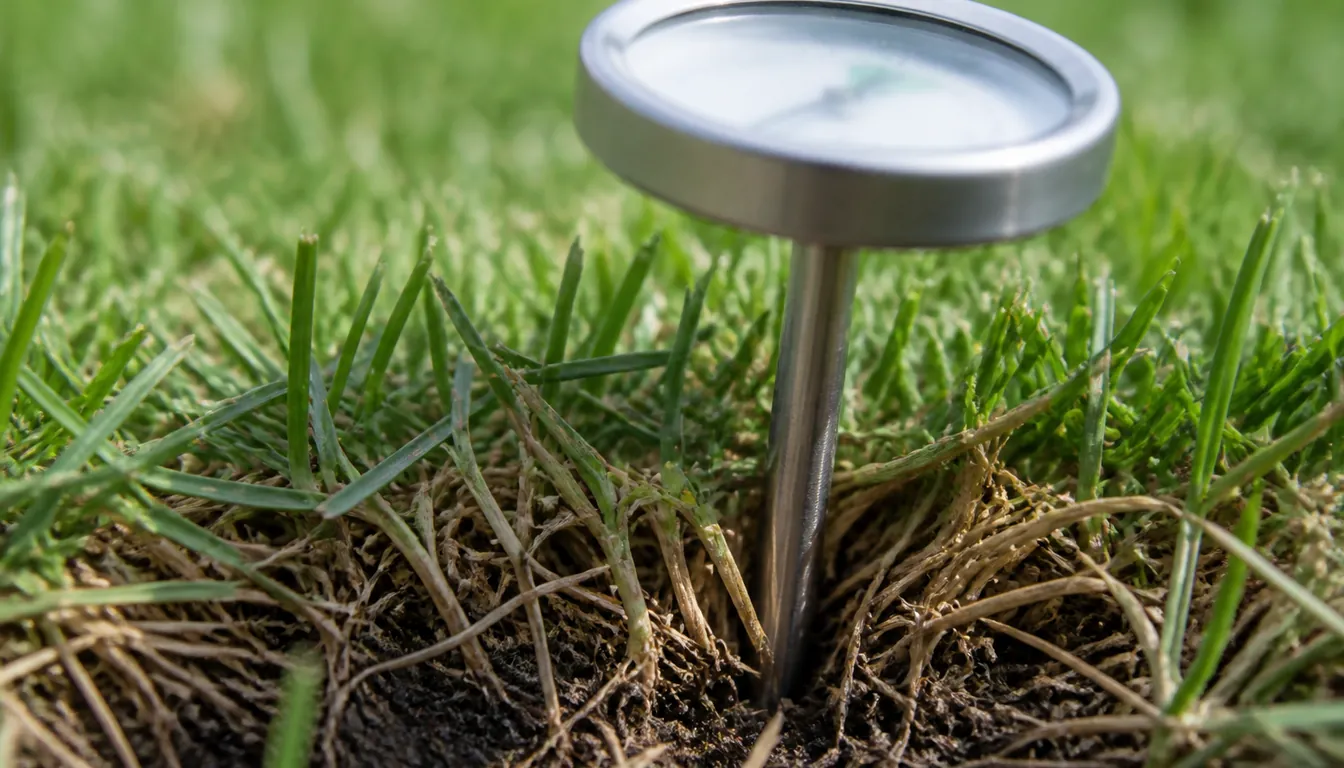
Three thresholds cover nearly every timing question on this page. Crabgrass pre-emergent goes down once soil at 2 inches holds 55 degrees for three to four consecutive days, cool-season seed germinates with soil between 50 and 65 degrees, and warm-season lawns green up and take their first feeding once soil sits consistently above 65.
Take the reading at 2 to 4 inches deep, in mid-morning, out in open turf rather than beside paving that holds heat.
| Task | Soil temperature | Applies to |
|---|---|---|
| Crabgrass pre-emergent | 55 F at 2 in, 3-4 days running | Both groups |
| Sow or overseed | 50-65 F | Cool-season |
| First feeding after dormancy | Consistently above 65 F | Warm-season |
| Main renovation window | Soil still warm, air cooling | Cool-season |
| Stop feeding | Growth slowing before dormancy | Both groups |
Late Winter Into Early Spring
This window rewards preparation and punishes enthusiasm. The lawn looks ready long before it is actually growing, and most of the damage done in spring is done by people feeding grass that has not woken up.
One job here has a genuine deadline rather than a preference, which is the pre-emergent.
- Sharpen the blade first: a torn blade tip browns off within days and no fertilizer fixes it
- Pre-emergent at 55 F: measured at 2 inches for three to four days running, not by the calendar
- First cut when it is growing: by height, not by date, and never more than a third off
- Hold the nitrogen: cool-season turf fed this early makes soft top growth on inactive roots, and warm-season turf gets nothing while brown
Late Spring Into Early Summer
This is where the two calendars pull hardest in opposite directions, and running one schedule across both grass groups does real damage here.
Warm-season lawns take their main feeding now that soil holds above 65 and the lawn has fully greened, at no more than 1 pound of nitrogen per 1000 square feet in any single application. Cool-season lawns get the opposite treatment, with the mower raised toward the top of their range before heat arrives rather than fed into it.
- Warm-season, feed: 1 lb nitrogen per 1000 sq ft, and 2 to 5 lb across the whole year
- Warm-season, repair: leveling and patching recover best now, not in fall
- Cool-season, raise the cut: move to the top of the range before the first heat spell
- Cool-season, stop renovating: overseeding now wastes the seed, because the window closes as soil passes 65
Mid to Late Summer
Two levers matter in heat and a third one actively hurts. Mowing height and watering depth carry a cool-season lawn through August, while nitrogen on heat-stressed turf buys a week of color and a season of disease.
The quantities are worth memorizing because they replace most of the guesswork. A lawn needs 1 to 1.5 inches of water per week including rainfall, delivered in one or two deep soakings rather than a daily sprinkle that never reaches the roots.
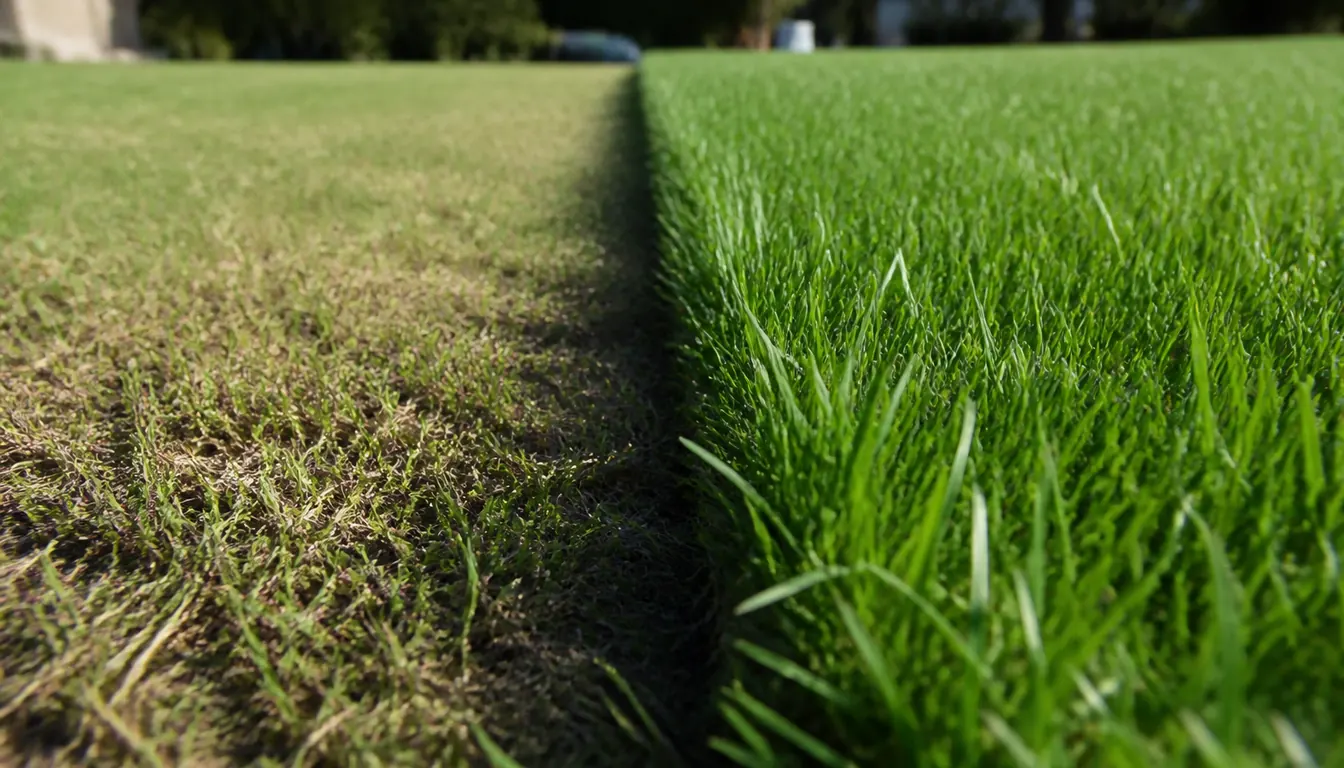
- Water 1 to 1.5 in per week: counting rain, in one or two soakings, early in the day
- Raise the mower: more leaf shades the soil and drives roots deeper
- Read fading color correctly: browning cool-season turf in August is usually dormancy, and the overwatering signs look nothing like it
- Do not feed heat-stressed turf: save the nitrogen for the fall window six weeks away
Fall Is the Whole Year for a Cool-Season Lawn
The reason fall beats spring is physical rather than traditional. Soil is still warm from summer while air temperature drops, so seed germinates quickly into ground that is no longer trying to cook it, and the seedlings root through weeks of mild weather instead of racing a heat wave.
The window has a hard end. Overseed 6 to 8 weeks before your average first frost so seedlings root before dormancy, which means counting backward from your own first frost date rather than using a month someone else published.
Order matters as much as timing, because aerating after seeding buries some of the seed and wastes the rest.
- First, aerate: open the compaction so seed has somewhere to land
- Then overseed: into the open holes, 6 to 8 weeks before average first frost
- Then water lightly and often: new seed wants surface moisture, which is the opposite of established turf
- Then feed: cool-season lawns take 2 to 4 lb nitrogen per 1000 sq ft a year, weighted here
Winter Is for the Notebook, Not the Lawn
Dormant grass has one real enemy and it is feet. Traffic on frozen or waterlogged turf crushes the crowns, and a dormant lawn cannot repair that until growth returns, so the wear pattern you make in January is still visible in April.
Otherwise the useful winter work happens indoors, and the notes are worth more than any product because they are about your yard rather than a generic one.
- Which areas thinned: and whether they share shade, slope or traffic
- Where weeds took hold: which tells you whether the pre-emergent timing missed
- How long irrigation ran: measured against the 1 to 1.5 inch target, not by feel
- Service the mower now: so the first cut of spring is made with a sharp blade
Pro Tips
- Buy a soil probe thermometer, since almost every timing question on this page becomes a reading.
- Sort your lawn by season group before following any schedule, including this one.
- Cut tall-fescue at 3 to 4 inches and bermuda-grass at 1 to 2.5, never at each other's height.
- Never remove more than a third of the blade in a single cut.
- Apply no more than 1 pound of nitrogen per 1000 square feet in one application.
- Water 1 to 1.5 inches a week including rain, in one or two deep soakings.
- Count 6 to 8 weeks back from your average first frost to find your own overseeding date.
Frequently Asked Questions
When should I start lawn work in spring?
When soil temperature says so rather than when the calendar does, since the same date is weeks early in one region and late in another. Crabgrass pre-emergent goes down once soil at 2 inches holds 55 degrees for three to four consecutive days.
What is the most important season for cool-season lawns?
Fall, and by a wide margin, because soil stays warm while air cools so seed germinates fast without heat stress. Aerate first, then overseed 6 to 8 weeks before your average first frost, then feed.
When should warm-season lawns get their main fertilizer?
Once soil is consistently above 65 degrees and the lawn has fully greened up, not while any of it is still brown. Keep any single application to 1 pound of nitrogen per 1000 square feet, and 2 to 5 pounds across the year.
How high should I cut my grass?
It depends entirely on the grass, with tall fescue and St Augustine at 3 to 4 inches, Kentucky bluegrass and fine fescue at 2 to 3, and bermuda, zoysia and centipede at 1 to 2.5. Whatever the height, never remove more than a third of the blade in one cut.
How much should I water my lawn?
1 to 1.5 inches per week including rainfall, delivered in one or two deep soakings rather than daily light watering. Shallow frequent watering keeps roots near the surface, which is exactly what fails in the first heat spell.
Can one lawn calendar work everywhere?
Only if it is built on soil temperature, which this one is, because that number already accounts for latitude, soil type and how the particular year is running. A calendar built on months cannot travel, and that is why most of them are wrong somewhere.
Sources & References
Related Guides
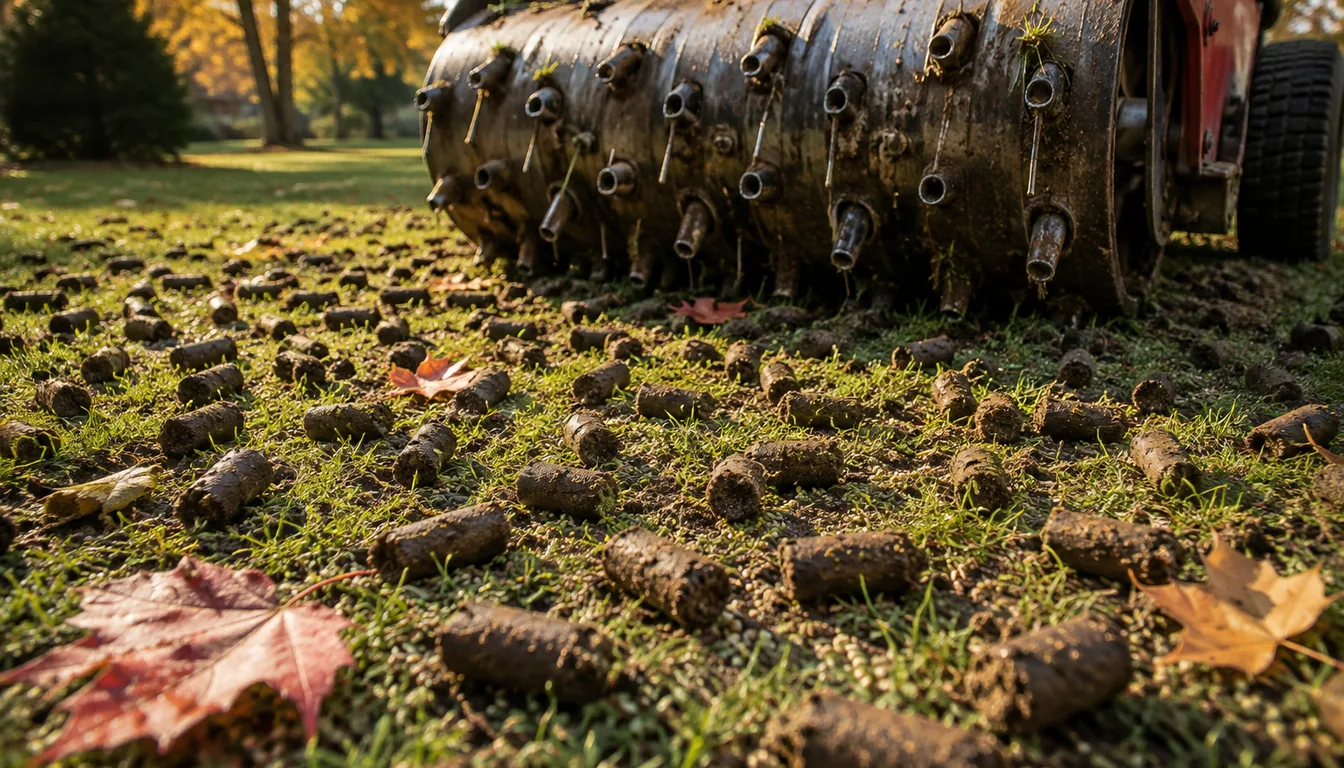
Best Time to Aerate and Overseed for a Thicker Lawn
Most lawns never reach their potential because aeration and overseeding happen at the wrong time.
11 min read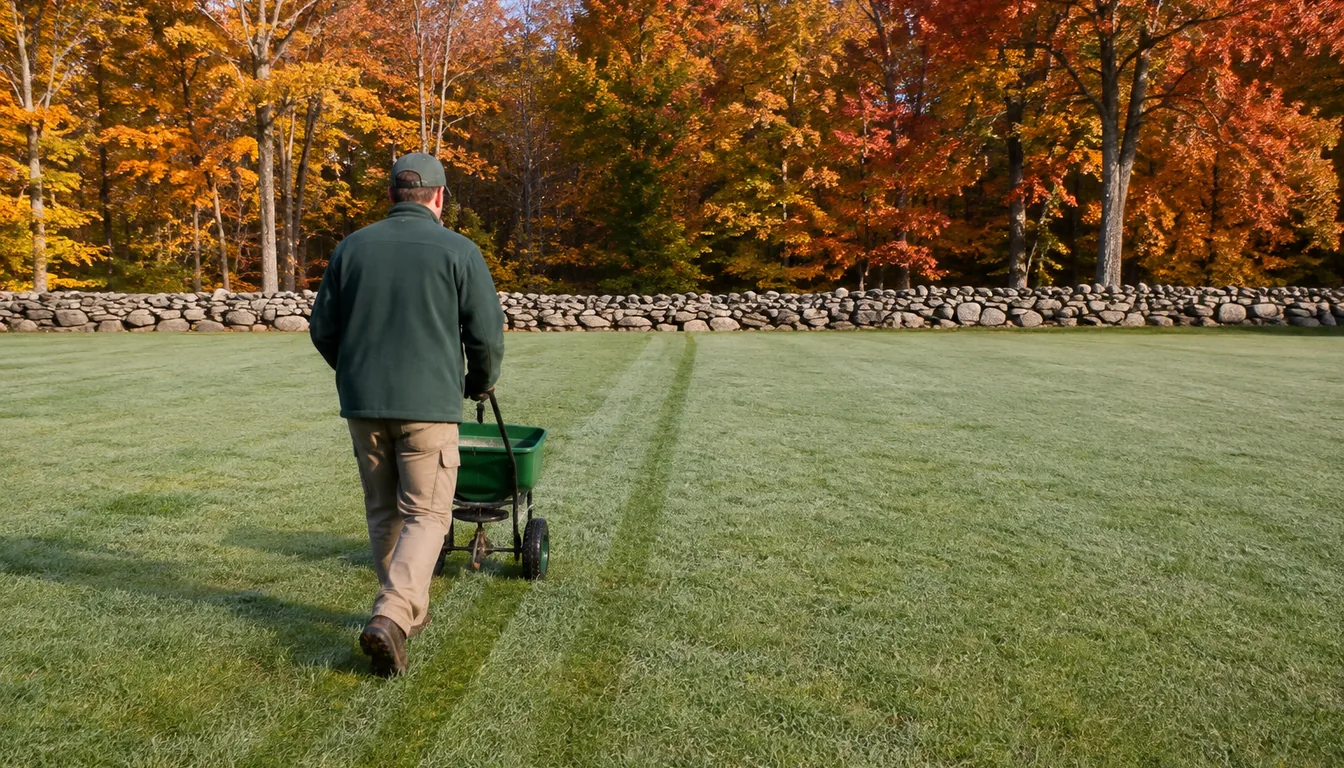
Best Time to Overseed a Northeast Lawn for Thick Turf
Overseeding in the Northeast is all about catching that short window when soil is warm, air is…
11 min read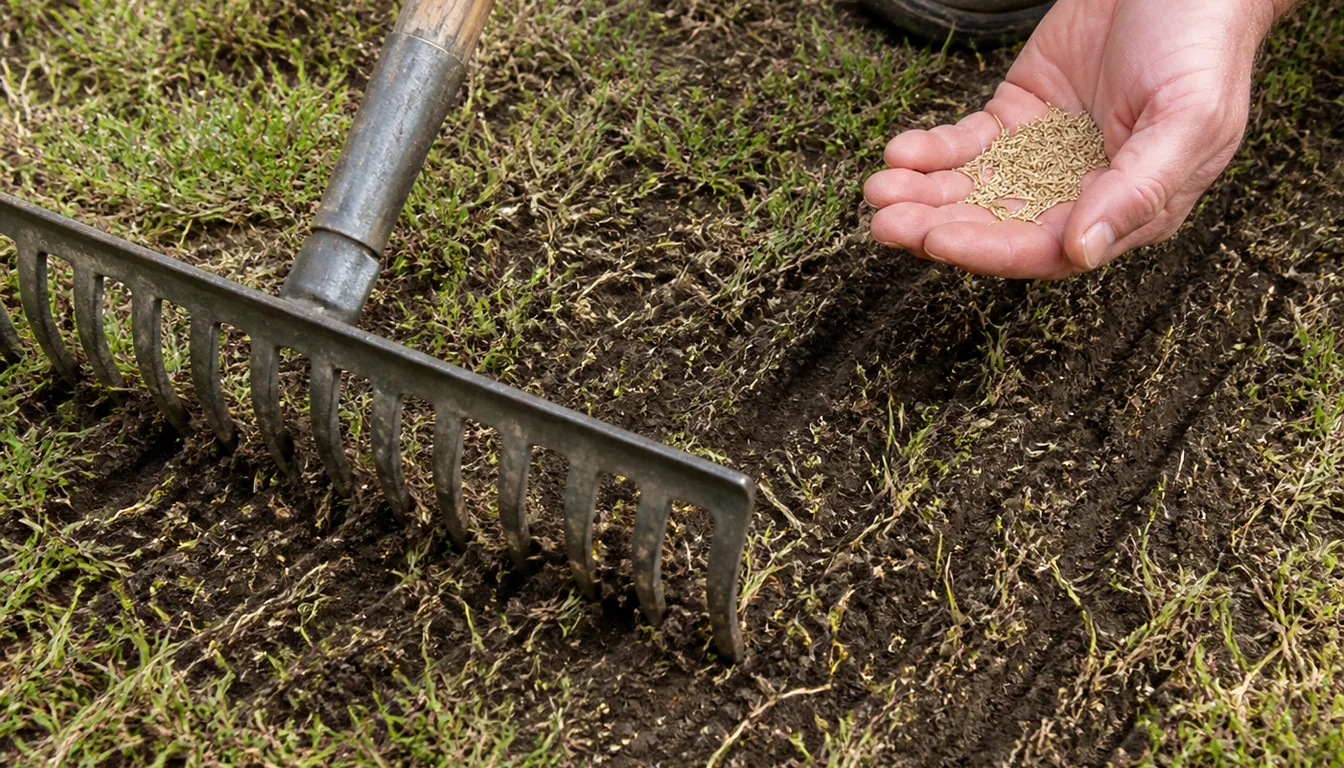
Can You Overseed a Lawn Without Aerating It First?
Thin turf and bare patches do not always mean you need to rent an aerator.
11 min read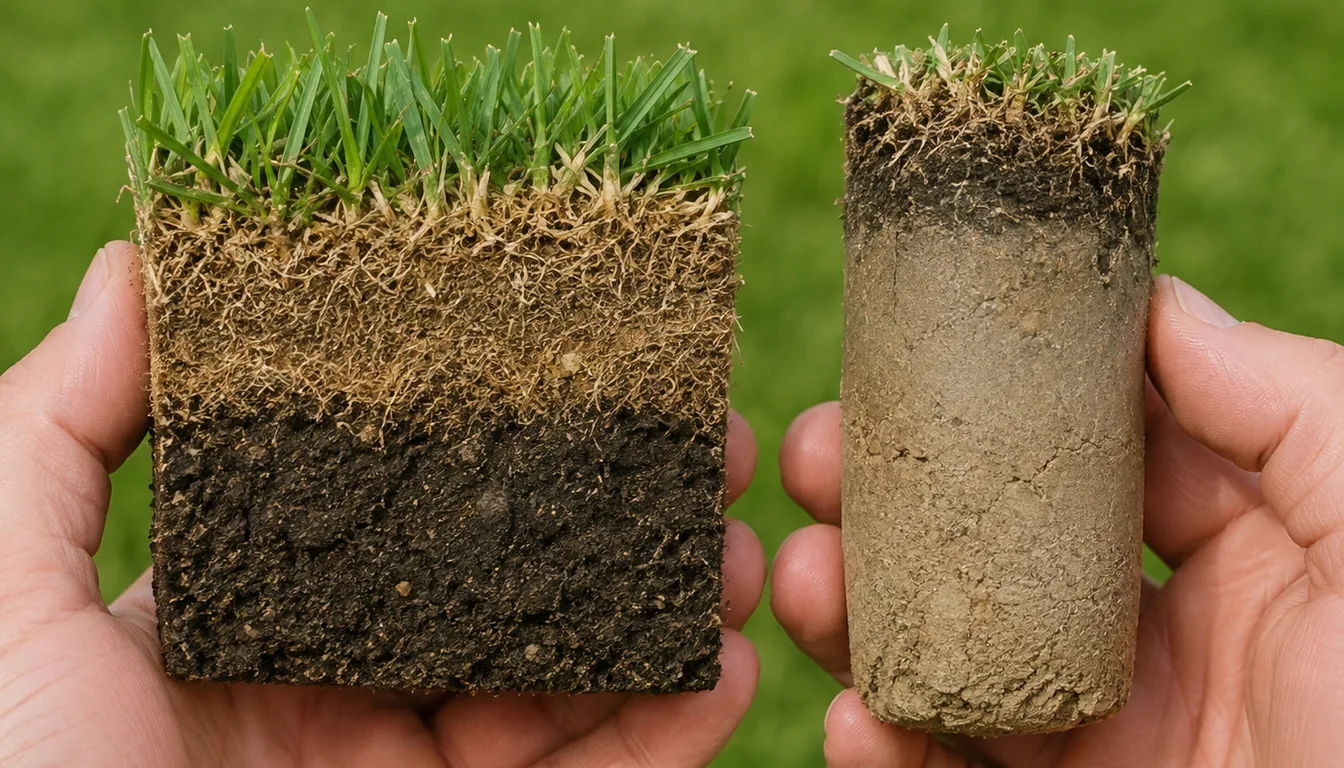
Dethatching vs Aerating: Which Does Your Lawn Need?
Choose dethatching when a measured layer of thatch has become excessive.
16 min read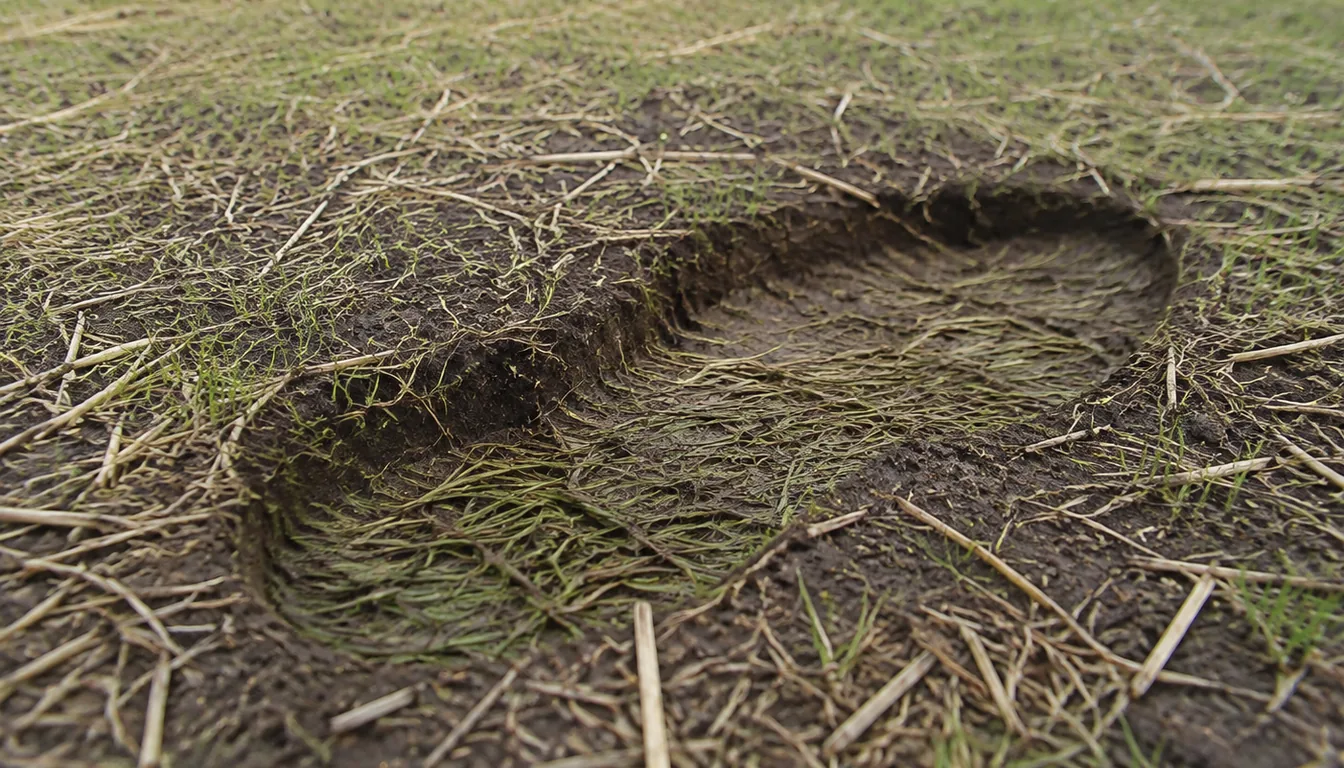
How Long After Planting Grass Seed Can You Walk On It Safely
Most new lawns fail not from bad seed, but from feet, paws, and mower wheels showing up too soon…
11 min read
How to Fertilize a Lawn Without Burning It
Those yellow stripes and crispy patches after fertilizing are almost always user error, not bad…
14 min read