Care snapshot
- Light
- Full sun (6+ hours) to part shade (2-6 hours)
- Water
- Drought tolerant once established
- Height
- 2 to 3 ft (NC State)
- Zone
- Zones 3-9 eastern, 5-8 threadleaf (NC State)
- Spread
- 2 to 3 ft wide (NC State)
- Temperature
- Slow to establish, 1 to 2 years for threadleaf
What Makes Amsonia Worth Growing?
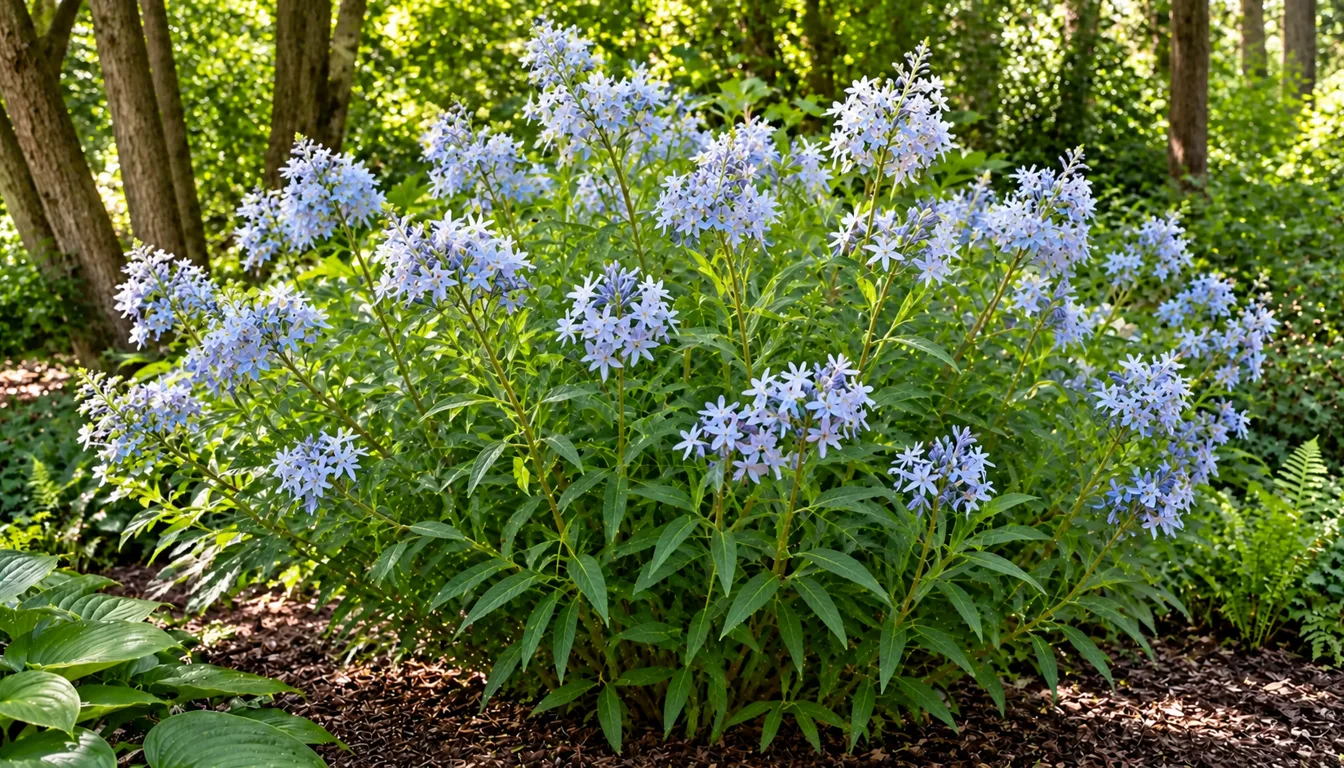
Amsonia, called bluestar for its pale blue, star-like flowers, is a genus of perennials in the dogbane family, Apocynaceae. Eastern bluestar (Amsonia tabernaemontana) is a native herbaceous perennial that NC State describes as 2 to 3 feet tall and wide in an erect clump, hardy in zones 3 to 9. Its clusters of light blue flowers open at the stem tips in late spring, in late April or May according to Iowa State, and stay for 2 to 3 weeks.
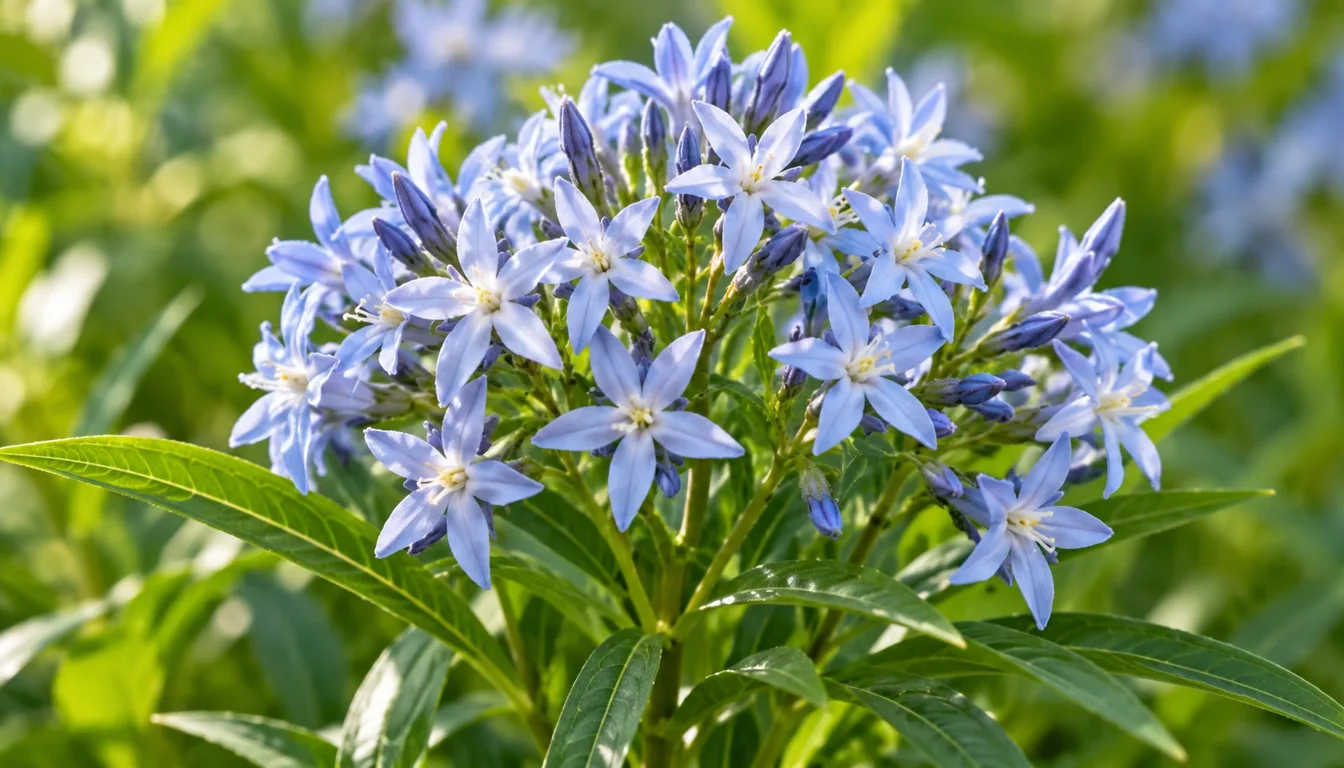
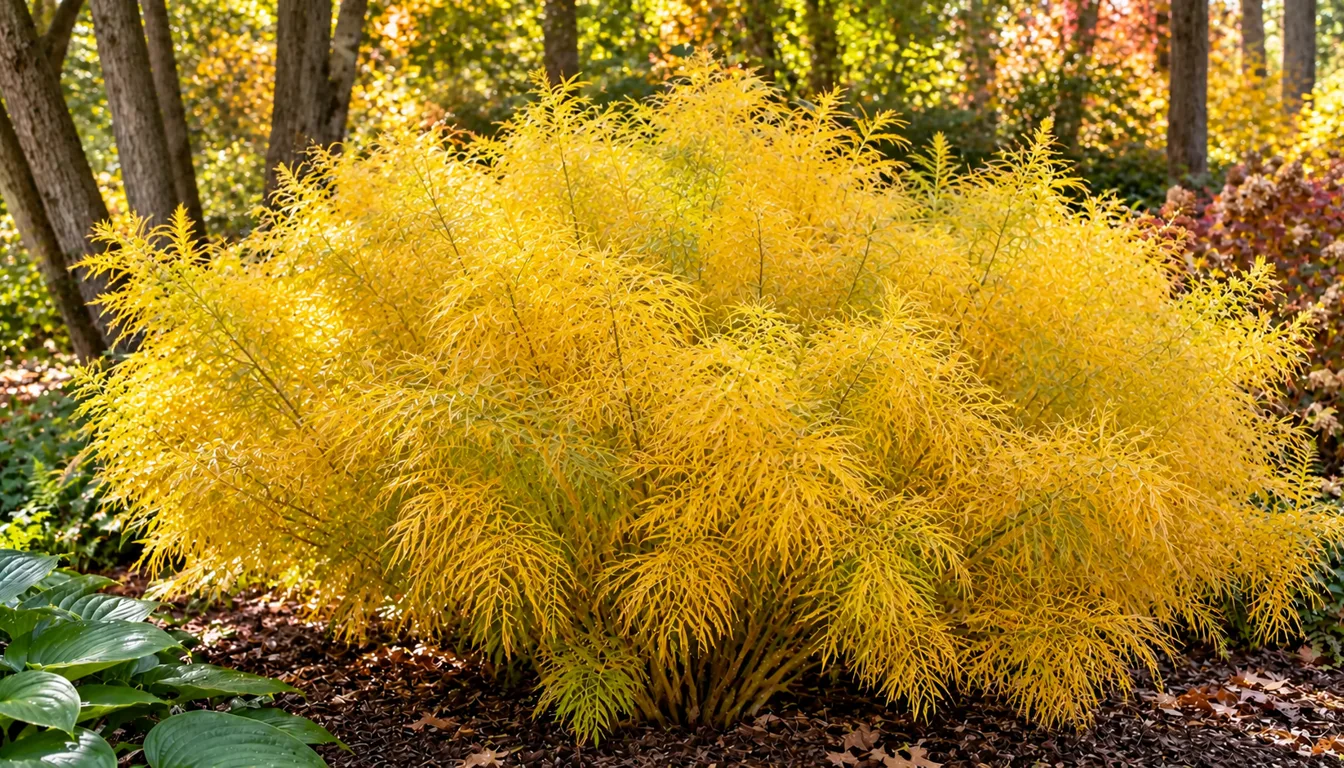
The leaves carry the plant after that. Iowa State says the narrow, dark green leaves stay disease-free through summer and turn a brilliant golden yellow in fall, a reliability few perennials match. NC State adds that the foliage contains a toxic white latex, which makes eastern bluestar resistant to damage by deer and other herbivores.
Eastern or Threadleaf Bluestar: Which Should You Plant?
Eastern and threadleaf bluestar are among the most commonly cultivated species (Iowa State), and they differ in leaf shape, hardiness and fall color, with two compact selections that stay smaller.
- Eastern bluestar (A. tabernaemontana)
- Narrow, willow-shaped leaves, zones 3 to 9, takes moist to occasionally wet soil and part shade, fall color variable (NC State, Iowa State)
- Threadleaf bluestar (A. hubrichtii)
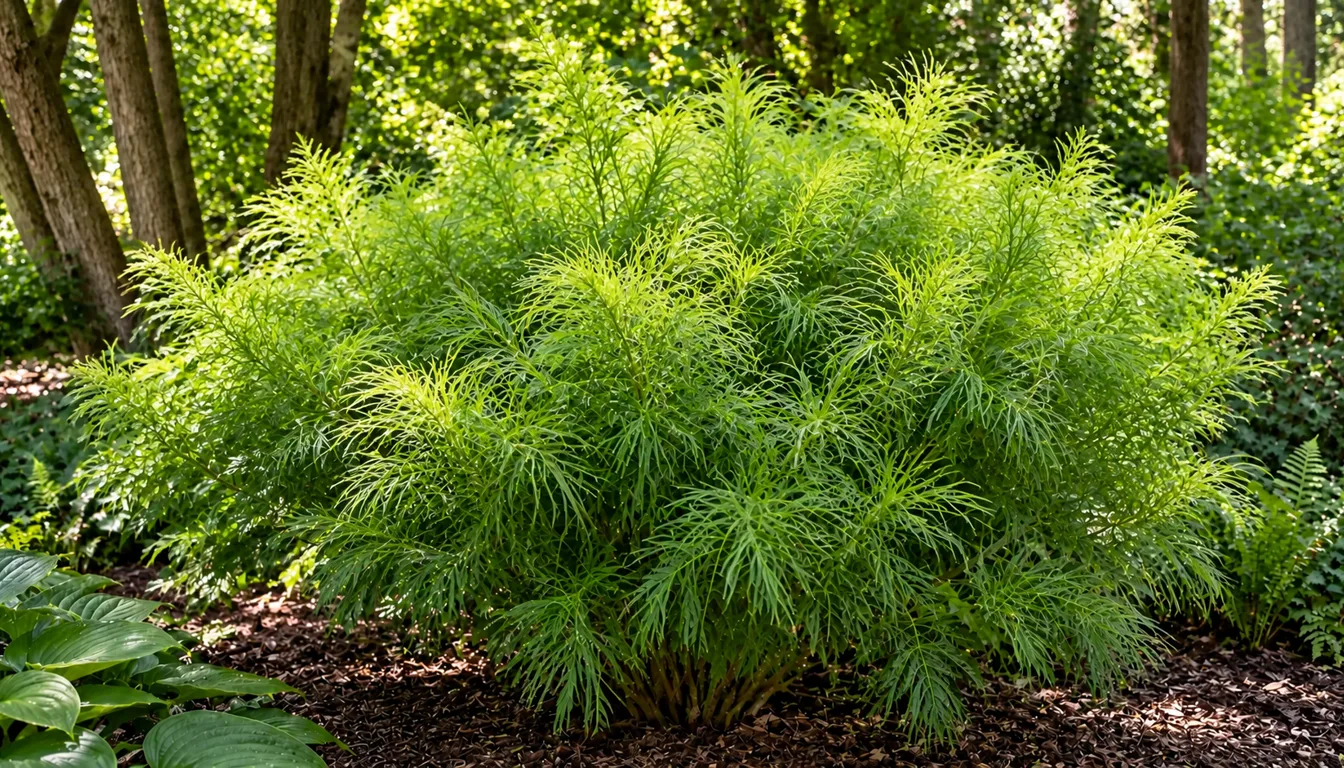
- Feathery, fine-textured leaves, zones 5 to 8, native to the Ouachita Mountains of Arkansas and Oklahoma, reliable fall color (NC State, Iowa State)
- Blue Ice
- 1 to 2 ft tall and wide with darker blue flowers (NC State, which calls its parentage uncertain). Iowa State lists it as a selection of European bluestar, which spreads by rhizomes once established
- Storm Cloud
- A compact selection of eastern bluestar that reaches about 2.5 ft tall (Iowa State)
For hardiness, NC State lists eastern bluestar for zones 3 to 9, while Iowa State says most bluestars are cold hardy to zone 5.
Threadleaf bluestar has the finer, feathery texture, and Iowa State rates its fall color as reliable where eastern bluestar's is variable. NC State calls it a slow grower that may take 1 to 2 years before its beauty shows, and says it flops in too much shade or in soil that is too rich. Plant it in sun and expect 1 to 2 years before its beauty shows.
Where and How Should You Plant Amsonia?
NC State lists both species for full sun, meaning 6 or more hours of direct sunlight a day, through part shade, meaning 2 to 6 hours, in average, well-drained soil. Eastern bluestar also takes moist to occasionally wet soil, and Iowa State says threadleaf prefers drier ground.
- Best fall color usually comes in full sun, according to the Missouri Botanical Garden as quoted by Illinois Extension, while flowers last longer with some afternoon shade where the sun is hot.
- Threadleaf flops in too much shade or in soil that is too rich (NC State), although Iowa State reports that bluestars in general prefer fertile, well-drained soil.
- Established plants are drought tolerant, and Iowa State adds that they tolerate heavy clay.
Seedlings germinate quickly but do not flower until their second year (NC State), so a seed-grown plant starts slowly. NC State puts a clump at 2 to 3 feet wide, which sets how much room each plant needs. NC State suggests using amsonia in a border or in groups, and an ornamental perennial border fits that use.
When and How Do You Cut Back Amsonia?
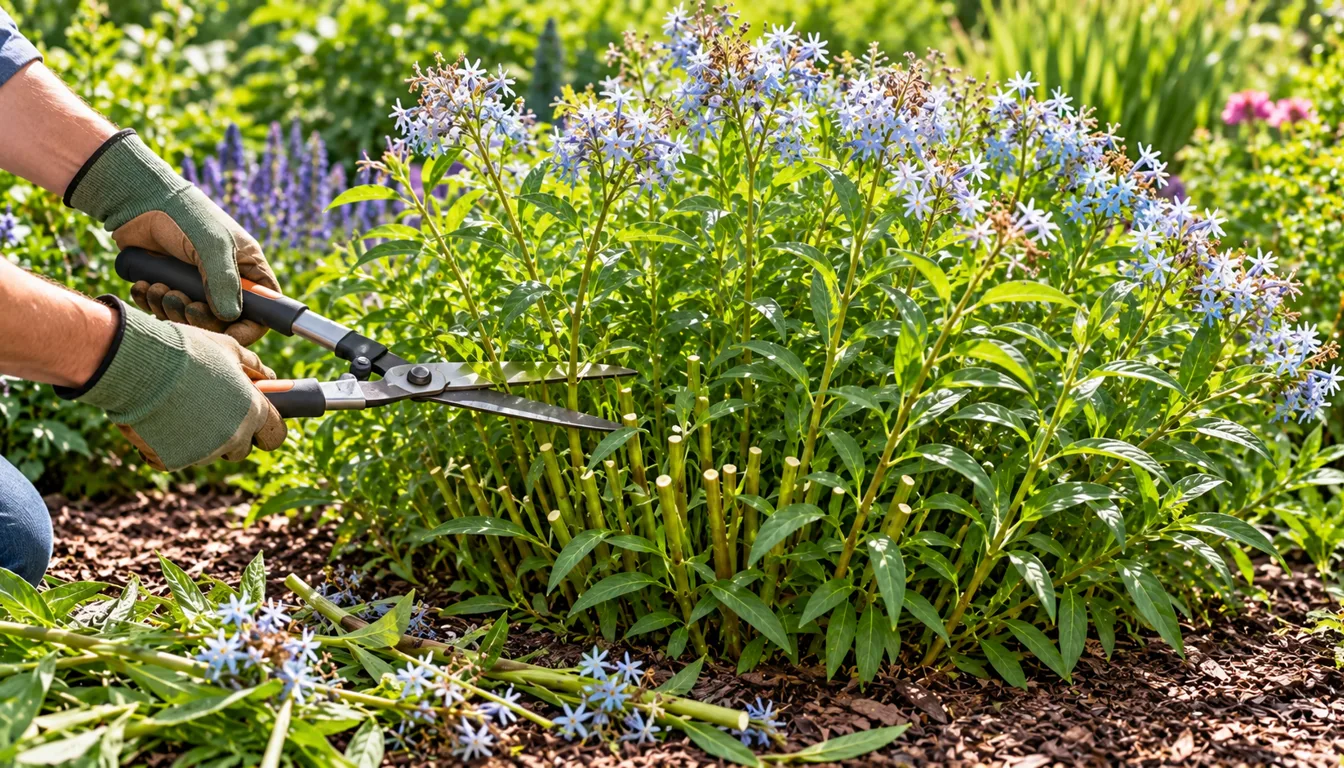
Cut the stems back right after the flowers fade, since that gives eastern bluestar a more rounded, neater look, and threadleaf plants that flop in too much shade should be cut back after flowering as well (NC State).
How much to take off varies by source. About 6 inches keeps stems upright and shapes a foliage mound (Illinois Extension, quoting the Missouri Botanical Garden), and an established plant can be cut back by half for a shorter, more compact habit (Iowa State).
Three small jobs go with the cut.
- Wear gloves, since NC State says the milky sap of threadleaf bluestar can cause skin irritation.
- Deadhead to prevent self-seeding, as NC State advises for eastern bluestar.
- Divide in spring or fall while the plant is dormant, keeping at least one eye per division (NC State). Iowa State warns that the dense crown can be difficult to divide or move once established, so choose the spot before you plant.
What Goes Wrong With Amsonia, and What Pairs With It?
Amsonia has few problems. NC State lists no significant problems for eastern bluestar, though rust may occur, and no serious insect or disease problems for threadleaf. It advises watching for fungal diseases on 'Blue Ice'.
- Floppy, open clumps point to too much shade, and for threadleaf to rich soil as well, so give the plant more light and cut it back after bloom (NC State).
- A young plant may not look like much yet, since seed-grown plants flower in their second year and threadleaf may take 1 to 2 years before its beauty shows (NC State).
- Deer and other herbivores do little damage, because the foliage of eastern bluestar contains a toxic white latex and the stems of 'Blue Ice' a toxic milky sap that helps deter rabbits and deer (NC State).
Pet safety is unrated. NC State gives no pet toxicity rating for eastern bluestar, threadleaf bluestar or 'Blue Ice', even though it describes the latex as toxic and says it makes the plant resistant to damage by deer and other herbivores.
Four plants share a border with amsonia and carry the planting on through the seasons.
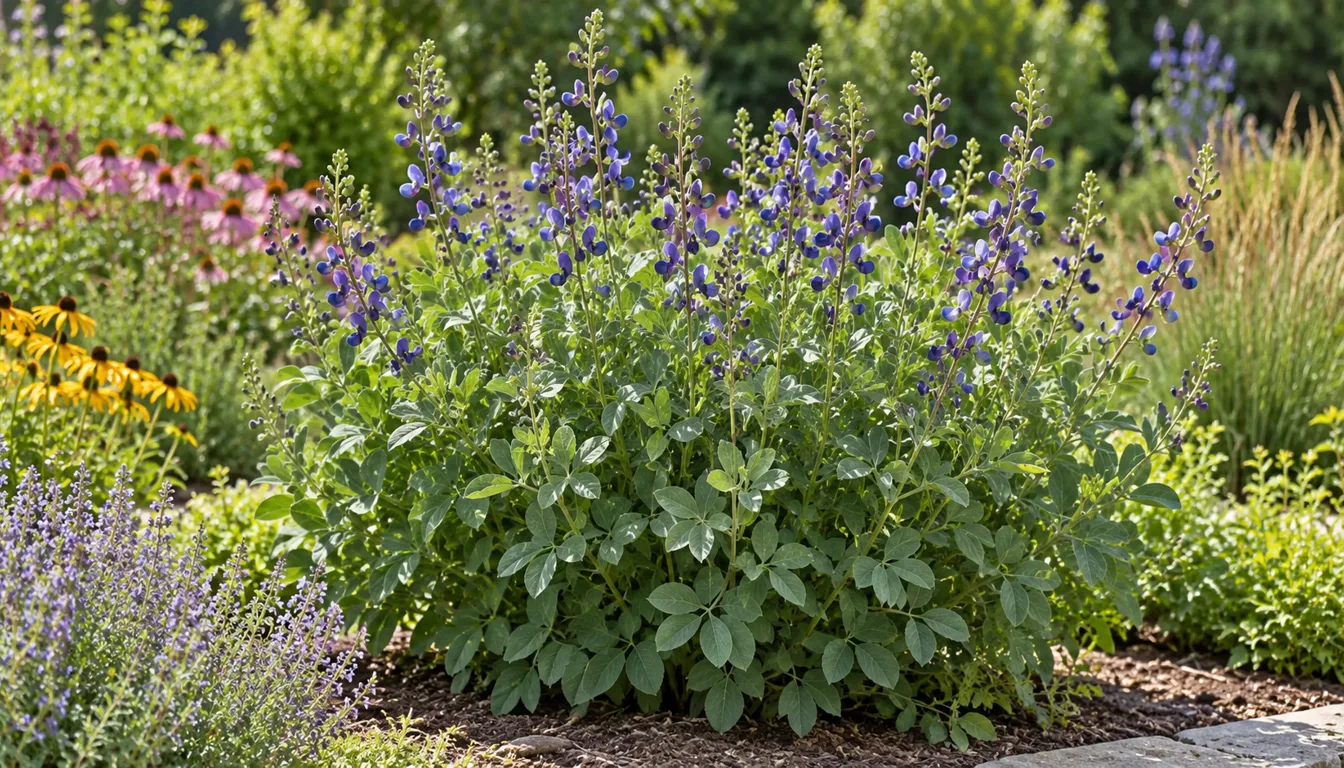
- Baptisia has indigo-blue flowers that NC State pairs with yellow or white perennials, and it grows in full sun to part shade like amsonia.
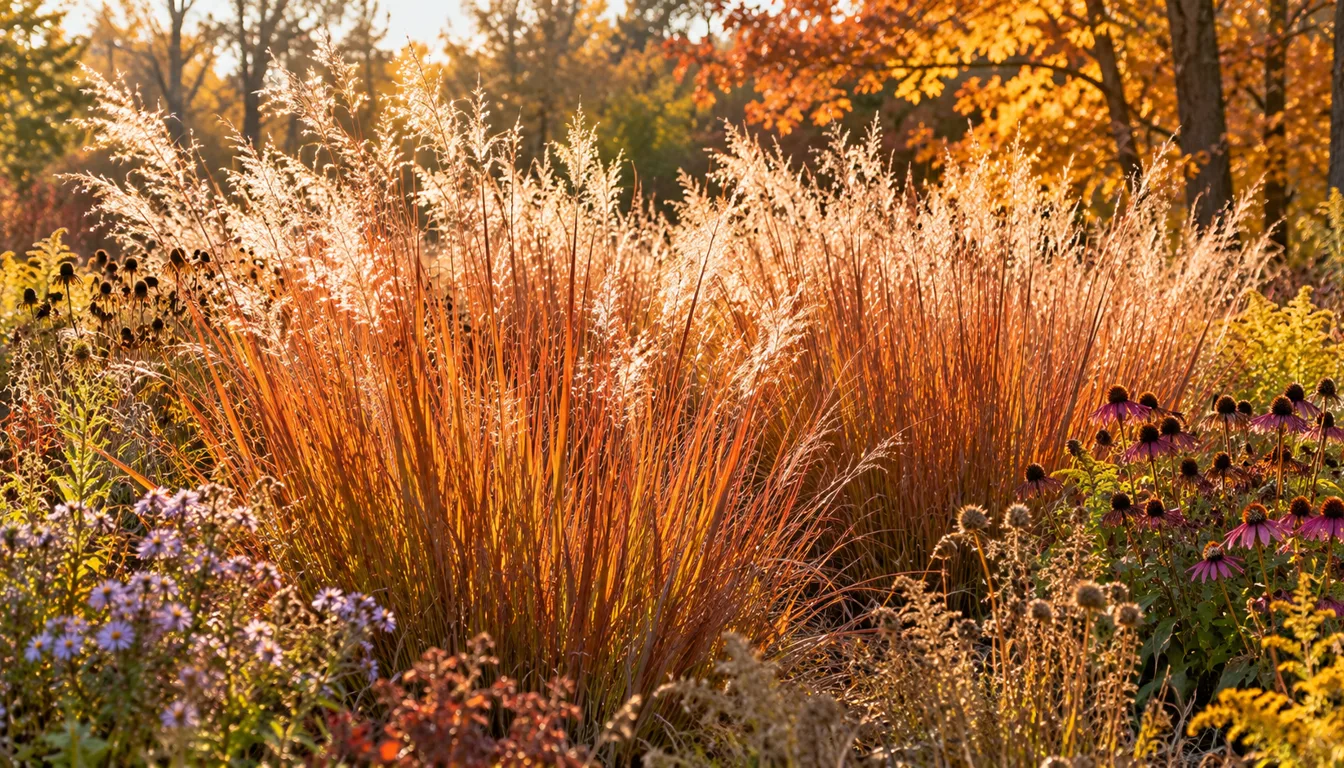
- Little bluestem turns a warm copper in fall that does not fade through winter (NC State), a color that sits beside golden amsonia.
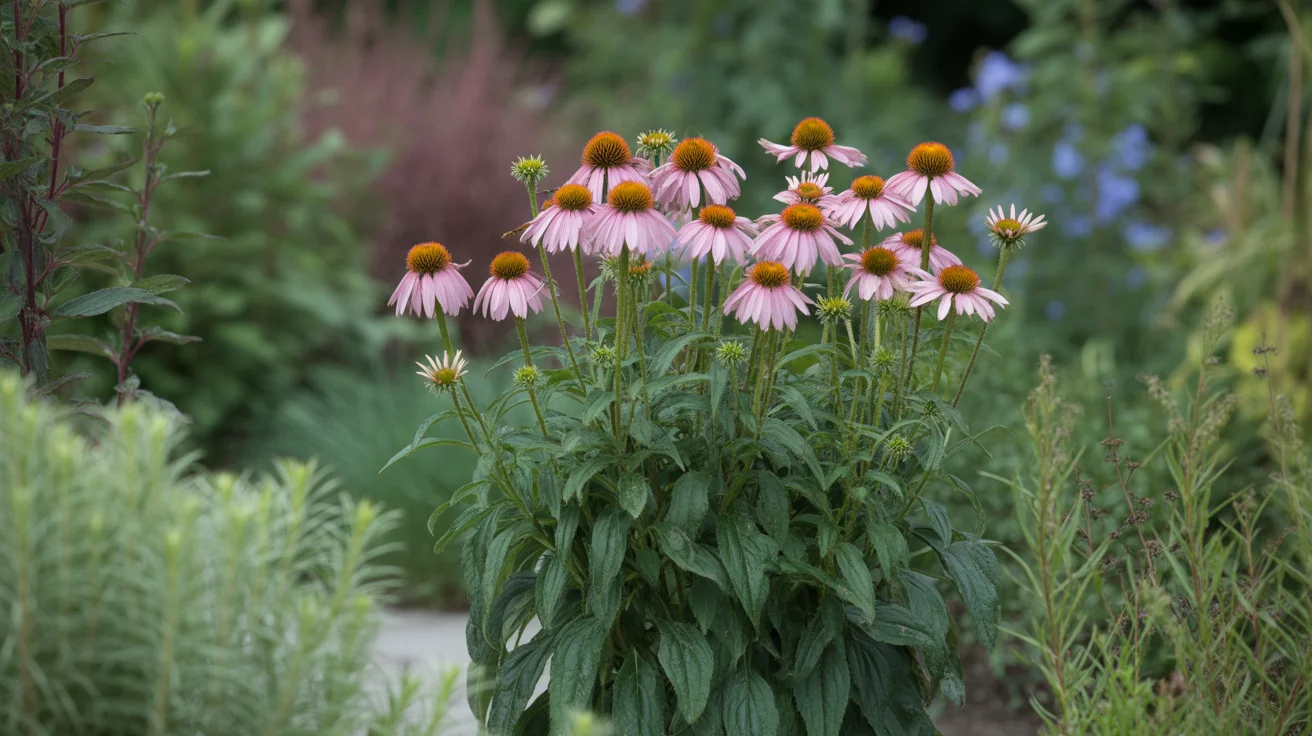
- Coneflower carries pinkish-purple flowers from early summer through mid-fall (NC State), after amsonia has bloomed.
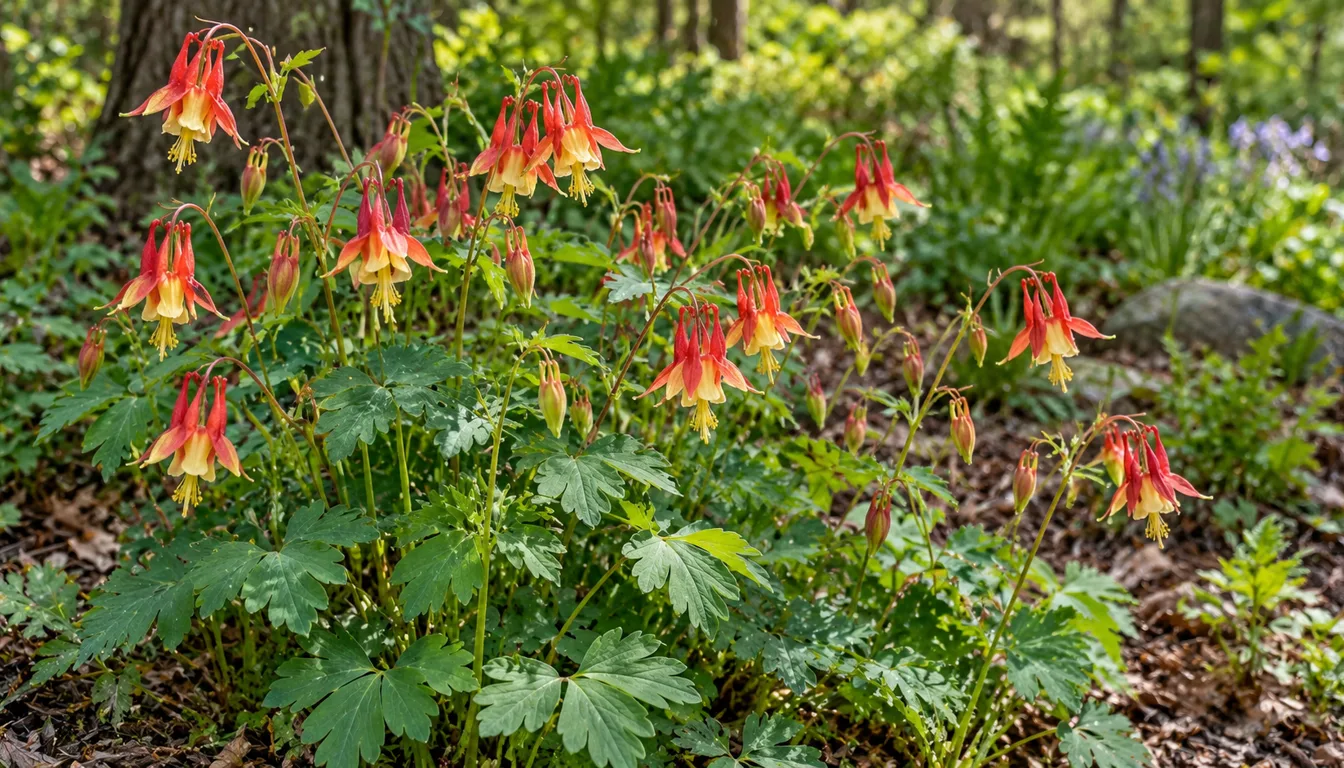
- Columbine prefers partial shade and opens red and yellow flowers in early spring (NC State).
Frequently Asked Questions
Should I cut back amsonia after it blooms?
Yes. NC State says cutting the stems back after flowering gives eastern bluestar a more rounded, neater look. Illinois Extension suggests about 6 inches, and Iowa State says an established plant can be cut back by half.
Why is my amsonia floppy?
Too much shade is the cause NC State names for both species, and it adds that threadleaf also flops in soil that is too rich. More sun and a cut back after bloom address it.
When does amsonia turn gold?
In fall. Iowa State says the leaves turn a brilliant golden yellow, reliably on threadleaf bluestar and variably on eastern bluestar.
Is amsonia deer resistant?
Yes. NC State says the foliage contains a toxic white latex that makes eastern bluestar resistant to damage by deer and other herbivores, and Iowa State says deer avoid bluestars for the same reason.
How long does amsonia take to establish?
NC State says threadleaf bluestar is a slow grower that may take 1 to 2 years before its beauty shows, and seed-grown eastern bluestar does not flower until its second year.
What is the difference between eastern and threadleaf bluestar?
Eastern bluestar has narrow, willow-shaped leaves and is hardy in zones 3 to 9. Threadleaf has feathery, fine-textured leaves, is hardy in zones 5 to 8, and has the more reliable fall color according to Iowa State.
Is amsonia safe for pets?
No pet toxicity rating exists in NC State's entries for the species covered here. NC State describes the latex as toxic and as the reason deer and other herbivores do little damage, and says the milky sap of threadleaf can cause skin irritation, so unrated does not mean safe.
Sources & References
- Amsonia tabernaemontana, North Carolina Extension Gardener Plant Toolbox
- Amsonia hubrichtii, North Carolina Extension Gardener Plant Toolbox
- Amsonia Blue Ice, North Carolina Extension Gardener Plant Toolbox
- Bonkers for Bluestars, Iowa State University Extension and Outreach
- Plant of the Week, Blue Star Amsonia, University of Illinois Extension
- Baptisia australis, North Carolina Extension Gardener Plant Toolbox
- Schizachyrium scoparium, North Carolina Extension Gardener Plant Toolbox
- Echinacea purpurea, North Carolina Extension Gardener Plant Toolbox
- Aquilegia canadensis, North Carolina Extension Gardener Plant Toolbox