Fertilizingschedule14 min read
Best Fertilizer for Indoor Plants
Learn how to choose the best fertilizer for indoor plants by growth style, season, and pot size without burning roots or overfeeding slow growers.
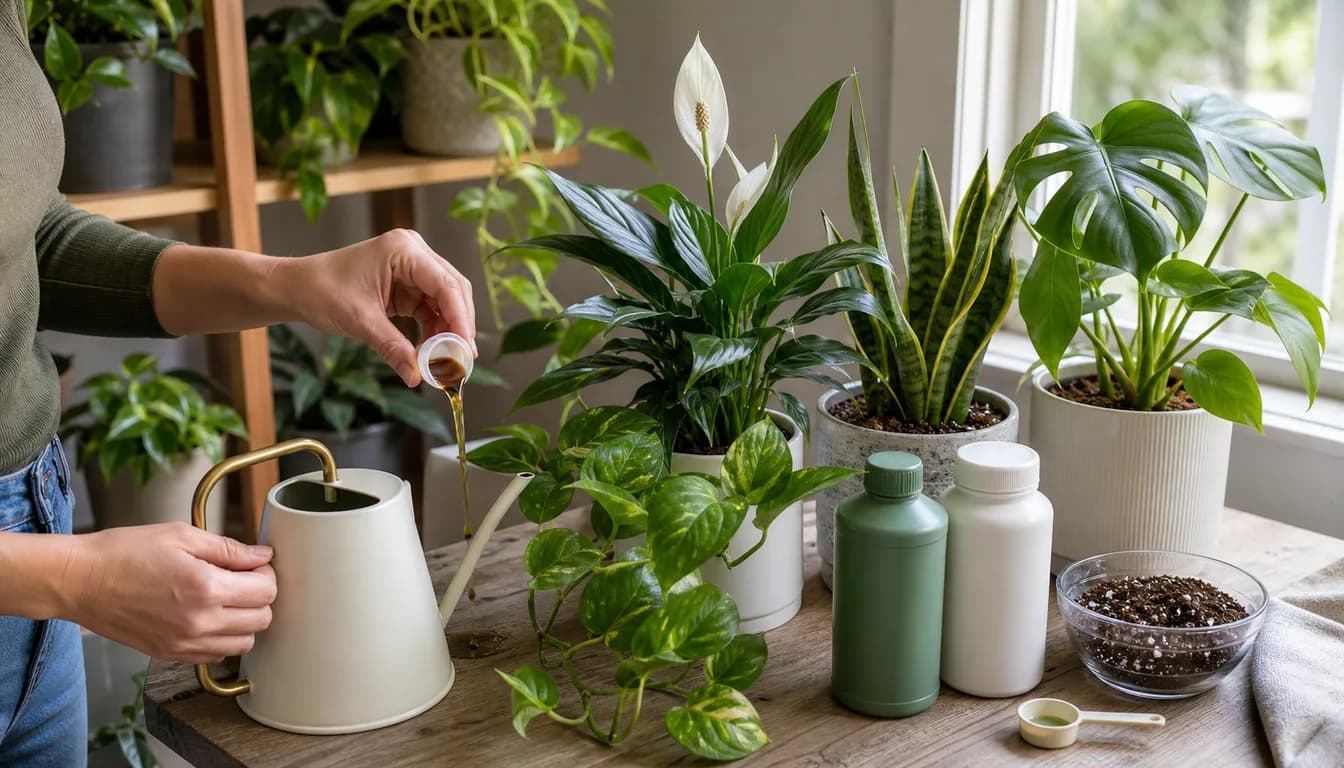
Fertilizer is where a lot of indoor plant care goes sideways. Too weak and you get leggy, pale growth; too strong and you crisp the roots in one watering can. Indoor pots give you very little room for error, so the right formula and timing matter more than brand names.
This guide skips the hype and focuses on what type of fertilizer fits your plants and your routine. We cover NPK basics, liquid versus slow-release feeding, and practical picks for foliage plants, flowering plants, indoor herbs, and low-light survivors, so you can feed with a steady hand instead of turning potting mix into a chemistry project.
scienceHow Indoor Plants Use Fertilizer
Most indoor plants live in a small volume of potting mix, so nutrients deplete faster than in a garden bed. Every time you water, a bit of nitrogen, phosphorus, and potassium washes out of the drainage holes.
Leaves and stems lean on nitrogen (N) for green growth. Roots and blooms use phosphorus (P), while potassium (K) helps with disease resistance and overall toughness; a balanced fertilizer keeps all three available in modest amounts.
Houseplants like pothos vines respond best to slightly nitrogen-forward formulas. Monstera foliage usually fits the same pattern, so blends like 3-1-2 or 10-10-10 work when you dilute them hard.
Flowering indoor plants, such as peace lily blooms, shift demand toward phosphorus during bud production. Potted basil needs steady nitrogen for leafy harvests, but it burns quickly if the dose is too strong.
More indoor plants are damaged by overfertilizing than by going a year with no fertilizer at all. Light, watering, and pot size must be in balance before extra nutrients do any good.
If a plant is struggling from low light or poor watering habits, fertilizer behaves like an energy drink for a sleep-deprived body, not a cure.
That is why feeding should stay behind light and watering in the triage order.
- fiber_manual_recordPrimary nutrients: Nitrogen for foliage, phosphorus for roots and flowers, potassium for resilience
- fiber_manual_recordSecondary nutrients: Calcium, magnesium, sulfur, often present in quality mixes
- fiber_manual_recordMicronutrients: Iron, manganese, zinc and others that prevent subtle yellowing issues
quizHow to Read NPK Labels Before You Buy
Fertilizer labels lean hard on marketing terms like "indoor plant food" or "jungle blend." The only numbers that matter are the three in the N-P-K ratio printed on the front.
Those numbers show the percentage by weight of each nutrient. A 3-1-2 product has three percent nitrogen, one percent phosphorus, and two percent potassium; everything else in the container is filler, organic matter, or minor nutrients.
For foliage houseplants such as snake plant clumps, use a relatively low overall NPK so you can feed regularly without much risk. ZZ plant clusters usually fit the same low-demand rhythm, so products labeled 2-2-2, 3-1-2, or 5-3-3 all make sense when diluted properly.
Indoor bloomers like anthurium flowers or patio hibiscus do not need extreme bloom-booster formulas. Mildly higher phosphorus, such as 2-3-2 or 5-7-5, is plenty when light and watering are on point.
Ignore any bottle that claims you never have to measure yet lists double-digit NPK numbers. High-analysis fertilizers demand careful dosing.
That caution keeps routine feeding simple and predictable.
- fiber_manual_recordUnder 5-5-5: Safe range for most indoor use when diluted
- fiber_manual_recordSingle-digit NPK: Easier to manage than strong granular lawn products
- fiber_manual_recordMicronutrient line: Look for iron and magnesium if your water is very soft
- fiber_manual_recordCertifications: Organic logos matter less than a clear, modest NPK ratio
Guide — See AlsoWhen to Fertilize Trees and Shrubs Without Pushing Weak GrowthLearn the best time to fertilize trees and shrubs, how timing changes for flowering shrubs, evergreens, and fruit trees,
chevron_rightwater_dropLiquid vs Slow‑Release: What Fits Your Routine
Liquid fertilizers dominate indoor plant shelves because they mix right into your watering can. They are ideal if you already water on a schedule and like tweaking strength by season.
Slow-release granules or spikes release nutrients over weeks. They are better for forgetful waterers or for bigger containers like indoor fiddle leaf fig trees; rubber plant tubs fit that set-and-forget style too.
Liquids shine for fast-growing vines like spider plant offsets. Heartleaf philodendron also responds well because you can feed lightly every two to four weeks during active growth and pause cleanly in darker winter months.
Slow-release products fit chunky mixes in large pots, such as bird of paradise clumps or parlor palm clusters. They keep nutrients available even if you miss a feeding or two.
Choose the format that matches your personality, not just what the label promises. A mild liquid used at half strength all season is safer than a powerful spike you forget about.
Never push lawn or shrub fertilizers into indoor pots. Their high salts and fast release can burn roots in small containers.
That one rule matters more indoors than chasing fancy formulas.
- fiber_manual_recordLiquid pros: Fast acting, easy to dilute, simple to pause
- fiber_manual_recordLiquid cons: Requires remembering a schedule, bottles clutter shelves
- fiber_manual_recordSlow-release pros: Set-and-forget feeding for big pots
- fiber_manual_recordSlow-release cons: Harder to remove if you accidentally overapply
Email Updates
Join the KnowTheYard update list
Zone-specific advice, seasonal reminders, and new plant guides — no filler.
potted_plantBest Fertilizers by Indoor Plant Type
Different groups of indoor plants respond best to slightly different feeding styles. Matching fertilizer type to plant type keeps you from buying a new product for every pot.
Low-light survivors such as office snake plants, tough ZZ clumps, and cast iron plant barely need fertilizer. A gentle 2-2-2 liquid at quarter strength once or twice each growing season is enough.
Fast foliage growers like variegated pothos, Brasil philodendron, and spider pups appreciate a 3-1-2 style fertilizer at half strength every four weeks while actively growing.
Flowering plants, including peace lily clumps, anthurium blooms, and indoor tropical hibiscus, like a formula with a touch more phosphorus; aim for something like 2-3-2, or supplement your usual feed with a mild bloom formula only when buds form.
Indoor herbs such as window mint, parsley pots, and compact thyme behave more like vegetable crops. They prefer steady, light feeding with a balanced product similar to what you would use to fertilize raised vegetables.
- fiber_manual_recordLow-light foliage: Very light feeding, balanced 2-2-2 once or twice per year
- fiber_manual_recordVining foliage: Half-strength 3-1-2 every four weeks in bright seasons
- fiber_manual_recordFlowering houseplants: Slightly higher phosphorus during active bloom cycles
- fiber_manual_recordIndoor herbs: Regular, gentle feedings to replace harvested growth
Guide — See AlsoCan You Fertilize Wet Grass Without Damaging Your Lawn?Learn when it is safe to fertilize wet grass, when to wait, and how moisture, product type, and weather affect burn risk
chevron_rightcalendar_monthTiming Fertilizer Through the Year Indoors
Indoor plants live on our schedules, but their roots still follow seasons. Light levels and day length change how much food they can use.
In bright windows or under grow lights, growth ramps up from late winter through early fall; that is the main feeding window for most houseplants.
Tropical foliage like large Monstera leaves and vining philodendron types usually appreciate regular fertilizer from February through October, then a lighter hand in darker months.
Winter is not always a full pause. Plants near south-facing windows or under LEDs may keep growing, so watch new leaves and adjust feeding instead of blindly stopping in November.
If growth slows and potting mix stays wet longer, cut fertilizer frequency in half before you stop entirely.
Succulents and semi-dormant plants, such as slow snake plants and tough ZZ clumps, prefer a shorter feeding season. Focus on spring and early summer when they push new growth.
Flowering houseplants, including indoor peace lilies and colorful anthuriums, often bloom in cycles. Fertilize more often when you see buds forming, then back off slightly after peak bloom.
Herbs on a windowsill, like potted basil or vigorous mint pots, exhaust nutrients faster because you harvest them. Plan smaller, more frequent feedings from early spring until the plants get woody.
Seedlings under lights follow their own calendar. Start feeding at quarter strength once true leaves appear, then step up as you move them gradually toward outdoor conditions.
- fiber_manual_recordSpring focus: Resume feeding, start at half strength, watch for soft, pale new growth
- fiber_manual_recordSummer focus: Maintain steady fertilizer, avoid overdoing ammonium-heavy products in hot rooms
- fiber_manual_recordFall focus: Taper applications, especially for plants far from bright windows
- fiber_manual_recordWinter focus: Feed only actively growing plants, often monthly or not at all
Matching fertilizer timing to real growth, not the calendar, keeps roots safe and foliage thick.
warningAvoiding Common Indoor Fertilizer Mistakes
Most fertilizer problems show up slowly, so they are easy to miss until leaves look rough. Catching the common slipups saves more plants than chasing fancy products.
Using outdoor-strength doses indoors is the fastest way to burn roots. Houseplants in small pots and low light use far less nitrogen than a tomato bed outside.
Skipping instructions is another big one. Labels on major brands usually include indoor rates and intervals; that matters whether you feed a big fiddle leaf fig or a tiny air plant cluster.
Water stress multiplies fertilizer damage. Dry roots plus a strong feed can scorch tips on already thirsty plants like humidity-loving ferns.
Never fertilize a plant that is bone dry or freshly wilted. Rehydrate first, then feed a few days later.
Pouring concentrate straight into the pot happens more often than we admit, so mark your concentrate bottle clearly before someone mistakes it for ready-to-use mix.
Switching products too often also backfires; jumping between high-nitrogen spikes and bloom boosters makes it hard to read what your peace lily clump actually needs.
Salt buildup sneaks up in closed containers. White crust on soil or pot rims, plus drooping even when moist, hints that you need a good flush with plain water.
Mixing fertilizer with every watering, without cutting the rate, can overload slow growers like cast iron plants. Low and steady beats strong and often indoors.
- fiber_manual_recordAlways dilute: Follow indoor label rates, or start at half strength for cautious feeding
- fiber_manual_recordFeed on moist soil: Water lightly first, then apply fertilizer solution to avoid shock
- fiber_manual_recordFlush regularly: Every 4-6 weeks, run water through pots until it pours from the bottom
- fiber_manual_recordSkip sick plants: Pause feeding on anything battling root rot, pests, or repot stress
Guide — See AlsoHow Long Does Compost Take To Be Ready To UseLearn how long compost really takes to be ready, what speeds it up or slows it down, and how to tell when your pile is f
chevron_rightpotted_plantFertilizing Right After Repotting or Pruning
Fresh potting mix usually contains some nutrients, so newly repotted plants do not need a full-strength feeding right away. Roots focus on healing and expanding first.
Heavy pruning, such as reshaping a leggy indoor rubber tree or cutting back overgrown Monstera vines, also briefly slows growth. Wait until you see new shoots before pouring on fertilizer.
Soilless mixes for indoor plants often use slow-release bits plus a small starter charge. That is usually enough for 4-6 weeks for average foliage in bright light.
Overfeeding right after repotting is a common trigger for root rot, because damaged roots cannot process the extra salts.
That is why the restart phase should stay boring and light.
For stressed plants, focus on good watering habits and light first. Once new leaves appear and stay firm, you can restart a light fertilizer program.
Fast drinkers like thirsty peace lilies or busy spider plants may need food sooner in basic peat mixes. Start with quarter strength at the three-week mark, then increase if color fades.
Woody house trees, such as braided money tree or umbrella plant types, appreciate a slow, steady feed after major root work. A mild liquid every 4-6 weeks supports recovery without forcing soft, weak growth.
If you had to cut away rot during repotting, hold fertilizer back even longer. Clean water and an airy mix matter more while new roots rebuild.
- fiber_manual_recordAfter normal repot: Wait four weeks, then start at half label strength
- fiber_manual_recordAfter heavy root pruning: Wait six weeks, monitor new growth before feeding
- fiber_manual_recordAfter emergency rot fix: Delay fertilizer six to eight weeks, prioritize drainage and airflow
- fiber_manual_recordAfter hard top pruning: Watch for strong new shoots, then resume your regular schedule
pest_controlFertilizer, Pests, and Leaf Problems
Extra fertilizer will not fix pest damage or poor light, and it can make both worse. Soft, overfed growth attracts sap-suckers and breaks more easily.
Sticky leaves on your indoor hibiscus shrub or colorful croton usually signal insects, not a fertilizer issue. Look for honeydew and tiny bugs, not just pale foliage.
Fungus gnats thrive in damp, rich mixes. If your pots are crawling, dry time between waterings matters more than the fertilizer label, though reducing fertilizer helps too.
Brown tips on snake plant fans or fronds of indoor majesty palm can come from salts, low humidity, or inconsistent watering. Fertilizer burn is only one piece.
Before blaming fertilizer, check for pests and root issues. Treat those first, then adjust your feeding routine.
If you see yellow leaves on trailing pothos vines, compare the pattern before you blame nutrients. Cold drafts, old age, and soggy soil all look different from a true shortage.
Brown patches on Monstera foliage may point to watering or disease. Fertilizer tweaks come after you sort out those basics.
If leaves stay small and pale even with good light and watering, then think nutrients. Balanced feeds can help picky calatheas and patterned prayer plants color up without pushing them too fast.
For any plant recovering from pests, resume fertilizer slowly. Quarter-strength feeds every three to four weeks support new growth without stressing tender tissue.
- fiber_manual_recordCheck for insects: Inspect leaf undersides and stems before changing products
- fiber_manual_recordReview watering: Soggy soil plus fertilizer is worse than low fertilizer alone
- fiber_manual_recordAdjust light first: Many deficiencies are low-light issues
- fiber_manual_recordUse mild formulas: Aim for balanced, low-salt products while plants rebound
Guide — See AlsoHow to Fix Compacted Soil for Healthier RootsLearn practical ways to loosen compacted soil in lawns, beds, and veggie gardens so roots can breathe, water can soak in
chevron_rightscienceAdvanced Fertilizing Tricks for Indoor Plant Nerds
Once your basic routine feels solid, a few small tweaks can give you tighter control over growth and color without buying ten different products.
Many indoor growers keep a mild all-purpose liquid plus a separate calcium-magnesium supplement. That combo keeps big leaves on indoor bird of paradise and dramatic alocasia from tearing and yellowing.
Some collectors rotate between a balanced feed and a bloom-leaning one for flowering plants like red anthuriums or patio hibiscus; nitrogen builds leaves first, then a bit more phosphorus and potassium supports buds.
Testing your tap water can change everything. Hard water often already contains calcium and magnesium, which means you can skip or reduce Cal-Mag products.
The more bottles you add, the more you need notes, so track dates, doses, and plant reactions in a simple log.
Hydroponic and semi-hydro setups, such as LECA for marble queen pothos cuttings, need complete nutrient solutions rather than standard potting fertilizers. Follow ppm or EC targets from the solution maker.
Growers under strong LEDs often run slightly higher feed levels for fast growers like spider pups or neon pothos vines, but they watch tips weekly for burn and back off at the first sign.
Foliar feeding can provide a small boost for thin-leaved plants, but it should never replace root feeding. Spray in the morning and avoid strong sun through glass to prevent spotting.
If you track plant families, you will notice patterns. Many aroids such as monstera adansonii and philodendron brasil like similar mild, frequent feedings, while succulents and jade stems stay happier with leaner diets.
- fiber_manual_recordUse a notebook: Record product, dilution, and plant response after each new trial
- fiber_manual_recordGroup by needs: Keep heavy feeders and light feeders in separate care routines
- fiber_manual_recordMeasure solutions: A cheap conductivity meter helps avoid mystery overdoses
- fiber_manual_recordChange one thing: Adjust only one fertilizer variable at a time to see what worked
tips_and_updates
Pro Tips
- check_circleCut label rates in half for any fertilizer stronger than 5‑5‑5 before using it indoors.
- check_circleSkip fertilizer for four to six weeks after repotting into fresh mix that already includes nutrients.
- check_circleFlush each pot with plain water every few months to reduce fertilizer salt buildup at the soil surface.
- check_circleFeed only when plants are actively growing, not when a low‑light room keeps them barely ticking along.
- check_circleUse a dedicated, clearly labeled indoor watering can for fertilizing so you do not mix lawn products by mistake.
- check_circleWatch new leaves, not old ones, to judge if your fertilizer routine is helping.
- check_circlePair a gentle fertilizer with consistent light and watering before blaming nutrients for poor growth.
quiz
Frequently Asked Questions
How often should I fertilize indoor plants in winter?expand_more
Most indoor plants need little or no fertilizer in winter. If a plant under strong light is still putting out new leaves, feed at half strength every 4–6 weeks. Skip feeding fully resting plants until days lengthen again.
Should I fertilize right after buying a new houseplant?expand_more
Usually no. New plants are already stressed from shipping and store care, and the nursery mix often has fertilizer in it. Give them 3–4 weeks to adjust to your home, then start a light feeding routine if growth is active.
Is organic fertilizer better for indoor plants than synthetic?expand_more
Both can work well indoors. Organic options are gentler and build soil life but may smell more and act slower. Synthetic liquids give precise, quick nutrition but can burn roots if overused. Follow indoor label rates for either type.
Can I use the same fertilizer for all my houseplants?expand_more
A balanced, all-purpose liquid at the right dilution works for most foliage plants. Succulents and cacti prefer weaker, less frequent feeding, and heavy bloomers may benefit from formulas with slightly higher phosphorus. Adjust strength and timing more than brand.
Do self-watering pots change how I should fertilize?expand_more
Yes. In self-watering pots, fertilizer salts can concentrate near the wick. Use lower-strength solutions, flush from the top with plain water every month or two, and watch for white crust on the soil surface or pot edges.
Related Guides
Benefits of Composting for Healthier Soil and Plants
Learn how composting turns kitchen scraps and yard waste into free fertilizer, improves soil, and boosts plant health in any size garden.
12 min read
Best Fertilizer for Vegetables by Garden Type
Learn how to pick the best fertilizer for vegetables by crop group, soil condition, and garden setup so you feed beds, rows, and containers without wasting nutrients.
11 min read
Best Time to Fertilize Your Lawn Around Rainfall
Learn exactly how to time lawn fertilizing with rain so you do not waste product, burn grass, or pollute runoff.
11 min read