Trees & Arboreal Species
KnowTheYard maintains a structured tree directory for shade, privacy, ornamental, and edible landscape decisions. Each entry keeps mature size, hardiness, site fit, and care context tied to the published plant profile.
This directory is maintained as published profiles change. Whether you are choosing one front-yard tree or planning a larger planting, use it as a practical starting point for tree selection.
Getting Started with Tree Selection
Start with mature size, root space, light, soil drainage, and distance from buildings before choosing a tree.

Mastering Tree Pruning
Understand seasonal timing, apical dominance, and structural correction techniques.

Soil Nutrition Basics
Analyze pH levels, drainage capacity, and mycorrhizal associations for root health.

Correct Planting Depth
Prevent root girdling and collar rot by identifying the root flare properly.

Establishment Watering
Calculated irrigation schedules for the critical first three years of growth.
Trending Trees
Our editors highlight these species for their exceptional structural presence and landscape impact.
Head-to-Head Comparisons
Side-by-side guides comparing popular trees — care needs, costs, and best use cases.
 Arborvitae
 Juniper
VS
Arborvitae vs Juniper
Choose Arborvitae for dense vertical privacy and a cleaner screen silhouette. Choose Juniper when drought, lean soil, wind, and lower water use matter more than a uniform green wall.
Read Comparison arrow_forward Japanese Maple
 Red Maple
VS
Japanese Maple vs Red Maple
Choose Japanese Maple for ornamental detail, compact scale, and focal-point planting. Choose Red Maple when you need a bigger shade tree, broader canopy, and stronger performance in larger or wetter sites.
Read Comparison arrow_forwardPlanting for Purpose
Tree selection depends on the job in the yard: shade, screening, spring flowers, fall color, wildlife value, or edible harvest.
nature_people
Shade Providers
Canopy trees with broad spreads designed to reduce ambient temperatures and provide shelter.
View Shade Trees arrow_forwardfence
Privacy Screens
Dense, often evergreen species ideal for blocking sightlines and buffering noise pollution.
View Privacy Trees arrow_forwardlocal_florist
Ornamental
Specimen trees noted for showy flowers, unique bark, or architectural branching structures.
View Ornamental arrow_forwardCore Tree Database
Access detailed profiles for every species in our published index.

fact_check Source Reviewed
Cherry Blossom
Prunus serrulata
USDA Zones 4-9
Cherry blossom trees are about one short season done well. The right tree gives you a week or two of spring cloud-like bloom in the exact place people look, then spends the rest of its life asking for clean drainage, open air, and realistic expectations about lifespan.
Low LightSource Reviewed
View Profile arrow_forward
fact_check Source Reviewed
Dogwood
Cornus florida
USDA Zones 4-9
Flowering Dogwood is easiest to grow when you copy the place it wants to live. It likes bright woodland-edge light, cool root soil, leaf-rich drainage, and gentle pruning; it struggles when people plant it in hot reflected sun and treat it like a hard-surfaced street tree.
Pet SafeSource Reviewed
View Profile arrow_forward
fact_check Source Reviewed
Ginkgo
Ginkgo biloba
USDA Zones 4-9
Ginkgo is not a plant for instant gratification. It is a patient tree that rewards the right buyer decision up front: male or female, narrow or broad, street-tough or small-yard-mistake. Once that choice is right, the care is much simpler than the hype makes it sound.
Source Reviewed
View Profile arrow_forward
fact_check Source Reviewed
Japanese Cherry
Prunus serrulata
USDA Zones 4-9
Japanese Cherry is a short-season show tree with real structural limits. The best care is not chasing bigger growth. It is choosing a cultivar that suits the view, keeping bark and roots out of stress, then pruning and watering in ways that protect bloom without shortening the tree's useful life.
Source Reviewed
View Profile arrow_forwardfact_check Source Reviewed
Japanese Maple
Acer palmatum
USDA Zones 5-8
Japanese Maple succeeds when the site protects the leaves as much as the roots. The real care job is matching the cultivar's habit to the space, buffering heat and wind, and pruning just enough to show off the branch structure instead of fighting the tree every summer.
Pet SafeSource Reviewed
View Profile arrow_forwardfact_check Source Reviewed
Juniper
Juniperus spp.
USDA Zones 4-9
Juniper is not one plant with one job. It can be a groundcover, a dry-site shrub, or an upright evergreen screen, and it succeeds when you match that form to full sun, sharp drainage, and light pruning instead of trying to force it into a wet, clipped, shaded role.
Source Reviewed
View Profile arrow_forward
fact_check Source Reviewed
Magnolia
Magnolia grandiflora
USDA Zones 6-9; some hardy cultivars reach Zone 5
Southern Magnolia is not just a flowering tree. It is a broad evergreen anchor that throws heavy shade, glossy leaves, giant white flowers, and year-round litter; if the yard has room for that scale, it can be one of the strongest long-term specimen trees you can plant.
Source Reviewed
View Profile arrow_forward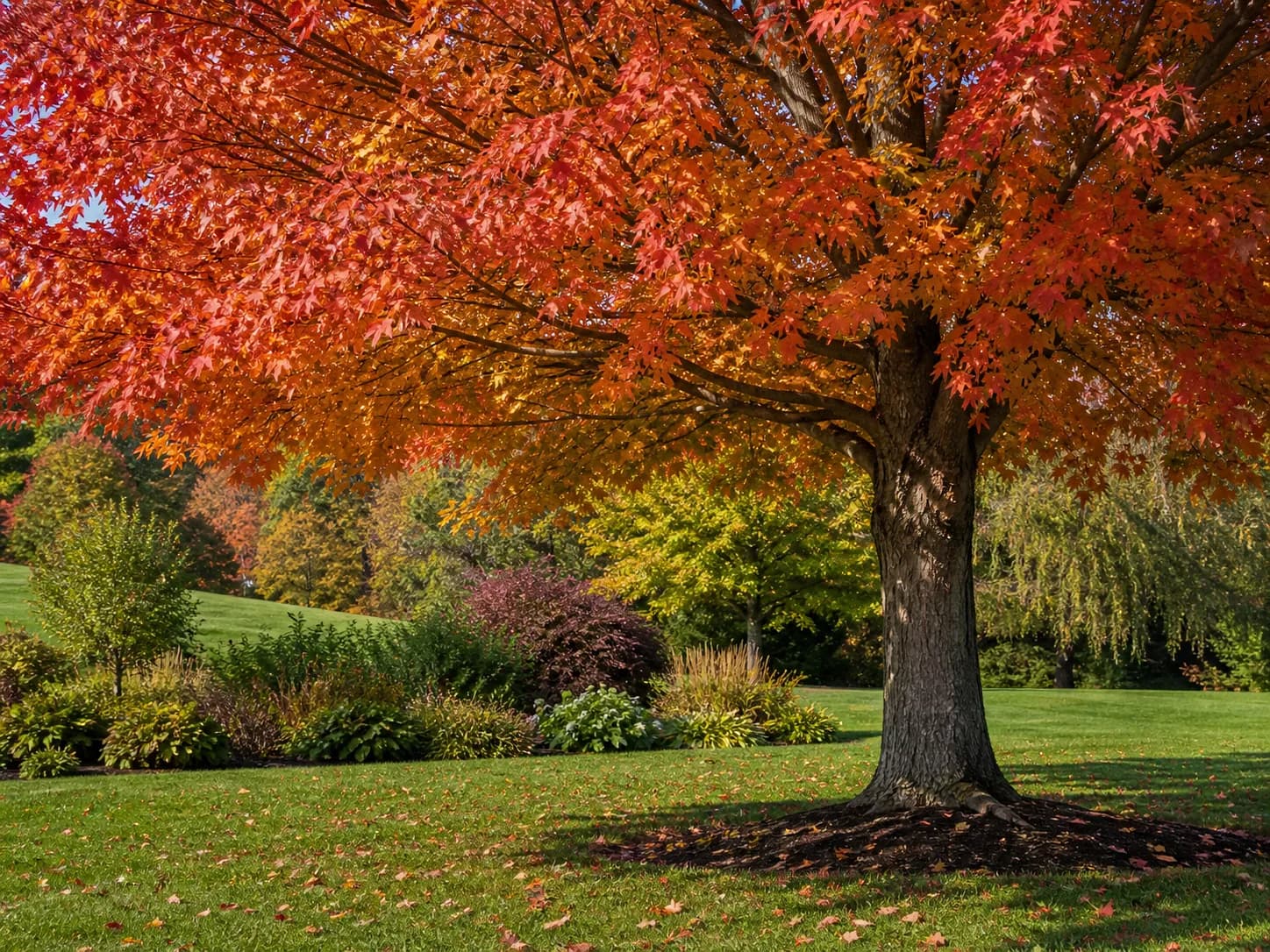
fact_check Source Reviewed
Maple
Acer species
Many landscape maples fit USDA Zones 3-9
Maples are popular because they combine dependable shade with strong fall color, but they vary a lot in mature size, root behavior, and tolerance for heat or urban stress. Pick the species to fit the yard, not just the leaf shape you liked in October.
Pet SafeSource Reviewed
View Profile arrow_forward
fact_check Source Reviewed
Oak
Quercus spp.
USDA Zone 4-9
In Zones 4-9, oak trees anchor a yard the way a foundation anchors a house. They grow into massive, long-lived shade trees with strong structure, deep roots, and high wildlife value. Give them room, decent drainage, and patience, and they repay you for generations.
Pet SafeSource Reviewed
View Profile arrow_forwardfact_check Source Reviewed
Red Maple
Acer rubrum
USDA Zones 3-9
Red Maple is one of the quickest ways to grow a broad native shade canopy, especially on moisture-holding soil. It earns that speed with tradeoffs though: you need room for roots, attention to young branch structure, and a named cultivar if you care about dependable fall color.
Pet SafeSource Reviewed
View Profile arrow_forward
fact_check Source Reviewed
Redbud
Cercis canadensis
USDA Zones 4-9
Gardeners who want spring color without the fuss of high-maintenance flowering trees should look at the Redbud tree (Cercis canadensis). This small native tree handles Zone 4-9 winters, offers pink blooms, heart-shaped leaves, and fits nicely into most suburban yards.
Pet SafeSource Reviewed
View Profile arrow_forward
fact_check Source Reviewed
River Birch
Betula nigra
USDA Zones 4–9
River Birch (Betula nigra) is a fast-growing, heat-tolerant birch tree for Zones 4-9 that thrives in moist or heavy clay soils where many trees struggle. Its peeling salmon-brown bark, filtered shade, and multi-trunk habit make it a favorite for lawns, rain gardens, and problem wet spots.
Pet SafeSource Reviewed
View Profile arrow_forward
fact_check Source Reviewed
Serviceberry
Amelanchier spp.
USDA Zones 4-9
Serviceberry is one of the few small trees that can give you spring bloom, edible summer fruit, good fall color, and smooth winter bark without demanding a huge yard. The main question is not whether it is pretty enough; it is whether the fruit is for you, the birds, or both.
Pet SafeSource Reviewed
View Profile arrow_forward
fact_check Source Reviewed
Smoke Tree
Cotinus coggygria
USDA Zones 4-9
Smoke Tree is a focal plant more than a utility shrub. It looks best when you decide early whether the goal is airy smoke plumes on older wood or huge dramatic leaves from hard annual pruning, then place it in full sun with lean, fast-draining soil.
Source Reviewed
View Profile arrow_forward
fact_check Source Reviewed
Sweetgum
Liquidambar styraciflua
USDA Zone 4-9
Sweetgum is a tall, long-lived shade tree known for star-shaped leaves, vivid fall color, and prickly seed balls. It suits Zone 4-9 yards that have room for a large, sun-loving tree and soil that drains well.
Pet SafeSource Reviewed
View Profile arrow_forward
fact_check Source Reviewed
Weeping Willow
Salix babylonica
Zones 4-9
Homeowners plant the classic Weeping Willow for instant drama and fast shade, then struggle with wet feet, broken branches, and aggressive roots. This profile shows you where it thrives, what soil it needs, and how to water and plant it so it becomes a long-lived feature instead of a money pit.
Source Reviewed
View Profile arrow_forwardPortal Progress