verifiedSource Reviewed
Alocasia: Bold Indoor Elephant Ear Foliage
Alocasia spp.
Family: Araceae
wb_sunnyLight
Bright indirect, brief gentle morning sun
water_dropWater
Moderate, keep soil lightly moist, never soggy
heightHeight
1–6 ft tall indoors, depending on species
publicZone
Outdoors in Zone 10-12, usually grown indoors
airAir Quality
Air Quality Note
Native Region
Tropical and subtropical Asia and Eastern Australia
biotechBotanical Profile and Growth Habit
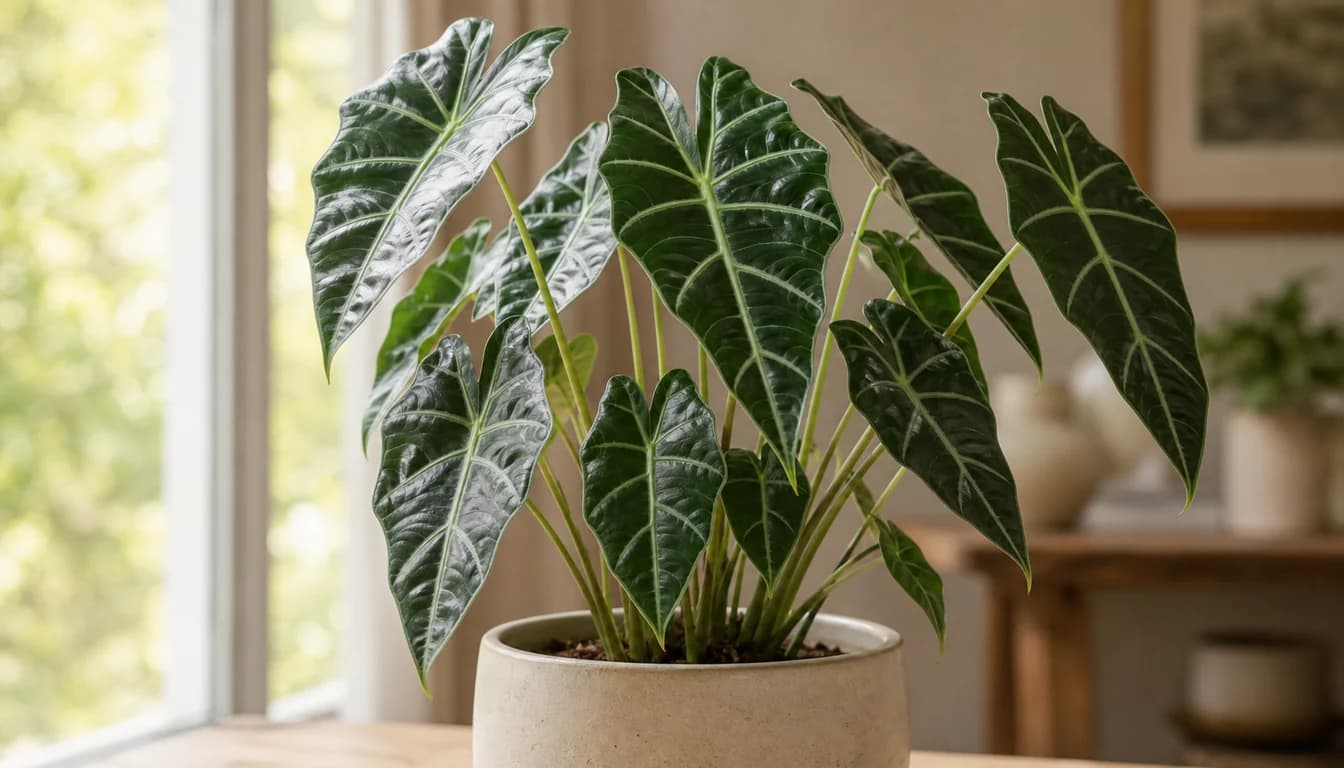
Few houseplants rearrange the visual hierarchy of a room the way Alocasia does. Set one on a table and it immediately becomes the focal point, with arrow-shaped leaves that look like they were designed by a graphic artist obsessed with vein placement.
The genus wraps together roughly 70 species plus a growing pile of hybrids, all members of the Araceae aroid family alongside Monstera and Peace Lily. What sets them apart is the way thick petioles shoot straight up from a central crown, holding those oversized blades like flags.
Leaf shapes swing from narrow arrows to broad hearts, with color palettes that range from forest green to near-black with silver cross-veining. Indoor hybrids have been bred specifically to tolerate pots and low humidity better than their wild jungle relatives in tropical Asia.
Think of them as the aroid cousin to an outdoor elephant ear in Zone 10-12, but scaled for a living room. Anyone drawn to dramatic, architectural indoor foliage finds that one Alocasia is never quite enough.
palettePopular Alocasia Types to Grow Indoors
Pick size first, because mature spread ranges from a compact 12 inches across to a sprawling 4-foot clump. Smaller growers suit desks; the giants need their own floor space and a sturdy pot.
Choose vein color next. Varieties like Alocasia 'Polly' and 'Amazonica' show dark green leaves with sharp white veins, while 'Silver Dragon' trades contrast for cool-toned, almost armored foliage.
Reach for taller, wider types such as Alocasia macrorrhizos or large 'elephant ear' style hybrids if you want that patio-jungle feel similar to a container-grown tropical focal plant. These need more room and heavier watering than the jewel types.
Stick to compact "jewel" Alocasias like 'Black Velvet' when shelf space is tight. Their leaves are smaller but thicker, with velvety surfaces that tolerate indoor air a bit better than wafer-thin, oversized types like large-leaf figs.
Do not buy only by leaf color. A tall elephant-ear type changes how you water, stake, and place the pot, while a jewel type asks for steadier humidity and less floor space.
Guide — See AlsoAir Purifying Plants for Cleaner Indoor AirLearn how to pick, place, and care for air purifying plants so they help your indoor air instead of just looking pretty.
chevron_rightwb_sunnyLight: Where Alocasia Actually Thrives
Bright, indirect light for 8–12 hours daily is the sweet spot. A spot 3–6 feet from an east-facing window delivers gentle morning rays that energize growth without burning the leaves.
Alocasia leaves are thin enough that afternoon sun through a south or west window leaves real damage — bleached patches and crispy margins that do not recover. A sheer curtain fixes the problem fast.
The plant talks back when light levels are wrong. Stretching petioles that lean hard toward the glass mean it is begging for more; pale, washed-out color with brown crispy edges means it is getting too much. Learning this language matters more than following any fixed distance rule.
Rooms that face north or sit deep inside an apartment may need a grow light to keep Alocasia from stalling. Hang LEDs 12–18 inches above the canopy and run them on a timer, the same way you would boost light for a monstera that has stopped pushing new leaves.
- check_circlePlace near bright windows, but keep leaves out of direct midday sun.
- check_circleUse sheer curtains on strong south or west exposures to soften the light.
- check_circleRotate the pot a quarter turn every week for even growth.
- check_circleRaise light levels if you see small, slow, or leaning new leaves.
Email Updates
Join the KnowTheYard update list
Zone-specific advice, seasonal reminders, and new plant guides — no filler.
water_dropWatering Without Causing Rot
Stick your finger 2 inches into the soil before reaching for the can. Alocasia want the top layer dryish but the zone below still cool and faintly damp — that narrow window between soggy and parched where they do their best work.
Pour slowly until 10–20% runs out the bottom, then tip the saucer dry. Full saturation followed by free drainage keeps the root zone evenly moist without the soggy pockets that turn leaves yellow, a pattern familiar from overwatered pothos.
Winter changes the math entirely. Growth slows or stops, wet soil hangs around far longer, and roots start to suffocate. Cut watering frequency and let the pot dry out more between drinks — the same logic applies to thick-leaved plants that store water in their tissues.
When spring triggers a flush of new leaves, resume a more regular schedule, especially in warm, dry homes. If the pot feels feather-light between waterings and the plant visibly droops, move the next drink up a few days rather than flooding the soil all at once.
A single yellow lower leaf is not always a watering failure. Many Alocasia retire older leaves while a new spear opens, so read the newest growth before changing the whole routine.
lightbulbKey Alocasia Watering Tip
More Alocasias die from overwatering than from thirst. Err slightly on the dry side and focus on well-draining soil, not constant moisture.
Guide — See AlsoBest Herbs to Grow Indoors for Real Harvests, Not Spindly PotsChoose indoor herbs that can actually produce in your light, temperature, and container setup, then match each one to th
chevron_right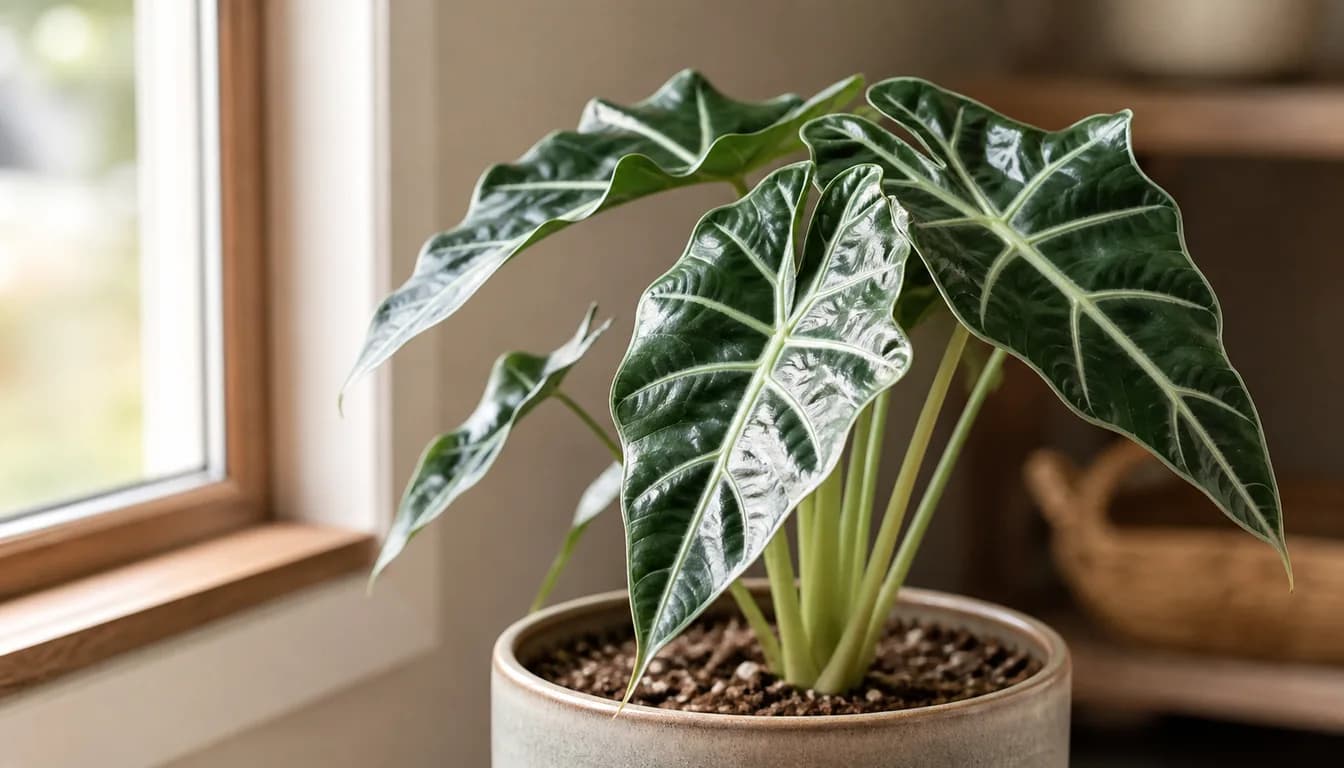
potted_plantSoil and Pot Choice for Healthy Roots
For Alocasia, soil is really corm protection. The mix must drain before the underground storage tissue sits wet long enough to sour.
Alocasia roots breathe, so the mix has to drain fast. Stir together roughly 40% potting soil, 30% orchid bark, and 30% perlite or pumice — water should run through in 30–60 seconds, not sit on top.
Only go 1–2 inches wider when you repot. Alocasia prefer to be slightly snug, and an oversized pot keeps wet soil against roots long enough to start rot — the same problem that plagues over-potted thick-rooted houseplants.
pH does not need babysitting. A range of 5.5–7.0 suits these aroids just fine, and most standard potting mixes land squarely in that zone. You will not need the acid-loving formulas designed for garden shrubs like hydrangeas.
If you skip full repotting, at least scrape off the top 1–2 inches of old soil each year and replace it. Tap-water salts and fertilizer residue accumulate there first and can burn the fine feeder roots. Pair the refresh with a light dose from indoor-safe fertilizer to keep growth steady.
- fiber_manual_recordAlways choose pots with large, open drainage holes.
- fiber_manual_recordUse a nursery pot with drainage inside a decorative cachepot if you like sealed containers.
- fiber_manual_recordAvoid heavy garden soil, which compacts and holds too much water indoors.
- fiber_manual_recordAdd more perlite if your home stays cool or you water heavily.
account_treePropagating Alocasia Clumps
There are two ways to make more Alocasia at home, but only one you can count on. Division of the underground corms gives you a full, established plant in weeks. Leaf cuttings, on the other hand, almost always collapse into mush.
Aim for 3–4 healthy leaves on each division you separate. Smaller pieces sometimes survive, but they stall out quickly and tend to rot before catching up, especially in the warm, moist conditions Alocasia require.
Twice a year is usually enough — late spring and midsummer if the pot has become seriously crowded. Pair the division with repotting work so the roots only get disturbed once.
lightbulbBest timing for division
Divide Alocasia in late spring when days are longer and indoor temperatures stay above 70°F. Warmth and bright light help divisions root quickly and reduce sulking.
After timing the division, handle the corms gently; Alocasia rebounds faster when each piece keeps roots, warmth, and one clear growing point.
- 1Water the plant 24 hours before you divide to make the root ball easier to loosen.
- 2Slide the root mass out and gently crumble away old soil so you can see the thick corms and roots.
- 3Use a clean knife or pruners to separate natural clumps, keeping several roots and at least 1 growing point per piece.
- 4Dust fresh cuts with powdered sulfur or cinnamon to limit rot in the warm, moist potting mix.
- 5Replant each division in a snug pot with airy soil, then water once to settle roots and wait before watering again.
One size up on the new pot is plenty for each division. Containers that are too big hold surplus moisture around roots that have not yet established, and that leads to the same limp, yellowing foliage you see when any aroid is over-potted.
infoWhy leaf cuttings fail
Alocasia store energy in corms and thick roots, not in individual leaves. A leaf cutting without part of the corm lacks the tissue needed to form new plants, so it simply collapses or molds.
Guide — See AlsoBest Indoor Plants for Every Room and Light LevelA practical guide to choosing the best indoor plants for your home, covering beginner-friendly picks, low light champion
chevron_rightpest_controlCommon Pests on Alocasia
Alocasia attract a predictable trio of trouble indoors: spider mites, fungus gnats, and scale. Warm rooms and consistently moist soil hand each of them an open invitation.
Build a habit of inspecting every 7 days. Flip leaves to check the undersides for mites and scale, and press a finger into the soil to confirm you are not keeping it wet enough for fungus gnat larvae to thrive.
Two detailed guides cover the most common battles. Start with controlling gnats in potting mix when flies rise from wet soil. Use a separate spider mite treatment when leaves look stippled or webbed.
pest_controlSpider mites
Dusty, stippled leaves and fine webbing between veins, especially in dry rooms or near heat vents.
pest_controlScale insects
Small, hard bumps on stems and leaf undersides that ooze sticky honeydew when scraped off.
pest_controlFungus gnats
Tiny black flies hovering over the pot, with larvae chewing on tender roots in constantly damp soil.
A quick rinse under the showerhead dislodges a surprising number of mites and loose scale. Bag the soil surface to keep it dry, give the leaves a thorough soak, then let everything drain fully before the pot goes back in place.
- check_circleUse yellow sticky traps at soil level to monitor flying adults and catch early fungus gnat issues.
- check_circleWipe leaves monthly with a damp cloth mixed with a drop of mild soap to dislodge mites and scale crawlers.
- check_circleLet the top 1–2 inches of soil dry between waterings so fungus gnat larvae do not have constant moisture.
- check_circleQuarantine any infested plant away from other houseplants like Peace Lily or Snake Plant until you break the pest cycle.
- check_circleRepeat treatments weekly for at least 3–4 weeks, since new pest generations keep hatching in warm conditions.
Use that pest checklist before spraying; Alocasia leaves are thin, so a correct diagnosis matters more than a stronger product.
warningWatch for chemical sensitivity
Thin Alocasia leaves scorch easily. Test any spray on one leaf first and avoid applying oils or soaps in direct sun or under strong grow lights.
calendar_monthSeasonal Care Indoors and Out
Alocasia stay warm-loving all year, but their growth rate swings dramatically with the calendar. Long, bright days trigger a burst of new leaves; short, dark ones bring near-dormancy.
Three things shift with the seasons and matter most: how often you water, whether you feed, and how much light reaches the canopy. Get that trio right and you sidestep the yellow-leaf crises that plague many indoor plants in seasonal homes.
local_floristSpring
Increase watering as new leaves appear, resume light feeding, and rotate the pot weekly for even growth.
wb_sunnySummer
In Zone 10-12, you can move pots outdoors to bright shade, but shield them from midday sun and heavy rain.
ecoFall
Shorter days slow growth, so reduce watering and stop fertilizer when new leaves stop unfurling regularly.
ac_unitWinter
Expect fewer or no new leaves. Water sparingly, keep temperatures above 65°F, and boost humidity instead of overwatering.
Humidity should stay at 50% or higher year-round. Grouping Alocasia with moisture lovers like Calathea creates a humid microclimate that benefits everyone in the cluster. Boston Fern can sit nearby if the room stays bright enough.
A spot 2–3 feet from a bright east or north window works for most varieties through every season. In winter, scoot the pot a little closer to the glass or switch on a grow light to prevent stretching and early leaf drop.
lightbulbDormancy is normal
If your plant drops several leaves in late fall but the corm feels firm, it is likely resting, not dying. Keep the soil barely moist and warmth steady until fresh growth wakes up in spring.
Guide — See AlsoBest Low-Light PlantsChoose and care for resilient, low-light houseplants for north-facing rooms, bathrooms, and shaded corners. Practical pl
chevron_righthealth_and_safetySafety, Pets, and Outdoor Impact
Even a tiny nibble of Alocasia triggers a big reaction. The leaves and stems are packed with needle-shaped calcium oxalate crystals that pierce soft tissue on contact, causing immediate mouth and throat irritation.
In cats or dogs, 30 seconds of chewing is enough to cause drooling, pawing at the mouth, and vomiting. Keep these plants well out of reach, and consider a non-toxic Spider Plant if your pets have a habit of sampling the greenery.
warningToxicity reminder
All parts of Alocasia are considered toxic if ingested. Contact a vet or poison control if a child or pet eats any part of the plant.
Two layers of protection make sense in homes with kids: height and awareness. Set Alocasia on tall stands or high shelves, and teach children to treat any plant with a warning tag as hands-off.
In colder climates there is zero risk of Alocasia escaping outdoors, but in Zone 10-12 some species survive year-round in the garden. They are not listed as major invasive threats, though, unlike the aggressive spreaders you might read about under woody landscape plants.
lightbulbSafe disposal and cleanup
Wear gloves when trimming or dividing plants, bag pruned material before tossing it, and wipe sap from hands or tools quickly to avoid skin irritation.
eco
Keep Exploring
Related Plants
 Houseplants
Wandering Jew
Wandering Jew is a fast Tradescantia grown for purple-silver striped vines that root and regrow easily. The main care job is keeping color dense near the cr
 Houseplants
Alocasia Dragon Scale
Alocasia Dragon Scale grows thick, leathery leaves with deeply impressed veins that genuinely resemble dragon skin — dark green surfaces with a metallic she
 Houseplants
Boston Fern
Frizzy, arching fronds look great in hanging baskets, but Boston Fern drop leaves fast if their air and soil dry out. Get the humidity, light, and watering
quiz
Frequently Asked Questions
Is Alocasia a beginner-friendly houseplant?expand_more
It sits in the middle of the difficulty range. Steady warmth, bright filtered light, and careful watering are non-negotiable. If you already keep Monstera or Peace Lily healthy, you have the skills — Alocasia just asks for a bit more attention to humidity and soil moisture.
Can I grow Alocasia outside year-round?expand_more
Outdoors year-round only works in Zone 10-12, where nighttime temperatures rarely dip. In cooler zones, treat it as an indoor plant or a summer patio accent and bring it back inside before nights drop below 60°F.
Why do Alocasia leaves drip water from the tips?expand_more
That dripping is called guttation — roots pushing out excess moisture through pores at the leaf edge. It usually follows a heavy watering in a humid room. Ease off the water slightly and make sure the pot drains freely so the soil does not stay saturated.
Can I propagate Alocasia from a single leaf cutting?expand_more
Not successfully. Alocasia store their energy in corms and thick roots, not in individual leaves. A leaf-only cutting has no growing point to sprout new roots or shoots, so it will rot or simply wilt away.
Why do my Alocasia leaves keep getting spider mites?expand_more
Dry, warm indoor air is an open invitation for mites. Bump up humidity, rinse the leaves regularly under the shower, and treat with a consistent weekly plan until you see clean, web-free new growth emerging.
Is Alocasia safe to grow around pets and kids?expand_more
Chewing or swallowing any part of the plant causes a painful reaction thanks to calcium oxalate crystals in the sap. Keep Alocasia out of reach and choose non-toxic alternatives for rooms where children or animals spend time.
menu_book
Sources & References
- 1.University of Florida IFAS Extension – Alocasia and Colocasia in the Landscapeopen_in_new
- 2.Missouri Botanical Garden – Alocasia Species Profilesopen_in_new
- 3.Royal Horticultural Society – Alocasia Growing Guideopen_in_new
- 4.University of Florida IFAS Extension, Alocasia, Elephant's Earopen_in_new
- 5.Royal Horticultural Society, Alocasia Growing Guideopen_in_new
- 6.ASPCA, Toxic and Non-Toxic Plant List for Cats and Dogsopen_in_new
- 7.Penn State Extension, Managing Insect and Mite Pests on Houseplantsopen_in_new