verifiedSource Reviewed
Schefflera (Umbrella Tree) Indoor Care
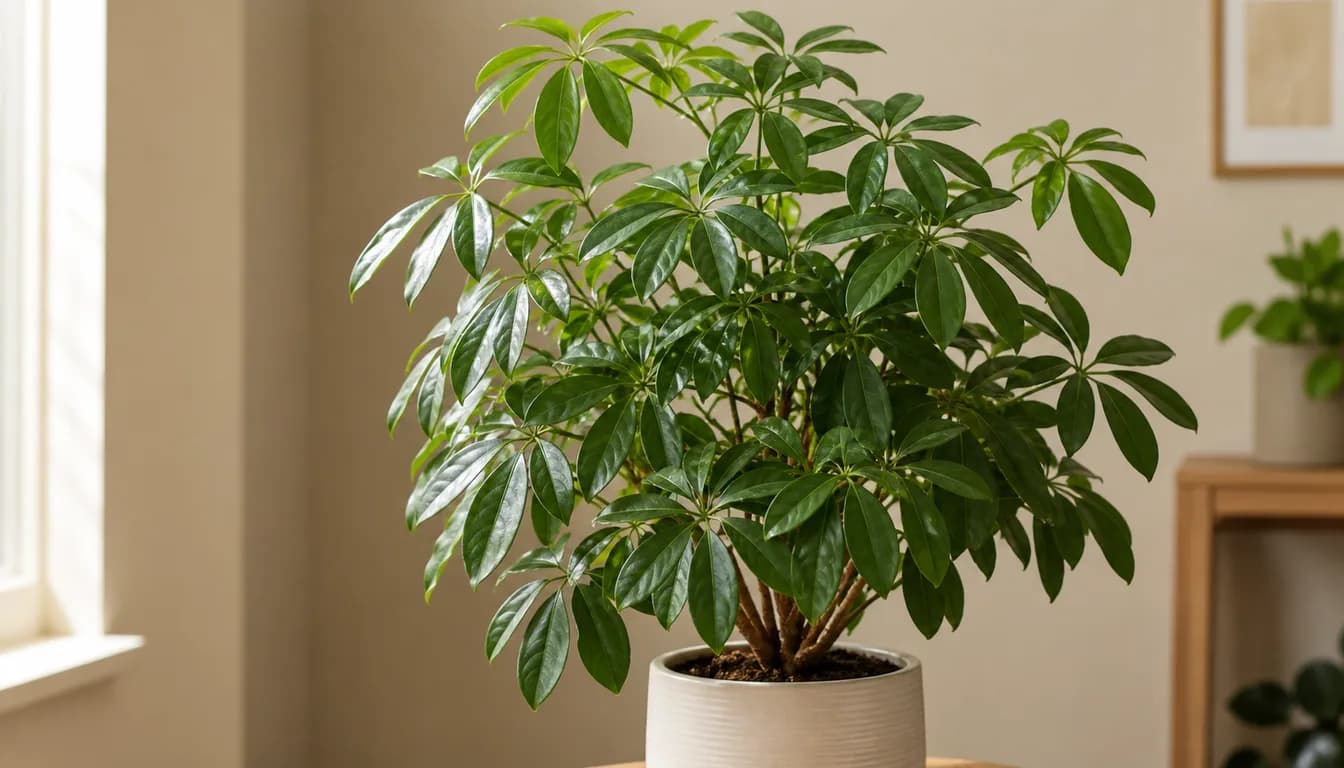
Schefflera actinophylla
Family: Araliaceae
wb_sunnyLight
Bright indirect, tolerates some direct morning sun
water_dropWater
Moderate, let top 1–2 inches dry
heightHeight
6–10 ft indoors with pruning
publicZone
Hardy outdoors in Zone 10-12
airAir Quality
Air Quality Note
Native Region
Northern Australia and New Guinea
forestGrow the Umbrella Shape on Purpose
The umbrella look comes from leaflets arranged like spokes, but that shape only stays full when the plant gets light on more than the top leaves.
A neglected Schefflera often turns into a tall green mop: lush at the tips, thin below, and awkward to move. Start with shaping in mind before the stems harden.
Use the first month to learn which side drops leaflets first. That side tells you where the room is failing the canopy.
lightbulbBest first decision
Choose a bright corner where the whole canopy gets light and where you can turn the pot. A shaded back side becomes bare before the front looks bad.
Look at where each leaflet cluster starts. Short gaps between clusters mean the plant has been growing in usable light; long bare cane between clusters means the canopy has already been stretching.
That matters because old bare stem will not refill with new leaflets just because you move the plant brighter. New growth can improve, but the old shape usually needs pruning or a lower branch to take over.
This is different from Rubber Tree, where trunk structure is the main indoor-tree job. Schefflera asks for canopy balance and regular heading cuts.
- check_circleSeveral stems from the base give easier fullness.
- check_circleFirm leaflets should sit level, not droop in a limp ring.
- check_circleA plant already leaning toward one side needs stronger light, not just a bigger pot.
shopping_bagChoose Fullness Before Height
A tall pot on the shelf can look like a better deal, but a shorter plant with more basal stems usually makes a better indoor tree.
Best floor plantMultiple stems, even leaf clusters, firm central growth
Best compact plantDwarf umbrella type with tight leaflets and short internodes
Risky buyOne tall stem, bare lower nodes, or a loose root ball in wet soil
This is also where buying small can be smarter. A compact plant lets you build the canopy evenly instead of correcting a stretched one.
Variegated forms need brighter light to keep cream and yellow clean. Plain green forms forgive lower light better, but they still get thin in a dim corner.
infoHeight is not the same as structure
A tall single stem gives instant size but fewer correction options. A shorter multi-stem plant lets you remove one weak stem without ruining the whole tree.
If the label says dwarf umbrella tree, expect tighter growth and easier indoor scale. If it is a larger umbrella tree type, plan earlier for ceiling height and wider clearance.
If you want a slower indoor tree, Ficus Audrey is the calmer choice. Schefflera grows faster and needs earlier pruning.
Guide — See AlsoAir Purifying Plants for Cleaner Indoor AirLearn how to pick, place, and care for air purifying plants so they help your indoor air instead of just looking pretty.
chevron_rightwb_sunnyLight the Back of the Canopy
Bright indirect light keeps the umbrella canopy dense. Aim for bright indirect light with some gentle morning sun if the leaves stay cool.
The back side matters. If only the window-facing leaves get light, the shaded side drops leaflets and the whole plant leans.
Rotate the pot a quarter turn every week while new growth is active. Once the stems get woody, rotation fixes future growth but not the empty space already made.
If the plant lives near a wall, leave space behind it. A pressed-back canopy loses leaflets where you cannot see them until the front is already lopsided.
Use the floor shadow as a quick room test. A soft shadow at midday is usually enough for steady growth, while no clear shadow means the plant may hold leaves for a while but will thin over time.
After a move, judge the next set of leaflets, not the oldest leaves. Old leaflets may drop from shock, but new compact growth tells you the new spot is working.
warningDo not hide it in a dark corner
A dim corner may keep the plant alive, but it creates long gaps between leaf clusters and makes pruning harder later.
Email Updates
Join the KnowTheYard update list
Zone-specific advice, seasonal reminders, and new plant guides — no filler.
water_dropWater the Root Ball, Then Read Leaf Drop
Water deeply, then wait until the top 1-2 inches dry. A fast-growing canopy needs a real soak, not a splash around the stem.
Leaf drop has two common patterns. A few lower leaflets dropping after a move usually means adjustment; yellow leaves with heavy soil point to wet roots.
Post-purchase leaf drop is common because the plant moves from greenhouse light to a drier room. Do not answer that first week by watering every time a leaflet falls.
The better check is pot weight plus stem firmness. If the pot is still heavy and stems are firm, hold steady; if the pot is light and leaflets hang softly, water thoroughly.
- fiber_manual_recordLight pot plus drooping leaflets: water fully.
- fiber_manual_recordHeavy pot plus yellow leaflets: wait and check drainage.
- fiber_manual_recordOne bare side: improve light before changing the watering rhythm.
For broader timing, houseplant watering frequency helps, but Schefflera still needs pot-weight checks because canopy size changes water use.
Guide — See AlsoBest Herbs to Grow Indoors for Real Harvests, Not Spindly PotsChoose indoor herbs that can actually produce in your light, temperature, and container setup, then match each one to th
chevron_right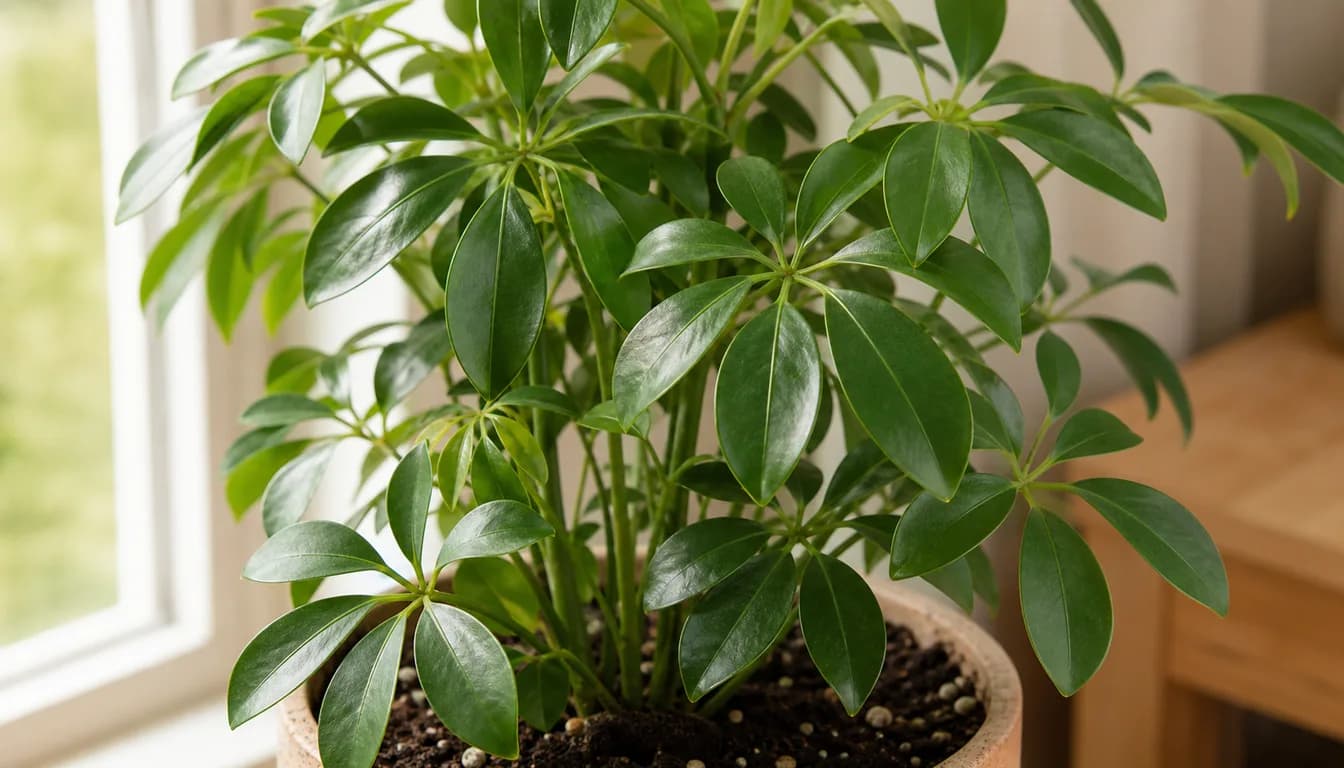
potted_plantUse a Stable Pot Before It Leans
A fast canopy can make the plant top-heavy before the roots need much more space. Repot for stability and drainage, not just because the tree looks tall.
Use a standard indoor mix loosened with perlite or bark. The mix should hold enough moisture for a leafy canopy and still drain fast after a full soak.
Do not bury the stems deeper to hide a lean. Buried cane tissue can stay wet and rot; correct a lean with light, pruning, a heavier pot, or a temporary stake.
If it leans toward lightRotate weekly and prune the heavy side after new growth starts
If the root ball rocksRepot one size up and firm the mix around the roots
If the canopy is too wideHead back stems in spring instead of upsizing the pot again
Use the first table for the container decision, then use the next one only if the plant is already leaning or outgrowing its shape.
Repot signalRoots circle tightly, plant tips easily, or water races through
Pot mistakeLarge decorative pot with no drainage and wet lower soil
Support fixHeavier pot, one size up, and pruning if the top is too wide
content_cutRoot Tips Before the Stems Turn Woody
Soft or semi-woody tip cuttings root better than old hard stems. Pruning can shape the mother plant and create cuttings at the same time.
Take cuttings during warm active growth, remove the lowest leaflets, and keep the medium lightly moist. Too much water rots the stem before roots form.
A warm windowsill or propagation mat helps because cuttings pause when the medium is cool.
lightbulbCut for shape first
Make the cut above a node where you want the mother plant to branch. The cutting is a bonus; the better canopy is the main job.
If easy water-rooted vines are your goal, Golden Pothos is more forgiving. Schefflera cuttings ask for more patience and warmth.
- 1Cut a healthy tip below a node.
- 2Remove lower leaflets so none sit in the medium.
- 3Keep warm, bright, and out of direct sun.
- 4Pot only after roots branch, not after one tiny nub.
Guide — See AlsoBest Indoor Plants for Every Room and Light LevelA practical guide to choosing the best indoor plants for your home, covering beginner-friendly picks, low light champion
chevron_rightbug_reportSticky Leaves Point to Scale First
Glossy leaflets can hide scale until the plant feels sticky. Check stems and leaflet undersides before the canopy looks weak.
Spider mites also show up in dry rooms, but scale is the pest that most often makes an umbrella tree feel tacky to the touch.
Honeydew is the clue many people miss. If the shelf under the plant feels sticky, check for scale before you wash the leaves and move on.
Treat a small outbreak by wiping each stem and leaflet midrib first. Sprays work better after the hard bumps and sticky film are physically reduced.
- check_circleSmall brown bumps on stems: treat as scale.
- check_circleFine pale speckles: check for mites.
- check_circleYellowing after wet soil: inspect roots before spraying.
If the yellowing pattern is confusing, compare it with Dracaena yellow leaves. Cane plants and umbrella trees both punish wet roots, but Schefflera sheds leaflets faster.
calendar_monthUse Spring Growth to Rebuild Shape
Spring and early summer are the repair window. That is when pruning cuts branch faster and cuttings root with less drama.
Winter is maintenance. Keep the plant bright, reduce watering pace, and skip hard pruning unless the tree is falling over.
After a spring pruning, wait for new buds before feeding harder. A bare cut stem cannot use much fertilizer until it has active growing points.
In late summer, stop chasing size and start hardening the shape you have. Softer late growth is more likely to shed when indoor light drops.
infoSeasonal priority
Use warm growth for pruning, repotting, feeding, and rooting. Use low-light months for cleaning leaves and holding the shape steady.
A light schedule from indoor plant fertilizer supports new canopy growth, but fertilizer cannot refill a shaded bare side.
petsPlan for Sap, Pets, and Outdoor Size
The sap and foliage can irritate pets, so keep Schefflera away from chewing cats and dogs.
Wear gloves if you are pruning several stems because the sap can make sensitive skin itchy. Wipe cuts before you put the plant back near fabric or walls.
In warm outdoor climates, do not treat trimmings like harmless houseplant waste. Bag rooted pieces or dispose of them where they cannot establish.
For a tougher dry-corner houseplant, Yucca Cane handles brighter, drier rooms with less canopy shedding.
eco
Keep Exploring
Related Plants
 Houseplants
Anthurium
Most people drown Anthurium in soggy soil or park it in dark corners, then wonder why the "flowers" fade fast. This tropical houseplant prefers bright filtered
 Houseplants
Marble Queen Pothos
Marble Queen Pothos is easy only if you respect the white variegation. The creamy leaves have less green tissue than standard pothos, so the plant needs bri
 Houseplants
Alocasia Dragon Scale
Alocasia Dragon Scale grows thick, leathery leaves with deeply impressed veins that genuinely resemble dragon skin — dark green surfaces with a metallic she
quiz
Frequently Asked Questions
Why is my Schefflera dropping leaves?expand_more
Check the pattern. Drop after a move often means adjustment, while yellow leaflets with heavy soil point to wet roots.
How much light does Schefflera need?expand_more
Give bright indirect light and rotate the pot. A dim corner makes the canopy thin and one-sided.
When should I prune Schefflera?expand_more
Prune during spring or early summer while growth is active. Cut above nodes where you want branching.
Can I propagate Schefflera from cuttings?expand_more
Yes. Use healthy tip cuttings from active growth and keep the medium lightly moist, not soggy.
Is Schefflera safe for pets?expand_more
No. Keep it away from chewing pets because the sap and foliage can irritate the mouth and stomach.
menu_book
Sources & References
- 1.Schefflera actinophylla, Royal Horticultural Society plant profileopen_in_new
- 2.Houseplants: Indoor Care, University of Missouri Extensionopen_in_new
- 3.Interior Plant Selection and Care, Clemson Cooperative Extensionopen_in_new
- 4.University of Florida IFAS Extension, Schefflera actinophylla Plant Detailsopen_in_new
- 5.ASPCA, Toxic and Non-Toxic Plants List, Umbrella Tree (Schefflera)open_in_new
- 6.Royal Horticultural Society, Schefflera Care Profileopen_in_new
- 7.Missouri Botanical Garden, Schefflera actinophylla Plant Finderopen_in_new