verifiedSource Reviewed
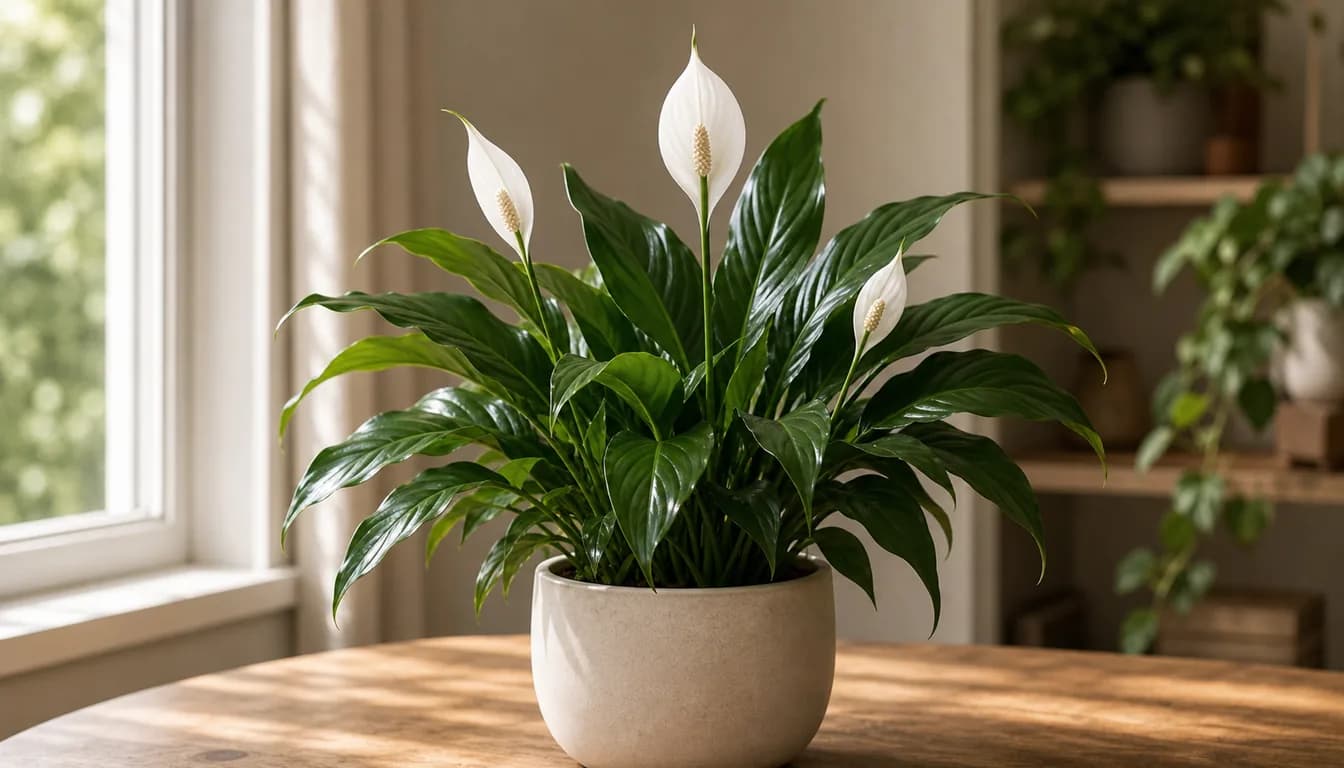
Peace Lily
Spathiphyllum wallisii
Family: Araceae
wb_sunnyLight
Low to medium indirect light; blooms more in brighter indirect light
water_dropWater
Moderate; keep soil evenly moist but not soggy
heightHeight
1-4 ft indoors depending on variety
publicZone
Outdoors in Zone 11-12; indoors anywhere
airAir Quality
Air Quality Note
Native Region
Tropical Americas and Southeast Asia
ecoRead the Wilt, Then Read the Bloom
Peace Lily gives two clear signals. Drooping leaves tell you the root ball is dry. Missing white spathes tell you the plant does not have enough light or energy to bloom.
Do not treat those signals as the same problem. A plant can wilt in good light, and a perfectly watered plant can stay green with no flowers in a dark room.
- check_circleDroops, then rebounds after watering: the plant was dry.
- check_circleStays green but never blooms: improve light before feeding.
- check_circleYellow leaves in wet soil: let the roots breathe.
This page is not the same as Snake Plant. Peace Lily tolerates shade, but it still reacts fast to water and light changes.
local_floristChoose Leaf Size and Bloom Habit
Most buyers should choose by mature size. Small types fit tabletops. Large types need floor space and more water because the leaf mass is bigger.
Compact peace lilyBest for desks, shelves, and small rooms
Large peace lilyBest for floor pots and bold glossy foliage
Anthurium alternativeAnthurium gives longer-lasting colored spathes but asks for brighter light
Comparison — See AlsoPeace Lily vs Spathiphyllum
chevron_rightwb_sunnyLow Light Keeps Leaves, Brighter Light Makes Spathes
A Peace Lily can hold leaves in low light, but bloom production needs medium to bright indirect light. Put it near a bright window out of direct hot sun if flowers matter.
If the plant only makes leaves, do not call it stubborn. It is saving energy. Move it brighter for several weeks and judge the next growth cycle.
For a lower-light foliage plant that does not promise white spathes, compare ZZ Plant. Choose Peace Lily when the bloom signal matters, not just the green mass.
Email Updates
Join the KnowTheYard update list
Zone-specific advice, seasonal reminders, and new plant guides — no filler.
water_dropUse the Droop as a Last Warning, Not the Schedule
Water when the top layer starts to dry and the pot feels lighter. If the plant has fully collapsed, water right away, but do not make hard wilting the normal routine.
Repeated collapse weakens older leaves. Wet soil every day creates a different problem: yellow leaves and sour roots.
warningDo not leave it sitting in water
A wilted Peace Lily may look thirsty, but the saucer should still be emptied after a full watering.
Guide — See AlsoAir Purifying Plants for Cleaner Indoor AirLearn how to pick, place, and care for air purifying plants so they help your indoor air instead of just looking pretty.
chevron_right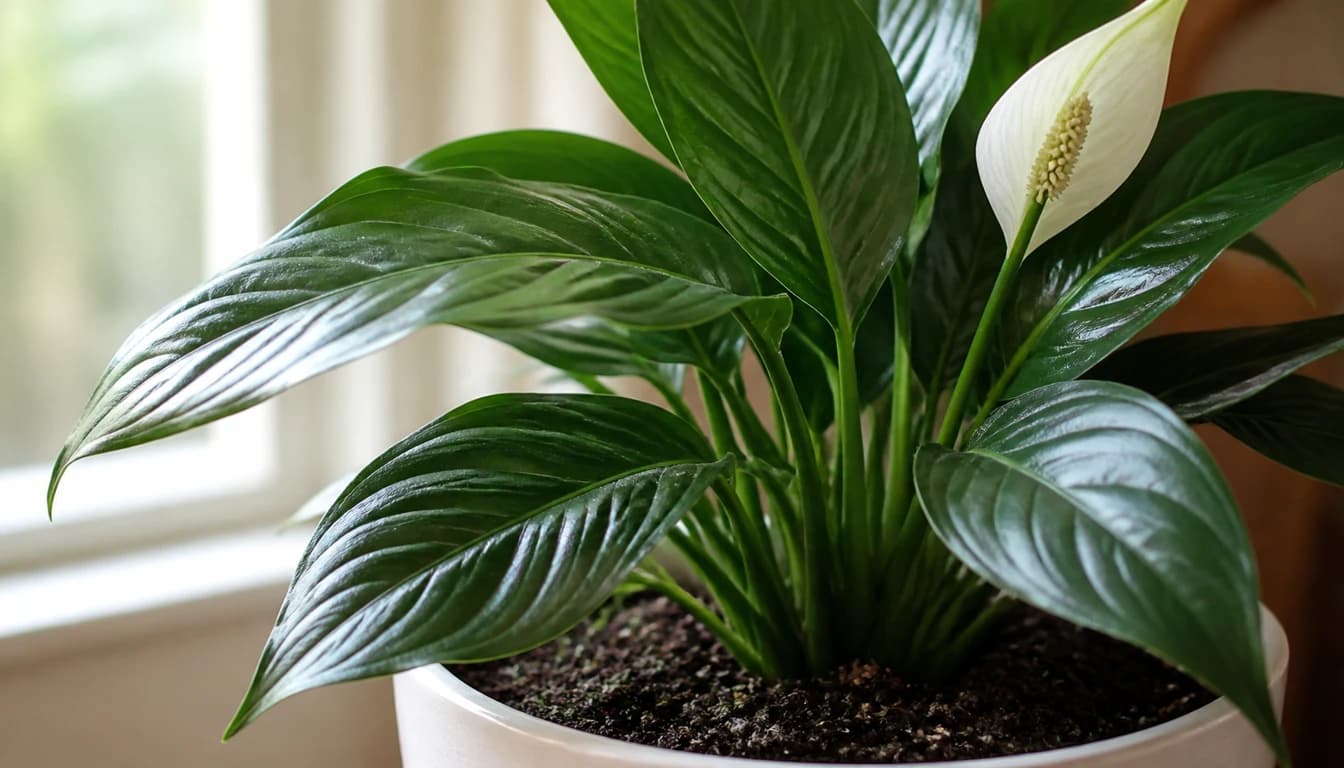
yardKeep the Crown Firm and the Mix Even
Use a regular indoor potting mix with extra perlite if the pot stays wet too long. The crown should sit at the same level after repotting.
- fiber_manual_recordRepot when the root ball fills the pot.
- fiber_manual_recordDivide only crowded clumps with several crowns.
- fiber_manual_recordAvoid deep sealed planters that hide standing water.
This root behavior differs from Calathea Orbifolia, where water quality and humidity often matter before bloom energy.
If the crown rocks in the pot, stop watering for a moment and check the base. A firm crown matters more than another drink.
content_cutDivide Clumps Instead of Chasing Seeds
The practical way to make more Peace Lily plants is division. Separate a crowded clump only when each piece has roots and several leaves.
Small weak divisions wilt hard. Keep them in warm indirect light until the leaves stand on their own again.
A division should carry roots and several leaves. Tiny single fans stall easily because they lose the stored energy that makes the next spathe possible.
Guide — See AlsoBest Herbs to Grow Indoors for Real Harvests, Not Spindly PotsChoose indoor herbs that can actually produce in your light, temperature, and container setup, then match each one to th
chevron_rightpest_controlWatch Crowded Leaf Bases
Pests often start where the leaf stems crowd the crown. Check there for mealybugs, scale, or sticky residue before the whole plant looks weak.
Dusty leaves also reduce light. Wipe the broad foliage so the plant can use the light you already have.
warningCrowded Crown Rule
Remove collapsed yellow leaves at the base instead of letting them stay wet against the crown.
calendar_monthExpect Fewer Flowers in Dark Months
Winter usually means fewer blooms because days are shorter. Water less often, keep the plant warm, and wait for better light before judging flower failure.
SpringBest time to divide and refresh crowded pots
SummerWatch water use in warm rooms
WinterHold steady care; do not overfeed for blooms
If winter bloom is the goal, Phalaenopsis Orchid is a better flowering project. Peace Lily usually uses dark months to hold leaves.
Guide — See AlsoBest Indoor Plants for Every Room and Light LevelA practical guide to choosing the best indoor plants for your home, covering beginner-friendly picks, low light champion
chevron_rightpetsPretty White Spathes Still Need Pet Control
Peace Lily is not a true lily, but it is still not pet-safe. Keep leaves and spathes away from cats and dogs that chew plants.
For pet-safe patterned foliage, look at Watermelon Peperomia instead.
For a softer pet-safe floor plant, Areca Palm fits homes where chewing risk is real.
Pilea Cadierei is another pet-safe tabletop option, but it solves a foliage-pattern job rather than a bloom job.
eco
Keep Exploring
Related Plants
 Houseplants
Dracaena Marginata
Dracaena Marginata is an indoor tree for people who want height, narrow leaves, and a sculptural cane shape with dry-down between waterings. Its mai
 Houseplants
Prayer Plant
Prayer Plant is a low Maranta grown for patterned leaves that lift and fold with the day-night cycle. Good care starts by knowing that movement is normal; c
 Houseplants
Calathea
Calatheas are tropical houseplants prized for their patterned, moving leaves and preference for warm, humid rooms. They need steady moisture, soft filtered ligh
quiz
Frequently Asked Questions
Why is my Peace Lily drooping?expand_more
Most drooping means the root ball is dry. If the soil is wet and the plant droops, check root health instead.
Why is my Peace Lily not blooming?expand_more
It usually needs brighter indirect light. Low light can keep leaves alive but stop white spathes from forming.
How often should I water Peace Lily?expand_more
Water when the top layer starts to dry and the pot feels lighter. Do not leave water in the saucer.
Can I divide Peace Lily?expand_more
Yes. Divide crowded clumps when each piece has roots and several leaves.
Is Peace Lily toxic to pets?expand_more
Yes. Keep it away from pets that chew leaves or flowers.