Perennials & Garden Flowers
KnowTheYard maintains a structured perennial directory for long-blooming beds, pollinator plantings, shade gardens, and low-maintenance borders. Each entry keeps bloom season, hardiness, spread, and care context tied to the published plant profile.
This directory is maintained as published profiles change. Whether you are planting a compact border or filling a larger garden bed, use it as a practical starting point for perennial selection.
Getting Started with Perennials
Start with light, hardiness, bloom season, spread, and maintenance level before choosing perennials for a bed or border.

Full Sun Perennials
Discover hardy perennials that thrive in direct sunlight and bloom season after season.

Ground Cover Plants
Low-growing perennials that suppress weeds and create living carpets of color.

Cut Flower Garden
Grow stunning arrangements from your own garden with these prolific bloomers.

Spring Blooming Flowers
The earliest perennials to bring color back after winter dormancy.
Trending Perennials
Our editors highlight these species for their exceptional bloom performance and longevity.
Head-to-Head Comparisons
Side-by-side guides comparing popular perennials — care needs, costs, and best use cases.
 Daylily
 Lily
LilyVS
Daylily vs Lily
Choose Daylily for easier care, broader adaptability, and more repeat color across a bed. Choose True Lily when you want taller stems, stronger fragrance, and a shorter but more dramatic flower moment.
Read Comparison arrow_forward Hosta
Hosta Fern
FernVS
Hosta vs Fern
Choose Hosta for bold mounded foliage and easier bed-filling structure. Choose Fern when you want finer woodland texture, softer movement, and a better answer for consistently moist shade.
Read Comparison arrow_forwardHostas Coral Bells
VS
Hostas vs Coral Bells
Choose Hostas for bigger shade coverage and calmer leaf mass. Choose Coral Bells when you want more foliage color, a tighter footprint, and easier mixing into smaller perennial combinations.
Read Comparison arrow_forwardPlanting for Purpose
Perennial selection depends on the job in the bed: long bloom, pollinator support, ground coverage, cut flowers, or low-maintenance structure.
local_florist
Long-Blooming Beds
Perennials chosen for extended color across the growing season.
View Long-Blooming Perennials arrow_forwardemoji_nature
Pollinator Borders
Flowering perennials that support bees, butterflies, and beneficial insects.
View Pollinator Perennials arrow_forwardgrass
Low-Maintenance Fillers
Reliable perennials for coverage, texture, and repeat performance.
View Easy Perennials arrow_forwardCore Perennial Database
Access detailed profiles for every species in our published index.

fact_check Source Reviewed
Aster
Symphyotrichum spp.
Hardy in USDA Zones 3–9
Gardeners often let asters flop, dry out, or bloom only once, then blame the plant. In reality, these tough North American perennials will anchor your late-summer and fall border with clouds of daisy-like flowers if you give them sun, lean soil, and steady moisture.
Pet SafeSource Reviewed
View Profile arrow_forward
fact_check Source Reviewed
Astilbe
Astilbe spp.
Zone 3–9 outdoors
Feathery plumes, ferny foliage, and reliable color in shade make Astilbe a workhorse perennial for damp beds and borders. It thrives in cool to mild climates, filling the gap where sun-loving flowers fail, especially in Zones 3 to 7.
Pet SafeSource Reviewed
View Profile arrow_forward
fact_check Source Reviewed
Black Eyed Susan
Rudbeckia hirta
USDA Zone 3-9
Black Eyed Susan gives Zone 3-9 gardeners weeks of yellow flowers with very little fuss. It behaves as a short-lived perennial or reseeding annual, filling sunny beds, cottage gardens, and meadow-style plantings with bright color and strong pollinator activity.
Pet SafeSource Reviewed
View Profile arrow_forward
fact_check Source Reviewed
Bleeding Heart
Lamprocapnos spectabilis
Zone 3-9 hardy perennial
Bleeding Heart looks like a fussy woodland plant, but it is a tough perennial for Zone 3-9 shade beds. Once planted in cool, humus-rich soil, it gives years of heart-shaped pink or white flowers with very little fuss beyond watering and spring cleanup.
Source Reviewed
View Profile arrow_forward
fact_check Source Reviewed
Catmint
Nepeta spp.
Zone 3-9 hardy perennial
Catmint (Nepeta) is a tough, fragrant perennial with long seasons of soft blue or purple flowers and gray-green foliage. It thrives in full sun, lean soil, and dry conditions, making it a reliable border and pollinator plant from Zone 3 through Zone 9.
Pet SafeSource Reviewed
View Profile arrow_forward
fact_check Source Reviewed
Clematis
Clematis spp.
USDA Zones 3-9
Flowering clematis vines give vertical color from late spring into fall, climbing trellises, fences, and shrubs in Zones 3-9. With the right light, soil, and pruning, these perennials can bloom for decades in the same spot.
Source Reviewed
View Profile arrow_forward
fact_check Source Reviewed
Coneflower
Echinacea purpurea
Zone 3-9 perennial
Many gardeners overwater and overpamper Coneflower (Echinacea purpurea), then wonder why it flops or rots. This tough summer-blooming perennial prefers lean soil, full sun, and occasional deep watering. Give it those conditions and it rewards you with months of pollinator-friendly flowers from Zone 3-9.
Pet SafeSource Reviewed
View Profile arrow_forwardfact_check Source Reviewed
Coral Bells
Heuchera spp.
USDA Zone 3-9
Most gardeners plant coral bells for flowers, then wonder why the show feels short. Heuchera is really a foliage plant first. Give it the right light and sharp-draining soil, and those leaves carry the bed from spring thaw to hard frost in Zone 3-9 gardens.
Source Reviewed
View Profile arrow_forwardfact_check Source Reviewed
Daylily
Hemerocallis spp.
Zones 3-9
Brown, tired flower beds that burn out by July usually come from fussy plants that quit in heat or poor soil. Daylilies (Hemerocallis spp.) solve that problem with clumping roots, tough strappy foliage, and waves of blooms from early summer into fall in Zones 3-9.
Source Reviewed
View Profile arrow_forward
fact_check Source Reviewed
Elephant Ear
Colocasia esculenta
Perennial in Zones 8-10; lift corms in Zones 3-7
Elephant Ear is a tropical aroid grown for oversized, shield-shaped leaves. It behaves like a wet-soil foliage perennial in warm zones and like a tender corm you lift and store in cold zones.
Source Reviewed
View Profile arrow_forward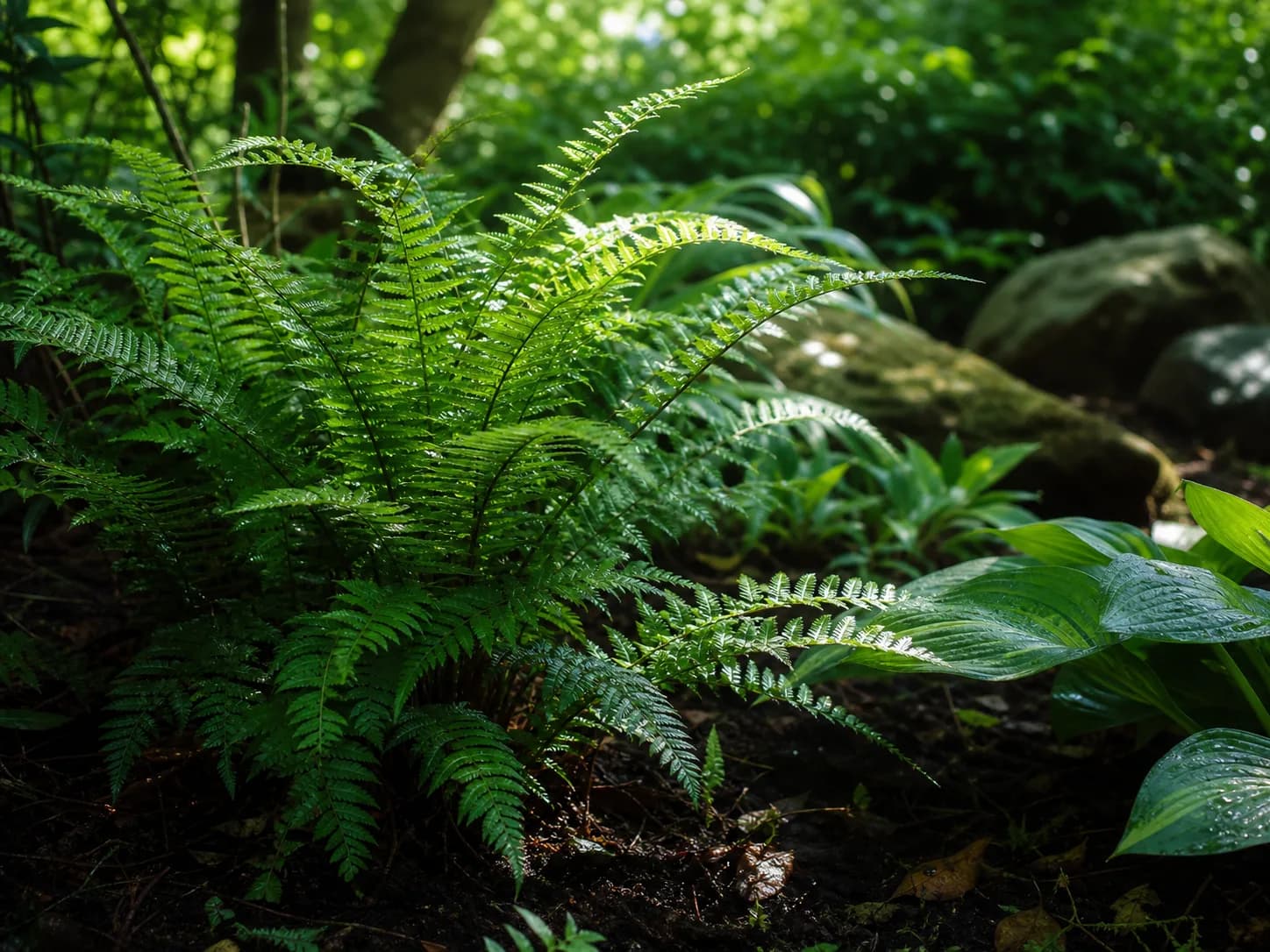
fact_check Source Reviewed
Fern
Various fern genera and species
Most common garden ferns fit USDA Zones 3-9
Ferns earn their place with texture, shade tolerance, and a calm green presence that softens woodland edges, foundation beds, and damp corners where flowers can look strained. Match the species to moisture and winter hardiness, and they become some of the easiest shade perennials to live with.
Pet SafeSource Reviewed
View Profile arrow_forwardfact_check Source Reviewed
Hosta
Hosta spp.
USDA Zones 3-9
Gardeners crave color in shade beds, and Hosta delivers with bold foliage instead of fussy flowers. This clumping perennial thrives in Zones 3-9, spreads steadily, and handles everything from tight foundation beds to big woodland borders with very little drama.
Source Reviewed
View Profile arrow_forward
fact_check Source Reviewed
Hydrangea
Hydrangea macrophylla
Zone 3-9 with winter protection in colder areas
Gardeners from cool Zone 3 yards to mild Zone 9 patios use Hydrangea macrophylla for big summer color and reliable structure. These deciduous shrubs offer mophead or lacecap blooms, color-shifting petals, and a good backbone for mixed borders when paired with hostas or daylilies.
Source Reviewed
View Profile arrow_forward
fact_check Source Reviewed
Phlox
Phlox paniculata
Hardy in USDA Zones 3-9
Garden phlox is a tall, fragrant perennial that brings mid to late summer color when many spring perennials are fading; it thrives in full sun, draws butterflies and hummingbirds, and can be managed with simple deadheading and good air flow to limit mildew.
Pet SafeSource Reviewed
View Profile arrow_forward
fact_check Source Reviewed
Russian Sage
Salvia yangii
USDA zones 3-9
By mid to late summer, Russian Sage (Salvia yangii) throws up airy clouds of lavender-blue flowers just when many perennials fade; it thrives in hot, dry sites that frustrate fussier plants, giving you tall, hazy color with very little ongoing maintenance.
Pet SafeSource Reviewed
View Profile arrow_forward
fact_check Source Reviewed
Wisteria
Wisteria sinensis
Hardy in Zones 3-9 (flowering best in 5-9)
Fight tangled, flowerless vines by giving Wisteria sinensis the structure, light, and pruning it needs; this vigorous perennial climber can cover an arbor or fence with fragrant purple clusters from spring into early summer in Zones 3-9 when it is sited and managed correctly.
Source Reviewed
View Profile arrow_forward
fact_check Source Reviewed
Yarrow
Achillea millefolium
Zone 3-9 hardy perennial
Gardeners often baby perennials, but Yarrow (Achillea millefolium) thrives on a little neglect; this hardy, ferny-leaved plant handles poor soil, summer drought, and full sun while still pumping out flat flower clusters that pollinators love. It is a reliable bloomer in Zones 3-9 and a workhorse for low-maintenance beds and borders.
Source Reviewed
View Profile arrow_forwardPortal Progress