Fertilizingschedule14 min read
How to Fertilize a Vegetable Garden for Maximum Yield
Practical, step‑by‑step fertilizing advice for backyard vegetable gardens, including soil prep, NPK choices, timing, and application methods so you get more food from every square foot.
Fertilizer is not magic dust; it is plant food in a specific ratio. Once you understand what your garden soil already has, you can feed crops exactly what they are missing and stop guessing.
The details that move the needle: soil tests, reading fertilizer labels, timing, and application methods tailored to common crops like backyard tomatoes and salad beds. You will learn how to set up a simple feeding schedule, avoid burning roots, and keep nutrients from washing away so more of what you buy ends up in your harvest basket.
scienceTest and Read Your Soil Before Adding Anything
The fastest way to waste fertilizer is to apply it blind. A basic soil test tells you pH and how much nitrogen, phosphorus, and potassium are already present.
You can use an inexpensive mail-in test from your local extension or a garden center kit. Follow the instructions and collect soil from several spots in the bed so results reflect the whole area, not just one corner.
Pay close attention to pH and organic matter on the report. Most vegetables prefer pH 6.0-7.0, where nutrients are easiest for roots to absorb. Organic matter around 4-6% usually means soil holds nutrients and moisture well.
If the soil test shows extreme pH, fix that before chasing fertilizer numbers. Lime raises pH in acidic beds, while sulfur lowers pH in alkaline soils, and both take months to fully work.
Fertilizer cannot fix poor soil structure or wildly off pH. It only rides on top of those problems, so get the base chemistry in range first.
A test also shows if your soil already has plenty of phosphorus or potassium. In that case, use high-nitrogen, low-P blends to avoid buildup and runoff into nearby areas with shallow roots like blueberry hedges or storm drains.
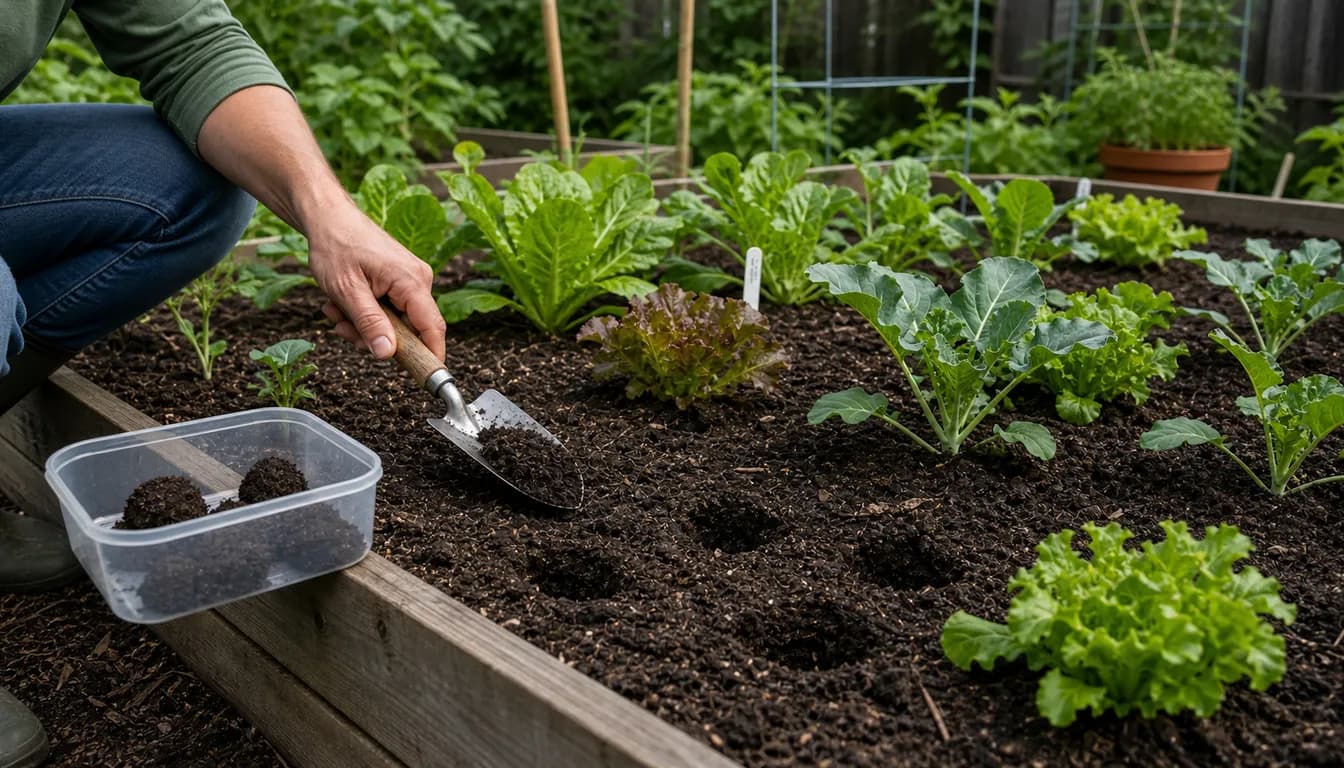
Take several small samples across the bed so your soil test reflects the whole garden.
- fiber_manual_recordSoil pH target: 6.0-7.0 for most vegetables
- fiber_manual_recordOrganic matter goal: 4-6% for good nutrient holding
- fiber_manual_recordRetest timing: Every 2-3 years in established beds
- fiber_manual_recordSample depth: Top 6 inches where most veggie roots feed
compostPick the Right Fertilizer Type and NPK Ratio
Every fertilizer bag carries three bold numbers, such as 5-10-10. These show the percentage by weight of nitrogen (N), phosphorus (P), and potassium (K), the main nutrients vegetables burn through as they grow.
Nitrogen drives leafy growth, phosphorus supports roots and flowering, and potassium promotes overall vigor and disease resistance. Different crops and growth stages call for different ratios, so one fertilizer rarely suits your entire garden from seedling to harvest.
Leafy crops like kale plants and spinach rows thrive on higher nitrogen, such as 10-5-5 or similar, which keeps foliage tender and green. Fruiting crops like pepper plants and cucumber vines respond better to more balanced blends or those with slightly higher P and K, such as 5-10-10.
You can use organic fertilizers such as composted manure, feather meal, and rock phosphate, or synthetic granular fertilizers. Organic products release nutrients slowly as soil life breaks them down. Synthetics act faster but are easier to overapply.
Fast-release synthetic fertilizers can burn roots if you apply more than the label rate or let granules touch stems and leaves.
For most home gardens, a mix of compost plus a moderate-strength granular fertilizer in the 4-6% N range is easier to manage than very strong products. It gives you a margin for error without wrecking your soil biology.
If you already fertilize houseplants, treat vegetable fertilizers as the outdoor cousin of products for indoor plant feeding, with formulas tuned for faster growth and heavier harvests.
Guide — See AlsoHow to Fix Compacted Soil for Healthier RootsLearn practical ways to loosen compacted soil in lawns, beds, and veggie gardens so roots can breathe, water can soak in
chevron_rightyardFeed the Soil With Compost and Organic Matter
Rich soil works like a built-in slow-release fertilizer. Compost, rotted leaves, and aged manure feed soil microbes, which in turn release nutrients for your vegetables all season long.
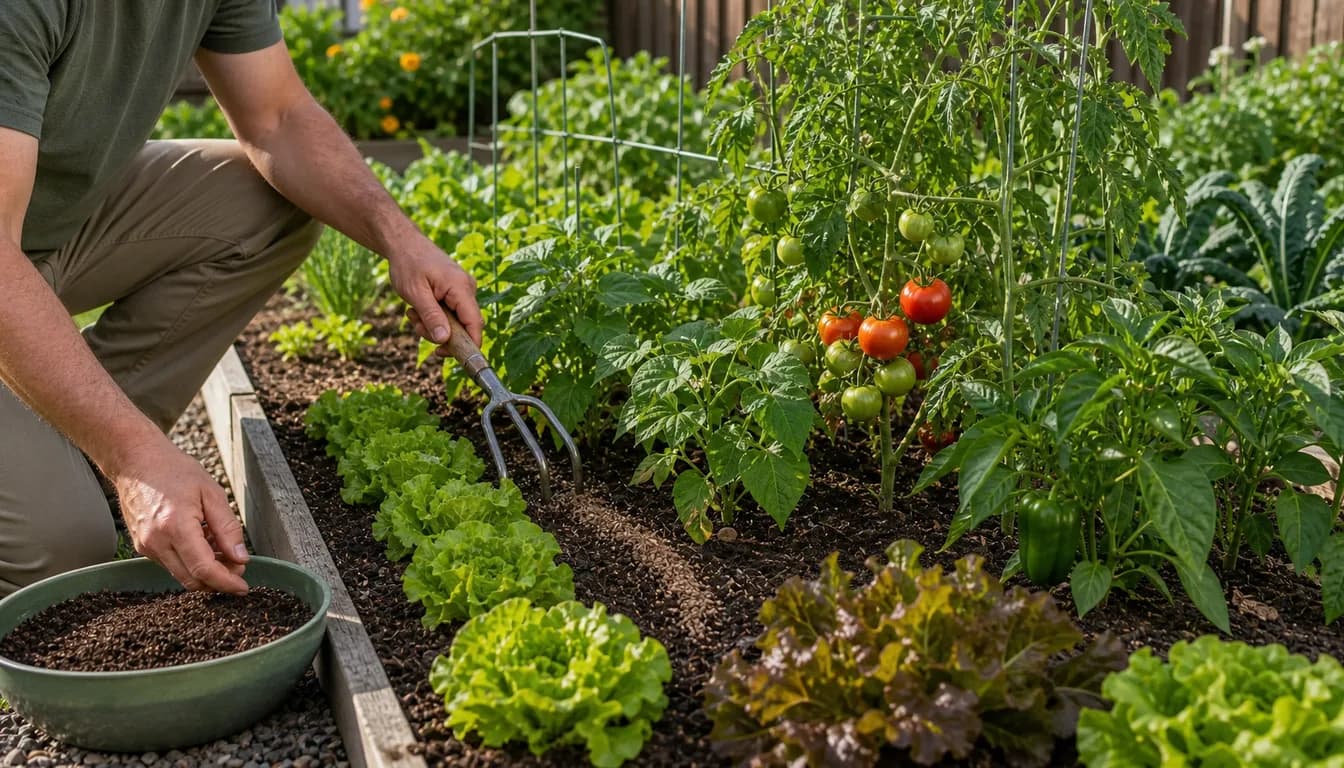
Spread 1-2 inches of finished compost over the top of the bed before planting. Work it into the top 4-6 inches of soil with a fork or hoe, or simply layer it on and let worms pull it down over time.
If you garden in heavy clay, organic matter opens up pore spaces so roots from crops like carrot rows and beet seedlings can penetrate deeper. In sandy soils, compost acts like a sponge, cutting down how often you need to water and slowing the rate at which nutrients leach away.
Manure is useful but only when fully composted and applied at the right time. Fresh manure can burn seedlings and can also carry pathogens, so keep it out of beds for at least 90 days before harvesting leafy crops.
Never side-dress with fresh manure around vegetables you will eat raw, such as lettuce or herbs, to avoid contamination risks.
Mulch also adds a quiet fertilizing boost. A 2-3 inch layer of shredded leaves, straw, or grass clippings between rows slowly breaks down, building more organic matter and keeping the soil surface cooler.
With healthy, living soil, you rely less on bagged fertilizer over time. Treat compost as your base feed and granular fertilizer as the fine-tuning for heavy feeders like sweet corn stands. Long-season broccoli plants usually need the same backup.
Email Updates
Join the KnowTheYard update list
Zone-specific advice, seasonal reminders, and new plant guides — no filler.
calendar_monthTime Fertilizer Around Crop Growth Stages
Vegetables do not need the same fertilizer from seedling to harvest. Early in the season, they put their energy into roots and leaves. Later, they shift that energy into flowers and fruit, which is where most of your harvest comes from.
For transplants like tomato starts and eggplant seedlings, mix a small amount of balanced fertilizer into the planting hole, usually 1-2 tablespoons of a low-strength granular product per plant. Water well so nutrients move into the root zone.
About 3-4 weeks after planting, side-dress with nitrogen to support vegetative growth. Pull mulch back, sprinkle fertilizer in a shallow band 4-6 inches from the stem, then cover and water.
Once flower buds form on crops like zucchini hills and bean rows, switch to lower nitrogen and steady phosphorus and potassium. Too much nitrogen at this stage grows vines and leaves instead of fruit.
Most underperforming vegetable gardens are overfed early and starved during peak fruit set. That is exactly when plants need nutrients to stay consistent.
Cool-season veggies such as spring spinach and heading cabbage often finish in 45-70 days, so they usually need one pre-plant feeding plus a light side-dress halfway through.
Warm-season crops that stay in the ground for months, like pumpkin vines, benefit from a regular schedule roughly every 3-4 weeks. Watermelon mounds usually follow the same rhythm.
Guide — See AlsoWhen to Fertilize Your Garden for Real ResultsLearn exactly when to fertilize vegetable beds, flowers, fruit, and lawns so you feed plants at the right time instead o
chevron_rightyardAdjust Fertilizer for Beds, Rows, and Containers
How you plant changes how fertilizer behaves. Raised beds, in-ground rows, and patio containers all drain and dry at different speeds, so you cannot use the exact same feeding plan.
In raised beds, nutrients move faster because the soil drains and warms quickly. That suits heavy feeders like tomato vines, but it also means fertilizer gets used or washed out sooner.
Traditional in-ground rows hold nutrients longer, especially in heavier soils. Here you can lean more on pre-plant fertilizer and side-dressing a couple times during the season.
Containers are the outliers. They dry out faster, roots are crowded, and frequent watering flushes nutrients.
- fiber_manual_recordRaised beds: Use a full pre-plant dose plus light side-dressing every 3-4 weeks.
- fiber_manual_recordIn-ground rows: Focus on pre-plant fertilizer and 1-2 midseason top-ups.
- fiber_manual_recordContainers: Cut single doses in half and feed every 2-3 weeks with liquid fertilizer.
- fiber_manual_recordPerennial veggies: Crops like asparagus crowns need a spring feeding and light top-up after harvest.
That container rule is the one most likely to prevent burn.
Container vegetables burn quickly if you treat them like field crops. Smaller soil volume, same fertilizer, much more damage.
If you rotate crops, adjust your layout when you plan fertilizer. Heavy feeders like sweet corn blocks and broccoli heads belong where you can easily side-dress and water nutrients in.
water_dropDial In Watering So Nutrients Actually Reach Roots
Fertilizer sitting dry on the surface does nothing. Nutrients only move into the root zone when water carries them down into the soil profile.
Right after you feed, water slowly and deeply. Use a gentle spray or a soaker hose instead of blasting the surface with a nozzle.
For granular fertilizers around crops like pepper plants, aim to wet the top 6-8 inches of soil. That is where most feeder roots live through the main growing season.
Liquid fertilizers act faster but also leach faster. They are handy for quick fixes on leafy crops like spinach beds, but you still need a soil-building plan underneath.
- fiber_manual_recordBefore feeding: Water dry beds the day before so fertilizer lands on slightly moist soil.
- fiber_manual_recordRight after feeding: Apply at least 0.5 inch of water to dissolve and move nutrients.
- fiber_manual_recordOngoing: Use deep, infrequent watering so roots chase moisture and nutrients down.
- fiber_manual_recordRain factor: Skip irrigation if a soaking rain is forecast within 24 hours.
Water is what turns fertilizer from granules into usable food.
More vegetables are stunted by dry fertilizer that never gets watered in than by weak fertilizer products.
If runoff appears while you water in fertilizer, slow the flow and give the soil time to absorb it. Sloped beds especially benefit from soaker hoses or drip lines that match low-spray irrigation setups.
Guide — See AlsoMake Homemade Vegetable Fertilizer That Actually WorksLearn how to mix safe, effective homemade vegetable fertilizer from common ingredients, when to use each type, and how t
chevron_rightquizTroubleshoot Common Fertilizer Problems Fast
Yellow leaves, burnt edges, and weak growth are the garden's way of saying the feeding plan is off. The trick is learning to tell low nutrients from too much of a good thing.
Pale leaves with green veins on crops like kale greens often point to iron or magnesium shortages, especially in high-pH soils. Uniform pale green or yellow, plus slow growth, leans more toward simple nitrogen deficiency.
Leaf scorch and crispy margins after feeding usually mean fertilizer burn. You will see this first on container crops, including patio cucumber vines, because the salts concentrate quickly.
If only older leaves are yellow and the plant keeps blooming and setting fruit, it might just be natural aging, especially on plants like bush beans. Nutrient problems usually show up across the plant, not just one or two sacrificed leaves.
- fiber_manual_recordSuspect deficiency: Feed lightly with a balanced or slightly higher nitrogen product and water well.
- fiber_manual_recordSuspect burn: Flush the area with extra water over several days to wash salts deeper.
- fiber_manual_recordPatchy issues: Compare several plants in the same bed to rule out disease or pests.
- fiber_manual_recordSlow containers: Switch to diluted liquid feed every 1-2 weeks instead of big granular doses.
One bad corner usually points to soil, drainage, or pH before product choice.
If several crops struggle in one area but thrive elsewhere, retest that spot instead of chasing random fertilizers.
Watch how long improvements take. Leaf color on fast growers like radish rows responds within 7-10 days after a good feeding. Woody or slow crops, such as blueberry shrubs edging a garden, may take several weeks to show recovery.
calendar_monthMatch Fertilizer to Cool and Warm Season Crops
Cool-season vegetables and warm-season vegetables use nutrients on totally different schedules. Treat them the same and either your spring crops bolt early or your summer crops starve.
Cool-season crops like lettuce heads want steady nutrition in mild weather. Pea vines usually follow the same shallow-rooted pattern.
Warm-season crops, including zucchini plants and eggplant bushes, build a big root and stem system before hitting full production. They benefit from a stronger feeding push once soil has truly warmed.
In mixed beds, it helps to think in two seasons. Feed cool crops as you plant in early spring, then top-up once more before real heat arrives.
- fiber_manual_recordCool-season timing: Fertilize at planting, then again about 4-5 weeks later.
- fiber_manual_recordWarm-season timing: Light feeding at transplant, stronger side-dress as flowering begins.
- fiber_manual_recordOverlap beds: After pulling spring crops, add compost and a fresh, pre-plant dose before warm crops.
- fiber_manual_recordFall crops: Treat fall broccoli and cabbage rows like a second spring, with full pre-plant fertilizer.
Short-season gardens need a cleaner stopping point for nitrogen.
In zones with short seasons, pushing late nitrogen keeps plants green but can delay ripening, especially on pumpkin vines and winter squash.
Gardeners in cooler areas like zone 5 gardens should front-load more fertility in spring. In hotter areas, such as zone 9 beds, shift stronger feedings to early and midseason before extreme heat slows growth.
Guide — See AlsoHow Long Does Compost Take To Be Ready To UseLearn how long compost really takes to be ready, what speeds it up or slows it down, and how to tell when your pile is f
chevron_rightwarningAvoid the Biggest Fertilizing Mistakes
A few repeat mistakes cost more yield than any fancy product ever adds. Fix these and your existing fertilizer goes much farther.
Broadcasting fertilizer over mulch is near the top of the list. Nutrients get trapped in the wood chips instead of reaching roots on plants like carrot rows. Always pull mulch back, feed the soil, then replace it.
Guessing rates is another common issue. A handful varies by person, and the difference adds up when you cover a whole bed of corn stalks. Use a scoop or small cup marked with the rates your favorite products need.
Chasing green leaves late in the season looks helpful, but it often backfires. Heavy late nitrogen pushes leafy growth on tomato plants when you want ripening fruit.
- fiber_manual_recordDo not fertilize: Stressed, wilted plants until water and temperature issues are under control.
- fiber_manual_recordNever mix: More than one high-nitrogen product in the same week on the same bed.
- fiber_manual_recordDo scratch in: Granular fertilizer lightly so it does not sit in dry crust.
- fiber_manual_recordDo switch: To compost-heavy feeding for root crops like beet rows.
That last pause prevents most accidental overfeeding.
If you are unsure whether to feed again, check plant growth and soil, not just the calendar date.
Houseplant habits can sneak into the veggie patch. Indoor feeders like snake plant pots get by on very little. Vegetables are closer to lawns and fruit trees, where feeding schedules are much slower than a weekly vegetable crop.
tips_and_updates
Pro Tips
- check_circleKeep a simple notebook with dates and products used so you can match fertilizer changes to harvest results next year.
- check_circleErr on the side of weaker fertilizer applied more often instead of rare, heavy doses that can burn roots.
- check_circleWater beds thoroughly the day before you fertilize so nutrients move into already moist, active soil.
- check_circleWatch leaf color, not just the calendar, to spot nitrogen shortages early in fast growers like bush beans.
- check_circleUse separate watering cans or clearly labeled sprayers for fertilizers and for pesticides to avoid mix‑ups.
- check_circleFeed container vegetables more often, usually every 1–2 weeks, because nutrients leach quickly from pots.
- check_circleStop high‑nitrogen feeding a month before expected frost so plants can harden off instead of pushing soft growth.
quiz
Frequently Asked Questions
Can I use lawn fertilizer on my vegetable garden?expand_more
Skip most lawn fertilizers in the vegetable garden. Many have weed killers that are not safe on food crops. Use products labeled for vegetables or stick with compost, aged manure, and simple NPK blends without added herbicides.
How often should I fertilize container vegetables?expand_more
Feed container vegetables lightly but often. Use a diluted liquid fertilizer every 1–2 weeks once plants are growing well. Combine that with slow‑release granules mixed into the potting soil at planting for a steady baseline.
Is organic fertilizer enough for heavy feeders like tomatoes and corn?expand_more
Yes, if you apply enough and build soil over time. Rich compost, manure, and organic blends can feed heavy feeders, but they release nutrients slower. Plan for stronger pre‑plant doses and regular side‑dressing during peak growth.
Do I need to fertilize leafy greens as much as fruiting crops?expand_more
Leafy greens need steady nitrogen but not the long, heavy feeding that fruiting crops do. Feed at planting and once more about a month later. Overdoing nitrogen on greens can cause weak, floppy growth and attract pests.
Should I fertilize right before harvest?expand_more
There is usually no benefit to fertilizing just before harvest. Nutrients applied that late will not change the current crop much and may leach away. Focus on building soil between crops and feeding early in each growth cycle instead.
menu_book
Sources & References
Related Guides
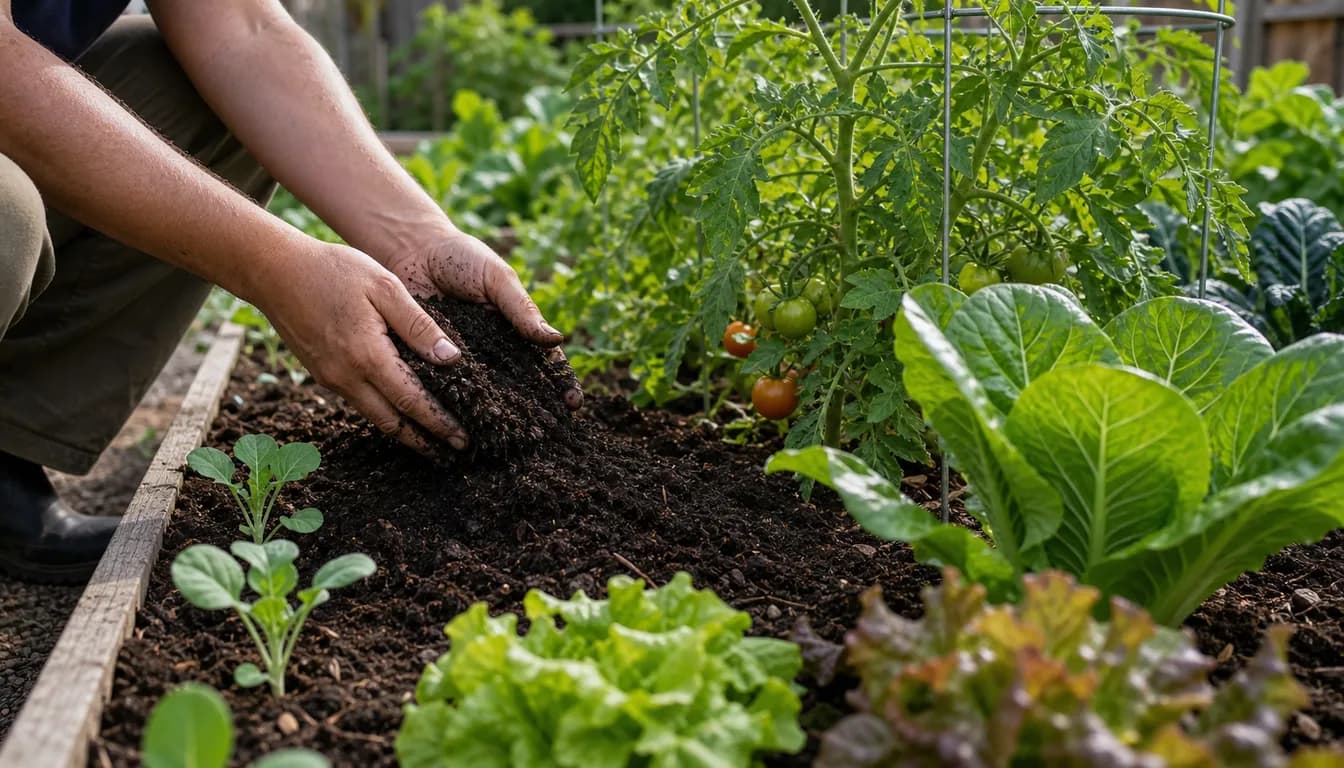
Benefits of Composting for Healthier Soil and Plants
Learn how composting turns kitchen scraps and yard waste into free fertilizer, improves soil, and boosts plant health in any size garden.
12 min read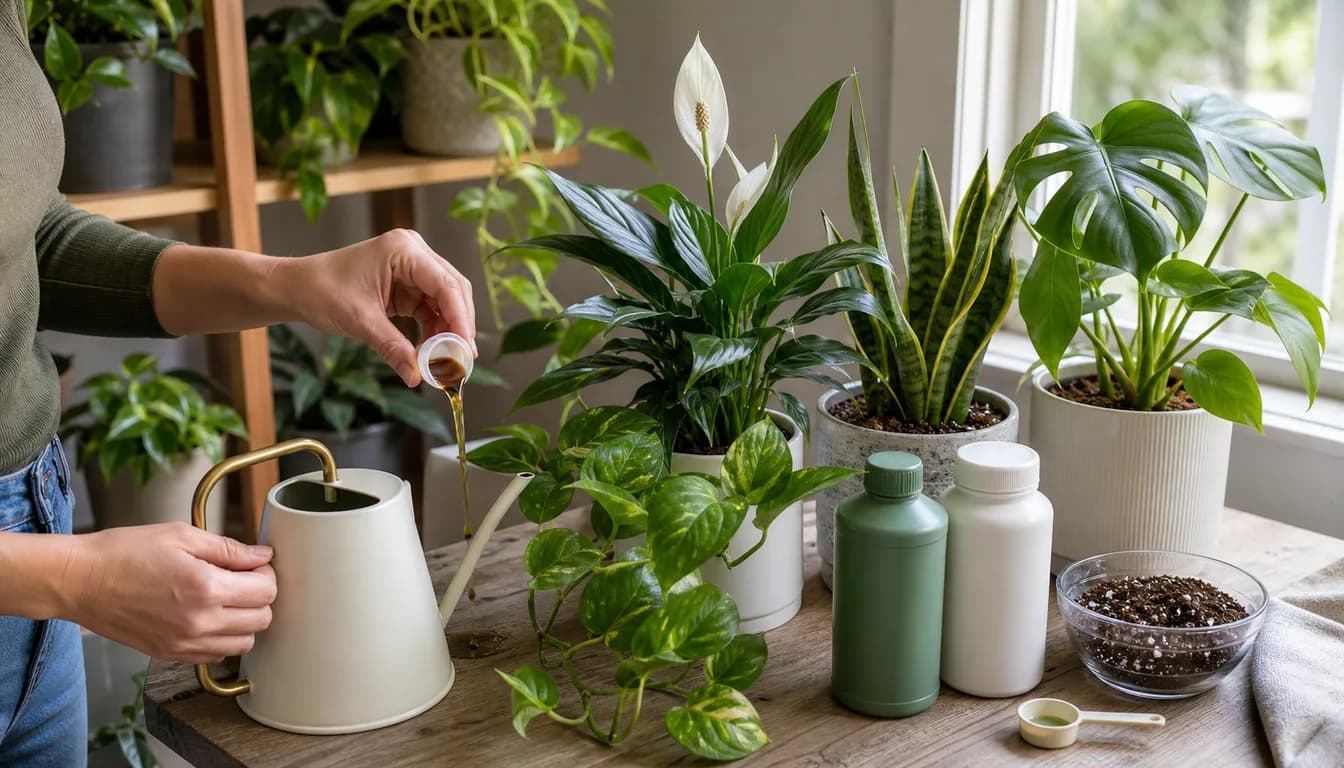
Best Fertilizer for Indoor Plants
Learn how to choose the best fertilizer for indoor plants by growth style, season, and pot size without burning roots or overfeeding slow growers.
14 min read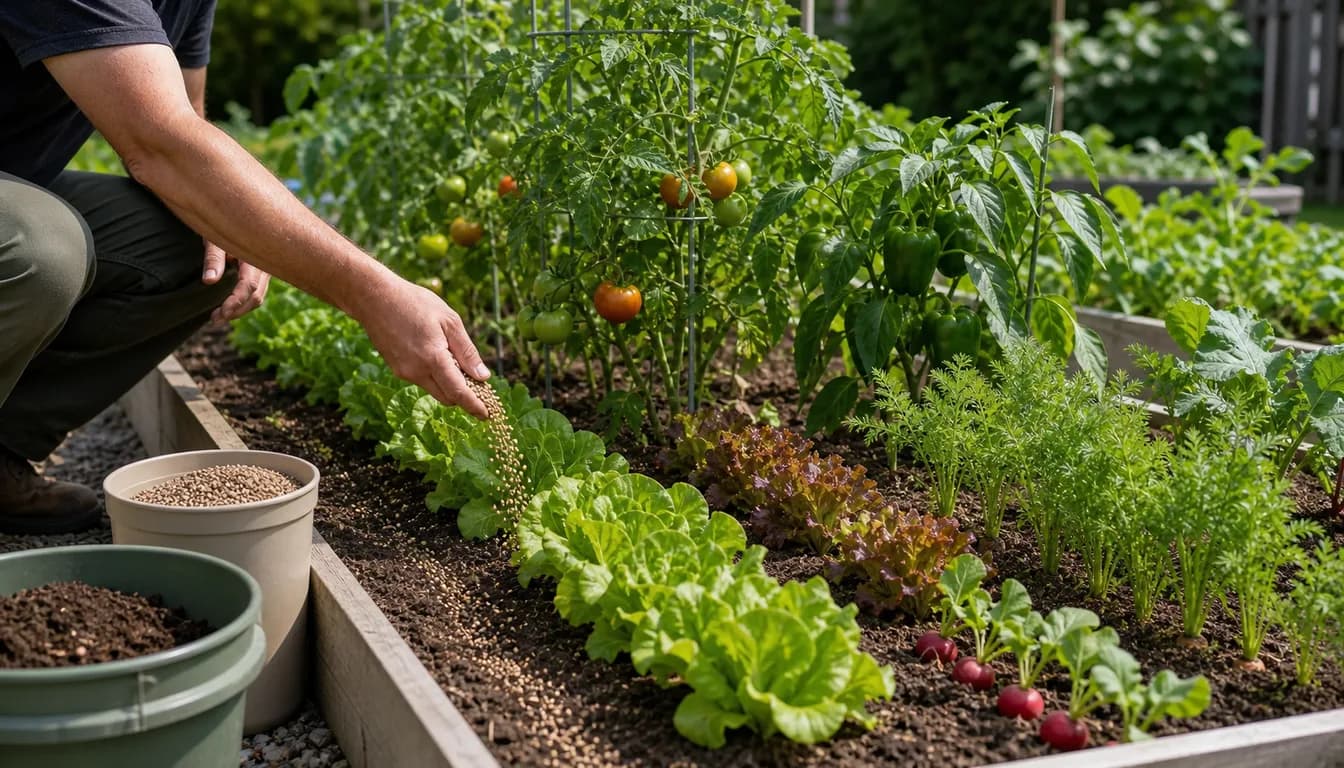
Best Fertilizer for Vegetables by Garden Type
Learn how to pick the best fertilizer for vegetables by crop group, soil condition, and garden setup so you feed beds, rows, and containers without wasting nutrients.
11 min read