verifiedSource Reviewed
Monstera Deliciosa Indoor Care Guide
Monstera deliciosa
Family: Araceae
wb_sunnyLight
Bright, indirect light, tolerates medium
water_dropWater
Moderate, let top 1–2 inches dry
heightHeight
Up to 6–8 ft indoors with support
publicZone
Hardy outdoors in Zone 10-12
airAir Quality
Air Quality Note

Native Region
Tropical rainforests of southern Mexico and Central America
ecoStart With the Next Leaf, Not the Biggest Leaf
The best signal on Monstera Deliciosa is the newest leaf. A young plant may start with whole leaves, then add cuts and holes as the vine matures in bright indirect light. If each new leaf looks smaller or flatter, the plant is not getting enough energy.
Do not judge care by one old torn leaf. Judge the plant by leaf size, stem spacing, and whether each new node looks stronger than the last.
- check_circleBigger new leaf with more cuts: keep the light and support steady.
- check_circleSmall new leaf on a long stem: move closer to light before adding fertilizer.
- check_circleSoft yellow lower leaf: check root moisture before changing the pole.
This page is different from Philodendron. Monstera Deliciosa needs support and maturity before it shows the leaf pattern people buy it for.
local_floristChoose Size Before You Choose a Name
Most indoor buyers need to choose between room scale and leaf drama. A small juvenile plant is cheaper, but it may take years to make the split leaves shown in photos.
Monstera DeliciosaBest for broad split leaves and a floor-plant role
Monstera AdansoniiMonstera Adansonii gives smaller leaves with many holes on a lighter vine
PhilodendronMonstera vs Philodendron is the better decision when you want a vine but not a heavy support plant
Plant Problem — See AlsoBrown Spots on Monstera DeliciosaBrown spots on **Monstera Deliciosa** usually come from wet roots, leaf spot disease, or scorch from harsh light and dry
chevron_rightwb_sunnyLight Makes the Cuts Possible
Monstera Deliciosa can survive in medium light, but survival will not build show leaves. Put it where the room stays bright for most of the day and direct sun does not burn the leaf surface.
If the plant leans hard or leaves turn toward one side, rotate the pot slowly. If the whole vine stretches, rotation will not fix it; the plant needs more light.
lightbulbThe shadow test helps
A soft hand shadow near the plant usually means the light is useful. No shadow at noon usually means the next leaf will stay small.
If you also grow Fiddle Leaf Fig, do not copy that plant's fixed tree placement. Monstera Deliciosa can be turned, tied, and trained as the newest nodes choose a direction.
Email Updates
Join the KnowTheYard update list
Zone-specific advice, seasonal reminders, and new plant guides — no filler.
water_dropWater the Root Ball, Then Let Air Back In
Water Monstera Deliciosa when the top inch or two dries and the pot feels lighter. Give enough water to wet the full root ball, then empty the saucer.
The mistake is frequent small sips. They leave dry pockets, then wet the top again before the lower roots breathe.
- fiber_manual_recordHeavy pot plus yellowing leaf: wait and check drainage.
- fiber_manual_recordLight pot plus curled leaf edge: water fully.
- fiber_manual_recordSour smell or soft stem base: inspect roots before feeding.
For a lighter vine that forgives missed watering faster, compare Pothos. Monstera Deliciosa carries more leaf weight, so wet soil and weak support show up faster.
Comparison — See AlsoMonstera Deliciosa vs Monstera Adansonii
chevron_right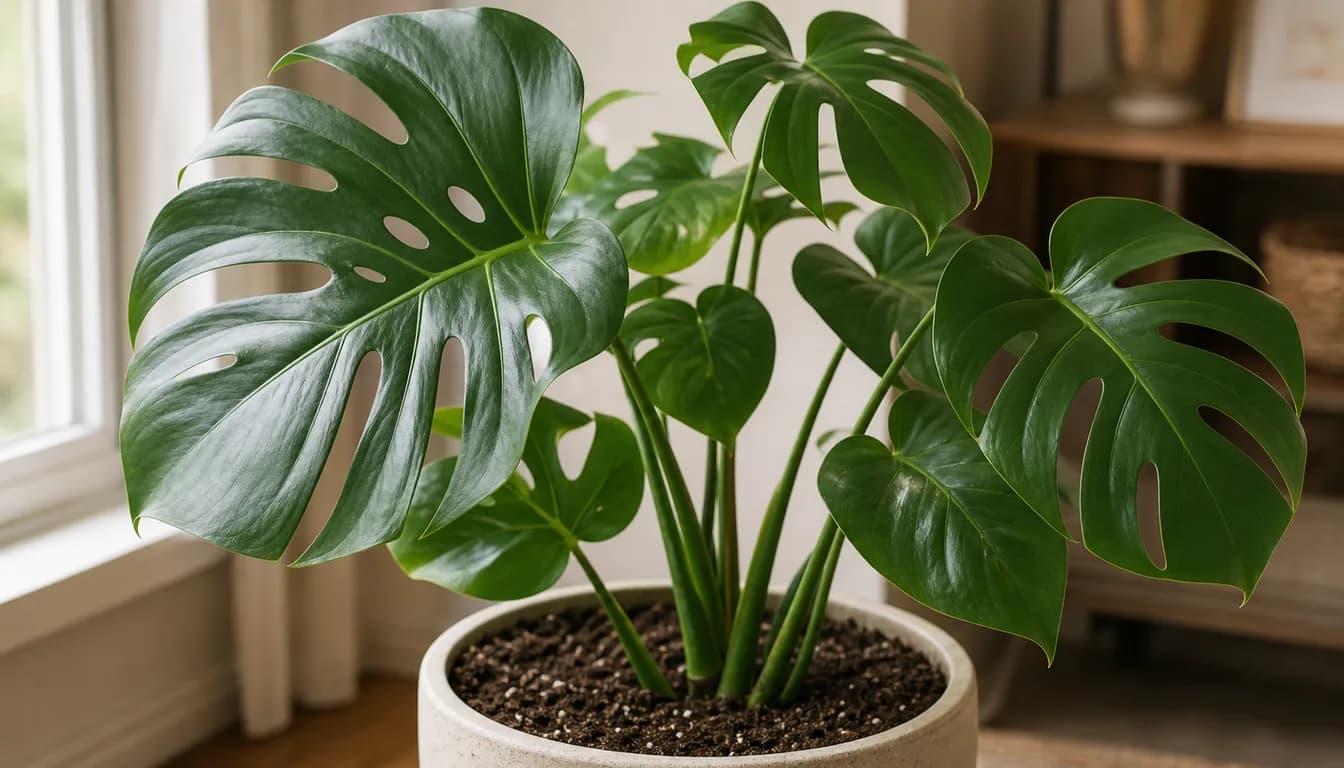
account_treeGive the Vine a Root Zone and a Climb Zone
The vine wants an airy mix and a firm support. Use bark, perlite, or coco chips in the potting mix so thick roots can breathe. Add a moss pole, plank, or trellis before the vine sprawls sideways.
A pole does not work by decoration. Tie the stem near nodes so aerial roots can meet the support. The plant then spends less energy crawling across the floor.
For a softer trailing plant, Pothos is easier. It can trail without asking for the same trunk-like support.
lightbulbSupport Check
Tie the stem, not the leaf stalk. A loose tie around a node lets aerial roots meet the pole without snapping the next leaf.
content_cutCut Only Where There Is a Node
A Monstera Deliciosa leaf without a node will not become a new plant. Cut a stem piece with a node, an aerial root nub if possible, and one healthy leaf.
Good cuttingNode, firm stem, and one leaf
Weak cuttingLeaf blade with no node
Best timingWarm active growth, when roots start fast
Comparison — See AlsoPothos vs Monstera
chevron_rightpest_controlClean the Big Leaves Before Pests Hide
Large leaves collect dust and hide pests along veins and petioles. Wipe both sides when the surface looks dull. Spider mites show as fine stippling; scale looks like stuck bumps on stems.
A clean leaf also uses light better. That matters more on Monstera Deliciosa than on many small-leaf vines because each new leaf costs the plant a lot of energy.
If you see yellowing tied to wet soil, do not treat pests first. Root stress can look like a leaf problem before insects ever appear.
Large glossy leaves can hide scale the way Rubber Plant does, but Monstera Deliciosa pests usually start around nodes and leaf backs first.
calendar_monthUse Spring for Training, Winter for Holding
Spring and early summer are the best times to add a pole, repot, or take cuttings. The plant has enough light to replace roots and redirect the vine.
Winter is slower. Keep the support steady, water less often, and avoid pruning just because one old leaf looks tired.
Guide — See AlsoAir Purifying Plants for Cleaner Indoor AirLearn how to pick, place, and care for air purifying plants so they help your indoor air instead of just looking pretty.
chevron_rightpetsKeep the Vine Away From Chewers
Monstera Deliciosa is not pet-safe. The leaves and stems contain irritating crystals, so place the vine where pets cannot chew dangling growth.
If you need a large pet-safer leaf, Areca Palm is a better floor-plant direction, though it has very different humidity needs.
If you need a dramatic plant that is easier to keep away from paws, Staghorn Fern can live mounted on a wall.
eco
Keep Exploring
Related Plants
 Houseplants
Rubber Plant
Rubber Plant is a glossy indoor ficus that wants stable bright light, full-root watering, and early pruning before it becomes a tall single stick.
 Houseplants
Parlor Palm
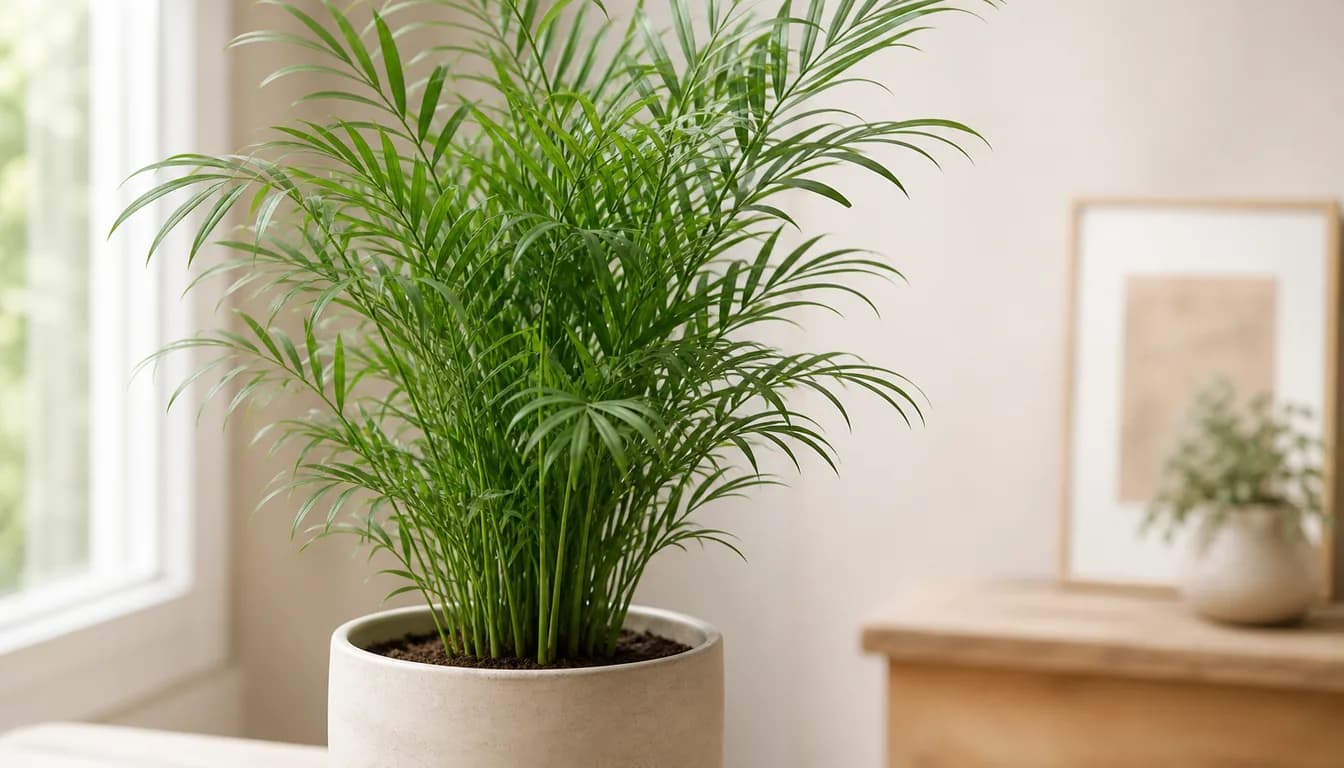
Parlor Palm is the small understory palm for rooms that cannot support a huge tropical tree. It grows slowly, tolerates low to bright filtered light
 Houseplants
Begonia Maculata
Begonia Maculata is the polka dot begonia — dark green, angel-wing shaped leaves splashed with silver dots on top and painted deep crimson underneath. It's
quiz
Frequently Asked Questions
When do Monstera Deliciosa leaves split?expand_more
Leaves split as the plant matures in bright indirect light with steady support. Small juvenile plants often make whole leaves first.
Does Monstera Deliciosa need a moss pole?expand_more
It does not need a moss pole to survive, but support helps the vine grow upward and make larger leaves.
How often should I water Monstera Deliciosa?expand_more
Water when the top inch or two dries and the pot feels lighter. Wet the full root ball, then let air return.
Can I propagate a monstera leaf?expand_more
No. A cutting needs a node. A leaf blade without a node can root for a while but will not grow a new vine.
Is Monstera Deliciosa toxic to pets?expand_more
Yes. Keep it away from pets that chew houseplants.