verifiedSource Reviewed
Majesty Palm: Indoor Tropical Fronds That Need Humidity
Ravenea rivularis
Family: Arecaceae
wb_sunnyLight
Bright indirect, a few hours of soft morning sun
water_dropWater
Moderate; keep soil lightly moist, never soggy
heightHeight
Indoor: 4–10 ft; Outdoor: 20+ ft in Zone 10–12
publicZone
Hardy outdoors in Zone 10-12; elsewhere as houseplant
airAir Quality
Air Quality Note

Native Region
Madagascar river valleys
A Resort Look Comes With Wetland Roots
Majesty Palm looks easy because stores sell it as a finished indoor tree. The plant tells a different story once it leaves the greenhouse: it wants bright light, steady moisture, and air that is not bone dry.
Its roots do not like a drought-crash cycle. Letting the pot go fully dry can brown leaf tips fast, while keeping it swampy in a dark room turns lower fronds yellow.
Buy this palm for a bright room where you can water carefully. Choose a smaller palm like parlor palm if the room is dim or you travel often.
infoAnswer first
Majesty Palm is worth growing indoors only when you can give it bright soft light, a draining but evenly moist pot, and humidity support.
Choose Majesty Only If You Can Give Space
The plant is usually sold by size, not cultivar. Pick the smallest healthy plant that already fits your light and room width, because fronds will spread wider than the pot.
Look for green spear growth at the center and leaflets that are flexible, not crisp. A palm with many cut brown tips is already telling you the store air was too dry.
Majesty PalmTall, soft, tropical look; highest water and humidity demand.
Areca palmCane clumps and lighter fronds; a better fit for bright rooms with less floor height.
Parlor palmSlower and smaller; more forgiving in lower light.
Guide — See AlsoAir Purifying Plants for Cleaner Indoor AirLearn how to pick, place, and care for air purifying plants so they help your indoor air instead of just looking pretty.
chevron_rightPut It in the Brightest Soft-Light Spot
Majesty Palm wants bright indirect light for full fronds. A dim corner turns the plant into a slow decline, even if it looks fine for the first few weeks.
Place it near an east window or several feet back from a bright south or west window. Direct hot glass can scorch leaflets, but weak light makes watering harder because the pot dries too slowly.
Turn the pot a quarter turn every week while it is actively growing. Even light keeps the crown centered and stops one side from reaching across the room.
Email Updates
Join the KnowTheYard update list
Zone-specific advice, seasonal reminders, and new plant guides — no filler.
Do Not Let the Root Ball Collapse Dry
Water when the top inch or two dries but the deeper root ball still feels slightly cool. This palm needs a narrower watering window than drought plants like ZZ plant.
Pour enough water to moisten the whole root ball, then empty the saucer. Small sips leave dry pockets; standing water suffocates the lower roots.
Brown tips after a dry week usually mean the plant missed water or sat in dry air. Yellow lower fronds in a wet pot mean the roots are short on air.
If the whole plant yellows while the pot stays wet, compare the pattern with yellow leaves before watering again.
warningRead the symptom before adding water
Use brown tips as a dry-air or missed-water clue before adding more fertilizer. Yellow lower leaves need a separate root and drainage check.
Guide — See AlsoBest Herbs to Grow Indoors for Real Harvests, Not Spindly PotsChoose indoor herbs that can actually produce in your light, temperature, and container setup, then match each one to th
chevron_right
Build a Heavy Pot That Still Drains
A tall palm needs weight at the base, but the pot still needs drainage. A heavy ceramic cover pot can work if the nursery pot inside drains freely and never sits in collected water.
Use a peat-based indoor mix with extra perlite or bark. The goal is even moisture with air, not a cactus mix that dries too sharply or dense garden soil that compacts.
Pot weightHeavy enough to hold tall fronds upright.
DrainageOpen holes plus a saucer you check after watering.
Repot timingWhen roots circle tightly or watering stops soaking in.
Do Not Plan on Propagating It Indoors
Majesty Palm does not give easy pups like some clumping houseplants. Indoor growers should not count on propagation as a normal care step.
Division damages roots and usually fails on a single-crown plant. If you want more palms, buy a second plant or choose a clumping palm that handles separation better.
infoSkip the cutting jar
Stem cuttings do not root into new Majesty Palm plants. Save propagation effort for plants such as spider plant or pothos.
Guide — See AlsoBest Indoor Plants for Every Room and Light LevelA practical guide to choosing the best indoor plants for your home, covering beginner-friendly picks, low light champion
chevron_rightBrown Tips Are a Moisture Report
Dry air invites spider mites, and dry roots brown the tips. Check both before spraying. A palm that lives beside a heat vent can have mites, thirsty roots, and crispy leaflets at the same time.
Look under leaflets with a flashlight. Fine webbing, dusty speckles, or dull leaflets mean mites are feeding before you see large damage.
Wipe fronds gently and shower the plant if the pot drains well. Follow with humidity support, because a one-time rinse will not fix a dry-room problem.
- fiber_manual_recordCrisp tips with dry soil: water missed the root ball.
- fiber_manual_recordYellow lower fronds with wet soil: roots need more air.
- fiber_manual_recordFine stippling on leaves: inspect for spider mites.
Summer Can Help, Winter Tests It
Warm months let Majesty Palm grow if light and water stay steady. Feed lightly with indoor plant fertilizer only during active growth.
A shaded porch can help in summer, but bring the plant back before cool nights. Sudden outdoor sun can burn greenhouse-grown fronds.
Use houseplant watering frequency only as a starting rhythm. This palm needs the pot checked more often than tough dry-room plants.
Winter is the hard season indoors. Short days slow water use, while heating systems dry the air; that mismatch is why tip burn often appears after the holidays.
Safe for Pets, Demanding in Small Rooms
Majesty Palm is often chosen for pet-friendly rooms, but size still matters. Wide fronds can block walkways, rub walls, and break if the pot sits in a tight corner.
Trim only fully brown fronds at the base. Cutting green fronds for shape removes food-making leaf area and can weaken an already stressed palm.
lightbulbBest fit
Use Majesty Palm where a bright humid room can support the look. Use areca palm when you want a lighter clumping palm with easier room placement.
eco
Keep Exploring
Related Plants
 Houseplants
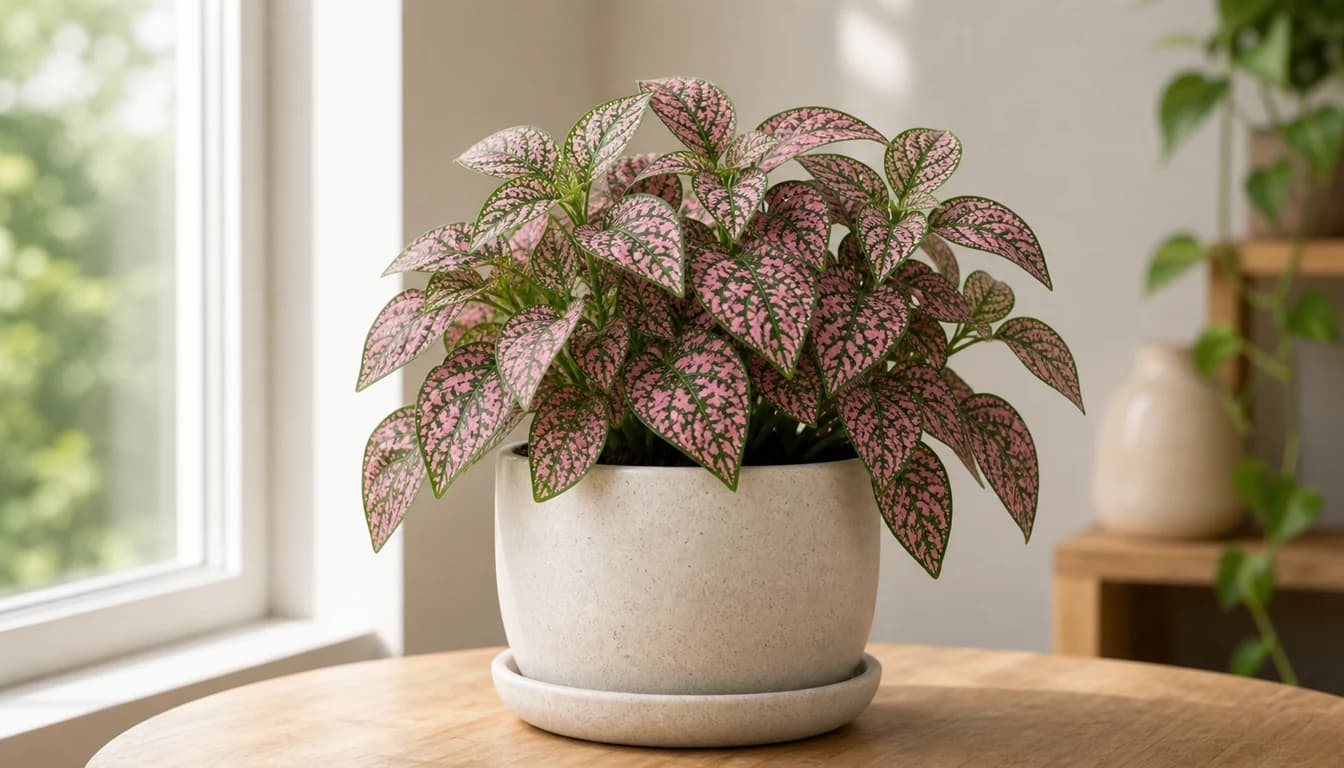
Polka Dot Plant
Polka Dot Plant is a fast color plant, not a long-lived foliage shrub. Keep the spots bright with light, pinching, and flower-bud removal.
 Houseplants
Nerve Plant
Nerve Plant is a tiny veined foliage plant that tells you fast when the room is too dry, too bright, or too unevenly watered. Grow it for a humid desk or te
 Houseplants
Rubber Tree
Rubber Tree is a Ficus elastica grown as a future indoor tree, not just a glossy tabletop plant. The main care job is to match leaf color, light, watering,
quiz
Frequently Asked Questions
Is Majesty Palm easy indoors?expand_more
It is manageable, but not easy. Majesty Palm needs brighter light, steadier water, and more humidity than many common houseplants.
Why does this palm have brown tips?expand_more
Brown tips usually come from dry air, missed watering, mineral buildup, or mite stress. Check soil moisture and leaf undersides before changing everything.
Can I cut brown tips off Majesty Palm?expand_more
Yes, trim only the brown tissue and leave a thin brown edge. Do not cut green fronds just to reshape the plant.
menu_book
Sources & References
- 1.Ravenea rivularis, Missouri Botanical Garden Plant Finderopen_in_new
- 2.Growing Palms Indoors, University of Florida IFAS Extensionopen_in_new
- 3.Palms: Choosing and Growing, Clemson Cooperative Extensionopen_in_new
- 4.Ravenea rivularis, Majesty Palm Profileopen_in_new
- 5.Houseplant Care: Palms Indoorsopen_in_new
- 6.Indoor Palms: Culture and Careopen_in_new
- 7.Managing Insect Pests on Indoor Plantsopen_in_new