verifiedSource Reviewed
Marble Queen Pothos: Pay for the White Variegation With Light
Epipremnum aureum 'Marble Queen'
Family: Araceae
wb_sunnyLight
Medium to bright indirect light; brighter light holds variegation
water_dropWater
Moderate; let the top 1-2 inches dry before watering
heightHeight
Trails 6-10 ft indoors with time
publicZone
Outdoors in Zones 10-12; indoors anywhere
airAir Quality
Air Quality Note

Native Region
Cultivar of Southeast Asian species (French Polynesia origin)
paletteTreat White Leaves as a Light Budget
The care question for Marble Queen Pothos is not whether Pothos is easy. It is whether the plant gets enough light to keep white marbling without burning the pale tissue.
White sections have less chlorophyll. That means a highly marbled vine grows slower and uses water more slowly than a greener Golden Pothos. Low light pushes the plant to make greener leaves because green tissue feeds it better.
This is also why Marble Queen Pothos should not be treated exactly like Neon Pothos. Neon color can dull in poor light, but Marble Queen can actually lose the pattern you bought it for.
Best lookCream-and-green marbling with some green in every leaf
Low-light driftMore solid green leaves and longer spaces between nodes
Too-white riskVery pale leaves grow slowly and scorch more easily
wb_sunnyPlace It Bright, But Keep White Tissue Out of Harsh Sun
Marble Queen Pothos wants bright indirect light, not a dark corner. A spot a few feet from a bright window, or near filtered morning light, usually keeps the marbling stronger than a shelf across the room.
Direct hot sun can crisp white leaf sections faster than green sections. If the pale areas turn tan and papery on the window side, move the plant back or add a sheer curtain.
- check_circleUse brighter light when new leaves turn mostly green.
- check_circleUse filtered light when white tissue scorches.
- check_circleRotate if one side makes greener vines than the other.
- check_circleAdd a grow light in winter if the plant loses pattern.
If the room is truly low-light, choose ZZ Plant instead. Marble Queen Pothos can survive there, but it will not stay queenly.
Cast Iron Plant is the tougher dark-corner choice. It gives up the marble pattern but asks much less from the room.
Guide — See AlsoAir Purifying Plants for Cleaner Indoor AirLearn how to pick, place, and care for air purifying plants so they help your indoor air instead of just looking pretty.
chevron_rightwater_dropWater Slower Than Greener Pothos
Because Marble Queen Pothos often grows slower than greener pothos, it may not drink as quickly. Water after the top 1-2 inches dry, then drain the pot fully.
Do not copy the schedule from a faster green pothos in the same room. The marble plant may still be holding moisture while the green plant is ready for water.
If leaves yellow while the soil is damp, use overwatering plant signs before adding fertilizer. Water stress and light stress often look similar at first.
Ready for waterTop mix dry, pot lighter, leaves just starting to relax
Wait longerPot still heavy or lower leaves yellow while mix is damp
Winter changeLonger dry-down because variegated growth slows
Email Updates
Join the KnowTheYard update list
Zone-specific advice, seasonal reminders, and new plant guides — no filler.
content_cutPrune Green Vines Before They Take Over
A greener vine can grow faster than a heavily marbled vine. If you let it run, it may become the strongest part of the plant and pull the whole pot toward a plainer look.
Cut strongly reverted vines back to a node that still has balanced marbling. Then move the plant brighter so the next growth has a better reason to stay patterned.
This pruning job differs from Philodendron Brasil, where the center stripe pattern has its own behavior. Marble Queen is a scattered marble pattern, so each node matters.
- 1Find the vine that is turning mostly green.
- 2Trace it back to the last well-marbled node.
- 3Cut just above that node with clean snips.
- 4Root the cutting only if it still has pattern worth keeping.
The cut changes the plant's future shape. The callout below keeps propagation from undoing that decision.
lightbulbDo not keep every cutting
A fully green cutting may root easily, but it will not rebuild the Marble Queen look you are trying to protect.
Guide — See AlsoBest Herbs to Grow Indoors for Real Harvests, Not Spindly PotsChoose indoor herbs that can actually produce in your light, temperature, and container setup, then match each one to th
chevron_right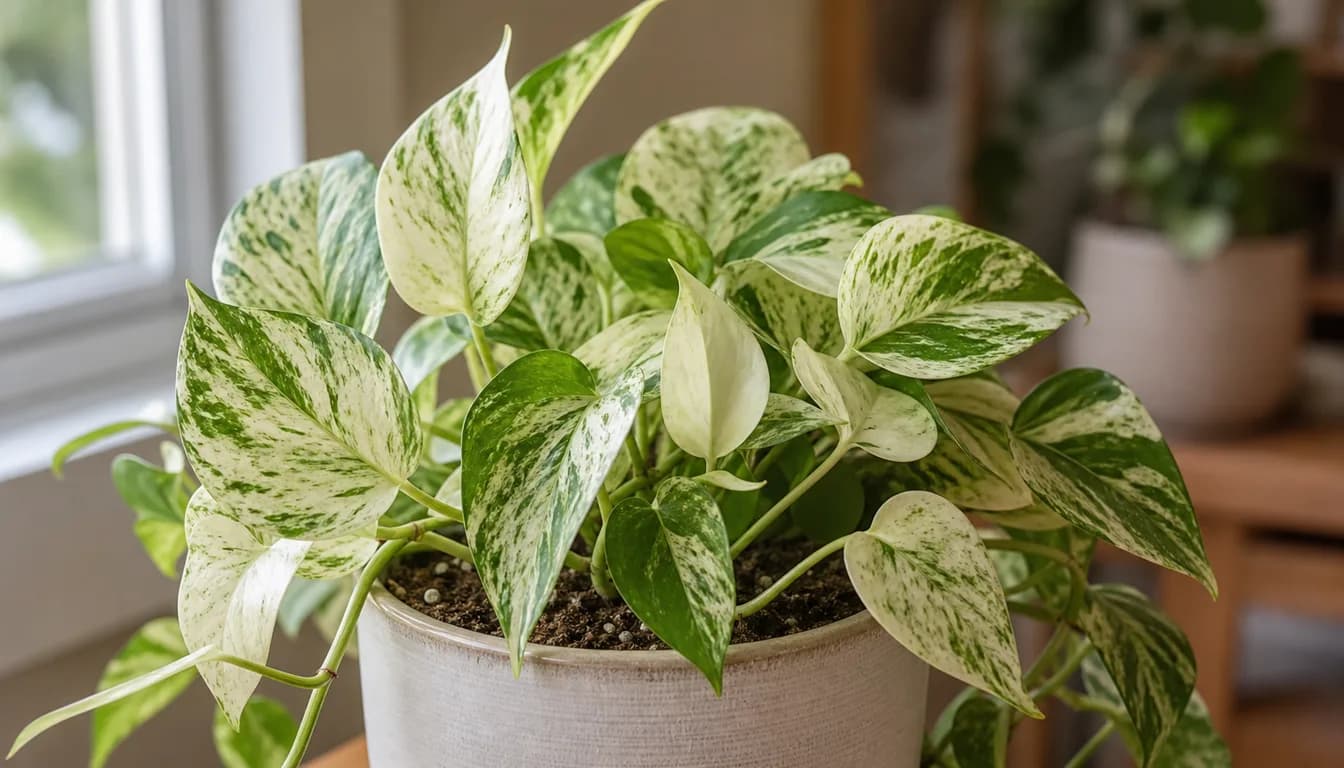
parkPropagate Nodes With Balanced Color
Marble Queen Pothos roots from nodes, not bare leaf stems. The node you choose controls the next plant more than the prettiest single leaf in your hand.
Choose cuttings with green and cream, not all-white leaves. A cutting with no useful green tissue may root slowly and struggle after potting.
Best cuttingNode with balanced green-and-cream leaf and firm aerial root bump
Risky cuttingNearly all-white leaf with little green tissue
Skip cuttingFully green reverted node if your goal is variegation
If you are new to vine propagation, the broader steps in propagate houseplants still apply: keep a node, keep it warm, and pot it before water roots get too long.
vertical_align_bottomChoose a Trail or Pole by How You Want to Read the Leaves
Trailing shows Marble Queen Pothos as a ribbon of marbled leaves. Climbing can make leaves larger over time, but it asks for a pole, ties, and brighter care near the top growth.
Use a hanging basket when you want shelf movement. Use a moss pole or board when you want bigger leaves and easier node inspection.
Do not choose a pole just because it looks advanced. If the room is not bright enough to keep marbling, climbing only makes the weak growth more visible.
pest_controlTrail it
Best for shelves, baskets, and showing many small marbled leaves.
pest_controlClimb it
Best for larger leaves and a controlled vertical display.
pest_controlPrune it
Best when vines get bare at the top or lose color balance.
Guide — See AlsoBest Indoor Plants for Every Room and Light LevelA practical guide to choosing the best indoor plants for your home, covering beginner-friendly picks, low light champion
chevron_righttroubleshootSeparate Color Change From Real Stress
Not every color change is a disease. Greener leaves usually point to low light or a reverted vine. Brown crispy white patches usually point to sunburn, dry air, or water stress on pale tissue.
Pests are a different pattern. Mealybugs hide at nodes; mites leave fine stippling; scale sticks to stems. Use spider mite treatment only when the symptom matches pests, not just because a leaf changed color.
pest_controlMore green
Usually low light or a reverted vine.
pest_controlCrispy white patches
Usually harsh sun or dry stress on pale tissue.
pest_controlYellow lower leaves
Often wet soil, old leaves, or a root-zone problem.
pest_controlSticky nodes
Inspect for scale or mealybugs before changing water.
health_and_safetyKeep Oxalate Crystals Away From Pets and Kids
Marble Queen Pothos is not pet-safe. Like other pothos, it contains insoluble calcium oxalate crystals that can irritate mouths if chewed.
Keep vines trimmed above pet reach and clean up cuttings after pruning. If you need a pet-safer variegated shelf plant, compare with Peperomia instead.
warningCuttings are still plant access
A fresh cutting on a table is easier for a pet to chew than the hanging basket. Clean up propagation pieces right away.
Guide — See AlsoWhite Spots on Plant Leaves: Causes and Fixes That WorkLearn what causes white spots on plant leaves, how to tell pests from disease or mineral residue, and step-by-step fixes
chevron_righteco
Keep Exploring
Related Plants
 Houseplants
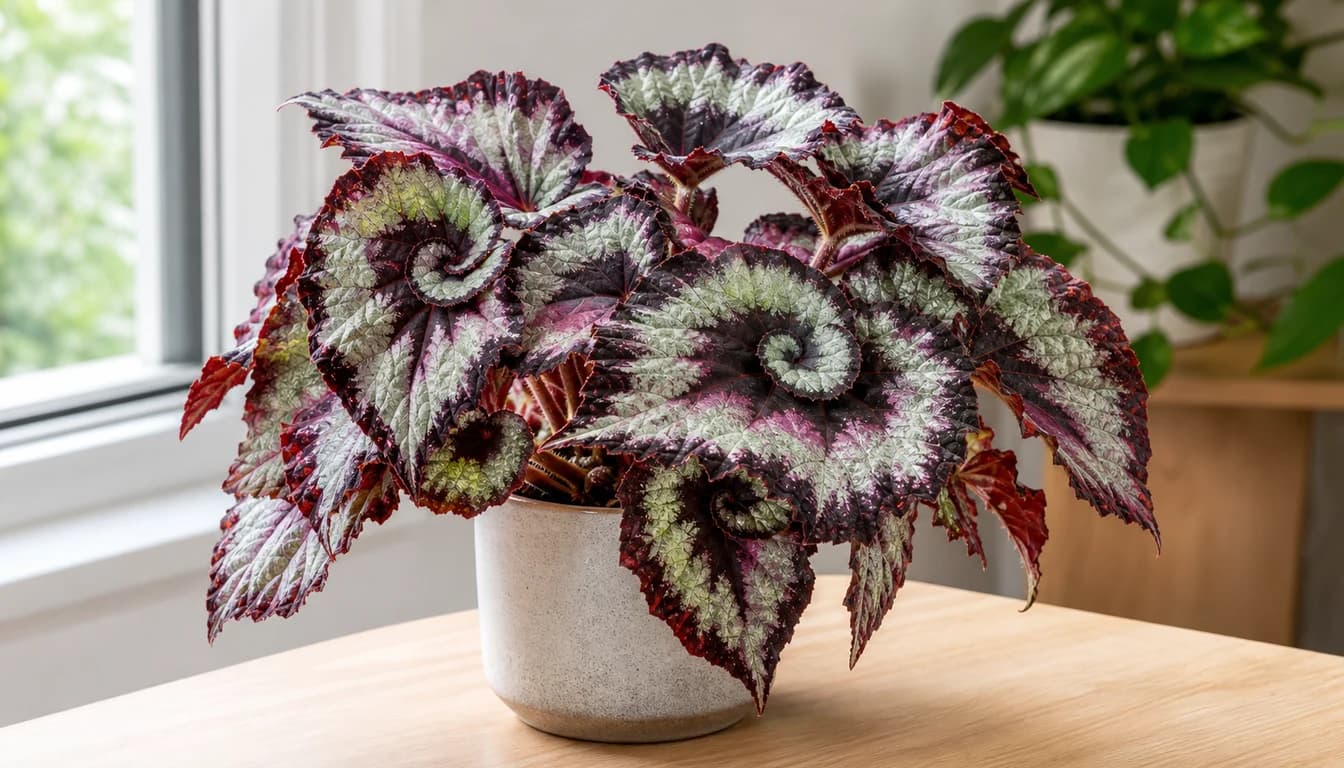
Begonia Rex
Begonia Rex (Begonia rex) is a rhizomatous begonia grown entirely for its wild, painterly leaves — each one a spiraling asymmetrical canvas of silver, p
 Houseplants
String Of Turtles
String of Turtles (Peperomia prostrata) is the trailing succulent with leaves shaped like tiny turtle shells — each leaf is a disc no bigger than a fingerna
 Houseplants
Money Tree
Braided trunks, glossy palmate leaves, and a forgiving nature make the Money Tree (Pachira aquatica) a go‑to indoor tree for bright rooms. It stays compact in c
quiz
Frequently Asked Questions
Why is my Marble Queen Pothos turning green?expand_more
The most common reason is low light. Move the plant to brighter indirect light and prune strongly green vines back to a node with better marbling.
How often should I water Marble Queen Pothos?expand_more
Water when the top 1-2 inches of mix dry and the pot feels lighter. It may need water less often than greener pothos because heavy variegation grows more slowly.
Can Marble Queen Pothos grow in low light?expand_more
It can survive, but it often loses white variegation and grows slower. Medium to bright indirect light is better if you want the marbled look.
Is Marble Queen Pothos safe for cats and dogs?expand_more
No. Keep it away from pets and children who chew plants because pothos contains irritating calcium oxalate crystals.
Can I propagate an all-white Marble Queen Pothos cutting?expand_more
It may root, but it often struggles because it has little green tissue. Choose a node with both green and cream for a stronger new plant.