verifiedSource Reviewed
Anthurium: Long-Lasting Color Indoors
Anthurium andraeanum
Family: Araceae
wb_sunnyLight
Bright, indirect light; no harsh midday sun
water_dropWater
Moderate; keep mix lightly moist, never soggy
heightHeight
12-24 in tall in containers
publicZone
Hardy outdoors in Zone 10-12 only
airAir Quality
Air Quality Note

Native Region
Central and South American rainforests
biotechWhat Makes Anthurium Tick Indoors
Start by picturing a jungle plant perched on a tree trunk, not a flowerbed annual. Anthurium andraeanum is an epiphyte or epilithic plant in the Araceae family, living on bark and rocks in humid tropical forests.
Grow it in pots as a compact clumping plant with 12-24 inch tall glossy leaves and colorful spathes around a central spadix. Those “flowers” are modified leaves that can last for weeks.
Treat it as a true tropical houseplant, similar in needs to Peace Lily and Philodendron, but a bit fussier about humidity and root conditions. Gardeners who like Monstera sized foliage often tuck a smaller Anthurium nearby for color.
Aim for conditions that feel like a warm, bright bathroom. In Zone 10-12 you can grow it outside year round in shade, but elsewhere it belongs on the same indoor shelf as many tropical houseplants.
Botanical nameAnthurium andraeanum
FamilyAraceae (aroid family)
Native rangeHumid forests of Central and South America
Mature indoor size12-24 in tall, 12-18 in wide
Growth rateModerate in warm, bright rooms
Typical useFlowering accent in living rooms, offices, and bright bathrooms
palettePicking Anthurium Types and Colors
Cultivar choice starts with the spathe, not the leaf. The colored part is a waxy modified leaf around the spadix, so color, size, and hold time matter more than flower-petal expectations.
Start by deciding whether you want classic red spathes, pastel tones, or something dark and dramatic. Anthurium andraeanum cultivars mainly differ in spathe color, size, and how compact the plant stays on your shelf.
Look for standard red forms if you want reliable blooms in average home light. These are similar in ease to Peace Lily, while some exotic hybrids behave more like finicky Calathea and really demand higher humidity.
Choose pink or white cultivars for lighter decor and smaller rooms. Dark burgundy or almost black selections pair well with bold foliage like upright Snake Plant when you want contrast in a modern pot grouping. ZZ Plant gives a similar glossy counterpoint in lower light.
Scan plant tags for words like "compact" or "mini" if space is tight. Taller flowering types work better as floor plants next to a Fiddle Leaf Fig, while shorter ones belong up at eye level where you can enjoy those long-lasting spathes.
pest_controlClassic red
Best bloomers in average home conditions, with strong color and medium-sized leaves.
pest_controlPink and white
Softer colors that fit neutral decor, often slightly smaller plants.
pest_controlBurgundy and near-black
Moody tones that need bright light to keep color from fading.
pest_controlMini / compact
Short internodes and smaller spathes for desks, side tables, and shelves.
Guide — See AlsoAir Purifying Plants for Cleaner Indoor AirLearn how to pick, place, and care for air purifying plants so they help your indoor air instead of just looking pretty.
chevron_rightwb_sunnyLight: Bright but Not Harsh
The light goal is steady color without bleached spathes. Too little light gives you glossy leaves and no show; too much light makes the bracts fade before they earn their space.
If a red or pink spathe fades green while the leaves still look healthy, treat that as a light signal before you change fertilizer. Move the pot closer to bright filtered light and wait for the next bloom cycle.
Place the plant where it gets strong, filtered brightness, not direct sunbeams. A bright east window or a few feet back from a south window usually works, similar to spots where you might keep a Rubber Plant.
Watch the leaves first. Dark green foliage with few spathes usually means the plant is in light that would suit many low-light foliage plants but is too dim for regular Anthurium flowering.
Shift the pot closer to the window if blooms slow down, but stop before midday sun hits the leaves directly. Scorched patches or a dull, yellowed film show the light is behaving more like full sun on a Hibiscus than the dappled shade Anthurium prefers.
Add a simple LED grow light if your home is shaded by porches or big trees. A 10-12 hour daily timer near other flowering houseplants like Peace Lily or other bloom-focused indoor picks keeps spathes forming.
- check_circleKeep 2-4 feet back from a south or west window.
- check_circleGive direct morning sun only, if any, from an east window.
- check_circleAvoid dark corners that barely support a ZZ Plant.
- check_circleRotate the pot monthly for even growth and flower display.
Email Updates
Join the KnowTheYard update list
Zone-specific advice, seasonal reminders, and new plant guides — no filler.
water_dropWatering Without Rotting the Roots
Check moisture with your fingers before you ever grab the watering can. Anthurium likes the top 1-2 inches of mix to dry slightly between waterings while the lower root zone stays lightly moist.
Water thoroughly until liquid runs from the drainage holes, then let excess drain away completely. This "deep then dry-ish" pattern is similar to schedules discussed for many indoor plants in the houseplant watering frequency guide.
Adjust your rhythm with the seasons. In bright warm months you might water every 5-7 days, while in winter it can stretch to 10-14 days, closer to how you would treat a resting Peace Lily or Parlor Palm.
Switch your approach if leaves yellow from the base or the pot feels heavy for many days. Those are classic signs of chronic overwatering that also show up on Pothos before yellow leaves become a bigger.
lightbulbSimple watering checks
Use a wooden skewer or chopstick as a moisture probe. Insert it 3-4 inches down; if it comes out almost clean, it is time to water. If it is dark and damp, wait a few more days.
Guide — See AlsoBest Herbs to Grow Indoors for Real Harvests, Not Spindly PotsChoose indoor herbs that can actually produce in your light, temperature, and container setup, then match each one to th
chevron_right
potted_plantSoil and Potting Mix Anthurium Actually Likes
Those thick roots are built for air pockets. A good Anthurium mix feels closer to orchid bark with compost tucked between chunks than to ordinary potting soil.
Build the potting mix more like an orchid blend than dense garden soil. Anthurium roots like chunky, airy materials that drain fast but still cling to a bit of moisture around the fibers.
Combine roughly 40% high quality potting soil, 30% orchid bark, 20% perlite, and 10% compost or worm castings. This feels similar under your fingers to mixes used for epiphytic aroids like Monstera and friends.
Repot every 2-3 years or when roots circle the pot and water rushes straight through. Choose a container only 1-2 inches wider in diameter, just as you would follow in the repotting instructions for other houseplants.
Test your drainage if you struggle with root issues. A pot that stays heavy for a week or smells sour is behaving more like poorly drained outdoor clay in the sandy versus clay soil comparisons than the loose, airy environment Anthurium expects.
- check_circleUse a pot with large drainage holes.
- check_circleAvoid straight garden soil or heavy peat-only mixes.
- check_circleTop dress with 1 inch of bark to keep roots cool and moist.
- check_circleRefresh the top 1-2 inches of mix yearly with fresh blend.
account_treePropagating Flamingo Flowers Indoors
Crowded pots are the first sign you should be propagating, not just repotting. Tight clumps mean you can divide healthy clumps and get a second blooming plant for free.
Guessing at timing leads to slow recovery, so schedule propagation for warm months when your heat is steady. In Zone 10-12 homes this usually means late spring through early fall when nights stay above 65°F.
Chopping blindly through roots risks rot, so start by unpotting and gently teasing soil away to expose individual crowns. Each division needs its own growing point, a chunk of rhizome, and at least 2-3 healthy leaves.
Using old, heavy mix slows new roots, so give divisions a fresh, airy blend. A simple recipe is 50% high quality potting mix, 30% orchid bark, and 20% perlite to mimic the chunky mix we use for climbing Monstera indoors.
- 1Water the plant lightly the day before to soften the root ball.
- 2Slide the root ball out and loosen roots with your fingers, not a tool.
- 3Locate natural clumps with their own stems and tug them apart gently.
- 4Trim any black or mushy roots with clean scissors before replanting.
- 5Pot each division at the same depth in fresh mix and water once.
After division, keep the new pot steady; Anthurium roots resent wobble, cold mix, and repeated checking.
lightbulbEasiest Anthurium Propagation Method
Division is far more reliable than stem or leaf cuttings. You can root pieces in water, but they often stall when moved to soil, while divided clumps usually keep blooming once settled.
Guide — See AlsoRed Flowers: Plan, Plant, and Combine ColorsPractical guide to choosing and planting red flowers in beds and containers, including sun, soil, spacing, and color-pai
chevron_rightpest_controlCommon Anthurium Pests Indoors
Sticky leaves and dull bracts are usually a pest problem, not a fertilizer issue. Ignoring those subtle changes lets insects multiply for weeks before you notice visible damage.
Fine webbing and speckled foliage point to spider mites, which love warm, dry apartments. Check undersides of leaves with a magnifying glass and compare what you see to tips for treating spider mites on houseplants.
Soft, cottony blobs along leaf joints usually mean mealybugs. Leaving them alone on Anthurium can stunt new growth much like they do on moisture-loving plants such as delicate Calathea foliage.
Flying "fruit flies" around the pot are often fungus gnats, not kitchen pests. Overwatering gives them a nursery in the top inch of soil, similar to what happens in soggy pots that need better houseplant watering routines.
pest_controlSpider mites
Look for sand-like dots and fine webbing, then rinse leaves in the sink and follow up with insecticidal soap every 5-7 days.
pest_controlMealybugs
Dab each cluster with cotton swabs dipped in 70% isopropyl alcohol, then spray the plant thoroughly to reach hidden insects.
pest_controlScale insects
Watch for tan bumps on stems that scrape off with a fingernail, then treat repeatedly with horticultural oil until new bumps stop appearing.
pest_controlFungus gnats
Let soil dry to at least 1-2 inches deep, then add yellow sticky traps and follow a soil-drench from a trusted fungus gnat control guide.
Use the pest list as a sorting step; Anthurium leaves recover better when you match the treatment to the insect first.
infoPrevent Pests Before They Spread
New houseplants can carry hitchhikers. Quarantine fresh arrivals for 2-3 weeks, keep leaves dust-free, and inspect once a week so you catch problems on one plant instead of ten.
calendar_monthSeasonal Care for Year-Round Blooms
Seasonal swings indoors still stress tropical plants, even in mild climates. Ignoring those shifts is why these flowers often stop blooming for months in Zone 10-12 homes.
Winter heating dries air and cools windowsills, which can crisp leaf edges like you see on stressed fiddle leaf figs in the same room. Move pots away from cold glass and vents once nights drop below 60°F.
Summer sun through south windows can scorch bracts, even though the room feels comfortable. If you notice faded, yellow patches, shift the plant a few feet back or use a sheer curtain, just as you would for Peace Lily or other shade-loving houseplants.
Sticking to one watering schedule all year invites root problems. Cut back in winter when growth slows, then increase slightly in late spring as new leaves and flower stalks appear, similar to timing fertilizer on indoor plant feeding schedules.
local_floristSpring
Resume regular feeding every 4-6 weeks, rotate the pot for even growth, and repot or divide crowded plants before peak summer heat.
wb_sunnySummer
Watch for leaf scorch, increase humidity with a tray of pebbles and water, and check twice weekly for mites in hot, bright rooms.
ecoFall
Ease back on fertilizer, trim yellowing leaves, and match your care to deeper, less frequent watering as light levels drop.
ac_unitWinter
Water less often, hold fertilizer, and keep the plant in the brightest window you can without cold drafts or touching glass.
After the seasonal checklist, let light decide the next move; Anthurium slows most when winter rooms are both dim and dry.
lightbulbHow To Keep Blooms Coming
Spent blooms left on the plant waste energy. Cut fading flower stalks back at the base and keep light bright and even, and you usually see fresh blooms within a couple of months.
Guide — See AlsoHow Much to Water Plants Without GuessingLearn how much to water indoor and outdoor plants using soil checks, pot size, and weather instead of random schedules.
chevron_righthealth_and_safetyToxicity and Indoor Safety
Chewed leaves are more than a cosmetic problem on this plant. The sap contains calcium oxalate crystals that can irritate mouths, throats, and skin.
Pets that nibble houseplants risk drooling and stomach upset, just like they would with Peace Lily or irritating Dieffenbachia foliage. Keep these plants where cats and dogs cannot easily reach them.
Kids who mouth the flowers can experience burning or swelling, not just a bad taste. Teach children that this is a "look, not touch" plant, and wash hands after any sap contact.
Overreacting by tossing every mildly toxic plant is not always needed. If you want color with fewer worries, mix in pet-friendlier options like easy spider plants on lower shelves and keep Anthurium higher up.
warningWhat To Do If Someone Chews a Leaf
If a child or pet chews the plant, rinse the mouth with water and offer a drink. Call your vet or poison control for guidance, especially if you see swelling, vomiting, or trouble swallowing.
eco
Keep Exploring
Related Plants
 Houseplants
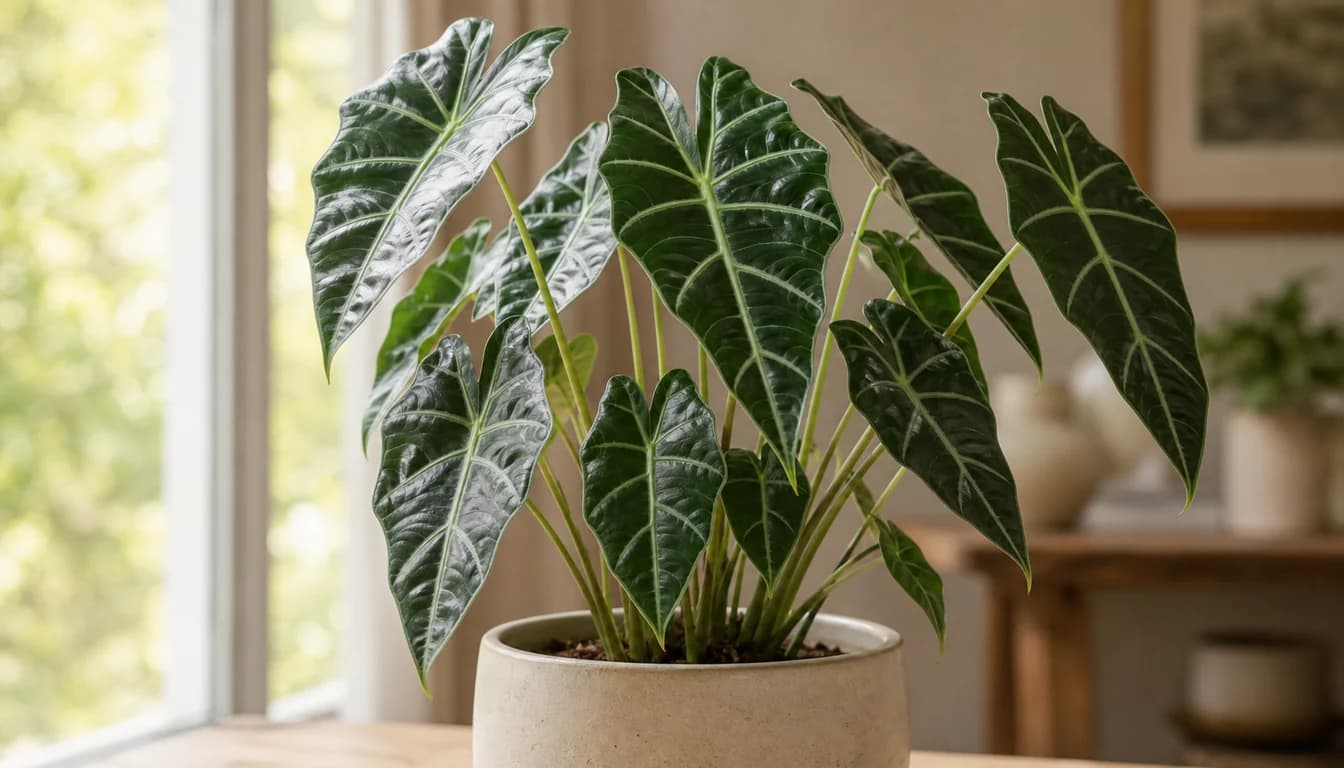
Alocasia
Large, arrow-shaped leaves and strong veins make Alocasia a centerpiece houseplant. It likes bright, warm, humid spots and dislikes cold drafts and soggy soil.
 Houseplants
Peperomia Watermelon
Watermelon Peperomia is a compact, pet-safe plant grown for round striped leaves and shallow roots that rot if the pot stays wet.
 Houseplants
African Violet
African Violet is a windowsill bloomer that rewards steady, small-pot care. Keep water out of the crown, give bright indirect light, and feed lightly so the
quiz
Frequently Asked Questions
How do I get my Anthurium to bloom again indoors?expand_more
Keep light bright and indirect, feed lightly during active growth, and avoid soggy soil. A warm room around 70-80°F with steady humidity and a chunky, well-draining mix usually brings new spathes within a few months.
Why are my Anthurium leaves turning brown on the edges?expand_more
Brown edges usually point to low humidity, salt buildup from fertilizer, or chronic underwatering. Raise humidity, flush the pot with clean water, and check that the top 1-2 inches of soil do not stay bone dry for long.
Can Anthurium grow outside year-round?expand_more
You can grow Anthurium outdoors all year only in Zone 10-12, in full shade or dappled light. In cooler climates, treat it as a houseplant and only move it outside in summer when nights stay above 60°F.
Can I grow Anthurium outdoors in my climate?expand_more
These plants only survive outdoors year-round in frost-free areas roughly matching Zone 10-12. In cooler zones, treat them as indoor plants and move them outside only in warm, shaded spots during summer.
Why did my Anthurium stop blooming?expand_more
Lack of bright, indirect light and low fertilizer are the usual reasons. Move it closer to a bright window, avoid direct midday sun, and feed lightly during spring and summer with a balanced houseplant fertilizer.
Is Anthurium good for low light rooms?expand_more
It tolerates medium light but blooms less in dim rooms. For truly low light areas, choose tougher foliage plants like ZZ Plant or shade-tolerant snake plants and keep Anthurium nearer a bright window.
menu_book
Sources & References
- 1.University of Florida IFAS Extension – Anthurium Production Guideopen_in_new
- 2.Royal Horticultural Society – Anthurium Growing Adviceopen_in_new
- 3.Missouri Botanical Garden – Anthurium andraeanum Plant Finderopen_in_new
- 4.University of Florida IFAS Extension, Anthurium Production Guideopen_in_new
- 5.Royal Horticultural Society, Anthurium Growing Guideopen_in_new
- 6.ASPCA, Toxic and Non-Toxic Plants Listopen_in_new
- 7.University of Hawaii Cooperative Extension, Anthurium Culture Notesopen_in_new