verifiedSource Reviewed
Prayer Plant (Maranta leuconeura) Care Indoors
Maranta leuconeura
Family: Marantaceae
wb_sunnyLight
Bright to medium indirect light
water_dropWater
Keep evenly moist, never soggy
heightHeight
8-12 inches tall
publicZone
USDA Zone 10-12 outdoors; houseplant elsewhere
petsPet Safety
Pet Safe
airAir Quality
Air Quality Note

Native Region
Tropical Brazil
self_improvementLeaf Movement Is Normal; Edge Damage Is the Message
The nightly lift is not a symptom. Prayer Plant folds its leaves as light changes, then opens them again when the room brightens.
Crisp margins tell a different story. Thin patterned leaves lose moisture fast, so brown edges often point to dry air, uneven watering, mineral-heavy water, or light that is too sharp.
lightbulbWatch the edge, not the pose
A moving plant with clean edges is usually fine. A still plant with crispy edges needs a care check even if the soil looks acceptable.
This separates it from Calathea Orbifolia, where large round leaves show damage as broad patches. Prayer Plant usually reports trouble first along the fine leaf margins.
palettePick Pattern by Room Light
Start with the pattern you want to see from normal standing height; tiny label differences matter less than whether the room can keep that pattern clear.
infoPattern follows the room
Red-veined and lemon-lime forms do not read the same in a room. Darker patterned plants tolerate a little less brightness, while pale or high-contrast leaves look better with steadier filtered light.
Use the table as a room-fit filter after that first visual choice, because the same cultivar can look sharp in one window and washed out in another.
Red-veined typesBest where the room is bright but not sunny
Lemon-lime typesNeed enough light to keep the pale markings clean
Mixed nursery potsBuy only if each crown looks firm and evenly colored
Choose a full pot with several active crowns. A single weak crown can survive, but it leaves little room for division or recovery after edge damage.
If your main goal is a tiny terrarium-like plant with bright veins, Nerve Plant owns that smaller, thirstier niche.
Guide — See AlsoAir Purifying Plants for Cleaner Indoor AirLearn how to pick, place, and care for air purifying plants so they help your indoor air instead of just looking pretty.
chevron_rightfilter_vintageFilter the Window Before It Touches the Pattern
Soft light keeps the pattern sharp. Place Prayer Plant in bright to medium indirect light, such as an east window, a bright room set back from glass, or a window softened by a sheer curtain.
Too little light makes new growth smaller and the pattern dull. Too much direct sun bleaches the leaf surface and makes edges dry faster than roots can refill them.
A practical test is shadow quality. If your hand casts a hard shadow on the leaves at midday, the plant needs more filtering.
If you are choosing a room before buying plants, best indoor plants by room helps separate low-light survivors from plants that mainly want filtered brightness.
infoLight goal
You are not trying to push fast vertical growth. You are trying to keep the leaf surface hydrated enough that the pattern stays flat and clean.
Email Updates
Join the KnowTheYard update list
Zone-specific advice, seasonal reminders, and new plant guides — no filler.
water_dropKeep Moisture Even Without Wetting the Crown
Even moisture matters more than heavy watering. Water when the top layer just begins to dry, then drain the pot well so the shallow roots get air again.
- check_circleTop half-inch barely dry: water soon.
- check_circleLeaves folded during the day plus dry mix: water now.
- check_circleHeavy pot plus yellowing lower leaves: wait and improve drainage.
Pour around the soil, not into the center of the crowns. Wet crowns in a dim room can stay damp long enough to invite rot.
The houseplant watering frequency guide gives the broader rhythm, but Prayer Plant needs closer attention than tougher foliage plants.
Compared with ZZ Plant, this plant reacts sooner because the leaves are thin and the roots stay shallow.
Guide — See AlsoBest Herbs to Grow Indoors for Real Harvests, Not Spindly PotsChoose indoor herbs that can actually produce in your light, temperature, and container setup, then match each one to th
chevron_right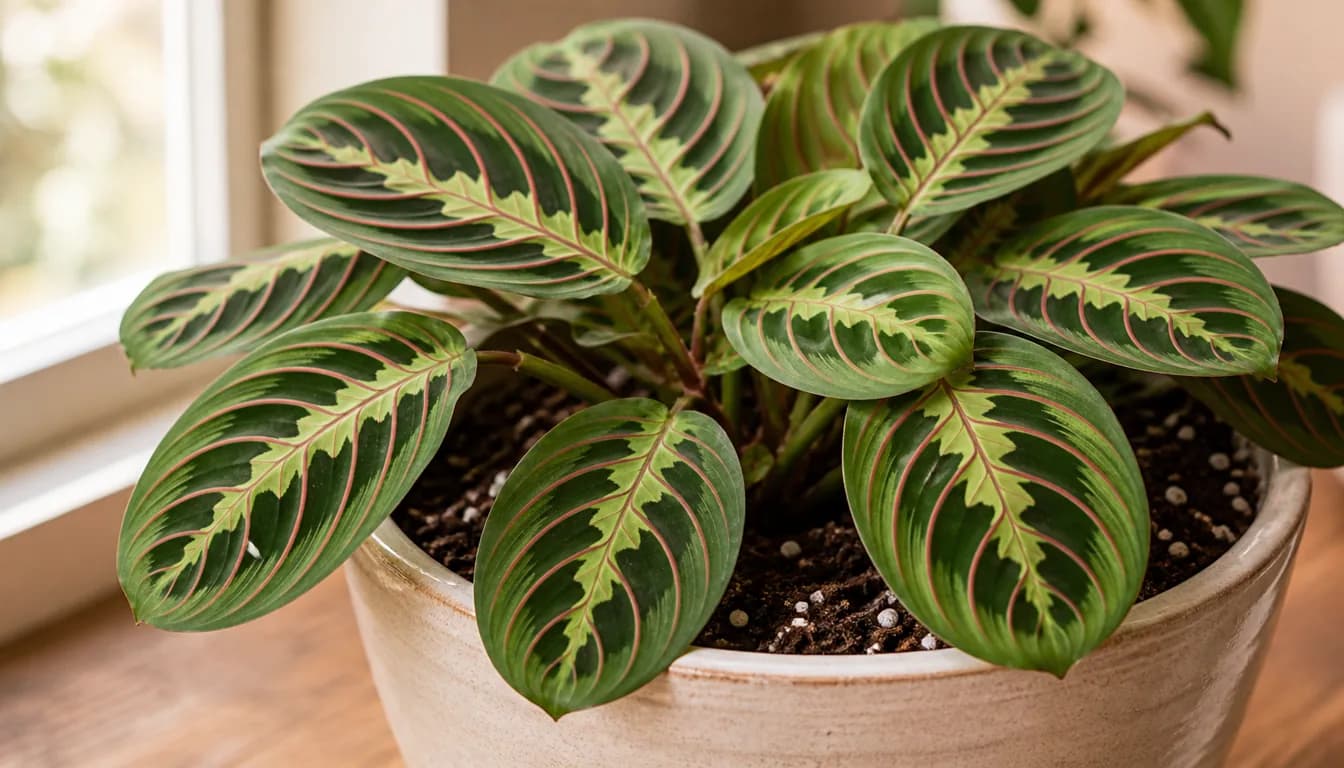
scienceUse Clean Water and a Light Mix for the Edges
Brown tips often start with water quality. If your tap water is hard, chlorinated, or salty, let it sit overnight, use filtered water, or switch to rainwater when available.
The soil mix should hold moisture without turning heavy. Use indoor potting mix with extra perlite and fine bark, then keep the pot only slightly larger than the root mass.
Clean water will not fix soggy soil, and airy soil will not fix mineral burn. Treat those as two separate checks so you do not keep changing the wrong variable.
A pot that is too large stays wet at the bottom while the upper roots still act dry. That mismatch creates the classic cycle of crispy edges and yellow older leaves.
Water clueBrown tips on many leaves despite even watering
Mix clueSoil stays wet for days after watering
Pot clueWide empty soil ring around a small crown
call_splitDivide Crowns, Do Not Root Single Leaves
Propagation should wait until the pot has more than one real crown; a full-looking leaf cluster without roots is not enough.
warningLeaves do not root into plants
A leaf cutting will not make a new Prayer Plant. Propagation works by division because each new plant needs roots and a growing crown.
Wait until the pot has several natural clumps. Then separate a small crown with its own roots during warm active growth, keeping the cut as gentle as possible.
warningDo not over-divide
Tiny divisions dry out quickly. Leave at least a few leaves and a real root bundle on each piece.
After division, keep light soft and moisture steady while roots settle. Skip fertilizer until new leaves show that the plant is growing again.
Guide — See AlsoBest Time to Water Indoor Plants for Healthy GrowthLearn exactly when to water indoor plants during the day, how timing changes by season and light level, and how to avoid
chevron_rightbug_reportDiagnose Edges Before You Blame Pests
Most ugly leaves start as water-air-light mismatch, not insects. Check the pattern of damage before you spray.
Spider mites make fine pale dots and webbing on the underside. Brown tips from dry air look cleaner and usually start at the margin instead of the whole leaf surface.
- fiber_manual_recordCalathea brown tips is a useful comparison when the edge burns but the leaf surface stays clean.
- fiber_manual_recordNerve Plant brown edges helps with small thin-leaf plants that react fast to dry air.
- fiber_manual_recordSticky residue or cottony clusters point away from humidity and toward pests.
Clean leaves with a damp cloth before treatment. The undersides matter because mites often start there while the top still looks patterned.
ac_unitWinter Air Changes the Leaf Surface
Heated winter rooms are the hard season; light drops, air dries, and water evaporates from the leaf edge while roots use water more slowly.
Move the plant away from vents, group it with other humidity-loving plants, and keep the pot on a tray that raises humidity without letting roots sit in water.
A bright bathroom can help if it has a real window. A dark humid room keeps leaves damp without giving them enough energy to grow cleanly.
Do not chase winter crisping with fertilizer. Feed lightly only when new leaves are opening in spring and summer.
lightbulbWinter target
Keep the plant steady, not perfect. One older leaf with brown edges matters less than a crown that keeps making clean new growth.
petsPet-Safe Still Needs a Stable Spot
Prayer Plant is usually a good pick for homes with cats and dogs because it is commonly listed as non-toxic.
Use a wide cachepot, a plant stand away from traffic, or a bright bathroom shelf if humidity is better there. For a broader pet-safe comparison, Snake Plant vs Aloe Vera shows why toxicity differs across common indoor plants.
eco
Keep Exploring
Related Plants
 Houseplants
Monstera Adansonii
Monstera adansonii is the small Swiss cheese vine with real holes in the leaves. Decide whether you want it to trail or climb first; that choice changes lig
 Houseplants
Yucca
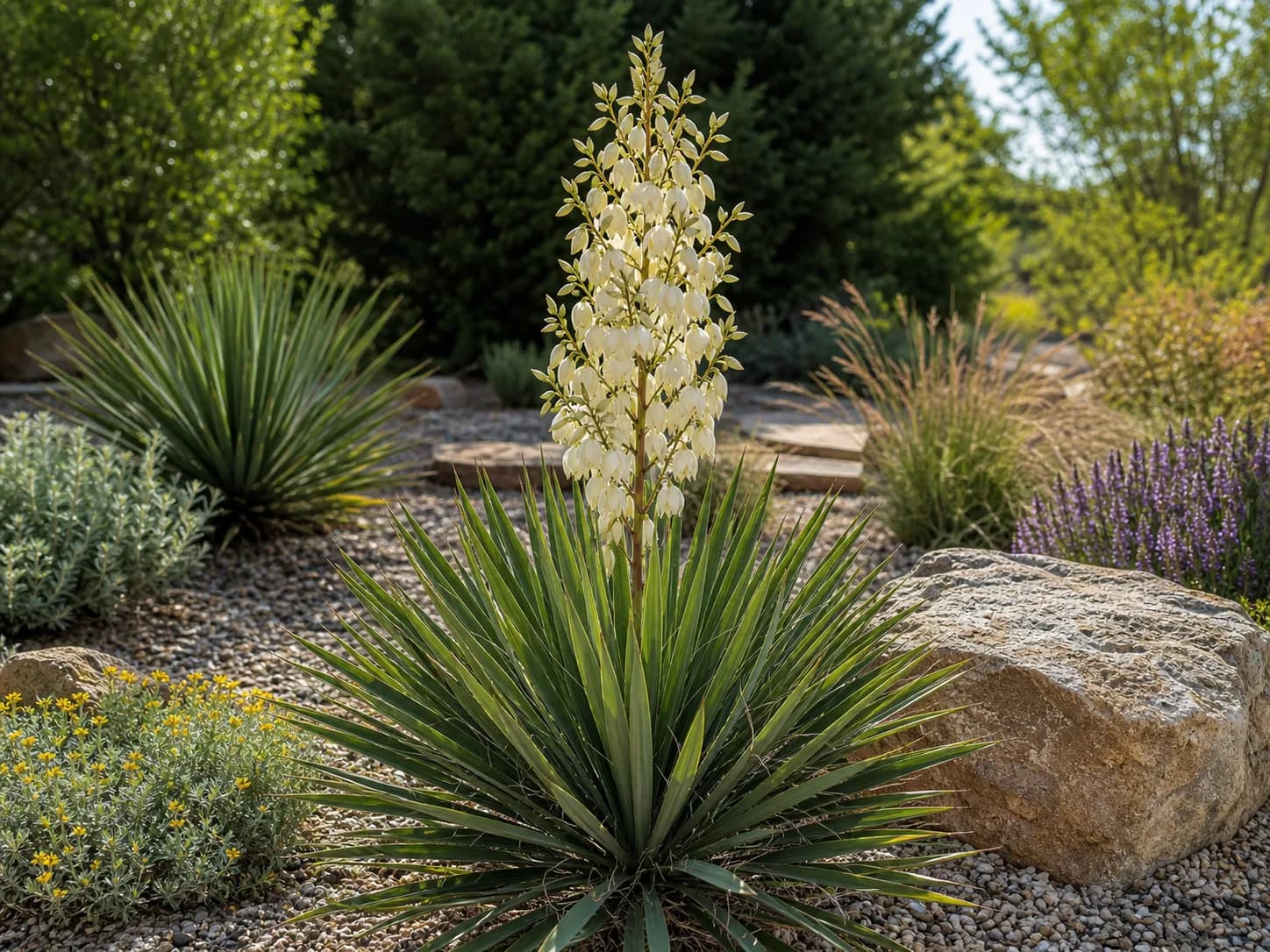
Yucca Cane is a dry-room indoor tree with thick canes, sword-like leaves, and a strong need for bright light. Good care means treating it like a sun-loving
 Houseplants
Peperomia
Peperomia is a compact houseplant group for desks and shelves, but its care depends on small roots and thick leaves. Keep the pot modest, the light bright b
quiz
Frequently Asked Questions
Why do Prayer Plant leaves move at night?expand_more
The movement is normal. The leaves lift and fold as light changes, then open again when the room brightens.
Why are the edges turning brown?expand_more
Brown edges usually mean dry air, uneven moisture, hard water, or light that is too direct. Check those before treating for pests.
Can Prayer Plant grow in low light?expand_more
It can tolerate medium light, but very low light makes the pattern dull and slows new leaves.
Can I propagate Prayer Plant from a leaf?expand_more
No. Divide a rooted crown instead; a single leaf will not grow into a new plant.
Is Prayer Plant pet safe?expand_more
Yes, it is commonly treated as non-toxic to cats and dogs, but keep the pot stable so pets do not damage the shallow stems.
menu_book
Sources & References
- 1.Maranta leuconeura, Missouri Botanical Garden Plant Finderopen_in_new
- 2.Ctenanthe, Calathea, and Maranta Care Indoors, University of Florida IFAS Extensionopen_in_new
- 3.Houseplants: Proper Care and Management, Clemson Cooperative Extensionopen_in_new
- 4.Maranta leuconeura, NC State Extension Gardener Plant Toolboxopen_in_new
- 5.Maranta leuconeura, University of Florida IFAS Gardening Solutionsopen_in_new
- 6.Marantaceae, Royal Horticultural Society plant care adviceopen_in_new