verifiedSource Reviewed
Spider Plant
Chlorophytum comosum
Family: Asparagaceae
wb_sunnyLight
Low to bright indirect light; tolerates some direct morning sun
water_dropWater
Moderate; let top inch dry between waterings
heightHeight
1-2 ft foliage; up to 3 ft with hanging runners
publicZone
Outdoors in Zone 9-11; indoors anywhere
petsPet Safety
Pet Safe
airAir Quality
Air Quality Note

Native Region
South Africa (tropical and southern Africa)
ecoGrow the Crown Before You Keep Every Baby
The center crown decides whether Spider Plant looks full or tired. A healthy crown sends out arching striped leaves first, then runners with small plantlets after the plant has enough light and root strength.
Do not let the babies become the whole project. Too many runners can pull energy from a small parent plant, especially in a dry basket or a dim room.
- check_circleFirm crown with new center leaves: keep normal care steady.
- check_circleLong runners but pale parent leaves: give better light before keeping more babies.
- check_circleSoft crown or sour soil: pause propagation and check the root ball.
This page is different from Pothos. Spider Plant is not a vine; it is a crown plant that throws plantlets from runners.
A crowded parent can still look good, but it will not restart well if the crown has already softened. Save the parent before you save every runner.
local_floristPick Stripes by the Room, Not by the Label
The common choice is not rare versus basic. It is where the white stripe sits and how much light the room can provide.
VittatumWhite center stripe; bright and easy to read from a shelf
VariegatumWhite leaf edges; a clean basket look with strong green centers
Solid greenLess common indoors, but tougher in lower light
If the room is very dim and you do not need runners, Cast Iron Plant is a better low-light bet.
Guide — See AlsoAir Purifying Plants for Cleaner Indoor AirLearn how to pick, place, and care for air purifying plants so they help your indoor air instead of just looking pretty.
chevron_rightwb_sunnyUse Light to Earn Runners
Spider Plant survives in low light, but runners need bright indirect light. A plant in a dim hallway may stay alive for years and still make few babies.
Morning sun is useful if the leaves do not bleach. Hot afternoon sun can fade the stripes and crisp the tips before the plant gains anything.
A hanging plant near an east window usually gives the best balance: enough light for runners, but not enough heat to scorch the arching leaves.
lightbulbRunner Light Rule
Move the basket brighter when the crown is healthy but runners are short or missing.
If you want low-light survival without the runner goal, ZZ Plant is easier to place.
Email Updates
Join the KnowTheYard update list
Zone-specific advice, seasonal reminders, and new plant guides — no filler.
water_dropRead Tips, Crown, and Pot Weight Separately
Water when the top inch dries and the pot feels lighter. The goal is a damp root zone that never leaves the crown sitting wet.
warningDo Not Chase Every Brown Tip
Brown tips can come from dry air, mineral-heavy water, fertilizer, or old damage. More water is not always the fix.
If you also grow Peace Lily, do not copy its dramatic wilt signal. Spider Plant should not collapse before you water.
Guide — See AlsoBest Herbs to Grow Indoors for Real Harvests, Not Spindly PotsChoose indoor herbs that can actually produce in your light, temperature, and container setup, then match each one to th
chevron_right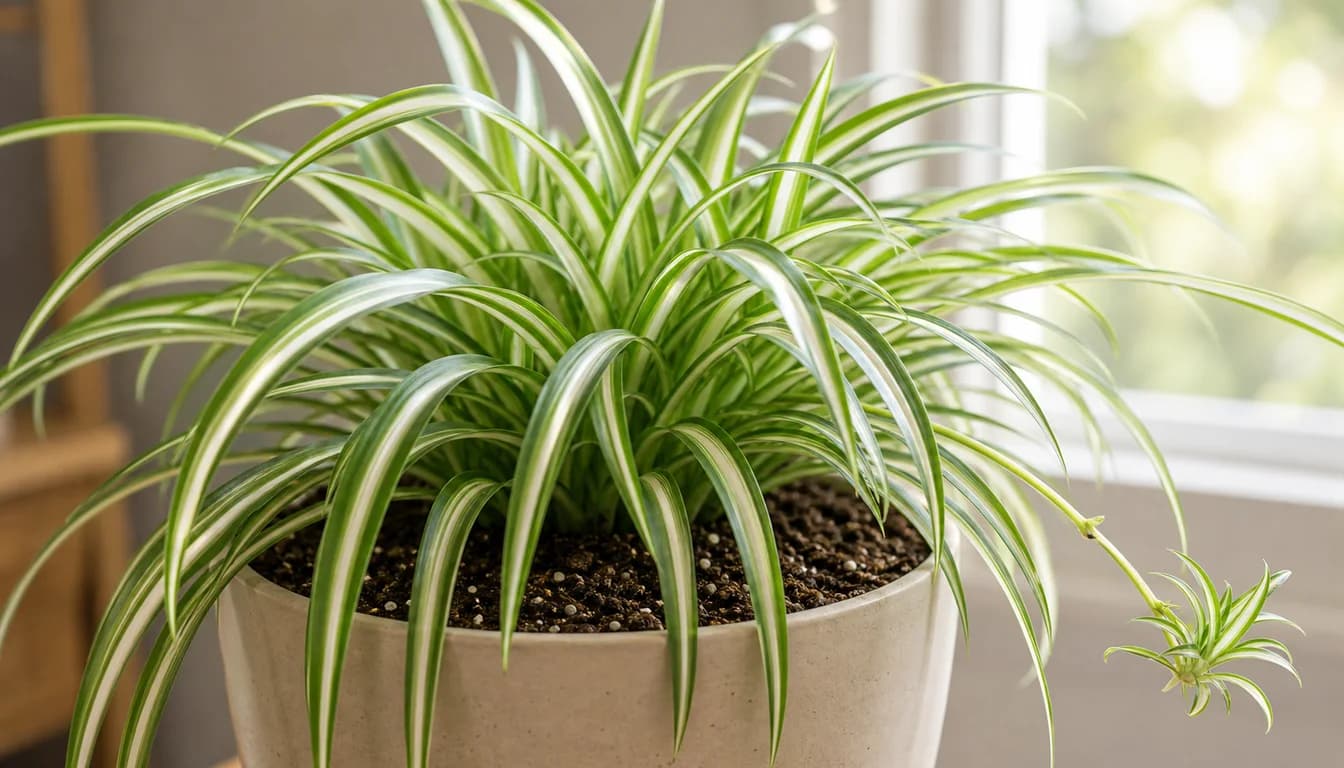
compostKeep the Root Ball Snug Enough to Flower
A slightly snug pot can help Spider Plant send out runners. A huge wet pot usually makes leaves soft before it makes more babies.
Use a regular indoor mix with perlite. Repot when roots circle tightly, water runs straight through, or the crown lifts out of the pot.
- fiber_manual_recordChoose a pot with drainage holes.
- fiber_manual_recordMove up one pot size, not three.
- fiber_manual_recordKeep the crown level with the soil surface.
For another crown plant where moisture at the base matters, compare Prayer Plant.
content_cutRoot Babies When They Have Their Own Nubs
The easiest baby is already trying to root. Look for small root nubs at the base of the plantlet before you cut it from the runner.
You can root plantlets in water for a short show-and-tell, but soil gives the new plant a cleaner start. Pin the baby onto moist mix and cut the runner after it grips.
FastestPin a rooted baby into soil while still attached
Cleanest giftCut a plantlet with nubs and pot it in a small cup
Weakest choiceTiny baby with no nubs, cut too early
If you want a plant that shares by pups from the soil instead of runners, Chinese Money Plant has a different rhythm.
Keep one or two strong babies on the parent if you want the hanging look. Remove extras when the parent starts to flatten or yellow at the center.
Guide — See AlsoBest Indoor Plants for Every Room and Light LevelA practical guide to choosing the best indoor plants for your home, covering beginner-friendly picks, low light champion
chevron_rightpest_controlFix Leaf Tips Before You Hunt for Bugs
Brown tips are more common than serious pests. Check water quality, dry heat, and fertilizer first if the plant still has firm new leaves.
Pests usually hide where leaves fold at the crown or where plantlets crowd a runner. Wipe dust away so you can see scale, mites, or mealybugs early.
A pale plant with sticky spots needs pest work. A firm plant with dry brown points usually needs cleaner water or calmer air.
calendar_monthUse Spring for Babies, Winter for Holding Shape
Spring and early summer are the best months to root plantlets because light and warmth help the crown replace energy quickly.
In winter, keep the plant a little drier and stop pushing new babies. A cool window can slow growth even when the plant still looks green.
If you want a pet-safe plant that keeps a steadier shape through winter, Parlor Palm is slower but less runner-driven.
Guide — See AlsoHow to Choose Houseplants That Actually Fit Your SpaceChoose houseplants by matching light, watering style, pet safety, and room size before you fall for leaf color or pot st
chevron_rightpetsPet-Safe Does Not Mean Chew-Proof
Spider Plant is pet-safe, which is why many homes choose it over Ti Plant. The practical problem is chewing, not poisoning.
Cats may tug the runners down. Hang the pot high enough that plantlets do not become toys, especially after you water and the basket gets heavier.
For another pet-safe display plant that stays off the floor, Staghorn Fern solves the problem by moving the plant onto a wall.
eco
Keep Exploring
Related Plants
 Houseplants
Croton
Croton is a color-first houseplant. Bright light, warmth, and steady moisture keep the leaf pattern strong; sudden changes cause most indoor leaf drop.
 Houseplants
Lucky Bamboo
Lucky Bamboo is a tough, water-tolerant dracaena that handles dim corners, office air, and forgetful watering better than most houseplants. With the right l
 Houseplants
Bromeliad
Bromeliads are colorful rosette-forming houseplants that hold water in a central cup instead of relying on constantly wet soil. They thrive in bright, filte
quiz
Frequently Asked Questions
How often should I water Spider Plant?expand_more
Water when the top inch dries and the pot feels lighter. In bright rooms this may be weekly; in winter it can take longer.
Why does my Spider Plant have brown tips?expand_more
Brown tips often come from mineral-heavy water, dry air, too much fertilizer, or old damage. Check those before adding more water.
When can I cut off spider plant babies?expand_more
Cut or pin plantlets once they have small root nubs. Tiny babies without nubs are slower to establish.
Is Spider Plant safe for pets?expand_more
Yes, it is considered pet-safe, but chewing can still damage the plant and pull down hanging runners.
Why is my Spider Plant not making babies?expand_more
It usually needs brighter indirect light, a stronger crown, or a slightly snugger root ball before it spends energy on runners.
menu_book