verifiedSource Reviewed
Jade Plant: Build a Small Tree, Not a Soft Succulent Bush
Crassula ovata
Family: Crassulaceae
wb_sunnyLight
Bright indirect light to direct sun after acclimation
water_dropWater
Low; water deeply only after the mix dries
heightHeight
2-5 ft indoors with age and pruning
publicZone
Outdoors in Zones 10-11; indoors anywhere

Native Region
South Africa (Eastern Cape and KwaZulu-Natal)
account_treeGrow the Trunk Before You Chase More Leaves
The main job with Jade Plant is structure. A good plant is not just a pile of thick leaves; it is a slow tree-form succulent with a trunk, branch angles, and enough light to keep new growth compact.
That makes this page different from Donkey Tail. Both store water, but Jade Plant has to hold a woody frame. Weak indoor light makes long soft stems that cannot support the leaf weight.
Start by deciding whether you want a single trunk, a low branching shrub, or a bonsai-like specimen. That choice changes how much you prune and how much lean you tolerate.
Best young plantFirm trunk, short gaps between leaf pairs, no soft base
Weak young plantLong floppy stems, pale new leaves, or a loose wet pot
Main goalBright growth that thickens stems before the canopy gets heavy
wb_sunnyUse Bright Light to Keep Internodes Short
Jade Plant needs more light than many beginner plants. Bright windows build short internodes, firm leaves, and better branch strength. Low light keeps the plant alive but turns the tree shape weak.
Give bright indirect light with direct sun after a slow acclimation. If the plant came from a store shelf, move it into stronger sun over days or weeks so leaves do not scorch.
If your best room is dim, choose ZZ Plant instead. That plant owns low-light survival better than jade does.
Snake Plant is another better low-light choice. Jade Plant earns its space when the room can build a firm trunk.
- check_circleGood signal: new leaves are close together and stems stand firm.
- check_circleLow-light signal: long gaps appear between leaf pairs.
- check_circleSun-stress signal: leaves bleach or turn dry on the window side.
- check_circleRotation signal: the trunk leans toward the glass.
Guide — See AlsoAir Purifying Plants for Cleaner Indoor AirLearn how to pick, place, and care for air purifying plants so they help your indoor air instead of just looking pretty.
chevron_rightwater_dropWater for Firm Leaves, Not Fast Growth
A healthy Jade Plant should feel firm, not swollen and soft. Water deeply after the mix is dry through the root zone, then let air return to the roots. Constant moisture is the fastest way to turn a sturdy trunk into a soft one.
Use leaf feel and pot weight together. Slightly less plump leaves can mean the plant is ready for water. Yellow leaves on wet soil mean the plant needs drying time and root checks, not another drink.
For a broader symptom check, compare your plant with overwatering versus underwatering. On jade, the trunk base matters as much as the leaves.
warningA soft trunk is urgent
If the trunk or branch base feels mushy, stop watering and inspect roots. Leaf drop alone is less serious than a soft woody base.
Once the trunk is soft, the table below helps you decide whether the next move is watering, waiting, or root inspection.
Dry and readyLight pot, dry mix, leaves slightly less firm
Too wetHeavy pot, yellow leaves, soft base, or black roots
Winter ruleWater less often because light and growth slow together
Email Updates
Join the KnowTheYard update list
Zone-specific advice, seasonal reminders, and new plant guides — no filler.
potted_plantChoose a Pot That Can Hold the Canopy
Older Jade Plant branches get heavy. A light plastic pot may drain well but tip once the canopy leans. A heavy pot with a drainage hole gives the plant both air and balance.
Use a gritty, fast-draining houseplant or succulent mix. If you need to rebuild the root zone, the principles in best soil for houseplants matter more than a decorative top dressing.
Repot only one size up. A huge pot keeps wet mix around roots the plant has not filled, which is the opposite of what a dry-climate succulent wants indoors.
- 1Pick a stable pot with a drainage hole.
- 2Use a gritty mix that drains quickly after a full soak.
- 3Repot when roots fill the pot, not because the top looks large.
- 4Reset the plant upright before new roots lock in the lean.
Guide — See AlsoBest Herbs to Grow Indoors for Real Harvests, Not Spindly PotsChoose indoor herbs that can actually produce in your light, temperature, and container setup, then match each one to th
chevron_right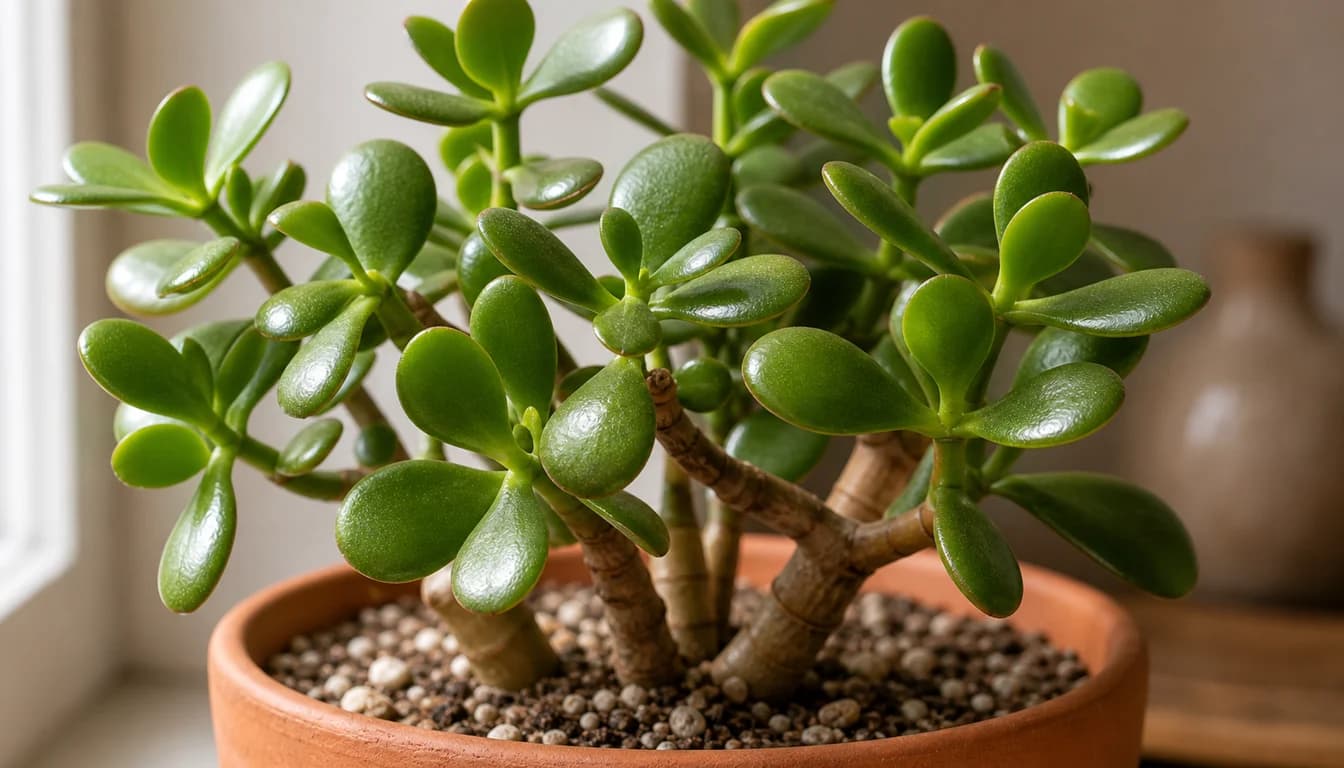
content_cutPrune for Branch Angles, Not Just Size
Jade Plant pruning should make the plant stronger. Cut above a leaf pair where you want two new shoots, and think about the future weight of those shoots before they grow.
Do not prune hard in weak light. The plant will replace compact growth with longer, softer growth. Bright light should come before shaping.
Healthy cuttings root well after the cut end dries and calluses. This is a cleaner propagation job than leaf-only starts because the cutting already has a small branch structure.
If the plant is old and uneven, use the same restraint you would with prune houseplants: remove a reasoned branch, then wait for the plant's response before cutting again.
pest_controlBest cutting
Firm stem section with several leaf pairs and no soft tissue.
pest_controlBest timing
Spring or early summer, when light is strong and roots form faster.
pest_controlBest goal
Shorter branch, better angle, or a new plant with structure.
troubleshootDiagnose Leaf Drop by Texture and Stem Feel
Leaf drop on Jade Plant can mean very different things. Dry crispy leaves, yellow wet leaves, and firm leaves knocked from a branch do not point to the same fix.
Mealybugs and scale often hide in branch crotches, where leaves meet woody stems. If you see cottony patches or sticky residue, use the careful steps from neem oil on houseplants and avoid soaking cold wet soil.
pest_controlFirm dropped leaves
Often handling, bumping, or a sudden move.
pest_controlYellow leaves plus wet soil
Often overwatering or slow drainage.
pest_controlWrinkled leaves plus dry mix
Usually a late watering signal.
pest_controlSoft trunk
Possible rot; inspect roots and cut above healthy tissue if needed.
Guide — See AlsoBest Indoor Plants for Every Room and Light LevelA practical guide to choosing the best indoor plants for your home, covering beginner-friendly picks, low light champion
chevron_rightac_unitTreat Winter as Rot Season
Winter is when many good Jade Plant habits fail. Light drops, growth slows, and the same watering rhythm that worked in July can keep roots wet for too long in January.
Move the plant to the brightest safe window, keep leaves off cold glass, and water only after the pot proves it has dried. Do not feed a plant that is resting in weak light.
Cold wet roots are more dangerous than a dry pause. A slightly thirsty jade can recover; a rotting trunk often cannot.
SpringPrune, take cuttings, and resume light feeding if growth is active
SummerUse strong light for compact growth and check pot weight often
FallReduce water as days shorten
WinterPrioritize bright light, dry roots, and cold protection
petsKeep Chewable Leaves Away From Pets
Jade Plant is not a pet-safe chew plant. Keep it away from cats and dogs, especially because the firm leaves are easy for curious pets to bite.
If you need a pet-safe succulent-like choice, Christmas Cactus is a better fit. If pet access is not an issue, jade earns its space by becoming a long-lived structural plant.
warningTreat fallen leaves as access
A dropped jade leaf on the floor is still plant material a pet can chew. Sweep up fallen leaves during pruning or repotting.
Guide — See AlsoHow to Propagate Rosemary From Cuttings at HomeStep-by-step guide on how to propagate rosemary from cuttings in water or soil, with timing, tools, and troubleshooting
chevron_righteco
Keep Exploring
Related Plants
 Houseplants
Orchid Phalaenopsis
Phalaenopsis Orchid is the beginner orchid because it blooms for months and asks for a different kind of care: read the roots, keep bark airy, and treat the
 Houseplants
African Violet
African Violet is a windowsill bloomer that rewards steady, small-pot care. Keep water out of the crown, give bright indirect light, and feed lightly so the
 Houseplants
Begonia Maculata
Begonia Maculata is the polka dot begonia — dark green, angel-wing shaped leaves splashed with silver dots on top and painted deep crimson underneath. It's
quiz
Frequently Asked Questions
How often should I water a Jade Plant?expand_more
Water after the potting mix dries and the pot feels light. Bright summer plants may need water more often than winter plants, but the dry-down rule matters more than a calendar.
Why is my Jade Plant dropping leaves?expand_more
Firm dropped leaves can come from handling or a sudden move. Yellow leaves with wet soil point to overwatering, while wrinkled leaves in dry soil usually mean the plant is thirsty.
Can Jade Plant grow in low light?expand_more
It can survive for a while, but it will stretch and lose its compact tree shape. Bright light is the main tool for short internodes and strong branches.
Is Jade Plant safe for cats and dogs?expand_more
No. Keep jade away from pets that chew plants, and clean up fallen leaves after pruning or repotting.
When should I prune Jade Plant?expand_more
Prune in spring or early summer when light is strong. Cut above a leaf pair to encourage branching, and avoid hard pruning in weak winter light.