verifiedSource Reviewed
Philodendron Brasil Trailing Houseplant
Philodendron hederaceum 'Brasil'
Family: Araceae
wb_sunnyLight
Bright indirect, tolerates medium
water_dropWater
Moderate, let top 1–2 inches dry
heightHeight
Trails or climbs 6–10 ft indoors with support
publicZone
Best indoors, hardy outdoors in Zone 10-12 only
airAir Quality
Air Quality Note

Native Region
Tropical Central and South America (cultivar selection)
The Lime Streaks Need Active Nodes
Philodendron Brasil is not just a green trailing vine. Its value is the lime streaking on new leaves, and that depends on light, pruning, and active nodes.
A long vine with fading leaves is still alive, but it is not showing the cultivar well. The care goal is bright new growth, not only more length.
Compared with plain heartleaf philodendron, Brasil needs a little more light and more selective pruning to keep color strong.
Know What Brasil Is Before You Compare It
Brasil is a variegated heartleaf philodendron. It trails or climbs like the green form, but the lime stripe can vary from leaf to leaf.
Do not compare it only with pothos. Philodendron vines often have softer leaves, thinner stems, and a different petiole shape.
BrasilGreen heart leaves with lime streaks; easy color vine.
Heartleaf philodendronPlain green and more shade tolerant.
Neon pothosSolid chartreuse leaves on a different vine.
Philodendron micansVelvety darker leaves; different texture goal.
Guide — See AlsoAir Purifying Plants for Cleaner Indoor AirLearn how to pick, place, and care for air purifying plants so they help your indoor air instead of just looking pretty.
chevron_rightPut Light on the Whole Vine, Not Just the Pot
Give Philodendron Brasil medium to bright indirect light. Low light makes new leaves smaller and can reduce the lime streaks.
A hanging vine often gets light at the crown while the lower stems hang in shade. That is why older runners can turn plain or sparse.
Prune weak green sections and move the plant brighter before the whole pot loses contrast. Strong morning light is useful; harsh afternoon sun can scar leaves.
lightbulbColor check
If color is the main reason you bought it, compare placement with Neon pothos. Both need more than a dark corner to stay bright.
Email Updates
Join the KnowTheYard update list
Zone-specific advice, seasonal reminders, and new plant guides — no filler.
Water for Soft Vines, Not Thick Storage Leaves
Let the top inch or two dry before watering. Brasil is forgiving, but it does not store water like a succulent or thick-leaved Peperomia.
Yellow leaves near the base can be age, wet roots, or low light. Check whether the newest growth is strong before blaming water alone.
Use houseplant watering frequency as a starting rhythm, then change it for light, pot size, and vine length.
infoRead new growth first
Weak new leaves tell you more than one old yellow leaf. New growth owns the diagnosis.
Guide — See AlsoBest Herbs to Grow Indoors for Real Harvests, Not Spindly PotsChoose indoor herbs that can actually produce in your light, temperature, and container setup, then match each one to th
chevron_right
Give Nodes Air and a Pot That Drains
A light indoor aroid mix works well: potting soil with perlite and a little bark if the pot stays wet. Roots need oxygen around the node zone.
Repot when roots circle hard or watering no longer soaks evenly. Move up one size, then let the vine rebuild before heavy pruning.
Trail from shelfBest for fast length and casual shape.
Climb a poleBest for larger leaves and shorter spaces between nodes.
Small hanging potDries faster and needs more frequent checks.
Use Bright Nodes to Rebuild the Crown
Every cutting needs a node. Cut below a healthy node with a bright leaf, then root it in water or airy mix.
- 1Choose a bright, firm vine tip.
- 2Cut below the node.
- 3Root until several roots branch.
- 4Plant cuttings near the crown for fullness.
Do not propagate only the dullest green runner unless you want more dull growth. Bright sections give the new pot a better start.
If you want a side-by-side vine decision, pothos vs philodendron explains the bigger difference before you collect more vines.
Guide — See AlsoBest Indoor Plants for Every Room and Light LevelA practical guide to choosing the best indoor plants for your home, covering beginner-friendly picks, low light champion
chevron_rightCheck Soft New Leaves for Early Damage
Tender Brasil leaves show pest damage early. Thrips can scar new leaves, and mealybugs can hide at nodes where vines overlap.
Dust also dulls the lime streaks. Wipe leaves gently so you can see whether marks are dirt, old damage, or active feeding.
- fiber_manual_recordDistorted new leaves: inspect for thrips.
- fiber_manual_recordWhite cotton at nodes: mealybugs.
- fiber_manual_recordYellowing plus wet pot: check roots before spraying.
Prune During Growth, Wait During Winter
Spring and summer are for pruning, rooting cuttings, and light feeding with indoor plant fertilizer.
Winter is slower. Keep the vine bright and warm, but do not force long runners with heavy fertilizer in weak light.
Use the indoor plant care calendar to time repotting and pruning when the vine can actually replace growth.
Keep Trailing Vines Above Pets
Like other philodendrons, Brasil can irritate pets that chew leaves. Trim long vines before they become toys.
For pet-heavy rooms, choose spider plant. For a color vine where pets cannot reach, Philodendron Brasil gives more pattern than plain green heartleaf.
eco
Keep Exploring
Related Plants
 Houseplants
Peperomia Watermelon
Watermelon Peperomia is a compact, pet-safe plant grown for round striped leaves and shallow roots that rot if the pot stays wet.
 Houseplants
Rattlesnake Plant
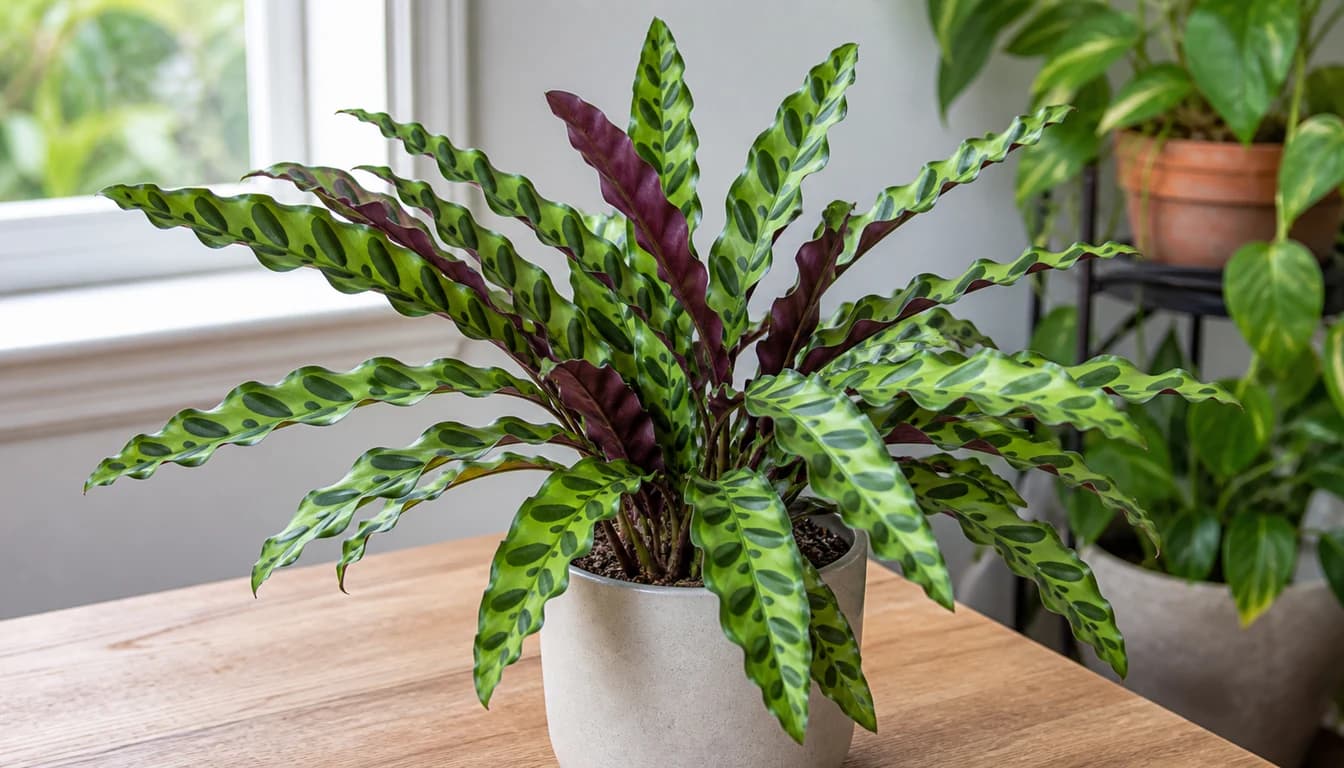
Rattlesnake Plant is a Calathea with long wavy leaves, dark oval markings, and purple undersides. Its narrow leaves roll, crisp, and speckle quickly when li
 Houseplants
String Of Turtles
String of Turtles (Peperomia prostrata) is the trailing succulent with leaves shaped like tiny turtle shells — each leaf is a disc no bigger than a fingerna
quiz
Frequently Asked Questions
Why is my Philodendron Brasil losing variegation?expand_more
It usually needs brighter indirect light or pruning back to brighter growth. Low-light vines often make duller leaves.
Is Philodendron Brasil the same as pothos?expand_more
No. It is a variegated heartleaf philodendron, with softer leaves and different vine structure than pothos.
How do I make Philodendron Brasil fuller?expand_more
Root bright node cuttings and plant them back near the crown. Prune pale runners during active growth.
menu_book
Sources & References
- 1.Philodendron hederaceum, Missouri Botanical Garden Plant Finderopen_in_new
- 2.Growing Indoor Philodendrons, University of Florida IFAS Extensionopen_in_new
- 3.Houseplants: Selection and Care, University of Minnesota Extensionopen_in_new
- 4.University of Florida IFAS Extension, Philodendron hederaceum species profileopen_in_new
- 5.ASPCA Toxic and Non-Toxic Plants List, Philodendronopen_in_new
- 6.Royal Horticultural Society, Philodendron cultivation and careopen_in_new