verifiedSource Reviewed
Monstera Adansonii Swiss Cheese Vine
Monstera adansonii
Family: Araceae
wb_sunnyLight
Bright, indirect light; tolerates medium
water_dropWater
Moderate, keep top inch just drying between waterings
heightHeight
Vines 3-10 ft long indoors with support
publicZone
Zone 10-12 outdoors only
airAir Quality
Air Quality Note

Native Region
Central and South America
The Holes Need a Vine With Energy
The holes on Monstera adansonii are not just decoration. They show best when the vine has enough light, steady moisture, and active nodes that can push stronger leaves.
A weak vine still makes leaves, but they shrink, stretch, and lose the bold Swiss cheese look. That is the main difference from a simple trailing shelf plant.
The answer comes early: grow it bright and give the nodes a job. Let it trail for a loose look; give it a pole when you want bigger leaves and tighter growth.
Pick a Small-Leaf Vine for the Space You Have
Choose Monstera adansonii when you want fenestrated leaves without the floor space of Monstera deliciosa. It suits shelves, small poles, and hanging baskets.
Avoid plants with long bare runners and tiny new leaves unless you want a rehab project. A good starter has several active tips and leaves with clean holes, not torn edges.
Do not buy by leaf holes alone. Check whether the pot has several rooted stems, because a single long vine takes longer to fill a shelf.
If you want a similar vine without the hole requirement, compare it with philodendron. If you want silver leaves instead, satin pothos owns that job better.
Trailing basketBest for shelves and hanging spots; leaves stay smaller.
Moss poleBest for larger leaves and shorter internodes.
Cutting potBest value if several rooted nodes are already growing.
Comparison — See AlsoMonstera Deliciosa vs Monstera Adansonii
chevron_rightLight Decides Leaf Size and Hole Count
Give the vine bright indirect light for compact growth. Low light creates long spaces between leaves and smaller holes.
Direct afternoon sun can mark the thin leaves with pale patches or brown spots. If that happens, move it back or add a sheer curtain before cutting the damaged leaf.
A grow light can work if it reaches the whole vine, not just the top of the pole. Trailing stems in shade will still thin out even when the pot looks bright from above.
For small apartments, this makes Monstera adansonii one of the better indoor plants only when the shelf or pole still gets light along the vine.
lightbulbCompare by leaf behavior
Pothos tolerates lower light with plain leaves. Monstera adansonii needs more light if you bought it for holes.
Email Updates
Join the KnowTheYard update list
Zone-specific advice, seasonal reminders, and new plant guides — no filler.
Keep Roots Evenly Moist, Not Heavy
Water when the top inch or two dries. The mix should not go dust dry for long, but it should never stay soggy around the nodes and fine roots.
Curling leaves can mean thirst, cold roots, or root damage. Check pot weight and soil feel before assuming the plant simply wants more water.
A young plant in a small pot may dry faster than a large floor monstera. Check by touch and pot weight, then use houseplant watering frequency only as a backup rhythm.
If brown spots spread after wet weeks, use monstera brown spots as a warning to inspect roots, drainage, and light together.
Guide — See AlsoAir Purifying Plants for Cleaner Indoor AirLearn how to pick, place, and care for air purifying plants so they help your indoor air instead of just looking pretty.
chevron_right
Give Nodes Air and Grip
A chunky aroid mix supports both roots and climbing nodes. Bark, perlite, and a little potting soil keep moisture even while leaving air spaces.
A moss pole changes the plant only if nodes touch it and stay slightly humid. A dry decorative pole beside the vine does not tell the plant to climb.
Best mixChunky indoor aroid mix with bark and perlite.
Best supportMoist pole, plank, or trellis close enough for nodes to attach.
Repot signRoots circle hard or water runs around a tight root ball.
Cut Below a Node, Then Wait for Root Points
Every cutting needs a node. A leaf blade without a node may stay green for a while, but it cannot become a new vine.
- 1Cut below a healthy node with one leaf attached.
- 2Place the node in water, moss, or airy mix.
- 3Keep it warm and bright but out of harsh sun.
- 4Pot it when roots branch instead of moving a single root too early.
If a cutting starts to rot, cut back to firm tissue and restart with cleaner water or a drier medium. Warmth matters more than a crowded jar of cuttings.
Cuttings from an actively growing vine root faster than tired winter pieces. Mark each cutting so the node sits in the rooting medium and the leaf stays above it.
Propagate leggy tips in spring or summer when the mother plant can refill. Cutting too hard in winter leaves bare stems for months.
Guide — See AlsoBest Herbs to Grow Indoors for Real Harvests, Not Spindly PotsChoose indoor herbs that can actually produce in your light, temperature, and container setup, then match each one to th
chevron_rightRead Spots, Curl, and Sticky Growth Separately
Thin leaves show trouble quickly. Brown patches after sun exposure are different from wet, spreading spots after overwatering.
Spider mites and thrips target tender new leaves. Check curled new growth and the back of leaves before the damage spreads down the vine.
- fiber_manual_recordSun marks: pale dry patches where light hits.
- fiber_manual_recordRoot stress: yellowing plus wet mix or sour smell.
- fiber_manual_recordPests: speckling, black dots, sticky areas, or distorted new leaves.
Train Hard in Spring, Slow Down in Winter
Spring is the best time to add a pole, prune long runners, and start cuttings. The plant has enough light to replace what you remove.
Feed lightly while new leaves open, then stop when growth slows. The indoor plant care calendar helps time pruning, feeding, and support work without forcing winter growth.
Winter care should be quieter. Water less often, stop heavy feeding, and keep the vine away from cold glass so leaves do not yellow from chilled roots.
infoBest training window
Train and prune during active growth. A winter chop can leave the vine sparse until light improves.
Guide — See AlsoWhat Does an Overwatered Plant Look Like (With Photos in Mind)Learn the real signs of overwatering, how they differ from underwatering, and what to check on leaves, stems, and soil b
chevron_rightKeep It Up High if Pets Chew Leaves
Like other aroids, Monstera adansonii can irritate mouths if pets chew it. Hang it high or train it up a pole where leaves are not dangling at pet level.
If you need a softer pet-friendly look, choose spider plant. For a bigger split-leaf statement, compare the buying decision before you choose a floor plant.
eco
Keep Exploring
Related Plants
 Houseplants
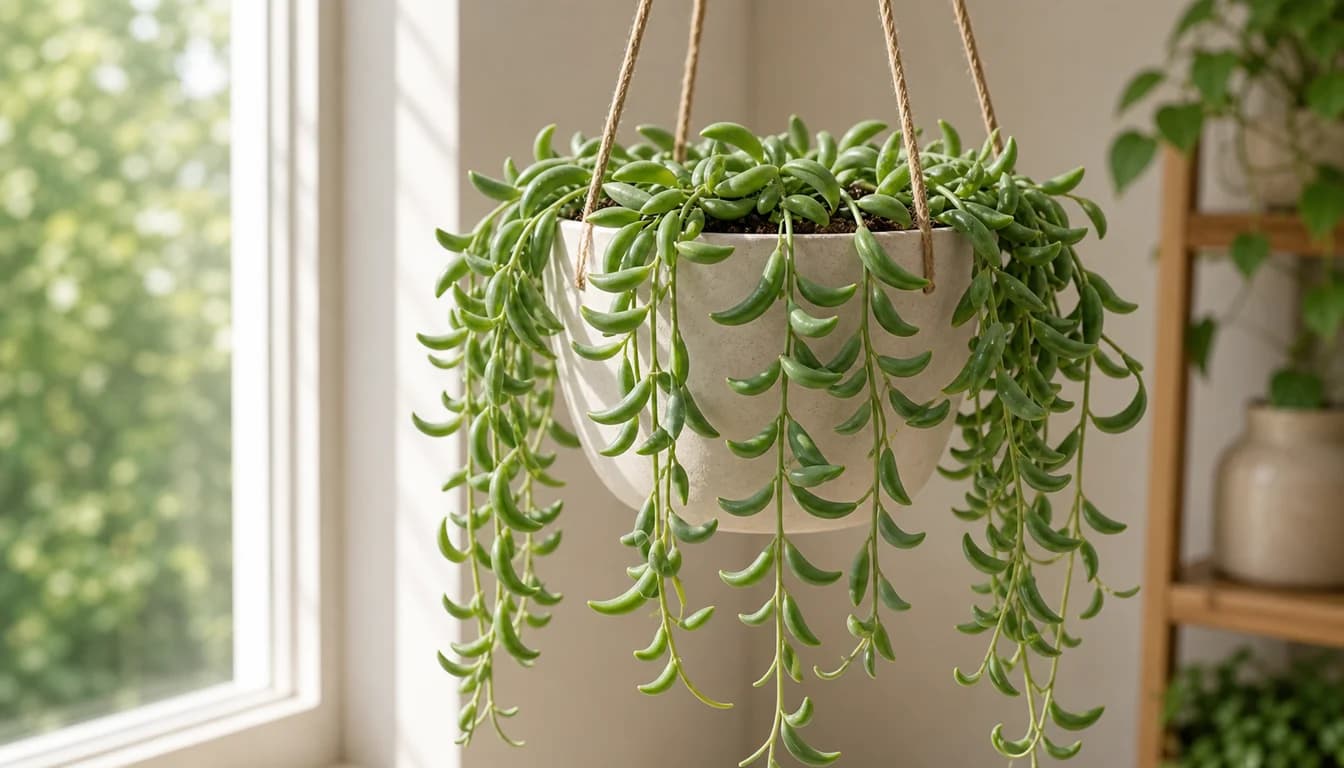
String Of Bananas
String of Bananas is a hanging succulent that shows water stress in its leaves before the soil looks dramatic. Grow it for plump, bright vines, not just lon
 Houseplants
Neon Pothos
Neon Pothos is the color-first pothos: its bright yellow-green leaves look best in medium to bright indirect light. Grow it like a durable vine, but judge s
 Houseplants
Peperomia Obtusifolia
Baby Rubber Plant (Peperomia obtusifolia) is a compact, thick-leaved houseplant with glossy dark green foliage that thrives on a light touch. Despite the common
quiz
Frequently Asked Questions
Does Monstera adansonii need a moss pole?expand_more
No, but a pole helps it climb and make stronger leaves. A trailing Monstera adansonii stays looser and usually smaller.
Why does my Monstera adansonii have no holes?expand_more
Young leaves, low light, or weak growth can reduce holes. Give brighter indirect light and steady care so new leaves have more energy.
Can I propagate Monstera adansonii from one leaf?expand_more
Only if that leaf has a node. A leaf blade without a node cannot grow a new vine.
menu_book
Sources & References
- 1.Monstera adansonii, Swiss Cheese Vineopen_in_new
- 2.Monstera, Swiss cheese plant growing adviceopen_in_new
- 3.Interior Plants: Selection, Care, and Managementopen_in_new
- 4.University of Florida IFAS Extension - Monstera adansonii and related aroidsopen_in_new
- 5.Royal Horticultural Society - Monstera growing guideopen_in_new
- 6.Missouri Botanical Garden - Monstera deliciosa and other Monstera species profileopen_in_new
- 7.ASPCA - Toxic and Non-Toxic Plants List (Monstera species)open_in_new
- 8.Clemson Cooperative Extension - Indoor Plants: Selection and Careopen_in_new