Shrubs & Bushes
KnowTheYard maintains a structured shrub directory for flowering shrubs, evergreen structure, privacy hedges, and foundation plantings. Each entry keeps mature size, light, hardiness, and care context tied to the published plant profile.
This directory is maintained as published profiles change. Whether you are building a hedge, softening a foundation bed, or adding seasonal bloom, use it as a practical starting point for shrub selection.
Getting Started with Shrubs
Start with mature size, bloom timing, privacy needs, pruning tolerance, and winter structure before choosing a shrub.

Mastering Shrub Pruning
Understand seasonal timing, apical dominance, and structural correction techniques.

Soil Nutrition Basics
Analyze pH levels, drainage capacity, and mycorrhizal associations for root health.

Correct Planting Depth
Prevent root girdling and collar rot by identifying the root flare properly.

Establishment Watering
Calculated irrigation schedules for the critical first three years of growth.
Trending Shrubs
Our editors highlight these species for their outstanding ornamental value and landscape versatility.
Head-to-Head Comparisons
Side-by-side guides comparing popular shrubs — care needs, costs, and best use cases.
 Arborvitae
 Juniper
VS
Arborvitae vs Juniper
Choose Arborvitae for dense vertical privacy and a cleaner screen silhouette. Choose Juniper when drought, lean soil, wind, and lower water use matter more than a uniform green wall.
Read Comparison arrow_forward Azalea
 Rhododendron
VS
Azalea vs Rhododendron
Choose Azalea for smaller spaces, lighter plant mass, and a broad cloud of spring color. Choose Rhododendron when you want larger evergreen presence, bigger flower trusses, and stronger woodland-scale structure.
Read Comparison arrow_forward Boxwood
 Privet
VS
Boxwood vs Privet
Choose Boxwood for formal structure, slower growth, and tighter pruning control. Choose Privet only when fast screening matters more than long-term maintenance, spread concerns, or a polished front-yard look.
Read Comparison arrow_forward Crepe Myrtle
 Lilac
LilacVS
Crepe Myrtle vs Lilac
Choose Crepe Myrtle for hot-climate bloom length and summer color. Choose Lilac when you have real winter chill and care more about fragrance and a classic spring flush than months of heat-season flowering.
Read Comparison arrow_forward HollyBoxwood
VS
Holly vs Boxwood
Choose Holly for taller screening, berries, and stronger winter presence. Choose Boxwood for clipped form, lower size, and a more controlled evergreen line where privacy is not the only job.
Read Comparison arrow_forwardPlanting for Purpose
Shrub selection depends on whether the planting needs privacy, seasonal flowers, evergreen structure, or a low-maintenance foundation layer.
fence
Privacy Hedges
Dense shrubs for screening, boundaries, and structure.
View Privacy Shrubs arrow_forwardlocal_florist
Flowering Shrubs
Shrubs selected for bloom season, color, and pollinator value.
View Flowering Shrubs arrow_forwardhome
Foundation Plantings
Compact shrubs that soften walls, paths, and front-yard beds.
View Foundation Shrubs arrow_forwardCore Shrub Database
Access detailed profiles for every species in our published index.
fact_check Source Reviewed
Arborvitae
Thuja occidentalis
USDA Zone 4–9
Arborvitae earns its keep when you need a living wall, not a loose mixed shrub. Pick it by mature width, winter exposure, deer pressure, and two-year watering access; nursery height matters less than the space the roots and lower foliage will need.
Pet SafeSource Reviewed
View Profile arrow_forward
fact_check Source Reviewed
Aucuba
Aucuba japonica
Zone 4-9 (needs winter protection at the coldest edge)
Aucuba is the shrub for bright shade with dry root competition. It keeps evergreen structure near north walls, porches, and tree-covered beds where hot sun would scorch the leaves and wet winter soil would damage roots.
Source Reviewed
View Profile arrow_forwardfact_check Source Reviewed
Azalea
Rhododendron spp.
USDA Zones 4-9
Most people plant azaleas for spring color, then spend years wondering why the shrubs look thin, sickly, or refuse to bloom; this profile gives you the simple soil, light, and watering tweaks that keep azalea shrubs dense, healthy, and covered in flowers from Zone 4-9.
Source Reviewed
View Profile arrow_forward
fact_check Source Reviewed
Barberry
Berberis thunbergii
USDA Zones 4-9
Barberry is a thorny color shrub with one non-negotiable first step: check local invasive rules before planting. If it is allowed where you live, use Barberry for sunny, dry, deer-heavy spots where the thorns and leaf color solve a real design problem.
Source Reviewed
View Profile arrow_forward
fact_check Source Reviewed
Beautyberry
Callicarpa americana
USDA Zones 4-9
Beautyberry is a fall-berry shrub, not a formal hedge. Grow Beautyberry where loose arching stems can carry purple fruit in view, give it 6 hours of sun where possible, and prune for new flowering wood after the winter display has done its job.
Pet SafeSource Reviewed
View Profile arrow_forward
fact_check Source Reviewed
Bottlebrush
Callistemon spp.
Zone 7-9 reliably, with protection in Zone 6
Bottlebrush is a sun-and-drainage shrub with a warm-climate bloom job. Grow Bottlebrush for red brush flowers and pollinator traffic only where full sun and sharp drainage can protect it from cold, wet roots and weak flowering.
Source Reviewed
View Profile arrow_forwardfact_check Source Reviewed
Boxwood
Buxus sempervirens
USDA Zones 4-9
Boxwood works when you need a small evergreen line that stays clipped, dense, and quiet year-round. It fails when the planting is treated like a fast privacy hedge; drainage, airflow, clean pruning, and cultivar size matter more than forcing it to grow quickly.
Source Reviewed
View Profile arrow_forward
fact_check Source Reviewed
Burning Bush
Euonymus alatus
Zone 4-9
Burning Bush is famous for red fall color, but the first decision is ecological, not ornamental. Check local invasive rules before planting; where it is allowed, site it for sun, mature width, and seed control instead of treating it like a harmless red accent.
Source Reviewed
View Profile arrow_forward
fact_check Source Reviewed
Butterfly Bush
Buddleja davidii
USDA Zones 4-9
Butterfly Bush earns a place when you want long summer flower panicles in hot sun, but it needs the right cultivar, hard pruning, drainage, and deadheading expectations. The real choice is nectar display plus management, not a set-and-forget pollinator fix.
Source Reviewed
View Profile arrow_forward
fact_check Source Reviewed
Camellia
Camellia japonica
Zone 4-9 with proper winter protection
Camellia is a cool-season flowering evergreen for sheltered acidic sites, not a dry-shade filler. It rewards morning light, steady root moisture, and wind protection; most bud drop and yellow leaves begin when those three jobs are ignored.
Source Reviewed
View Profile arrow_forwardfact_check Source Reviewed
Crepe Myrtle
Lagerstroemia indica
USDA Zones 4–9 (most 6–9)
Crepe Myrtle gives long summer bloom only when the plant is chosen by mature size and pruned with restraint. Full sun, good airflow, and light structural cuts matter more than the hard topping that ruins so many shrubs and small trees.
Pet SafeSource Reviewed
View Profile arrow_forward
fact_check Source Reviewed
Euonymus
Euonymus japonicus
Hardy in USDA Zones 4-9
Euonymus japonicus works as a clipped evergreen shrub only when you manage leaf color, airflow, and scale insects from the start. Treat it as a tidy structure plant, not as the same shrub as invasive Burning Bush or a fast privacy wall.
Source Reviewed
View Profile arrow_forward
fact_check Source Reviewed
Forsythia
Forsythia × intermedia
Zone 4-9
Forsythia is worth growing for one reason first: bright yellow flowers before the rest of the yard wakes up. Keep it sunny, give it room to arch, and prune right after bloom; otherwise the shrub becomes a green tangle with fewer flowers each spring.
Pet SafeSource Reviewed
View Profile arrow_forward
fact_check Source Reviewed
Gardenia
Gardenia jasminoides
Zone 4-9, often container-only in colder areas
Gardenia earns its space with fragrance, but it is not a forgiving background shrub. Plant it only where acidic soil, steady moisture, warm roots, and morning light can hold together; most yellow leaves and bud drop come from breaking that comfort zone.
Source Reviewed
View Profile arrow_forwardfact_check Source Reviewed
Holly
Ilex spp.
USDA Zone 4-9
Holly can give evergreen structure and winter berries, but berries are not automatic. Choose the right species, plant a compatible male nearby when needed, give enough sun, and leave room for prickly mature growth before you expect red fruit.
Source Reviewed
View Profile arrow_forwardfact_check Source Reviewed
Lilac
Syringa vulgaris
Zone 4-9 hardy shrub
Lilac is a cold-climate fragrance shrub, not a generic flowering hedge. Give it full sun, alkaline-to-neutral well-drained soil, and post-bloom renewal pruning; most bloom failures come from shade, late pruning, warm winters, or old crowded canes.
Pet SafeSource Reviewed
View Profile arrow_forward
fact_check Source Reviewed
Loropetalum
Loropetalum chinense
USDA Zones 7-9; some cultivars marginal in Zone 6
Loropetalum earns its place when you want dark evergreen foliage first and spring fringe flowers second. Give it acidic, draining soil, steady first-year moisture, and protection from harsh afternoon heat in the warm end of its range.
Source Reviewed
View Profile arrow_forward
fact_check Source Reviewed
Mountain Laurel
Kalmia latifolia
USDA Zones 4-9
Mountain Laurel is a native broadleaf evergreen for acidic woodland edges, not a fast privacy shrub. Plant it where roots stay cool, drainage stays sharp, and pets or livestock cannot browse the toxic foliage.
Source Reviewed
View Profile arrow_forward
fact_check Source Reviewed
Nandina
Nandina domestica
Commonly grown in USDA Zones 6-9; protected sites may stretch colder
Nandina is a tough color shrub, but it is not a harmless bamboo substitute. Choose it only after you decide whether berries, bird safety, local invasive risk, and pet access fit your yard.
Source Reviewed
View Profile arrow_forward
fact_check Source Reviewed
Ninebark
Physocarpus opulifolius
Zone 4-9
Ninebark is a tough native shrub for gardeners who want color without acid-soil fuss. Its care revolves around sun for leaf color, room for arching canes, and renewal pruning that keeps young stems coming.
Pet SafeSource Reviewed
View Profile arrow_forward
fact_check Source Reviewed
Oleander
Nerium oleander
Best in USDA Zones 8-10; colder zones need containers or protected sites
Oleander is a tough flowering shrub for hot, dry sites, but safety owns the decision. Every part is highly toxic, so it belongs only where children, pets, livestock, smoke, and edible beds are kept away from it.
Source Reviewed
View Profile arrow_forward
fact_check Source Reviewed
Pieris
Pieris japonica
USDA Zones 5-8, with shelter in colder or hotter edges
Pieris belongs in cool, acidic, partly shaded beds where red new growth and hanging spring flower chains can carry the show. It is not a hot-wall shrub; protect shallow roots, watch lace bugs, and keep the soil evenly moist without making it soggy.
Source Reviewed
View Profile arrow_forward
fact_check Source Reviewed
Pittosporum
Pittosporum tobira
Best in USDA Zones 8-10; shelter needed on colder edges
Pittosporum tobira is a warm-climate evergreen for dense screens, clipped mounds, and coastal edges. Its care turns on mature size, drainage, salt and wind exposure, and cold damage rather than a generic shrub schedule.
Source Reviewed
View Profile arrow_forwardfact_check Source Reviewed
Privet
Ligustrum spp.
USDA Zone 4–9 (species dependent)
Privet can make a fast dense hedge, but it should not be the default privacy answer. Check local invasive rules first, then decide whether you can keep up with clipping, seedlings, berries, and disposal.
Source Reviewed
View Profile arrow_forwardfact_check Source Reviewed
Rhododendron
Rhododendron spp.
Hardy in Zones 4-9
Rhododendron succeeds when the flower buds survive winter and the shallow roots stay cool, acidic, and evenly moist. Treat it as a bud-and-root plant first, not a generic shade shrub.
Source Reviewed
View Profile arrow_forward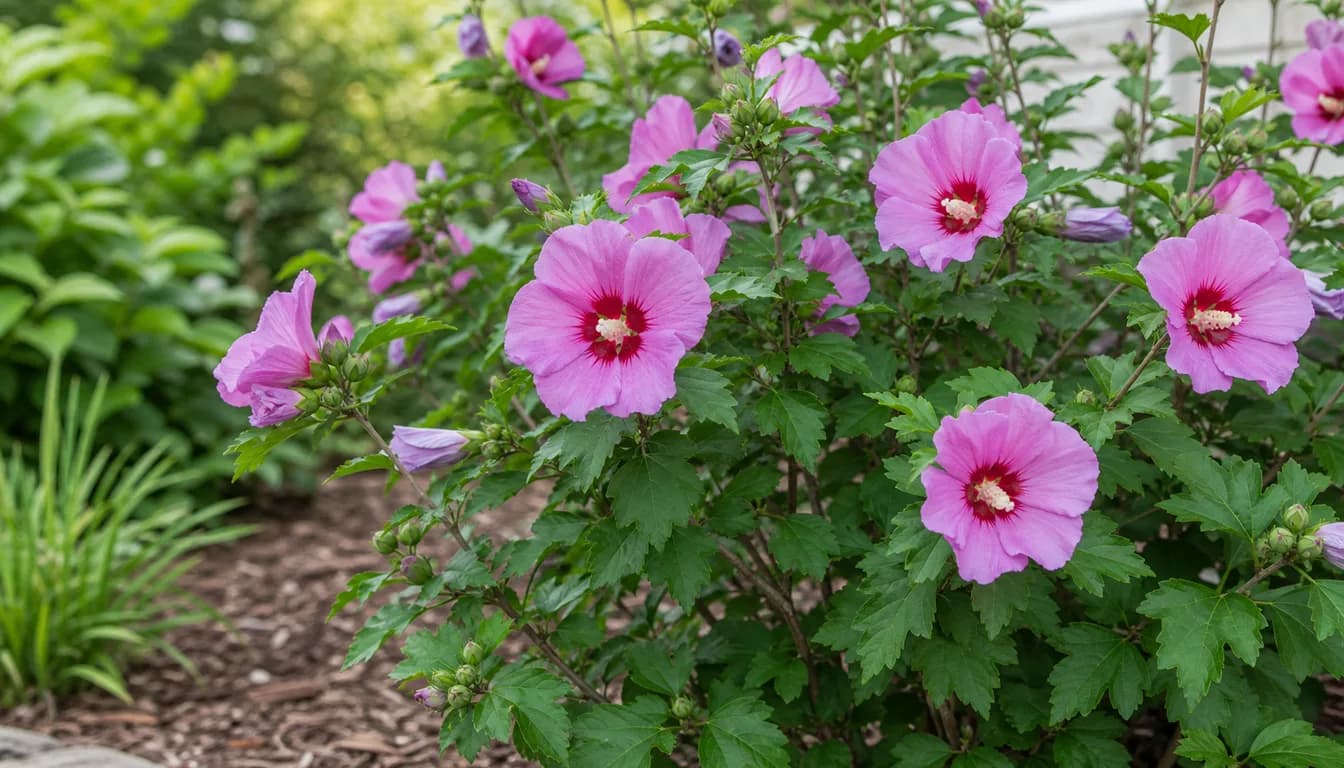
fact_check Source Reviewed
Rose Of Sharon
Hibiscus syriacus
USDA Zones 5-9, sometimes protected Zone 4
Rose of Sharon is a woody hibiscus for late-summer bloom, not a spring shrub. Grow it for heat-season flowers, but choose seed-conscious cultivars, full sun, and pruning that supports new wood.
Source Reviewed
View Profile arrow_forward
fact_check Source Reviewed
Skip Laurel
Prunus laurocerasus 'Schipkaensis'
Zone 4-9 hardy evergreen shrub
Skip Laurel works when you need a year-round screen in a tight strip, but it only stays useful when you plan mature width, drainage, pruning access, and toxic foliage before planting.
Source Reviewed
View Profile arrow_forward
fact_check Source Reviewed
Spirea
Spiraea spp.
USDA Zone 4-9
Spirea stays useful when you choose the right bloom type, give it sun, and renew old canes instead of shearing every shrub into the same round mound.
Pet SafeSource Reviewed
View Profile arrow_forward
fact_check Source Reviewed
Viburnum
Viburnum spp.
Zone 4-9
Viburnum is not one shrub habit. The right species decides whether you get fragrance, berries, fall color, a screen, or a beetle-prone maintenance problem.
Source Reviewed
View Profile arrow_forward
fact_check Source Reviewed
Weigela
Weigela florida
Zone 4-9 hardy deciduous flowering shrub
Weigela is easy only when you respect its old-wood spring bloom, arching cane habit, and need for post-bloom renewal instead of random shearing.
Source Reviewed
View Profile arrow_forward
fact_check Source Reviewed
Yew
Taxus baccata
USDA Zones 4-9
Yew is a durable evergreen for shade, hedges, and formal structure, but drainage and toxicity decide whether it belongs in the site before pruning style does.
Source Reviewed
View Profile arrow_forwardPortal Progress