verifiedSource Reviewed
Philodendron
Philodendron hederaceum
Family: Araceae
wb_sunnyLight
Low to bright indirect light; very adaptable
water_dropWater
Moderate; let top inch dry between waterings
heightHeight
Trails 6-10 ft or climbs to 4+ ft on a pole
publicZone
Outdoors in Zone 10-12; indoors anywhere
airAir Quality
Air Quality Note

Native Region
Tropical Americas (Mexico to Brazil)
account_treeDecide if the Vine Should Trail or Climb
The first care decision for Philodendron is shape. Let it trail from a shelf for long soft vines, or give it a pole and prune around nodes for a fuller climbing plant.
Without that choice, the plant often becomes a long thin vine with leaves only at the ends. The fix is not more water. It is light, pruning, and node placement.
- check_circleLong gaps between leaves: improve light and prune back to nodes.
- check_circleSmall new leaves: move brighter before feeding.
- check_circleBare base: root cuttings and replant to fill the pot.
If you want a split-leaf statement plant, Monstera Deliciosa is the stronger match. Use Philodendron when you want a vine that can be cut and restarted often.
local_floristPick the Leaf Color That Fits Your Light
Green heartleaf types handle lower light better than bright variegated types. If you want yellow or striped leaves, plan for stronger indirect light.
Heartleaf PhilodendronBest for easy green trailing growth
Philodendron BrasilPhilodendron Brasil needs more light to hold color
MonsteraMonstera is the heavier climbing choice with split leaves
Comparison — See AlsoMonstera vs Philodendron
chevron_rightwb_sunnyUse Light to Shorten the Vine Gaps
Philodendron tolerates low light, but tight growth needs medium to bright indirect light. Low light makes longer spaces between leaves.
If the plant hangs high, make sure the top of the pot still gets light. A bright wall below the vines does not help the nodes near the soil.
A shelf plant with long bare gaps is not asking for more water. It is usually asking for light or a shorter cutting cycle.
Email Updates
Join the KnowTheYard update list
Zone-specific advice, seasonal reminders, and new plant guides — no filler.
water_dropWater After the Top Layer Dries
Water when the top inch dries. The leaves may curl a little when dry, but yellow leaves in a heavy pot point to too much water.
warningDo not water because the vine is long
Long vines usually need pruning or better light. Extra water will not fill bare stems.
Compared with Pothos, Philodendron often shows thirst sooner by curling or softening leaves.
Comparison — See AlsoPothos vs Philodendron (heartleaf)
chevron_right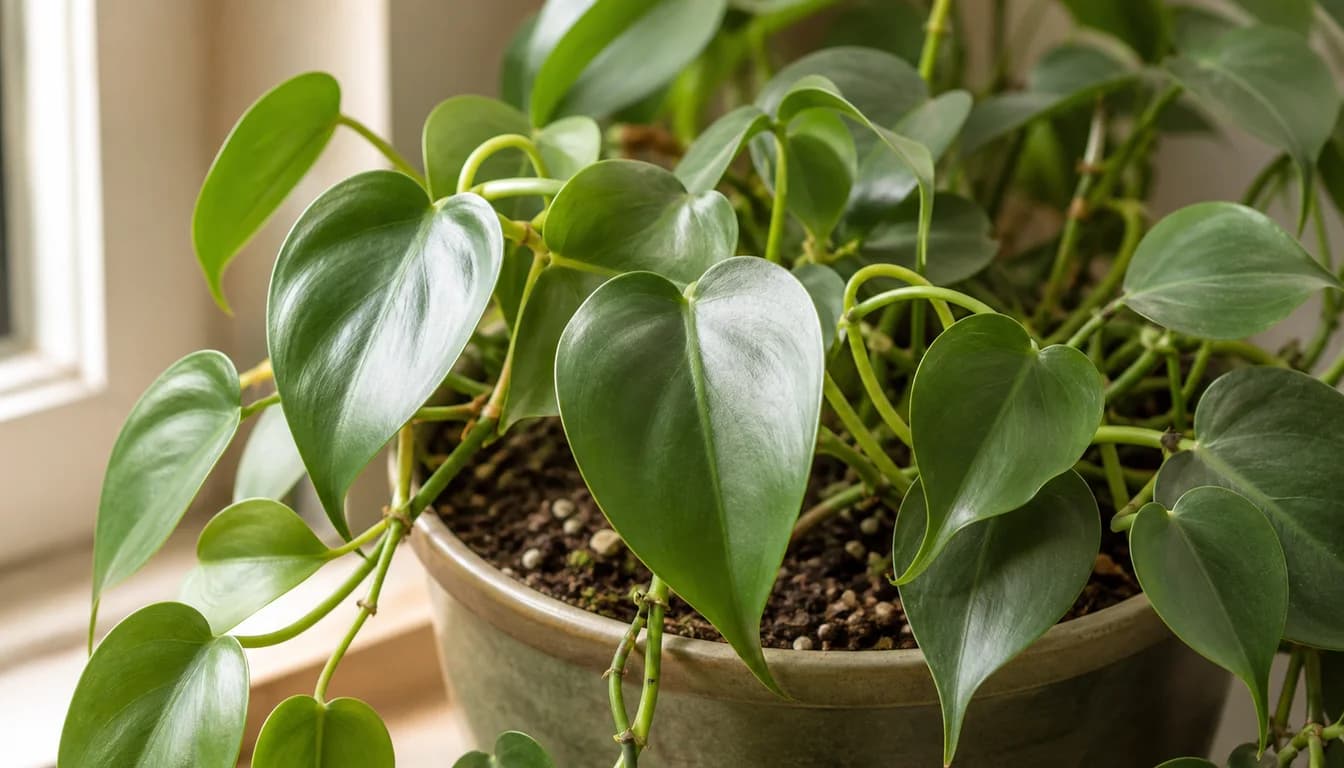
yardUse an Airy Mix for Fast Node Recovery
Use a regular indoor mix with added perlite or bark. The roots like moisture, but they recover faster when air returns after watering.
A tight nursery pot can dry fast. A huge decorative pot can stay wet too long. Choose the middle path.
lightbulbNode Recovery Rule
After a hard prune, keep the mix lightly moist. Wet soil slows recovery, but bone-dry soil stalls new nodes.
content_cutCut Below a Node and Replant for Fullness
Each useful cutting needs a node. Cut below a node, root the piece, then replant several cuttings into the same pot if you want a fuller plant.
- 1Find a node with a leaf or aerial root nub.
- 2Cut below the node with clean scissors.
- 3Root in water or mix.
- 4Plant several rooted cuttings together for a fuller pot.
For color-first philodendrons, Philodendron Brasil needs brighter light than plain green vines.
Pink Princess Philodendron adds a stricter variegation problem, so do not copy its light expectations to every green vine.
Guide — See AlsoAir Purifying Plants for Cleaner Indoor AirLearn how to pick, place, and care for air purifying plants so they help your indoor air instead of just looking pretty.
chevron_rightpest_controlCheck New Growth and Sticky Leaves
Mealybugs and scale often show on tender new growth or along stems. Sticky leaves mean you should inspect before you blame watering.
Dust also matters. Clean leaves use low indoor light better.
lightbulbPest Check Order
Check new leaves and vine tips first. That is where soft growth shows pest pressure before older leaves look bad.
calendar_monthPrune in Growth Season, Hold Shape in Winter
Spring and summer are best for cutting back long vines and rooting nodes. The plant replaces leaves faster then.
In winter, keep the pot warm and water less often. Do not prune hard unless the plant has enough light to regrow.
Winter pruning should stay light because the plant cannot replace lost leaf area quickly in weak light.
Guide — See AlsoBest Herbs to Grow Indoors for Real Harvests, Not Spindly PotsChoose indoor herbs that can actually produce in your light, temperature, and container setup, then match each one to th
chevron_rightpetsKeep Trailing Vines Away From Pets
Philodendron is not pet-safe. Long vines are easy for cats to reach, so hang or place the pot where leaves cannot be chewed.
For an easier pet-safe shelf plant, use Watermelon Peperomia. If toxicity is acceptable, Pothos gives a similar trailing role.
For a pet-safe trailing shelf plant, String of Turtles is a better match than any aroid vine.
eco
Keep Exploring
Related Plants
 Houseplants
Rubber Tree
Rubber Tree is a Ficus elastica grown as a future indoor tree, not just a glossy tabletop plant. The main care job is to match leaf color, light, watering,
 Houseplants
Begonia Maculata
Begonia Maculata is the polka dot begonia — dark green, angel-wing shaped leaves splashed with silver dots on top and painted deep crimson underneath. It's
 Houseplants
Marble Queen Pothos
Marble Queen Pothos is easy only if you respect the white variegation. The creamy leaves have less green tissue than standard pothos, so the plant needs bri
quiz
Frequently Asked Questions
Does Philodendron climb or trail?expand_more
It can do both. Choose one shape, then prune and support the plant around that choice.
Why is my Philodendron leggy?expand_more
Low light and missed pruning usually cause long bare vines. Cut back to nodes and move the plant brighter.
How often should I water Philodendron?expand_more
Water when the top inch dries. Do not keep the pot constantly wet.
Can I root Philodendron cuttings?expand_more
Yes. Each cutting needs a node.
Is Philodendron toxic to pets?expand_more
Yes. Keep trailing vines away from pets that chew plants.