
White Spots on Plant Leaves: Causes and Fixes That Work
Random pale freckles on your pothos, a chalky film on the tomatoes, or tiny white specks on a prized rose all point to the same question: what is attacking your plants. The fix depends completely on the cause.
The practical steps: the most common reasons for white spots on plant leaves, how to tell them apart in a few minutes, and what to do right away. We will cover indoor favorites like trailing pothos vines, outdoor workhorses like backyard tomato plants, and even shrubs and trees, so you can act before the damage spreads.
Start Here: What Kind of White Spot Is It
The pattern of the white spot tells you more than the color ever will. Blurry patches that look like flour dust work very differently from crisp little dots that scrape off with a fingernail.
Take a clear look at one leaf in good light. Flip it over, run a finger across the area, and notice whether the spot wipes, smears, or feels raised. That fifteen second check saves a lot of wrong treatments.
Powdery areas that look like someone dusted leaves with baby powder usually mean fungal disease. This shows up all over vegetable beds, from heirloom tomato foliage to young cucumber vines.
Tiny bright dots that cluster along veins or leaf edges more often point to pests. Think spider mites, thrips, or scale on houseplants like monstera leaves and upright snake plant leaves. You may also see webbing or sticky residue nearby.
Hard, chalky spots that stay put when you rub them can simply be mineral deposits. These appear where hard water dries on foliage, especially on glossy plants such as indoor rubber plants or windowsill peace lilies.
Never spray fungicide or insecticide until you are confident which of these you are dealing with. Random spraying often burns leaves or kills helpful insects without solving the real problem; guessing usually adds a second problem on top of the first.
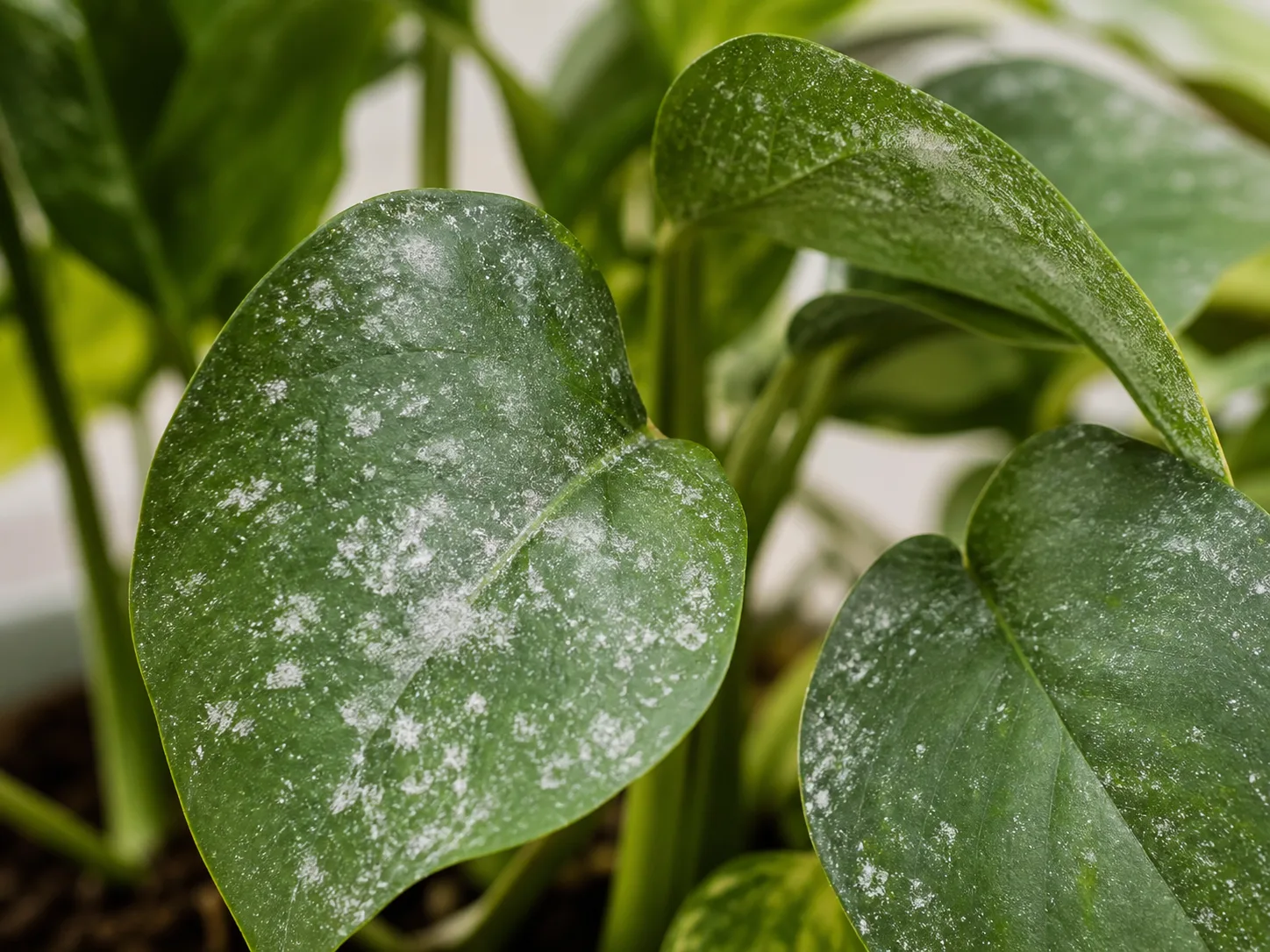
- Powdery patches: fuzzy or dusty, often spreading fast in warm dry air
- Speckled dots: crisp flecks, often paired with webbing or sticky honeydew
- Chalky film: hard residue that stays after wiping, usually from tap water
- Scattered flecks: physical damage, splash marks, or old scars on tough foliage
Powdery Mildew and Other Fungal White Coatings
Patchy white mildew on leaves is one of the most common garden headaches. It hits everything from hybrid tea roses to vigorous zucchini plants once humidity and poor airflow line up.
Powdery mildew looks like someone brushed talc or flour across the leaf surface. Early on it shows as small round spots. Later, entire leaves, stems, and flower buds can be coated, especially on dense shrubs like summer hydrangeas.
Fungal leaf spots can also appear as white centers with darker halos. These show up on crops like beet greens and cool-season spinach, leaving papery patches where tissue dies.
The fungus thrives when leaves stay damp and air cannot move. Crowded beds, overhead watering late in the day, and shaded corners are perfect conditions.
Avoid spraying infected foliage with overhead irrigation at night. Wet leaves plus cool air feed powdery mildew and many other leaf diseases.
First, trim the worst affected leaves into a trash bag, not the compost pile. Then improve airflow by thinning overcrowded stems on plants like climbing clematis or tightly planted daylily clumps.
Home growers often control light infections with simple sprays. Use a labeled horticultural oil or potassium bicarbonate mix and coat both sides of the leaves. Follow the same careful coverage you would for other garden disease treatments.
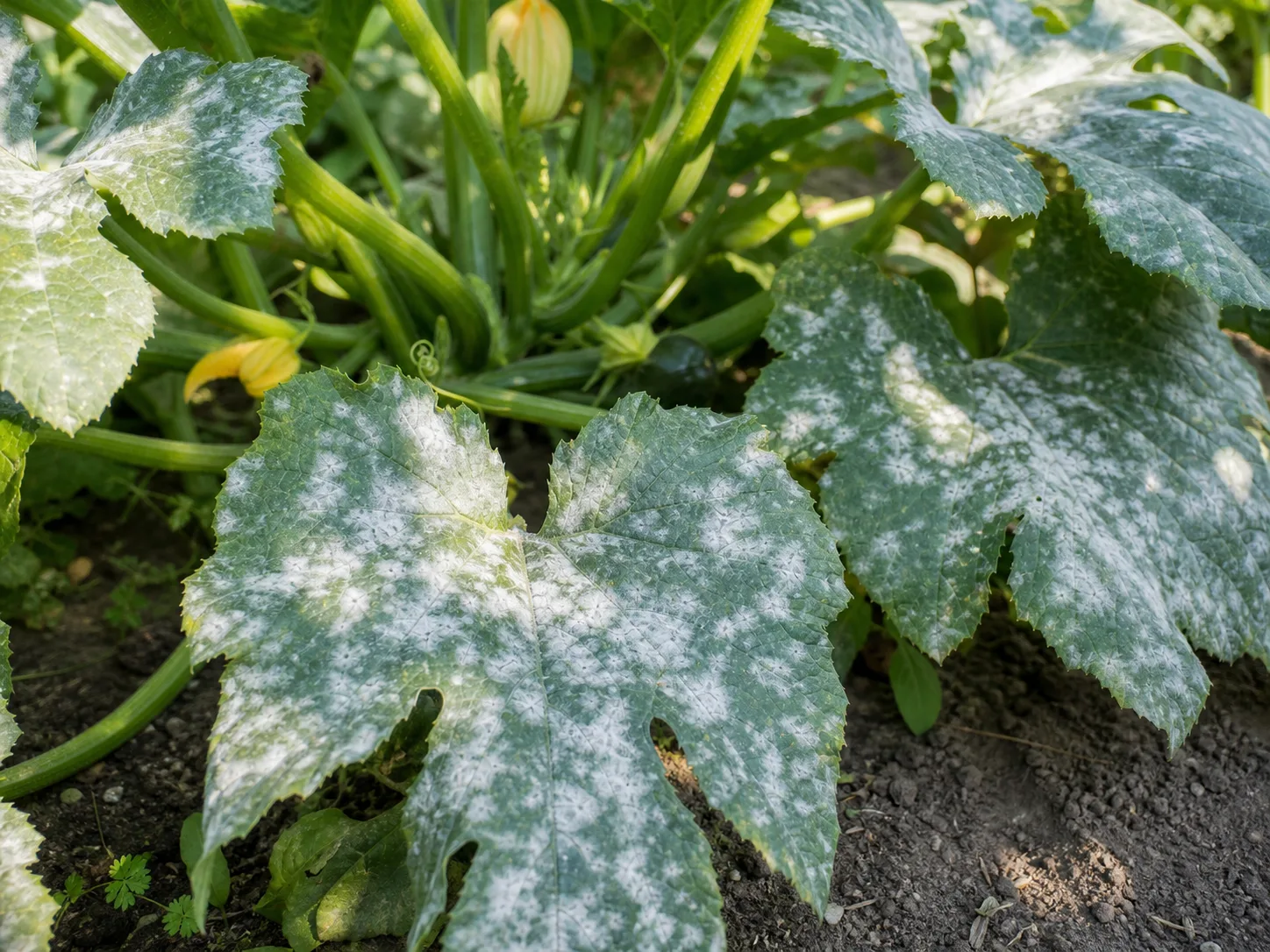
- Remove: clip badly covered leaves and dispose in the trash
- Thin: open up canopies on shrubs and dense perennials
- Water: switch to morning watering at soil level only
- Spray: apply an appropriate fungicide every 7 to 14 days
- Choose: next season, pick mildew resistant varieties where available
Insect Pests That Leave White Specks
Sap sucking bugs leave lots of small, sharp white marks that look nothing like fuzzy mildew. On close inspection you will usually see the insects themselves or the damage pattern they create.
Spider mites are a classic culprit indoors. They stipple leaves of plants like fiddle leaf figs and variegated pothos with tiny pale dots that merge into a dull, faded look. Tough ZZ plants show the same kind of stippling when mites get established.
Whiteflies cloud around plants when disturbed, then settle back under leaves. They love soft growth on herbs like tender basil foliage and vegetables such as pepper plants in the greenhouse.
Scale insects can appear as small white or tan bumps stuck to stems and leaves. You will see them on woody houseplants like dracaena canes and outdoor shrubs such as broadleaf camellias.
Look for the extras that come with pests. Webbing between monstera leaf lobes, sticky honeydew on rose foliage, or sooty mold growing on that honeydew are strong clues you are dealing with insects.
Treat pests first with a good rinse. Many insects hate a firm spray of water more than any chemical you can buy.
Move potted houseplants like spider plant baskets to the sink or shower and spray the undersides of leaves. Outside, send a strong but not leaf-shredding jet through shrubs.
Follow with a labeled insecticidal soap or neem oil. Coat both sides of leaves and repeat weekly for several cycles, the same way you would handle stubborn spider mite infestations.
- Check undersides: pests hide on the lower leaf surface first
- Look for webbing: fine threads often point to spider mites
- Watch for movement: tap the leaf over white paper to spot insects
- Rinse thoroughly: remove as many bugs as possible before spraying
- Repeat treatments: continue for several weeks to break the life cycle
White Residue from Water, Fertilizer, and Sun Scorch
Not every white mark is alive. Minerals, fertilizer salts, and sun damage can all leave pale, crusty, or bleached spots that confuse even experienced gardeners.
Hard water is a common source of chalky deposits on shiny houseplants. As tap water dries on foliage of peace lily leaves or rubber plants, it can leave a ring of white or gray minerals behind.
Strong liquid fertilizer that splashes on leaves can burn spots that later dry to a pale tan or almost white scar. This shows on seedlings like young tomato starts or indoor herbs such as container parsley when feedings are too concentrated.
Sun scorch works differently. Droplets of water can focus intense light onto thin leaves. You will see irregular bleached patches on plants like hostas in afternoon sun or newly moved hydrangea shrubs that were not hardened off.
These kinds of marks will not smear like mildew or brush off like dust. They also do not spread from leaf to leaf. New growth comes in clean once the underlying issue is fixed.
Before you panic, watch the newest two or three leaves. If only older foliage shows white scars and the newest growth is healthy, active disease or pests are less likely.
Switch to watering at the soil line for both indoor containers and outdoor beds. Bottom water sensitive plants like picky calatheas to keep foliage dry. Prayer plants benefit from the same treatment.
Dilute fertilizers properly, especially on seedlings. Follow a clear feeding schedule like you would in any vegetable bed fertilizing plan, and skip spraying concentrates onto leaves unless the label specifically allows foliar feeding.
- Residue: does not spread or feel fuzzy, often near drip lines
- Fertilizer burn: follows splash patterns, often on lower, tender leaves
- Sun scorch: irregular bleached patches, usually on the sunniest side
- New growth: stays clean once watering and feeding are adjusted
Step‑By‑Step Fix: Saving the Plant You Already Have
Cleaning and stabilizing the plant comes before any spray or treatment. If leaves stay coated in fungus, insect shells, or mineral crusts, nothing you apply will work well.
Work over a sink, tarp, or outdoor table so you can really see what comes off the foliage. That way you can tell powdery mildew from hard scale or flaky mineral deposits.
Start with plain water first. A soft cloth or sponge dipped in lukewarm water often removes loose powder, honeydew, or dried fertilizer without stressing the plant.
If residue sticks, mix a few drops of mild dish soap in a quart of water and wipe again. Rinse leaves after so no soap film is left to interfere with breathing.
- Tools: Soft cloths, small bowl, mild dish soap, pruning snips
- Order: Clean leaves, trim damage, then treat disease or pests
- Checkpoints: Look at leaf undersides and stems for hidden insects
- Finish: Rinse foliage and let it dry before any fungicide or oil
After cleaning, remove badly damaged or deformed leaves. This is especially helpful on plants like rose bushes that carry mildew, because infected foliage keeps throwing new spores into the air.
Disinfect pruners between plants with rubbing alcohol. This matters if you are bouncing between a sick monstera with leaf spots and a healthy one right next to it.
Do all your wiping and cutting before you spray anything so treatments reach living tissue instead of sitting on old debris.
Never scrub so hard that you scratch the leaf surface, those wounds become perfect entry points for more disease.
Ongoing Care After Treatment: Keep Spots From Coming Back
Once the worst of the white spots are handled, your next job is giving the plant steady, boring care while it recovers. New growth should look cleaner than the old leaves.
Start by tightening up your watering habits. Let the top inch of potting mix dry on most indoor plants like pothos vines that get speckling and peace lily foliage, and avoid splashing water on leaves late in the day.
Move plants to the right light level. A slightly brighter spot helps many houseplants outgrow light fungal issues, while shade lovers like Chinese evergreen types burn if pushed into hot sun.
Hold off on heavy feeding until you see strong, clean new growth. If you do fertilize, use a gentle indoor formula at half strength, or follow a plan from a solid source like the guide on indoor plant fertilizer choices.
- Watering check: Soil slightly dry before you water again
- Light check: No harsh midday sun on tender leaves
- Airflow: Small fan on low near crowded houseplants
- Fertilizer: Light feeding only after new growth appears
Outdoor beds also heal faster with consistent care. Keep soil moisture even around things like tomato vines with leaf spots and pepper plants; steady moisture matters more than frequent light splashing, and avoid overhead sprinklers late in the afternoon.
Mulch around perennials such as hosta clumps or coneflower stands to reduce soil splash, which often carries fungal spores up onto lower leaves.
If new leaves keep coming in with the same white problem, your original diagnosis was off or conditions still favor that disease, so revisit the earlier sections and adjust.
Seasonal Patterns: When White Spots Flare Up Most
White spots almost never show up at random. They follow humidity swings, watering routines, and growth flushes that repeat the same way every year.
In spring, cool nights and crowded shelves of seedlings raise humidity. That is why young spinach trays, kale starts, and herbs like basil seedlings often get faint white fungal films if air does not move.
Summer brings hot days but damp nights, which favors powdery mildew on things like zucchini leaves, rose canes, and phlox borders in many climates. Overhead watering in the evening makes this worse.
Late season, tired foliage becomes more prone to insect problems. Whitefly clouds on tomato foliage, scale on boxwood hedges, and mealybugs on snake plant leaves often explode after a heat wave.
- Spring risk: Damp greenhouses and crowded trays
- Summer risk: Warm days, humid nights, overhead irrigation
- Fall risk: Aging leaves, reduced airflow, more insects
- Winter risk: Dry heated air, hard water crust on houseplants
Indoor plants follow their own cycle. In winter, heating systems dry the air and concentrate mineral salts, so you see more white crust along pot rims on things like fiddle leaf figs and ZZ plants.
Knowing which season your issue belongs to makes diagnosis easier. If white coating appears every July on hydrangea shrubs, you are almost certainly dealing with a predictable mildew problem, not a random nutrient issue.
Prevention Playbook: Humidity, Spacing, and Water Quality
Adjusting environment is the cheapest, most effective way to avoid white spots long term. Sprays are backup, not the main plan.
Start with spacing. Outdoor beds packed with daylily fans, peony clumps, and iris stands trap moisture around foliage, which keeps fungal spores happy.
Indoors, crowding pots of monstera leaves, spider plant babies, and air plants on one shelf does the same thing. Even a few inches of air between pots makes a difference.
Water quality matters more than people think. Hard tap water leaves white calcium trails on leaves and soil, which are harmless but ugly. Use filtered or rainwater for fussy plants like calathea foliage that already struggle with leaf spotting.
- Spacing: Leave at least one leaf-width between neighbors
- Air movement: Small fan on low in stuffy rooms
- Water source: Rain, filtered, or allowed to sit overnight
- Timing: Morning watering so leaves dry before nightfall
Keep humidity where the plant wants it, not where fungus likes it. Many tropical houseplants like steady humidity, but soaking wet foliage is different from moist air.
Group thirsty plants on pebble trays instead of misting every hour. This cuts fungal risk on things like parlor palm fronds that hate water sitting in their leaf bases.
If you focus on airflow, plant spacing, and smarter watering, you will prevent more white spot problems than any single spray bottle ever could.
Common Mistakes That Make White Spots Worse
A few well-meant habits lock white spots in place or create new problems. Fixing these gives you fast wins.
The first is random spraying without a diagnosis. Coating a powdery mildew patch on grape vines with insecticidal soap will not help, just like a systemic insecticide will not fix mineral scale on a lemon tree leaf.
Another mistake is leaving infected leaves piled on the soil. Fallen mildew leaves from phlox clumps or blueberry bushes act like a spore factory under the plant.
People also keep sick plants pressed against healthy ones. Mealybugs from one marble queen pothos vine walk right onto the next pot if leaves touch.
- Guessing: Treating without identifying the problem
- Litter: Leaving diseased leaves under shrubs and perennials
- Crowding: Plants with touching foliage on the same shelf
- Overkill: Mixing multiple sprays on the same day
Flipping between homemade mixes is another issue. Dousing a peace lily leaf in baking soda, then oil, then vinegar in one weekend often causes leaf burn that looks like new white or tan spotting.
Test any new spray on one or two leaves first and wait several days before treating the whole plant, especially on sensitive foliage like hydrangea leaves or azalea shrubs.
Finally, some gardeners give up too soon. Perennials such as coneflower clumps or shrubs like lilac hedges can look rough this year, then come back almost spotless next season once you tweak watering, spacing, and cleanup habits.
Pro Tips
- Take one clear photo of the spot and one of the whole plant, so you can track whether damage spreads.
- Always inspect the underside of leaves and along stems, since most insects hide where you do not look first.
- Sanitize pruners with alcohol after cutting diseased or mildewed foliage to avoid spreading problems.
- Quarantine new houseplants like pothos or monstera for two weeks before parking them with older plants.
- Switch overhead watering to early morning and aim at the soil surface to reduce mildew and leaf spots.
- Thin dense perennials and shrubs every couple of years to keep air moving through the foliage.
- Test fertilizer strength on one or two plants before feeding the entire bed or indoor collection.
- Use a simple magnifying glass to check speckled leaves, which makes spotting mites and scale far easier.
Frequently Asked Questions
Are white spots on plant leaves always a fungus?
No. White spots can be fungal, insect related, mineral residue, or even sunscald. Fungal spots usually spread in humid weather, while mineral crusts and fertilizer residue do not grow or move across the leaf.
Can I still eat vegetables from plants with white spots on the leaves?
Usually yes, if the problem is limited to foliage and you wash produce well. Powdery mildew on squash leaves, for example, rarely affects the fruit itself. Avoid eating anything from plants treated with pesticides not labeled for food crops.
Will white spots on indoor plant leaves spread to outdoor plants?
They can, especially fungal diseases and insect pests. Spores and insects hitchhike on clothes, tools, and open windows. Keep heavily infested houseplants away from open doors and clean tools before you work on outdoor beds.
How long does it take white spots to clear after treatment?
Existing damage often stays visible, but new growth should look clean within a few weeks. On fast growers like spider plant offsets and pothos vines, you may see better foliage within two to four weeks once conditions improve.
Should I throw away a plant covered in white spots?
Only if the plant is mostly dead or heavily infested with insects you cannot control, like advanced mealybugs on multiple stems. Many plants recover if you prune hard, adjust care, and stick with a simple, consistent treatment plan.
Sources & References
Related Guides
Best Herbs to Grow Indoors for Real Harvests, Not Spindly Pots
Indoor herbs only work when you match the plant to the setup. A sunny kitchen window can keep a few…
10 min readBest Indoor Plants for Every Room and Light Level
Growing plants indoors is one of the simplest ways to make a home feel alive, but picking the wrong…
13 min readBest Low-Light Plants for Dim Rooms and Shaded Corners
This guide helps you pick low-light houseplants that thrive in dim rooms, shows you how to assess…
12 min