
What's a Monstera Deliciosa? How to Grow Larger, Split Leaves
Monstera deliciosa Araceae
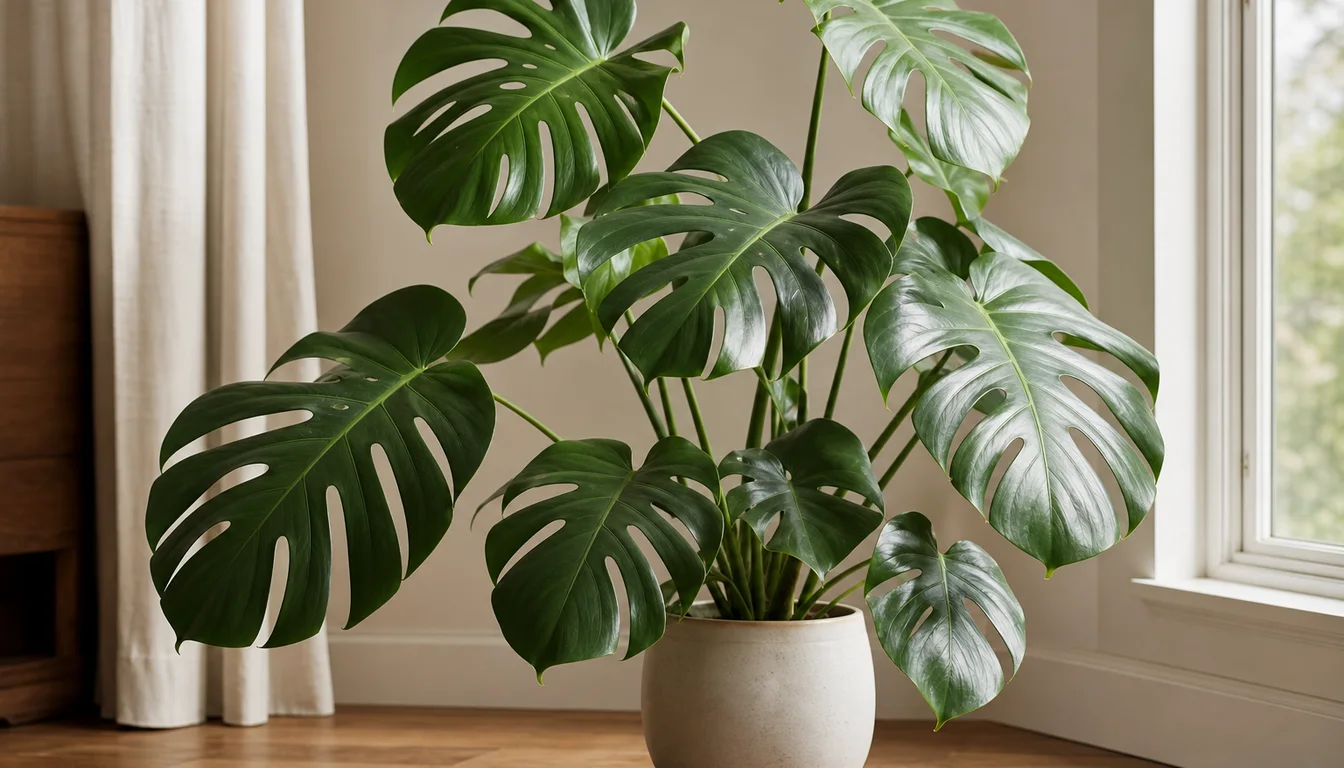
Monstera Deliciosa grows upward as a climbing vine, and its newest leaves become larger and more deeply split when the stem has useful light, secure support, and healthy roots. Care becomes easier when you read that new growth instead of reacting to one old leaf.
Care snapshot
What the Newest Monstera Leaf Says About Its Care
Because Monstera Deliciosa is an evergreen climbing vine rather than a self-supporting indoor tree, give the advancing stem bright indirect light, a surface it can climb, and a root ball that partly dries between complete soakings.
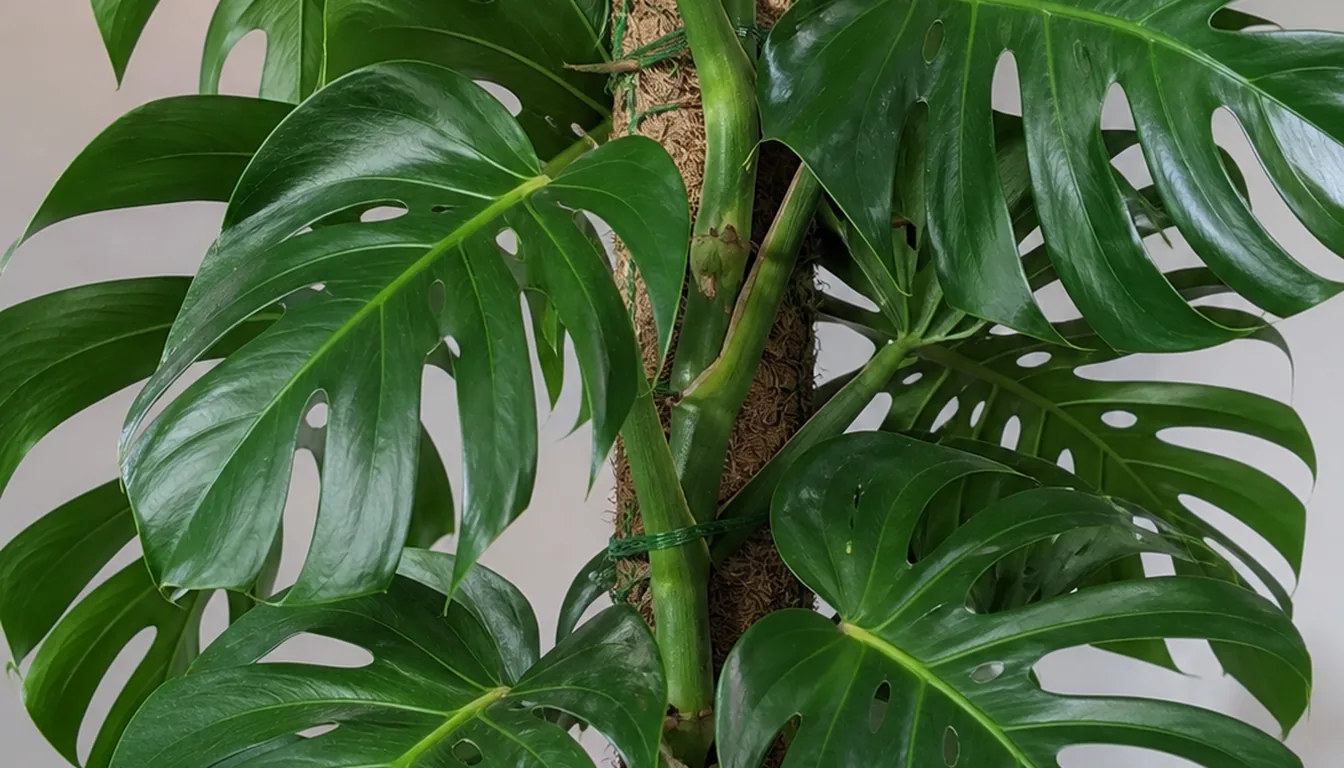
A young vine normally produces smaller heart-shaped leaves with no cuts or holes. As the same stem matures, later leaves can become much larger, split from the margins, and develop internal openings called fenestrations.
Compare the newest two or three leaves with the short section of stem below them because increasing leaf size, firmer growth, and equal or shorter gaps between nodes show progress even when an older leaf remains torn or stained.
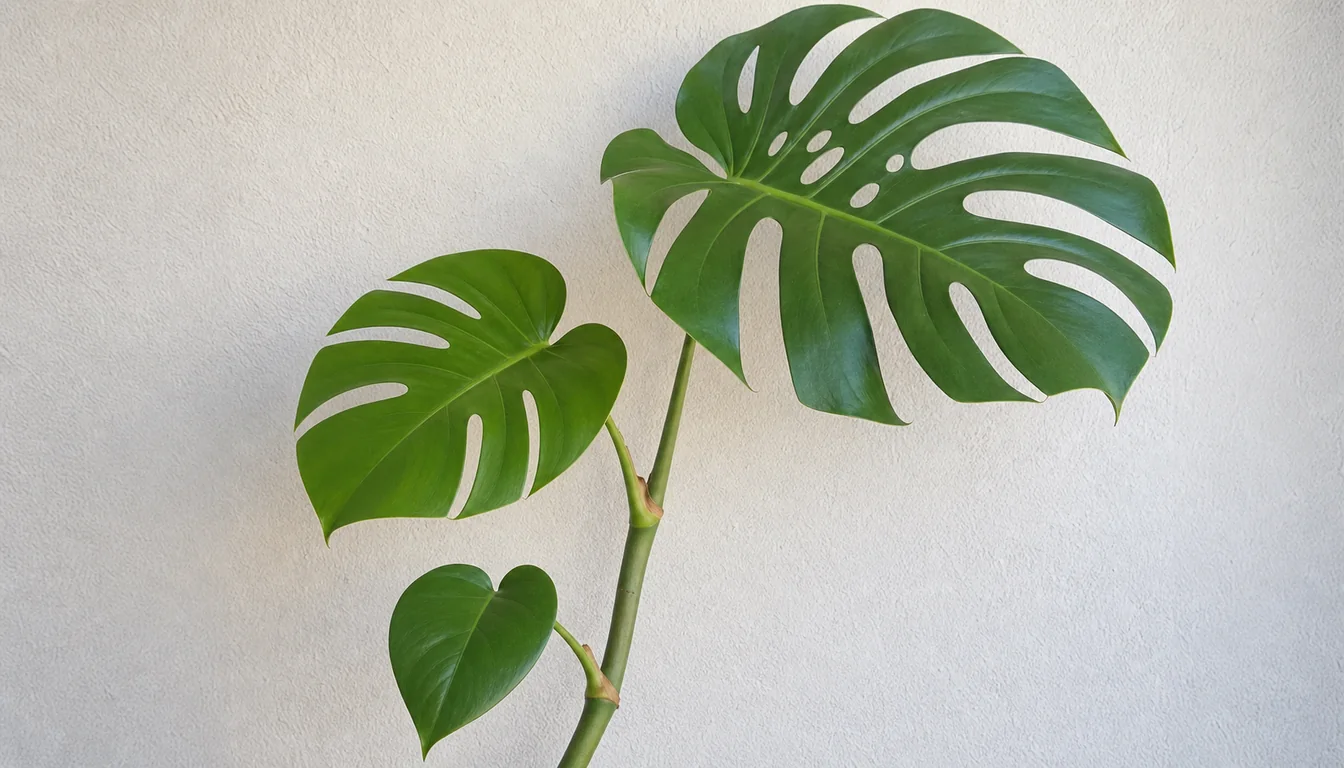
The name Swiss cheese plant also gets used for Monstera Adansonii, whose thinner, smaller leaves usually keep their holes enclosed within the blade, while a split-leaf philodendron may actually be the self-heading Thaumatophyllum bipinnatifidum, which lacks the internal Monstera-style holes.
How Much Light Does Monstera Deliciosa Need Indoors?
Start near an east or west window, or in a bright room set back from stronger south or west glass, where the leaves receive broad daylight for much of the day without heating in a hard beam for hours.
Very low light slows the vine, stretches the gaps between nodes, and is associated with fewer holes in new leaves. Hot direct sun can create pale tan or brown patches on the side facing the window, especially when those leaves formed in shade.
After a move, watch the growing tip for about two weeks instead of rotating the pot every day. A tip that holds its direction and begins a sturdy new leaf is useful evidence, while a stem that keeps reaching sideways still needs a brighter position or a better-aligned support.
White or cream tissue on a variegated plant contains less chlorophyll, so heavily variegated vines grow more slowly and need especially dependable bright indirect light. That extra light still does not turn a newly rooted cutting into a mature vine overnight.
A Climbing Stem Makes Bigger Leaves Than a Sprawling One
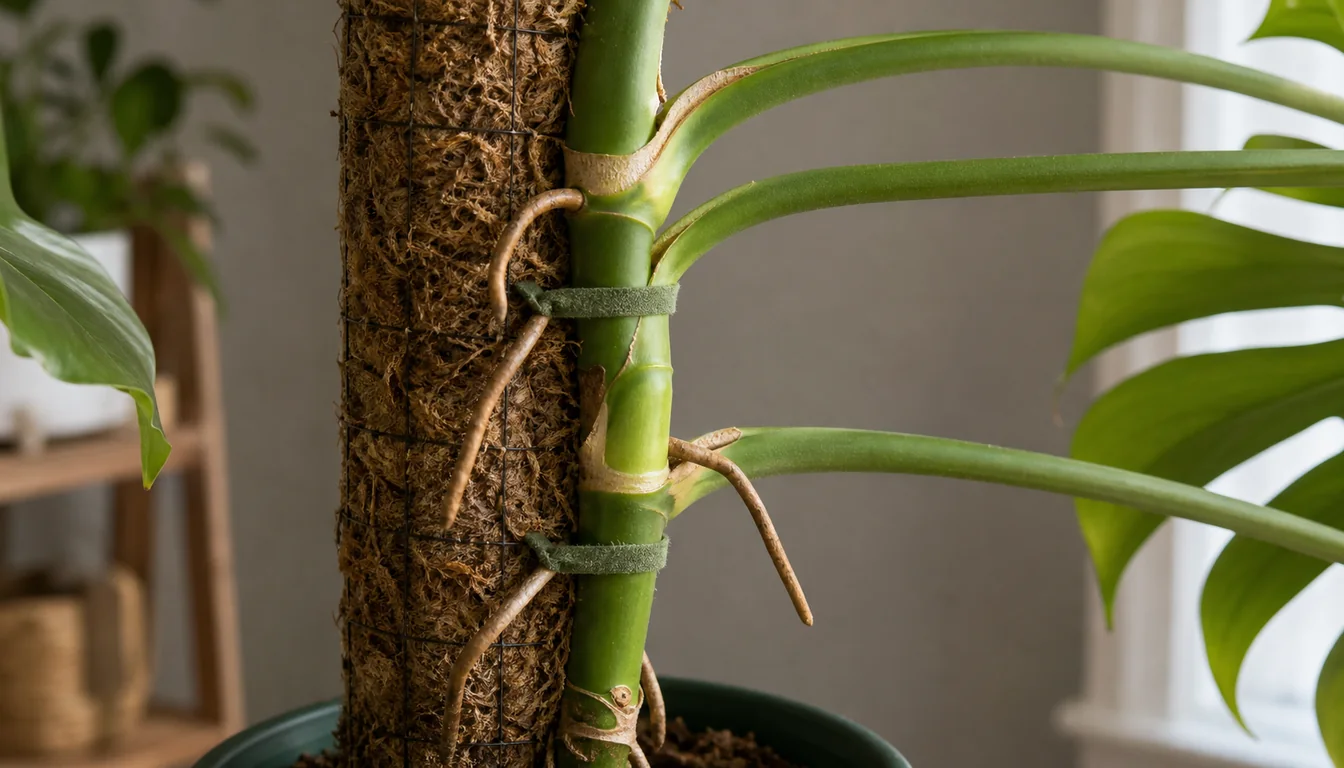
Because each new leaf and petiole extends from a thickening vine, a stable support keeps a mature Monstera Deliciosa upright and helps the actively climbing stem produce larger, more fenestrated leaves.
Find the back of the vine before placing a pole. Nodes and aerial roots face the surface the plant wants to grip, while the long leaf petioles fan toward the light and need room to pivot.
- Anchor a broad pole, plank, or trellis firmly before moving the stem.
- Turn the node and aerial-root side toward the support.
- Use loose soft ties around the main stem between nodes.
- Recheck each tie as the stem thickens and a new leaf changes angle.
Tie the main stem rather than a petiole because that leaf stalk moves toward light and a tight tie can crease it or hold the next leaf in an awkward position.
A moist moss pole gives aerial roots a surface they may enter, while a rough plank or sturdy trellis mainly carries weight and direction. Pick the support you will actually keep stable and maintain, because a dry decorative pole still works as structure when the vine is tied correctly.
Water Only After the Root Ball Starts to Dry
Water Monstera Deliciosa after the top 1 to 2 inches of the root ball have dried, soak the entire pot until water leaves the drainage holes, and empty the saucer or cachepot so the lower roots do not remain submerged.
A loose surface can feel dry while the dense center remains wet. Check deeper with a finger where the roots allow it, insert a wooden skewer near the center, or learn how the whole pot feels after watering and again as it approaches the next soak.
Pour slowly across the surface in more than one pass when a dry mix sheds water down the pot wall, giving the root ball time to accept moisture instead of leaving a dry core inside a wet-looking container.
A light pot with dry mix and a temporarily limp but firm vine supports a thorough watering. Yellowing lower leaves over heavy wet mix, a sour smell, or a soft stem base point toward poor root aeration, so more water would deepen the problem.
- Dry center and noticeably lighter pot
- Soak evenly, drain fully, then empty the saucer
- Cool damp center and firm leaves
- Wait and check again before watering
- Wet center with odor or soft growth
- Inspect drainage and roots before the next soak
The interval shortens in brighter warmth and lengthens when winter light slows growth, while pot size, root density, and airflow also make a weekday schedule unreliable.
When Does a Monstera Need a Larger Pot?
Repot when roots push through drainage holes, the root ball dries within a day, the plant repeatedly tips, or a dense root mass lifts from the pot intact, rather than moving up only because the leaves are tall.
Choose a stable container about 2 inches wider and only a little deeper because a much larger pot holds wet mix beyond the active roots, making moisture harder to judge and raising the risk of rot.
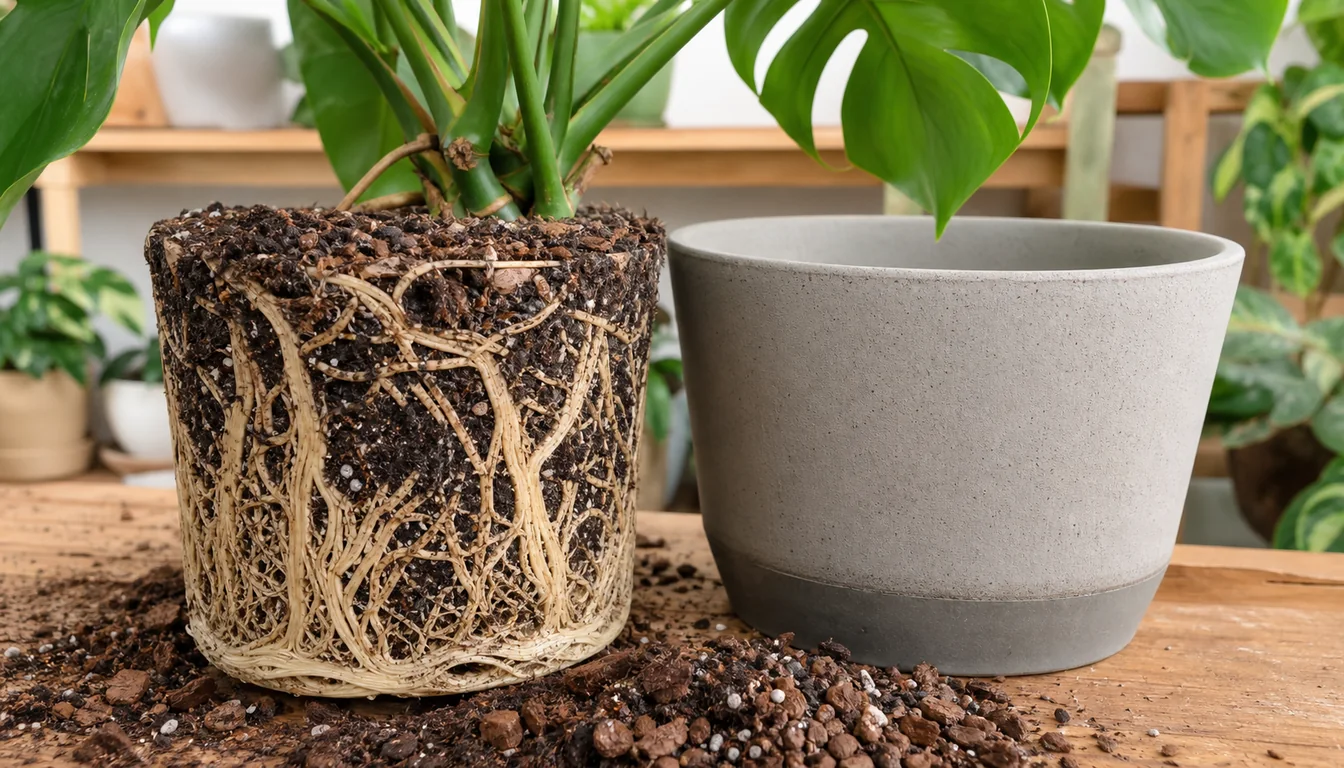
Use an open houseplant mix that holds some moisture but drains freely around thick roots. Coarse bark and a mineral aeration material can keep the structure open, while the base mix supplies the moisture retention the vine still needs.
Lay the plant and support down together if the vine is too heavy to lift safely upright. Keep the main root ball mostly intact, settle it at the same depth, and secure the support before filling around the sides so neither roots nor stem carry the wobble.
Water once to settle the mix, return the plant to familiar light, and expect a pause while disturbed roots reconnect with the new soil. Wait for firm active growth before resuming fertilizer, because fresh feed cannot repair roots bruised during the move.
Feed the Vine That Is Actively Making New Leaves
Feed only while the growing tip is producing leaves in useful light because a balanced liquid houseplant fertilizer can support active spring and summer growth but cannot replace a brighter position or healthy roots.
Apply fertilizer to an already moist root ball and stop when the plant is wilted from dryness, sitting wet, or recovering from a repot. Crusted mix, browned root tips, and a stalled vine after repeated feeding call for a drainage check and a thorough plain-water flush before more fertilizer.
Keep the plant around 65 to 77°F and away from cold drafts or direct radiator heat. A summer move into bright outdoor shade can speed growth, but wait for warm nights and introduce gentle sun gradually because leaves formed indoors can scorch quickly.
What Should You Do With Monstera Aerial Roots?
Aerial roots are normal structures that emerge from stem nodes and help Monstera Deliciosa attach as it climbs, so their position decides the useful response.
- Guide a flexible lower root into the pot only if it reaches without a sharp bend.
- Lay a root near the pole against its surface and secure the stem, not the root tip.
- Shorten a long inconvenient root with a clean blade when it crosses a walkway or reaches furniture.
Do not force a stiff root into the soil, because it can snap near the node and tear the stem surface. Removing one inconvenient aerial root does not stop the vine from climbing when the stem remains healthy and supported.
Avoid routing loose roots into walls, floor gaps, or a permanent jar of water beside a soil-grown pot. Those arrangements can damage the room, complicate watering, and hide decay without giving the main root ball a dependable benefit.
Cut at a Node to Shorten or Propagate the Vine
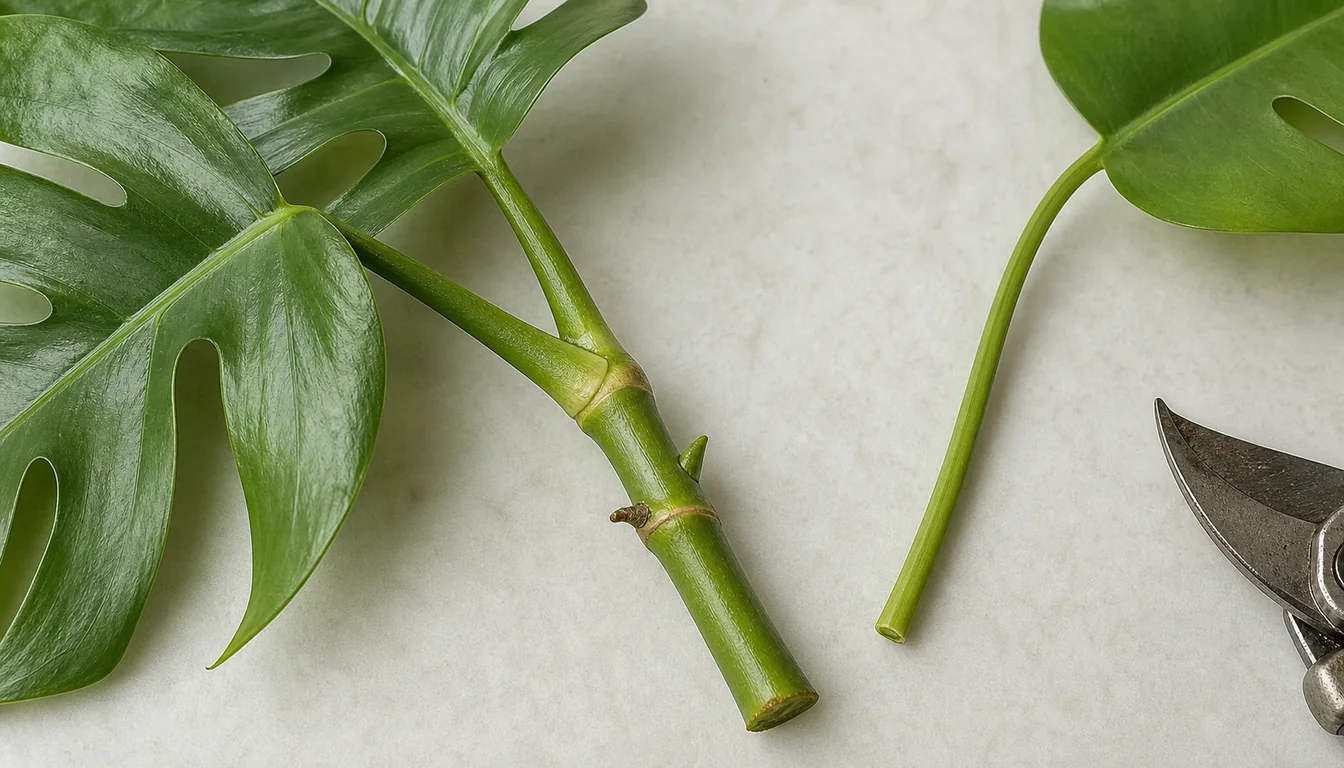
To shorten the parent, choose where its remaining stem can restart and cut just above a healthy node. For the removed piece to become another vine, its base must include a node with an axillary bud, so the propagation cut goes through the internode below that node.
The node is the swollen stem point where a leaf and often an aerial root emerge, and its axillary bud sits on stem tissue that a long leaf petiole alone does not have.
- Choose one firm node with a visible bud and at least one healthy leaf.
- Cut 1 to 2 inches below the node with a clean sharp blade.
- Place the node in water, perlite, or a moist airy rooting mix.
- Keep it warm in bright indirect light and replace cloudy water when needed.
- Move a well-rooted cutting into a modest draining pot rather than a large container.
Although roots may begin within a few weeks, a new leaf can take 2 to 3 months, so check water-grown roots visually and avoid repeatedly tugging a cutting in solid medium.
A cut leaf may remain green in water and can sometimes form roots from attached tissue, yet it cannot make a new vine without a node and axillary bud. Check that anatomy before buying a single-leaf cutting or sacrificing a good leaf from the parent.
One cutting can root in water, perlite, or potting mix because the viable node supplies the growing point. Choose the medium you can keep evenly moist and aerated, then change as little as possible while the first roots form.
Why Are the New Leaves Smaller or Less Split?
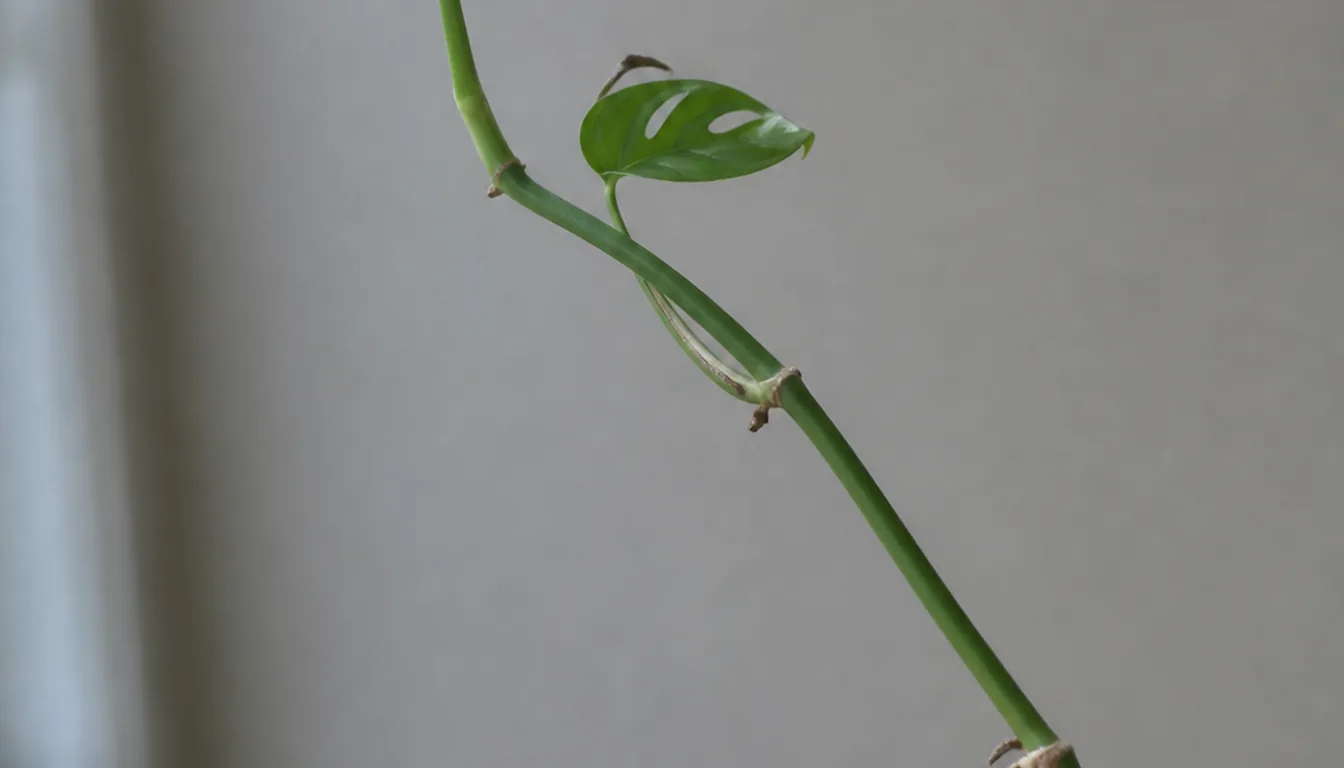
Two smaller new leaves in succession matter more than one flawed old leaf, so start at the growing tip and follow the stem backward until leaf size, hole count, spacing, or firmness changes.
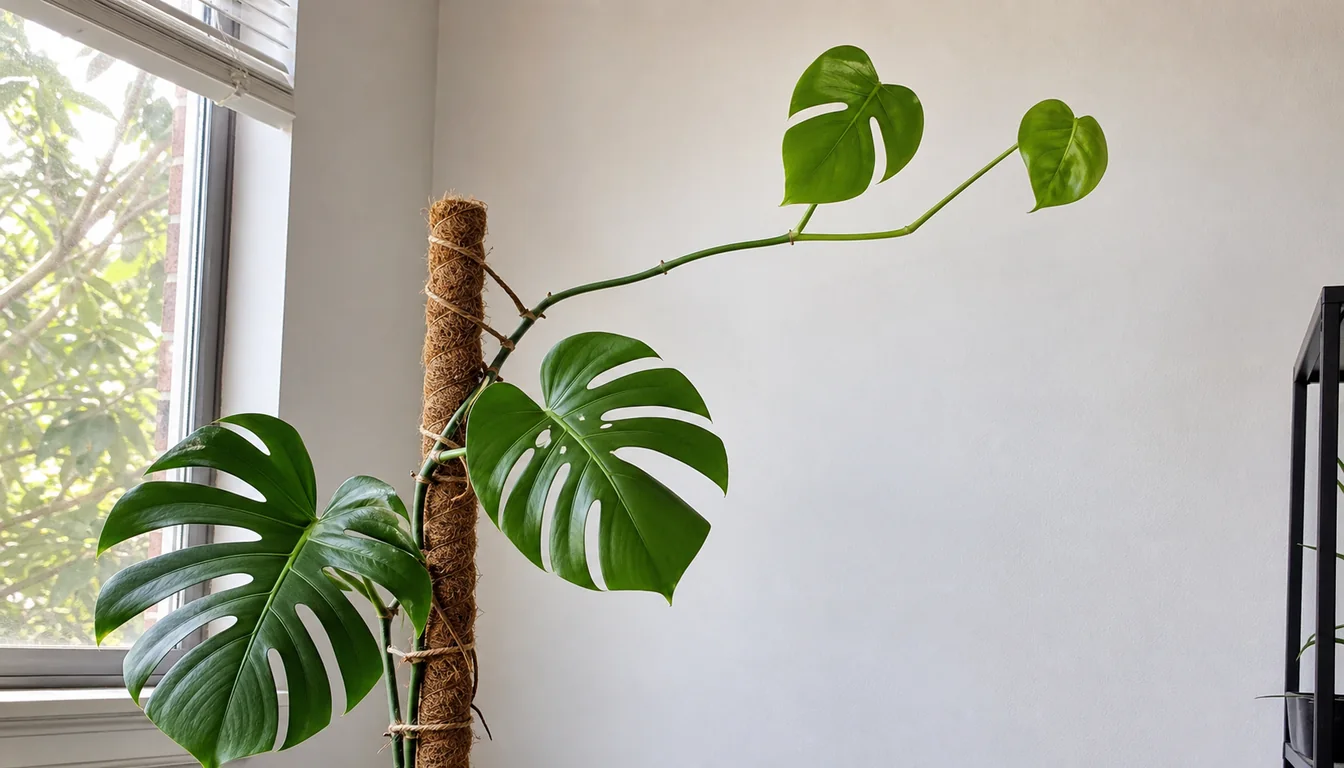
Wider internodes and a stem reaching toward the window make insufficient light the first suspect, while normal spacing on a vine that pulled away from its pole points toward lost climbing contact.
Small soft growth over persistently wet mix, a sour smell, or a weak stem base shifts the inspection below the soil. A light dry pot may briefly wilt, but wet-root stress usually worsens while the center stays heavy and starved of air.
Longer gaps and window reach
- Increase useful indirect light
- Keep hot sun off old leaves
- Judge the next leaf
Stem detached from support
- Realign the stem back
- Anchor the pole
- Retie between nodes
Soft growth over wet mix
- Pause watering
- Check odor and roots
- Correct drainage first
Crisp edge or pale patch
- Check dry air and hot glass
- Review recent moves
- Protect new growth
Stippling, cotton, or bumps
- Inspect leaf backs and nodes
- Isolate the plant
- Treat the confirmed pest
Crisp brown edges can follow dry air or repeated moisture swings, while bleached window-side patches fit sun scorch better. Fine stippling and webbing suggest spider mites, cottony clusters suggest mealybugs, and fixed bumps along veins or stems suggest scale.
An isolated brown patch on a Monstera leaf needs a closer diagnosis than this growth check can provide. Keep the evidence tied to the affected leaf and root conditions rather than spraying every large leaf or adding fertilizer before you know what changed.
Keep Chewers Away From Leaves, Stems, and Sap
Because leaves, stems, roots, and sap contain needle-like calcium oxalate crystals, a mature Monstera Deliciosa needs a closed room, barrier, or another floor-level arrangement that truly prevents chewing once it outgrows a shelf.
Wear gloves for major pruning, wash sap from skin, and collect every cutting before a pet or child reaches it. Contact a veterinarian or poison service after known chewing, especially when drooling, vomiting, mouth pain, or difficulty swallowing appears.
Frequently Asked Questions
Why does my Monstera have no holes?
A juvenile Monstera Deliciosa normally has whole leaves. Give the climbing stem bright indirect light and firm support, then judge whether successive new leaves become larger and more mature.
Does Monstera deliciosa need a moss pole?
It needs sturdy support to build an upright mature form, but that support can be a moss pole, rough plank, or trellis. A moss surface helps only when it stays usable and the stem faces it correctly.
How often should I water Monstera deliciosa?
Water after the top 1 to 2 inches of the root ball dry, then soak and drain the full pot. Light, temperature, root density, and pot size change the interval.
Can I cut off Monstera aerial roots?
Yes, you can shorten an inconvenient aerial root with a clean blade. Guide useful roots toward soil or support when they reach naturally, and never force a stiff root into a sharp bend.
Can a Monstera leaf grow without a node?
No new vine can grow from a leaf and petiole alone. A viable cutting needs a stem node with an axillary bud, even if a node-free leaf stays green for a while.
Is Monstera deliciosa toxic to cats and dogs?
Yes. Its calcium oxalate crystals can cause painful mouth irritation and digestive signs, so keep the plant and every cutting out of reach.
Sources & References
- How to Grow Swiss Cheese Plants, Royal Horticultural Society
- Monstera deliciosa, University of Minnesota Extension
- Swiss Cheese Plant, NC State Extension Plant Toolbox
- Monstera deliciosa, Missouri Botanical Garden Plant Finder
- Monstera Deliciosa Toxicity, ASPCA
- Monstera deliciosa, NC State Extension Gardener Plant Toolbox
Related Plants
Monstera Adansonii
A lighter climbing vine with smaller leaves and enclosed holes.
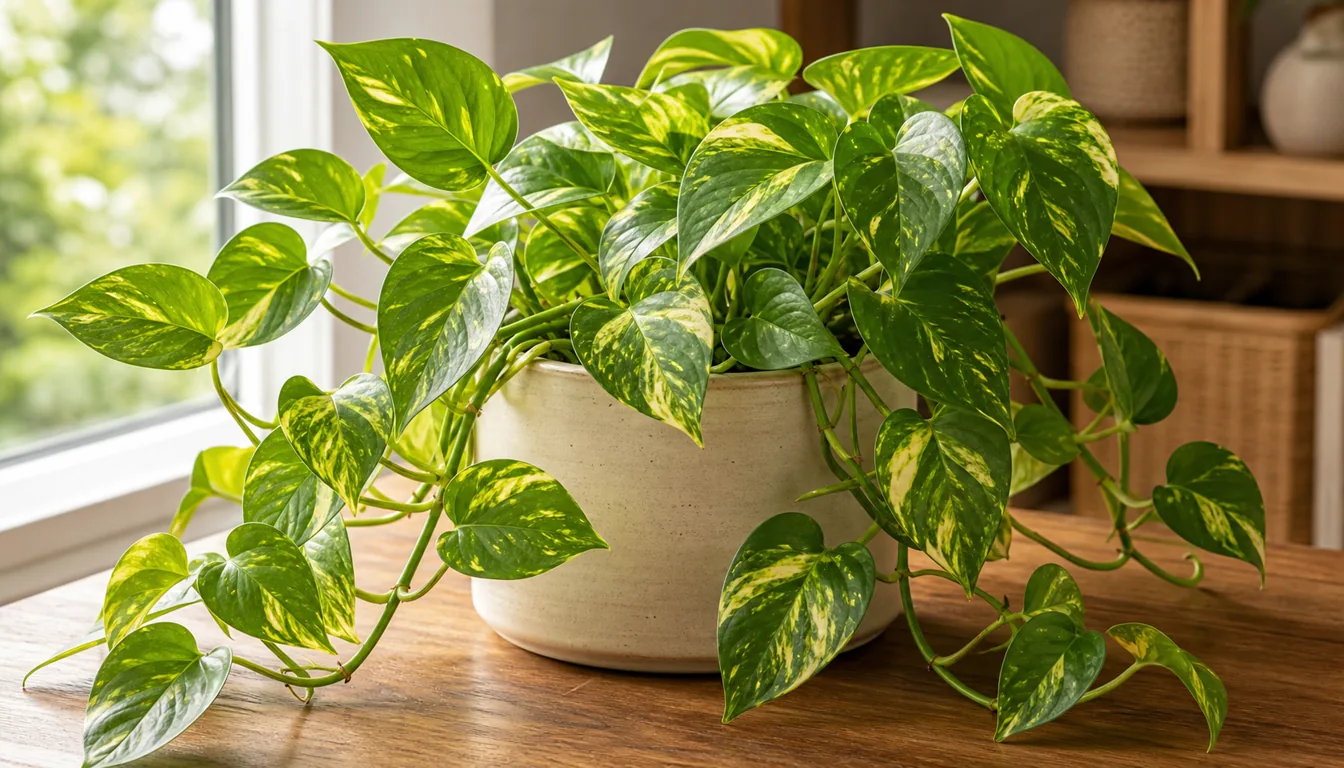
Golden Pothos
A forgiving vine that can climb or trail in less floor space.
African Violet
African Violet is a windowsill bloomer that rewards steady, small-pot care.
Air Plant
Air plants are living sculptures that thrive without soil, anchoring to driftwood, rocks, or shells while drawing…
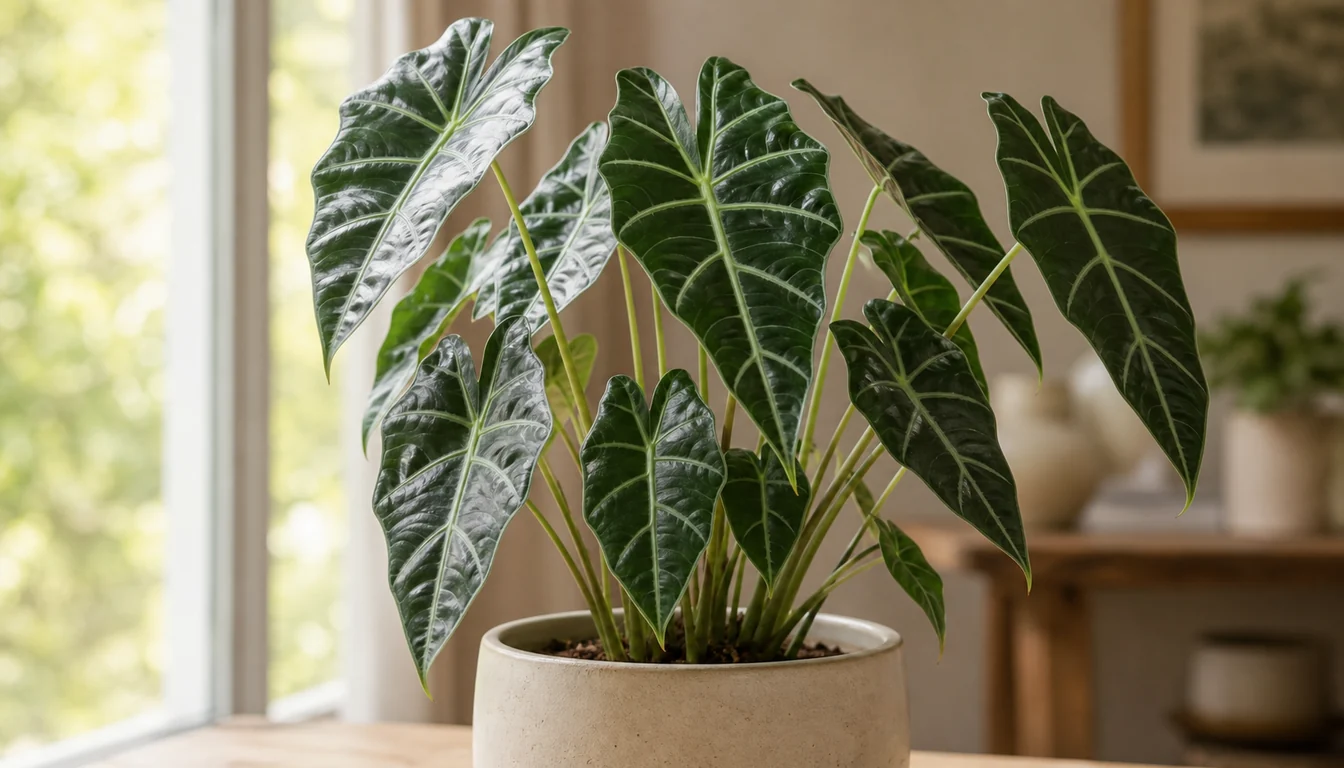
Alocasia
Alocasias include compact, textured houseplants and large elephant ears that need substantial floor space.
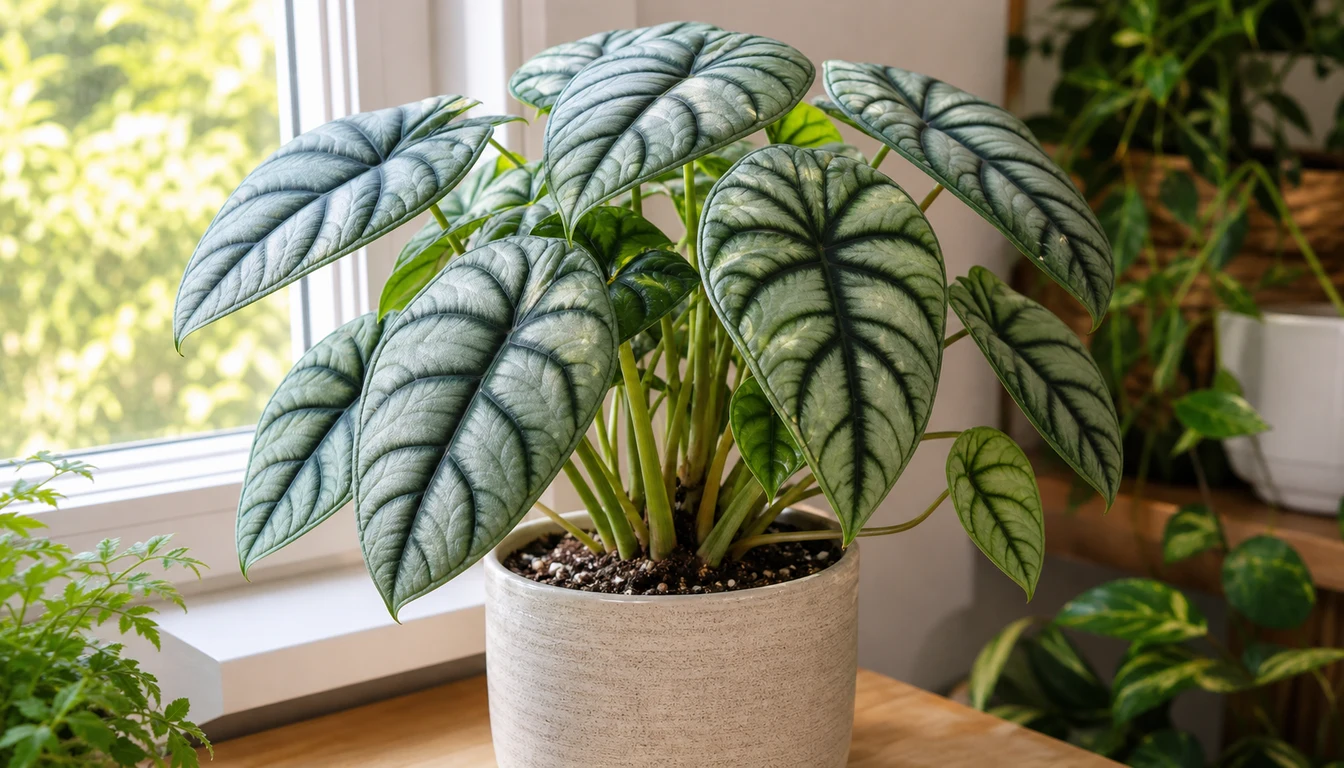
Alocasia Dragon Scale
Alocasia Dragon Scale has thick, quilted-looking leaves with dark veins.