
How to Grow a Parlor Palm Without Overwatering Its Fine Roots
Chamaedorea elegans Arecaceae
Parlor Palm is a slow understory palm with slender stems and soft pinnate fronds. Nursery pots usually contain several solitary seedlings, so successful care depends on useful filtered light, a carefully checked root zone, and restraint with repotting and fertilizer.
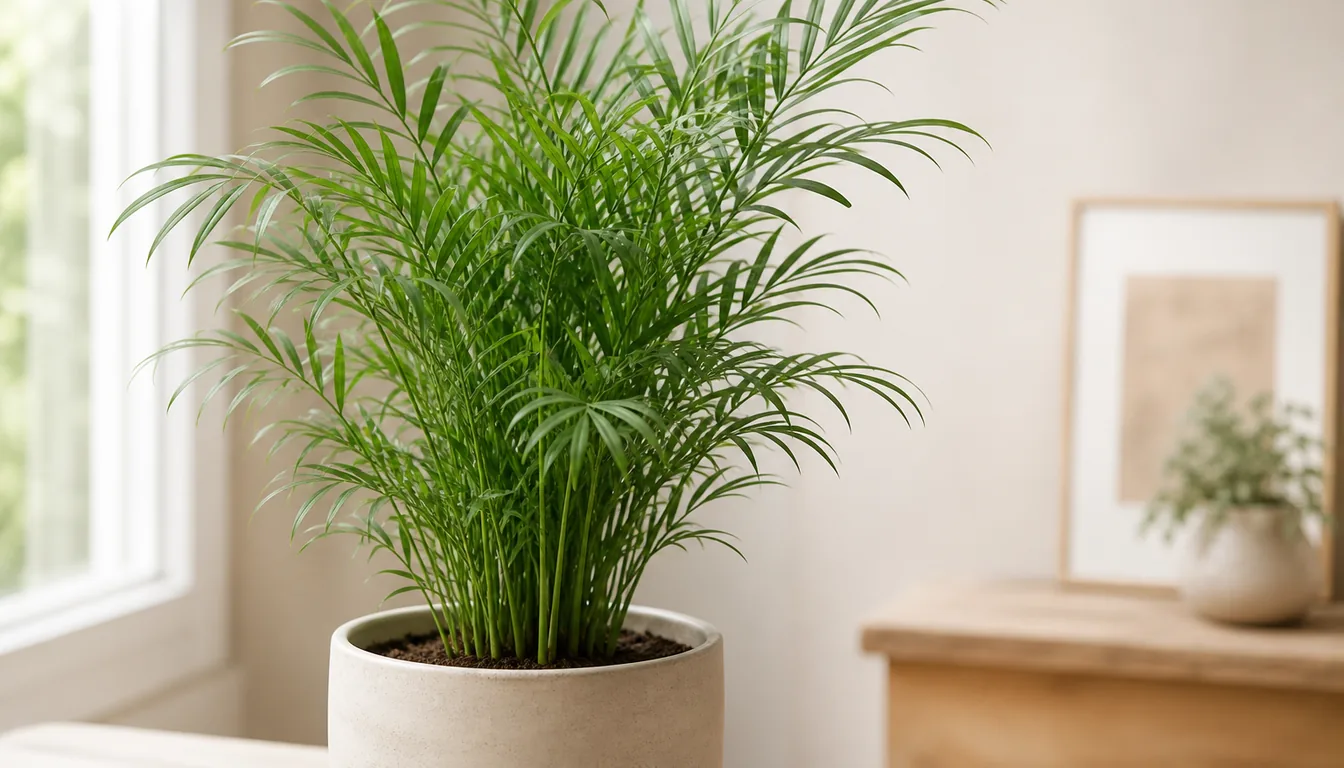
Care snapshot
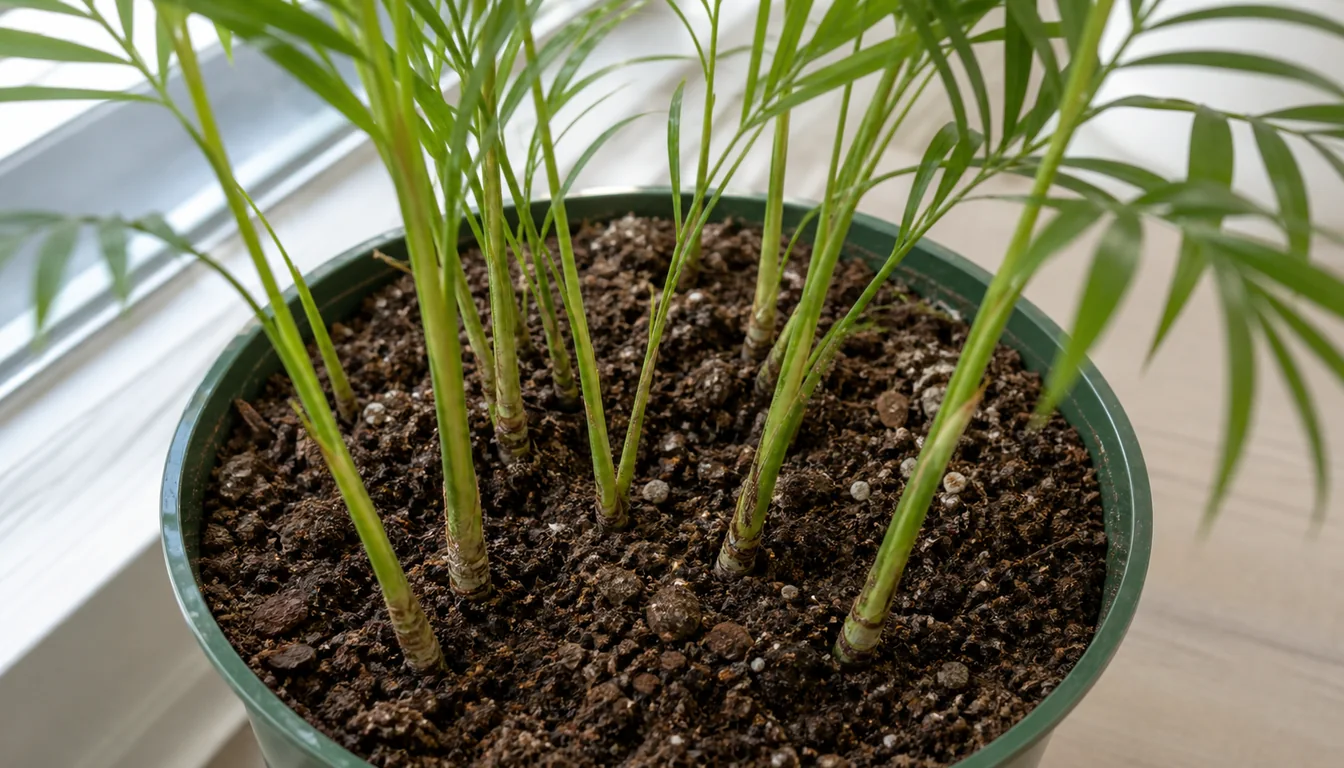
A Full Pot Is Usually Several Solitary Palms
Parlor Palm is a solitary understory palm, even though a store pot often looks like one naturally clumping plant.
Growers place several seedlings together to create immediate density. Each green stem is an individual palm sharing the same root zone and competing slowly with its neighbors.
Inspect the center before buying.
Healthy outer fronds can hide yellow inner stems, scale, stale wet mix, or a crowded sleeve inside a decorative cachepot. Choose firm green stem bases and active new fronds rather than the tallest plant.
Height can reflect age or stretch, while an evenly green center shows that the group is coping together.
- Look between the outer fronds for yellow or collapsed inner stems.
- Check leaf undersides and stem joints for stippling, webbing, wax, or scale. Smell the mix and reject a pot with a sour wet root zone.
- Confirm that the nursery pot has an open drainage hole.
- Choose the frond spread that the room can hold without constant brushing.
Some stems may lose the competition as the group matures. One declining seedling does not mean the entire pot is failing.
Follow the yellow stem to its own base and compare it with the moisture, light, and condition of the remaining palms before changing care for all of them.
Routine division is rarely the practical way to make more Parlor Palms. Pulling the group apart damages fine intertwined roots, and a small division recovers slowly.
Seed is the normal propagation route.
For most indoor growers, buying another healthy small pot is safer than dismantling a stable cluster.
Lower Light Is Tolerance, Not a Growth Setting
Parlor Palm survives among lower-light houseplants better than many palms, but it still needs visible filtered light to replace old fronds.
Best growth occurs in brighter filtered light.
A room that merely keeps the leaves green while each new frond opens smaller is maintaining decline, not supporting the plant.
Watch the newest spear and the frond that follows it.
A normal slow palm may wait a long time between fronds, yet the new leaf should still reach a useful size and color.
Repeatedly smaller leaves, widely spaced leaflets, and the loss of old fronds faster than replacements point toward weak light. Hot direct sun produces another pattern.
Indoor-grown leaflets may bleach or turn pale on the exposed side, then dry at the edge.
Reduce the hot beam and judge new tissue.
Do not move a shade-adapted palm abruptly into strong sun in an attempt to accelerate its naturally slow growth.
Check the Wet Center Before Watering the Cluster
Water after the surface has dried slightly, the pot feels lighter, and the center of the clustered stems no longer hides persistent wet mix.
Push a wooden skewer or finger into an open space near the middle. The surface and outer edge can dry while the protected center remains damp.
When the root zone is ready, water the whole pot until excess leaves through the drainage hole.
Empty the saucer or cachepot.
A small surface splash does not reach deeper roots, while repeated top-ups keep the crown area damp without creating a useful wet and drying cycle.
One old lower frond can yellow as the palm redirects resources. Several inner stems yellowing above wet mix are more concerning.
Widespread yellowing with soft bases, a sour smell, or a pot that stays heavy calls for a root-zone correction rather than another drink.
Water use falls when days shorten, temperatures cool, or the palm moves farther from a window.
Let those conditions lengthen the drying interval naturally. The correct timing comes from the pot and plant, not from repeating the summer routine in winter.
Brown Tips Need a Cause Before a Scissor
A brown leaflet tip records stress, but it does not name the cause.
Dry room air, a root ball that became too dry, accumulated fertilizer salts, hard or treated water, and hot exposure can create similar edges.
Check when the damage appeared and whether it affects many fronds before changing several conditions at once.
White crust on the pot or mix supports a salt problem. Flush the root ball with suitable water and let the excess drain, then reduce unnecessary feeding.
When damage follows repeated dry pots, correct the watering check.
When it develops only on the window-facing side, reassess heat and direct exposure.
Fine stippling across the leaflets is not ordinary tip burn. Inspect the undersides with a flashlight for mites and webbing.
Scale can sit on stems, and mealybugs can hide where fronds emerge.
Confirm the pest before choosing a treatment because slow palm foliage takes a long time to replace.
Trim only fully dead brown tissue when appearance matters.
Leave a narrow dry margin rather than cutting into green tissue.
A palm frond does not regrow from its clipped tip, so removing a mostly green frond reduces the leaf area available to support the next one.
Do not shorten a Parlor Palm stem at mid-height because a cut stem does not branch into a lower crown. Remove a completely failed stem at its base only after tracing the damage to that individual seedling.
- Brown Tips and White Crust
- Flush accumulated salts and reduce unnecessary fertilizer.
- Tips Follow a Dry Pot
- Improve the moisture check without keeping the center wet.
- One Hot Exposed Side
- Reduce direct sun and protect remaining green tissue.
- Fine Stipple and Webbing
- Isolate the plant and confirm spider mites before treating.
- Sticky Stems or Hard Bumps
- Inspect closely for scale rather than blaming dry air.
Protect Fine Roots From Oversized Pots and Excess Feed
Repot only when roots and old mix prevent even watering, the container has become unstable, or the root ball has clearly filled its space.
Normal slow growth is not a repotting signal.
Disturbing fine roots can pause an already slow palm for a long time.
Choose a drained pot that closely follows the root ball and a humus-rich indoor mix that holds moisture while regaining air.
A deep oversized container leaves unused mix wet around the grouped seedlings. Move the cluster intact when possible instead of teasing every stem apart.
Feed only while useful new growth and adequate light support nutrient use.
A weak palm in dim light cannot turn extra fertilizer into a larger frond, but salts can remain in the pot and damage tips. Periodic thorough watering that drains freely helps carry residue out of the root zone.
- Roots or collapsed mix have changed how the pot accepts water.
- The next container closely follows the existing root ball. The cluster can move without being pulled into small divisions.
- New fronds and useful light support any planned feeding.
- Drainage can carry dissolved residue out of the pot.
Keep the Pet-Safe Palm Away From Drafts and Traffic
The ASPCA lists Parlor Palm among non-toxic plants for cats and dogs.
Check the scientific name because the word palm appears in common names for unrelated plants with very different safety profiles.
Non-toxic also does not make chewing or eating the plant desirable.
Give the arching fronds room away from doorways, heater vents, air-conditioning blasts, and repeated brushing. Cold drafts can damage a tropical palm, while traffic tears leaflets that will not repair themselves.
A steady protected position suits its slow replacement rate.
Indoor plants rarely fruit, but NC State notes that juice from the fruit may irritate sensitive skin.
Avoid handling rare fruit unnecessarily and wash after contact. This caveat does not change the ASPCA non-toxic listing for cats and dogs.
Frequently Asked Questions
Can a Parlor Palm grow in low light?
It tolerates lower light better than many palms, but visible filtered light is still needed to replace old fronds. Repeatedly smaller new fronds and ongoing old-frond loss mean the room is too dim for steady growth.
Why does my Parlor Palm have brown tips?
Check root moisture, room dryness, hot exposure, water quality, fertilizer residue, and mites before trimming. White crust supports salt buildup, while stippling and webbing support a mite problem.
Should I divide a crowded Parlor Palm?
Usually no.
The full pot commonly contains several solitary seedlings with intertwined fine roots.
Division can leave weak sections that recover slowly.
Move a healthy cluster intact unless separation is necessary to save viable stems.
Is Parlor Palm safe for cats and dogs?
Yes.
The ASPCA lists Chamaedorea elegans as non-toxic to cats and dogs.
Confirm the scientific name because not every plant with palm in its common name shares that listing.
Sources & References
Related Plants
Majesty Palm
A larger palm that asks for stronger light and more exact moisture management.
ZZ Plant
An upright foliage plant for readers who value drought tolerance over soft palm texture.
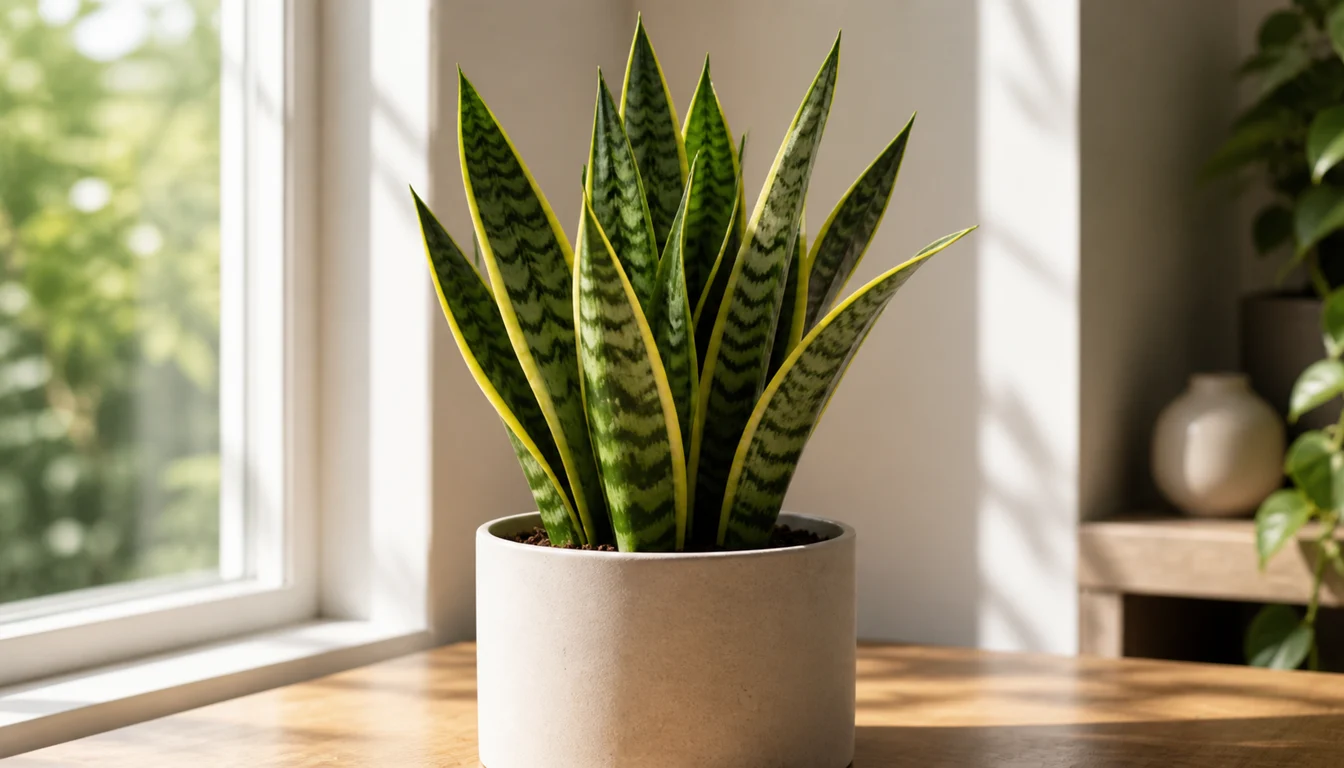
Snake Plant
An architectural houseplant that holds an upright shape in modest room light.
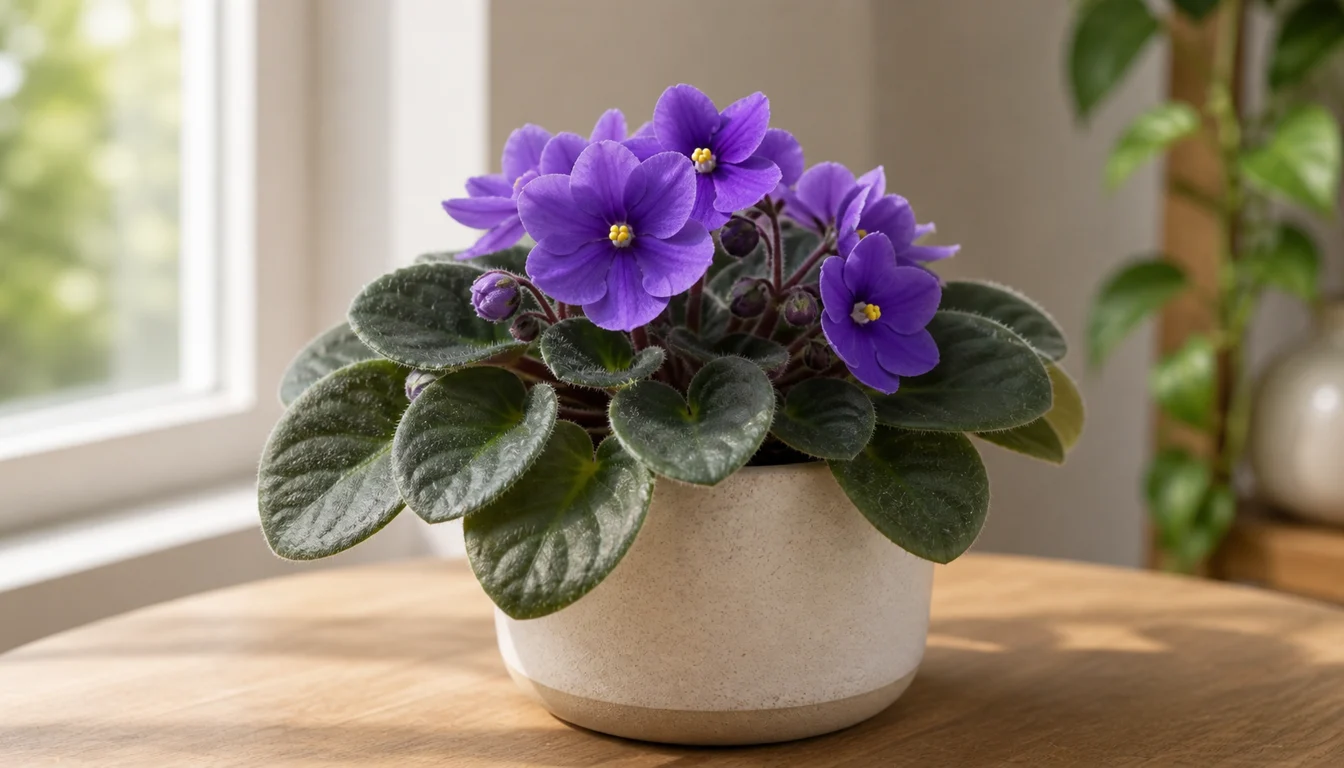
African Violet
African Violet is a windowsill bloomer that rewards steady, small-pot care.
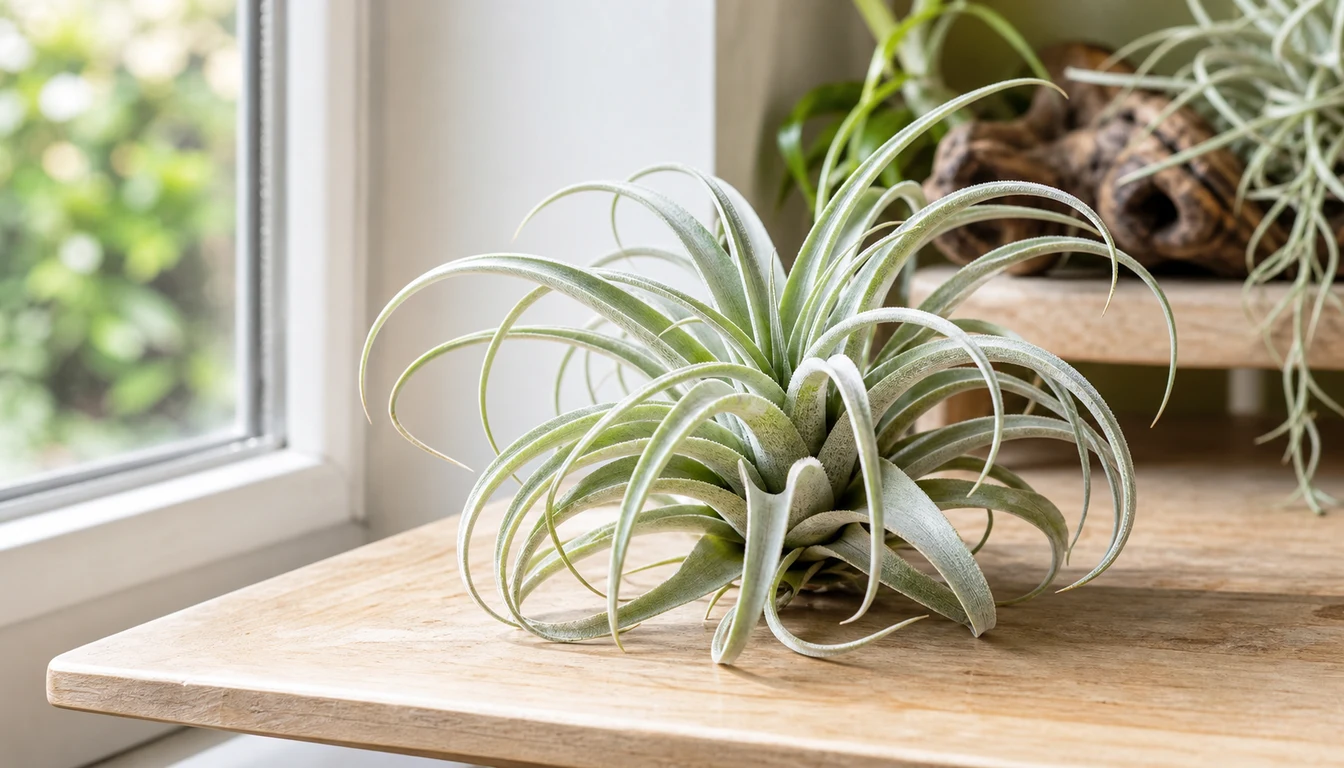
Air Plant
Air plants are living sculptures that thrive without soil, anchoring to driftwood, rocks, or shells while drawing…
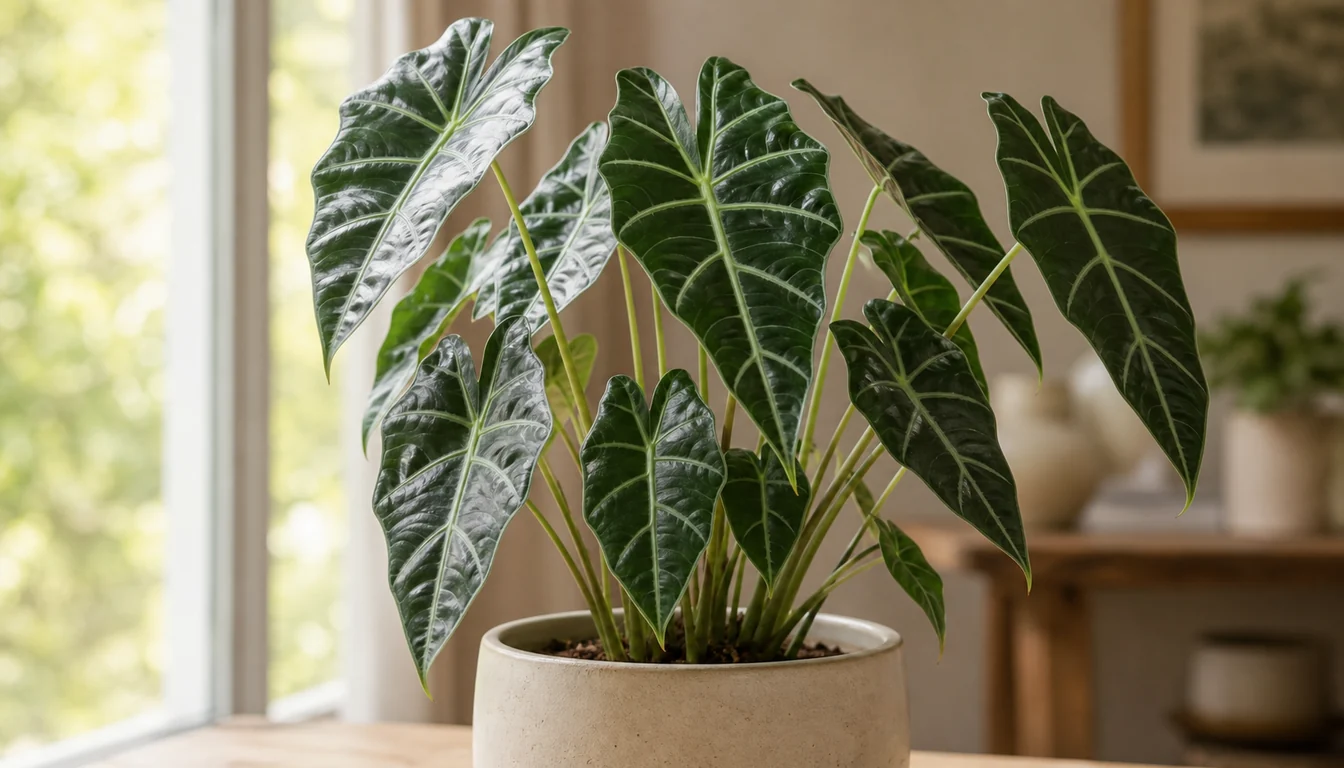
Alocasia
Alocasias include compact, textured houseplants and large elephant ears that need substantial floor space.