
How to Grow Marble Queen Pothos and Read Changes in Its Color
Epipremnum aureum 'Marble Queen' Araceae
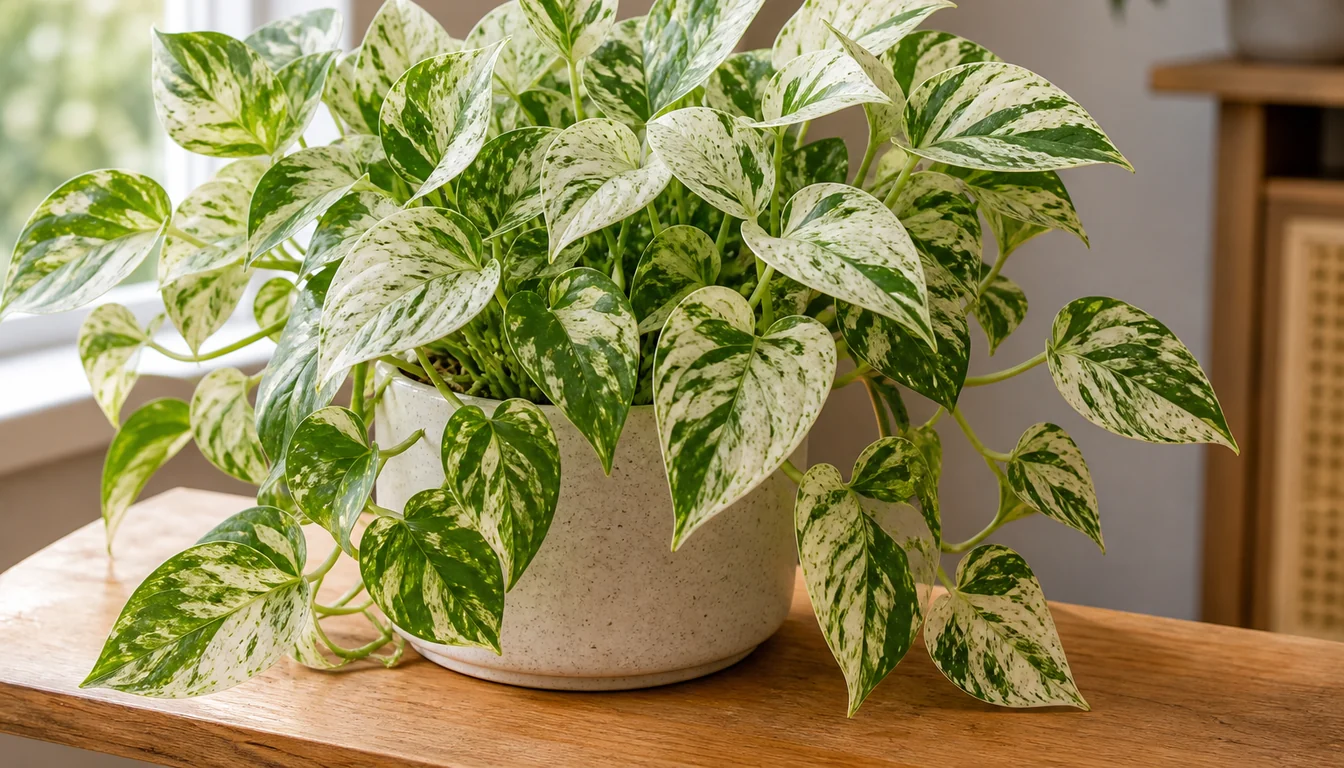
Marble Queen pothos has white-and-green marbled leaves on trailing or climbing vines. Bright indirect light supports growth, but a change in the pattern needs a closer look at the whole shoot, its roots, and recent conditions.
A greener leaf, a persistently green vine, and a brown damaged patch call for different decisions. Pruning can change which growth remains, but it cannot guarantee the color of the next leaf.
Care snapshot
Marbling Varies, but a Green Shoot Deserves a Closer Look
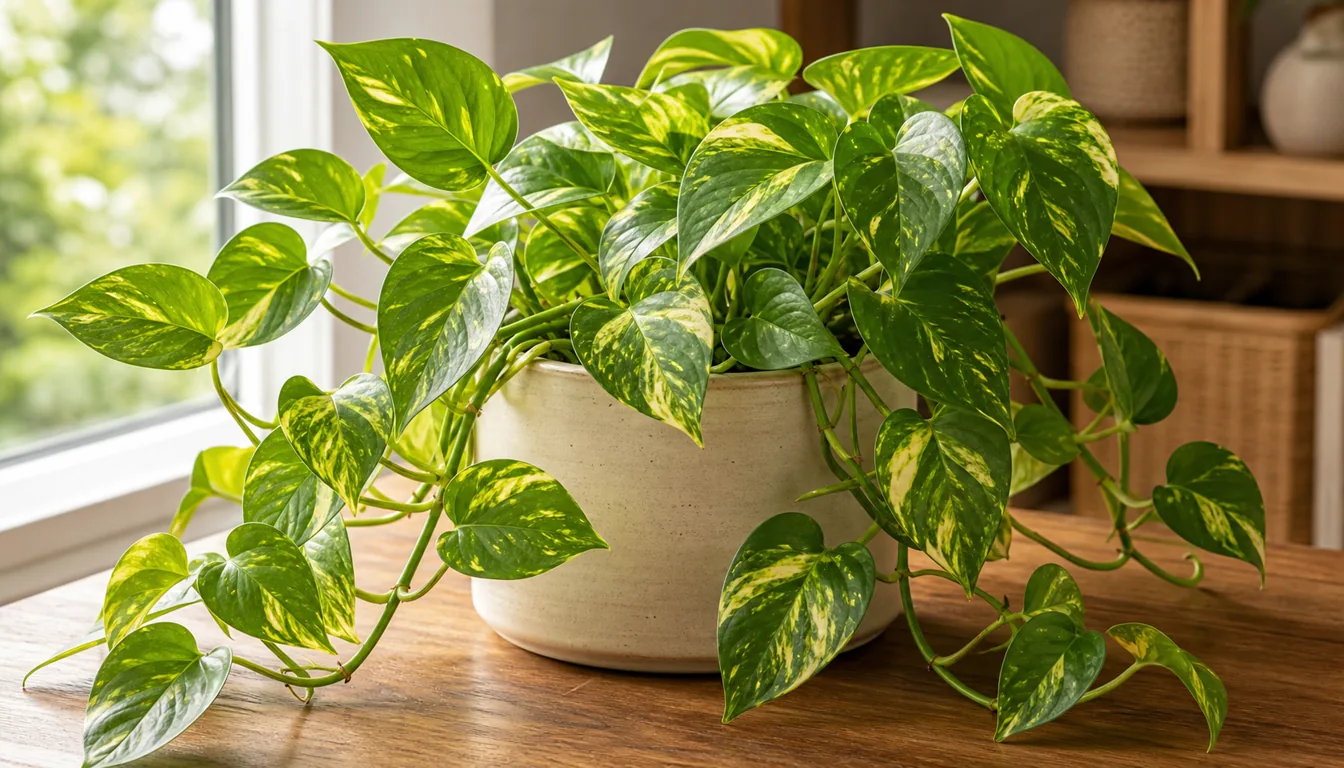
Marble Queen is a white-variegated cultivar of Epipremnum aureum. Golden pothos has yellow splashes, while Neon is predominantly yellow-green. Those are different appearances within the species, so a care decision starts with the cultivar rather than treating every pale leaf as sick.
The white and green areas are distributed unevenly. One leaf can carry more pale tissue than its neighbor, and a photograph of two different leaves cannot show whether either has changed since opening. A record of the same vine over time gives a better basis for judging a loss of marbling.
- A differently patterned leaf
- Compare the surrounding leaves and the next growth before changing care.
- New growth becomes less patterned across several vines
- Review the light and root environment, particularly after moving the plant.
- One shoot continues producing plain green leaves
- Reversion is a possibility. Trace the whole shoot before deciding whether to prune.
- Pale tissue turns dry and brown
- The tissue is damaged. Its position and recent exposure help guide investigation.
RHS guidance for houseplants separates reversion from reduced variegation associated with inadequate light or waterlogging. These explanations can overlap with other stress, so brighter light alone is not a universal cure. A green shoot is also not a disease that spreads by touching neighboring leaves.
The plant’s health includes intact roots, continuing growth, and sound foliage as well as the desired pattern. A heavily white plant with failing roots is not a better specimen simply because it photographs brightly.
Bright Indirect Light Supports Growth Without Forcing Color
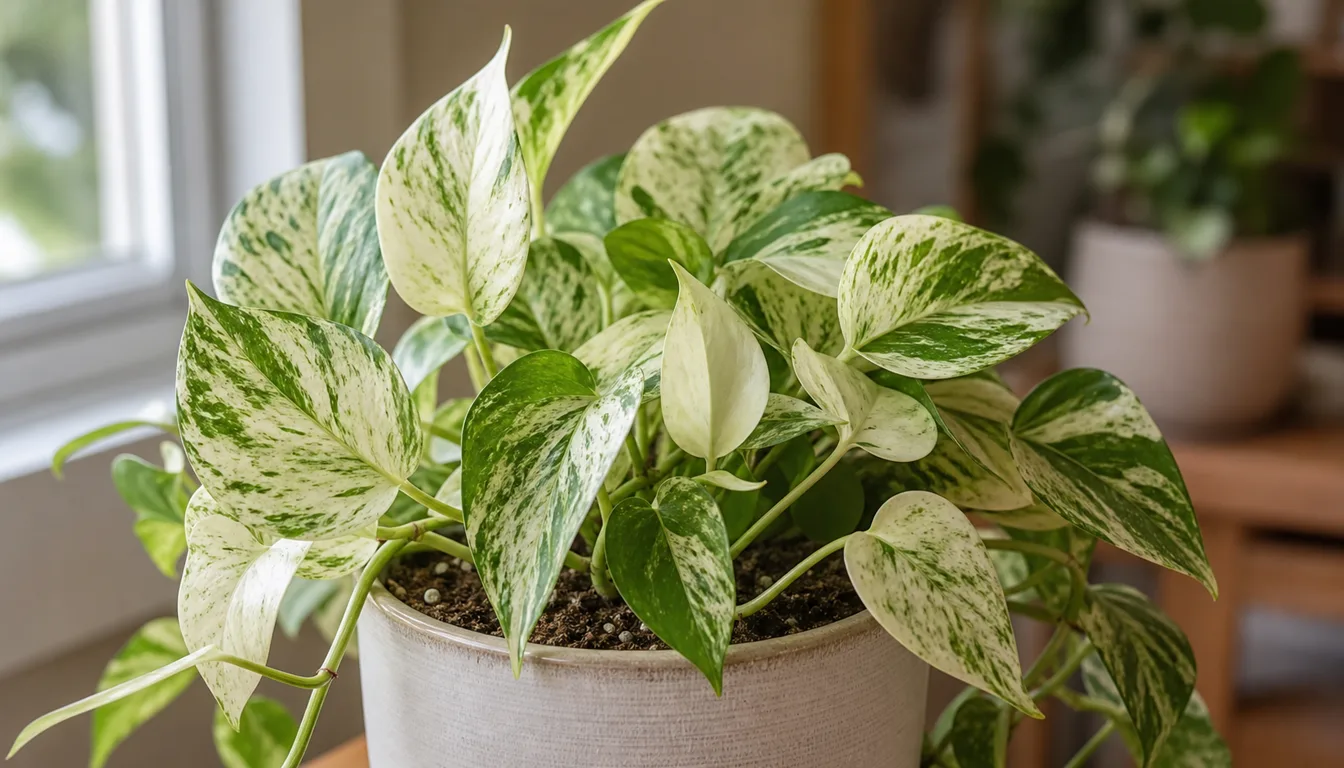
A bright position protected from harsh direct sun suits Marble Queen. Deep shade can reduce pothos growth and variegation, but an immediate move into hot sun can damage the pale parts of its leaves. The useful change is better illumination without a sudden increase in heat or exposure.
A window’s direction is only part of the setting. Curtains, outdoor shade, season, and the distance to the leaves determine how much light reaches the plant. The top of a hanging pot can remain shaded even when the longest vine reaches a bright area.
UF/IFAS associates scorched patches within variegated areas with excessive light or heat. Affected tissue will not recover its original appearance. New leaves and the absence of further damage are more useful for judging the adjusted position than waiting for a brown patch to disappear.
The Root Ball Sets the Watering Interval
An established Marble Queen can have a slightly dry surface before it is watered thoroughly and allowed to drain. Its white pattern does not set a separate watering clock. Plant size, roots, pot material, medium, temperature, and light all influence how quickly the pot dries.
A nearby Golden pothos is therefore an imperfect watering reference, even when both plants receive similar light. A smaller root system in a larger plastic pot can leave much more wet medium than a full root ball in porous terracotta.
The combination of pot weight and moisture below the surface is more useful than a drooping leaf alone. Dry roots may need water, while damaged roots in persistently wet medium can leave the leaves wilted too. Standing runoff in an outer pot is worth checking before another watering.
- Light pot and dry medium
- Water so the root ball becomes evenly moist, then let excess drain away.
- Heavy pot and wet medium
- More water is unlikely to solve wilt. Check drainage and continuing root or stem decline.
- Mix dries unevenly or water bypasses the root ball
- Inspect the medium and root crowding rather than simply shortening the watering interval.
An airy houseplant potting mix supports both moisture retention and oxygen around roots. Repotting becomes useful when root crowding or degraded medium prevents that balance. A larger pot is not the automatic answer for a plant whose roots are already deteriorating.
Fertilizer follows active growth and its product label. A slow-growing plant in dim winter light generally has less demand than one growing under good supplemental light. Extra fertilizer cannot restore lost marbling caused by an unsuitable position or repair waterlogged roots.
When Pruning a Green Vine Makes Sense
Pruning is a choice about the plant’s future shape and appearance. If one vine keeps producing plain green growth while the others remain marbled, removing that shoot can preserve a predominantly patterned display. It does not prove that the entire pot was short of light.
The distinction matters because a single green leaf provides less information than a continuing green shoot. Cutting every less-marbled leaf removes healthy foliage without necessarily changing what the growing tip will produce.
- Trace the shoot from its tip toward the base so you can distinguish a continuous green section from a single differently patterned leaf.
- If the goal is to remove reverted growth, cut it back to the part carrying the desired variegated growth with clean, sharp tools. Keep a viable node on the retained stem.
- Watch the new growth before taking more off. Its appearance shows what developed after the cut, rather than confirming a promised color outcome.
A green cutting can still be a viable pothos cutting. Keeping it is reasonable if plain foliage is acceptable. Selecting a healthy marbled shoot better matches a marbling goal, but the pattern of its existing leaf cannot guarantee every leaf produced by the new plant.
A Cutting Needs a Node and Healthy Tissue
A stem cutting needs the main stem and its node, not just a leaf stalk. The brown aerial-root nub can help locate the junction, but a visible nub is not a tested ranking of which cutting will root fastest.
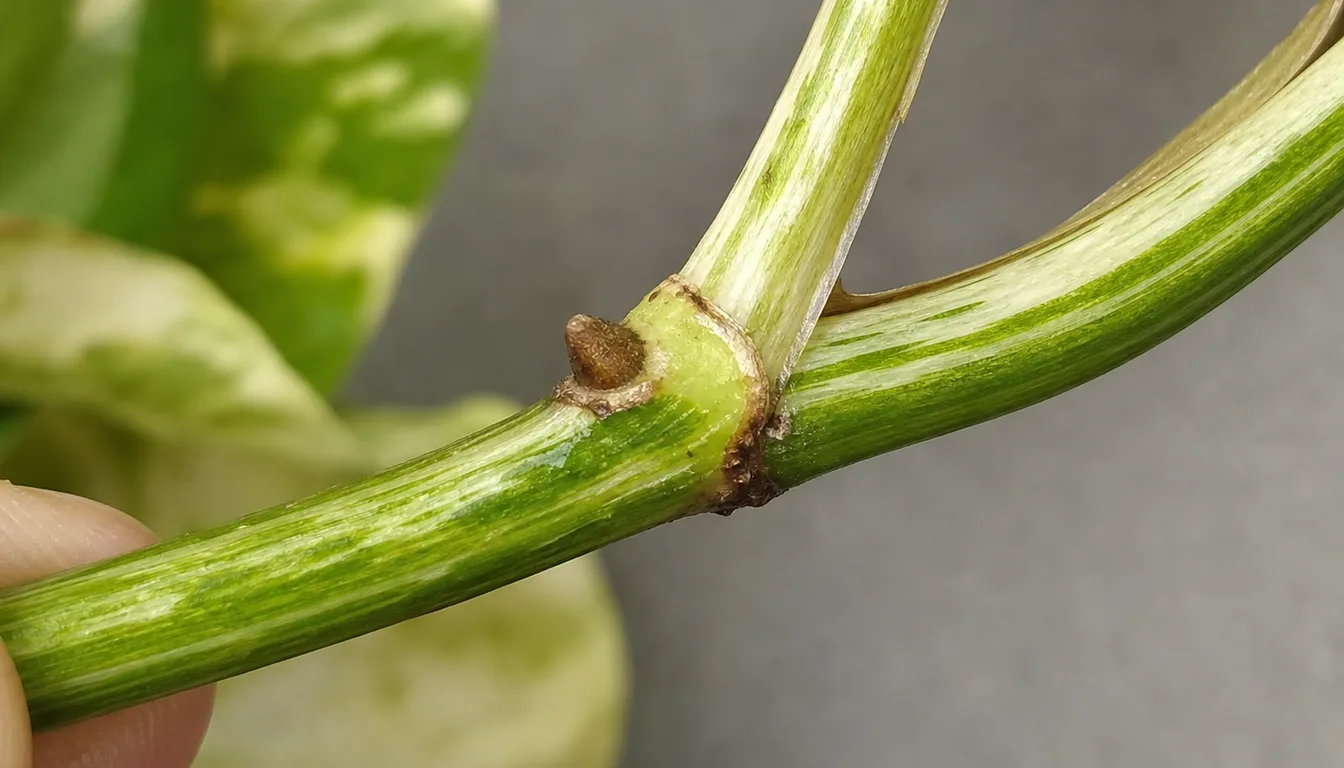
A healthy leafy tip or a shorter stem section can supply suitable material. UF/IFAS describes pothos propagation from one node with an attached leaf. The useful checks are living stem tissue, a growing point, appropriate orientation, and freedom from visible pests or decay.
For a marbled plant, a shoot already showing the desired pattern is a sensible selection. An almost white leaf does not reveal the condition of every bud on the stem, and an exact white-to-green ratio is not a reliable home test for future performance.
Water exposes developing roots for observation, while an airy rooting medium supports them out of sight. Both need suitable moisture and a warm, bright position out of harsh sun. Water-grown roots may show stress when transferred to potting mix, so early care must support establishment.
Root development determines when a cutting can be potted. A new leaf can open before a substantial root system is ready to support it, and pulling repeatedly at a rooting stem can damage what has formed. Soft, deteriorating material calls for reassessment rather than extra fertilizer.
Trailing and Climbing Change the Display
Trailing vines show many juvenile leaves across a shelf or hanging basket. A support gives the aerial roots a climbing surface and can help the plant develop larger leaves under suitable conditions. The pole itself does not supply the light or healthy roots needed for growth.
A stable support also changes the weight and balance of the pot. The growing tip needs room, and the plant must remain accessible for watering and pest inspection. Vines pressed behind furniture can be harder to examine than an open trailing display.
A bare top may reflect the way the pot was originally filled, later leaf loss, or unsuitable conditions. Rooted cuttings can add foliage where there is room for their roots, but increasing density does not correct the cause of continuing leaf loss.
Pattern Loss and Tissue Damage Need Different Checks
Less white marbling leaves the tissue intact. Brown dry areas, spreading yellowing, collapsing stems, or newly distorted growth add evidence of stress. Those changes deserve attention beyond selecting a prettier vine.
A yellow lower leaf can be aging, especially while the rest of the plant grows normally. Several declining leaves with wet medium justify checking the roots and drainage, but they do not rule out light, cold, nutrition, or pests. A symptom can identify a useful next check without identifying the only cause.
Mealybugs may leave cottony wax at leaf joints, scale may appear as attached bumps, and spider mites can produce fine stippling and webbing. Inspection includes the undersides of old and new leaves as well as stems. A quick glance at one clean node cannot clear the whole plant.
Marble Queen Has the Species’ Toxicity Risk
Marble Queen is a cultivar of Epipremnum aureum, which ASPCA lists as toxic to dogs, cats, and horses. Insoluble calcium oxalates can cause pain and swelling when plant material is chewed. White markings do not make the leaves safer.
Loose cuttings and fallen leaves provide access even when the main pot is high. A hanging basket is useful only where the animal truly cannot reach the foliage or fallen pieces. If separation cannot be maintained, a plant with an appropriate non-toxic listing is a better fit.
Sap can also irritate human skin, so gloves are useful when handling cut stems. Children should not chew the plant. A non-toxic alternative still needs identification by species, because a broad genus name does not establish safety for every plant sold under it.
Sources & References
- University of Wisconsin Horticulture: Pothos, Epipremnum aureum
- NC State Extension, Epipremnum aureum Plant Details
- ASPCA, Devils Ivy (Epipremnum aureum)
- ENH894/EP151: Cultural Guidelines for Commercial Production of Interiorscape Epipremnum
- Iowa State University Extension, How to Propagate Houseplants by Stem Tip Cuttings
- University of Minnesota Extension, Managing Insects on Indoor Plants
- ASPCA, What to Do if Your Pet Is Poisoned
- University of Georgia Extension, Growing Indoor Plants with Success, Bulletin 1318
- Royal Horticultural Society, Leaf Damage on Houseplants
Related Plants
Golden Pothos
Golden pothos has yellow markings and shares the species’ trailing and climbing habit.
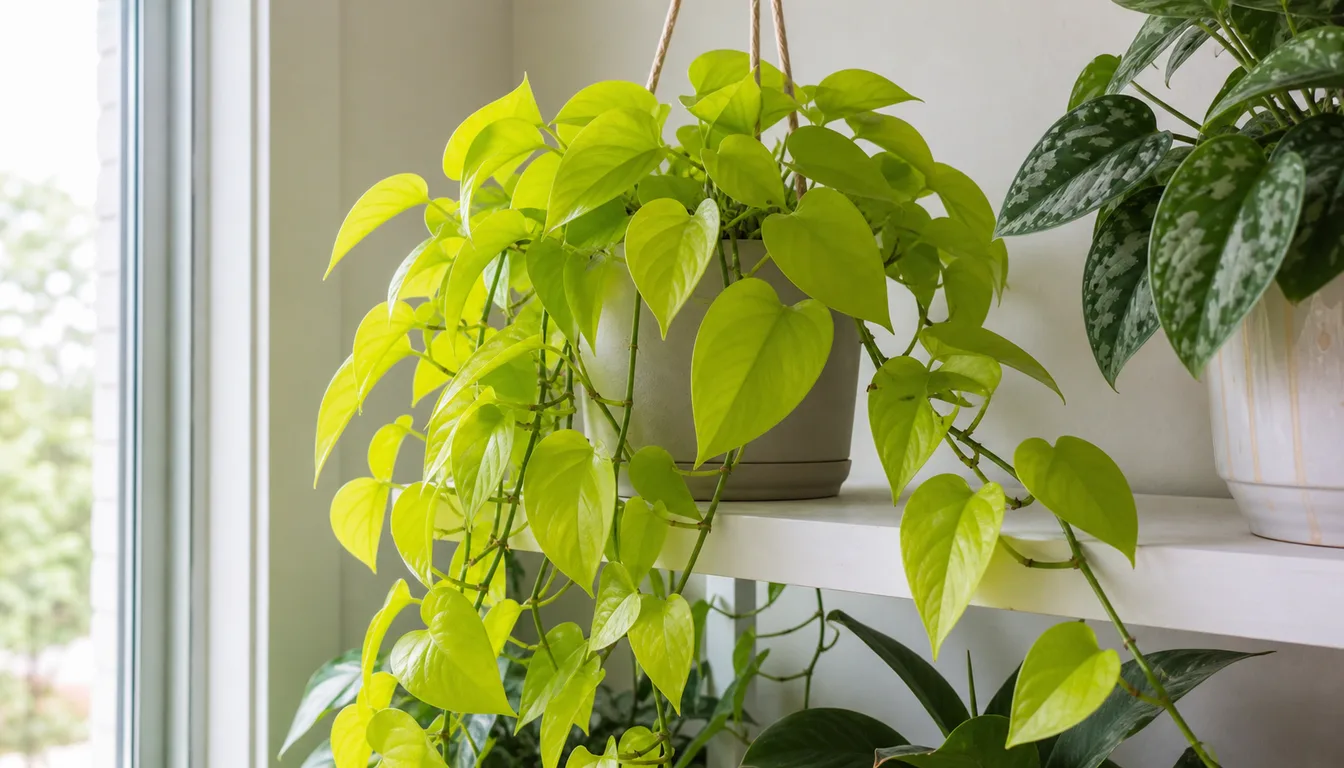
Neon Pothos
Neon has yellow-green foliage whose new leaves can be brighter than mature leaves.
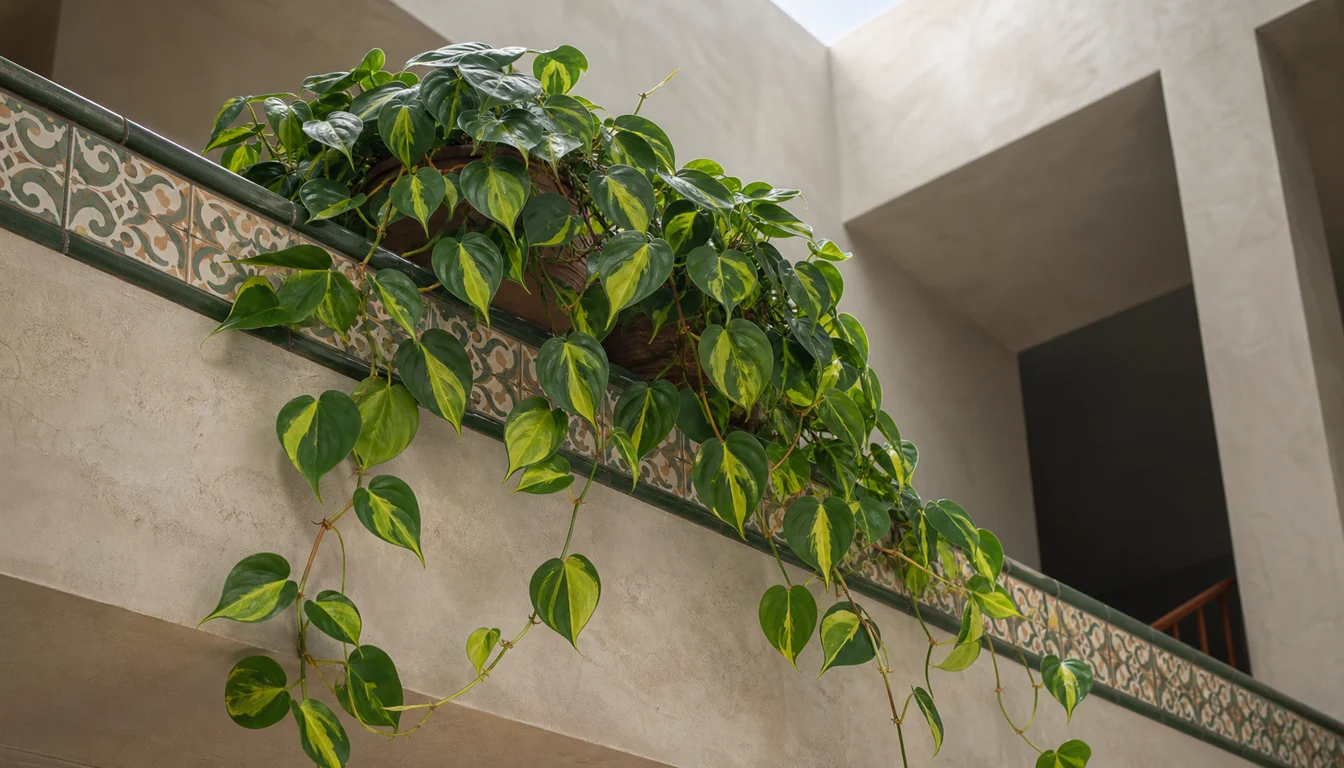
Philodendron Brasil
A trailing variegated plant with a different leaf shape and stripe pattern.
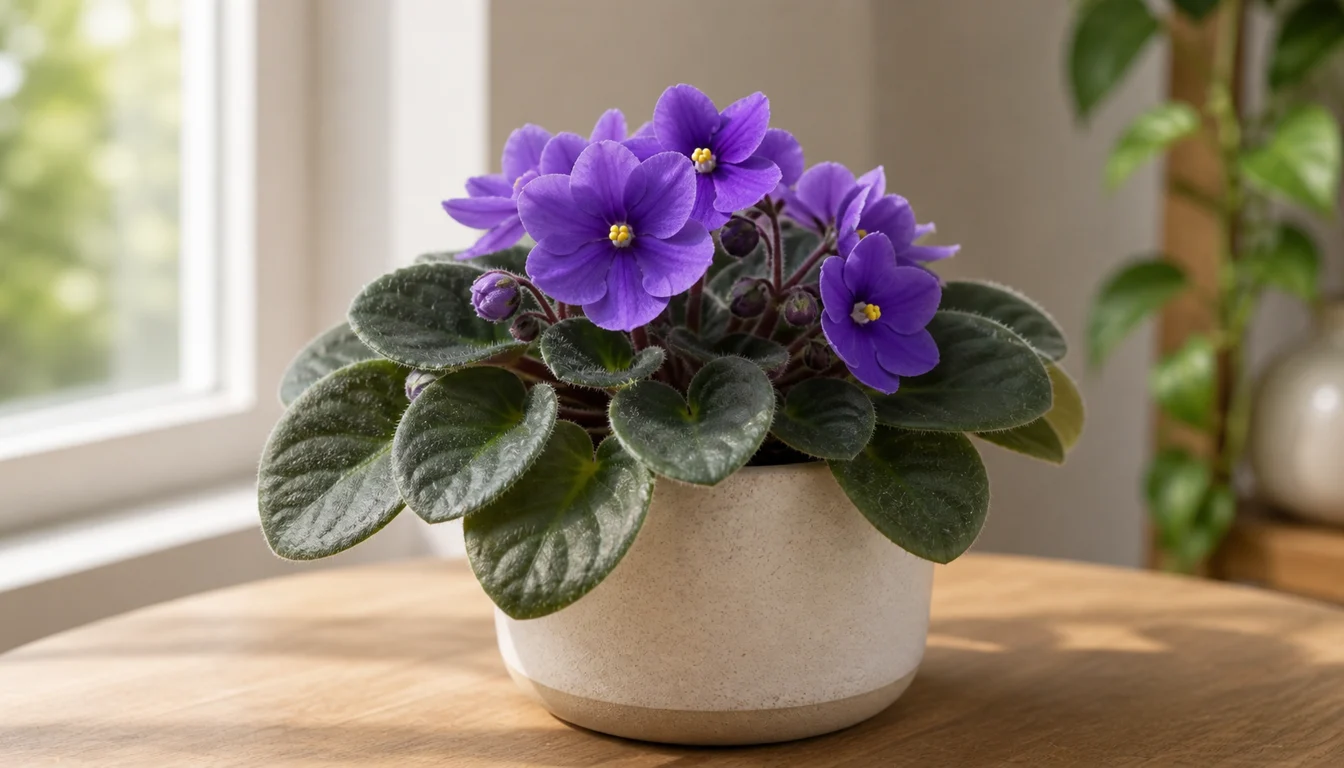
African Violet
African Violet is a windowsill bloomer that rewards steady, small-pot care.
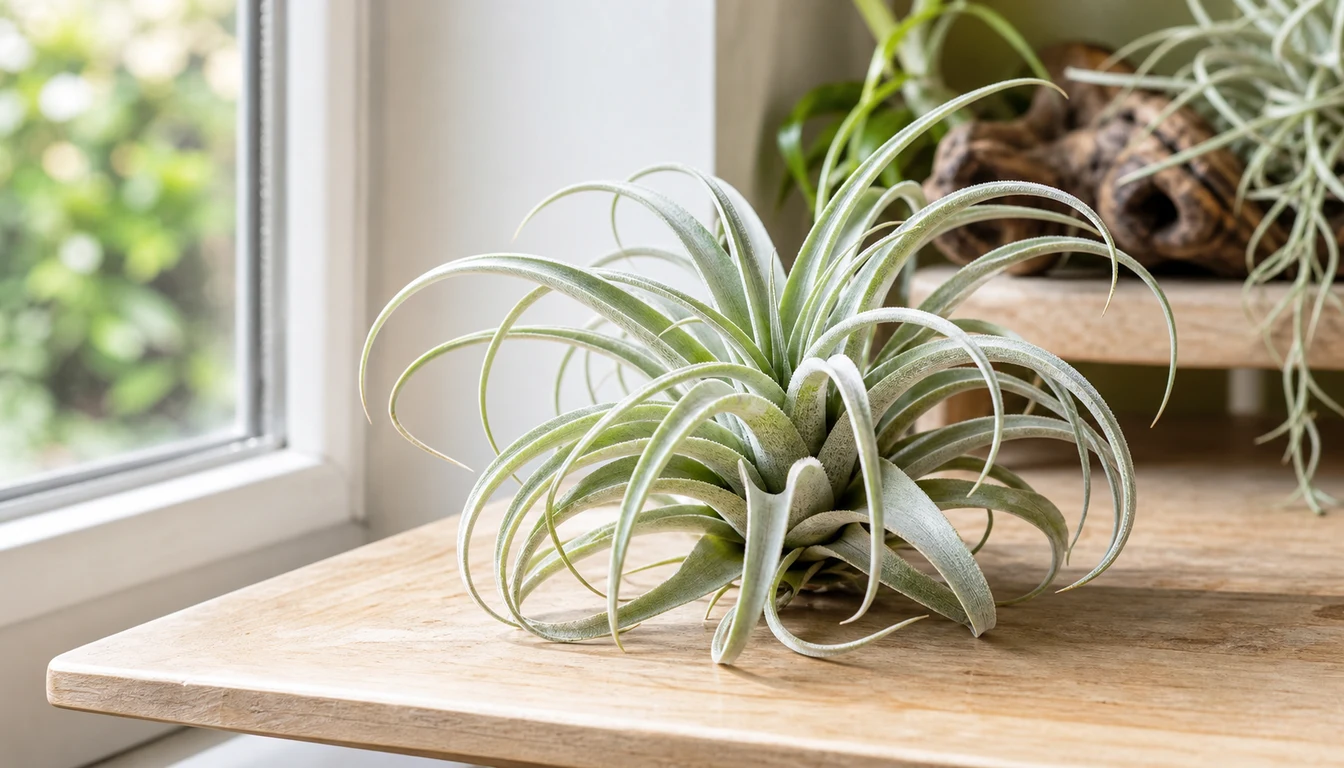
Air Plant
Air plants are living sculptures that thrive without soil, anchoring to driftwood, rocks, or shells while drawing…
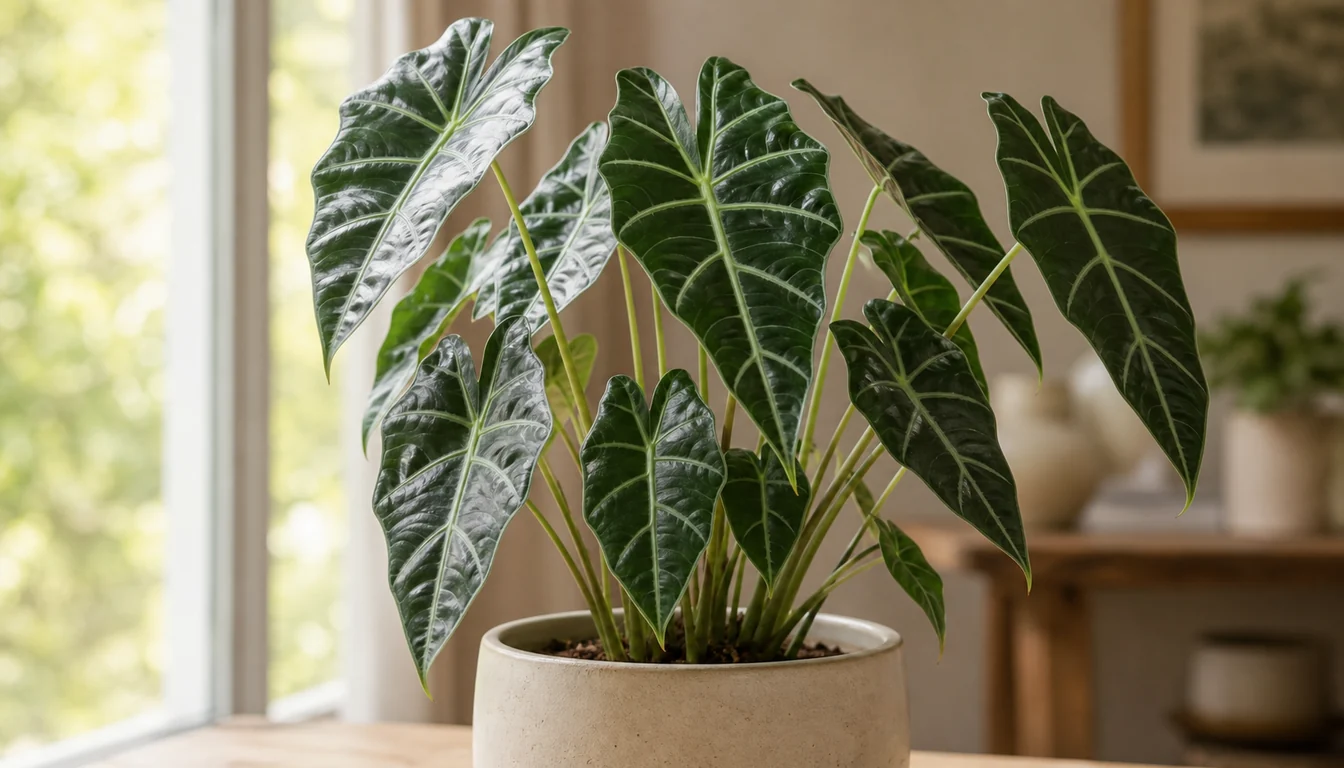
Alocasia
Alocasias include compact, textured houseplants and large elephant ears that need substantial floor space.