
Best Low-Light Plants for Dim Rooms and Shaded Corners
Choose Cast Iron Plant for broad, durable foliage, Snake Plant for a narrow upright shape, or ZZ Plant when you need a plant that tolerates drying between waterings. Pothos works for trailing growth, while Parlor Palm offers softer, arching foliage.
All still need usable light. A plant that tolerates a dim room cannot live indefinitely in darkness, and the easiest choice changes when pets chew leaves or the pot stays wet.
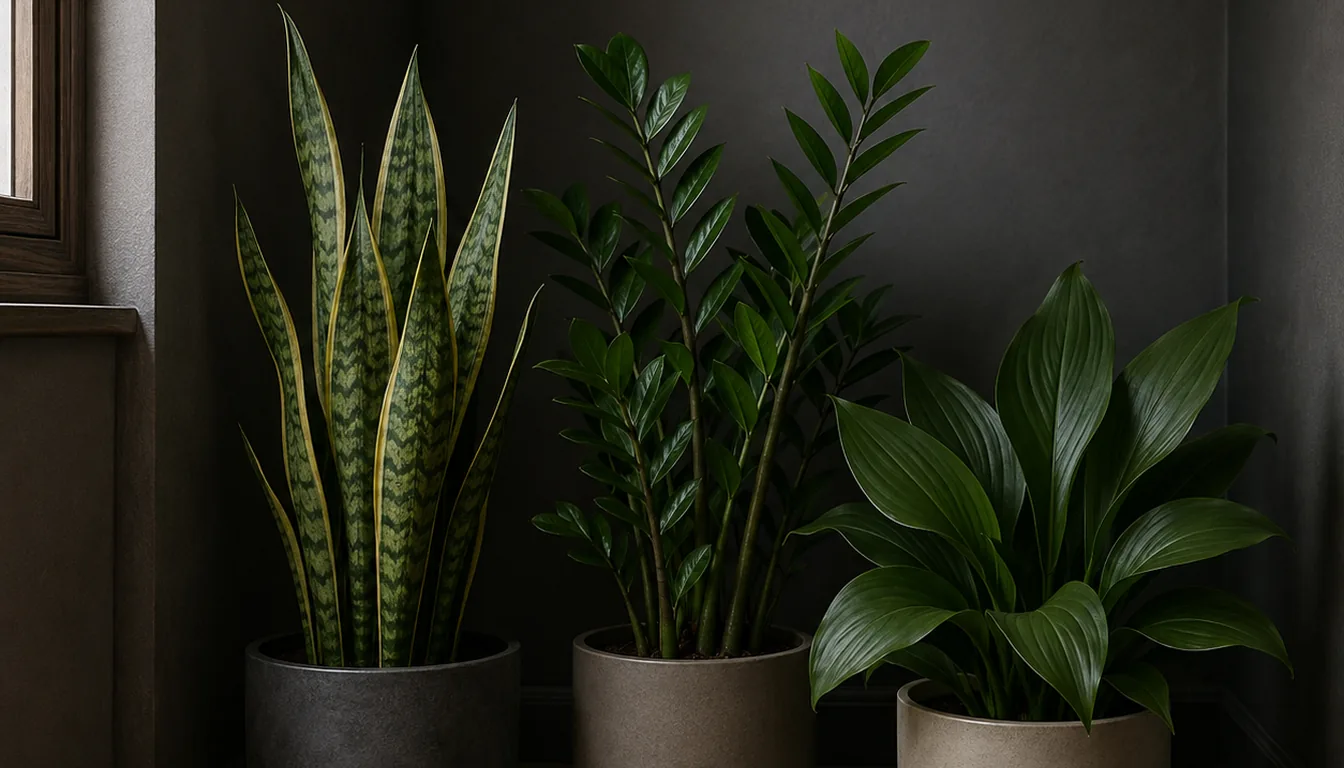
At a glance
Which Low-Light Plant Fits Your Room and Care Habits?
Start with the shape you have room for and the watering routine you can realistically follow. An upright plant on the floor, a vine above a desk, and a palm beside a chair occupy different spaces even when they tolerate similar light.
| Plant | Best reason to choose it | Tradeoff to accept |
|---|---|---|
| Cast Iron Plant | Broad green leaves in a shaded indoor spot | Slow growth, so buy the fullness you want |
| Snake Plant | Upright leaves where floor space is narrow | Wet soil is a greater risk than missed watering |
| ZZ Plant | Glossy foliage and tolerance of dry intervals | Slow growth and unsuitable access for leaf-chewing pets |
| Pothos | A trailing vine for a shelf near daylight | Sparse light can mean smaller leaves and less variegation |
| Parlor Palm | Arching fronds and a pet-friendlier choice | Allow space for the fronds and avoid prolonged dryness |
| Peace Lily | Broad foliage where you can check moisture regularly | Dim light can limit flowering, and leaves are unsuitable for pets to chew |
Cast Iron Plant grows as a leafy clump rather than a branching shrub.
Each long leaf rises from the base, which makes it useful beside furniture without needing a support or trellis. Its tolerance of shade does not make it fast growing, so a small pot is unlikely to become a large floor specimen quickly.
Choose a plant that already has the presence you need.
Snake Plant stores water in fleshy leaves and has a strongly vertical shape.
It is a practical choice where a palm would brush against a walkway, but a tall cultivar can become top-heavy in a light pot. Choose a stable container with drainage rather than making the root space much larger just for weight.
ZZ Plant has thick underground rhizomes that help it cope with dry intervals.
That makes it forgiving when you forget a watering, not when you keep topping up an already damp pot. Leave room around its arching growth instead of choosing solely by the nursery pot's width.
For a shelf, Pothos gives a different result.
The vine can trail toward the light, but the leaves near the wall may receive much less light than the growing tip. Inspect the whole vine when choosing placement.
A dark-green cultivar is generally a better starting point for a dim location than buying a highly variegated plant and expecting its markings to stay unchanged.
Parlor Palm suits someone who wants fine-textured foliage rather than solid blades or broad leaves.
It tolerates lower light but grows better with bright indirect light. Let the surface dry slightly between waterings while avoiding the extended drought you might allow for a ZZ Plant.
The fronds need room to spread without being repeatedly bent against furniture.
Peace Lily is reasonable when you can check moisture and value foliage as much as flowers.
It should not be the first purchase for someone who routinely leaves pots dry or wants dependable blooms at the back of a dark room. Choosing by those care differences is more useful than treating every plant sold as low-light tolerant as interchangeable.
How Can You Tell Whether the Spot Has Enough Light?
Assess the exact position of the leaves during daylight with room lights switched off.
A bright room can contain a dark shelf, especially when the window is beside the furniture rather than in front of it. Curtains, outdoor trees, roof overhangs, and neighboring buildings can matter as much as compass direction.
A north-facing window is often a useful starting point in the United States, but it is not a guarantee.
An unobstructed north window can offer more usable light than a south window blocked by a porch. Move your view to plant height and check what lies between the foliage and the glass.
Look again at different times of day before committing a large plant to the spot. A brief bright patch does not describe the rest of the day.
A phone photograph can make a dim corner look bright because the camera adjusts exposure, so do not use the photograph's brightness as the measurement.
A light meter can help compare the proposed shelf with a position nearer the same window.
Take readings at leaf level using the same device and orientation. Use them as observations alongside plant response.
Different extension references use different low-light bands, and a single reading cannot capture the daily amount of light or promise growth for every cultivar.
Watch the new growth after placement. A vine making progressively smaller leaves with longer bare gaps is giving more useful evidence than an old leaf that has stayed green.
A slow-growing Cast Iron Plant may look nearly unchanged for a while without being in immediate trouble, but continuing leaf loss is a reason to reassess the location.
For a windowless bathroom or interior office, decide on lighting before buying the plant. Humidity cannot supply the energy that leaves obtain from light.
An artificial plant is also an honest choice when you cannot provide daylight or leave an appropriate lamp running.
Why Does Watering Change When the Light Is Low?
A plant growing slowly in dim light usually uses water more slowly. Copying the watering schedule from a bright windowsill can therefore leave roots wet long after the surface looks dry.
A calendar can remind you to check the pot, but the condition of the mix decides whether you water.
For Snake Plant and ZZ Plant, let the mix dry between waterings. For Pothos and Parlor Palm, check the surface and the moisture below it before watering again.
Peace Lily needs closer attention to avoid repeated severe drying, while still needing air around its roots. These differences are why a universal weekly schedule is a poor fit for a mixed collection.
Lift a manageable pot before and after watering to learn the difference in weight. Check beneath the surface with a finger where you can do so without damaging roots.
If you use a moisture probe, treat its reading as another clue rather than allowing it to overrule a visibly wet mix or a pot that has hardly become lighter.
When water is needed, wet the mix and allow excess water to drain. Remove collected runoff from the saucer or decorative outer pot.
A nursery pot inside a cachepot makes that easier because you can lift it out, water it over a sink, and put it back after drainage stops.
Do not solve slow growth by moving a small root ball into a much larger container. The extra mix can remain wet around roots that are not using it.
Repot when the root system or degraded mix requires attention, using a container and potting mix suited to the plant. A well-draining commercial houseplant mix is a starting point, while the drought-tolerant choices may need a more open blend.
Feeding should follow active growth and the product label. Fertilizer cannot replace light.
Repeated applications to a plant that is barely growing can add salts without correcting the cause of weak growth. During darker months, reassess both watering and feeding instead of automatically repeating a summer routine.
Keep leaves reasonably clean so dust does not add another barrier to the limited light.
Wipe sturdy leaves gently with a damp cloth and inspect their undersides while you work. That gives you a chance to notice pests before assuming every change in appearance is caused by the room.
Which Plants and Expectations Disappoint in Dim Rooms?
Buy for the foliage you can support, not for a promise of flowers in a dark corner. Peace Lily may retain attractive leaves in lower light while flowering less freely.
Moving it into better indirect light is more relevant to a flowering problem than repeatedly adding bloom fertilizer.
Do not apply the low-light label to all succulents. Snake Plant and ZZ Plant tolerate shade much better than many sun-loving plants sold on the same shop display.
A Jade Plant, Aloe, or desert cactus should not inherit a dark placement just because its leaves or stems also hold water.
Highly variegated Pothos and brightly patterned cultivars can disappoint when color is the main reason you bought them. The plant may survive while its new leaves become less distinctive.
Prefer a greener form for the dimmer position, or improve the light before choosing a cultivar for its pale markings.
Plan for slow replacement of damaged leaves. Cutting away every imperfect leaf can remove much of the working foliage from a plant that is not making replacements quickly.
Remove dead or decaying material, but distinguish a cosmetic brown tip from a whole leaf that no longer contributes.
Outdoor hardiness zones do not rank indoor low-light performance. They describe winter temperature survival outdoors.
For a heated room, light at the leaves, drafts, drainage, and household access are the more useful buying checks.
Which Choices Are Better Around Cats and Dogs?
Start with Cast Iron Plant or Parlor Palm when a cat or dog can reach the foliage. The ASPCA lists both as non-toxic to cats and dogs.
That makes them preferable candidates here, although chewing plant material can still upset a pet's stomach and damage the plant.
Pothos, Peace Lily, ZZ Plant, and Snake Plant need a different access decision. Their leaves are not appropriate for pets to chew.
A trailing vine can eventually reach below a supposedly safe shelf, and a cat may be able to reach a pot that is well above a dog's height.
Check the botanical name when buying a palm. Parlor Palm is Chamaedorea elegans.
A common name containing the word palm does not establish that an unrelated plant has the same safety profile.
Choose a pet-safe plant before relying on a difficult placement. Putting a toxic plant farther into a dark corner to keep it away from a pet can create a light problem without reliably preventing access.
If you suspect a pet has swallowed a toxic plant, contact your veterinarian and keep the plant label available for identification.
When Should You Add a Grow Light?
Add lighting when the desired position cannot provide enough daylight and moving the plant would defeat the purpose of the location. A lamp over the intended shelf can make that space usable, but a ceiling bulb switched on briefly while you pass through is not equivalent to dedicated plant lighting.
Choose a fixture intended for plant growth and follow its distance and coverage instructions. The useful distance depends on its output, lens, and the area being lit.
A tall floor plant can have well-lit upper leaves and a shaded base, while a wide shelf may need a broader fixture rather than a stronger spot aimed at one pot.
University of Minnesota Extension suggests 12 to 14 total light hours for foliage houseplants. A timer makes that repeatable.
Include the daylight already reaching the plant rather than assuming every location needs the same extra lamp hours, and give the plant a regular dark period.
Judge the setup by subsequent growth. Look for new leaves with a normal shape and better spacing rather than expecting existing stretched stems to shorten.
If leaves near the fixture bleach or scorch, review the manufacturer's distance guidance and reduce exposure while you investigate.
Treat the lamp as part of the furnishing plan. Check that you can keep it in its working position, route the cord safely, and water without wetting electrical equipment.
A lamp that gets moved away whenever the room is used will not solve the original problem.
Is the Plant Too Dark, Too Wet, or Just Growing Slowly?
Combine the symptom with what the pot and newest growth are doing. Yellow leaves alone do not identify a cause.
The next check should separate the actions, because a thirsty plant and a plant with failing wet roots can both droop.
| What you see | Check next | What the check changes |
|---|---|---|
| Longer gaps and smaller leaves on a vine | Light reaching the newest growth | Improve placement or lighting before adding fertilizer |
| Drooping with a heavy, wet pot | Drainage and the root condition | Do not automatically add more water |
| Drooping with a light, dry pot | Moisture beneath the surface | Water if the root zone is dry, then check recovery |
| Little new growth but firm, stable foliage | Species growth rate and season | Observe before repotting or feeding aggressively |
| Bleached patches nearest a window or lamp | Recent increase in exposure | Reduce harsh exposure and reassess the position |
| Brown tips with otherwise firm leaves | Drying history, fertilizer, drafts, and pests | Investigate the cause instead of treating every tip as low humidity |
Move a light-starved plant into better indirect light gradually rather than putting shade-acclimated foliage straight into strong sun. Keep other changes limited when possible so you can tell whether the new location helps.
If roots are mushy or the base is decaying, address that damage rather than expecting extra light alone to fix it. If roots are firm and new growth is becoming more compact after a move, keep the improved conditions and allow time for the plant to replace its older appearance.
Use the first purchase as a test of the intended position before filling it with plants. Once you know how that pot dries and whether it maintains healthy growth, you can select another plant for an observed environment rather than for an appealing low-light label.
Frequently Asked Questions
Can I rotate plants through a dark display spot?
Temporary display and permanent growing conditions are different decisions. A plant may look unchanged during a short stay in a darker position, but that does not show that the spot can support it long term.
Prefer a suitable permanent location or add lighting rather than relying on an untested rotation schedule.
Does a humid bathroom make a better place for low-light plants?
Only if it also supplies usable light.
A windowless bathroom still needs artificial lighting.
Check the pot before watering and keep foliage away from repeated hot or cold blasts rather than choosing by humidity alone.
Sources & References
- University of Minnesota Extension - Lighting for indoor plants
- University of Georgia Extension - Growing Indoor Plants with Success
- Penn State Extension - Low Light Houseplants
- NC State Extension - Cast Iron Plant
- NC State Extension - Snake Plant
- NC State Extension - ZZ Plant
- NC State Extension - Pothos
- NC State Extension - Parlor Palm
- NC State Extension - Peace Lily
- ASPCA - Cast Iron Plant
- ASPCA - Parlor Palm
Related Guides
Best Butterfly Garden Plants for a Complete Habitat
The best butterfly garden plants do two different jobs. Host plants feed caterpillars, while nectar…
15 min read
Best Fall-Blooming Flowers for Color Near Frost
A bed that still carries flowers in October usually was planned before temperatures fell.
9 min read
Best Fast-Growing Trees for Shade and Privacy
The best fast-growing tree is the one whose mature crown, roots, climate range, and maintenance…
16 min read
Best Fragrant Flowers for Every Yard and Season
The best fragrant flowers depend on climate, light, space, and the hours you use the yard.
15 min read
Best Full-Sun Perennials for Hot, Bright Beds
The best full-sun perennials are the ones that match the bed's soil moisture and drainage, local…
14 min read
Best Ground Cover Plants for Sun, Shade, and Slopes
The best ground cover is a plant that survives the site and performs the job without escaping into…
18 min read