
What's Basil? How to Keep It Making Leaves All Summer
Ocimum basilicum Lamiaceae
Basil is a tender annual that turns a warm season into armfuls of soft leaves, as long as it goes out into warm soil, gets pinched before it flowers, and keeps its foliage dry enough to stay ahead of downy mildew.
Care snapshot
Why Doesn't Basil Come Back Next Year?
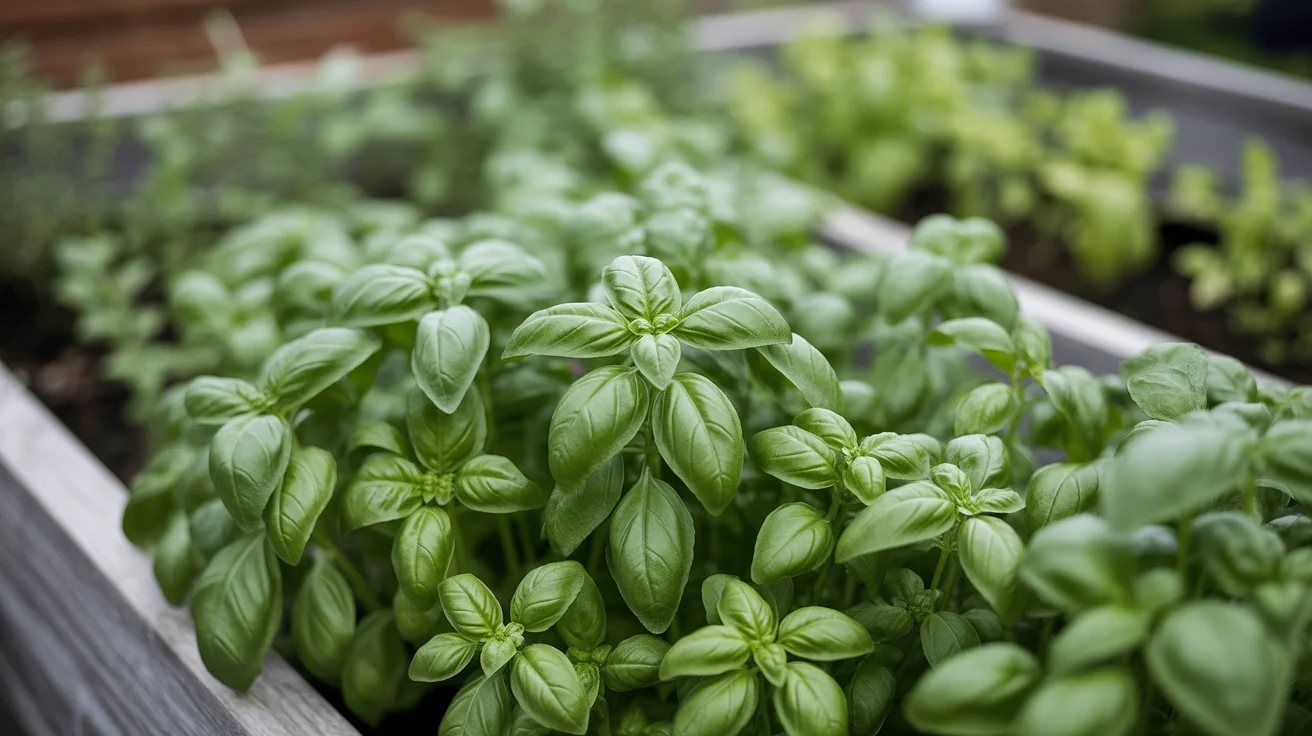
Basil is Ocimum basilicum, a soft-stemmed member of the mint family, Lamiaceae. It shares that family with mint, and the square stem that goes with it, but it stays in the clump you planted rather than running through the bed.
Iowa State puts the size at up to two feet in height, which is larger than the pot on the shelf suggests and smaller than a plant left unpinched will try for.
It is a tender annual, which means one warm season is its whole life.
That single fact separates basil from the herbs it is usually sold beside.
Rosemary, sage and thyme are woody perennials that go quiet over winter and come back.
Basil does not come back.
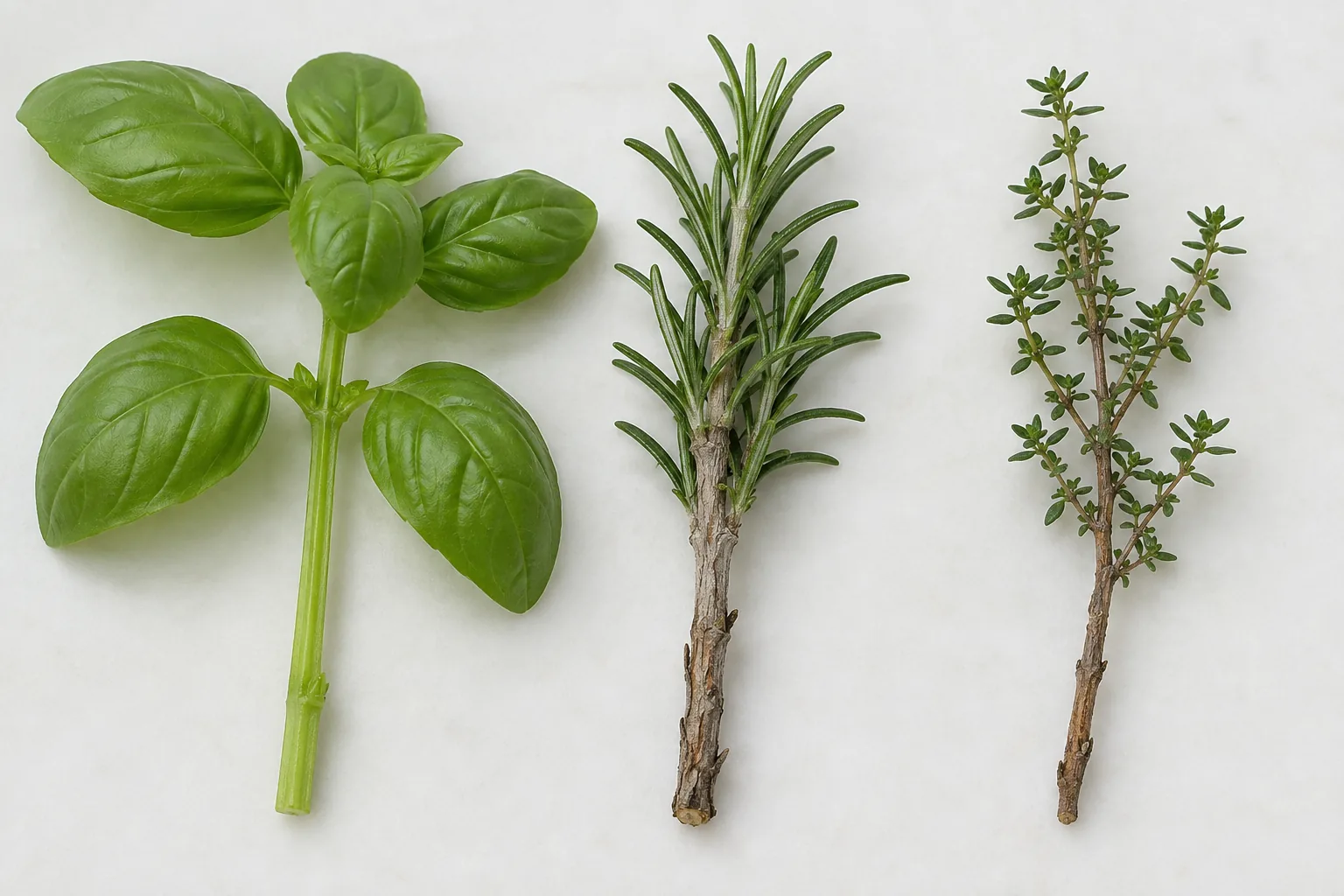
Every spring starts with new seed or a new plant, and a gardener who expects otherwise spends October wondering what went wrong. It is the one plant among the essential kitchen herbs where the calendar is part of the specification.
Which Basil Variety Should You Grow?
The word basil on a label covers plants that are not interchangeable in the kitchen. Sweet basil, including the large-leaved Genovese types, is the one for pesto and for anything with tomato plants in it.
Thai basil holds its flavor when it hits hot oil, which sweet basil does not.
Holy basil is grown for tea and scent rather than for a bowl of leaves.
If you cook mostly one cuisine, that settles the variety before any growing question comes up.
There is now a second decision sitting on the same label. Downy mildew has become the disease that ends most home basil plants, and the answer breeders reached for was resistance rather than a spray.
Prospera, Amazel and Pesto Besto were bred for it, and Eleonora carries some. Where the disease has already reached your garden once, choosing one of those lines is the difference between a crop and a compost heap.
Read the packet for the variety name and for the words downy mildew resistant, not just for the word basil.
- Sweet or Genovese
- Large tender leaves for pesto, tomato dishes and fresh use
- Thai
- Holds flavor through cooking heat, where sweet basil fades
- Holy
- Grown for tea and scent rather than for volume of leaf
- Named resistant line
- Choose where downy mildew has ended a basil crop before
None of the four is harder to grow than the others, which is worth saying because the resistant lines sometimes get treated as a specialist purchase. They take the same soil, the same warmth and the same pinching as anything else here.
When Is It Warm Enough to Plant Basil Out?
The date that decides a basil season is not the last frost. It is the day the soil reaches 60°F.
Basil put into cold ground does not die, and that is what makes the mistake so hard to see. It simply sits.
Weeks later it is close to the size it went in at, while a plant set out a fortnight afterwards has already passed it.
Damage starts around 50°F, well above freezing. Leaves darken, the growing tip stalls, and the plant carries that check for the rest of the summer.
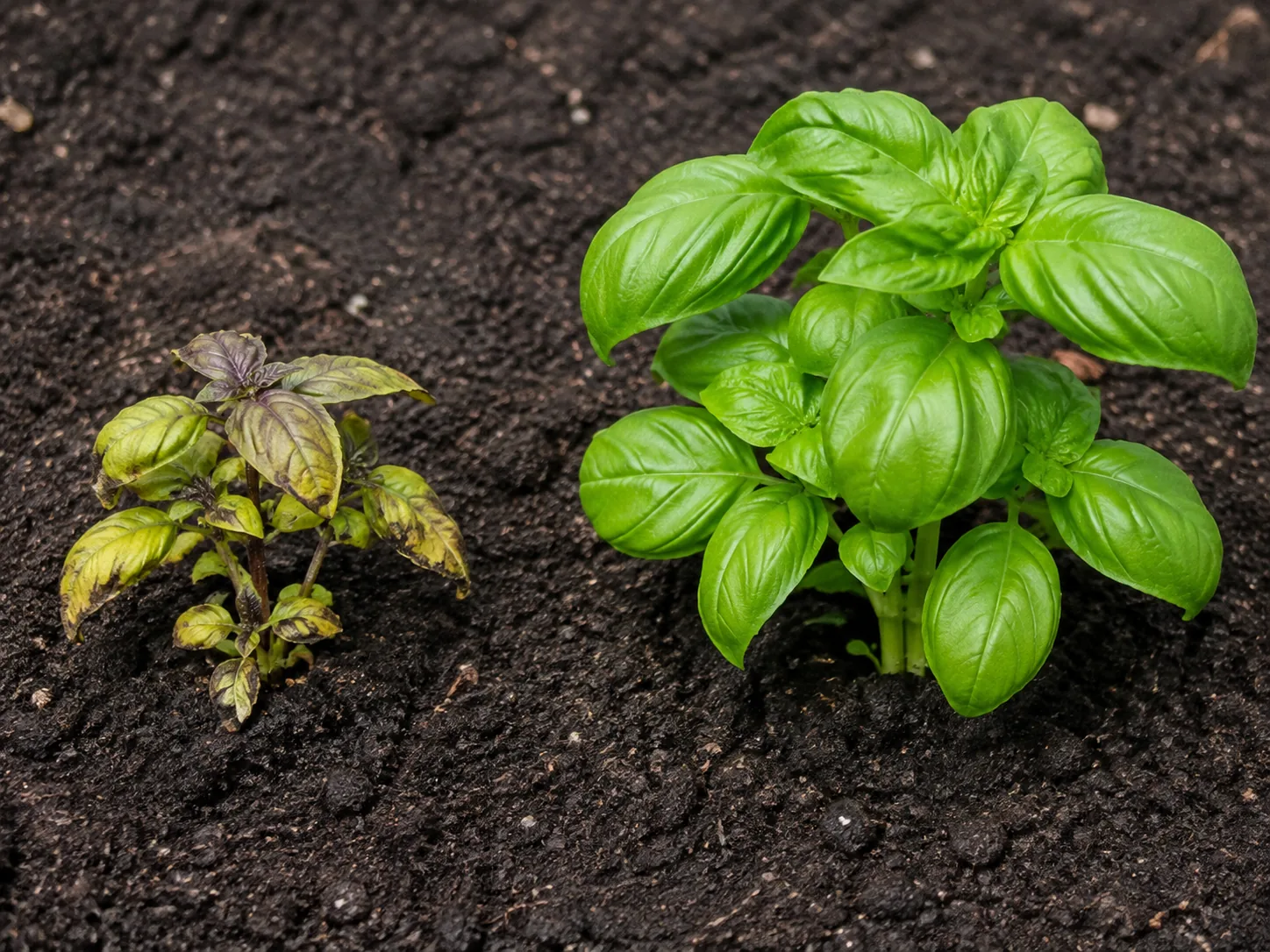
Iowa State gives a second version of the same gate that needs no thermometer in the ground, direct sowing once night temperatures are consistently above 50°F. Nights are the limiting figure on this plant, and they lag the daytime warmth by a fortnight or more.
For seed under cover, the two sources put the start at slightly different points. Illinois begins three to four weeks before the frost-free date and Iowa State begins 4 or 5 weeks before it, which is a fortnight of daylight between them rather than a disagreement about the plant.
Warmth decides the germination either way. Held at a media temperature of 70°F basil comes up in five to seven days, and Iowa State works at about 75°F. Cooler than that it comes up slowly and unevenly, which usually gets blamed on the seed.
Those two routes are a real choice rather than a convenience, since one buys a fortnight of season and the other skips the transplant check altogether. Sowing direct against raising transplants sets out how that trade works across a bed.
Move young plants outside gradually, the way you would vegetable starts.
How Much Sun, and How Rich Should the Soil Be?
Basil wants full sun, six to eight hours of it.
A plant given less does not fail outright, it stretches.
The stem lengthens between leaf pairs, the leaves stay small, and the whole plant leans toward the brightest side. That is a light problem, and moving the pot fixes it faster than feeding ever will.
Soil is where the two extension services pull in opposite directions, and both are worth hearing. Illinois Extension records that poor soil gives slow growth and weaker flavor, so thin ground shows up in the leaf.
Iowa State takes the other side and says to avoid heavy nitrogen, because too much nitrogen affects the flavor. Read together they are not a contradiction, they are the two edges of a band.
What that band means in practice is soil with organic matter worked in and no repeated feeding on top of it.
Compost at planting is doing flavor work.
A high-nitrogen feed every fortnight produces a large pale plant that tastes of less than a smaller one would.
Containers change the job rather than the requirement.
Potting mix runs out of nutrients faster than a bed does, so a container plant wants the approach you would use for feeding vegetable beds, only more often and at a lighter rate.
A group of potted herbs standing together dries out faster still.
- Six to eight hours of direct sun, measured where the plant actually stands rather than where the garden faces.
- Long gaps between leaf pairs mean too little light, not too little fertilizer.
- Organic matter worked in before planting, because thin soil shows in the flavor.
- No heavy nitrogen afterwards, because too much of it costs the flavor the soil was meant to build.
How Should You Water Basil Without Feeding Disease?
Basil wants even moisture. It does not want wet feet, and it does not want wet leaves either.
Those are two separate failures.
Waterlogged soil suffocates roots and shows as yellowing that starts at the bottom of the plant and works up.
Wet foliage is what downy mildew needs to establish, and that shows on the leaves themselves rather than from the base.
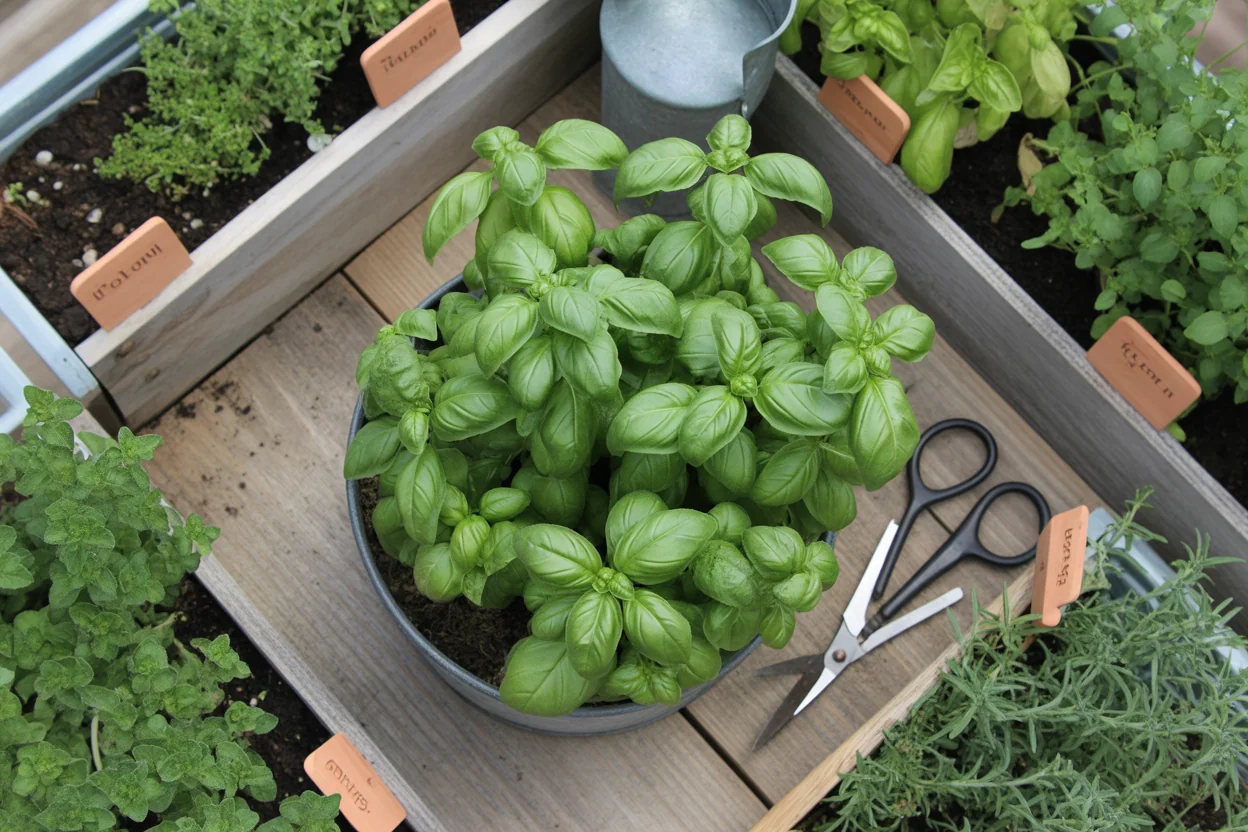
The water therefore goes at the base. A can with the rose taken off, or a hose laid on the soil, does more for the plant's health than any change in how much you give it.
Water in the morning. Foliage that dries by early afternoon spends far fewer hours wet than foliage watered at dusk, and hours of leaf wetness are what the disease counts.
An established plant is less demanding than a young one. Iowa State calls established basil relatively drought-tolerant, while adding that regular watering in dry weather promotes growth, which is the difference between a plant that survives a dry fortnight and one that keeps producing through it.
How Do You Keep Basil Making Leaves Instead of Flowers?
With basil, harvesting and pruning are the same action. Every time you take leaves properly you are also shaping the plant, which is why a well-used basil plant outproduces one that is left alone.
The cut goes just above a pair of small side shoots, at the point where two tiny leaves are already showing at the node.
Cut there and both of those shoots grow away.
Cut halfway down a bare stem instead and you are left with a stub that does nothing.
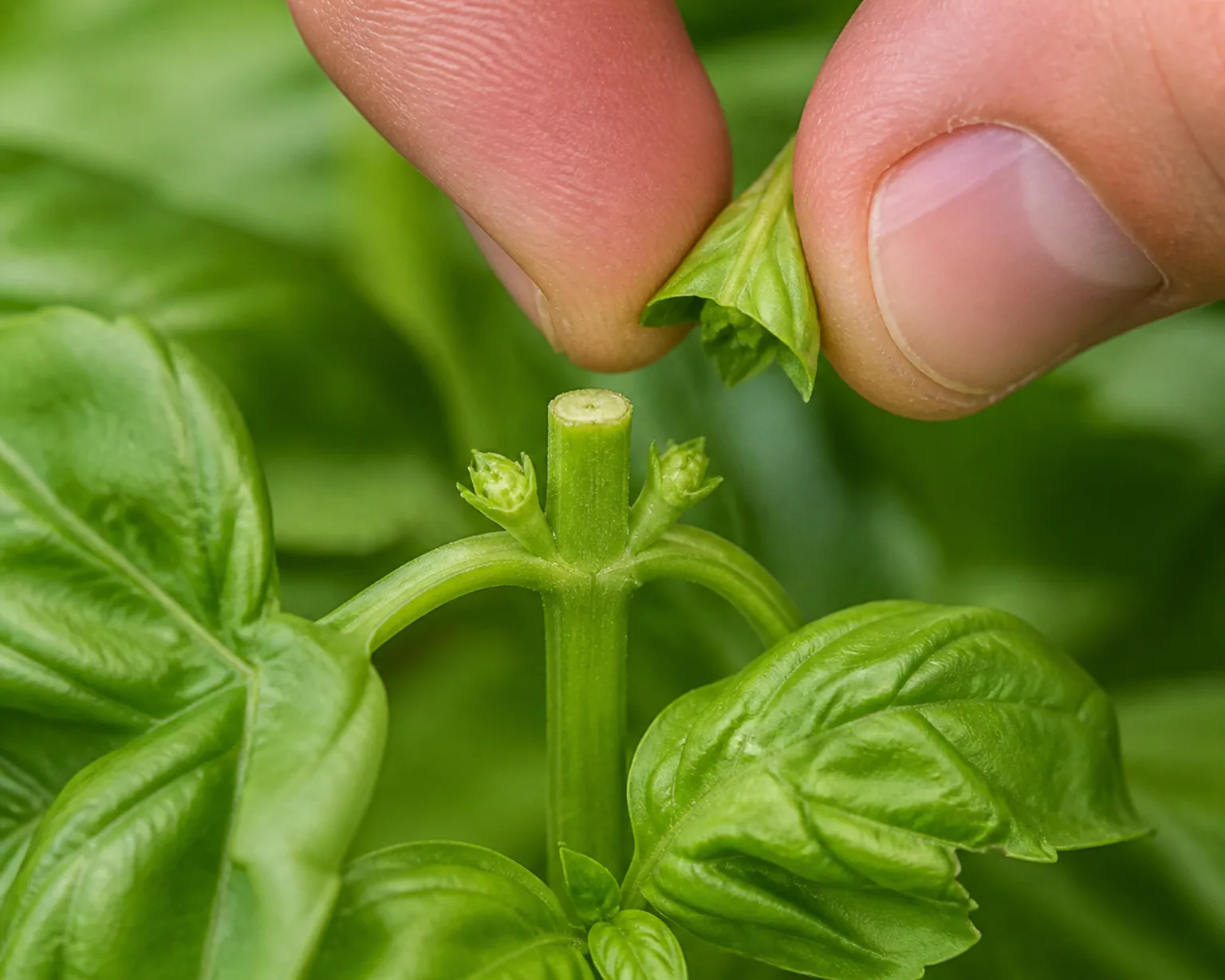
That is the whole reason a pinched plant grows wider and denser while an unpinched one grows tall and thin. Iowa State starts the habit early, pinching in mid-spring to promote branching, and says cutting the stem tips keeps an ongoing harvest much of the summer into fall.
Flowering is the other half of the same job. Once a stem starts a flower spike the plant moves its effort from leaves to seed, and the leaves below that spike get smaller and lose flavor.
Illinois Extension puts it plainly, saying to take flower buds off as they appear, and Iowa State sets the main harvest at the same moment, cutting when flower buds have started to form but before they begin to open. A tight green spike caught early comes away with the same pinch you were already making.
A plant that has reached open white flower can still be brought back. Cut those stems down to a leaf pair well below the spike, keep the water steady, and new growth follows within a week or two.
What is not worth nursing is a plant that has gone woody at the base and set seed across most of its stems. At that point a fresh sowing gives you usable leaves sooner than the rescue will.
- Start pinching in mid-spring, once the plant has three or four pairs of true leaves, not when it is already tall.
- Take the tip above a node with visible side shoots, and use what you cut.
- Check weekly in warm weather for the first flower spikes, which appear faster in heat.
- Cut a flowering stem back below the spike rather than picking the flowers off the top.
What Are Those Spots on Your Basil Leaves?
When basil leaves go yellow or spotted, turn one over before you do anything else.
From above, downy mildew looks like yellowing between the veins, in blocks that stop where a vein runs.
On its own that pattern gets read as a feeding problem.
Underneath the same leaf there is a gray to purple fuzz lying along the veins, and that is the sign that settles it.
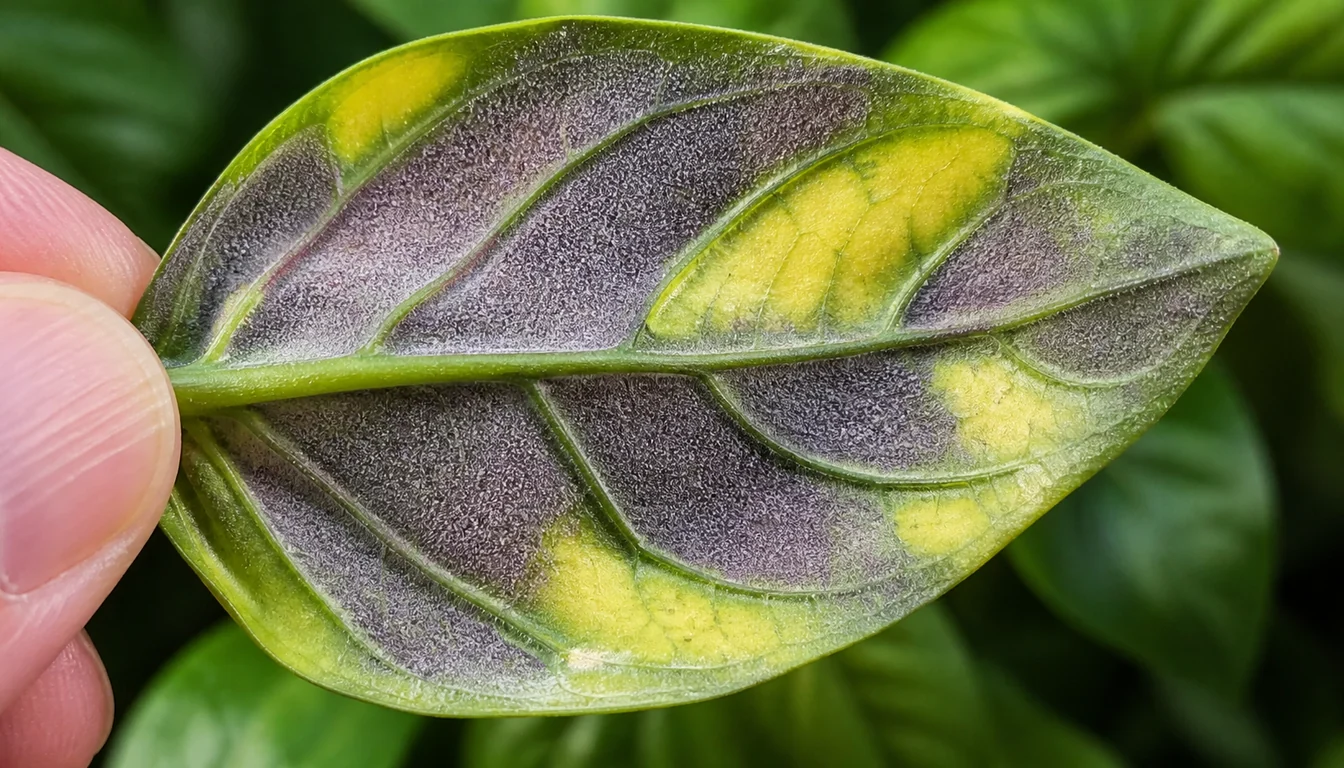
The spores travel on wind, sometimes a considerable distance. A clean plant in a clean garden can be infected from a source you will never identify, which is why the usual description is that it was fine last week.
Insect damage looks different once you know what to compare.
Mites leave fine pale stippling and sometimes webbing, and leafminers leave winding pale trails inside the leaf.
Neither puts fuzz on the underside, and both respond to the approach used for treating mites indoors.
The responses are not interchangeable.
For mites or leafminers, strip the worst leaves, treat, and the plant recovers.
For downy mildew there is no home cure, so harvest whatever is still clean and then pull the plant before it releases spores over the rest of the bed.
Prevention that actually works was the variety choice made back at the packet, together with keeping the leaves dry. If the same bed loses basil every summer, work through yellowing basil leaves for the full diagnosis and grow a resistant line next season.
- Yellow blocks between veins, gray fuzz underneath. Downy mildew, and the plant comes out.
- Fine pale stippling, sometimes webbing. Mites, and the plant recovers after treatment.
- Pale winding trails inside the leaf. Leafminer, and the affected leaves come off.
- Even yellowing from the base upward with soggy soil. Too much water, not a disease.
How Do You Keep Basil Past the End of Summer?
The outdoor plant is finished at the first frost, and it is already struggling below 50°F. Take what you want from it before the cold arrives, not after.
Cuttings are how the plant carries over.
Basil roots readily from tip cuttings off a healthy stem, and Illinois Extension treats overwintered plants as a normal source of those cuttings in spring.
Take them while the plant is still growing well, because a chilled plant makes poor cuttings.
- Cut a four-inch tip from a stem that has not flowered.
- Strip the lower leaves so no leaf sits in water.
- Stand the stem in a glass of water on a bright windowsill and change the water every few days.
- Pot it once the roots are an inch long, and keep it in the brightest window you have.
Indoors the limit is light, not warmth. A basil plant on a dim sill stretches exactly the way it does in a shaded bed, so the brightest window in the house is the minimum rather than the ideal.
There is a cost to accept alongside that.
Iowa State says plants grown indoors have a less intense flavor and fragrance than the same variety outdoors, which is worth knowing before a windowsill row is judged a failure.
The indoor herb guide covers which of the others hold up better.
For cut stems the storage that works is a glass of water at room temperature on the counter. The refrigerator discolors the leaves and blackens the edges within a day or two.
Drying is the honest answer to a glut that no amount of pesto is going to absorb. Iowa State dries the leaves on racks or trays in a warm, well-ventilated area away from direct sunlight, and the test for done is that they are brittle to the touch.
Frequently Asked Questions
Is sweet basil a perennial in warm climates?
In frost-free Zones 10-11, sweet basil can behave as a short-lived perennial and live longer than one season. Growth still declines after a year or so, so most gardeners replant every year for best flavor and vigor.
How often should I harvest basil to keep it bushy?
Plan to pinch or cut stems every 1-2 weeks during the growing season, removing the top 3-4 inches of growth just above a pair of leaves. Regular harvesting prevents tall, leggy stems and delays flowering, so plants stay leafy longer.
Can I grow basil indoors year-round?
You can grow basil indoors if it gets strong light and warm temperatures. Use a south-facing window or a grow light running 12-16 hours per day, keep the soil evenly moist, and expect indoor plants to stay smaller and need more frequent pruning.
What's the difference between Genovese and Thai basil?
Genovese basil has large, tender leaves with the classic sweet, slightly peppery flavor most people expect in pesto and caprese. Thai basil carries a stronger anise or licorice note, holds up better to cooking heat, and resists bolting a bit longer in summer conditions.
Why are my basil leaves turning yellow at the bottom?
Lower yellow leaves usually come from age, shade, or soil staying too wet. Thin plants for more light, switch to deep but less frequent watering, and check drainage similar to how you would adjust care for yellowing basil leaves.
Is sweet basil safe for pets and kids?
Yes, basil is considered non toxic and is commonly used as an edible herb. Large amounts could upset a sensitive stomach, so discourage grazing, but it does not carry the same risk as truly poisonous plants like foxglove or dieffenbachia.
What fertilizer works best for basil grown in containers?
Use a balanced, water soluble fertilizer at half strength every 2–4 weeks. You can follow the same general strategy used for feeding vegetable beds, but go lighter so you do not sacrifice flavor to overly lush, watery growth.
Sources & References
- Illinois Extension: Basil
- Growing Basil in the Home Garden, Clemson Cooperative Extension
- Basil in the Garden
- University of Wisconsin Horticulture: Basil Downy Mildew
- Iowa State Extension: Growing Basil in the Home Garden
- Toxic and Non-toxic Plants: Basil | ASPCA
- North Carolina Extension Gardener Plant Toolbox - Ocimum basilicum
Related Plants
Tomato
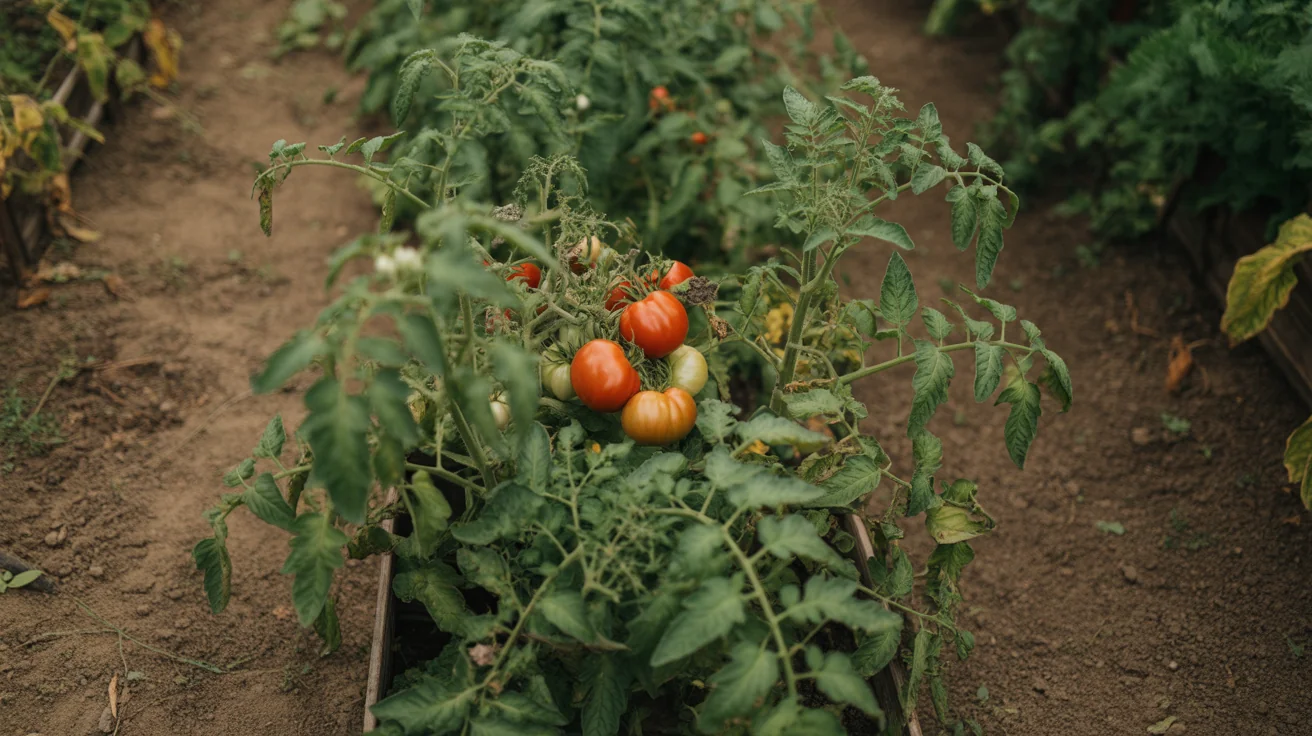
Classic companion crop that shares basil's love of full sun and pairs naturally in the kitchen.
Pepper
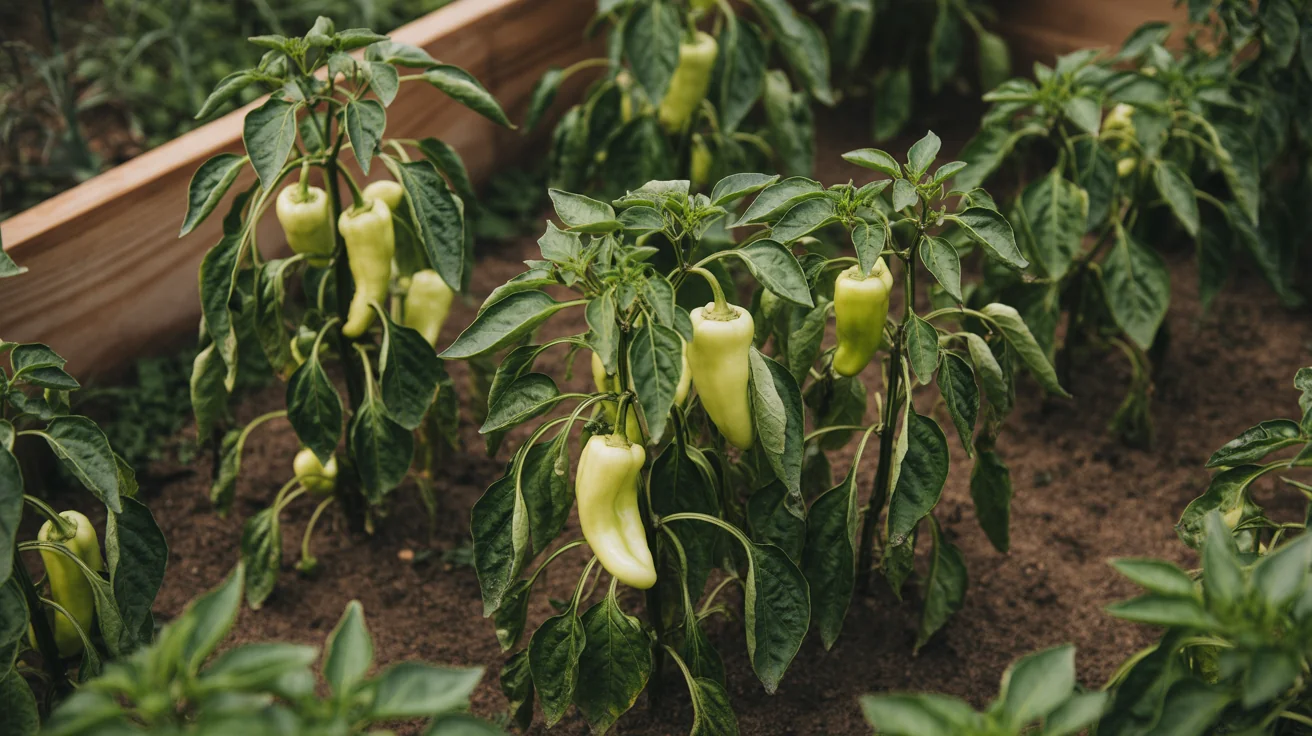
Warm-season companion with the same sun and even-moisture needs as basil.
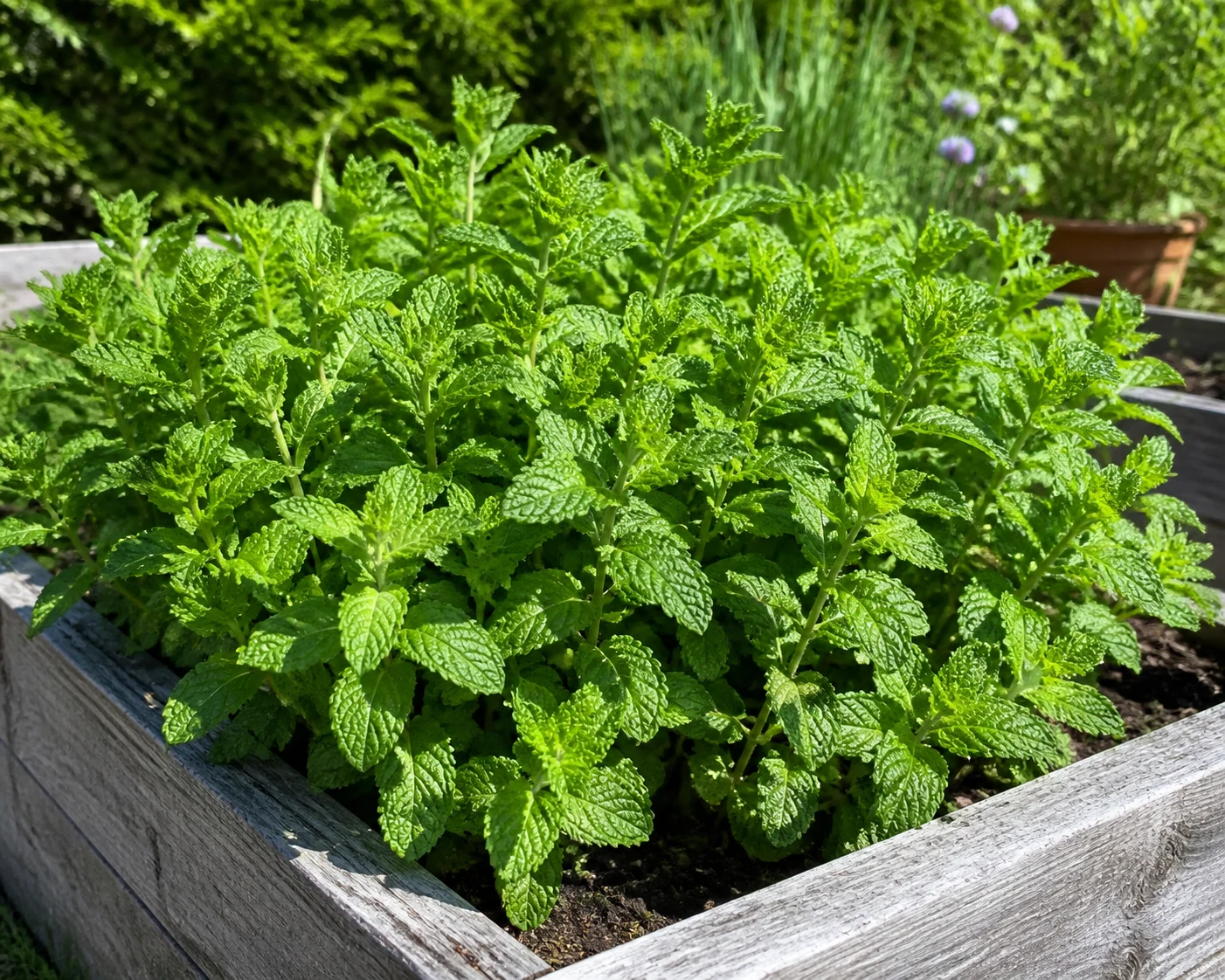
Mint
Fellow mint-family herb, but one that spreads aggressively unlike well-behaved basil.
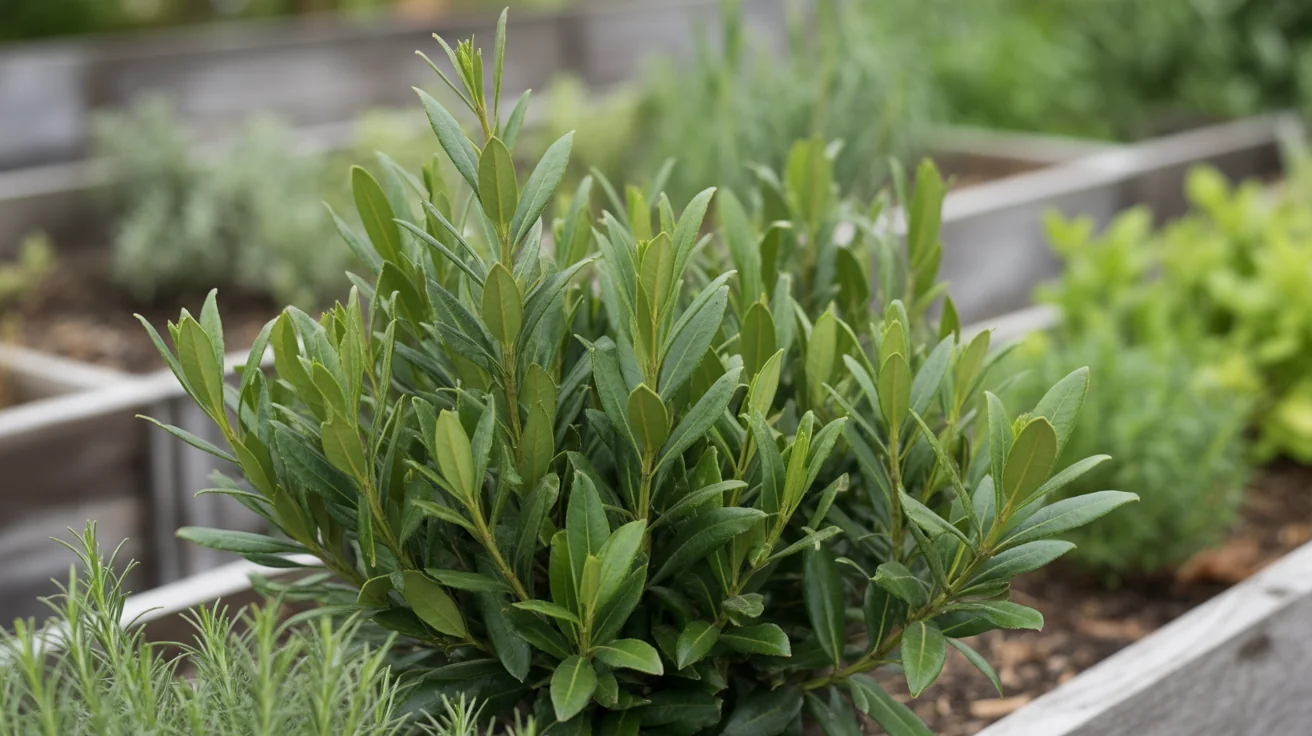
Bay Laurel
Bay laurel is a tree grown as a container plant, which is why every decision about it looks the way it does.
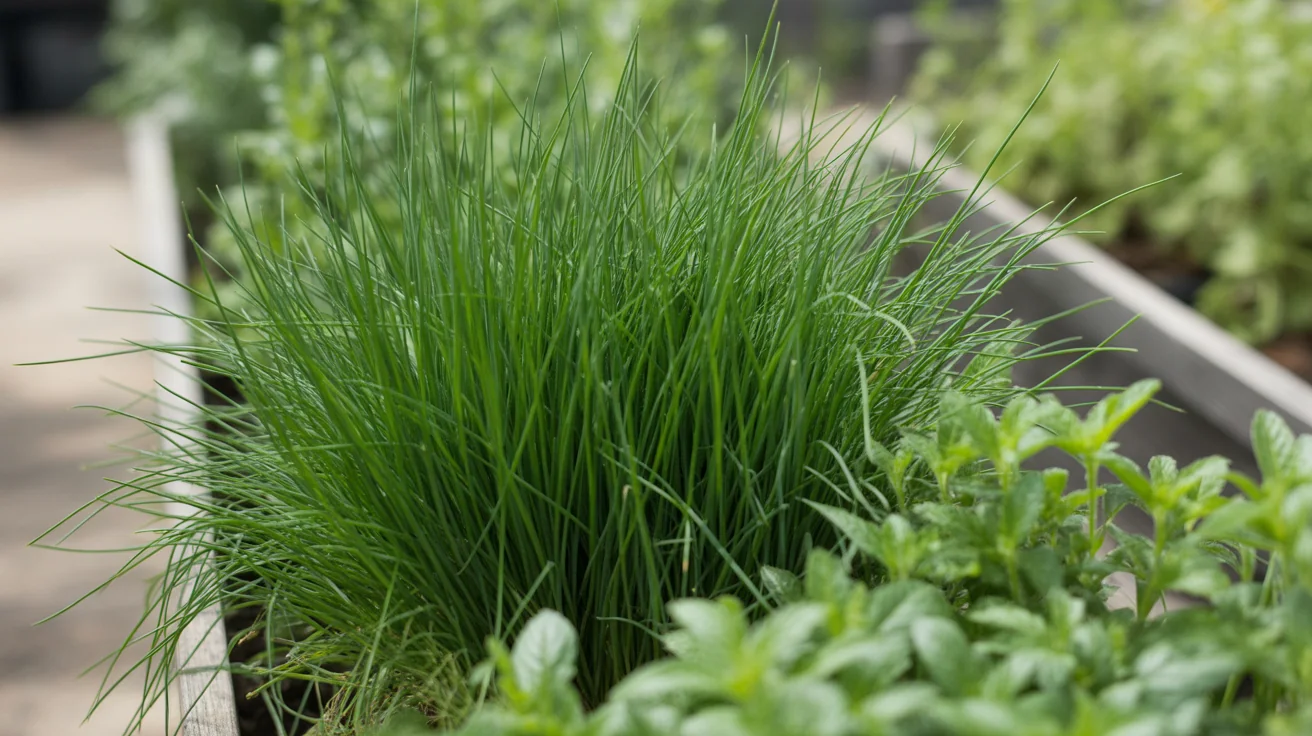
Chives
Chives are an Allium, in the same genus as onion and garlic, and that explains the flavor, the clump of small bulbs…
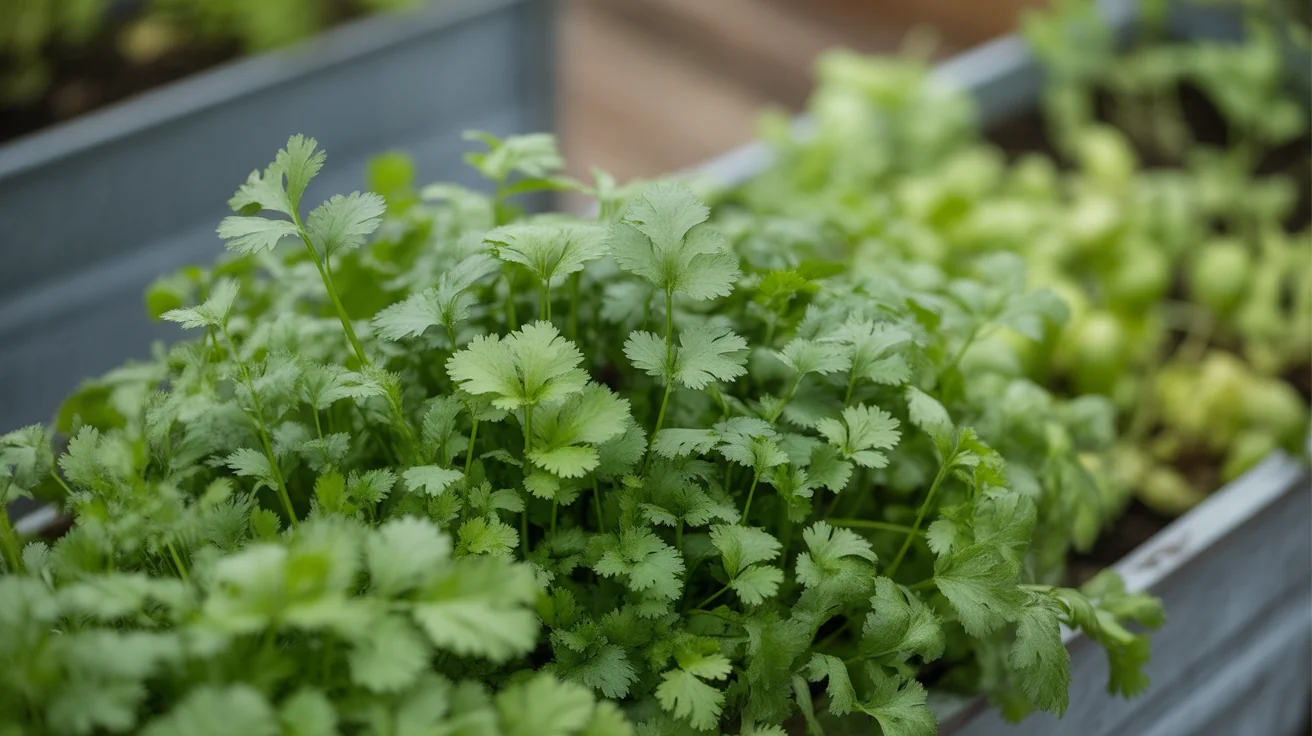
Cilantro
Cilantro and coriander are one plant at two stages, and the two crops need different spacing from the day the seed goes…