
How to Choose and Grow Azaleas for Your Soil and Climate
Rhododendron spp. Ericaceae
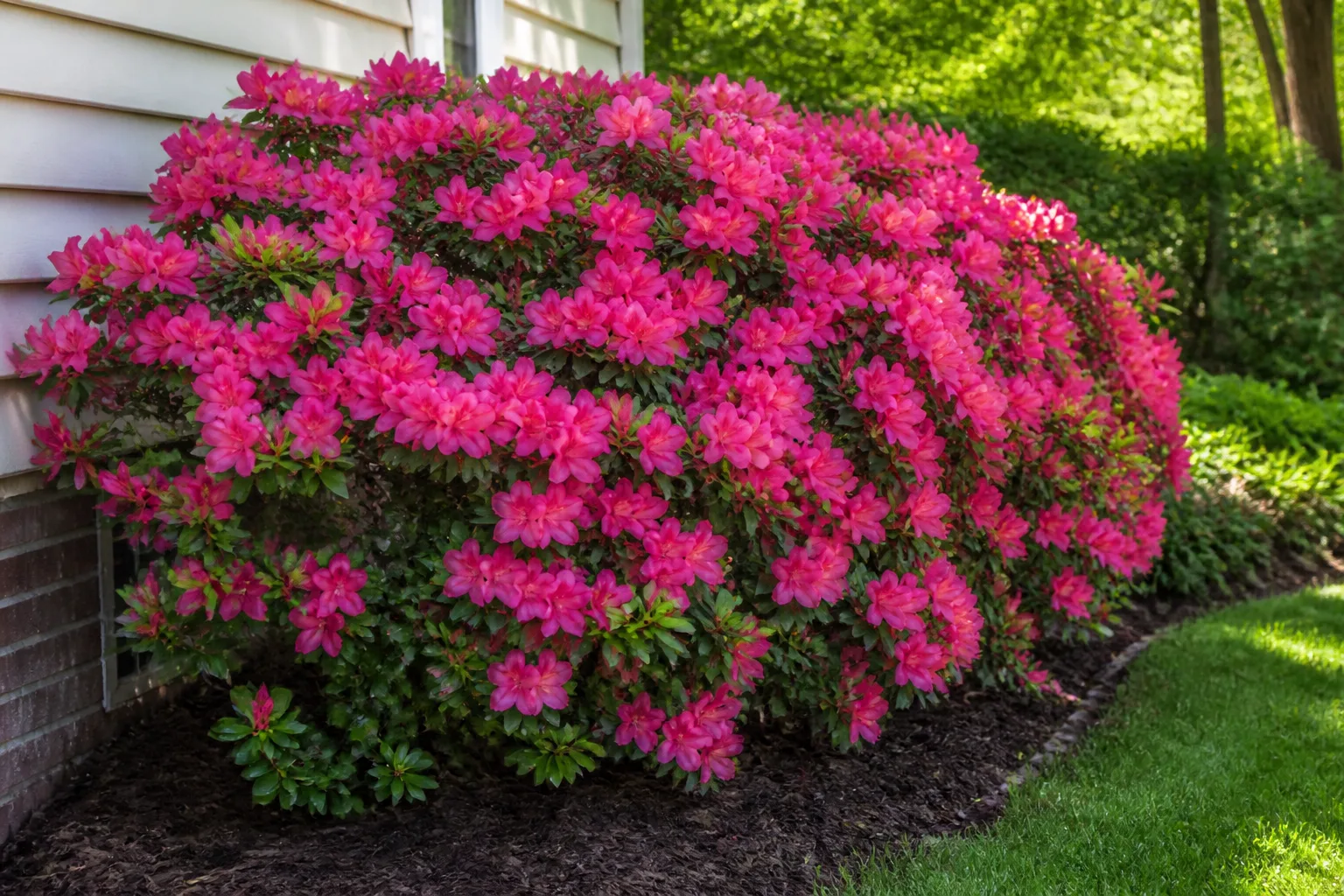
Azaleas bring spring flowers, and some cultivars bloom again later in the year. Their shallow roots need both moisture and air, while winter survival and flower-bud hardiness depend on the named cultivar.
Care snapshot
What Makes Azaleas Thrive or Struggle?
Azaleas belong to the genus Rhododendron, which includes both evergreen and deciduous shrubs. The azalea label alone does not establish mature size, winter hardiness, or whether leaves will remain through winter.
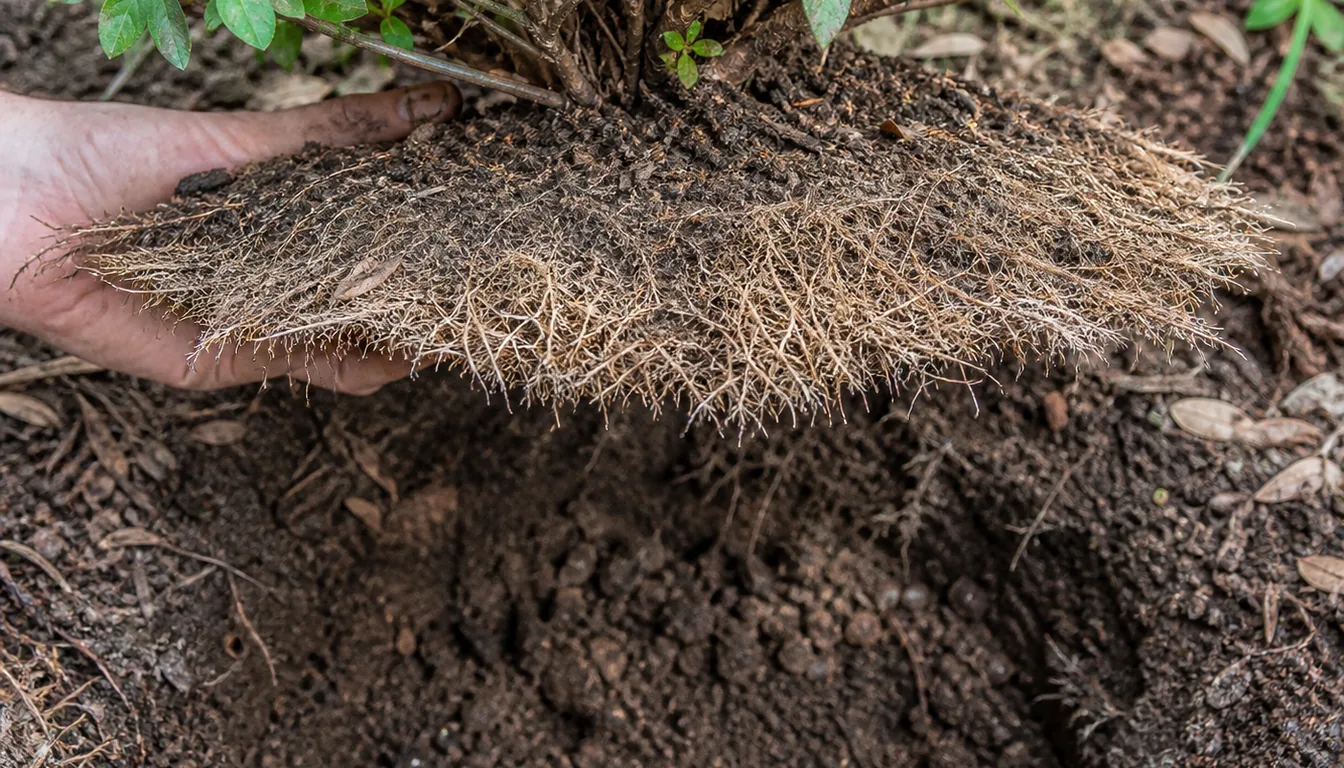
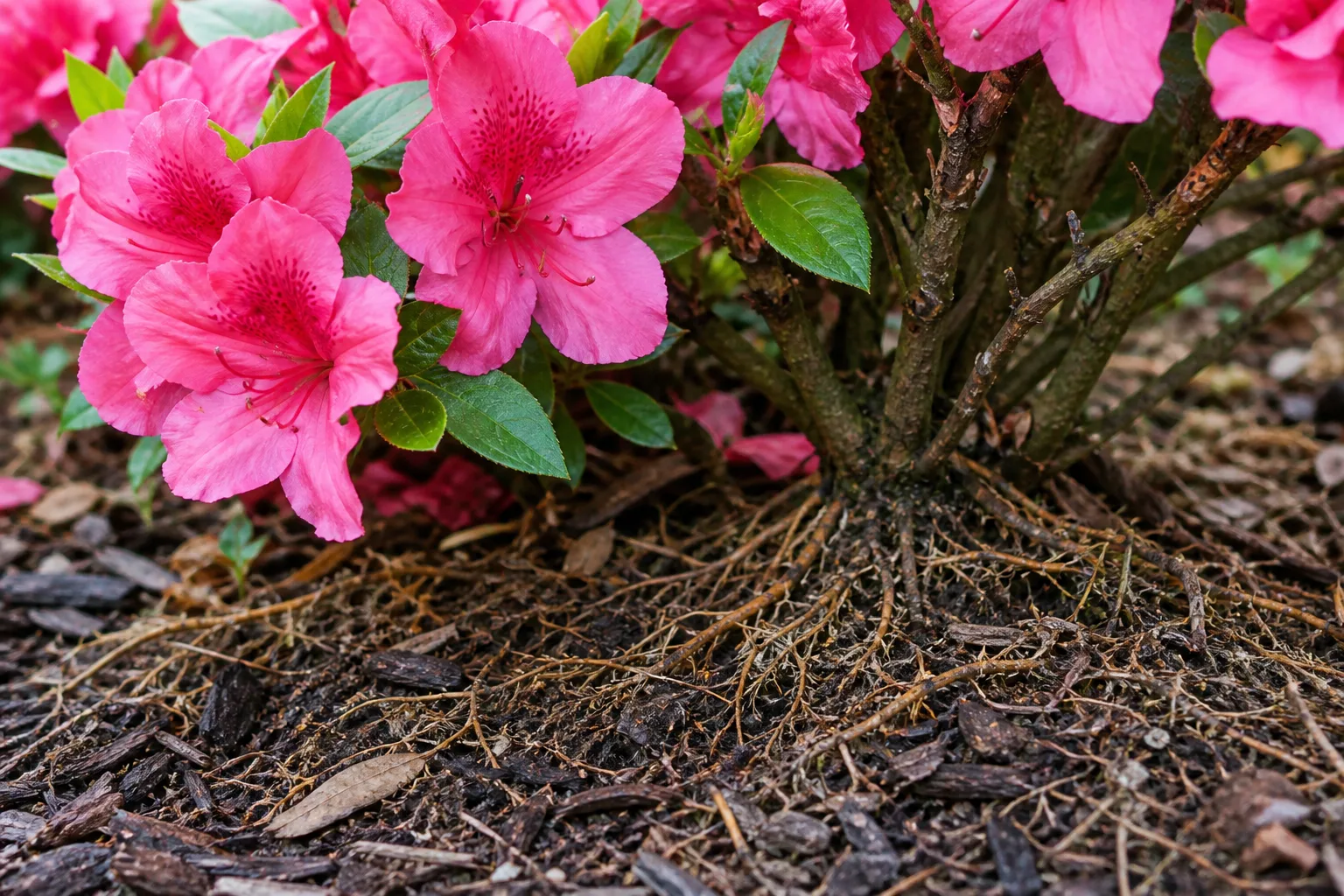
Their shallow, fibrous roots are easily stressed by drying soil, compaction, or prolonged saturation. A shrub can therefore wilt from either too little available water or damaged roots in a wet bed.
A compact cultivar may fit below a window, while a larger species can outgrow that position. The mature height and spread of the named plant matter more than the size of the nursery pot.
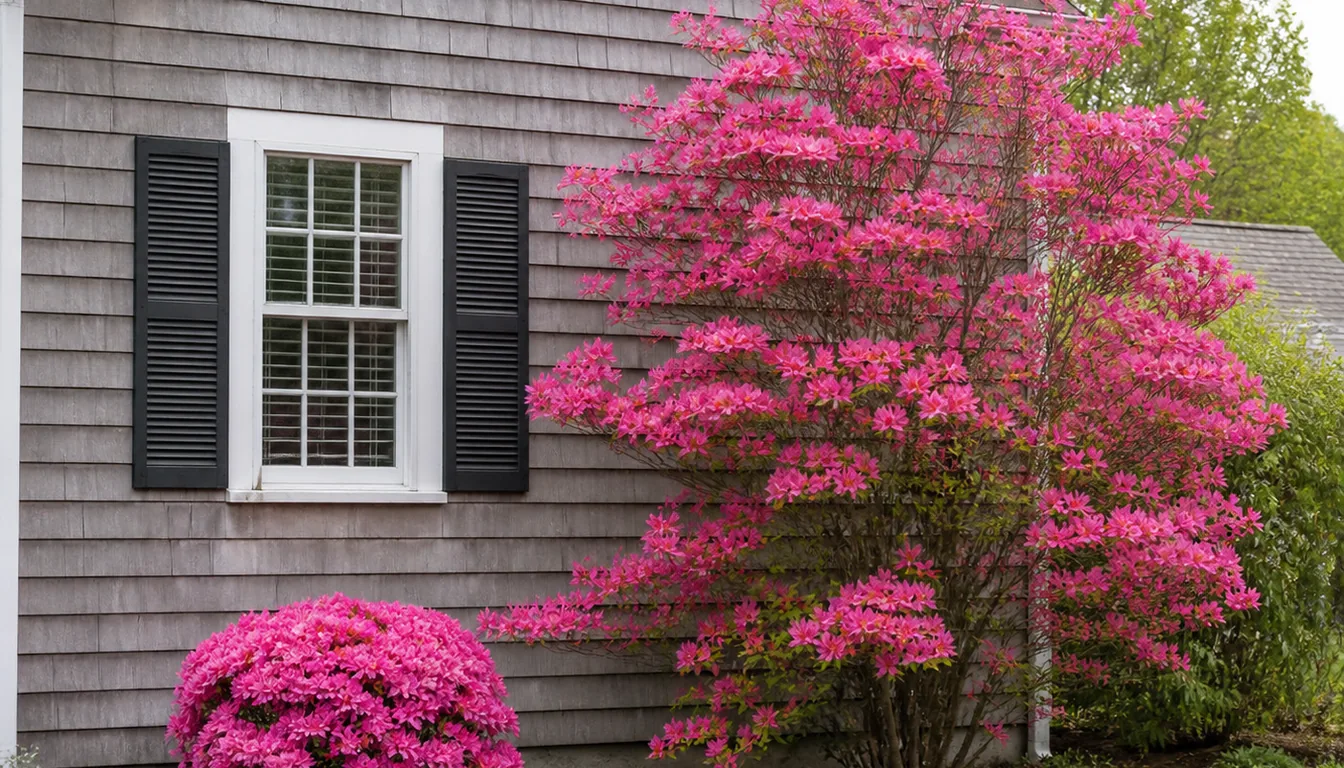
Azaleas are bred for different timing and habits. Some are early-spring showoffs, others extend color into late spring, and newer reblooming lines can flower lightly again into summer and fall.
Choosing Azalea Types That Actually Fit
Cultivar choice sets the limits for size, bloom season, and cold tolerance. A flowering plant at a garden center may suit a different climate, and outdoor garden azaleas are not interchangeable with florist gift plants.
Compact evergreen cultivars can provide a leafy foreground to hydrangeas or other larger shrubs. Leaf retention still varies with the plant and winter conditions.
Deciduous azaleas lose their leaves, and some offer fragrance or yellow and orange flowers. Cold tolerance is a cultivar trait, not a promise attached to every deciduous azalea.
Older single-season cultivars give one big spring show, while newer reblooming lines give smaller flushes again in summer and fall. If your beds already carry long-blooming plants like salvia perennials, you may not need reblooming azaleas.
- Evergreen or deciduous
- Choose whether winter foliage matters; neither label determines final size or cold tolerance.
- Named cultivar and mature dimensions
- Allow room for the stated height and width, including access around the shrub.
- Single-season or reblooming
- Repeat flowers depend on the cultivar and growing conditions, not simply extra fertilizer.
- Flower-bud hardiness
- A surviving shrub can lose its bloom if buds are injured. Local cultivar performance is useful evidence.
Light for Flower Buds Without Excessive Exposure
Light shade or filtered sun suits many garden azaleas. Morning sun with protection from hot afternoon exposure can balance flowering with reduced drying, although sun tolerance differs among cultivars.
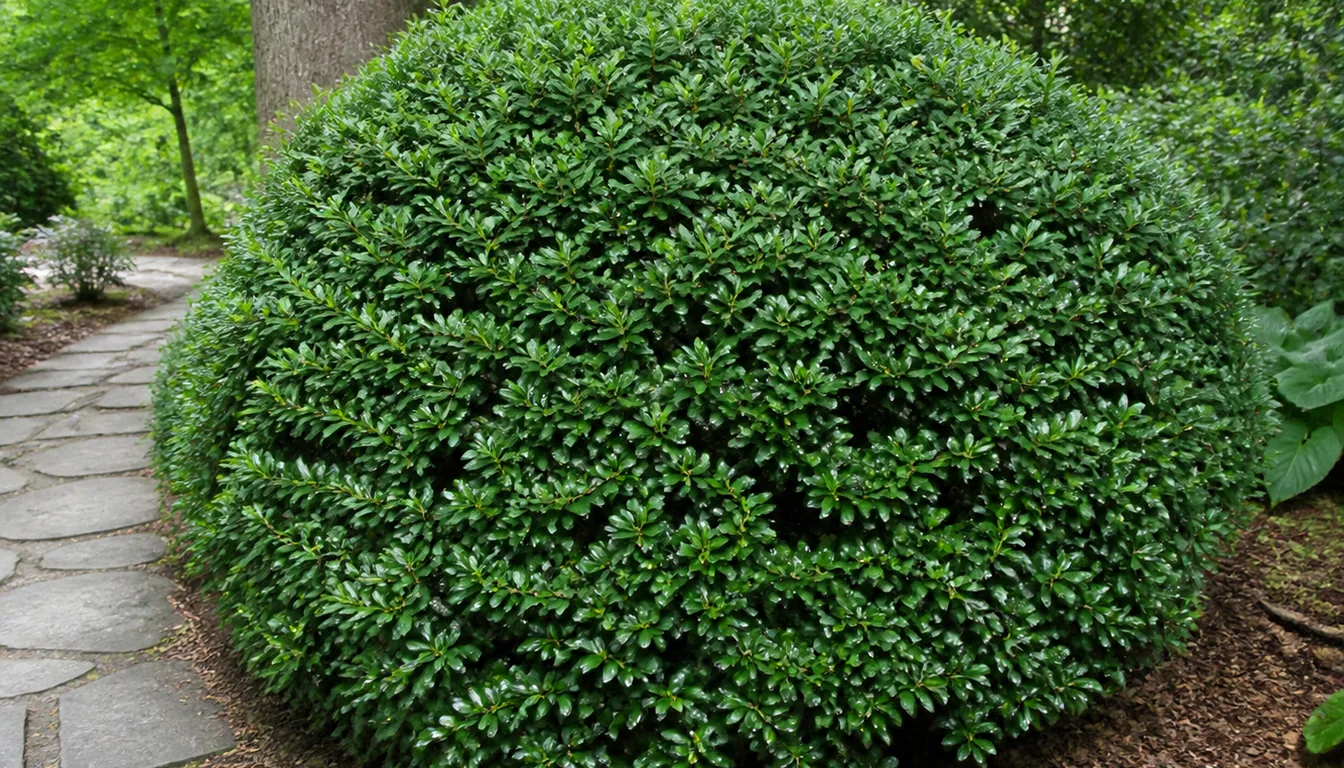
Heavy shade can produce weaker growth and fewer flowers. A site can protect leaves from afternoon heat yet still be too dark for a satisfactory bloom.
Actual summer heat, reflected light, wind, and available moisture determine exposure stress. Two gardens in the same winter-hardiness zone can offer very different conditions.
The useful light assessment follows the site through the day and season. An open canopy provides a different setting from a dense wall of evergreen foliage.
Bleached or scorched leaves warrant an exposure and moisture check, but leaf-edge damage alone does not identify the cause.
- Morning sun with afternoon shade is often a useful starting point for site selection.
- Nearby tree roots can compete for water even under favorable filtered light.
- Reflected heat from pavement or walls can increase exposure.
- A companion planting needs enough spacing that growing shrubs do not close over the azalea.
Watering Without Drowning Shallow Roots
Azalea roots occupy a shallow zone where moisture can change quickly. The original nursery root ball and the surrounding soil may dry at different rates, so a wet patch beside the shrub does not show that its roots received water.
A moisture check under the mulch is more useful than a fixed weekday. When the upper root zone is becoming dry, slow irrigation can wet the root mass without sending most of the water away as runoff.
A hose running for 30 minutes can deliver very different amounts at different flows. Irrigation duration therefore needs checking against actual wetting depth, plant size, soil, and recent rain rather than a universal timer.
- Check both the root ball and adjacent soil while a new shrub establishes.
- Apply water slowly and confirm that it reaches the root area rather than only wetting the mulch.
- Allow excess water to drain and adjust for rain and cooler weather.
- Keep a 2–3 inch organic mulch layer clear of the stems to reduce evaporation without burying the crown.
Acid Soil and Drainage Are Separate Requirements
Azaleas generally grow best in acid soil around pH 4.5–6.0. A soil test distinguishes a pH problem from a nutrient shortage; adding fertilizer does not automatically correct either poor drainage or unsuitable pH.
Yellow leaves with greener veins can be associated with poor iron availability at high pH, but root damage can also interfere with uptake. Azalea leaf yellowing needs the soil and root context before a treatment is chosen.
A wide planting area gives roots room to spread. The hole must not bury the original root-ball surface, and its base needs to support the plant without settling.
The top of the root ball belongs level with or slightly above the surrounding soil. On a poorly drained site, a properly designed raised area needs an outlet for water rather than just richer soil in the same wet hole.
Organic matter can improve a planting bed, but a heavily amended isolated hole can hold water differently from the surrounding ground. Soil preparation needs to address that whole area, not an arbitrary compost percentage.
- Keep added soil and mulch off the stems.
- Avoid lime unless a soil test establishes a reason for it.
- Account for runoff from paths, roofs, and nearby irrigation.
- Base tree and shrub feeding on demonstrated need, not yellow color alone.
Propagating Azaleas at Home
Propagation preserves a useful named plant when it is done vegetatively. Seedlings can differ from their parent, so seed is not a reliable way to duplicate a cultivar.
Evergreen and deciduous azaleas do not respond identically to cuttings. Deciduous azaleas can be difficult, and rooting dates or success cannot be promised from a single recipe for the whole group.
Simple layering keeps a low branch attached to the parent while it forms roots. It produces only a few plants, but avoids asking an unrooted cutting to support itself immediately.
- Choose a healthy, flexible branch that reaches the ground without breaking.
- Prepare a small area of suitable soil and remove leaves from the part of the stem that will be buried.
- Pin that portion beneath the soil with the leafy tip above ground.
- Keep the rooting area moist without waterlogging it.
- Separate the layer only after it has formed a useful root system, rather than at a fixed calendar deadline.
For cuttings, guidance for the actual azalea type matters more than a universal temperature or rooting-week target. Plant-patent restrictions may also limit propagation of a purchased cultivar.
Common Azalea Pests and Damage
Leaf symptoms help locate a problem, but treatment depends on the pest that is actually present. Old damage can remain after insects have gone.
Pest activity changes with species, weather, and region. A spring-only inspection can miss later feeding.
Pest management starts with that distinction. Small populations and predators may justify observation rather than a spray.
Azalea lace bug is the headline pest in many yards, sucking sap from the underside of leaves and leaving a speckled, bleached look on the top.
Lace bugs and spider mites can both leave pale stippling. Both may occur beneath leaves, so the side of the leaf alone does not distinguish them.
Black fecal spots beneath stippled leaves support a lace-bug investigation. Fine webbing can suggest mites, but the pest itself and the pattern of current damage provide stronger evidence than either sign alone.
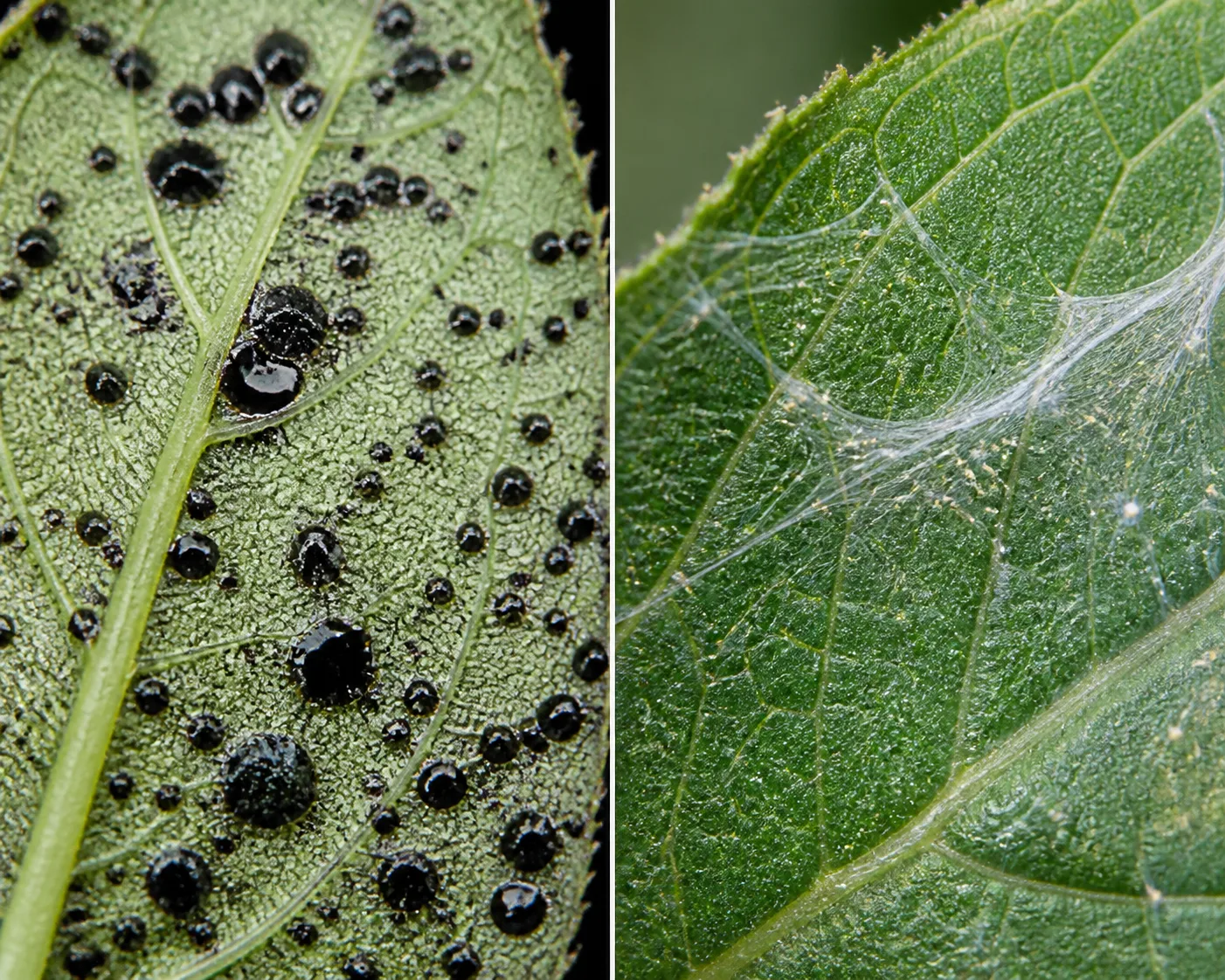
Look beneath stippled leaves for dark fecal spots and the insects. When treatment is justified, a product labeled for the plant and pest must reach the feeding surface; flowering plants also need pollinator protection.
Stippling and possible fine webbing call for a closer look for mites. The basic recognition signs described for spider mites are useful, but an outdoor azalea treatment must follow its own product label.
Mines or curled tips can contain larvae. Local identification guidance helps distinguish these from leaf scorch or other damage.
Adults notch leaves, while larvae feed on roots. Leaf notches alone do not establish serious root damage, and biological treatments depend on the pest stage and product conditions.
Once you know which pest is active, keep the plant comfortable so the same problem does not rebound after treatment.
Pruning and Care Around the Bloom Cycle
Spring tasks start right after bloom or as buds fade, which is when azaleas set the framework for next year’s flowers.
Summer care follows soil moisture and plant growth. Winter protection depends on local exposure and the cultivar, not a schedule inferred from the zone number alone.
Timing matters because azaleas form next year’s flower buds soon after blooming, so late pruning can wipe out the show just like cutting lilac at the wrong time.
Spring is also the window to squeeze in a light feeding if needed, lining up with broader advice on fertilizing woody plants without burning roots.
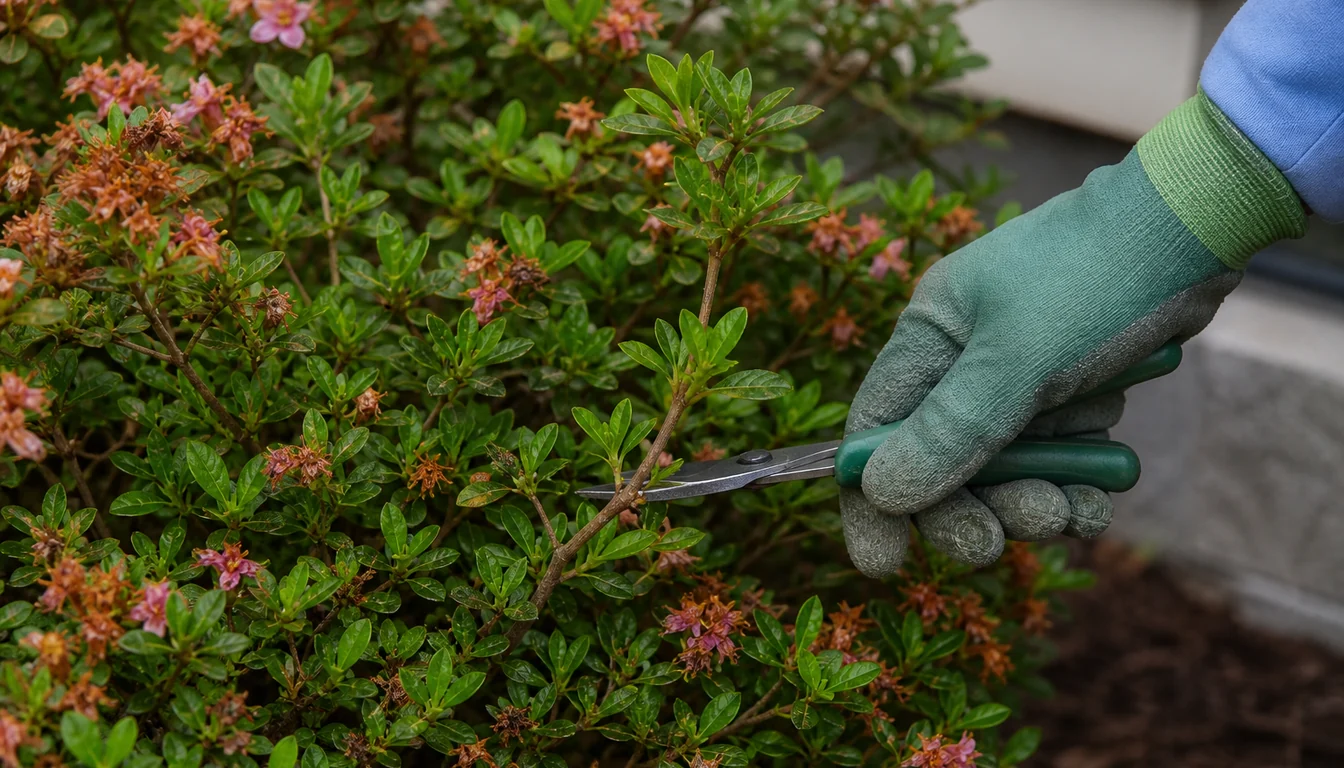
- In early spring, check winter damage, remove dead tips, and refresh 2-3 inches of pine mulch around the drip line.
- Right after flowering, lightly shape the shrub by cutting back lanky stems, but avoid heavy pruning that removes forming buds.
- Use a soil test and the plant’s condition to assess feeding need. Pale foliage alone is not proof of a fertilizer shortage.
After spring shaping, summer care is mostly about water and mulch rather than more fertilizer.
- Water deeply when the top 2 inches of soil are dry, rather than sprinkling lightly and often.
- Maintain a wide mulch ring to keep roots cool and reduce competition from lawn grass around the base.
- Skip fertilizing in late summer so new growth can harden before freezing weather.
Winter protection is a separate job in colder sites, focusing on wind, salt, and heavy snow rather than extra feeding.
- Create windbreaks using burlap screens on the windy side, leaving space for air movement.
- Keep salty runoff and snow cleared from treated pavement away from the root area.
- Avoid forcing ice or frozen snow from branches; breaking a limb to remove the load causes further injury.
Toxicity and Ecological Considerations
Azaleas are toxic if eaten. ASPCA lists Rhododendron species as toxic to dogs, cats, and horses because of grayanotoxins. A browsing animal or an undamaged plant is not evidence of a safe amount.
For a garden visited by animals, access to the shrub and discarded prunings matters alongside the planting choice. This safety warning concerns ingestion of plant material and does not establish a safe dose or a home treatment.
Frequently Asked Questions
Do azaleas prefer sun or shade?
Many grow well in filtered light or morning sun with afternoon shade. Heavy shade can reduce flowering, while exposed hot sites can increase drying and lace-bug problems. Cultivar and site conditions matter more than a fixed hour count.
How often should I water an established azalea?
Check the root-zone moisture before watering. Dry weather may call for irrigation, while wet soil does not need another soak because a week has passed. Slow application helps water reach roots without runoff.
Can azaleas grow in containers long term?
Compact cultivars can grow in containers with drainage holes and a suitable acidic potting mix. Roots in pots face different drying and winter exposure from roots in the ground, so container care cannot be inferred from the outdoor hardiness zone alone.
Why did my azalea stop blooming after I pruned it?
Azaleas set next year’s flower buds soon after spring bloom, so pruning hard in midsummer or fall likely removes those buds. Keep shaping cuts to right after flowering, and avoid late pruning except for dead, damaged, or crossing branches.
Does an azalea need fertilizer every year?
Not necessarily. Azaleas have modest nutrient needs, and soil conditions or damaged roots can explain weak growth without a nutrient shortage. A soil test and the condition of the plant guide whether feeding is useful.
Sources & References
- Azalea Planting, Clemson Cooperative Extension
- Azalea Care, Clemson Cooperative Extension
- Azaleas, University of Minnesota Minnesota Hardy
- Azaleas and Rhododendrons: Identify and Manage Problems, University of Maryland Extension
- How to grow rhododendrons, Royal Horticultural Society
- Layering plants, Royal Horticultural Society
- Azalea, ASPCA
- Azaleas and rhododendrons: Mad honey and other surprising dangers, National Capital Poison Center
Related Plants
Rhododendron
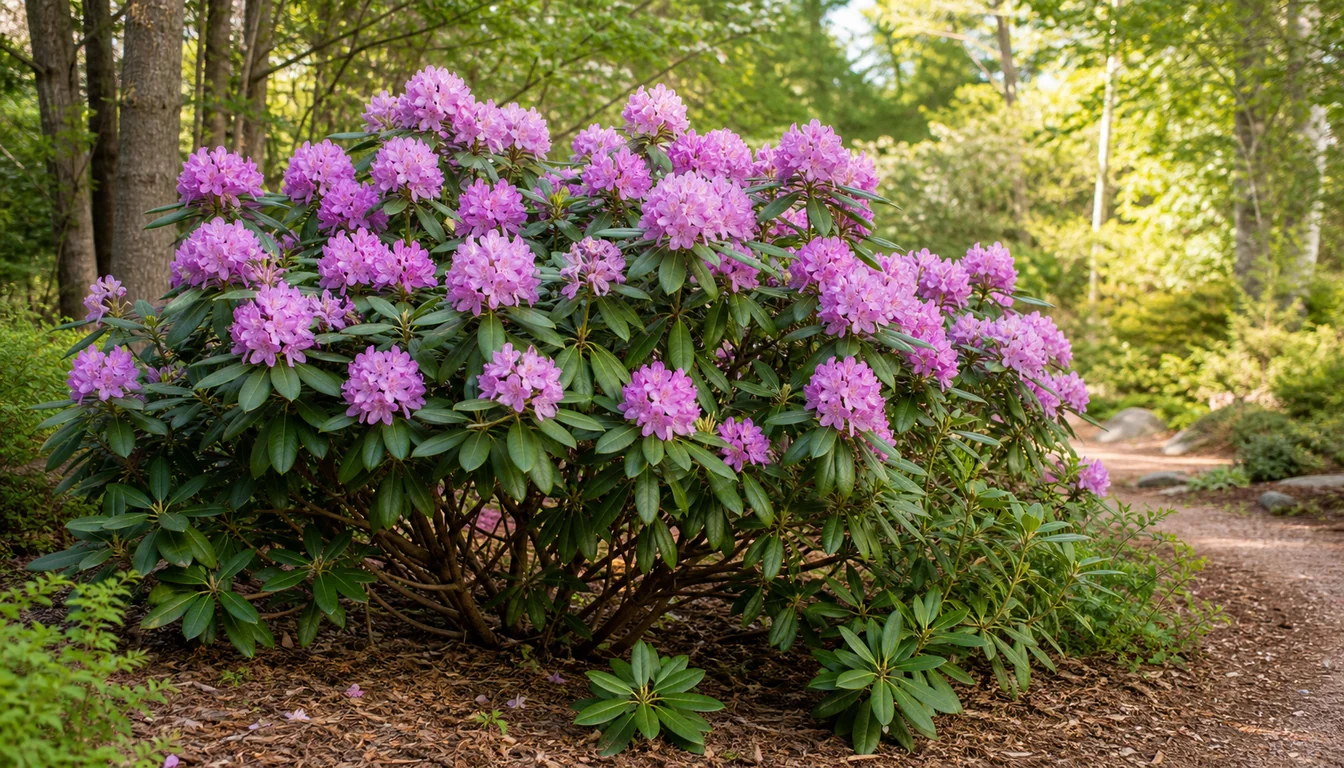
Larger-leaved cousins with similar soil needs but bigger shrubs.
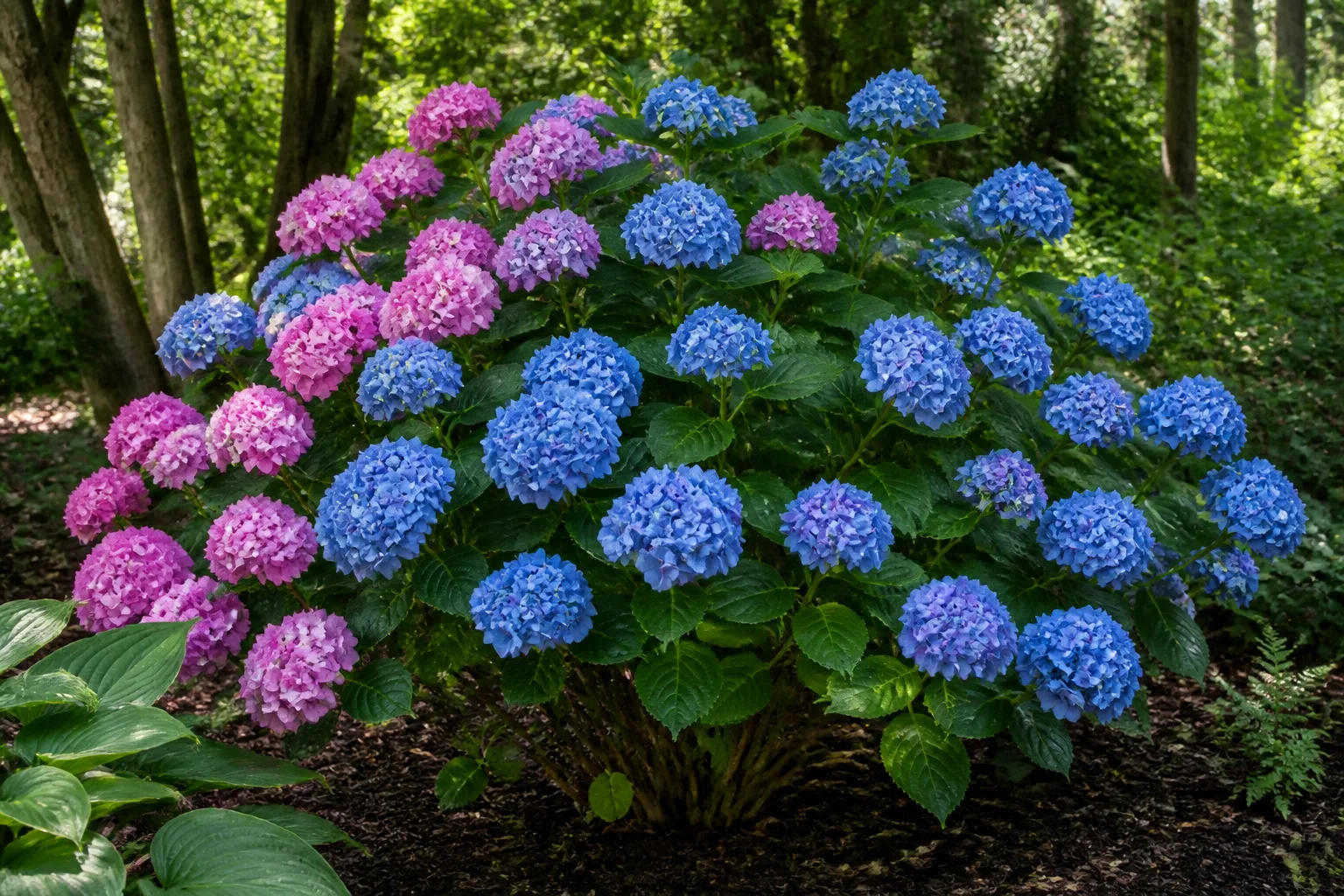
Bigleaf Hydrangea
Another flowering shrub that likes some shade and consistent moisture.
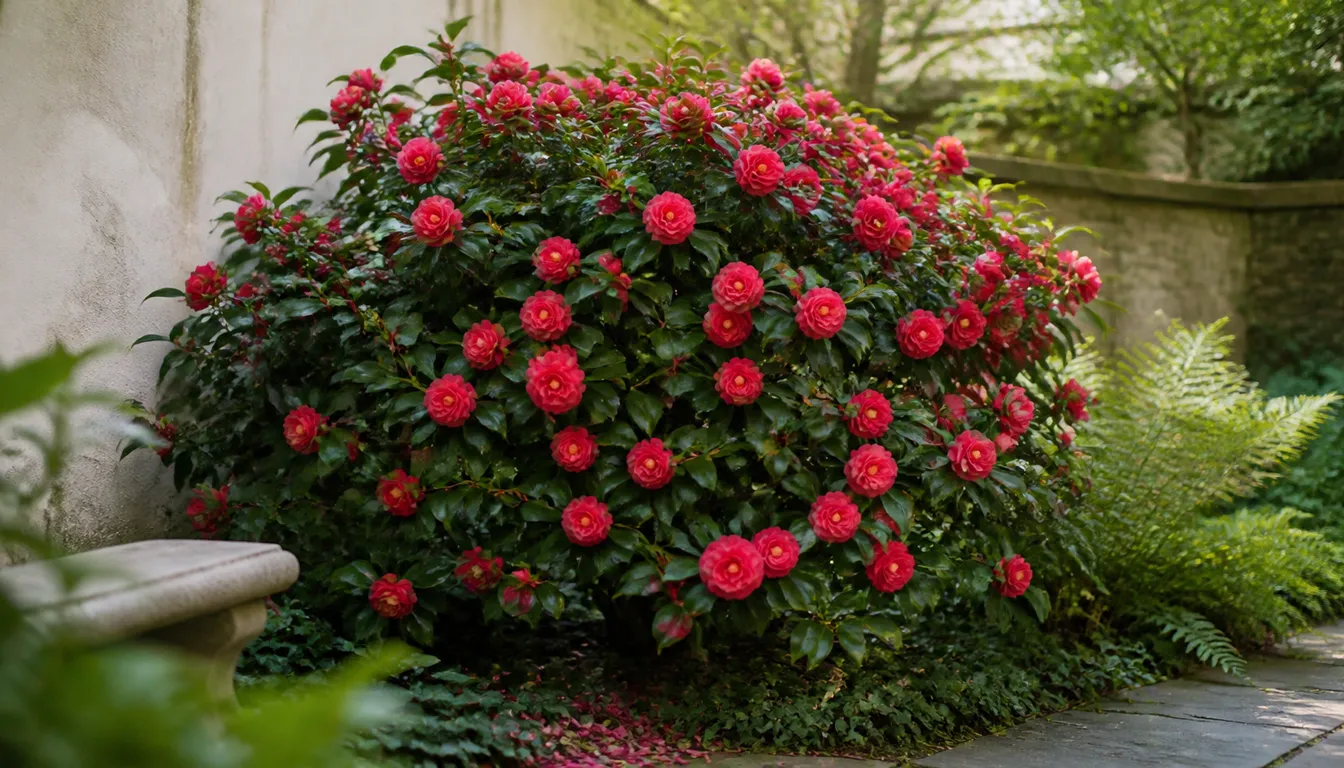
Camellia
Evergreen shrub with similar planting needs but different bloom season.
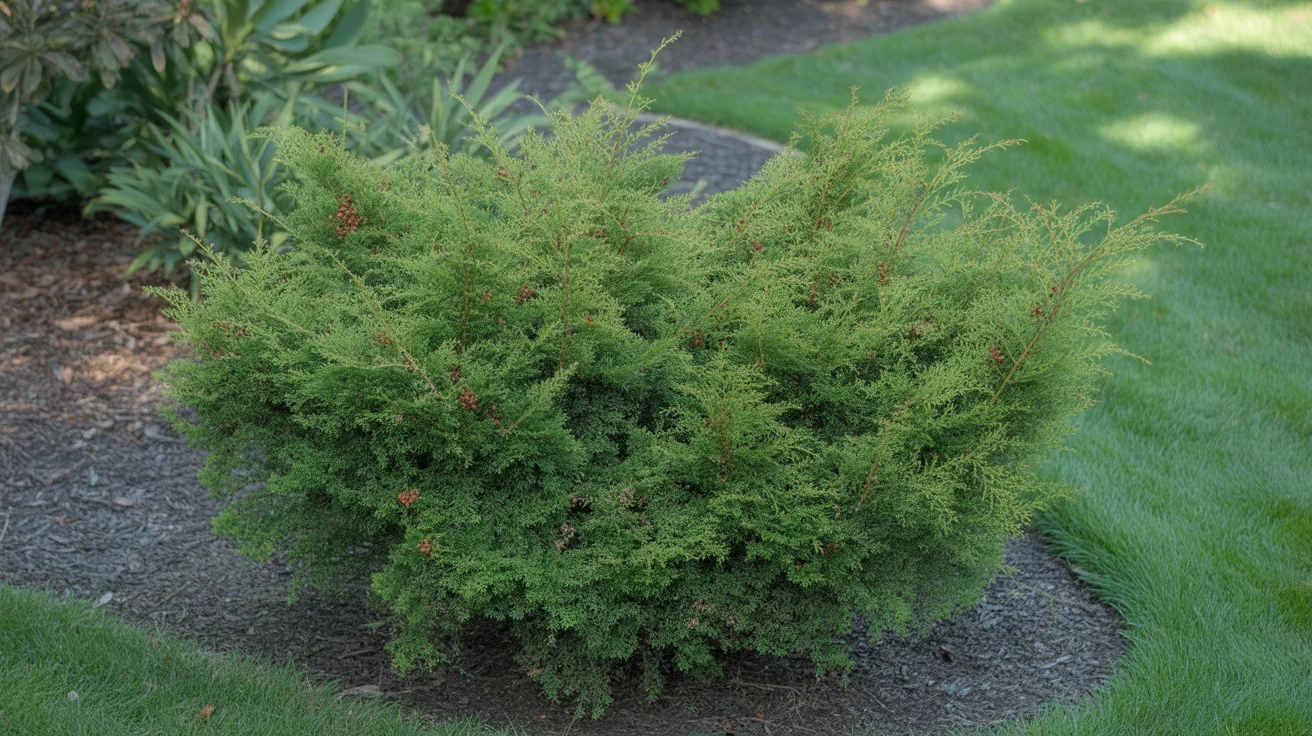
Arborvitae
Arborvitae can form a dense living screen where its mature width, exposure, and water needs fit the site.
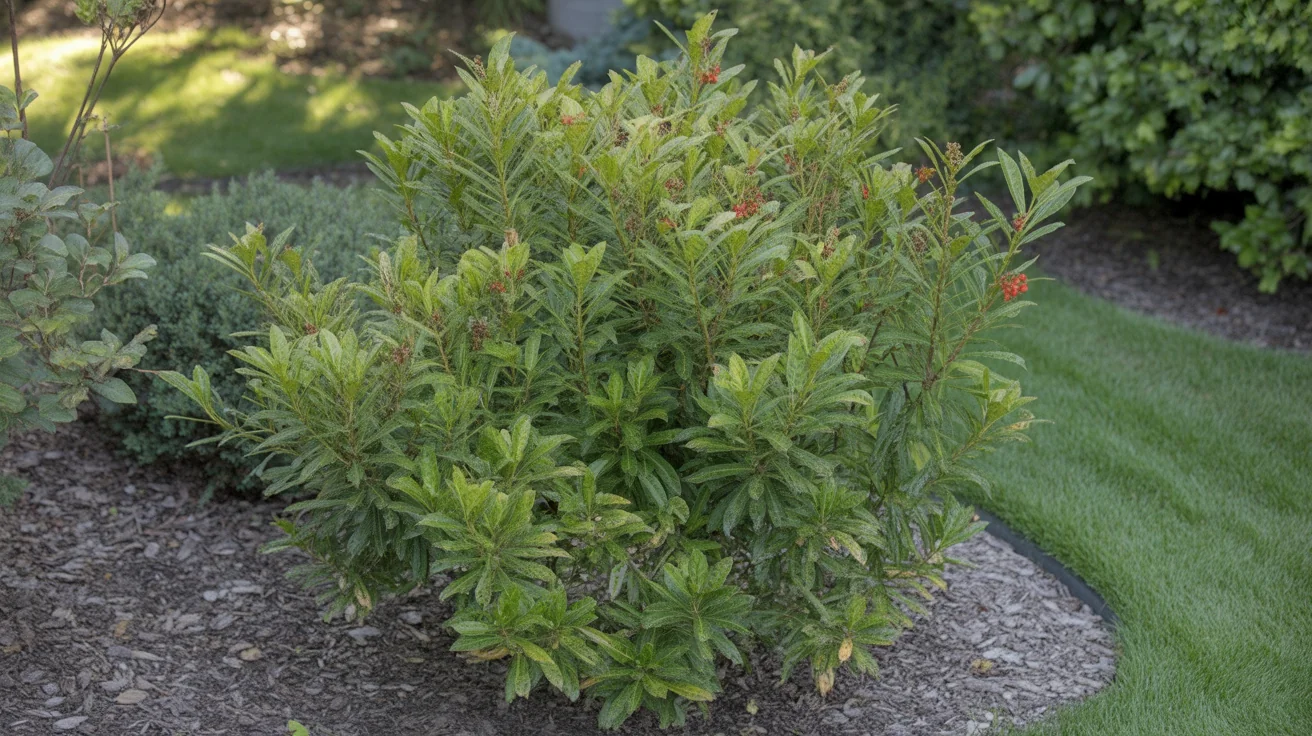
Aucuba
Aucuba is the shrub for bright shade with dry root competition. It keeps evergreen structure near north walls, porches…
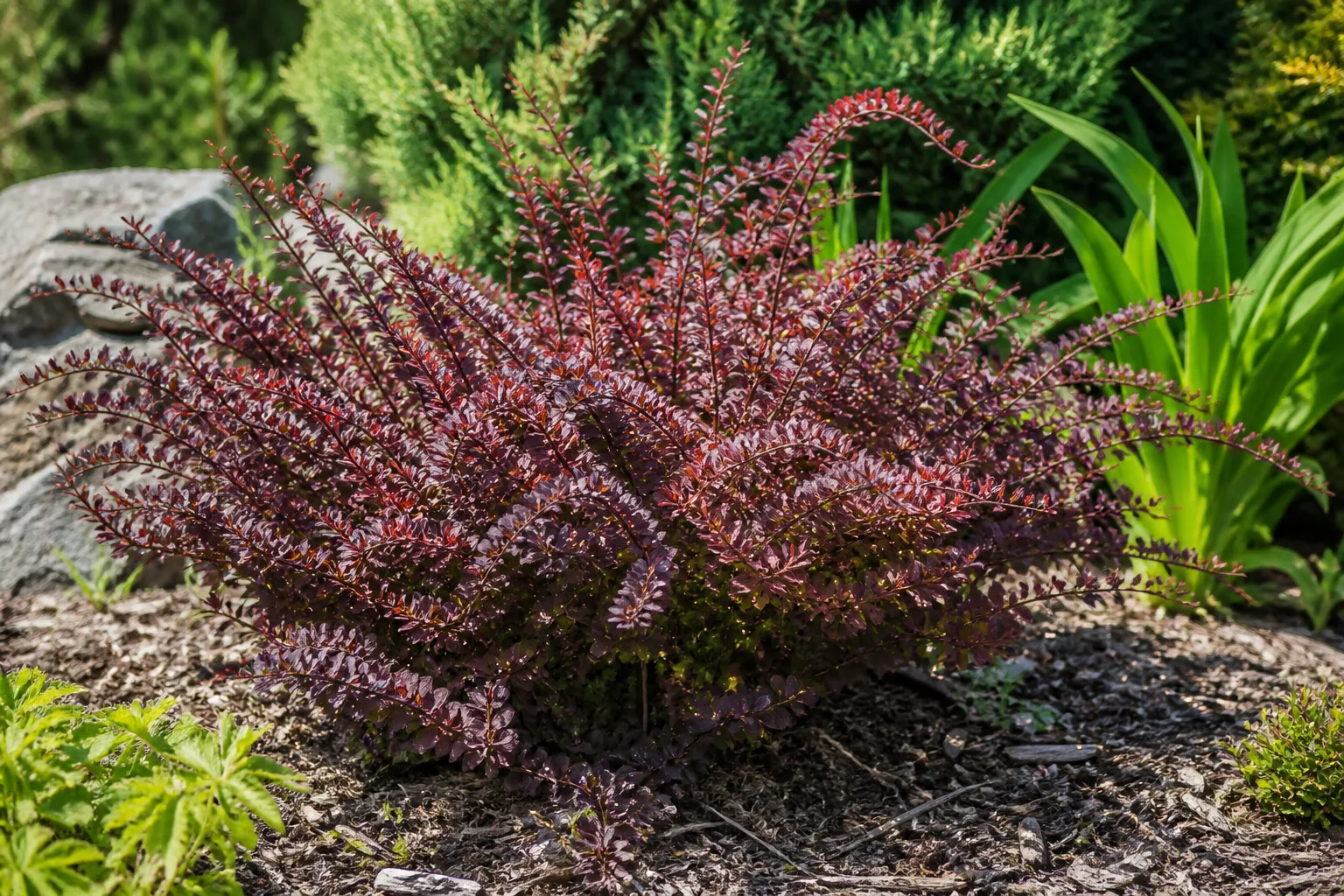
Barberry
Japanese barberry (Berberis thunbergii) is a thorny, deer-resistant shrub whose berries birds carry into woods, so…