
Match a Chinese Evergreen's Leaf Color to the Light You Have
Aglaonema commutatum Araceae
Chinese Evergreen care starts with matching leaf color to the light you actually have. Green and silver Aglaonema types handle low light well, while pink or very pale plants need brighter filtered light, warm roots, and careful watering after the top mix dries.
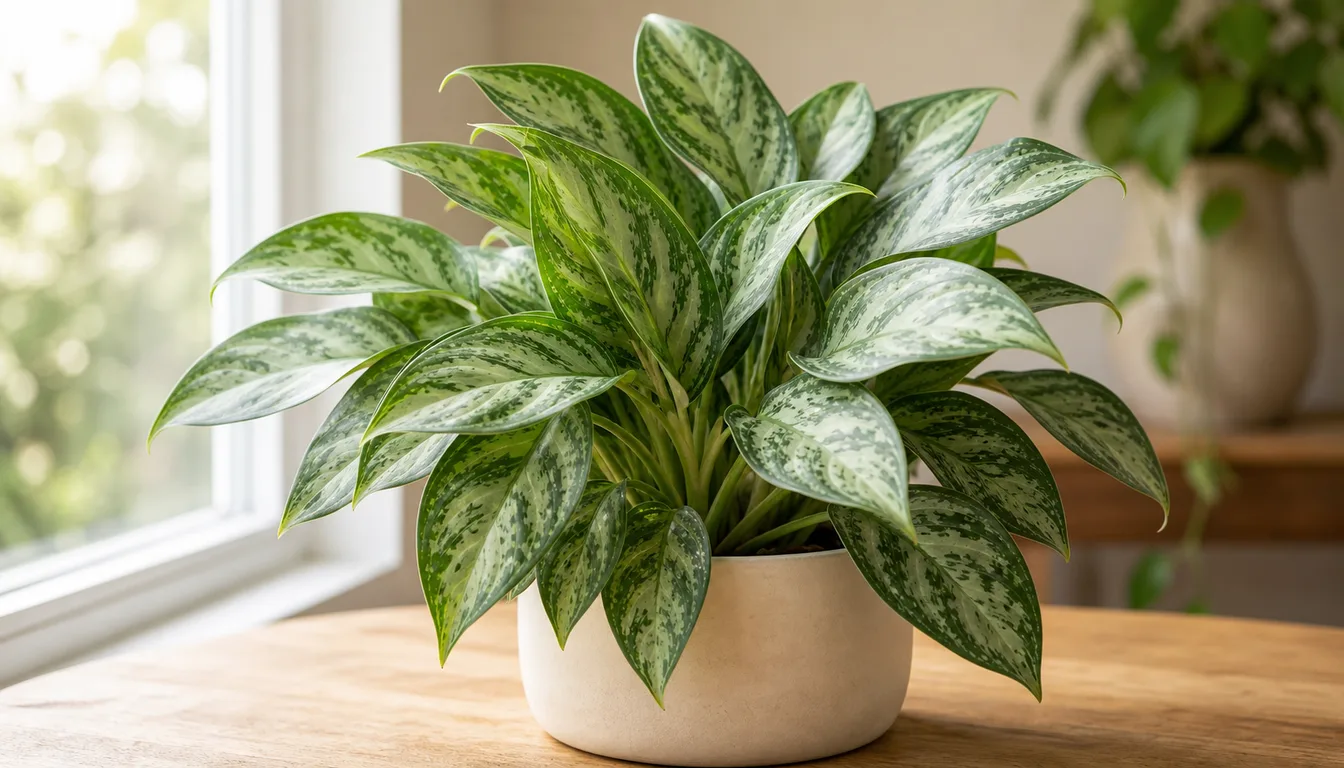
Care snapshot
Choose Leaf Color by the Light You Actually Have
The first Chinese Evergreen decision is cultivar color because dark green and silver types handle low light better than pink, red, or very pale types.
Bright color costs the plant energy, so a pink cultivar in a dim corner may stay alive while new leaves arrive smaller, duller, or greener than the tag promised.
This plant sits between colorful foliage and shade tolerance. If the room is extremely dim and color is not important, Cast Iron Plant may be the better long-term choice because it accepts darker corners with fewer appearance tradeoffs.
- Green and silver
- Best for offices, bedrooms, and lower light.
- Pink or red
- Needs medium to bright filtered light.
- Very pale leaves
- Needs bright light but no hot sun.
- Weak new color
- Move brighter before feeding.
Buy the leaf pattern your room can keep, not the loudest pattern in the store, because a steady green-silver plant usually looks better than a pink plant slowly fading in the wrong corner.
Check the crown before buying because firm stems at the soil line matter more than one perfect display leaf.
If a store tag says a plant tolerates low light, read that as survival, not a promise that every color will stay vivid.
A green-silver cultivar can make a dim office look planted without constant rotation. A pink cultivar usually needs a brighter shelf to avoid turning into a weaker version of itself.
The best buying choice is the one that still looks good after three months in your room.
Low Light Is Useful, But No Light Is Not a Plan
Chinese evergreen tolerates low light because it grows slowly and uses energy carefully. It still needs usable indirect light from a window or grow light to replace old leaves.
A windowless room can hold the plant for a short display, but it is not a permanent care plan because the plant may sit green for a while before it stops making strong new leaves.
Judge the newest leaves, not the oldest ones, because old leaves can stay attractive in weak light long after the plant has stopped improving.
A small grow light can turn a weak corner into a real growing spot, especially for pink and pale cultivars. Keep it on a normal daytime schedule instead of leaving light on all night.
For the toughest dark-room comparison, ZZ Plant handles neglect differently because it stores water in rhizomes. Chinese Evergreen gives more color, but it asks for steadier warmth and more attention to the crown.
If you are choosing among low light houseplants, decide whether color or toughness matters more. That choice usually tells you whether Aglaonema belongs in the room.
If the plant sits more than several feet from a small window, treat it as a low-energy setup and water slowly.
A grow light does not need to be intense, but it should be close enough that new leaves point upward instead of leaning toward the nearest window.
Dust matters more in low light because every bit of leaf surface is doing useful work. Wipe leaves gently when the pattern looks dull.
Keep the Crown Warm Through Seasonal Changes
Cold is the hidden failure point in Chinese evergreen care because the plant handles lower light better than cold wet roots or a draft blowing across the crown.
Keep the pot away from exterior doors, winter glass, air-conditioner blasts, and cold floors. If the pot stays cold for hours after watering, the root zone is not in a forgiving range.
Cold damage often shows up later as yellowing, dull leaves, or soft stems after the mistake happened days earlier at the window, floor, or vent.
Move the plant before winter nights become a problem, since a spot one foot back from cold glass can be enough if the room still has soft light.
- Use a room that stays warm at night.
- Avoid watering right before a cold night.
- Move the pot back from winter glass.
- Keep vents from blowing into the crown.
This is the biggest difference between low light and cold shade because low light slows growth, while cold wet roots can injure the crown.
A tougher plant such as Snake Plant may tolerate a neglected corner better. Chinese evergreen repays warmer placement with fuller patterned leaves and fewer soft-stem scares.
Warmth also changes watering risk because the same wet pot that dries safely in July can sit cold and heavy for too long in January.
If you move the plant for winter, give it a week before judging leaf response. Old cold damage can keep appearing even after the new location is better.
A plant stand can solve two problems at once. It lifts the pot off a cold floor and makes the leaves harder for pets to reach.
Water After the Top Layer Dries, Then Drain Fully
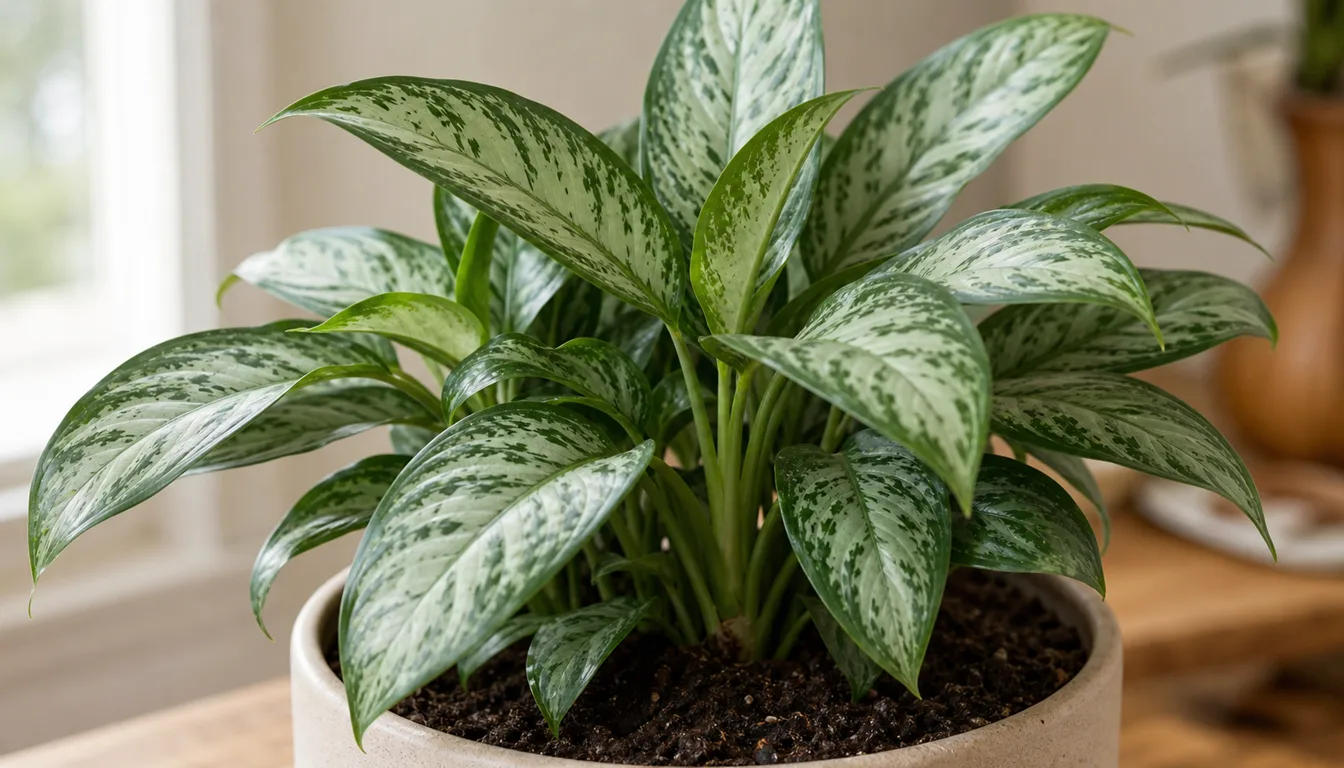
Water after the top 1 to 2 inches of mix dries, then water thoroughly and drain the saucer instead of following a fixed weekly day.
Low light slows water use, so a plant across the room from a window may need far less water than the same cultivar in bright filtered light.
Lift the pot before adding water. A heavy cold pot with yellow lower leaves is usually asking for patience, not another drink.
- Ready for water
- Top layer dry, pot lighter, leaves firm.
- Too wet
- Yellowing, soft stems, sour mix, heavy pot.
- Too dry
- Curling leaves with a very light pot.
- After repotting
- Water carefully until roots resume growth.
If the symptoms are mixed, check overwatering versus underwatering before changing the routine. On this plant, wet cold mix usually matters more than a dry-looking surface.
Use a loose houseplant mix with perlite, bark, or another coarse ingredient that holds some moisture without sealing around the roots.
Good soil for houseplants depends on root behavior. Chinese evergreen roots want even moisture, but they also need air to return after watering.
When in doubt, wait one more day and check again by weight. Chinese evergreen usually forgives a short dry pause better than repeated watering into cool wet soil.
Do not pour a little water every few days because small splashes keep the crown damp without refreshing the full root ball.
If tap water leaves crust on the mix, flush the pot occasionally and let it drain fully. Salt buildup can make brown tips worse even when your watering interval is reasonable.
Pot and Divide the Clump Only When It Asks
Chinese evergreen grows as a clump, so a modest pot usually keeps the root zone easier to dry and the plant easier to stabilize than a huge decorative pot.
Repot only when roots fill the pot, the mix breaks down, or water runs through strangely because the root ball has crowded the container. Move up one size, not into a deep decorative pot.
Keep the crown at the same soil height because burying stems deeper can trap moisture against tissue that should stay above the mix.
- Choose a pot with drainage.
- Move up one size when roots justify it.
- Keep the crown at the same soil height.
- Water less for a while in low light.
- Wait for new leaves before feeding hard.
The normal time to repot houseplants is when roots crowd the pot or the mix collapses. Chinese evergreen adds one special caution, which is to protect the crown from wet burial.
Division works when the clump has several rooted stems, while a small piece with weak roots may sit for weeks and rot if the room is dim or cool.
Divide during active growth and keep each division small enough that the pot dries predictably. Warmth matters more than speed after the split.
After repotting, the plant may pause while roots explore the new mix. That pause is not a reason to feed heavily.
If a division loses one older leaf, watch the crown before you assume failure. A firm crown and one new spear are better signs than keeping every old leaf.
Avoid dividing a plant right before a vacation or a cold stretch. The first weeks need steadier attention than an established clump.
Separate Yellow Leaves, Dry Edges, and Soft Stems
One old yellow lower leaf is not always a crisis, but a pattern of yellowing near wet soil or a soft crown is a different message.
Check the pot weight and the stem bases before adding water because the place where the leaf meets the clump tells you more than the color alone.
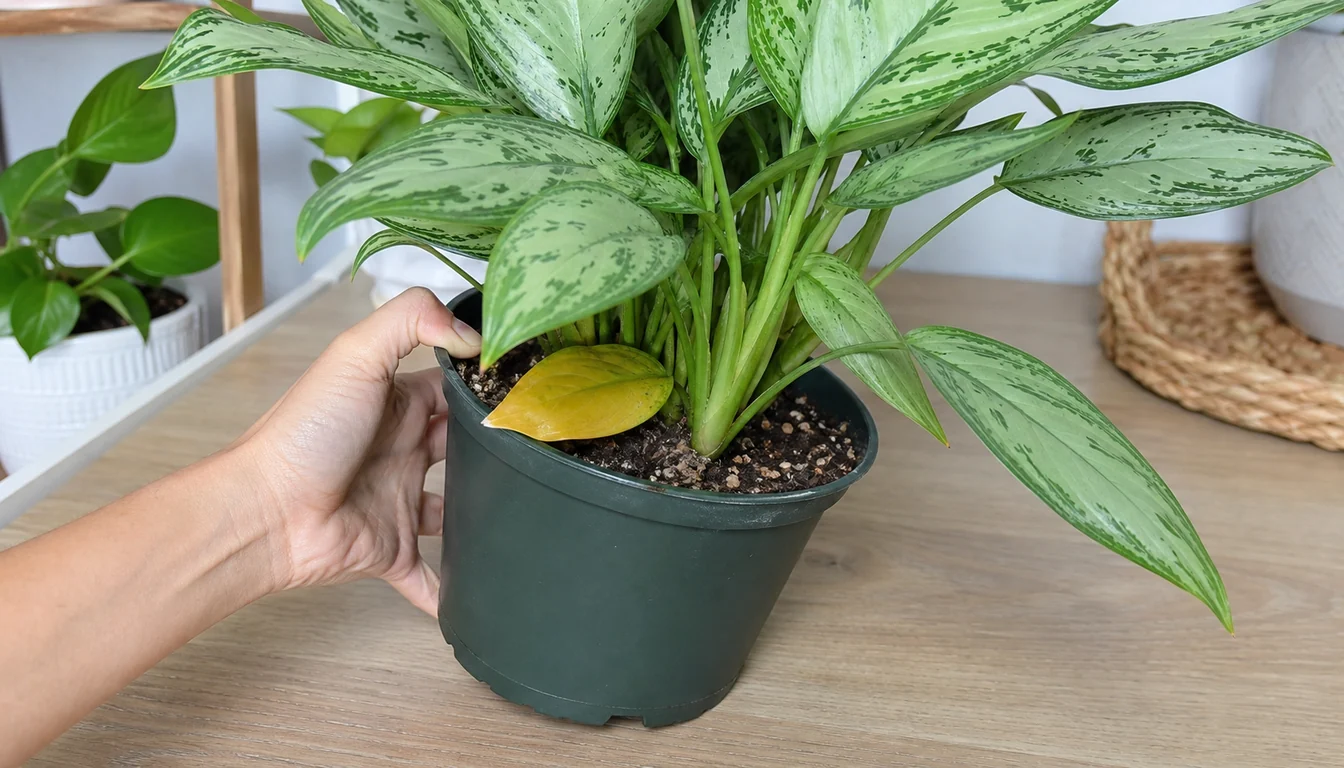
Old lower leaf
- One leaf yellows
- Crown stays firm
- Remove after it loosens
Too wet or cold
- Several yellow leaves
- Heavy pot
- Soft stems near soil
Dry edge stress
- Brown tips or edges
- Pot may be light
- Check water quality and rhythm
Brown edges can come from dry air, inconsistent watering, fertilizer salts, or old damage. Fix the current routine and judge the next new leaves instead of expecting old edges to turn green.
A loud wilting plant such as peace lily gives clearer water signals. Chinese evergreen is quieter, so the pot and crown check matter more than a single drooping leaf.
If soft stems appear, stop watering, move the plant warmer, and save firm divisions before the crown collapses.
Pattern matters more than one leaf. One yellow leaf low on the plant can be age, while several yellow leaves at once ask for a root and temperature check.
Dry edges do not always mean the plant is dry. Inconsistent watering, mineral buildup, cold drafts, or old shipping stress can leave similar marks.
If the crown feels soft, stop treating the leaf tips and inspect the base. Crown softness is the problem that can remove the whole clump.
After any correction, judge the next new leaf instead of the damaged old one. Old Aglaonema leaves do not repair their pattern, so fresh growth is the cleaner proof that light, warmth, and watering are back in balance.
Place It Away From Pets That Chew Leaves
Chinese evergreen is an Araceae houseplant, so place it where pets and children cannot chew irritating leaves or pull the pot down.
Wear gloves if sap bothers your skin, and pick up trimmed leaves after grooming so access control stays simple instead of dramatic.
A raised stand can improve both safety and root warmth because a low floor pot often sits colder than the room.
Choose a stable pot and saucer so the clump cannot tip as it grows wider.
Do not place the plant where a pet can chew one leaf every few days, because small repeated access is still access.
If you prune or divide the plant, bag the trimmings right away because loose leaves on the floor are easier to reach than the plant itself.
A plant that needs both light and distance from pets may belong on a tall stand near a window rather than on a low bookshelf.
Frequently Asked Questions
Does Chinese evergreen really grow in low light?
Yes, green and silver Chinese Evergreen types tolerate low light well, but they still need some indirect light. Pink and very pale cultivars usually need brighter filtered light.
How often should I water Chinese evergreen?
Water when the top layer dries and the pot feels lighter. Low light and cool rooms make the plant use water more slowly.
Why are my Chinese evergreen leaves turning yellow?
One old lower leaf can age out naturally, but several yellow leaves with wet soil or soft stems usually point to overwatering, cold roots, or crown stress.
Is Chinese evergreen safe for pets?
Keep it away from pets that chew leaves. Chinese evergreen can irritate mouths, so use a high stable spot or choose a pet-safe houseplant instead.
Sources & References
Related Plants
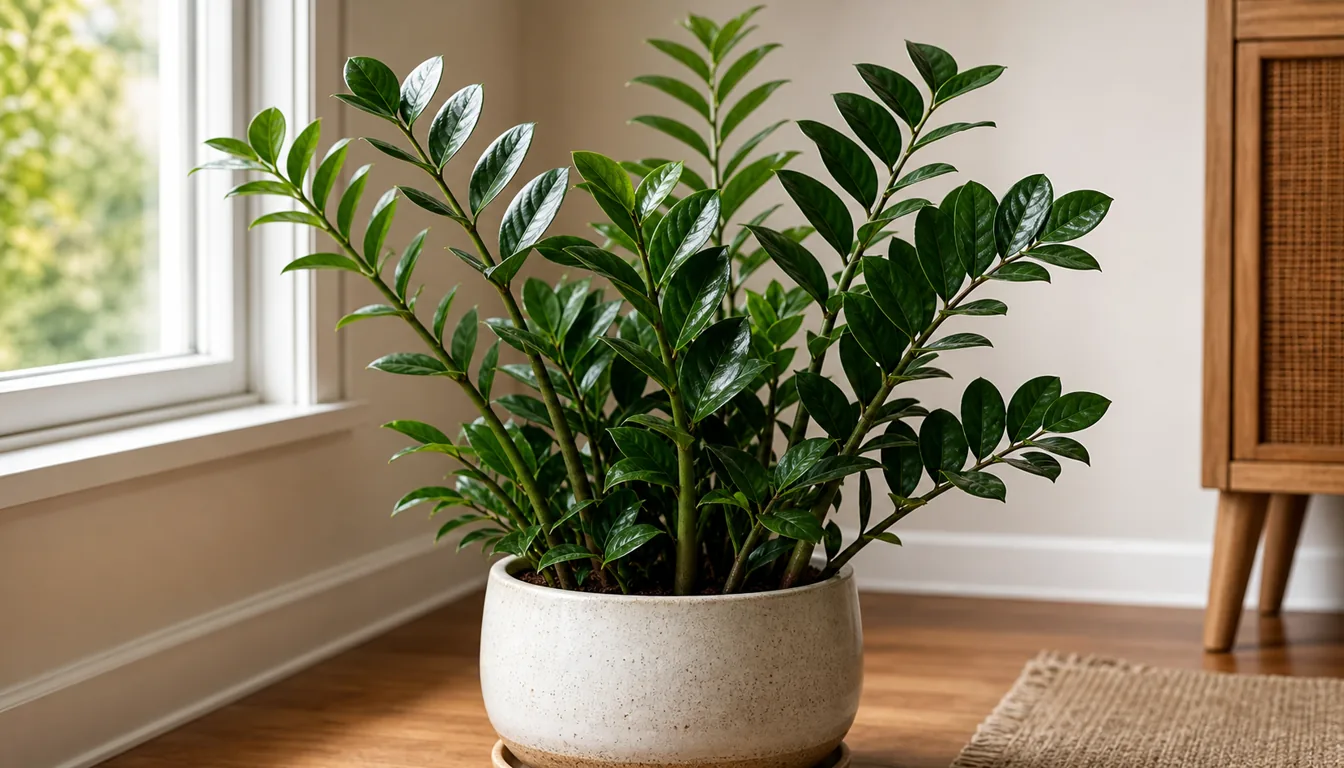
ZZ Plant
A darker, tougher low-light plant that tolerates longer dry spells.
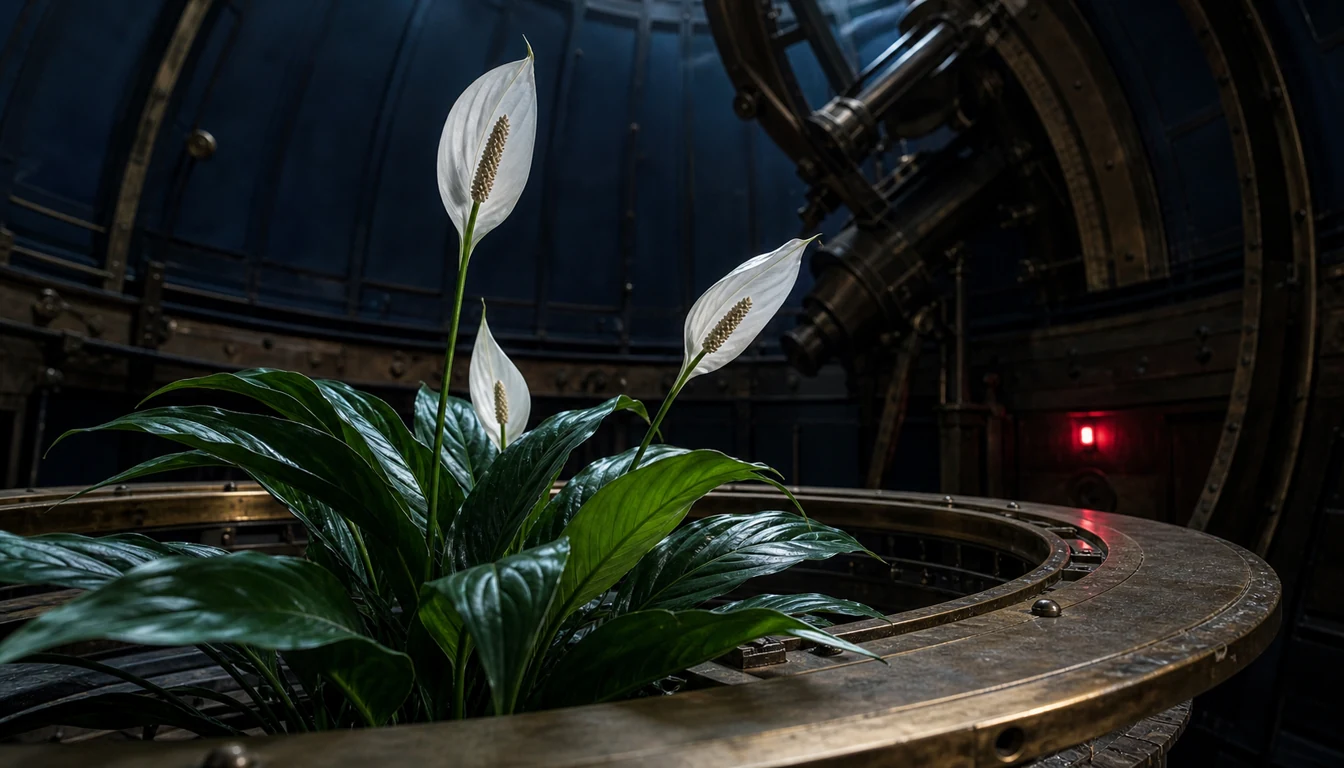
Peace Lily
Another low-light aroid, but with louder wilt signals and white spathes.
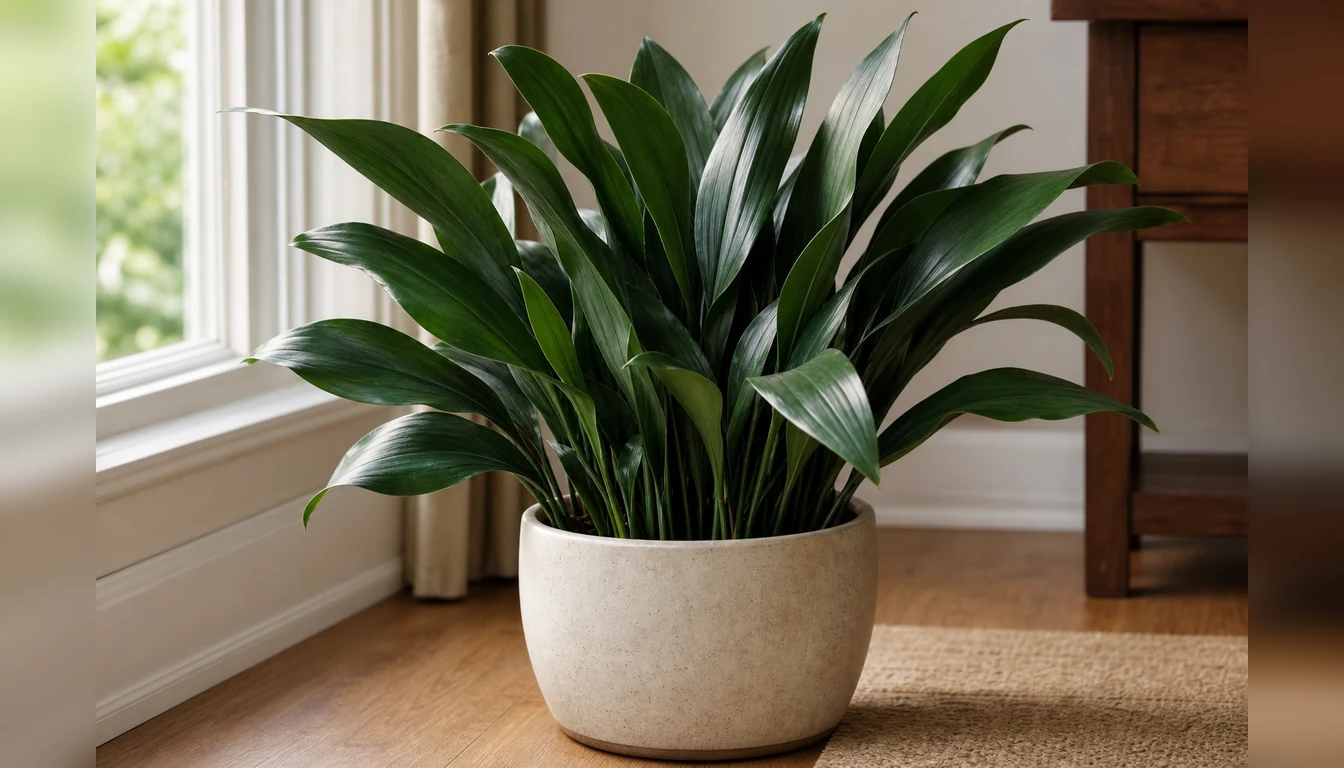
Cast Iron Plant
A slower, tougher choice for very dim corners where color matters less.
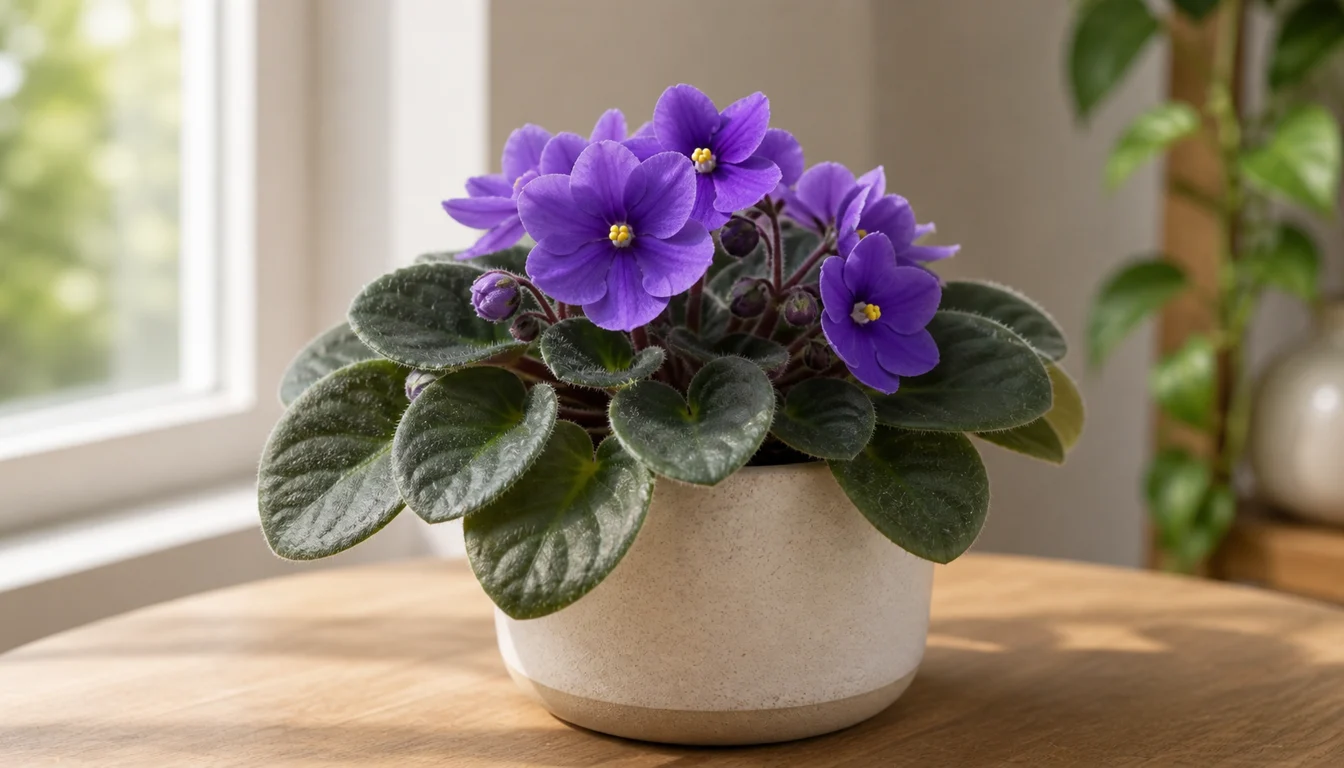
African Violet
African Violet is a windowsill bloomer that rewards steady, small-pot care.
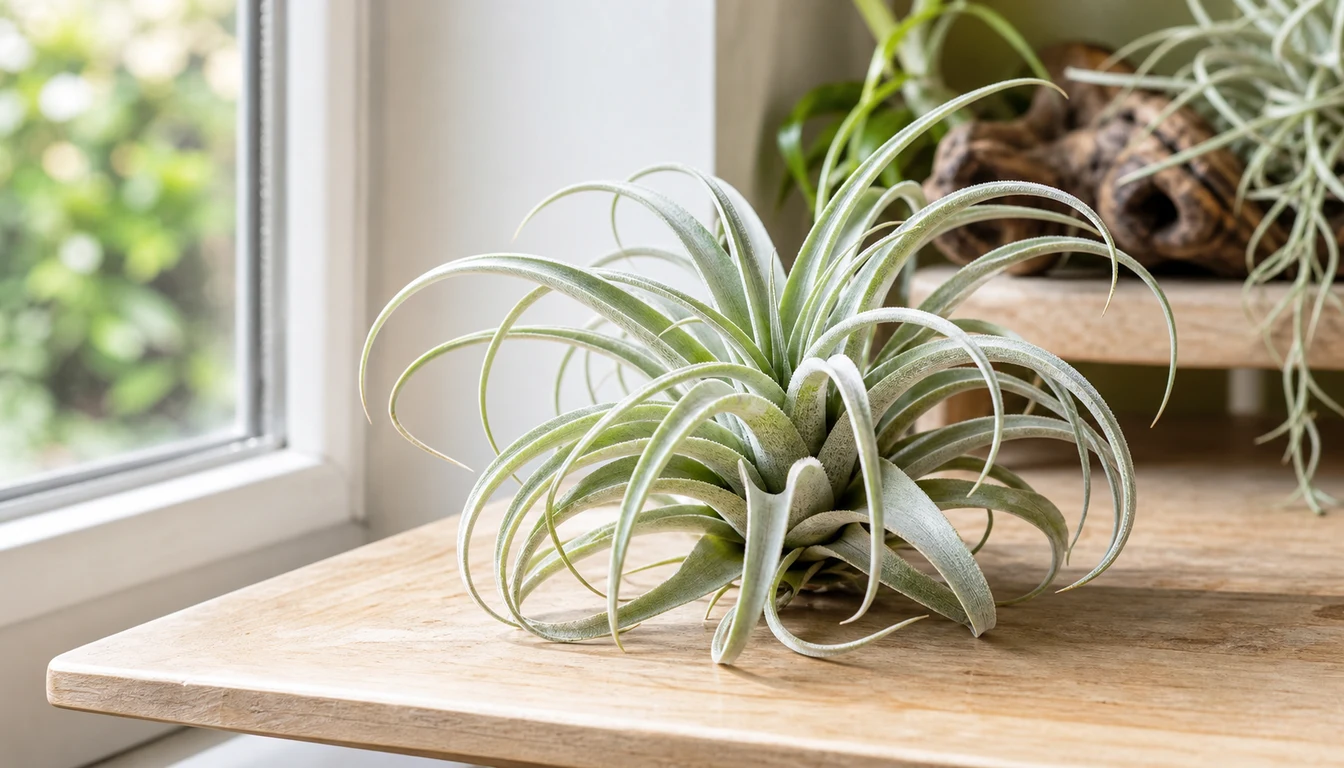
Air Plant
Air plants are living sculptures that thrive without soil, anchoring to driftwood, rocks, or shells while drawing…
Alocasia
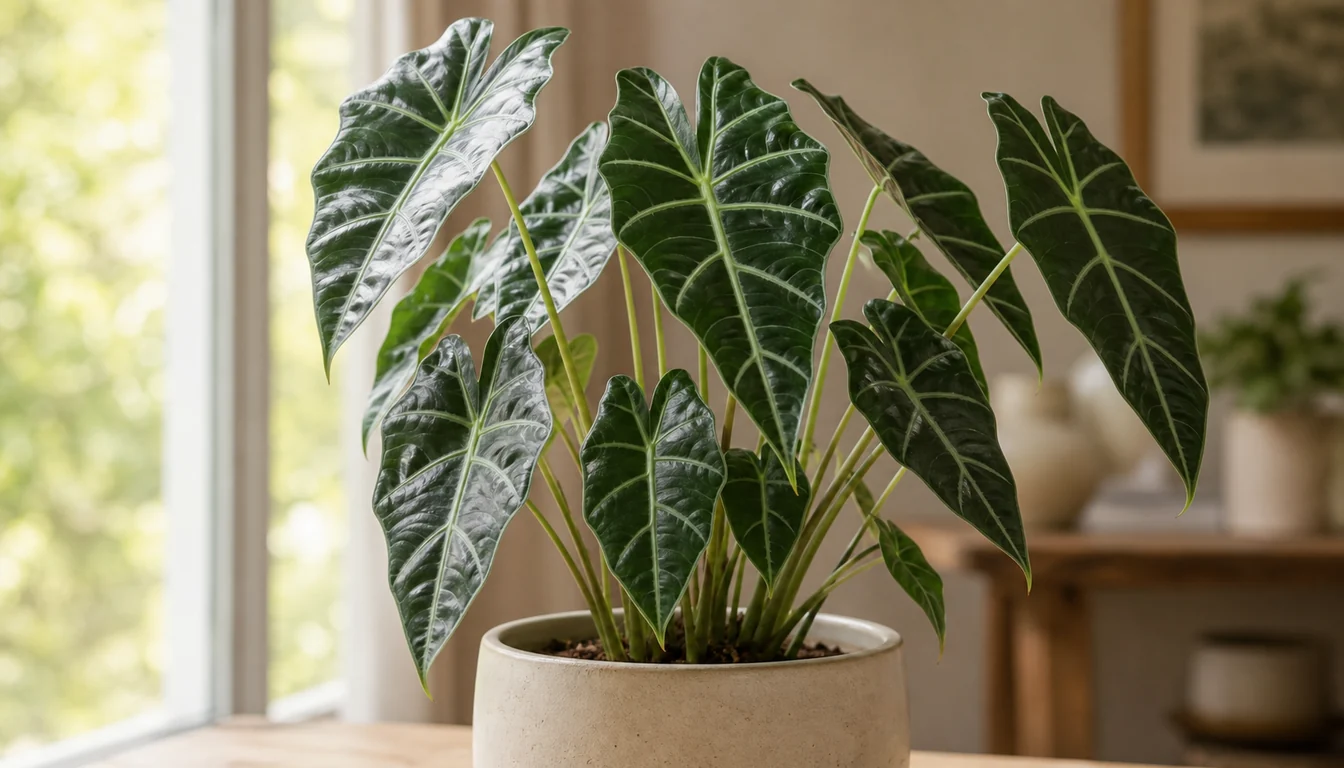
Alocasias include compact, textured houseplants and large elephant ears that need substantial floor space.