
What's Parsley? How to Grow It Before It Turns Bitter
Petroselinum crispum Apiaceae
Parsley is a hardy biennial grown as an annual, and the gap between those two is what makes a returning plant disappointing.
It gives a 12 to 18 inch rosette of leaves in its first year and a seed stalk with tough, bitter foliage in its second. It germinates slowly enough that gardeners give up on it, wants richer soil than most herbs, and is the host plant for the black swallowtail caterpillar that turns up on its leaves.
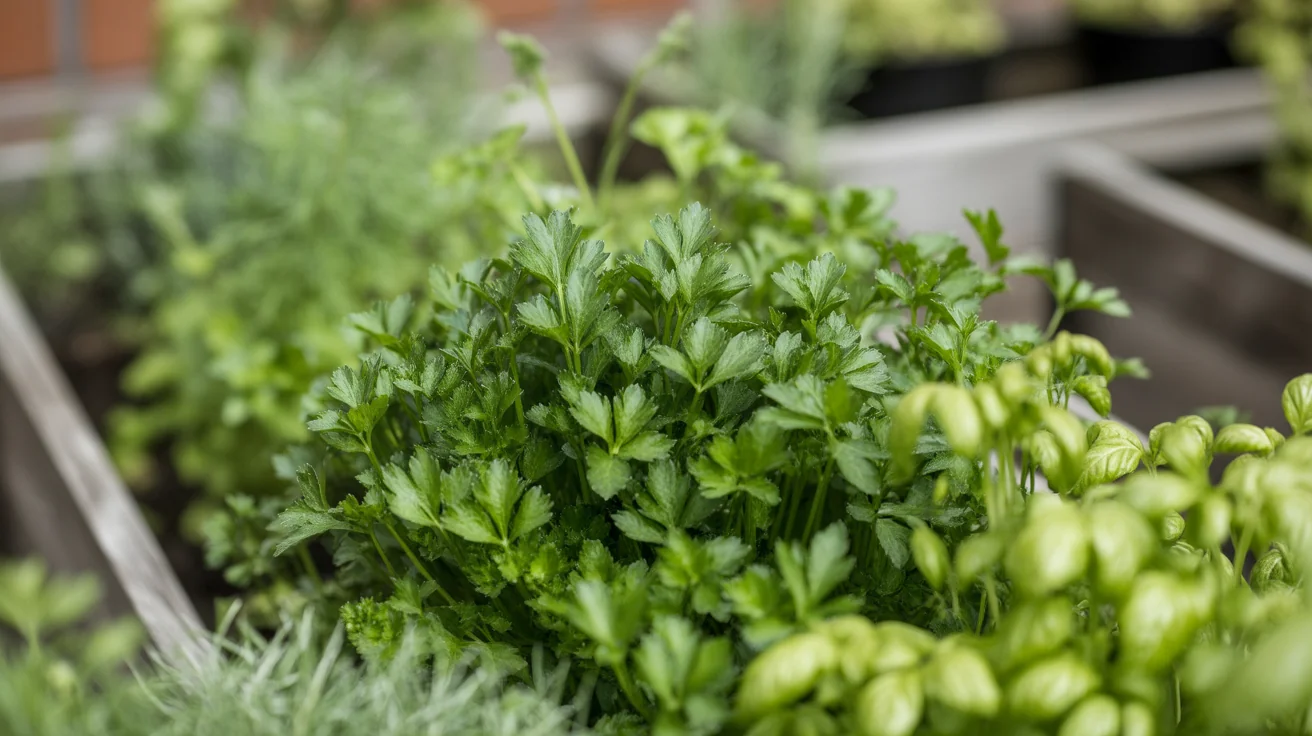
Care snapshot
Is Parsley an Annual or a Biennial?
Parsley is a hardy biennial, and NC State adds that it is usually grown as an annual.
Wisconsin places it in the carrot family, Apiaceae, alongside carrot, celery and cilantro. Those two facts explain why a parsley plant that returns in spring disappoints.
In its first year the plant does what you want.
Wisconsin gives the rosette of leafy stems as 12 to 18 inches tall, and it keeps producing for as long as you keep cutting. That is the parsley anyone means when they say parsley.
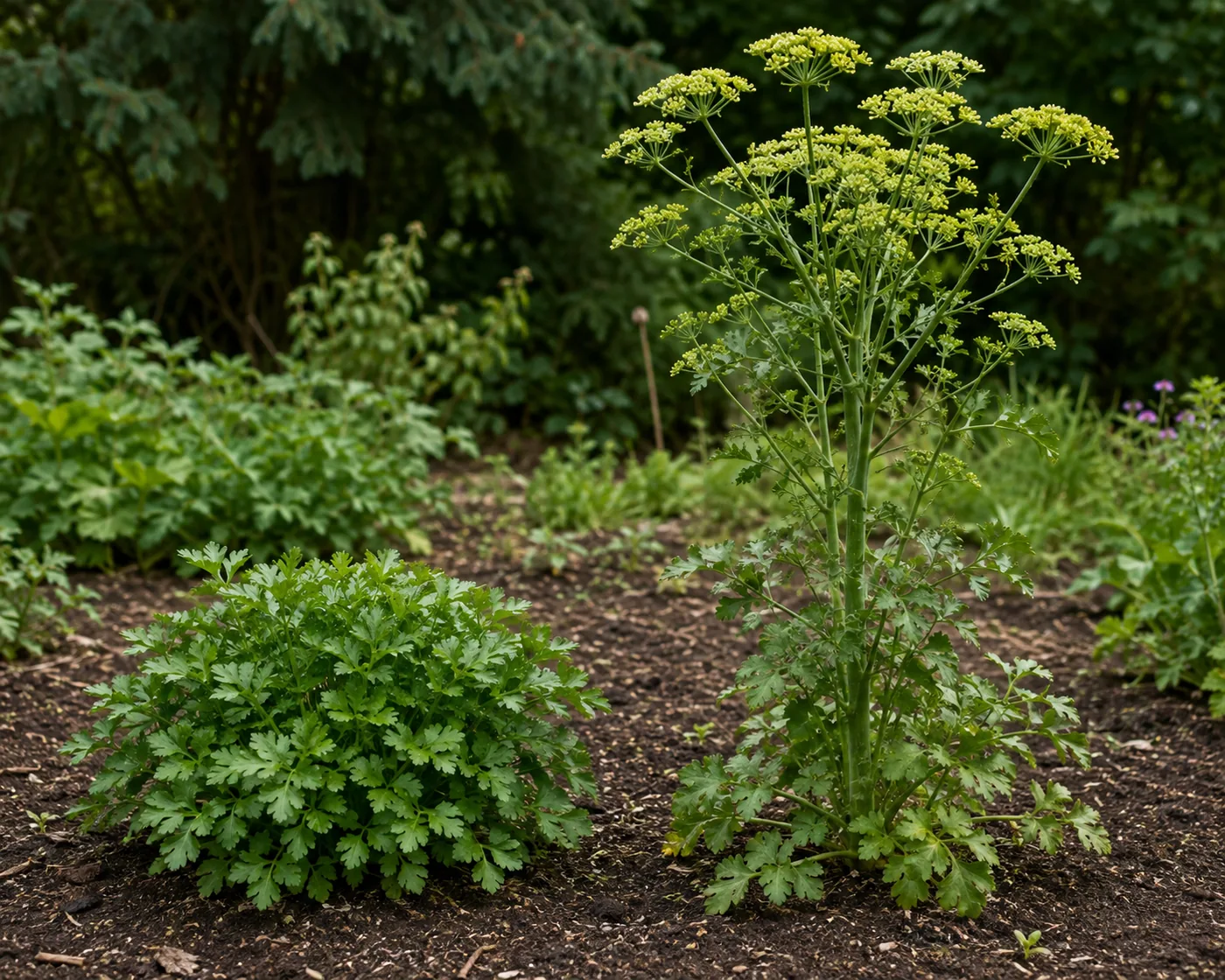
The second year is a different plant. It stretches to 2 or 3 feet and produces greenish-yellow flowers in compound umbels, followed by small ridged seeds.
Illinois is blunt about what happens to the part you eat, saying the leaves become very tough and bitter.
Illinois recommends starting new plants each season for that reason, which makes a parsley bed a yearly sowing rather than a permanent planting.
There is one reason to leave a bolting plant standing. It is still a swallowtail host while the caterpillars are feeding, so a plant the kitchen has finished with can stay useful in the bed.
Should You Grow Flat-Leaf or Curly Parsley?
Two types sit side by side on every herb bench.
Illinois Extension describes moss-curled parsley as finely cut and tightly curled, and names its job as garnish.
Flat-leaf it calls the preferred parsley for cooking, because it has more flavor.
- Flat-leaf
- The preferred parsley for cooking, which Illinois puts down to it having more flavor, and the type Wisconsin says may overwinter better
- Moss-curled
- Finely cut, tightly curled leaves, named by Illinois as the type used for garnish
Both are Petroselinum crispum and both are grown in exactly the same way. The choice is about what the leaves are for rather than about how much work either one takes.
Wisconsin adds a second reason to prefer the flat type, saying flat-leaved types may overwinter better than curly leaf types. That only matters if a fall sowing is being carried through, which is covered further down.
If there is only room for one plant, the sources point at flat-leaf.
Curly is worth growing when the look of a plate matters.
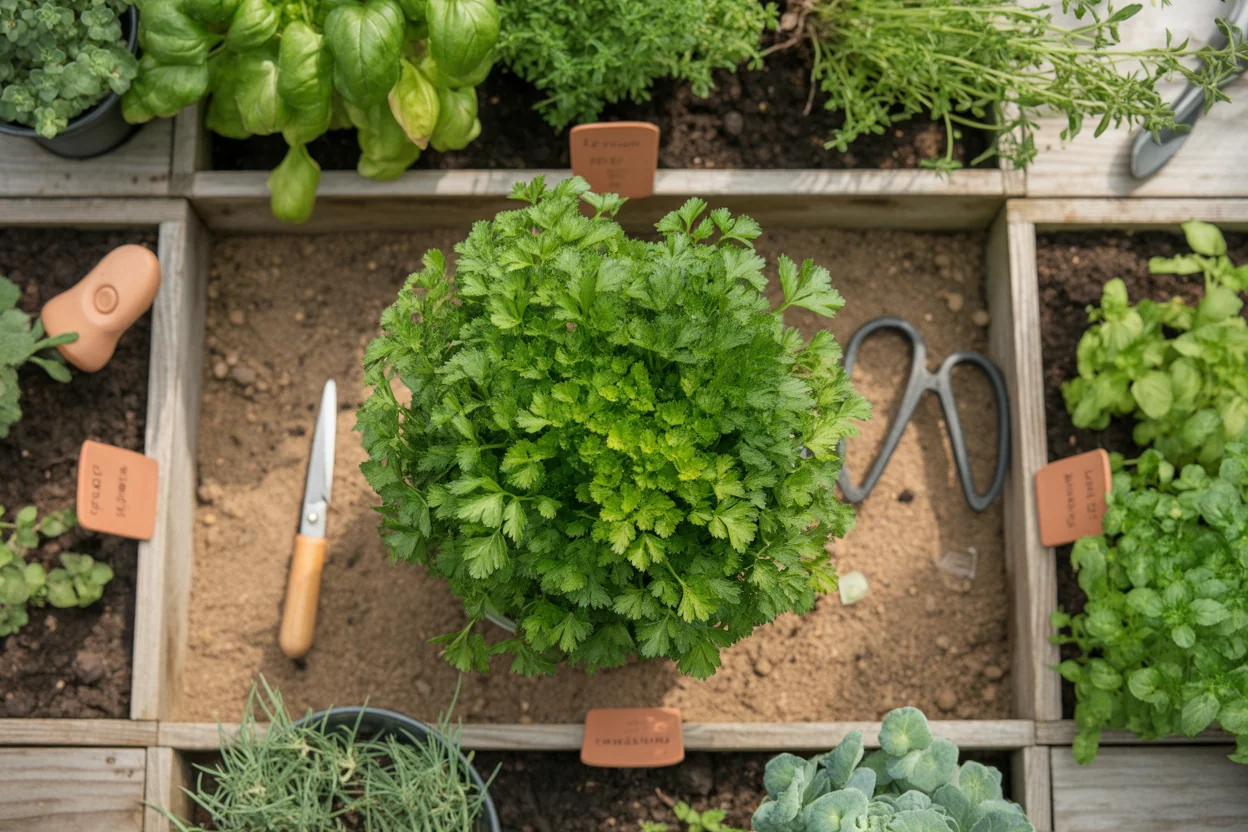
The other essential kitchen herbs take the same conditions and sit beside either one.
Why Is Parsley So Slow to Come Up?
Most failures with this plant happen before a single leaf shows.
NC State says it is easier to grow from seedlings because the germination period is long.
Wisconsin puts a figure on that, saying seeds may take several weeks to germinate, especially in cool, wet soils.
Both sources reach the same preparation. Illinois suggests soaking the seeds in water overnight before planting because parsley is slow to germinate, and Wisconsin says soaking overnight helps to enhance germination.
- Soak the seed overnight in water before sowing, which both Illinois and Wisconsin give.
- Start indoors before the last spring frost for the earliest cutting.
- Sow outdoors after the spring frost, or again in midsummer for a later crop.
- Buy seedlings instead, which NC State calls the easier route, and space them 8 to 12 inches apart.
Soil warmth matters here. Wisconsin's note that germination is slowest in cool, wet soils is the case against an early outdoor sowing into cold ground.
Illinois suggests that radish trick precisely because radish germinates quickly. The radishes come and go long before the parsley needs the space.
None of this is required. NC State's own advice is that seedlings are easier, and the seed-raising guide covers the longer route for anyone who wants it.
What Does Parsley Need From Its Spot?
Soil is where this plant asks for more than the woody herbs do, not less. Wisconsin says to place plants in relatively fertile soil, and adds that this is more so than for other herbs, which are usually best in unfertile ground.
NC State lists clay, loam and sand as all tolerated. The pH band is wide, running from acid below 6.0 to neutral between 6.0 and 8.0, and the light requirement is full sun of six or more hours.
Moisture is where it parts company with rosemary and thyme. NC State pairs good drainage with moist, which is a narrower target than either word manages on its own, and it is the pairing rather than either half that a bed has to deliver.
- Full sun of six or more hours, which is the one requirement with no flexibility in it.
- Relatively fertile ground, richer than the lean soil most herbs are given, which is what feeding a leaf crop assumes.
- Moist and free-draining together, usually meaning organic matter worked through the bed.
- Plants 6 to 12 inches apart, which Wisconsin gives and NC State narrows to 8 to 12.
That combination is easiest to hit in a bed with organic matter through it, or in a pot with a mix that drains freely and gets watered often. A dry parsley plant stalls, and a waterlogged one rots.
Spacing is the part most people skip, and the two sources bracket it rather than agreeing exactly. Anywhere from 6 to 12 inches gives a clump wide enough to cut from all season.
How Should You Cut Parsley?
Illinois sets the start point loosely, saying parsley can be cut any time after it has become large enough.
Wisconsin gives two methods.
Pinch off sprigs as needed, or cut the entire plant where larger quantities are wanted.
Where you cut matters more than when.
Take whole stems from the outside of the clump, close to the base, and leave the young growth at the center alone. That center is where the next flush comes from.
Picking leaves off the top instead leaves a plant full of bare stalks.
Cutting the whole plant is a real option rather than a last resort, and it is what Wisconsin describes when a larger quantity is wanted, such as a batch for drying.
Storage is unusually forgiving. Wisconsin says both the leaves and the roots retain their flavor when dried, which is not true of most soft herbs, and Illinois adds that potting a plant in the fall for indoor use works if it is discarded in the spring.
Can a Fall Sowing Be Carried Through the Winter?
Sometimes, and Wisconsin is careful about the word. A fall sowing may sometimes be successfully overwintered for harvest in early spring, which is worth trying where the winter is not severe.
The catch follows from the biennial habit.
A plant that overwinters is already into its second year, and Wisconsin says the leaf flavor is not as good in the second season.
An early crop of mediocre parsley is still earlier than anything sown in spring, so whether that is a good trade depends on what it is for.
Type choice tilts the odds. Wisconsin says flat-leaved types may overwinter better than curly leaf types, which is one more reason to grow the flat one if only one is going in.
Is That Caterpillar Worth Killing?
A boldly striped caterpillar on parsley is not a pest to be dealt with. Both NC State and Wisconsin list parsley as a larval host plant for the black swallowtail, Papilio polyxenes.
The caterpillar has a common name of its own, the parsleyworm, which NC State lists among parsley's insects. It is green, banded in black and spotted with orange, and nothing else on a parsley plant looks like it.
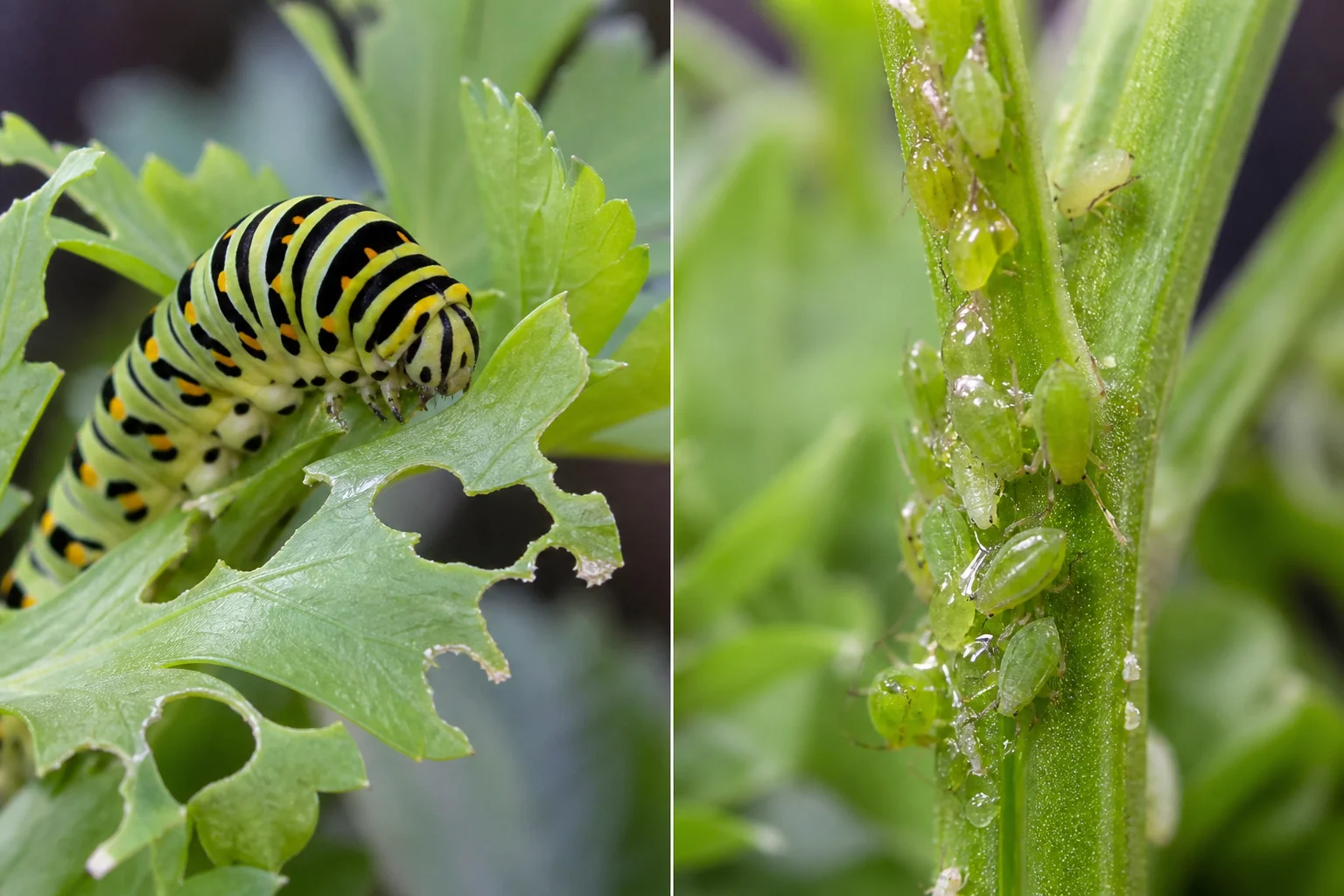
That changes the decision. A plant can spare a few leaves, and moving the caterpillar to a spare plant costs less than losing the butterfly, which is why parsley turns up on butterfly garden lists.
- A green caterpillar banded in black and spotted with orange is a black swallowtail larva, worth moving rather than killing.
- Aphids are what Wisconsin calls the most common pest, gathering in colonies along the stems and taking sap without chewing.
- Carrot weevil, flea beetles, leafhoppers and tarnished plant bugs are the insects NC State names, none of which announces itself.
- Septoria leaf spot, caused by Septoria apiicola, is what Wisconsin calls the most common disease of parsley.
The insects that actually cost you a crop are far less obvious than the caterpillar. Dill sits in the same family and shares the swallowtail and the aphids, which is worth knowing if the two are grown together.
Two diseases are named across the sources. NC State gives septoria leaf spot and stem rot, and Wisconsin singles out Septoria apiicola as the most common, both of which build up in crowded, wet foliage rather than arriving out of nowhere.
Spacing is the response to most of that list. A plant given its 6 to 12 inches dries between waterings and sees fewer of all of them.
Is Parsley Safe Around Pets and Skin?
Parsley is toxic to dogs, cats and horses, according to the ASPCA. Its record names furanocoumarins as the toxic principle and photosensitization, meaning sunburn or dermatitis, as the effect, and adds that large amounts are needed to cause it.
Photosensitization is a reaction to sunlight. The furanocoumarins make skin burn more easily in the sun, and NC State does not list contact dermatitis for parsley, so the problem follows eating a large amount rather than brushing past or handling the plant.
In practice the case to avoid is a pot within reach of an animal that grazes it. For a suspected large ingestion, the ASPCA's advice is to call a veterinarian or its Animal Poison Control Center.
A second safety point has nothing to do with the garden plant. Montana State University Extension notes that poison hemlock, which is also called poison parsley, belongs to the same family, and that the most recent human deaths from it came from mistaking it for edible members of the carrot family. Parsley for eating comes from a bed sown or planted on purpose, never from a wild plant that looks like it.
Frequently Asked Questions
Why did my parsley come back tough and bitter?
Because it reached its second year.
Parsley is a biennial, and Illinois Extension says an overwintered plant produces a seed stalk with leaves that are very tough and bitter.
Wisconsin agrees that leaf flavor is not as good in the second season.
How long does parsley take to germinate?
Wisconsin says several weeks, especially in cool, wet soils. Both Illinois and Wisconsin suggest soaking the seed overnight to enhance germination, and Illinois adds sowing radish alongside as a row marker.
How far apart should parsley be planted?
Wisconsin places plants 6 to 12 inches apart in relatively fertile soil, and NC State narrows that to 8 to 12 inches for bought seedlings.
Does parsley need rich soil?
Yes, more than most herbs. Wisconsin says parsley wants relatively fertile soil, more so than other herbs, which are usually best grown in unfertile ground.
Is flat-leaf or curly parsley better?
Illinois calls flat-leaf the preferred parsley for cooking because it has more flavor, and describes moss-curled as the type used for garnish. Wisconsin adds that flat-leaved types may overwinter better.
Can parsley be dried?
Yes, unusually well for a soft herb. Wisconsin says both the leaves and the roots retain their flavor when dried.
Should I kill the striped caterpillar on my parsley?
No. NC State and Wisconsin both list parsley as a larval host plant for the black swallowtail, Papilio polyxenes, and that green caterpillar banded in black and spotted with orange is its larva.
Is parsley safe for cats and dogs?
No. The ASPCA lists parsley as toxic to dogs, cats and horses. The toxic principle is furanocoumarins, the effect is photosensitization (sunburn or dermatitis), and the ASPCA notes that large amounts are needed to cause it.
Sources & References
Related Plants
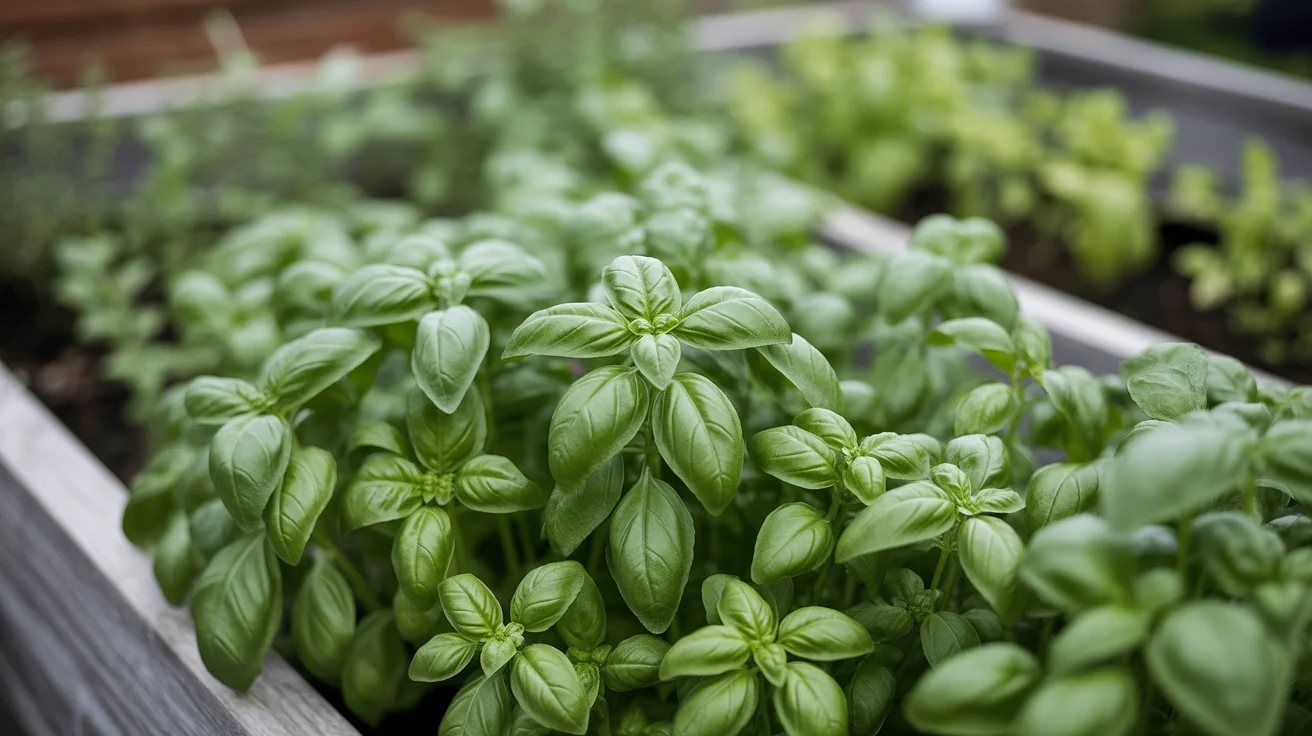
Basil
Tender warm-season herb that pairs well with tomatoes and likes richer soil and more heat than parsley.
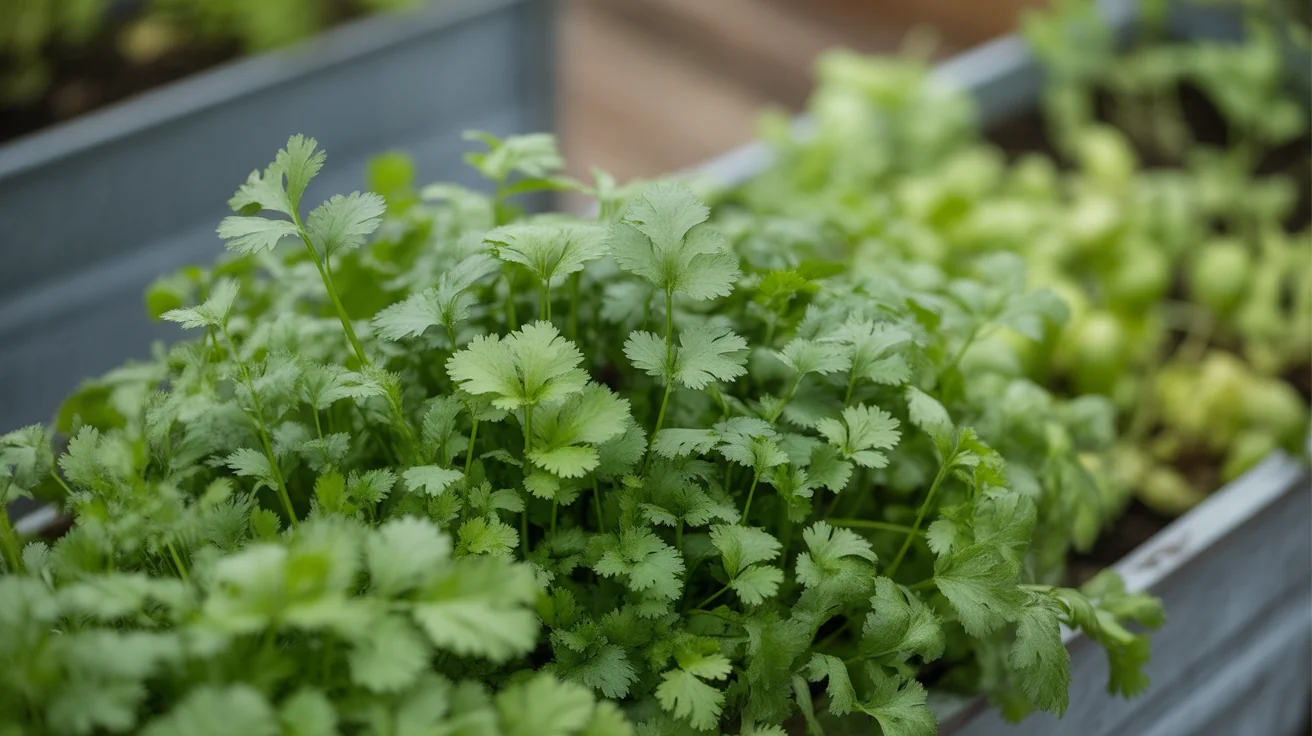
Cilantro
Cool-weather herb from the same family with a similar bolting habit and quick spring growth.
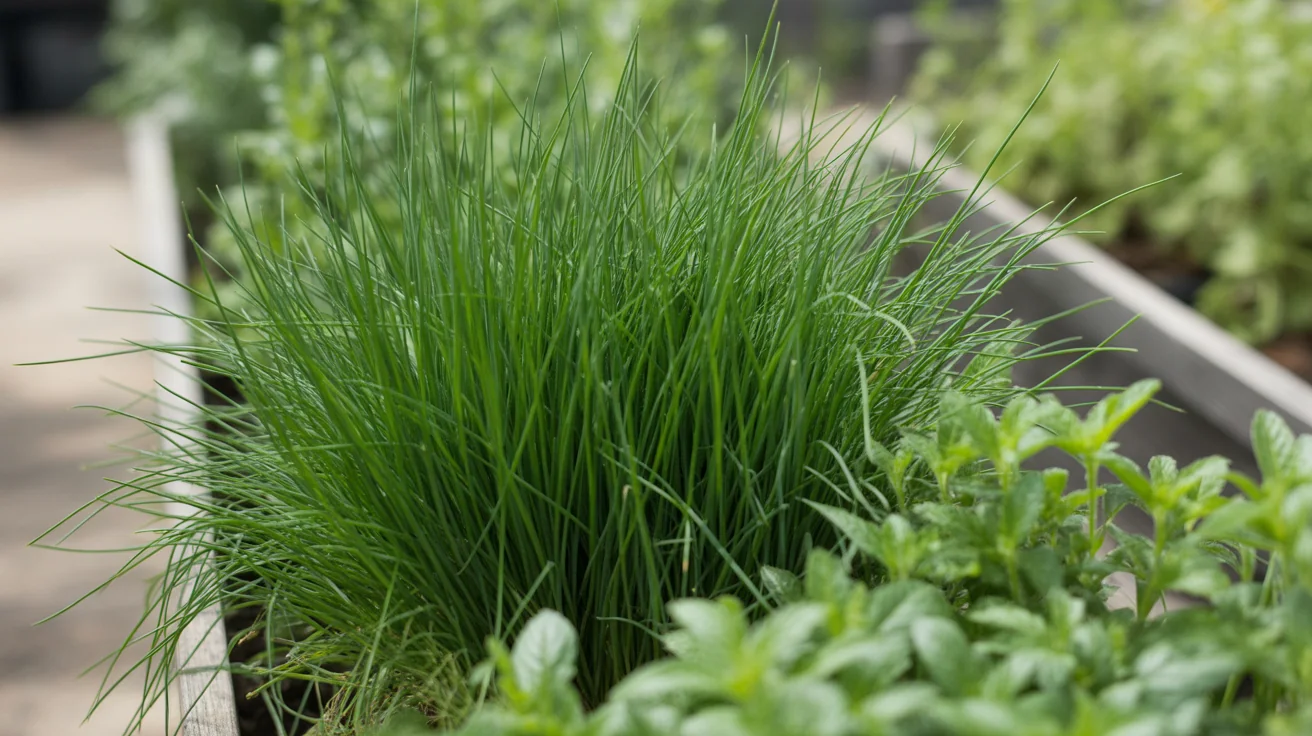
Chives
Perennial onion relative that fills the same edging and container spots as parsley in many gardens.
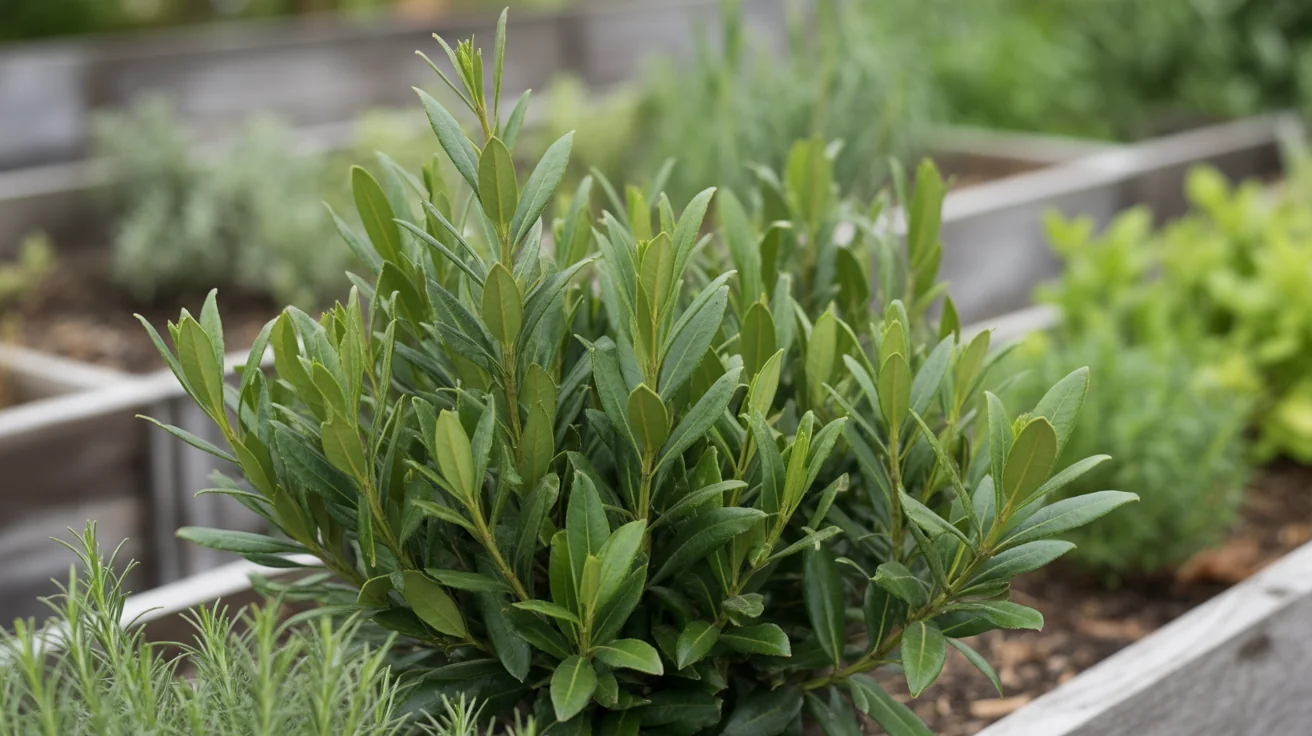
Bay Laurel
Bay laurel is a tree grown as a container plant, which is why every decision about it looks the way it does.
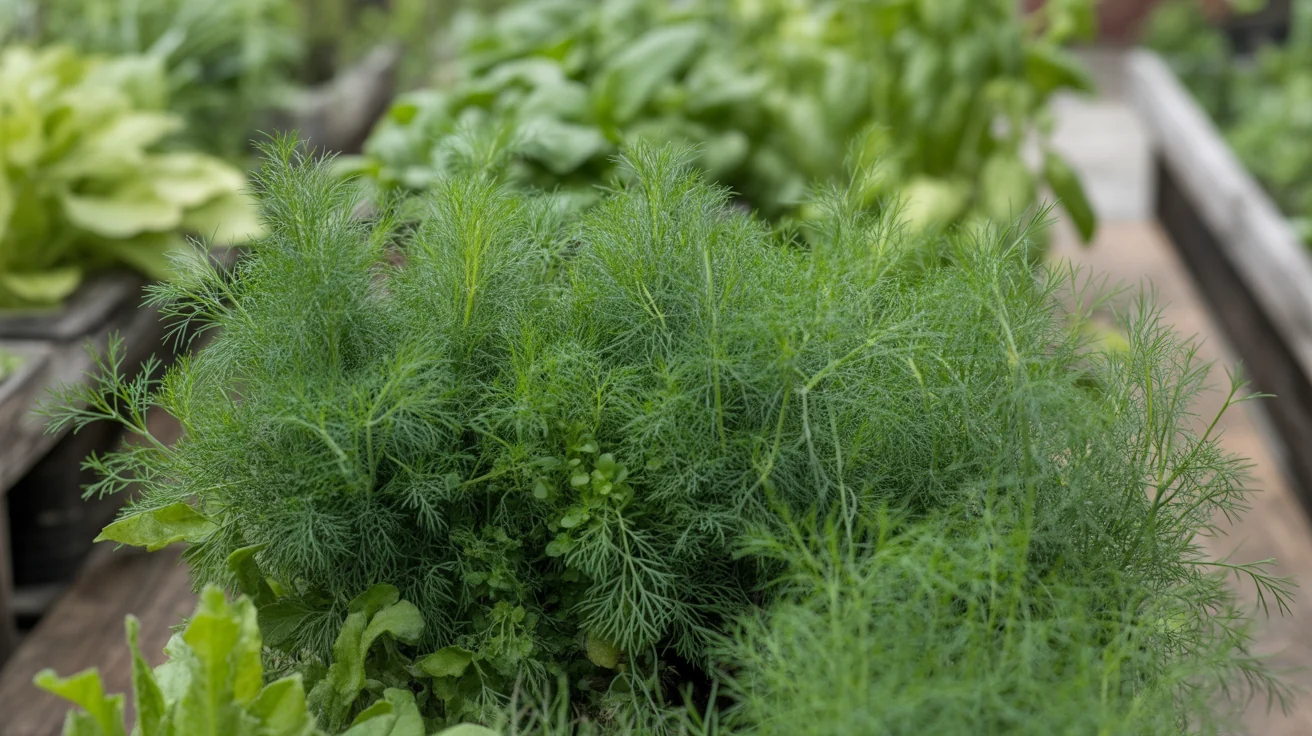
Dill
Dill reaches two and a half to five feet, which the small pot it is sold in does not prepare anyone for, and it…
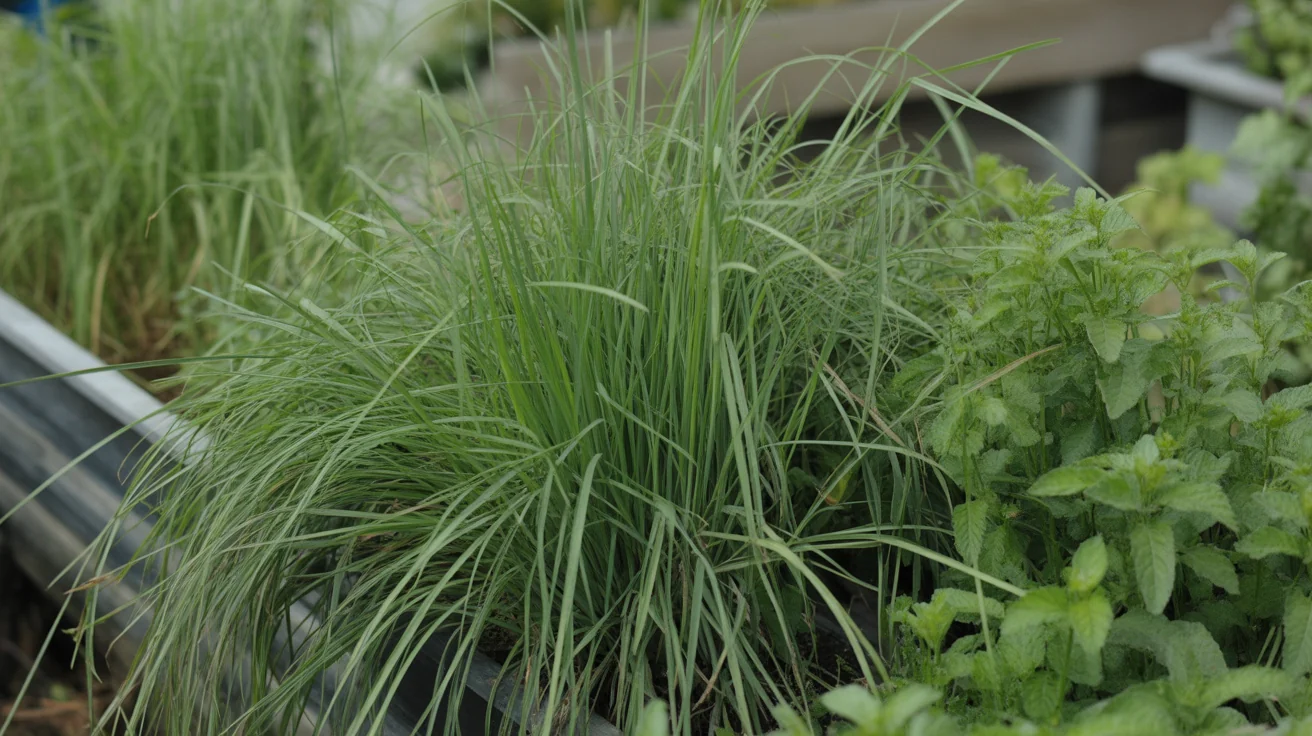
Lemongrass
Lemongrass is a tender tropical grass that does almost nothing until summer heat arrives and then increases…