
How to Grow Calatheas and Understand Their Moving Leaves
Calathea spp. Marantaceae
Calatheas combine patterned foliage with leaves that change position through the day. Many familiar houseplants sold under that name are now classified as Goeppertia.
They grow best with suitable indirect light, warm conditions, moist but aerated roots, and humid air. Those needs work together, but a humidifier cannot drain a wet pot and a grow light cannot prevent a cold draft.
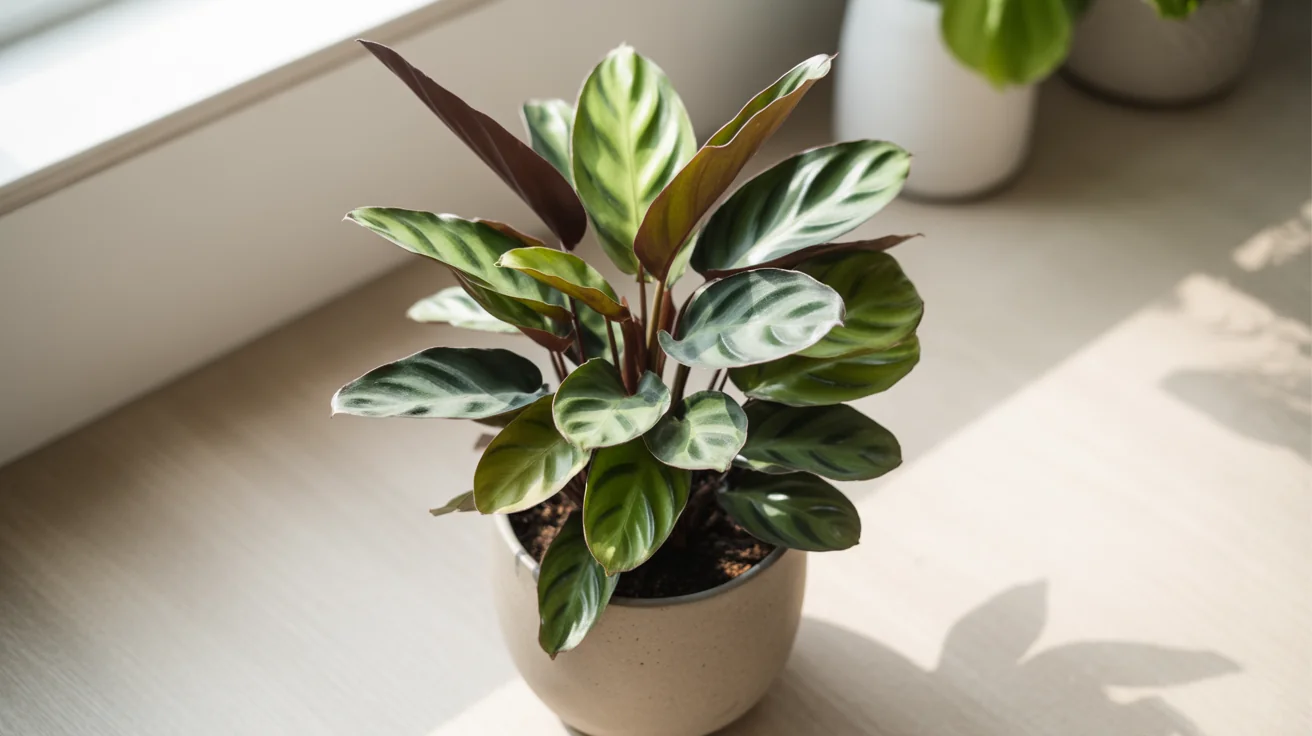
Care snapshot
Calathea Names and Normal Leaf Movement
Calathea remains a familiar nursery name even though many species have moved to Goeppertia. The two names on a label may refer to the same plant. “Prayer plant” is broader still and can refer to relatives in Maranta, Ctenanthe, or Stromanthe, so the botanical name helps connect care advice to the plant in front of you.
Many members of the prayer-plant family raise or fold their leaves in darkness. This daily movement is called nyctinasty. A plant changing position in the evening is not automatically short of water, and the amount of visible movement varies.
Persistent rolling, limp petioles, browning, or newly damaged foliage deserves a different assessment. The root zone, recent exposure, and leaf surfaces provide more information than whether a leaf opened at a particular hour.
The common Goeppertia houseplants form clumps from rhizomatous growth. New shoots widen the plant at its base, which is why division can preserve a growing section with roots. A detached patterned leaf does not contain the same parts.
The related prayer plant may share the daily movement, but its trailing or branching stems change its growth habit and propagation options. A common name is not a reason to use the same cutting method for both.
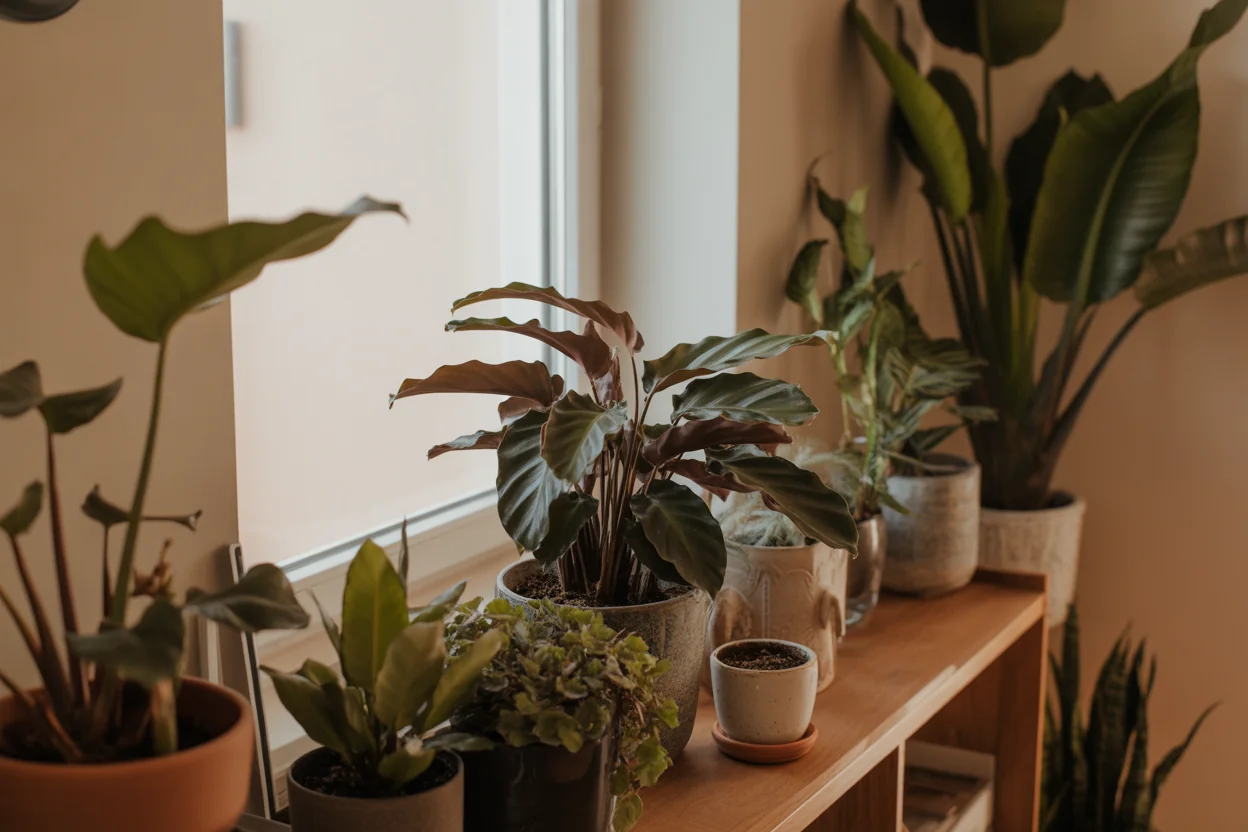
Choosing a Type by Identity and Space
The label matters before a promise that one calathea is easy. A narrow-leaved rattlesnake plant and a broad-leaved orbifolia occupy different space, but both still depend on suitable roots, moisture, and room conditions.
- Rattlesnake plant
- Goeppertia insignis, also sold as Calathea lancifolia, has long, wavy leaves with dark oval markings and purple undersides.
- Orbifolia
- Goeppertia orbifolia has broad rounded leaves with silver-green bands. Mature leaves need room beyond the pot rim.
- Pinstripe types
- Goeppertia ornata is known for fine pale or pinkish lines on darker foliage.
- Rose-painted types
- Goeppertia roseopicta has contrasting brush-like markings. Cultivar names distinguish the different selections.
NC State describes orbifolia as reaching about 2 to 3 feet tall with leaves as wide as 12 inches. That is a species example, not a size limit for every calathea. A small retail pot can therefore need more display space as it matures.
Sound foliage, firm growing points, and a manageable root ball are better purchase checks than a claim that a variety tolerates neglect. Cold transport can damage tropical foliage, so protecting the plant on the trip home matters even before its permanent position is chosen.
Light Supports Growth Without Controlling Temperature
A bright location screened from harsh direct sun is a useful starting point. Curtains, outdoor shade, season, and distance from the glass all affect the light at the leaves. A window direction alone cannot specify the exposure.
Low light can slow growth, while intense sun can scorch leaves. Moving a shade-grown plant abruptly into a hot window adds stress rather than correcting every pale patch. New damage and growth over time help judge a change in position.
Supplemental light can help a dim room. The fixture’s output and coverage determine placement, so a universal distance and timer setting cannot suit every lamp or plant. The plant still needs a daily dark period appropriate to its growing setup.
NC State gives 65–75°F as a growing range for the familiar Goeppertia group. This is useful indoor guidance rather than proof that a brief reading outside it explains a symptom. Stable warmth and protection from abrupt temperature changes matter more than an outdoor USDA zone label inside a room.
Watering and Humidity Solve Different Problems
Calatheas generally need moisture available around their roots without prolonged saturation. Evenly moist does not mean a pot standing in water. During slower growth, the surface can dry slightly before rewetting, while the entire root ball should not be allowed to become hard and dry.
Pot weight and moisture below the surface help set the interval. A small actively growing clump can dry differently from a larger pot of fresh mix. A fixed weekly routine misses those differences, especially after a move or repotting.
Water needs to reach the root ball and then drain away. Runoff left in a decorative outer pot keeps the base wet even when the visible surface looks normal. Persistent wetness and declining foliage justify checking drainage and roots before adding water.
Water quality can also matter. NC State identifies fluoride sensitivity in orbifolia, and mineral or fertilizer accumulation can contribute to injury. Brown tips do not identify a particular chemical, so the water source, feeding history, roots, and air conditions need to be considered together.
Distilled water provides a lower-mineral option when the supply is a concern. A filter’s label determines what it removes. Letting tap water stand does not remove dissolved mineral salts, and changing water cannot reverse tissue that has already dried brown.
Humid air reduces a different stress from dry roots. A hygrometer near the foliage helps describe conditions where the plant actually sits. A humidifier can improve dry room air, but its use does not make more water in the pot appropriate.
A Moisture-Retentive Mix Still Needs Air
A suitable houseplant potting mix retains moisture while leaving air spaces around roots. Bark, perlite, coir, or other ingredients can contribute different properties, but the finished mix and the container determine how it behaves. No one ratio is necessary for every calathea.
A growing pot with drainage can sit inside a decorative cachepot as long as runoff is removed. Drainage depends on open outlets and the medium, not simply how many holes the container has. What matters is an unobstructed route for excess water and access to check the base.
Repotting becomes useful when the clump and roots have filled the container, the medium has deteriorated, or water no longer moves evenly through it. Roots at a single drainage hole do not establish all of those conditions.
A healthy crowded root ball may need a modestly larger container. A reduced or damaged root system may need less surrounding wet mix instead. Division is a separate choice about retaining healthy growing clumps, not an automatic step at every repot.
Feeding follows active growth, the nutrient content already present in the mix, and the fertilizer label. Combining pre-fertilized mix with an unchanged feeding routine can add more than intended. Extra fertilizer cannot correct cold roots or inadequate light.
Division Preserves Shoots and Their Roots
Division is the usual home propagation method for clump-forming Goeppertia. A useful piece retains living shoots or growing points connected to a viable root-bearing portion of the clump. Counting three or four leaf stalks does not by itself establish that connection.
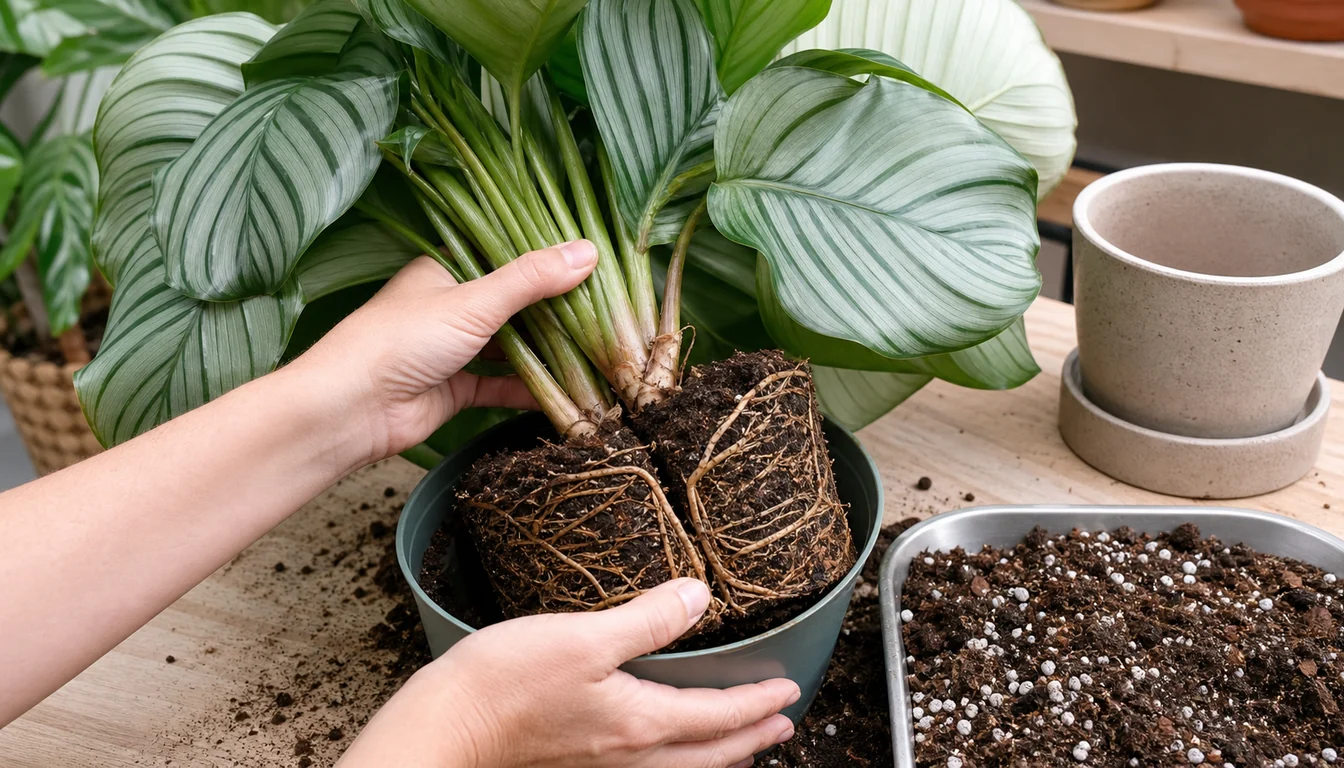
Active growth and stable warm conditions make recovery easier to support. A plant already declining from unidentified root or stem damage needs assessment before pieces are distributed to other pots.
- Lift the root ball gently and locate the rooted growing sections before pulling leaves or cutting through the clump.
- Separate a sound section along a natural division where possible. Use clean tools if a connecting portion needs cutting, preserving its roots and growing points.
- Pot each division at an appropriate depth in moisture-retentive, freely draining medium and a container suited to its roots.
- Water to settle the medium, allow drainage, and provide warm indirect light and humid air. Monitor roots and growth rather than removing a humidity cover on a fixed date.
A closed cover can trap heat and wetness as well as humidity. Ventilation and protection from direct sun are important if an enclosure is used. Softening tissue or continued collapse needs reassessment, not more fertilizer.
An ordinary detached leaf is not a division. Branching relatives can have other propagation options. RHS includes branching Ctenanthe among plants sold as calatheas and describes stem cuttings for those plants. Correct identification determines which method applies.
Pest Evidence Comes From Inspection
Fine stippling and webbing can suggest spider mites, cottony wax may indicate mealybugs, and attached bumps may be scale. Leaf movement or curling alone cannot identify one of them. Inspection includes undersides, joints, and older foliage as well as the newest leaf.
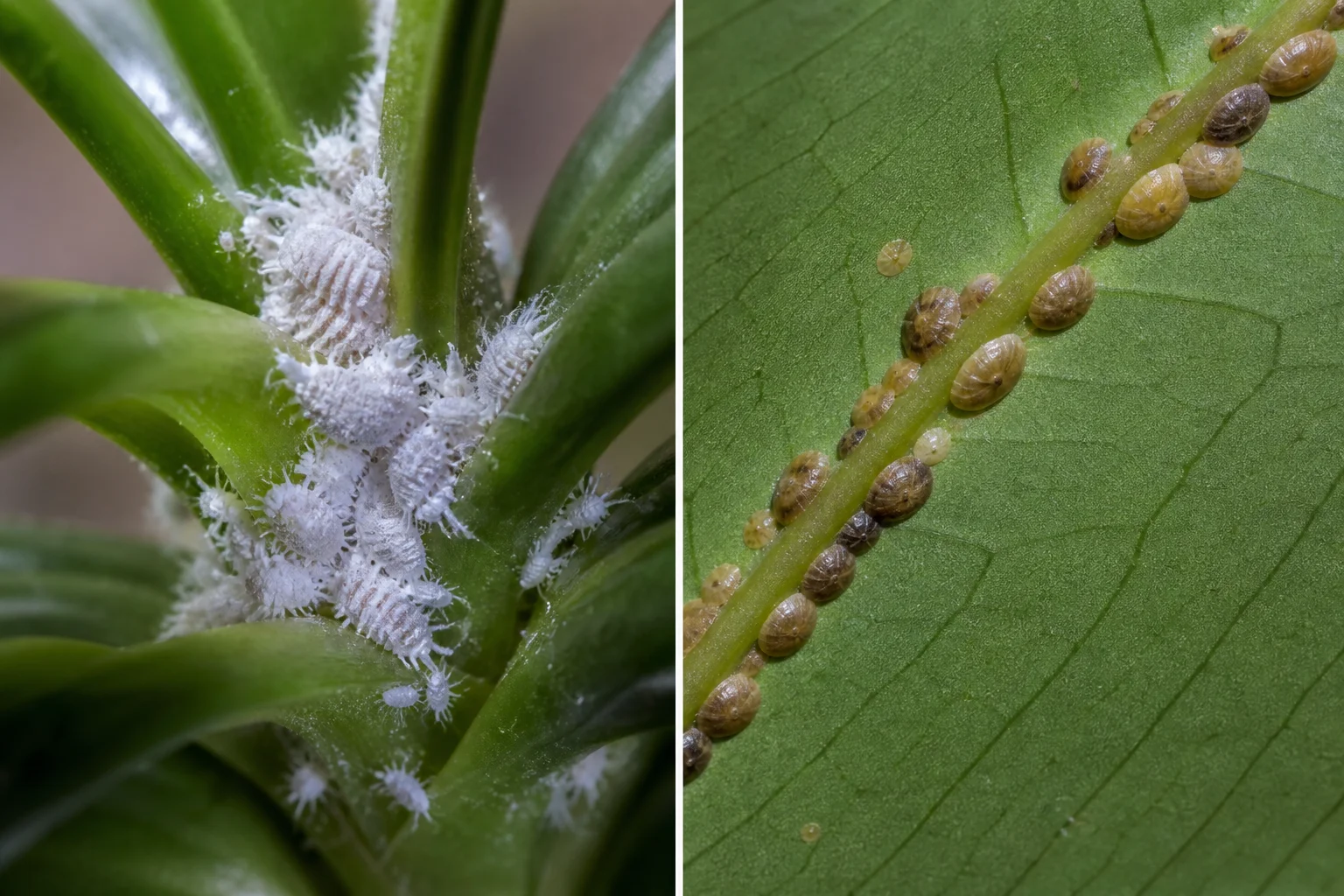
Confirmed pests may require separation, physical removal, and an appropriate labeled treatment. A product must permit the indoor site, plant, and target pest. Leaf sensitivity and label precautions matter before soap, oil, alcohol, or a systemic product is used.
Fungus gnats breed in moist organic medium, but managing them does not require drying a calathea into severe wilt. Drainage and watering can be improved while the roots retain needed moisture. Sticky traps monitor adults, while any control directed at larvae needs its own appropriate instructions.
Humidity management supports the plant but cannot certify that pests are absent or stop every infestation. Temperature and other conditions affect insect development. Temperature influences pest development, so inspection remains useful under either natural or supplemental light.
Seasonal Changes Follow the Room
Lower winter light can slow growth and water use, even when the thermostat is unchanged. Heating or air conditioning can also alter conditions around the foliage. A plant growing under effective supplemental light may need a different routine from one at a dim window.
Watering follows how the root ball now dries, and feeding follows actual growth and the label. Neither a calendar date nor one pale leaf automatically calls for fertilizer. A move away from a cold window may also change the light and drying pattern.
Outdoor exposure adds wind, rain, stronger light, and nighttime temperature changes. Staying indoors is reasonable when stable conditions cannot be maintained. A warm daytime reading does not guarantee a suitable night, and a regional hardiness zone does not establish the conditions on a particular patio.
Old dry edges do not become green again after conditions improve. The useful record follows new damage and developing foliage. Continuing decline deserves renewed inspection rather than an assumption that the plant is simply resting for the season.
Pet Safety Depends on the Plant’s Identity
ASPCA lists Calathea spp. as non-toxic to dogs, cats, and horses. The record uses the familiar older genus name. Matching the plant and its botanical synonyms matters because “prayer plant” can refer to several different genera.
Non-toxic does not mean edible or safe to chew without limit. Potting material, fertilizers, and pesticides create separate exposure questions. An uncertain plant identification or symptoms after ingestion warrants veterinary advice.
A calathea placed beside a toxic plant does not make the shared display safe. Fallen leaves, accessible cuttings, and the animal’s ability to reach each pot still matter. Human food uses and the safety of every preparation are outside the ASPCA listing.
Outdoor suitability also needs a species and location. A generic calathea name does not establish frost tolerance or prove that a plant can never spread beyond a garden. Indoor care recommendations should not be used as a local ecological assessment.
Sources & References
- RHS, How to grow calatheas
- NC State Extension, Goeppertia
- NC State Extension, Goeppertia insignis
- NC State Extension, Goeppertia orbifolia
- ASPCA, Calathea (Calathea spp.)
- University of Minnesota Extension, Managing Insects on Indoor Plants
- University of Georgia Extension, Growing Indoor Plants with Success, Bulletin 1318
Related Plants
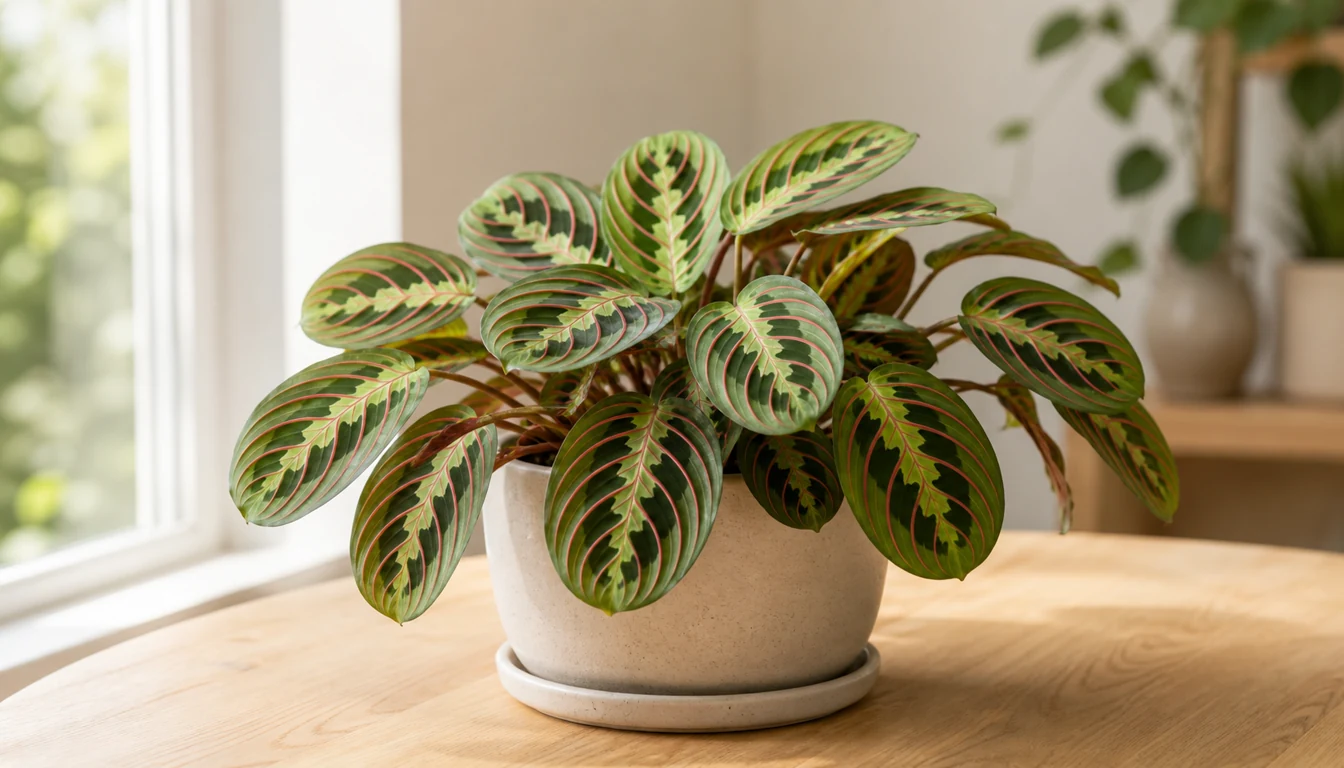
Prayer Plant
A Maranta relative with patterned leaves and a different growth habit.
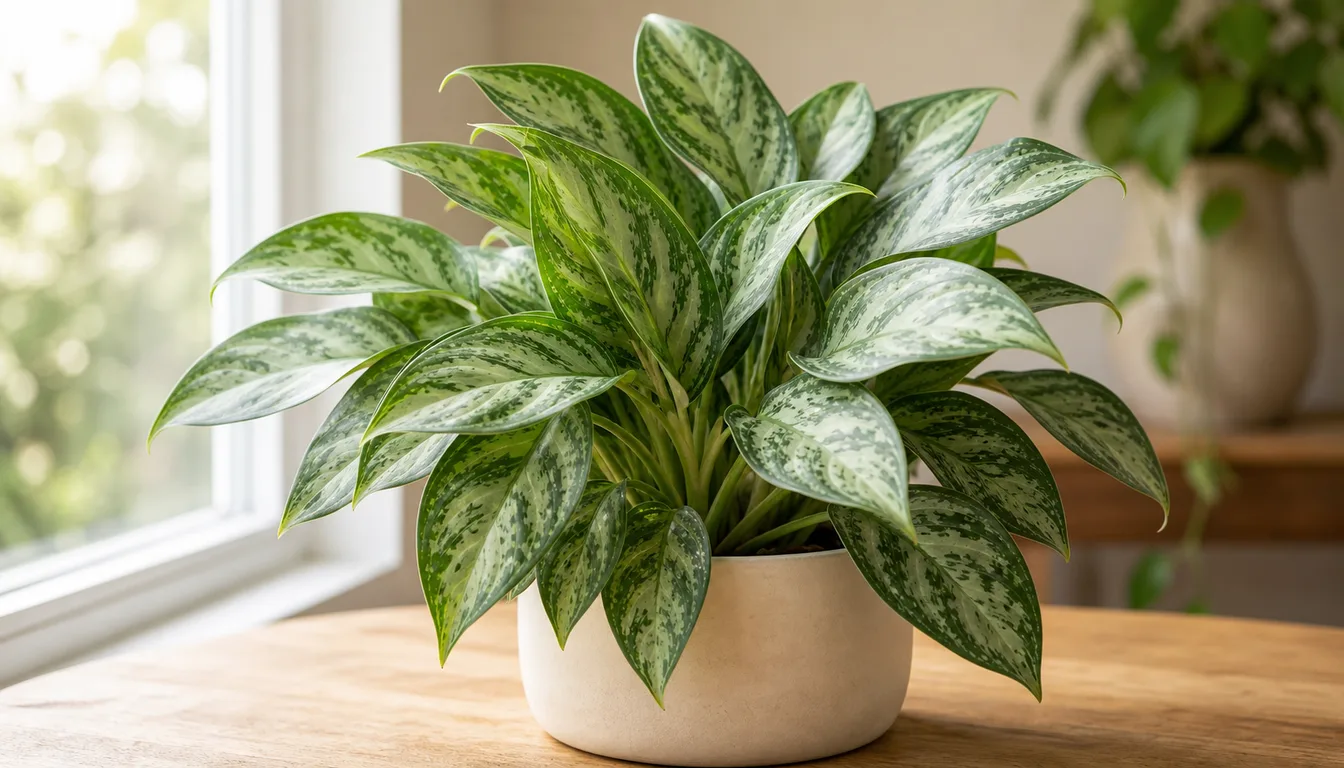
Chinese Evergreen
A foliage plant with different moisture and pet-safety considerations.
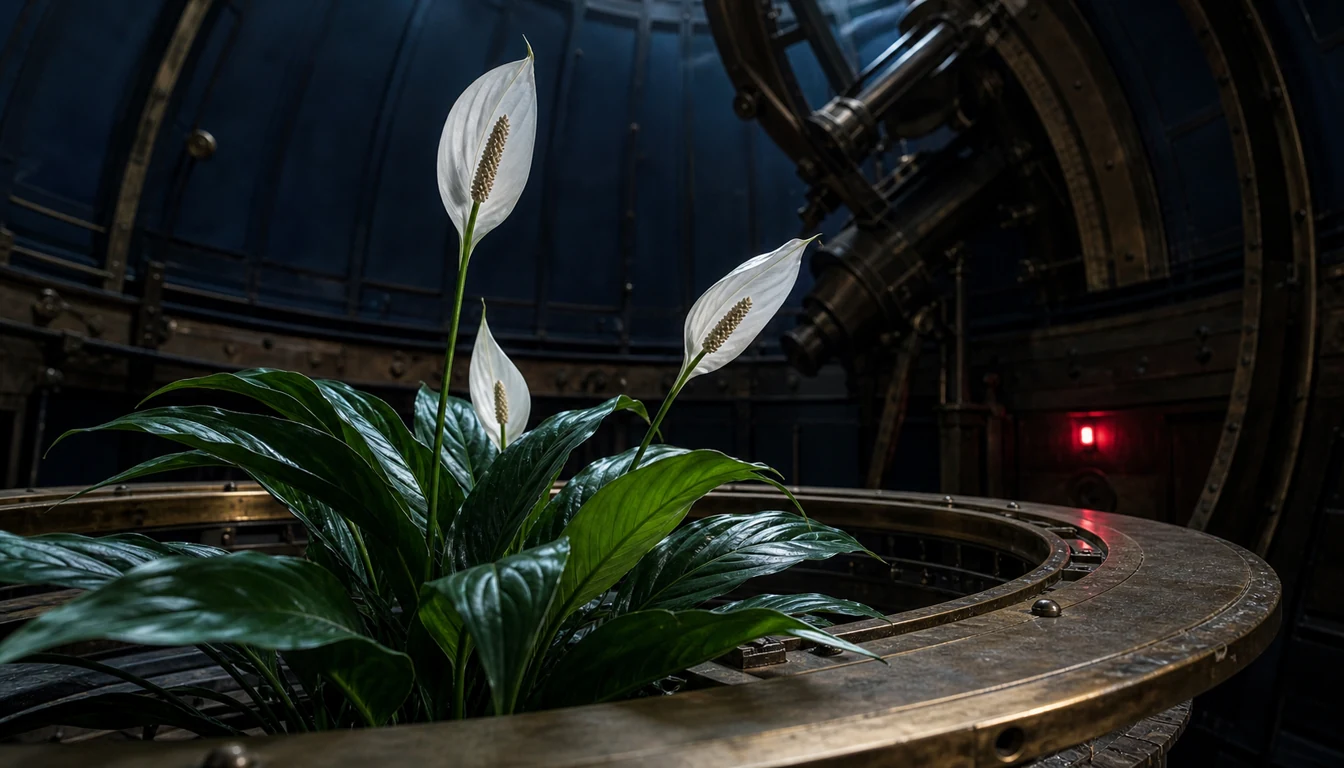
Peace Lily
A flowering aroid with different identity and toxicity considerations.
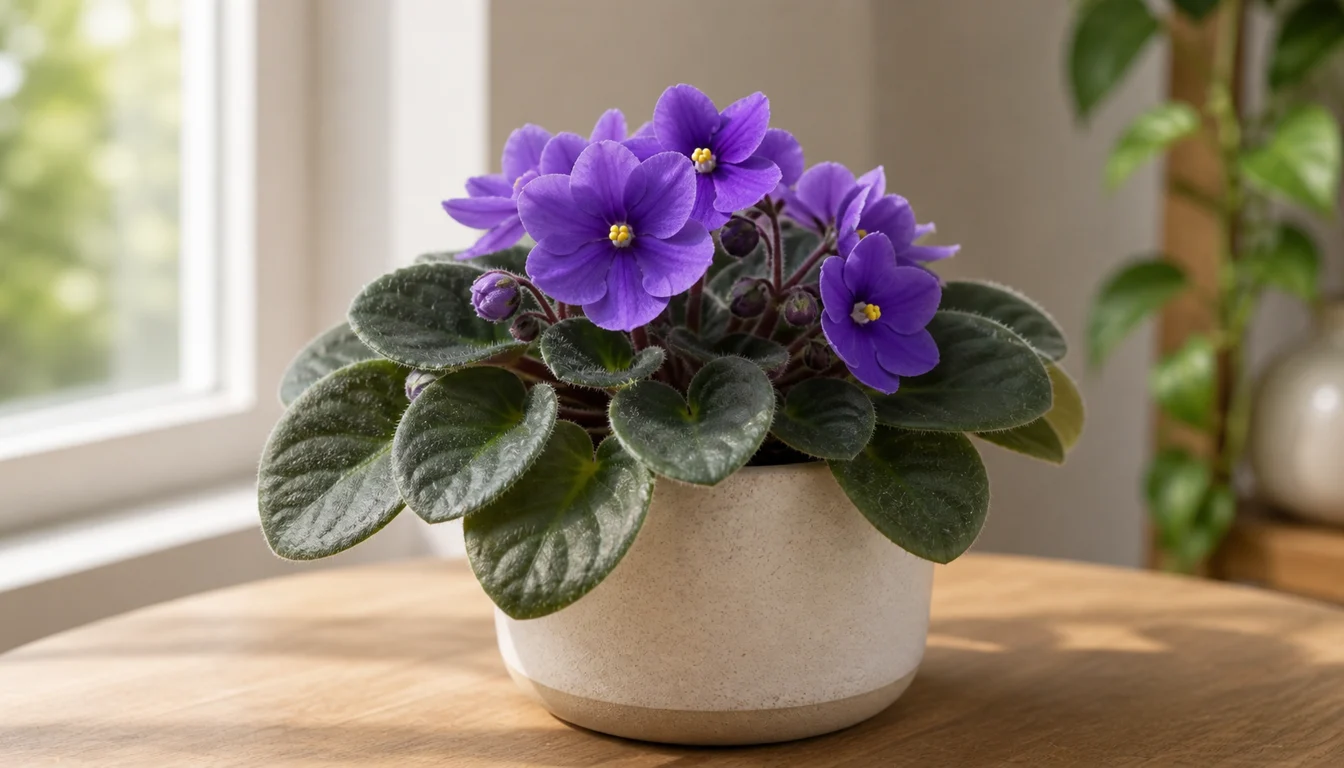
African Violet
African Violet is a windowsill bloomer that rewards steady, small-pot care.
Air Plant
Air plants are living sculptures that thrive without soil, anchoring to driftwood, rocks, or shells while drawing…
Alocasia
Alocasias include compact, textured houseplants and large elephant ears that need substantial floor space.