
What's a Bigleaf Hydrangea? How to Protect the Wood That Carries Flowers
Hydrangea macrophylla Hydrangeaceae
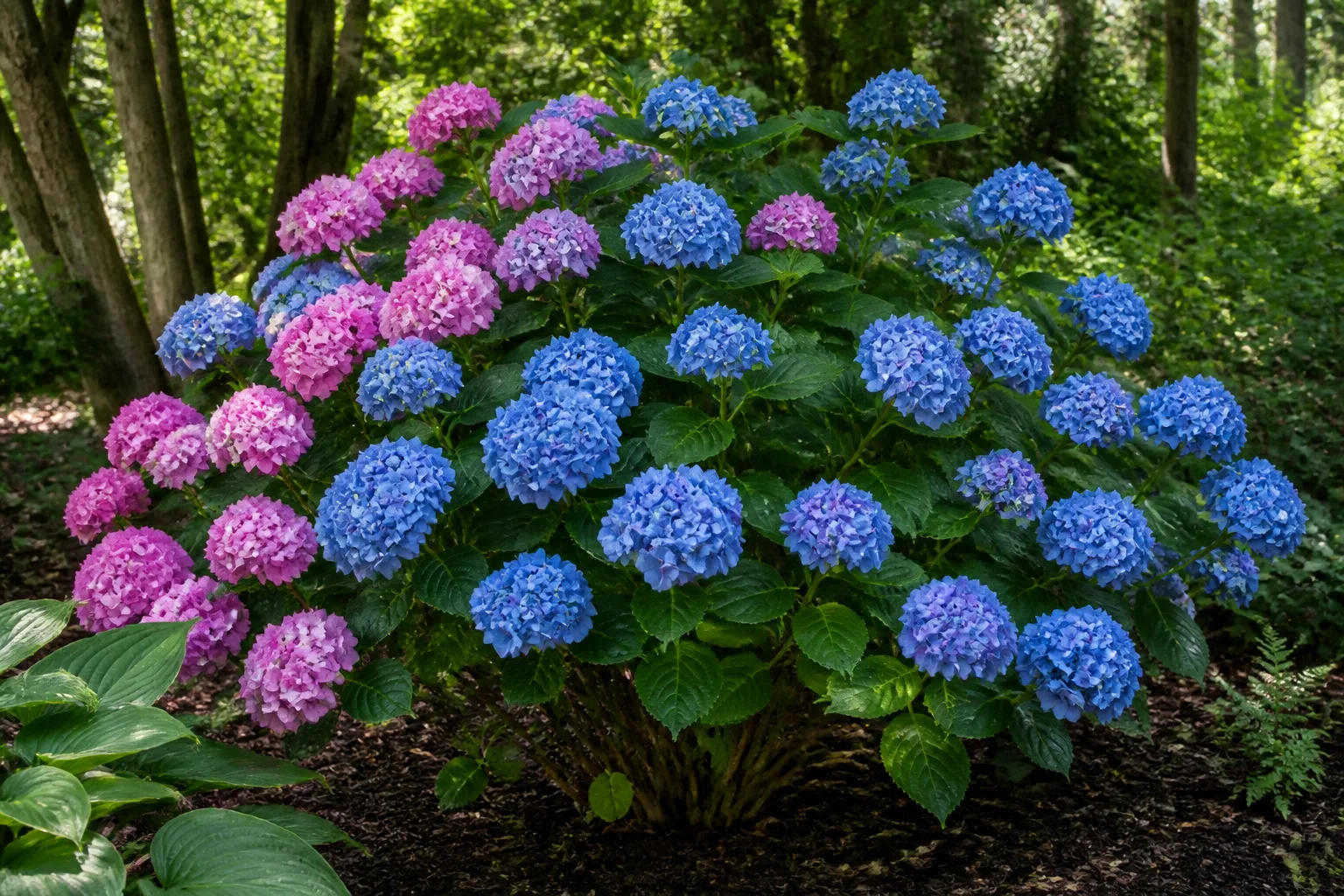
Bigleaf hydrangea (Hydrangea macrophylla) produces mophead or lacecap flowers, but winter survival and reliable flowering are separate questions. Species, cultivar, surviving buds, and local conditions matter more than a broad “hydrangea” zone label.
Care snapshot
Protect the Wood That Carries Flowers
Hydrangea macrophylla is easy to grow as foliage and harder to grow as a reliable bloomer.
The difference is flower buds, since many bigleaf types store next year's flowers on stems that must survive winter, spring frost, and pruning.
Gardeners in mild coastal areas see Hydrangea macrophylla blooming for months, while inland growers fight spring frosts to protect buds.
Grow these shrubs as deciduous, multi-stemmed mounds reaching 3-6 ft tall and wide, similar in scale to a mature lilac or smaller rhododendron.
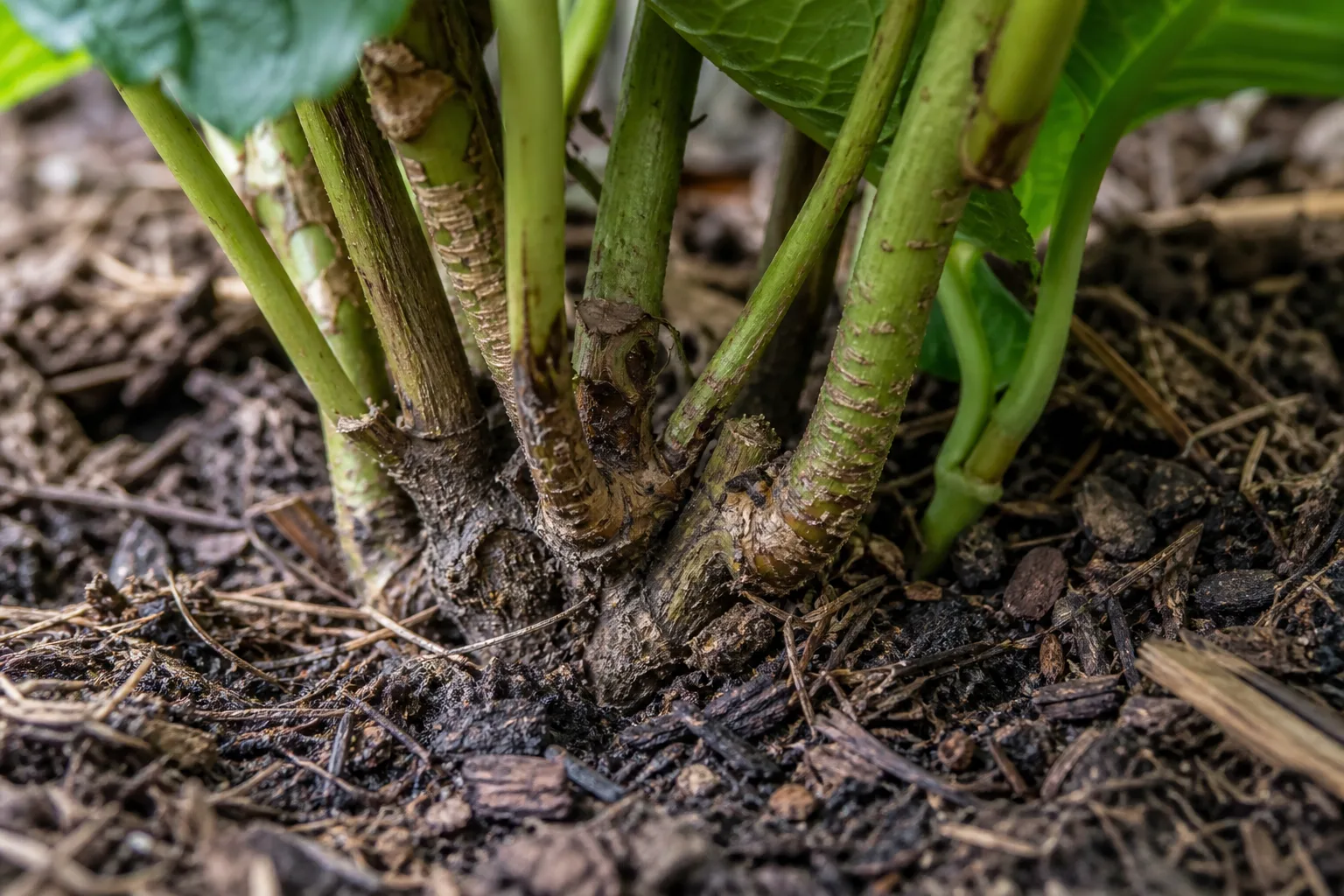
The stems are not just structure, since on many cultivars, they are the storage place for next season's flower buds.
Treat bloom color as a second project after bud survival. Many bigleaf hydrangeas shift between pink and blue based on soil pH and aluminum availability, which makes them a natural fit for gardeners who already manage soil for plants like acid-loving berries.
Read Wilting Leaves Before You Panic
Hydrangea leaves can wilt in afternoon heat while the root zone still holds moisture. Wilting that persists after the evening cools deserves a closer check rather than an automatic extra soak.
Water deeply to soak the root zone 8-10 inches down, then let the top couple inches dry before the next session. Use proper deep watering habits, but judge the plant by soil moisture rather than the drama of one hot afternoon.
Persistent wilting calls for a soil-moisture check, including below a dry-looking surface. More water can worsen the problem if the roots are already in saturated soil.
Mulch beds with 2-3 inches of shredded bark to reduce swings in moisture and temperature. Avoid piling mulch against stems, which can invite rot, and instead keep a 2-inch gap right around the base of each plant.
Containers need a tighter check than in-ground shrubs because the root ball heats and dries faster. Use a pot at least 18-20 inches wide, water until excess drains out, then wait until the upper mix dries instead of topping it off every day.
Choose by Bud Habit, Then Flower Color
Cultivar choice starts with flowering wood and documented hardiness. Traditional bigleaf types carry flower buds through winter on old stems; rebloomers can also flower on new growth, but that trait does not make every cultivar suitable for Zone 3.
Choose compact cultivars, often topping out around 3-4 ft, for foundation beds or tight paths that also host shrubs like boxwood edging. Standard bigleaf types reach 5-6 ft, so they fit better behind lower perennials or as soft patio screening.
Match flower form and color to nearby plants, since strong blues pair nicely with cool-toned hostas while pink and red selections echo warm partners such as garden roses or daylilies. White cultivars blend almost anywhere and simplify mixed-color beds.
- Blooming wood type
- Old wood, or both old and new wood on rebloomers
- Typical mature size
- 3-6 ft tall and wide, depending on selection
- Flower forms
- Mophead clusters or lacecap disks, both with showy sterile florets
- Color flexibility
- Many change between blue and pink with soil pH adjustments
Softwood Cuttings or Ground Layering
Bigleaf hydrangea can be propagated from nonflowering softwood shoots in early summer. A cutting is separated immediately; a ground layer stays attached to the shrub while it forms roots.
- Choose a healthy, nonflowering shoot and make a clean cut just below a leaf node. Remove the lower leaves without damaging the node.
- Place the cut end in moist, loose propagation mix; rooting hormone can help when used according to its label.
- Keep the cutting shaded and moist while roots develop. A clear cover can limit moisture loss, but direct sun can overheat the covered pot.
UGA describes rooting in roughly 3–5 weeks under suitable conditions, not a deadline for every cutting. A cutting that remains green has not necessarily formed enough roots to transplant.
For ground layering, a flexible low branch is bent down and part of the stem covered with soil, with the growing tip left above ground. The branch stays attached until roots have formed; burying a plastic-wrapped air layer mixes two different methods.
A young rooted plant still needs protection suited to its cultivar and local winter. The Zone 5 label alone does not establish that a newly propagated bigleaf hydrangea can overwinter outdoors.
Give Morning Sun, Not Afternoon Punishment
Morning sun and afternoon shade are a useful starting point for bigleaf hydrangeas. Summer heat, exposure, and available moisture matter here; a USDA winter-hardiness zone does not measure the intensity of summer sun.
In hotter regions, use bright dappled shade under open-canopy trees, similar to the placement you might give azaleas or rhododendrons.
Deep shade keeps foliage alive but reduces bloom counts and stretches stems.
Wilting by 3 p.m. that recovers overnight usually signals sun stress or shallow roots rather than thirst, and it often improves when you add a little more shade instead of more water.
A cool summer may allow more sun than a hot, exposed site, but winter-zone numbers cannot determine that exposure. Cultivar guidance and the actual site are more useful than assigning sunlight hours from a zone.
- Check the cultivar’s exposure guidance
- Consider afternoon heat and drying wind
- Watch soil moisture as well as leaf condition
- Avoid assuming a winter zone describes summer light
Beautiful Blooms, Not Snack Plants
Bigleaf hydrangea is not an edible plant. NC State identifies cyanogenic glycosides and lists concerns for people, dogs, cats, and horses; the listing does not provide a safe amount to eat.
Lacecap forms include fertile flowers, while showy mophead forms emphasize enlarged sterile florets. A varied pollinator planting provides other flower sources rather than relying on hydrangea alone.
Fix Drainage Before Chasing Blue Flowers
Start with well-drained, moisture-retentive soil rich in organic matter. Flower color gets the attention, but roots decide whether the plant can carry leaves and buds through summer.
Test drainage by filling the planting hole with water and timing the drop.
Persistent standing water warrants a drainage assessment or a raised planting position. The raised-bed comparison explains the site tradeoffs; one test-hole rate is not a universal suitability threshold.
Treat soil pH as a design tool if you care about bloom color. Acidic soil (pH below 6) plus available aluminum pushes flowers toward blue, while alkaline soil (pH above 7) favors pink to red tones, with white varieties staying neutral regardless.
A soil test helps determine whether any amendment is needed and at what rate. Nearby plants, including clematis, also experience the change, so color adjustment is not a reason to add sulfur or lime blindly.
- Ideal soil texture
- Moisture-retentive soil with organic matter and reliable drainage
- Preferred pH
- 5.5-6.5 for good growth; color shifts within this range
- Poor soil warning
- Constant puddling or cracking surface signals drainage problems
Separate Leaf Damage From Bud Failure
On hydrangeas, chewed leaves and missing flowers are different problems. Mid to late summer pests mark foliage, but no-bloom complaints usually trace back to winter bud loss, pruning, or cultivar choice.
If you have had trouble with insects on azalea, rhododendron, or other flowering shrubs, watch hydrangeas the same way. Many of the same sap-sucking pests move between these plants.
Use that perspective before treating, identifying the pest first, then deciding whether the damage is serious enough to justify intervention.
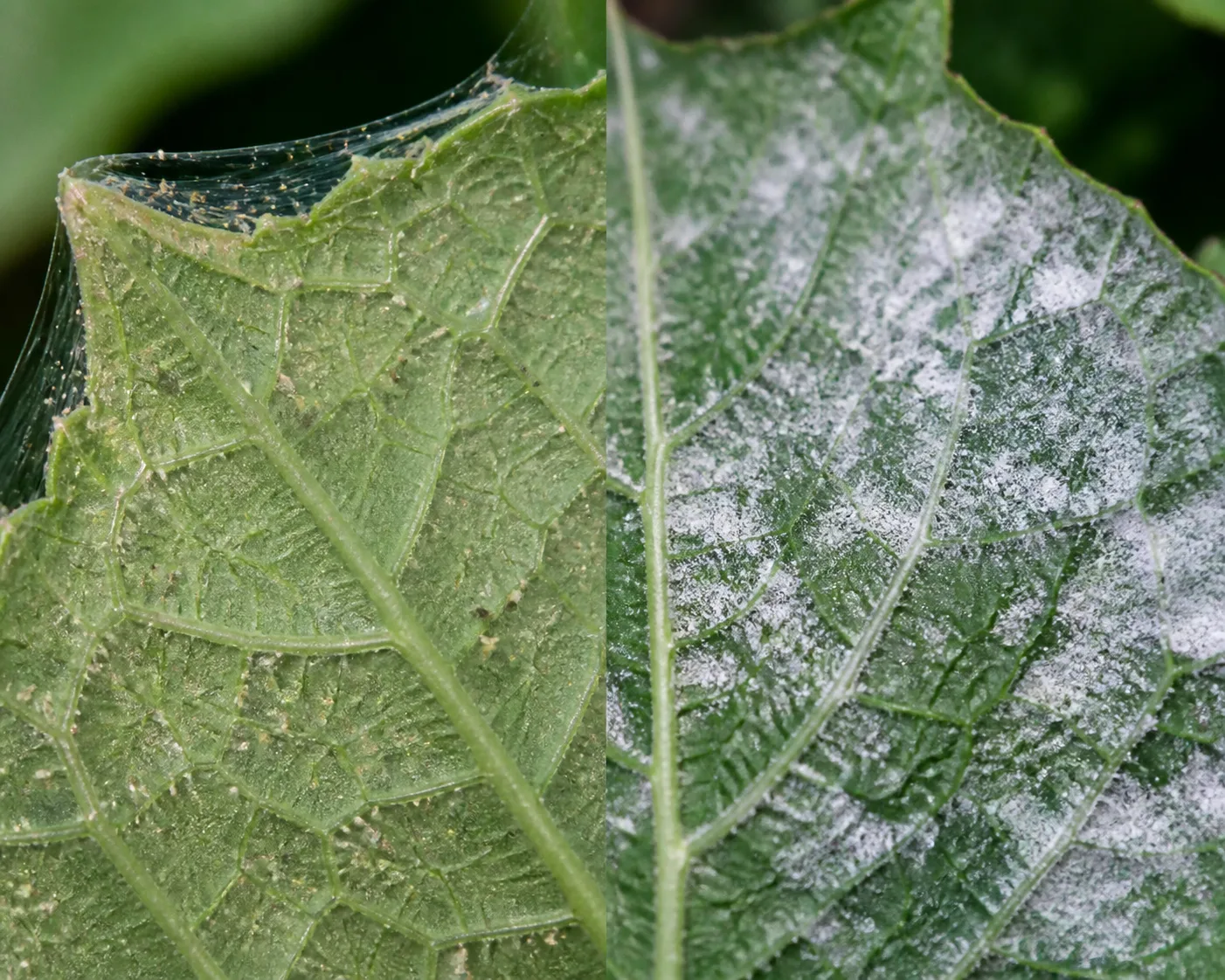
Spider mite damage and powdery mildew both leave hydrangea leaves looking dusty or grayish from a distance, which is exactly why the two get confused even though one is a sap-sucking insect and the other is a fungus.
Spider mites leave fine webbing and tiny stippled specks concentrated on the leaf underside, while powdery mildew coats the top surface in a chalky white film that rubs off on your fingers instead of webbing between the veins.
Cluster on tender shoot tips in late spring and summer, causing curled new leaves and sticky honeydew. A firm spray from the hose or insecticidal soap usually keeps them in check.
Appear during hot, dry spells as tiny specks and fine webbing on undersides of leaves, which may look dusty or bronzed. Increase humidity and use a targeted miticide or follow a good spider mite treatment routine.
Show up as small, immobile bumps on stems and leaf veins, and heavy infestations weaken plants over years. Treat crawlers with horticultural oil in spring and again in midsummer if needed.
Brown or purple spotting, often in late summer, and white powder on leaves in damp shade. Space plants for airflow and water at soil level to reduce fungal problems.
Slugs also chew hydrangea foliage in spring, especially near hosta or other slug favorites. Iron phosphate baits and tidy mulch edges help reduce damage on new growth.
Early Warning Signs
- Sticky leaves or sooty mold usually point to aphids or scale above.
- Fine webbing between leaf veins suggests spider mites, especially in heat.
- Random round holes in spring leaves often mean slugs or snails at work.
Simple Fixes First
- Blast foliage with water to knock off aphids before using sprays.
- Trim a few badly infested stems to reduce scale or mite populations.
- Rake up fallen leaves in fall to reduce overwintering fungal spores.
Seasonal Care Is Bud Protection
Seasonal care for bigleaf hydrangeas is mostly about keeping the right stems alive. A plant can look healthy in May and still skip flowers if winter killed the buds or spring pruning removed them.
Spring is when your choices matter most for flower buds on Hydrangea macrophylla. New growth pushes hard, but the flower clusters usually come from last year’s wood on these bigleaf types.
A surviving root system can produce fresh leaves after the old stems or flower buds have been injured. That survival does not establish reliable bloom, so local cultivar performance matters when flowers are the main reason for planting.
Clear winter mulch away from the crown once soil thaws, then top-dress with 1-2 inches of compost. Remove only dead, winter-killed stems, leaving green, budded wood as much as possible.
Water deeply when the top 2 inches of soil are dry, especially in Zone 7-9 heat, and a 2-3 inch mulch layer keeps roots cool. Deadhead spent blooms if you like, but avoid heavy pruning now.
Stop fertilizing by late summer so new growth can harden off. In cool climates, pile shredded leaves or straw around the base 6-8 inches deep after the first hard frost to protect buds.
In windy sites, wrap plants loosely with burlap after the ground freezes, using stakes to keep fabric off the stems. This protects old-wood buds from desiccating wind and extreme cold.
For traditional old-wood cultivars, shaping after flowering preserves more opportunity for the next season’s buds. Late frost, browsing, and poorly timed pruning can still affect flowers in a generally mild winter climate.
If you grow reblooming series like Endless Summer and are curious how they compare to panicle types, look for comparisons between hydrangea groups before you change how you prune.
Frequently Asked Questions
Do hydrangeas grow better in sun or shade?
Bigleaf hydrangeas like morning sun and afternoon shade, though in cooler zones they handle more sun while in hotter climates they prefer bright dappled shade. Full deep shade keeps plants alive but cuts bloom production sharply.
How do I make my hydrangea flowers turn blue or pink?
Flower color on many Hydrangea macrophylla types shifts with soil pH and aluminum, with more acidic soil and available aluminum producing blue tones while limier, more alkaline soil favors pink. Changes are gradual and can take a full season to show well.
Can I grow hydrangeas in containers?
Compact bigleaf cultivars can be grown in containers with suitable drainage and regular moisture checks. Container roots face different winter exposure from roots in the ground, so a landscape hardiness rating is not a guarantee for an exposed pot.
Why did my hydrangea stop blooming after I pruned it?
Bigleaf hydrangeas bloom mostly on old wood, which means last year’s stems, so cutting hard in late fall or early spring likely removes the flower buds. Only lightly thin dead or damaged stems outside the post-bloom window.
Does a surviving hydrangea mean it should flower?
No. Roots can survive while flower buds on old stems are damaged by winter, late frost, browsing, or pruning. A reblooming cultivar adds the ability to flower on new growth, but local conditions still affect performance.
Sources & References
Related Plants
Azalea
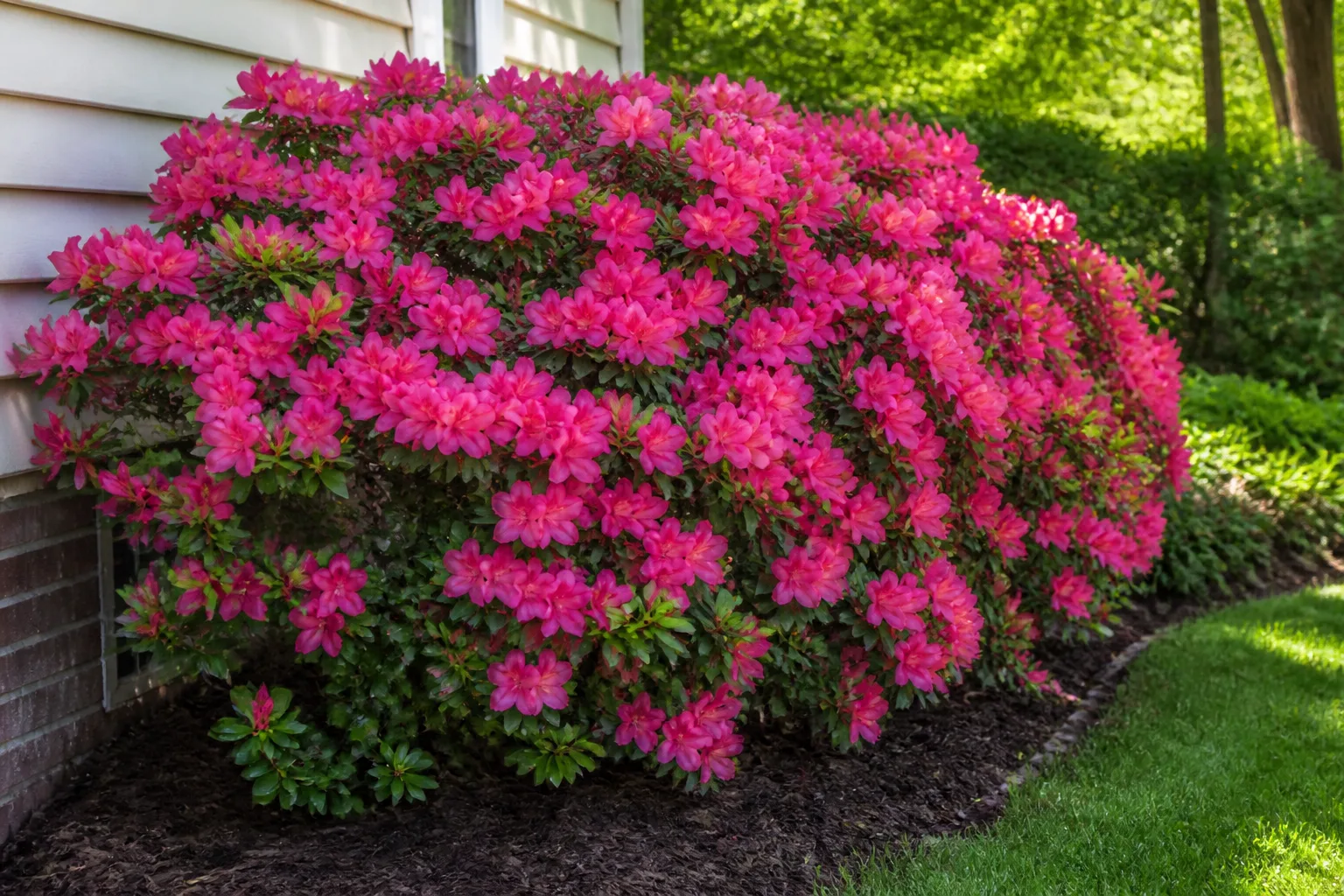
Acid-loving flowering shrub that pairs well with hydrangeas in part shade beds.
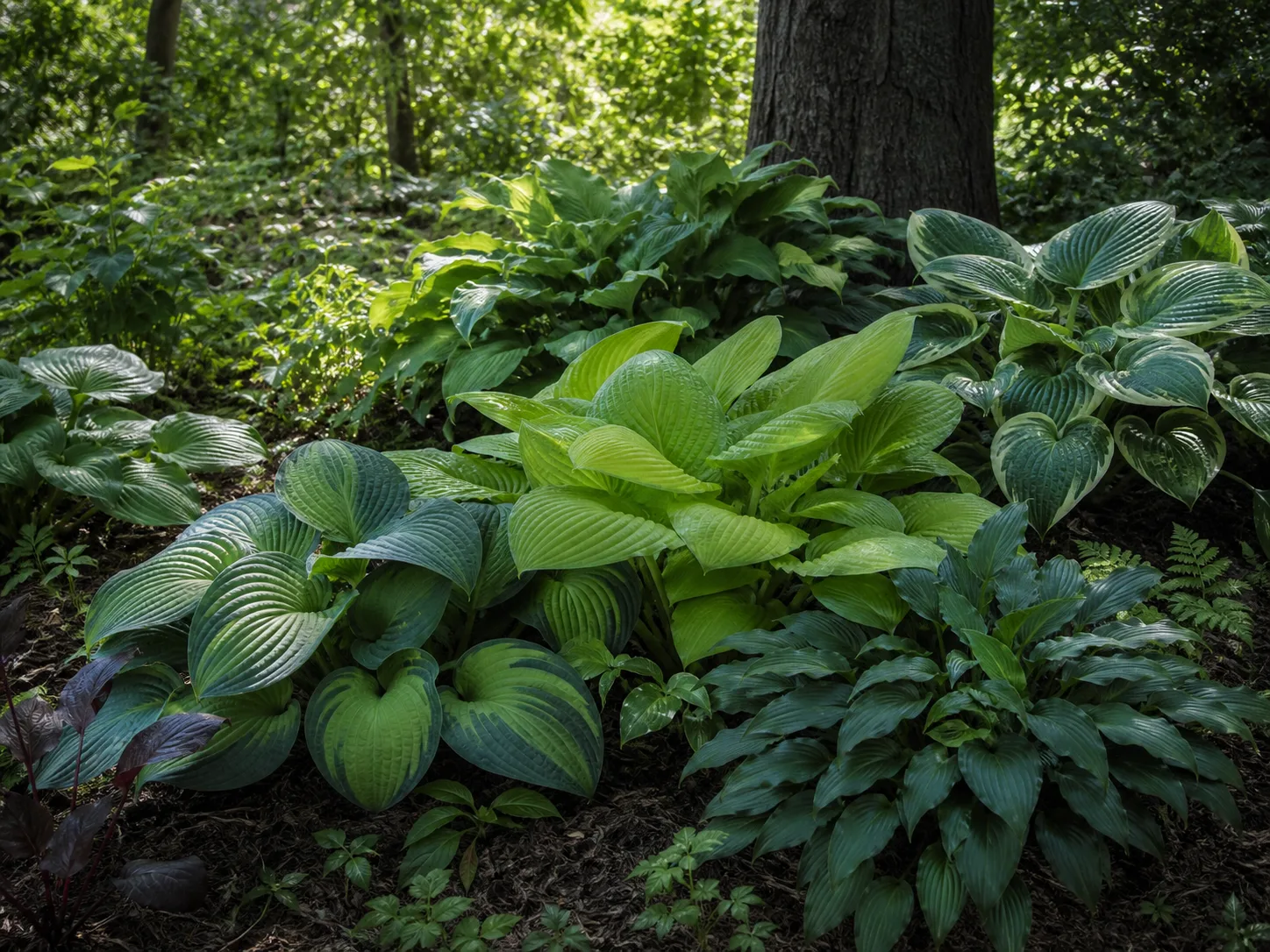
Hosta
Shade perennial with bold foliage that fills in around hydrangea bases.
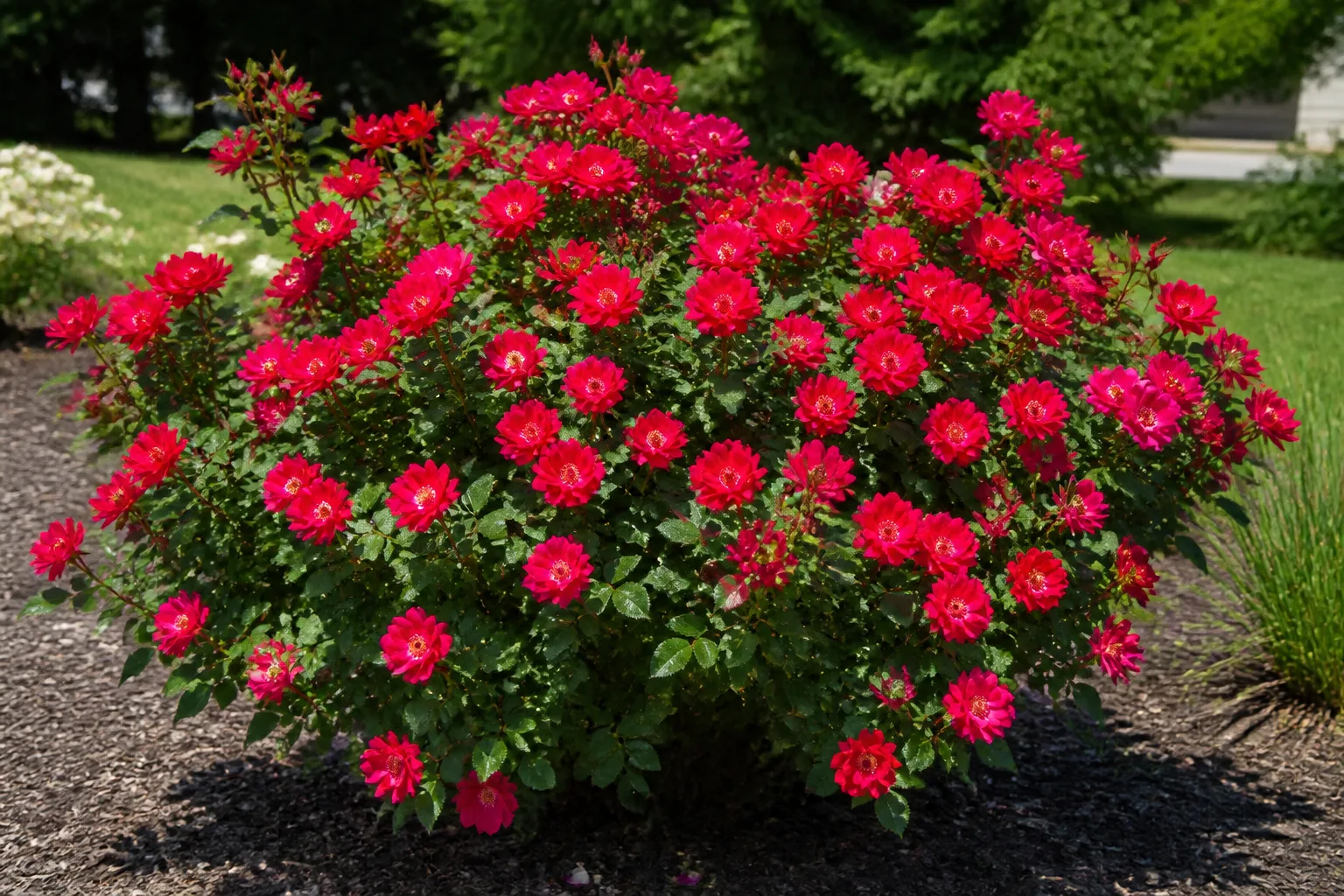
Knock Out Rose
Low-care rose that matches hydrangea bloom season in sunny borders.
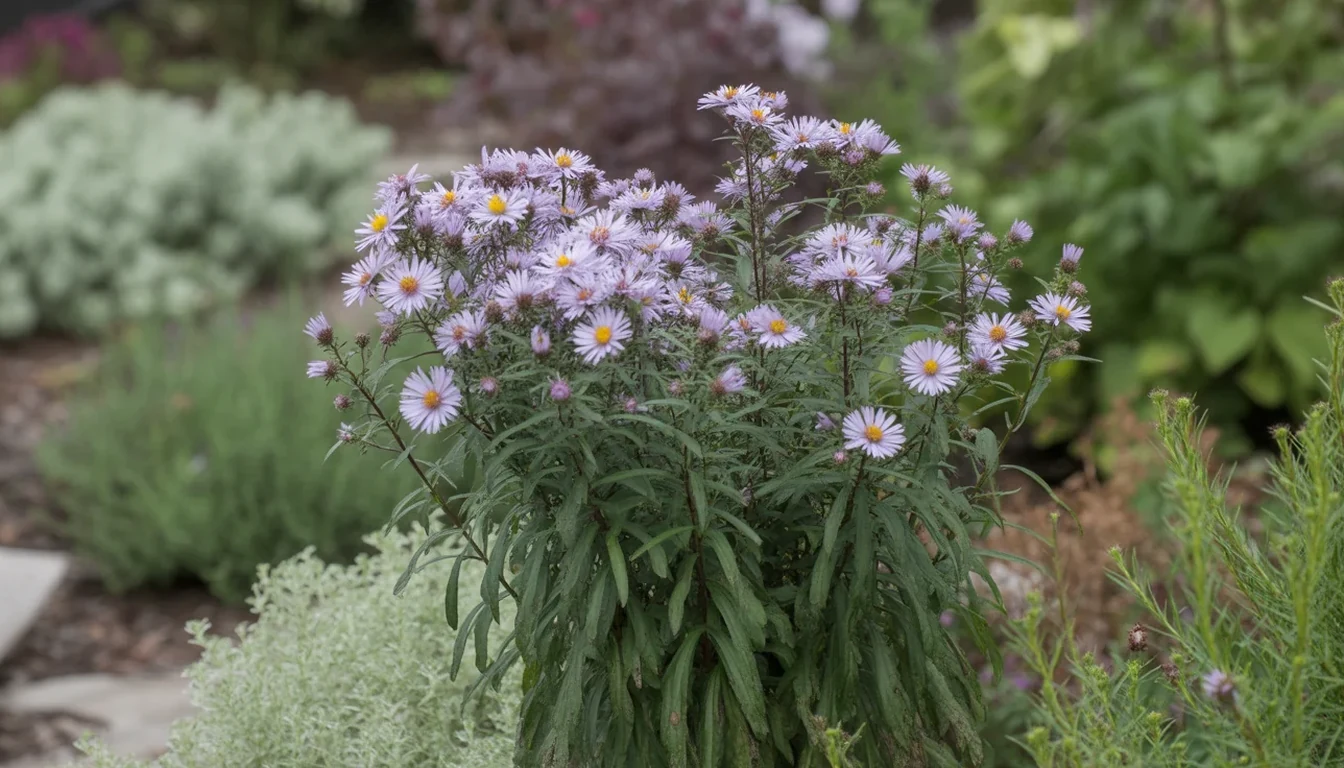
Aster
Gardeners blame the weather when an Aster splits open in September, but the shape was decided in early summer.
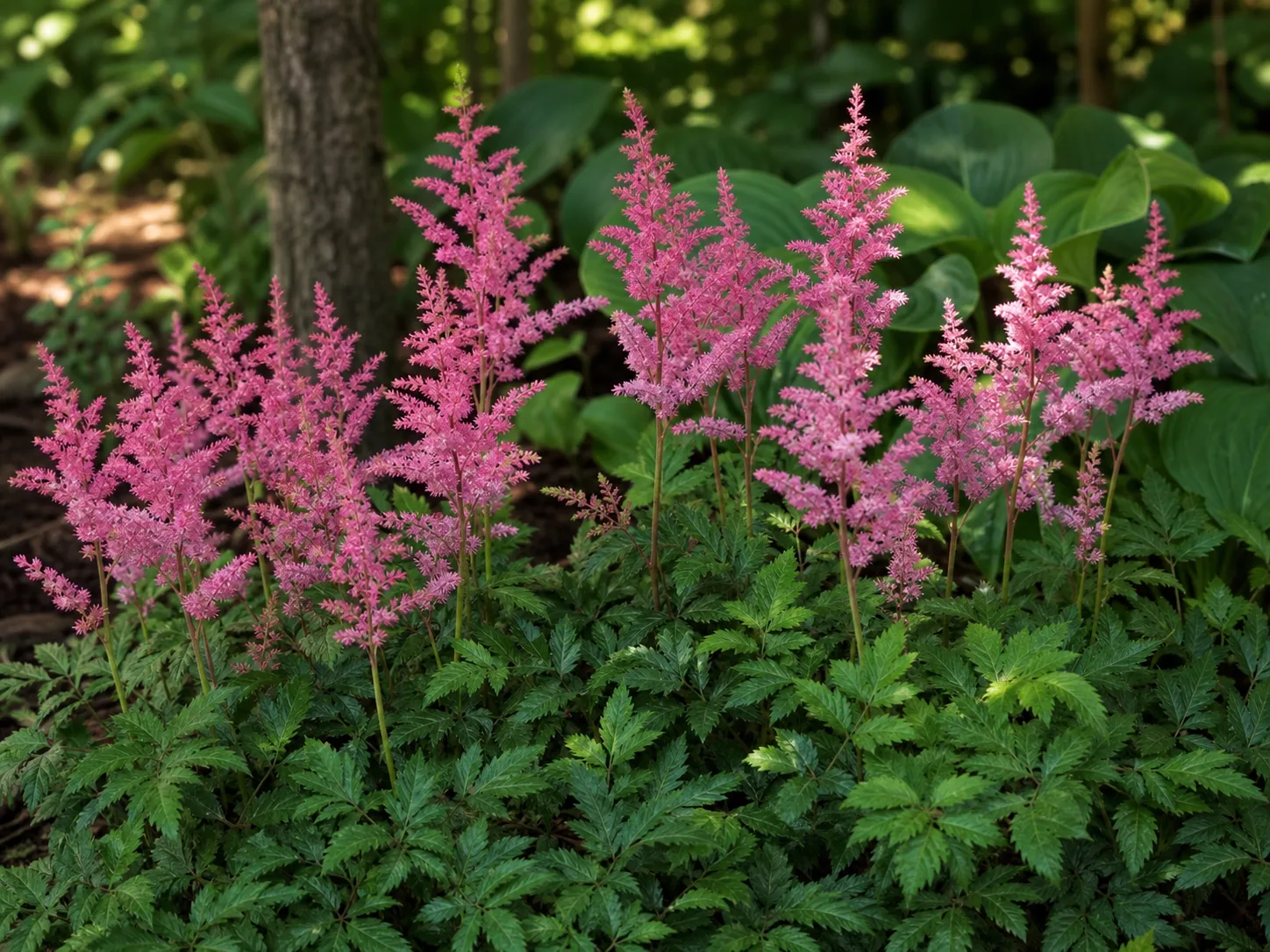
Astilbe
An Astilbe puts real color into a shade bed that would otherwise be green on green, but its shallow roots hold no…
Black-Eyed Susan
A Black-Eyed Susan patch outlives the plants in it. The common garden species lives one to three years and restocks…