
What Is a Spider Plant and When Should You Keep the Babies?
Chlorophytum comosum Asparagaceae
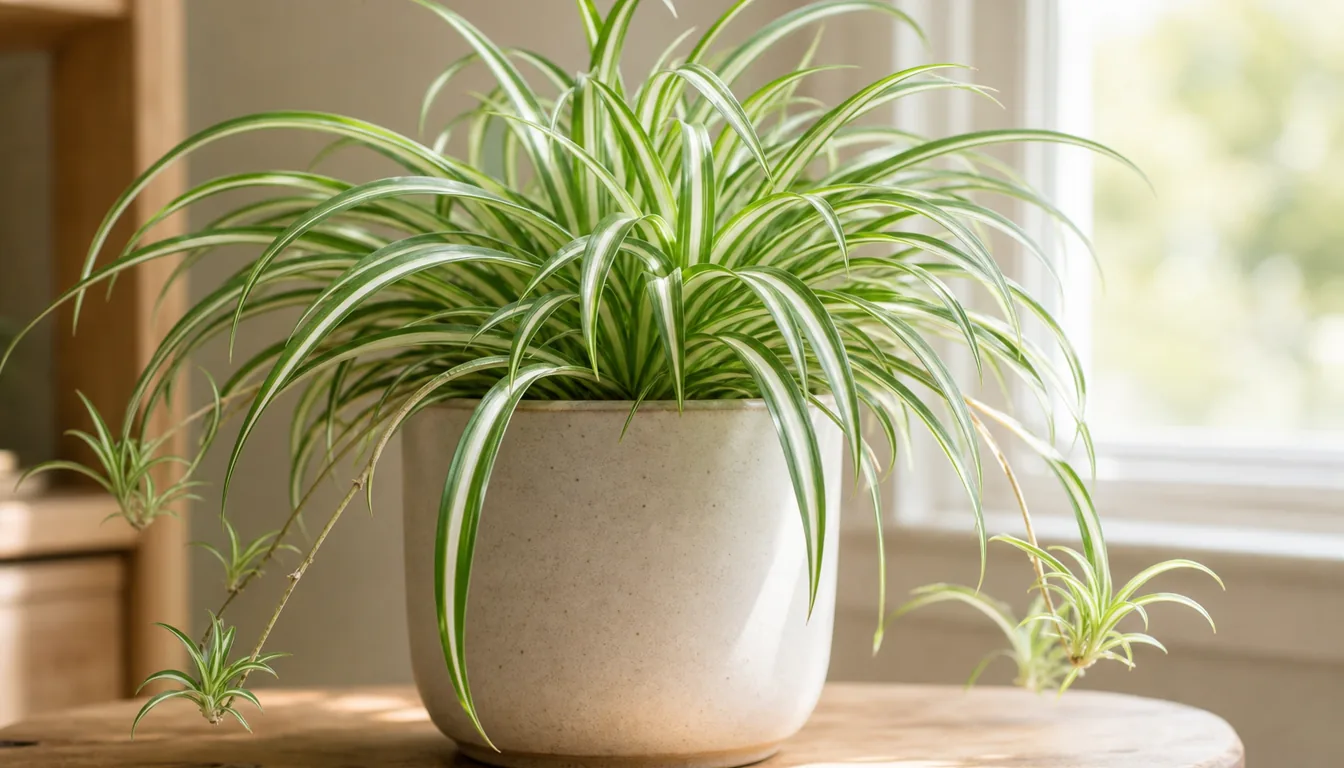
A spider plant is a forgiving, pet-safe houseplant that sends out runners with baby plantlets when light, roots, and maturity line up. It is easy, but it still needs a full crown before you keep every baby.
Care snapshot
Grow the Crown Before You Keep Every Baby
The center crown decides whether Spider Plant looks full or tired. A healthy crown sends out arching striped leaves first, then runners with small plantlets after the plant has enough light and root strength.
Do not let the babies become the whole project. Too many runners can pull energy from a small parent plant, especially in a dry basket or a dim room.
A spider plant is easy because it forgives normal indoor mistakes, not because it has no preferences.
The crown should be dense, upright, and actively making new leaves before you ask it to carry many runners. A weak mother plant with too many babies often stalls.
The practical decision is whether to grow one strong basket or many small starts. Keeping every baby looks productive, but each runner uses energy.
If the mother plant is pale, sparse, or drying too fast, remove some plantlets and rebuild the crown first.
A display-first plant like Staghorn Fern asks you to manage a mounted object. Spider Plant asks whether the parent crown can support the babies you keep.
Spider plant can be trimmed, restarted, divided, and shared easily. The main care job is keeping the crown strong enough to keep producing.
- Firm crown with new center leaves, keep normal care steady.
- Long runners but pale parent leaves, give better light before keeping more babies.
- Soft crown or sour soil, pause propagation and check the root ball.
Pothos trails from vine growth, while Spider Plant grows from a crown and throws plantlets from runners. That difference is why runner management matters here.
A crowded parent can still look good, but it will not restart well if the crown has already softened. Save the parent before you save every runner.
A spider plant with many babies is not automatically healthier than one with none. Runners usually mean the plant is mature, somewhat snug in its pot, and getting enough light.
A young or recently divided plant may need to fill its own crown first. Forcing babies by stress is not better care.
Flower stems come before many babies, so small white blooms are a useful sign. They show the plant has reached a reproductive stage.
If flowers appear but plantlets fail, the plant may be drying too hard, getting bumped, or sitting in light that is enough to flower but not enough to carry long runners.
A tired old spider plant can often be rebuilt instead of discarded.
Remove weak runners, divide the strongest crown pieces, refresh the mix, and restart in brighter indirect light. The plant may look smaller at first, but new centered growth tells you the reset worked.
Pick Stripes by the Room, Not by the Label
The common choice is not rare versus basic. It is where the white stripe sits and how much light the room can provide.
Green forms are usually the easiest because they have the most leaf tissue making energy. Variegated forms are still forgiving, but they need better light to stay dense and keep clear striping.
Curly forms show drought and salt stress faster because the leaf shape already curls.
Pick the look by the room. A hanging basket needs clear space below for runners.
A shelf plant needs a pot that does not tip when plantlets pull to one side. A tabletop plant may need regular runner trimming to stay tidy.
If you want a trailing plant for dimmer rooms, Pothos is usually better. If you want pet-safe plantlets and fast propagation, spider plant is the more useful choice.
- Vittatum
- White center stripe. bright and easy to read from a shelf
- Variegatum
- White leaf edges. a clean basket look with strong green centers
- Solid green
- Less common indoors, but tougher in lower light
If the room is very dim and you do not need runners, Cast Iron Plant is a better low-light bet.
Reverse-variegated types with pale centers can show scorch faster in hot windows because the lighter tissue has less protection. Green-edged types often look sharper from across a room, while solid green plants read calmer and tolerate lower light better.
The care difference is small, but the placement difference is real.
Curly spider plants deserve extra restraint with water.
Their twisted leaves make early wilt harder to read, and their smaller crowns can be overpotted easily. Keep the pot snug and judge watering by weight rather than by leaf curl alone.
Use Light to Earn Runners
Spider Plant survives in low light, but runners need bright indirect light. A plant in a dim hallway may stay alive for years and still make few babies.
Morning sun is useful if the leaves do not bleach. Hot afternoon sun can fade the stripes and crisp the tips before the plant gains anything.
A hanging plant near an east window usually gives the best balance, enough light for runners, but not enough heat to scorch the arching leaves.
If you want low-light survival without the runner goal, ZZ Plant is easier to place.
Bright indirect light is what turns a surviving spider plant into a producing one. In weak light, the plant may stay alive for years, but it often makes fewer runners and thinner leaves.
In stronger filtered light, the crown builds energy for flowers and babies.
Direct hot sun can bleach or scorch the pale stripes.
Morning sun is safer than afternoon glass. If the leaves fold, fade, or brown on the window side only, pull the plant back a little instead of watering more.
A grow light can help a hanging basket because the crown may sit above the natural window line. Place light over the crown, not only on the dangling babies.
Low-light plants are a better fit if the room cannot support runner growth.
Runner production often follows a period of stronger light, not a single sunny day.
If the plant lives on a high shelf, the leaves may be bright while the crown sits above the useful light angle. Lower the basket or add overhead light before deciding the plant is too immature to flower.
If a spider plant grows on a shelf, check the direction of every leaf. A plant leaning hard toward the window is not getting balanced light.
Rotate it and move it closer before the crown becomes one-sided. A balanced crown supports runners better and keeps the basket from tipping.
More runner light should still be filtered. Strong light that scorches the stripe edges costs more leaf area than it gains.
Read Tips, Crown, and Pot Weight Separately
Water when the top inch dries and the pot feels lighter. The goal is a damp root zone that never leaves the crown sitting wet.
If you also grow Peace Lily, do not copy its dramatic wilt signal. Spider Plant should not collapse before you water.
Brown tips are not a single diagnosis.
They can come from dry cycles that go too far, salts in water or fertilizer, low humidity, or old leaf ends. The crown, pot weight, and newest leaves tell you which cause is most likely.
Water when the top of the mix dries and the pot feels lighter, then water thoroughly so the whole root ball gets wet. Let extra water drain away.
A sip-only habit leaves dry pockets and makes tips brown even when you water often.
If tips brown while the soil stays wet, check drainage and root crowding.
If tips brown while the pot is light and leaves fold inward, the plant is getting too dry. Houseplant watering frequency should be adjusted by pot weight, not used as a fixed rule.
- Light pot and folded leaves
- Water thoroughly and shorten the dry interval.
- Wet mix and yellow lower leaves
- Let the pot drain and check for root crowding or rot.
- Brown tips only
- Flush salts, reduce fertilizer, and trim dead tips cleanly.
- Drooping after division
- Keep evenly moist while roots recover.
Water quality matters when every other clue looks fine. If new leaves are clean but older tips brown in the same pattern, mineral salts or fertilizer buildup may be the cause.
Flush the pot, switch to rainwater or filtered water for a while if practical, and reduce feeding until several new leaves emerge clean.
After flushing salts, let the pot drain completely and return to normal watering. Do not flush every week.
Too much flushing can keep the root ball wet and create a different problem. Use it as a reset when tip burn points toward mineral buildup, then watch new leaves.
A hanging basket dries from the outside and bottom faster than a tabletop pot. Check the basket by weight, not by the surface only.
If the outer roots dry too hard, water can channel through and leave the center unevenly wet.
Water thoroughly and check that the whole root ball rewets.
Wait longer and confirm the pot drains freely.
Old brown tips can be trimmed after the new growth looks healthy.
Keep the Root Ball Snug Enough to Flower
A slightly snug pot can help Spider Plant send out runners. A huge wet pot usually makes leaves soft before it makes more babies.
Use a regular indoor mix with perlite. Repot when roots circle tightly, water runs straight through, or the crown lifts out of the pot.
- Choose a pot with drainage holes.
- Move up one pot size, not three.
- Keep the crown level with the soil surface.
Moisture at the crown also matters with Prayer Plant. Spider Plant adds runner weight to the pot decision.
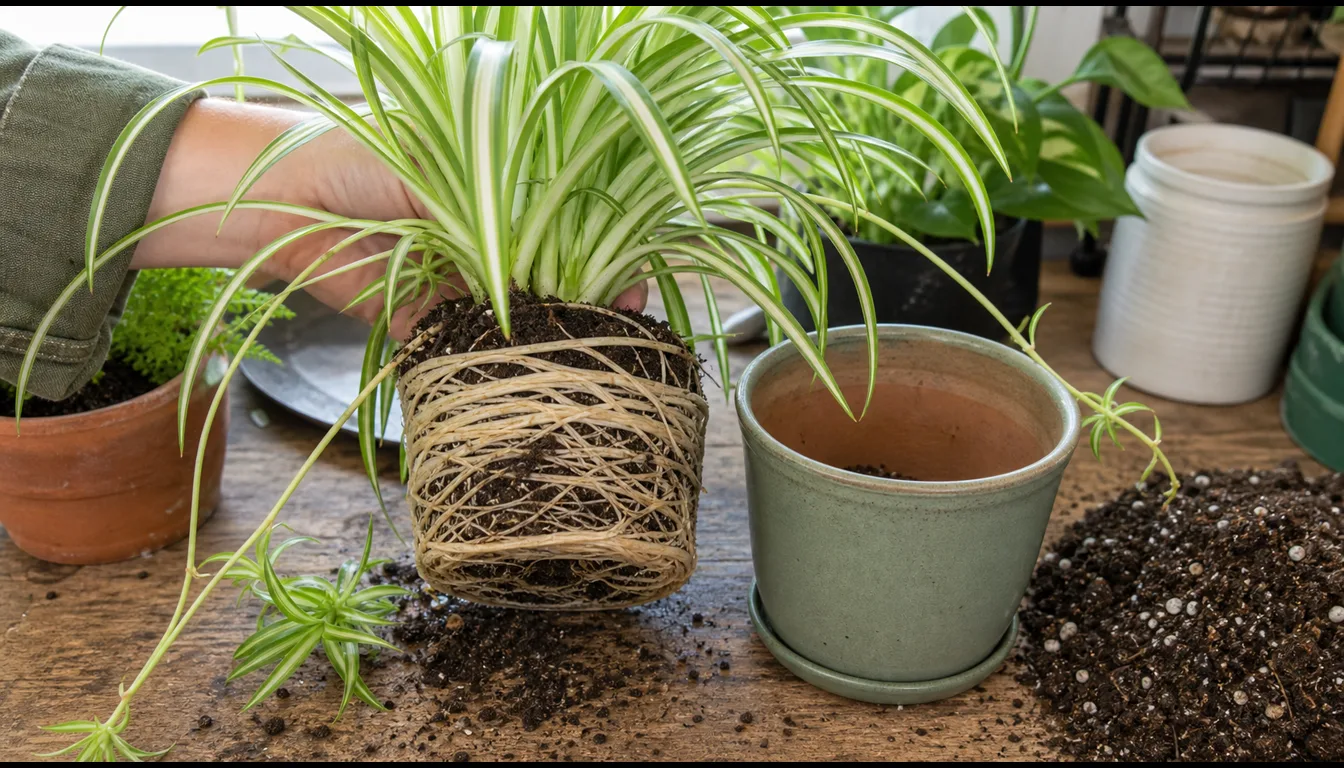
Spider plant likes a snug root ball more than an oversized pot.
A plant that is slightly crowded often flowers and sends runners. A plant moved into a much larger wet pot may grow leaves slowly and lose roots in the unused damp mix.
Use a standard houseplant mix with added perlite if the pot stays wet. The pot must drain.
Hanging cachepots without holes make watering look neat, but they hide the standing water that damages roots.
Repot when water runs straight around a hard root mass, the plant lifts from the pot, or watering becomes too frequent to manage. Move up one size and keep the crown at the same soil level.
Division is better than a huge pot when a root-bound spider plant is hard to water.
Split the crown into sections with roots and leaves attached, then pot each piece into a modest container. A divided plant may look smaller for a month, but it usually rebuilds faster than a cramped root ball shoved into a deep wet pot.
Root Babies When They Have Their Own Nubs
The easiest baby is already trying to root. Look for small root nubs at the base of the plantlet before you cut it from the runner.
You can root plantlets in water for a short show-and-tell, but soil gives the new plant a cleaner start. Pin the baby onto moist mix and cut the runner after it grips.
Keep babies when they have small root nubs and the mother plant is strong. Rooting is easiest if you pin the plantlet into a small pot while it is still attached to the runner.
Once roots grip, cut the runner.
Water rooting babies lightly but consistently.
A tiny plantlet in a large wet pot rots easily. Several babies can root in small nursery pots, then the strongest can be moved into a fuller display later.
Keep attached
- Use this when the baby has root nubs but is still small
- Pin the plantlet into its own pot while the runner feeds it
- Cut the runner only after roots grip the mix
Root separately
- Use water or a tiny pot for firm detached babies
- Move to mix before water roots become too long
- Keep several starts if you want a full pot quickly
Remove extras
- Cut weak pale plantlets from a tired mother plant
- Reduce runner weight after repotting or division
- Let the crown rebuild before keeping every baby
You can also cut and root plantlets in water, but potting them early often builds sturdier roots. Water roots can work, then pause when moved to mix.
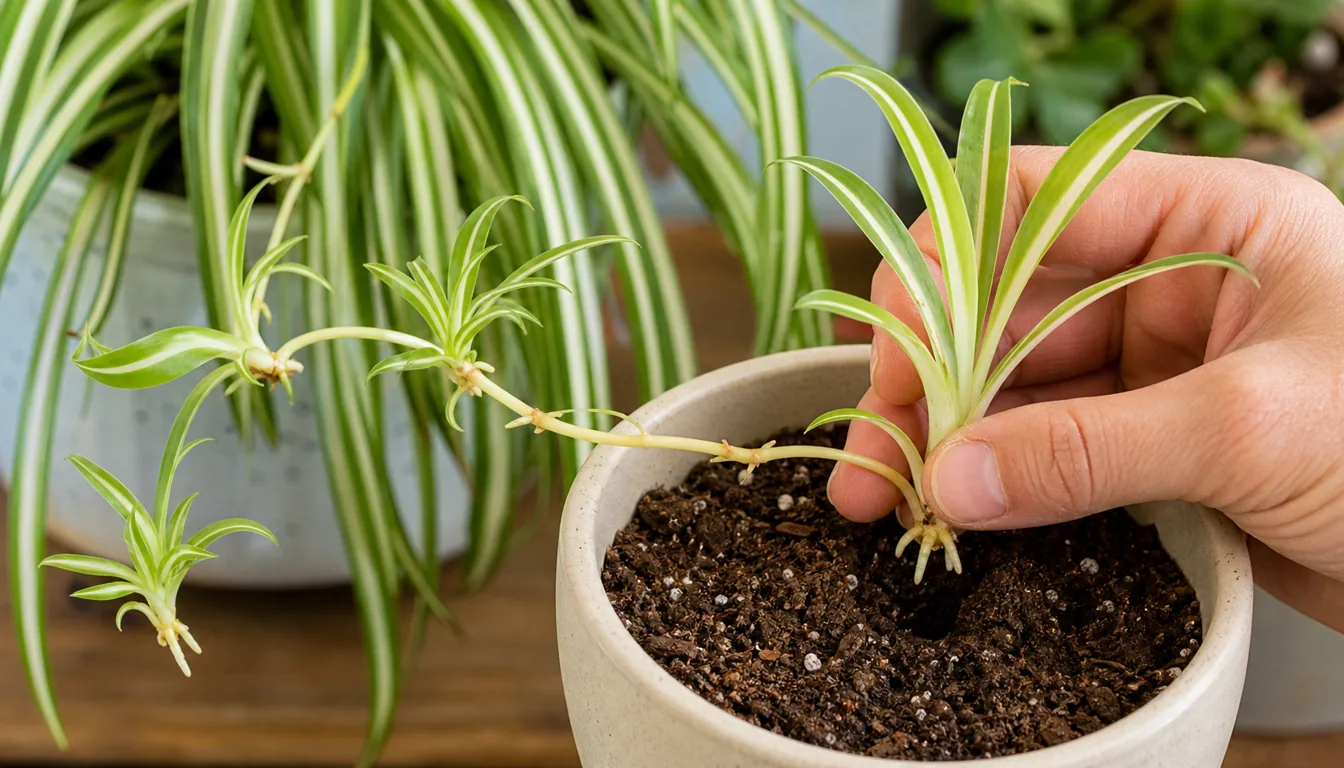
- Fastest
- Pin a rooted baby into soil while still attached
- Cleanest gift
- Cut a plantlet with nubs and pot it in a small cup
- Weakest choice
- Tiny baby with no nubs, cut too early
Plants that share from soil pups behave differently from runner plants. Chinese Money Plant has that rhythm, so baby timing is less tied to dangling stems and parent crown weight.
Keep one or two strong babies on the parent if you want the hanging look. Remove extras when the parent starts to flatten or yellow at the center.
The attached-pot method is the least dramatic and usually the most reliable. The baby still receives support from the runner while it grows roots in its own mix.
That matters in dry rooms where a detached plantlet can wilt before roots have time to function.
If you want a fuller pot, plant several rooted babies together rather than waiting for one tiny plantlet to fill a large container. Grouping three to five rooted starts gives an instant crown and reduces the temptation to overwater a single small plant in too much mix.
Do not leave too many attached babies on a plant you just repotted.
Repotting asks the roots to colonize fresh mix, while runners keep drawing energy. Keep the strongest few plantlets for display and remove the rest until the crown is actively pushing new leaves again.
A runner can carry several babies, but the closest baby is not always the best one. Choose firm plantlets with visible root nubs and balanced leaves.
Weak pale plantlets can be removed so the mother plant and stronger starts keep more energy.
Fix Leaf Tips Before You Hunt for Bugs
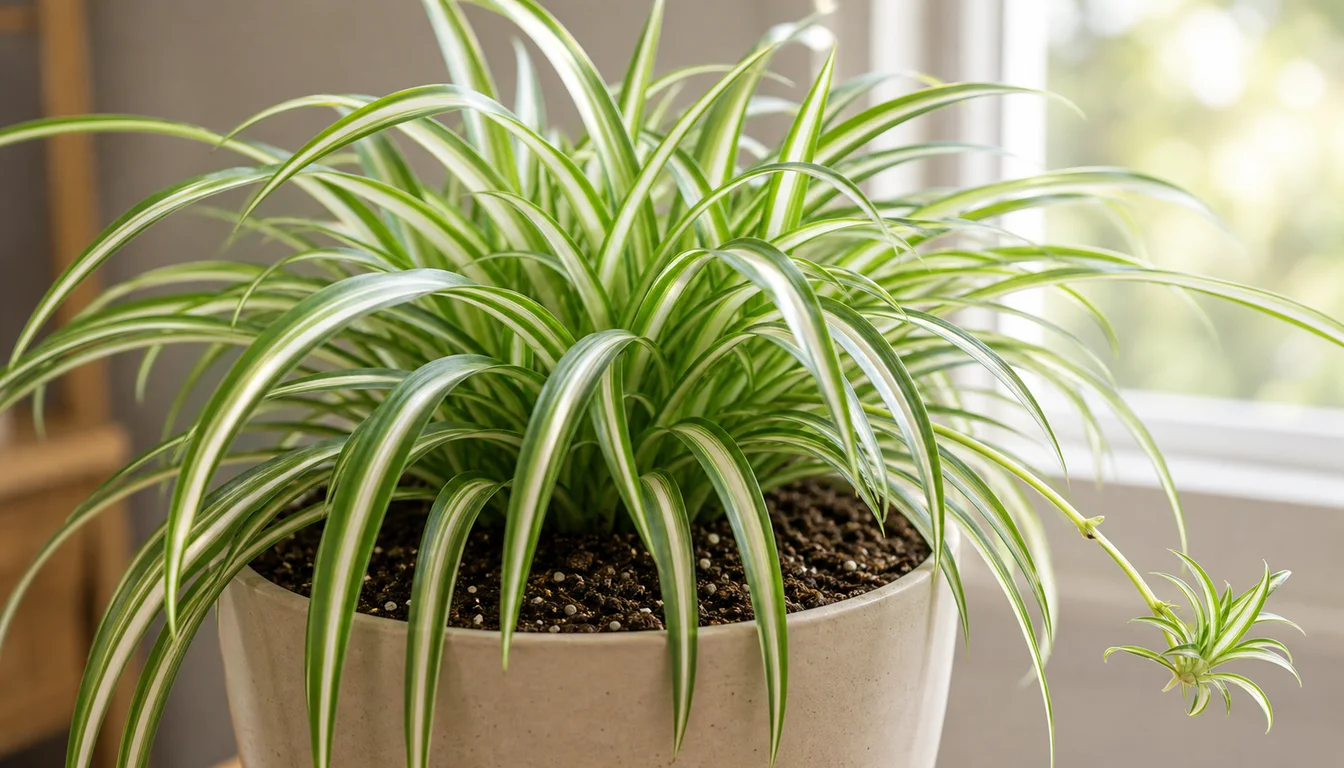
Brown tips are more common than serious pests. Check water quality, dry heat, and fertilizer first if the plant still has firm new leaves.
Pests usually hide where leaves fold at the crown or where plantlets crowd a runner. Wipe dust away so you can see scale, mites, or mealybugs early.
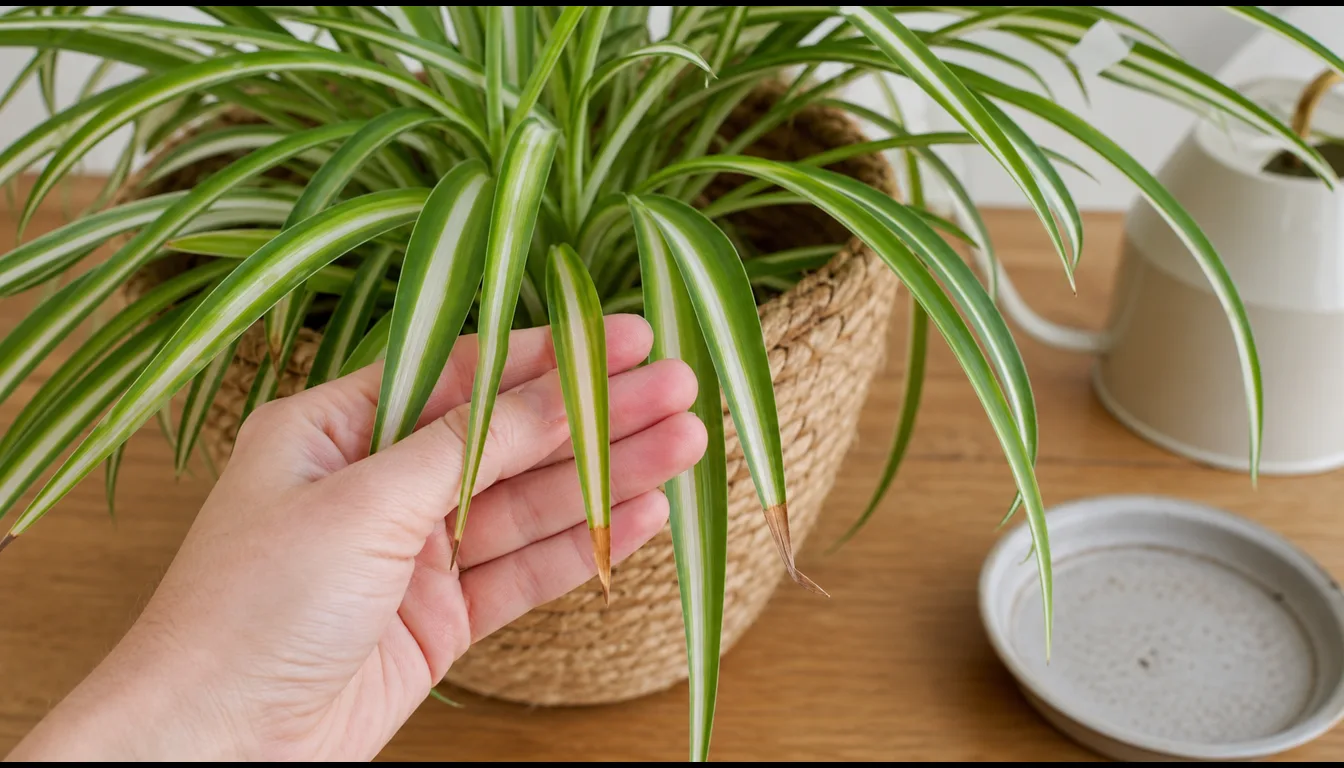
A pale plant with sticky spots needs pest work. A firm plant with dry brown points usually needs cleaner water or calmer air.
Spider plant is usually not a pest magnet, so repeated damage often starts with water, salts, or light.
Inspect before treating. Look under leaves and around the crown for webbing, cottony spots, or sticky residue.
Trim brown tips with clean scissors by following the natural leaf angle. Do not cut into green tissue more than needed.
Tip trimming improves appearance, but it does not solve the cause if water or salt stress continues.
Flush the pot occasionally if you use tap water with high dissolved minerals or fertilizer often.
Let water run through the mix and drain fully. Then hold fertilizer until new leaves show clean tips.
Do not let tip trimming become the only care response. If you trim the same leaves every month, the plant is still reporting a problem.
Check light level, pot weight, drainage, water quality, and fertilizer strength in that order before reaching for pest treatment.
If pest checks are clean and brown tips continue, review fertilizer strength.
Spider plants do not need heavy feeding to make runners. A weak balanced feed during active growth is enough, and plain water periods help prevent salt buildup.
Use Spring for Babies, Winter for Holding Shape
Spring and early summer are the best months to root plantlets because light and warmth help the crown replace energy quickly.
In winter, keep the plant a little drier and stop pushing new babies. A cool window can slow growth even when the plant still looks green.
If you want a pet-safe plant that keeps a steadier shape through winter, Parlor Palm is slower but less runner-driven.
Spring and summer are the best seasons to propagate, divide, and rebuild a basket. The plant has more light and faster root growth.
Winter is a holding season in many homes, especially if the basket hangs far from the window.
In winter, water only as the pot dries more slowly and avoid heavy feeding.
A plant that made many babies in summer may look tired by late winter. Remove weak plantlets and dead leaves so the crown can restart cleanly.
Outdoor summer moves can help, but use bright shade first. Direct outdoor sun is far stronger than indoor window light and can bleach leaves quickly.
A basket can also become lopsided after a strong summer. Rotate the plant, remove weak plantlets, and prune runners that pull the crown off center.
A balanced crown uses winter light better because leaves are not all stacked on one side.
Pet-Safe Does Not Mean Chew-Proof
ASPCA lists Chlorophytum comosum as non-toxic to cats and dogs. That supports choosing it for a pet household, but eaten plant material can still cause digestive upset.
Dangling runners can bring plantlets within reach even when the basket is high. A secure support and a position away from climbing routes reduce access, while fallen leaves and cuttings still need attention.
Fertilizer, sprays, and potting mix have their own exposure concerns. The plant’s non-toxic listing does not establish the safety of everything in its pot.
Frequently Asked Questions
How often should I water Spider Plant?
Water when the top inch dries and the pot feels lighter. In bright rooms this may be weekly, while winter can take longer.
Why does my Spider Plant have brown tips?
Brown tips often come from mineral-heavy water, dry air, too much fertilizer, or old damage. Check those before adding more water.
When can I cut off spider plant babies?
Cut or pin plantlets once they have small root nubs. Tiny babies without nubs are slower to establish.
Is Spider Plant safe for pets?
ASPCA lists Chlorophytum comosum as non-toxic to cats and dogs. Eating leaves can still cause digestive upset, and treatments or fertilizers need separate precautions.
Why is my Spider Plant not making babies?
It usually needs brighter indirect light, a stronger crown, or a slightly snugger root ball before it spends energy on runners.
Sources & References
Related Plants
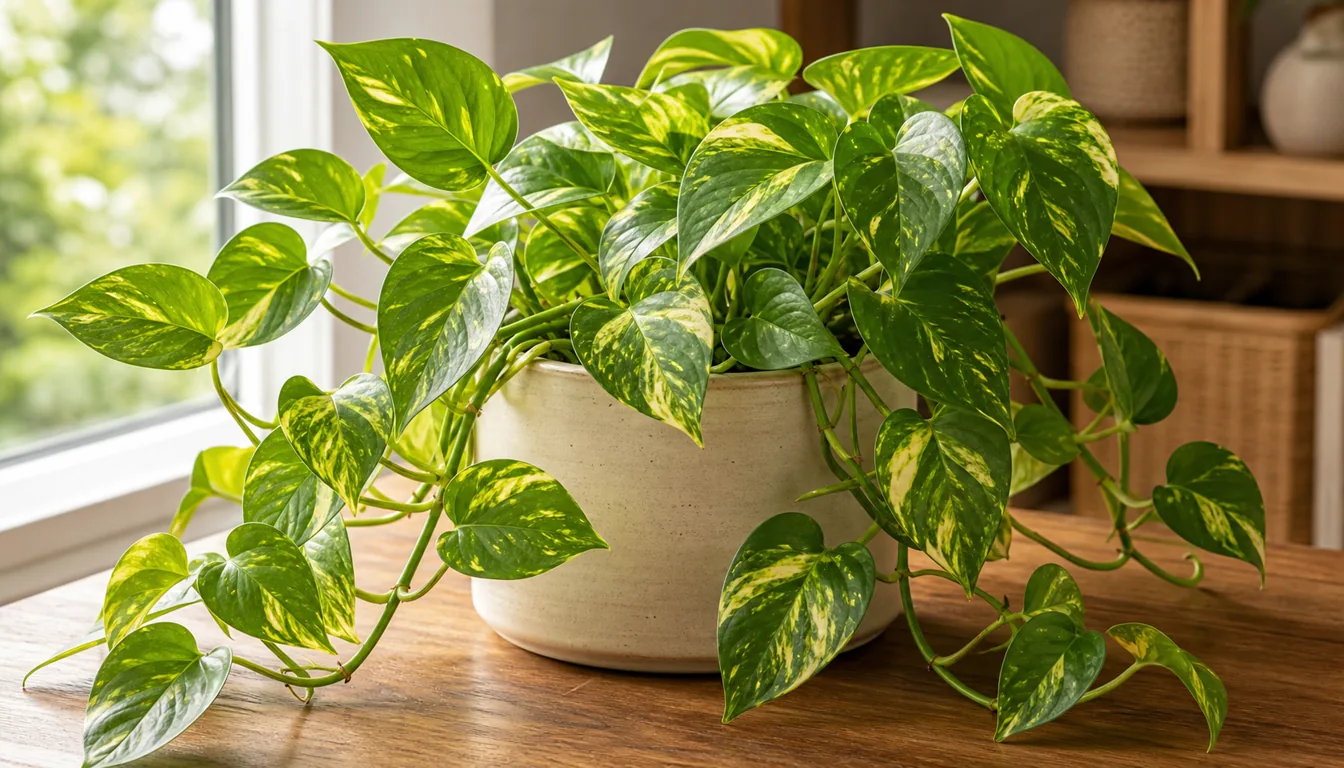
Golden Pothos
A faster trailing plant, but not pet-safe and less focused on baby offsets.
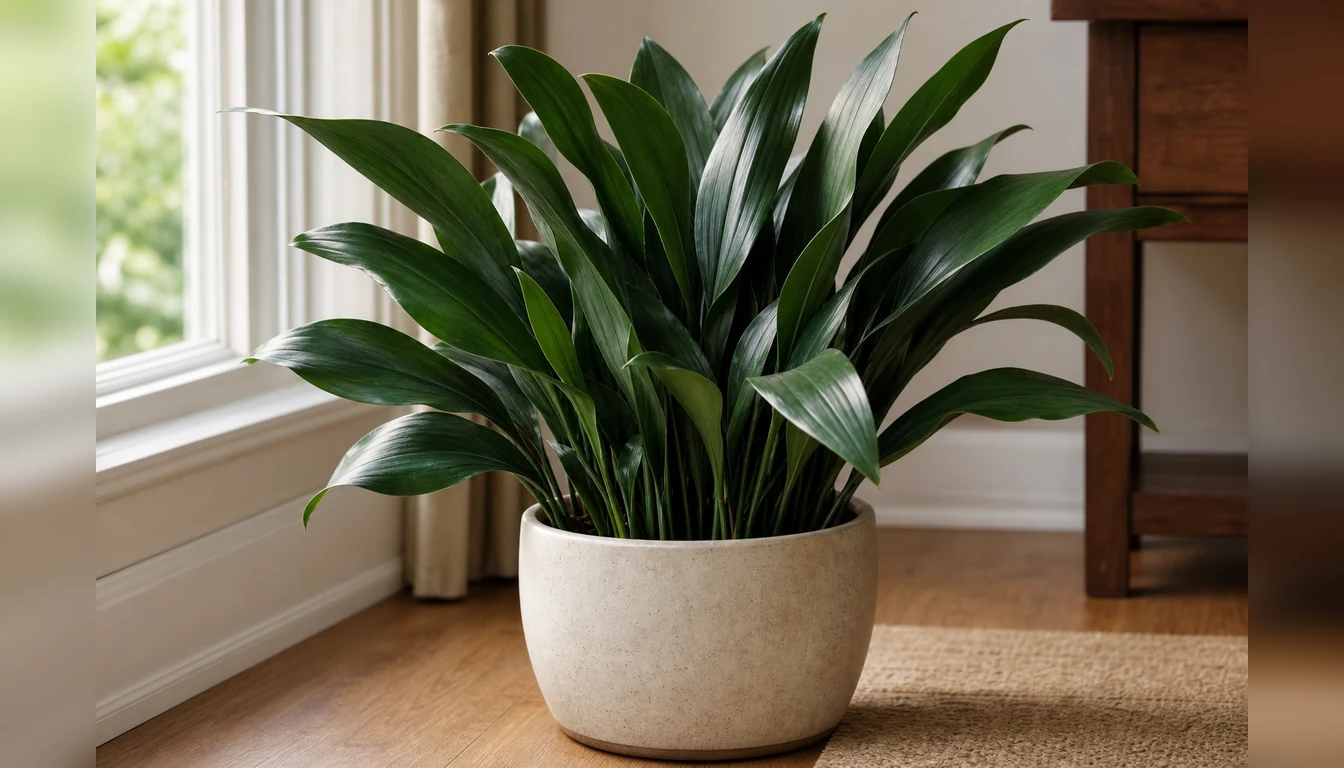
Cast Iron Plant
A slower pet-safe low-light option without runners or plantlets.
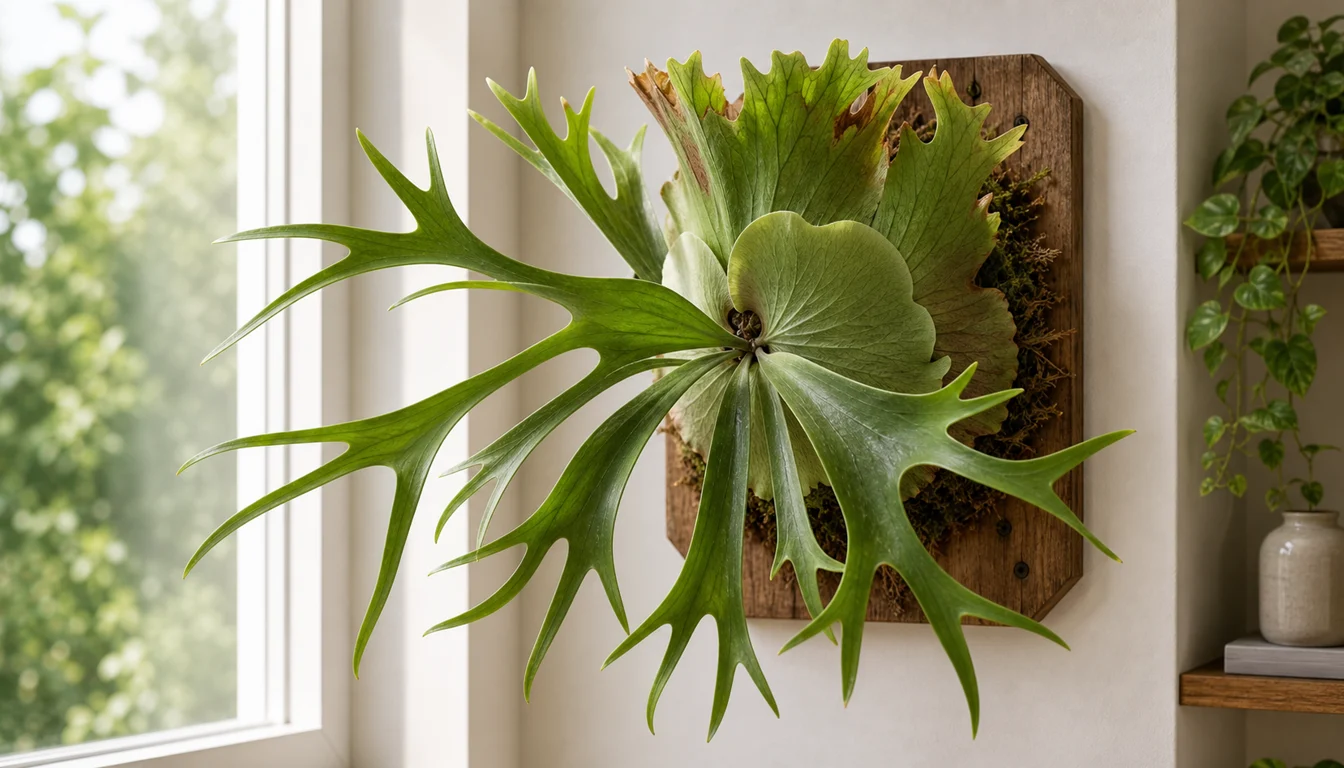
Staghorn Fern
Another pet-safe choice, but it solves a wall-mount display job instead of a hanging-basket job.
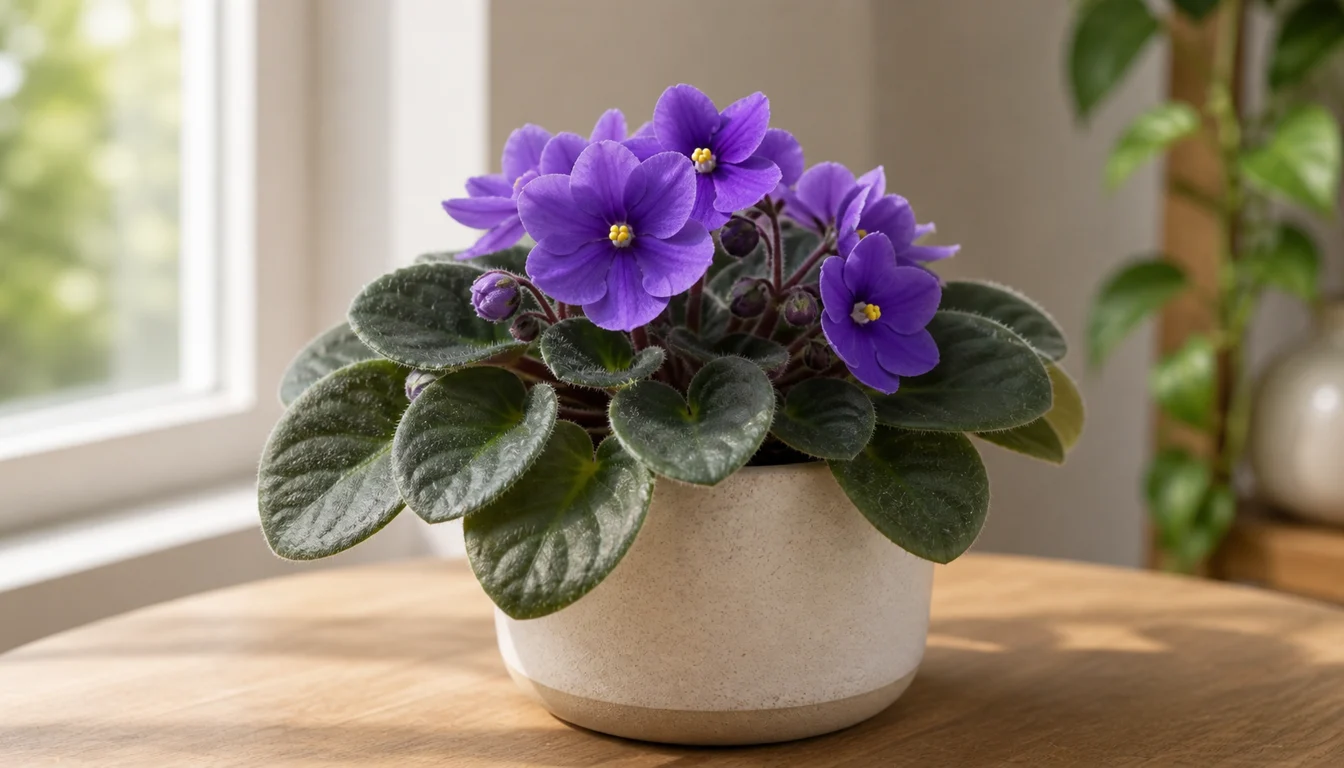
African Violet
African Violet is a windowsill bloomer that rewards steady, small-pot care.
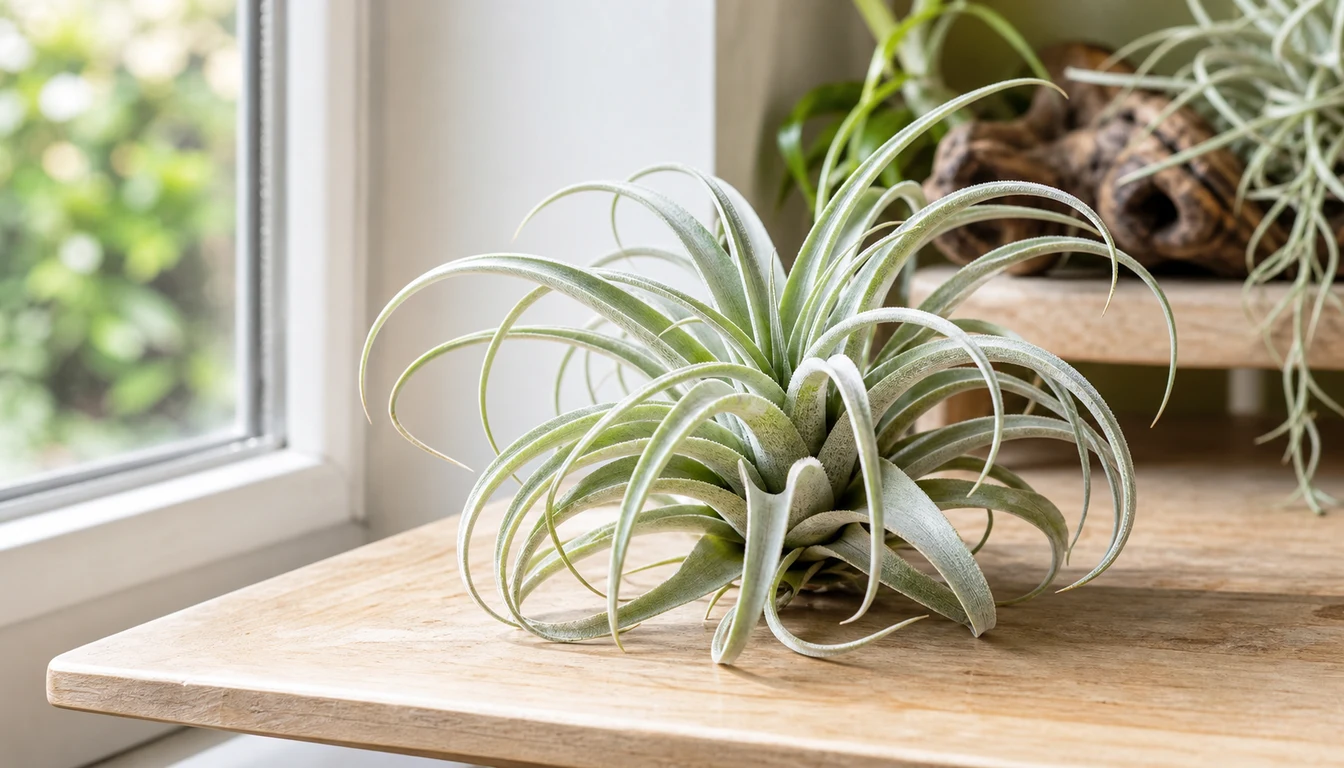
Air Plant
Air plants are living sculptures that thrive without soil, anchoring to driftwood, rocks, or shells while drawing…
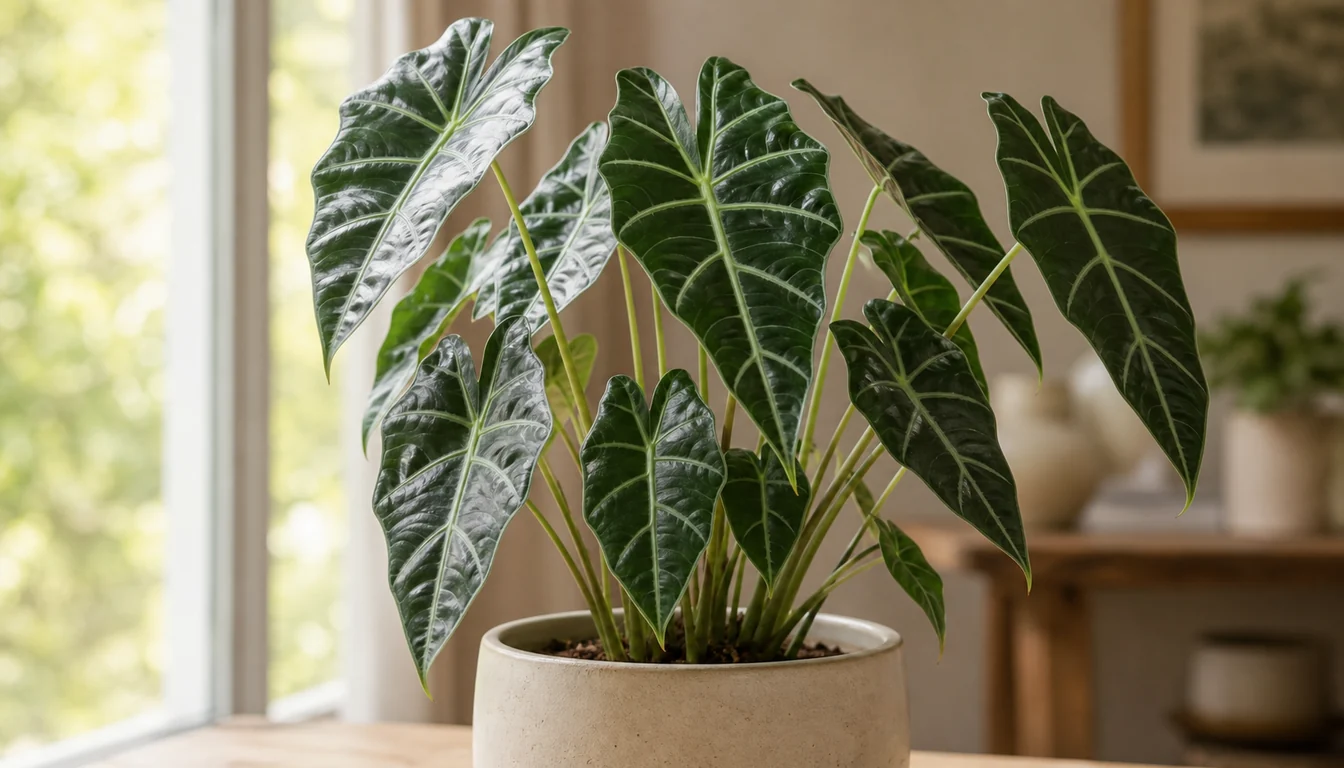
Alocasia
Alocasias include compact, textured houseplants and large elephant ears that need substantial floor space.