
How to Grow Grapes on a Trellis and Manage Fruiting Growth
Vitis spp. Vitaceae
A sunny fence, arbor, or wire trellis can become a productive fruiting vine, but the crop needs training more than pampering. The keys are a cultivar matched to climate and use, full sun, a permanent support, annual pruning, and enough airflow to keep disease pressure manageable.
Care snapshot
Grapes Are Permanent Vines That Need Structure
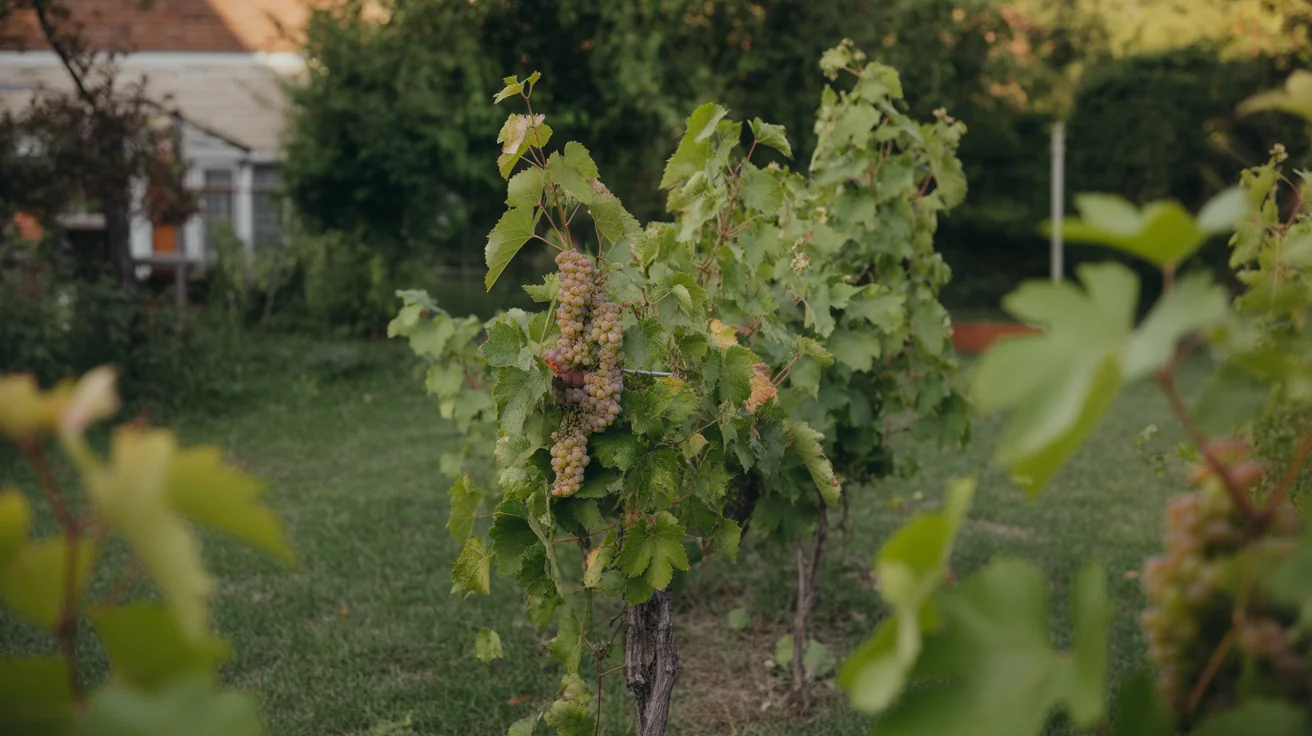
Grape vines are long-lived woody vines that fruit on shoots produced from selected buds. They are not plants you let sprawl and then tidy later, since the support system needs to exist from the beginning.
A single vine can cover a fence, arbor, pergola, or wire trellis, but fruit quality depends on keeping the canopy open enough for sun and airflow.
A single well-established vine can live and fruit for 50 years or more with good care, which is part of why the initial support structure is worth building right the first time.
Compared with blackberries, grapes keep a more permanent trunk and cordon or cane framework instead of renewing whole fruiting canes every year.
The genus Vitis includes both Eurasian wine grapes and several North American species, and crossing the two groups is exactly how many modern disease-resistant hybrids were bred.
Table, Juice, Wine, Seedless, and Cold-Hardy Grapes
Choose grape cultivars by purpose first. Fresh-eating table grapes, juice grapes, jelly grapes, and wine grapes are bred for different texture, sugar, acid, seed, skin, and flavor goals.
Muscadine grapes, native to the southeastern United States, tolerate heat and humidity that would devastate most European wine cultivars planted in the same climate.
Cold-climate gardeners often do better with hybrids or American grape backgrounds than pure European wine grapes. Warm dry regions have more options, but still need disease-resistant choices for home care.
Cold-hardy hybrids bred at university programs can survive winters far colder than classic wine grapes ever tolerate, which is why they dominate backyard plantings in the upper Midwest and Northeast.
Table grapes, wine grapes, muscadines, and American hybrids have different climate needs. The right grape for humid eastern gardens is often not the same grape that thrives in dry western wine country.
Grape cultivar choice should include disease resistance, not just berry color. In humid regions, a slightly less famous resistant variety often gives better home harvests than a classic cultivar that needs constant protection.
- Table types
- Best for fresh eating, often larger berries and tender skins
- Juice and jelly types
- Strong flavor, often more cold-hardy in northern regions
- Wine types
- Need climate match, careful canopy control, and enough season length
- Seedless types
- Convenient for eating, but choose by local hardiness and disease resistance
Full Sun for Sugar and Disease Control
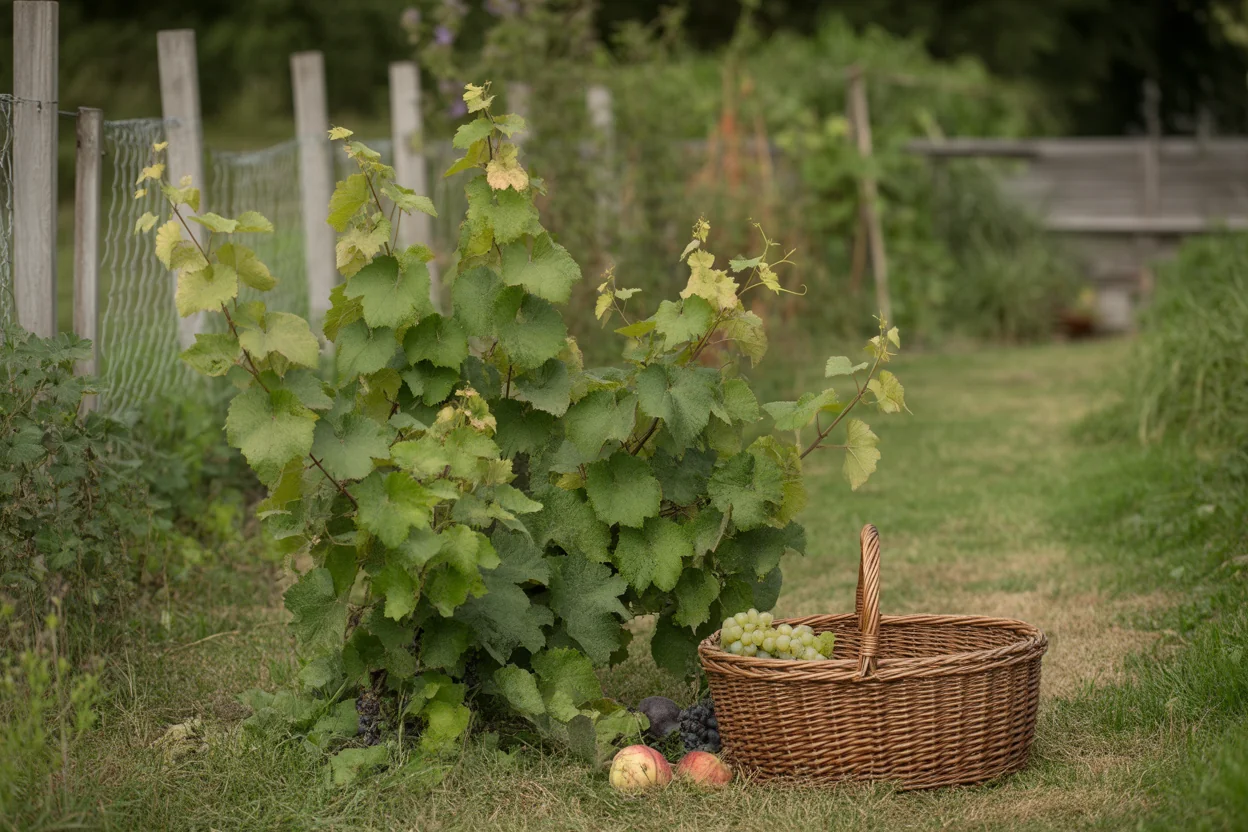
Grape vines need 6-8 or more hours of direct sun for sugar, color, bud formation, and dry leaves. Shade creates foliage without good clusters.
Open sun also helps reduce mildew by drying foliage and fruit clusters after rain. A vine tucked into a damp corner may grow fast but stay disease-prone.
Morning sun is especially valuable, since it dries overnight dew off the leaves early in the day, shrinking the window fungal spores have to germinate before conditions turn dry again.
If you want a fruiting screen in partial shade, grapes are usually the wrong plant. Choose the sunny fence, not the convenient shady one.
Light also decides how hard you have to prune later. A shaded vine grows extra leaves while clusters stay slow to ripen, so winter pruning cannot fully fix a trellis placed in poor sun.
Removing leaves directly around the clusters during the growing season, not just at winter pruning, is a standard technique for exposing fruit to more light and airflow.
- Best site: open sun with airflow on both sides.
- Avoid: dense shade, roof runoff corners, and crowded shrubs.
- Hot sites: protect clusters from sunburn with balanced leaf cover.
- Pergolas: prune so fruit hangs in light, not deep shade.
Water Deeply, Then Let Vines Work
New grape vines need regular water while roots establish. Mature vines are more drought tolerant, but fruit can suffer if drought hits during berry sizing.
Established vines develop deep roots capable of reaching moisture far below the surface, part of why grapes have traditionally thrived in dry regions that would stress shallower-rooted crops.
Use deep watering rather than frequent shallow sprinkling. Wet the root zone, then let the surface dry enough to discourage disease.
Reduce water as harvest nears if rain is adequate. Too much water near ripening can dilute flavor and increase splitting in some varieties.
Berry splitting happens specifically when a dry spell is followed by heavy rain or watering right before harvest, since the fruit absorbs water faster than the skin can stretch.
Young Grape vines need consistent moisture while roots establish, but mature vines often produce better fruit when they are not overwatered. Too much late-season water can dilute flavor and push leafy growth.
Irrigation style changes disease pressure on grapes. If you are choosing hardware, drip irrigation vs sprinkler is not just about water savings, since drip keeps leaves and clusters drier.
A soaker hose buried under mulch along the row delivers water straight to the root zone while keeping the whole canopy above it completely dry.
Soil, Drainage, and Trellis Placement
The planting bed matters because Grapes tolerate many soils if drainage is good. Heavy, wet clay is harder on roots and increases disease pressure around the canopy.
Grapevines have historically been planted on rocky, comparatively poor hillside soils in wine regions precisely because limiting vine vigor concentrates flavor into fewer, better-ripened clusters.
Moderate fertility is better than rich soil. Too much nitrogen makes vigorous shoots, shaded clusters, and more pruning work.
A soil test is mainly useful for catching major deficiencies before planting, not for chasing some ideal fertility number, since grapes actually perform better on the lean side.
Compared with blueberries, grapes do not need strongly acidic soil. A slightly acidic to neutral range is often workable.
Grapes prefer drainage over richness. Too much nitrogen produces a beautiful canopy that shades clusters and delays ripening, while a moderately lean site pushes the vine toward fruit instead of endless leaves.
- Drainage
- Essential; avoid soggy low spots
- Fertility
- Moderate, not lush
- Spacing
- Often 6-10 feet per vine, depending on vigor and training
- Support
- Install wire trellis, arbor, or pergola before vines get heavy
Training, Pruning, and Cuttings
Training grape vines starts in the first year. Build a trunk, choose the framework, and remove extra growth before the plant becomes a tangled mat.
The trunk itself typically needs two to three years to fully establish before the vine reaches meaningful production, which is why early training discipline pays off later.
Mature vines need hard dormant pruning. Depending on cane or spur system, you may remove most of last year's growth and keep only selected buds.
The system must match the cultivar and trellis. Some grapes fruit best from long canes, while others are simpler as spur-pruned cordons, and copying a random pruning diagram can leave too few fruiting buds.
Hardwood cuttings root from dormant one-year canes, but buying certified disease-free vines is safer where virus problems are common.
Grafted vines are standard in commercial vineyards specifically to gain resistance to phylloxera, a root-feeding insect that nearly destroyed European vineyards in the 1800s.
Pruning time overlaps with many woody fruits, including fig trees, but grape pruning is usually more severe because fruiting depends on fresh shoots from retained buds.
Training is the real foundation of grape production. Whether you use a cordon, cane-pruned system, or arbor, the goal is to place fruiting wood where sun and air can reach it before disease pressure builds.
Labeling each vine by cultivar at planting time avoids confusion years later, especially once several varieties share the same trellis and their pruning needs start to diverge.
- Train one strong trunk first.
- Choose cordons or fruiting canes based on variety and trellis.
- Prune during dormancy before bud break.
- Remove weak, crowded, and poorly placed shoots in summer.
- Keep clusters exposed to filtered light, not harsh bare sun.
Mildew, Rot, Beetles, Birds, and Cluster Pests
Grapes can face powdery mildew, downy mildew, black rot, Japanese beetles, grape berry moth, birds, and wasps. The best prevention is cultivar resistance plus an open canopy.
Sanitation matters. Remove mummified fruit, fallen leaves, and diseased clusters so problems do not overwinter directly under the vine.
Phylloxera is the same root-feeding insect that devastated European vineyards historically, which is why most wine grapes grown today are grafted onto resistant American rootstock rather than grown on their own roots.
Powdery mildew and black rot are airflow problems as much as disease problems. Open training, timely leaf removal around clusters, and cleanup of mummified fruit reduce pressure before sprays are even considered.
Downy mildew specifically needs free water sitting on the leaf surface to infect, unlike powdery mildew, which is why irrigation timing and overhead watering affect each disease differently.
Grape berry moth larvae tunnel directly into developing clusters, so webbing between individual berries is often the first visible sign, well before any fruit actually drops.
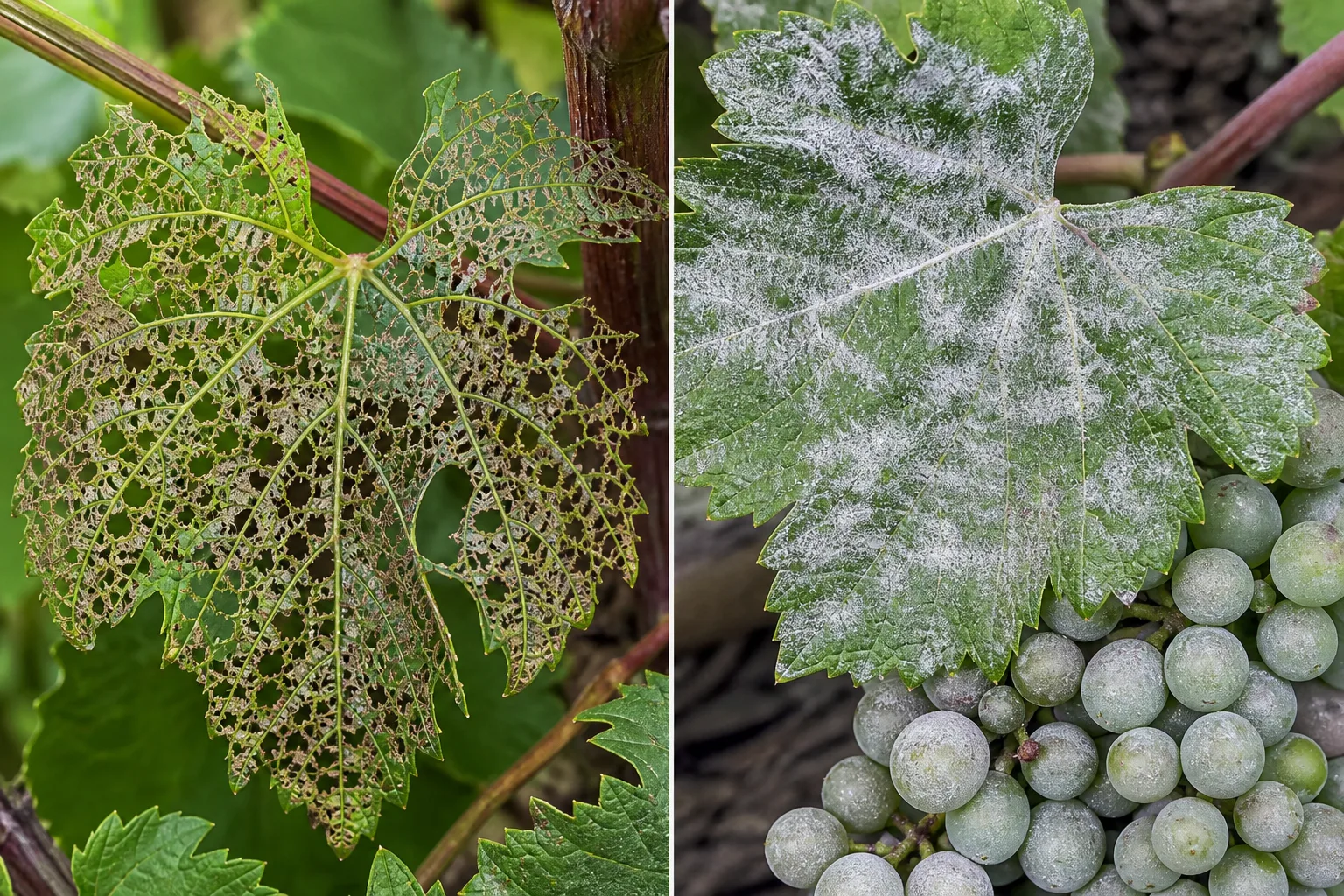
White film on leaves and fruit. Increase airflow and choose resistant cultivars.
Spots and shriveled fruit. Remove mummies and improve sanitation.
Skeletonized leaves. Hand-pick early in small plantings.
Net fruit and harvest promptly as clusters soften.
Seasonal Care From Dormancy to Harvest
Winter is pruning season for grapes. Decide the bud load before spring growth begins, because an unpruned vine will waste energy on too many shoots.
Pruning too late, after sap starts flowing heavily in early spring, can cause a vine to visibly bleed sap from the cuts, though this rarely harms the plant despite how alarming it looks.
Spring and early summer are for shoot positioning, tying, and thinning. Keep the canopy open enough that clusters get light and air.
A late spring frost after bud break is one of the most damaging events a grape crop can face, since it can kill the year's fruiting shoots outright and erase the whole season's harvest.
If your yard also includes apple trees, keep grape cleanup just as strict, since fallen fruit and diseased leaves carry next year's problems.
Pruning looks severe because grapes fruit on new shoots from one-year wood. Leaving too many buds gives a leafy vine with scattered clusters, while cutting back hard concentrates energy into fewer, better-ripened shoots.
Checking trellis wires and posts each fall, before the weight of winter ice or snow settles on them, catches a weak anchor point while it is still an easy repair.
Prune hard and repair trellis wires.
Train new shoots and watch for early disease.
Thin shoots, water in drought, and manage canopy shade.
Harvest by flavor and clean fruit debris.
Dog Safety, Wildlife, and Spray Choices
Grapes and raisins can be dangerous to dogs, with kidney injury possible even from small amounts in some animals. Do not plant or train vines where dogs freely eat fallen fruit.
Birds and wildlife will take ripe fruit unless you net or harvest quickly. Keep windfalls cleaned up near patios so wasps do not build around overripe clusters.
Raccoons and other mammals raid backyard grape plantings too, sometimes stripping an entire row of ripe clusters overnight if fruit is left unprotected.
That lower-spray approach still has a hard pet boundary. Grapes and raisins belong away from dogs, no matter how healthy the vine is.
Grapes are not safe snacks for dogs, even though the vine is common in yards. If pets roam the garden, keep dropped fruit cleaned up and do not let children use grapes as fetch treats.
Frequently Asked Questions
Do grape vines need a trellis?
Yes, grape vines need a permanent support such as wires, an arbor, pergola, or fence. A trellis makes pruning, airflow, and harvest much easier.
How long do grape vines take to fruit?
Grape vines usually need about 3 years before a meaningful crop. The first years should focus on roots and framework.
When should I prune grape vines?
Prune grape vines during dormancy before bud break. Mature vines often need hard pruning to control crop load and keep fruiting wood productive.
Do I need two grape vines for fruit?
Most common grapes are self-fertile, so one vine can fruit. More than one variety can extend the harvest window.
Can grapes grow in containers?
Compact grapes can grow in large containers with strong support, but in-ground vines are easier to water, train, and crop heavily.
Are grapes safe for dogs?
No, grapes and raisins can be toxic to dogs. Keep fruit and fallen clusters away from pets and call a vet if a dog eats them.
Sources & References
Related Plants
Blackberry
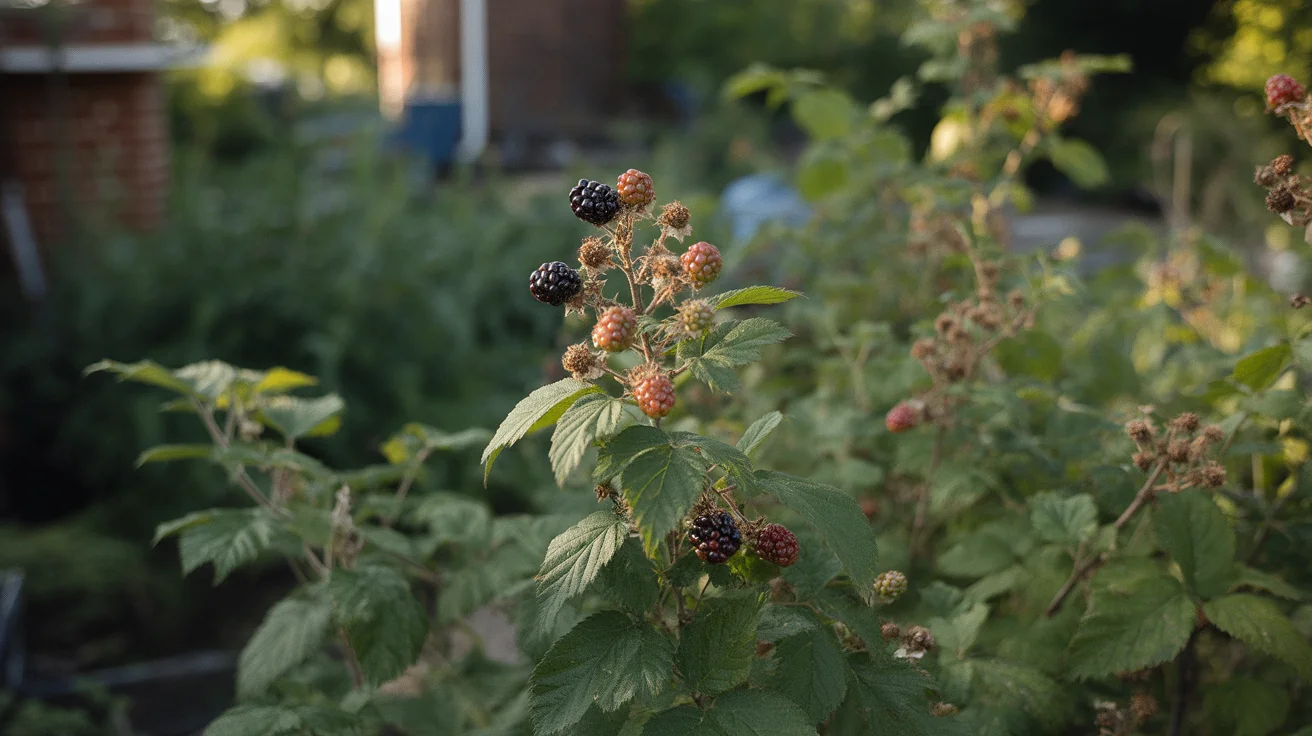
Another trellised fruit crop with annual cane management.
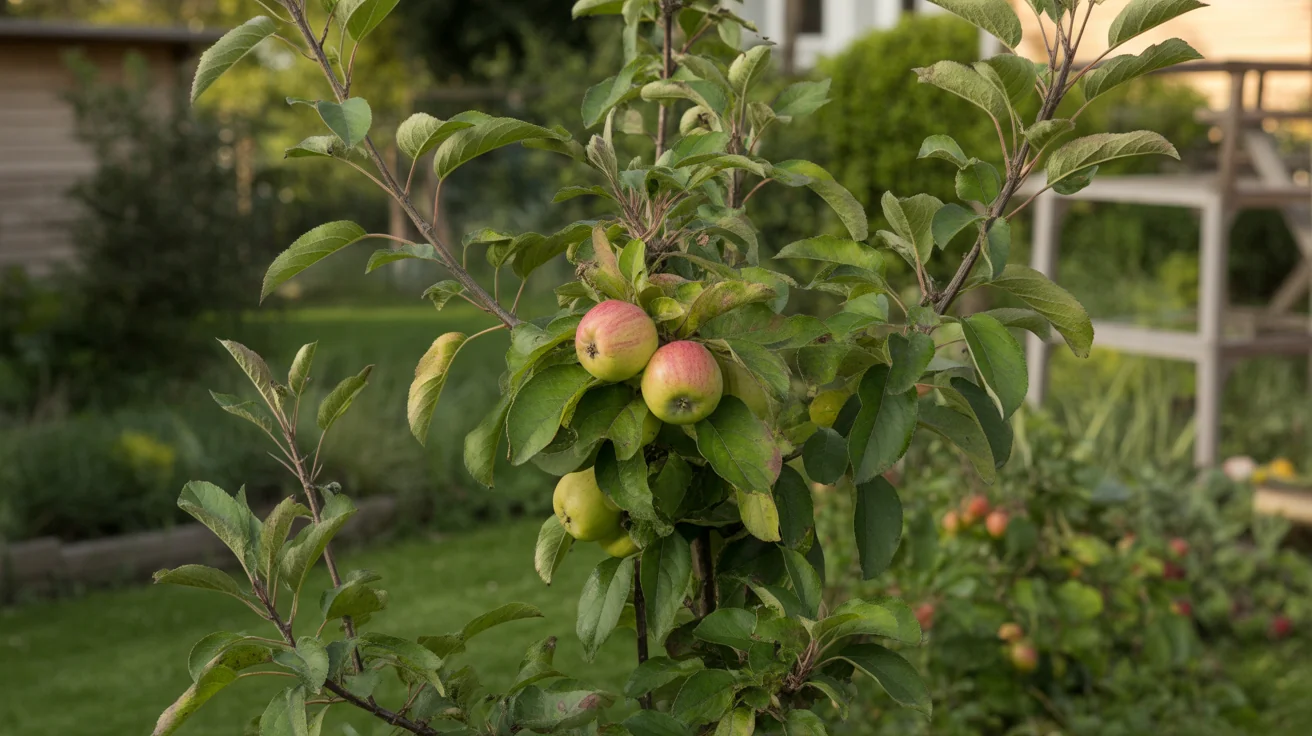
Apple Tree
A woody fruit crop with similar dormant pruning timing.
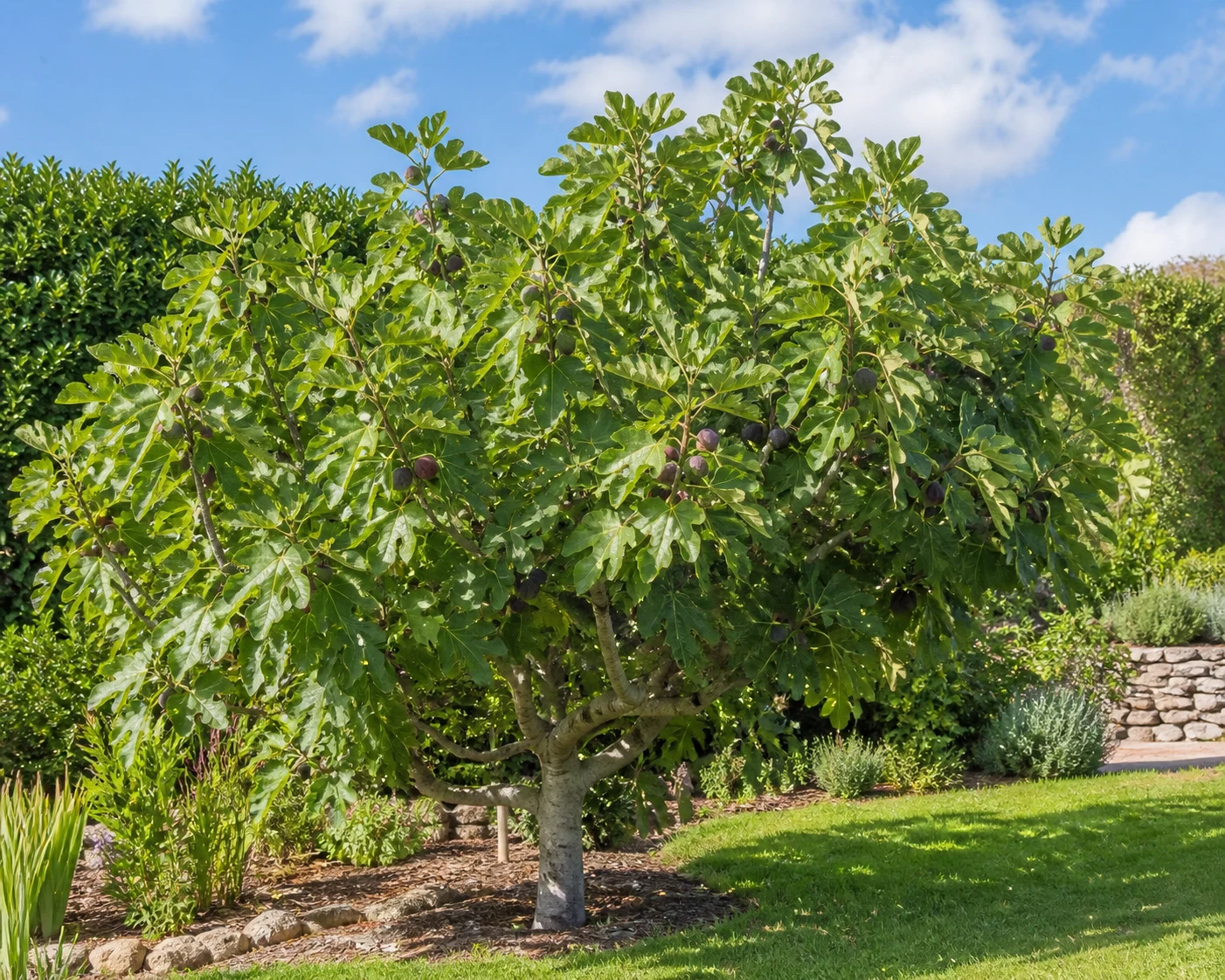
Fig Tree
A warm-site fruit tree for gardeners comparing backyard fruit options.
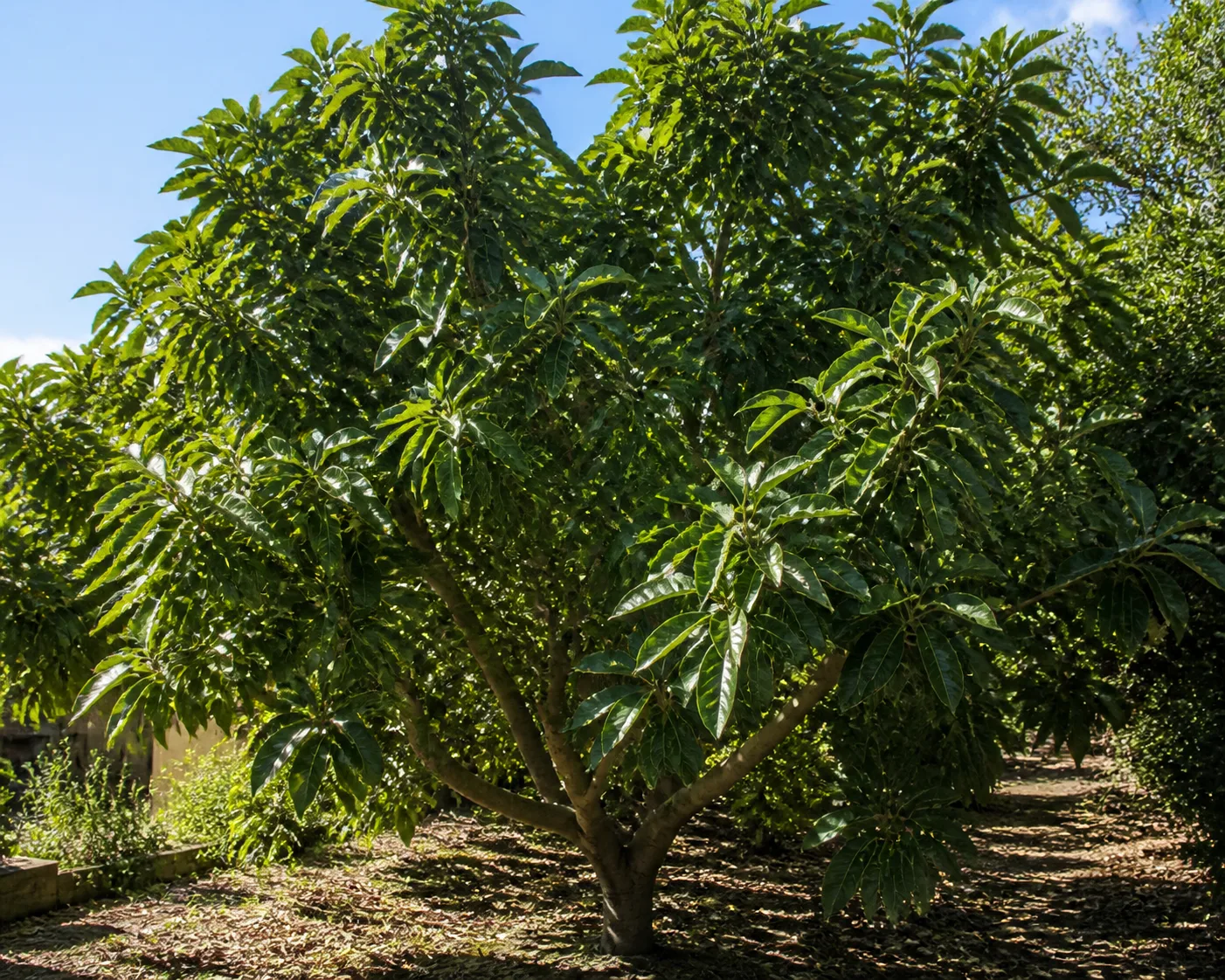
Avocado Tree
Avocado tree is a subtropical evergreen fruit tree for frost-free gardens, warm patios, and bright indoor…
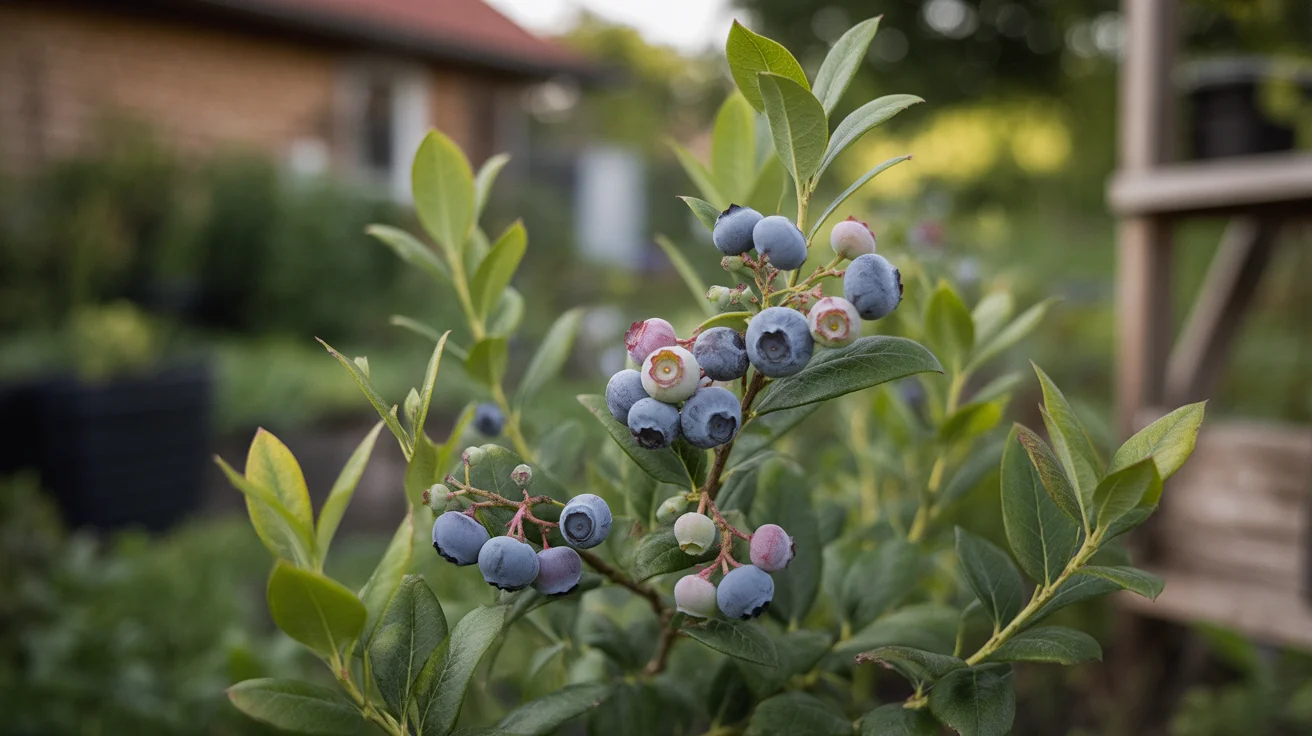
Blueberry
Blueberries are long-lived fruiting shrubs that reward careful soil prep more than constant fussing.
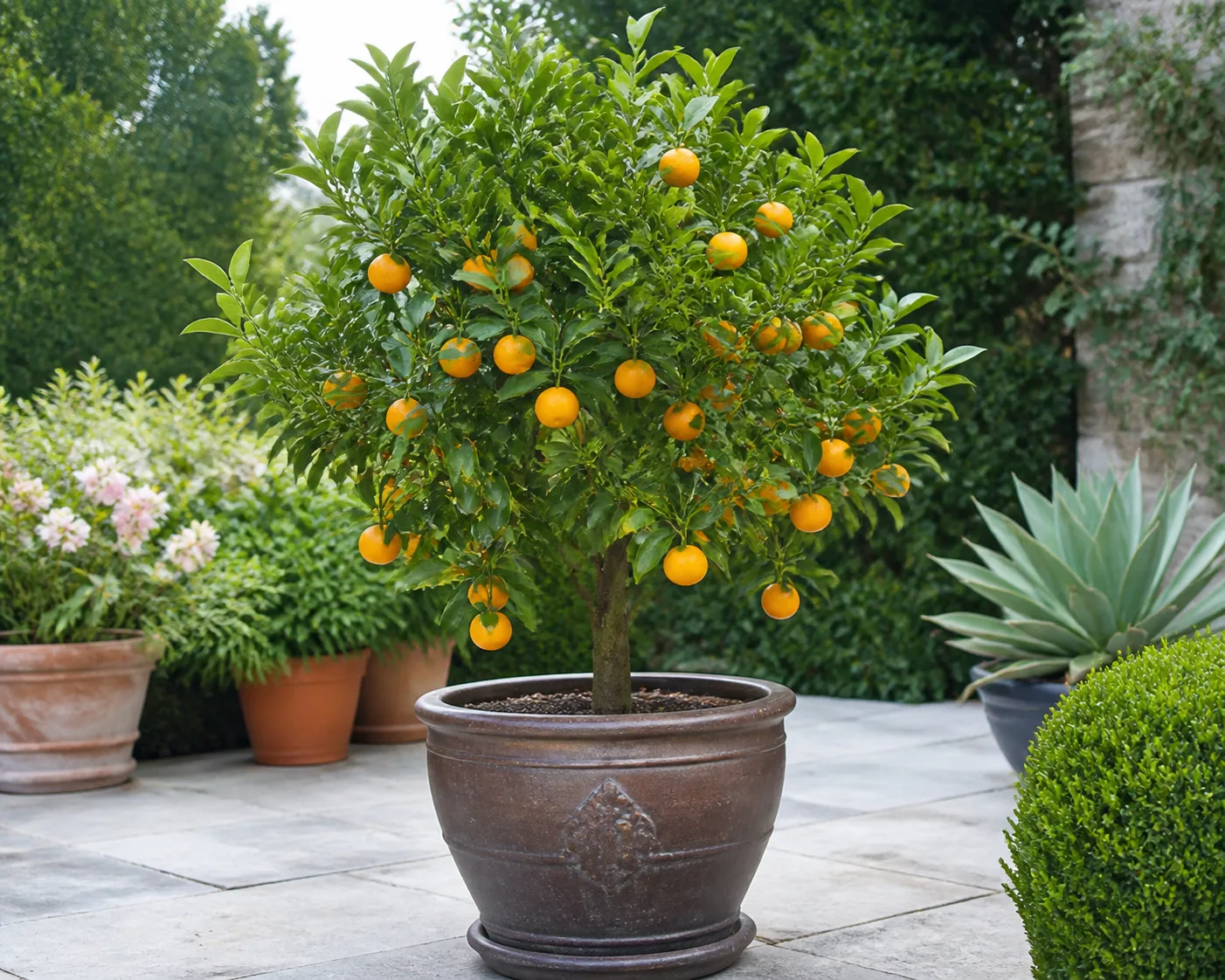
Dwarf Citrus
Dwarf citrus includes different fruiting varieties grown on size-controlling rootstocks, along with naturally smaller…