
Which Herbs Will Actually Grow in Your Window?
Indoor herbs fail for one reason far more often than any other, and it is not watering.
Herbs want six to eight hours of bright light a day, most of it direct. A south-facing sill delivers that and an average kitchen window usually does not, which is why the same plant thrives in one house and stretches into a pale stick in the next.
Measure your window before you shop. Count the hours of direct light, learn the signs of a plant reaching for more, and add a grow light if the herbs you want need more than the glass provides.
Once the light is right, match each herb to a pot, watering habit, and harvest cut it can sustain.
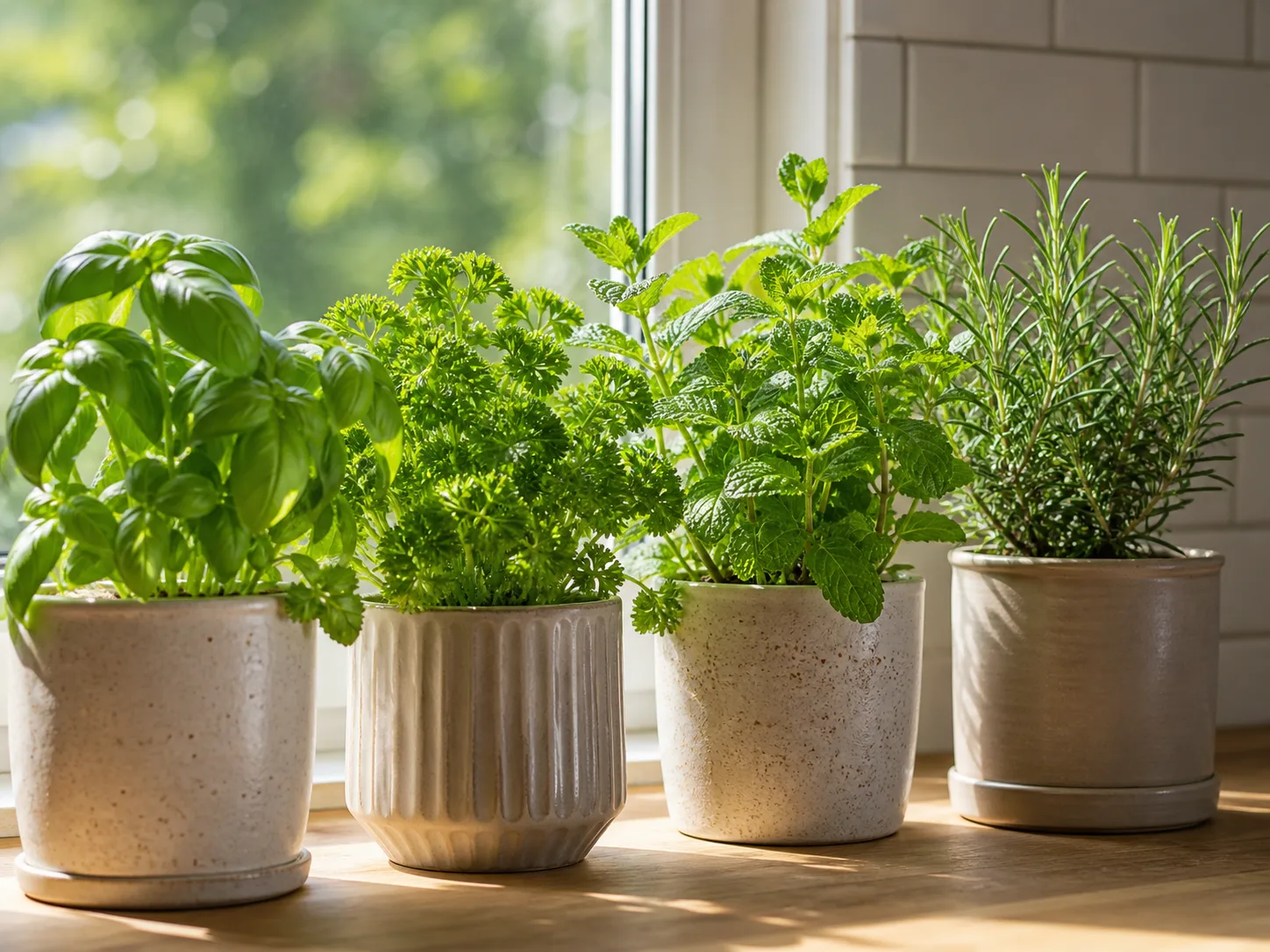
At a glance
How Much Light Do Indoor Herbs Actually Need?
Six to eight hours of bright light a day, and at least six of them direct.
That figure decides which herbs can stay compact in your window, and it is worth measuring rather than estimating because a kitchen that feels bright to a person can be well under it.
- South-facing sill: The exposure that reliably delivers the hours through winter.
- West-facing sill: Workable, with strong afternoon light and a hotter pot to match.
- East-facing sill: A few hours of gentle morning sun, which suits the forgiving group and not much else.
- North-facing or two feet back from any window: Not enough on its own.
Distance matters as much as direction. Light drops off sharply once you leave the glass, so a pot on the sill and a pot on the counter two feet behind it are in different places even though the room looks the same.
Turn the pots when you pass them. The side facing the room is always the weaker one, and a quarter turn every few days is what keeps a plant even instead of one-sided.
Pick one clear day and count. Watch which hours the sun is actually on the sill rather than on the floor nearby, and the answer settles a question that no amount of watering will.
What Does an Herb Short of Light Actually Look Like?
Three things happen together.
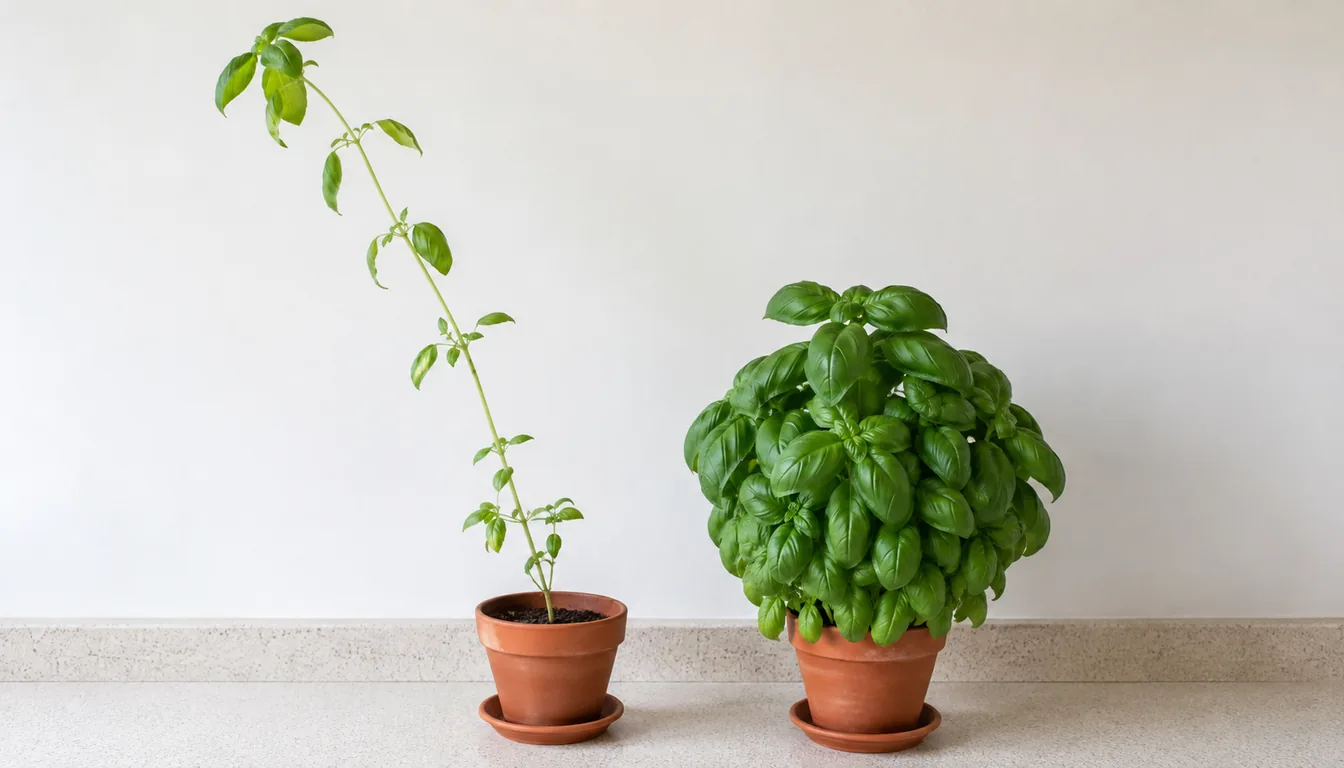
The plant grows thin and spindly, the new leaves come in smaller than the old ones, and the scent fades. That combination is the plant reporting a light shortage, and it arrives long before anything looks unwell.
The measurement to look at is the gap between leaf pairs. Long bare stem between them means the plant is reaching, and short gaps with leaves stacked close together mean it has enough and is building rather than searching.
A plant leaning steadily toward the window is the same signal, and it is the reason for turning the pot.
Scent is the one that decides it for a cook. A basil that looks acceptable and smells of very little has been short of light for weeks, whatever the leaves suggest.
None of this is a watering problem, and watering a stretched plant more often just leaves it wet as well as dim.
Which Herbs Suit the Light You Have?
Split the list by how much light each one needs to stay compact.
Chives, mint, thyme and parsley cope with an average window and keep producing after repeated cutting. That tolerance, rather than any difference in difficulty, is what makes them the beginner set.
Basil and rosemary are the demanding pair. Both stretch quickly in an east window, and both are worth growing anyway if you are willing to add a light.
Mint is the most forgiving of low light and the least willing to share. It fills the root space it is given and crowds out anything planted beside it within a season.
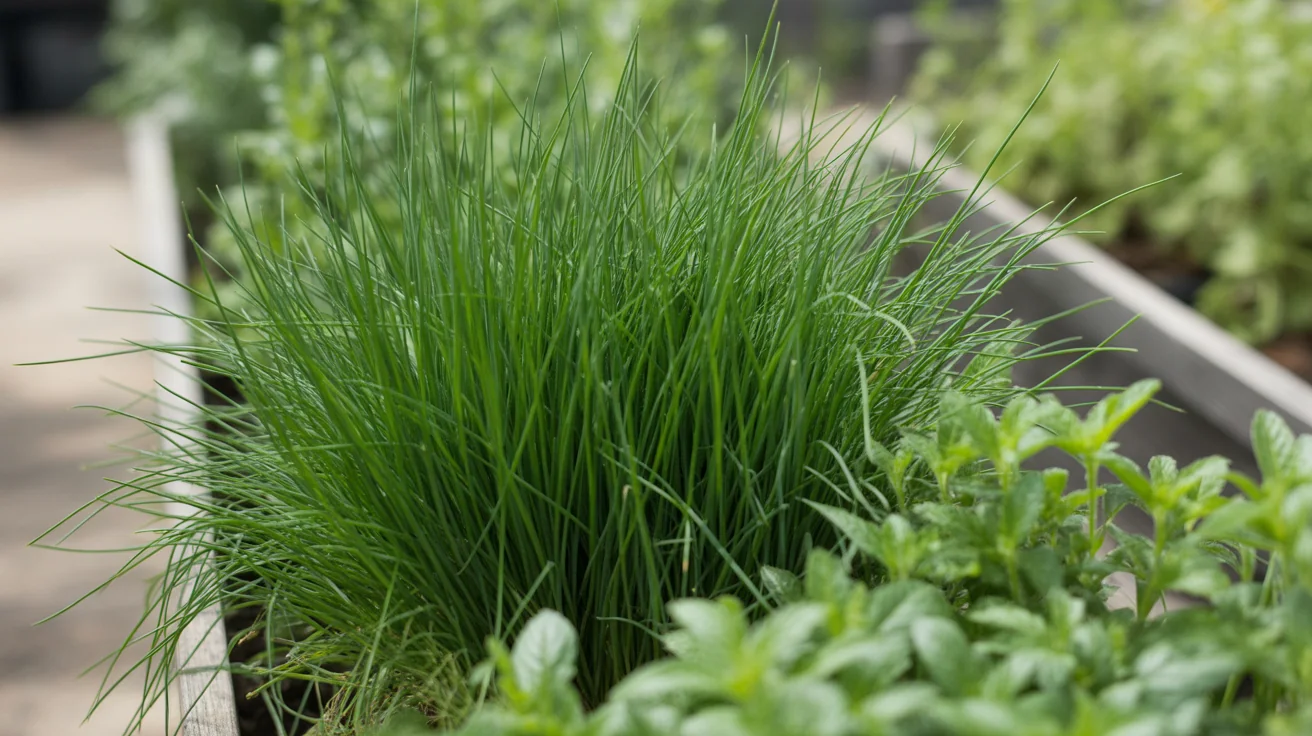
Chives
Steady cut-and-come-again leaves from an average bright window
- Mature fit
- Use a pot at least 6 inches deep for the clumping bulbs
- Main tradeoff
- Cut from the base, and keep the plant in measurable direct light
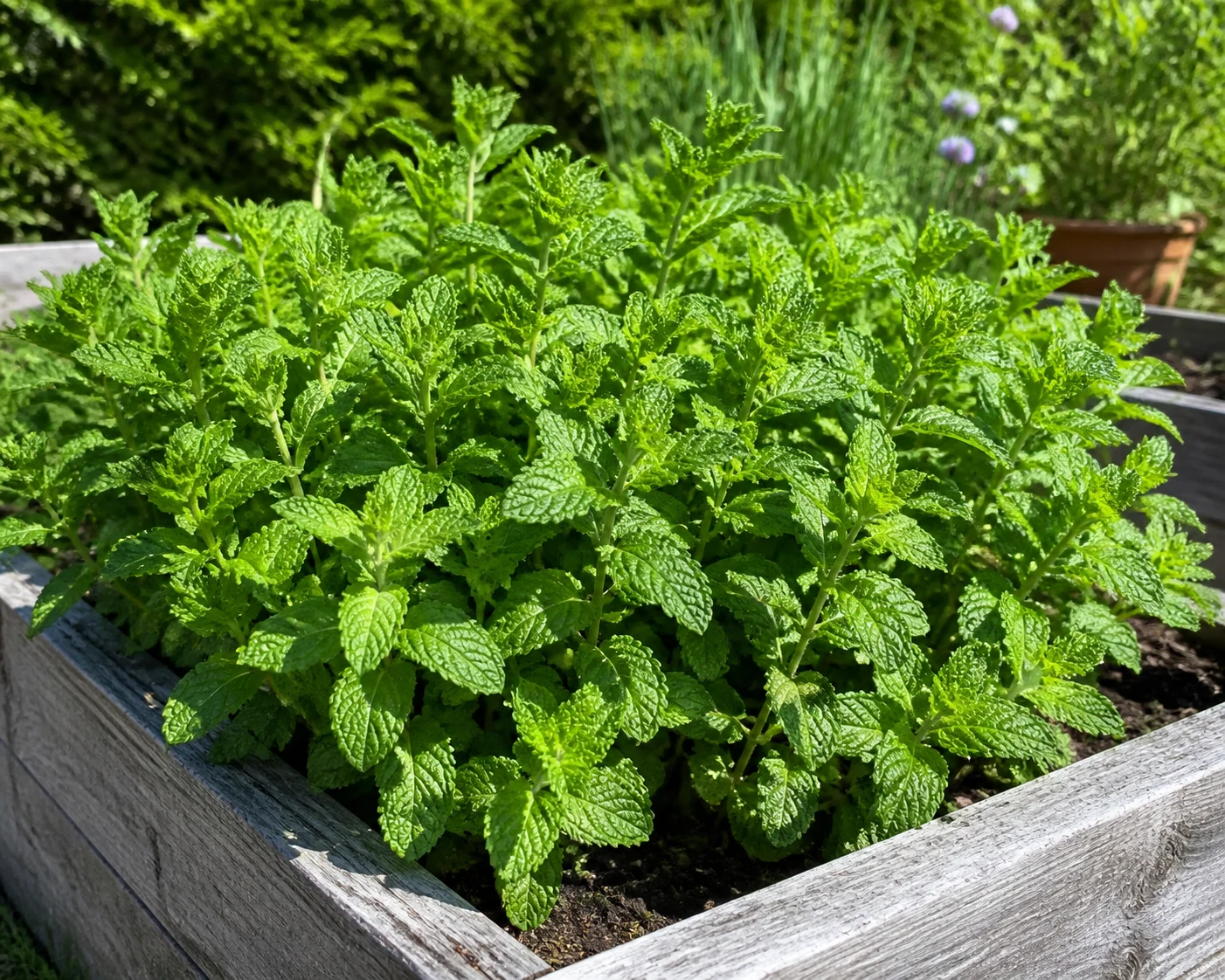
Mint
The most forgiving harvest when a window is less than ideal
- Mature fit
- Give its spreading roots a separate pot at least 8 inches deep
- Main tradeoff
- It crowds shared containers and wants more moisture than woody herbs
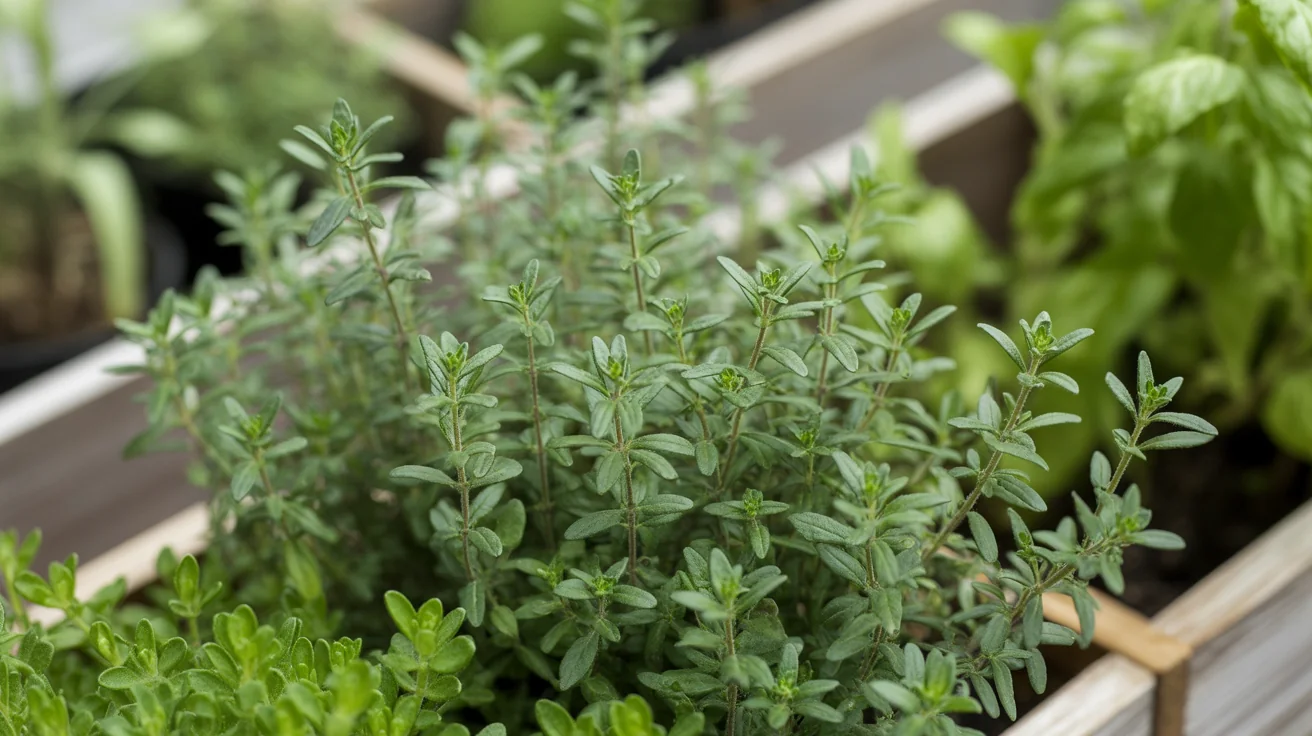
Thyme
A compact harvest for a bright, warm sill
- Mature fit
- A 6-inch-deep pot works when drainage is sharp
- Main tradeoff
- Let the mix dry noticeably and cut only green growth
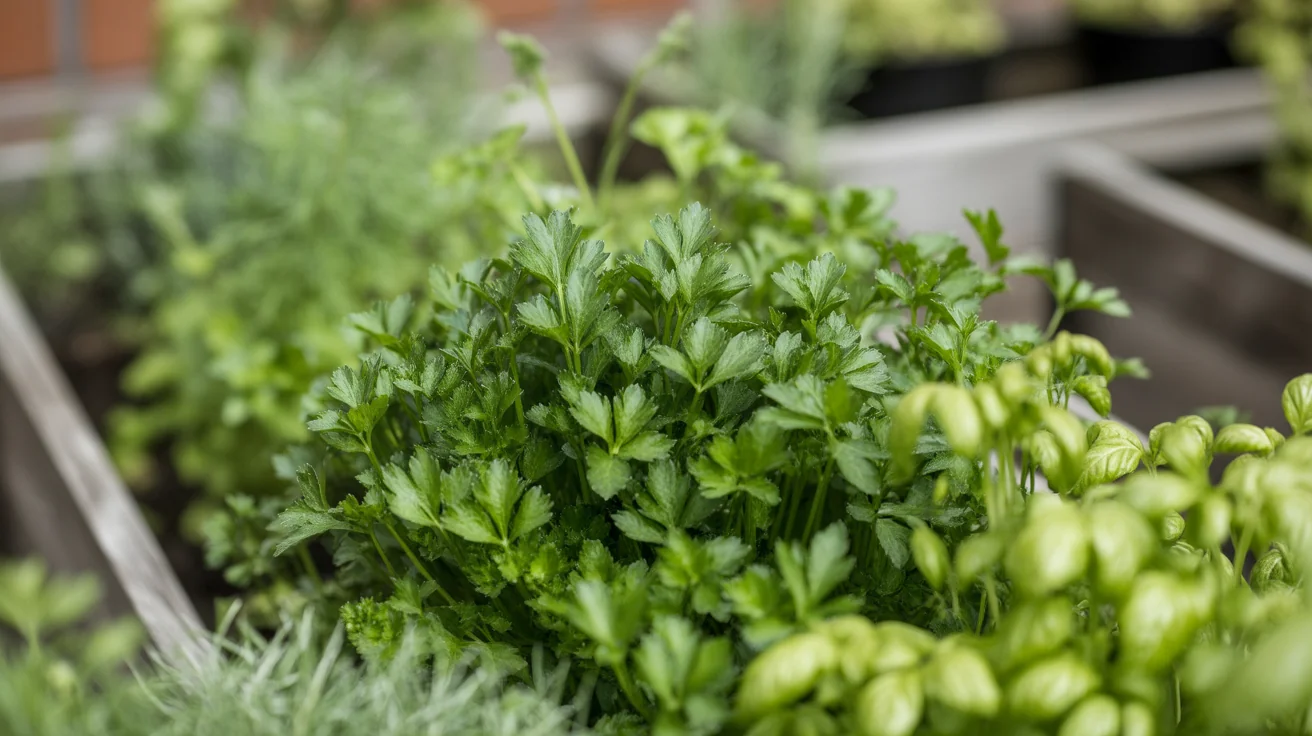
Parsley
A leafy harvest from an average bright window
- Mature fit
- Its taproot needs a pot about 10 inches deep
- Main tradeoff
- Keep moisture more even than you would for rosemary, thyme, or sage
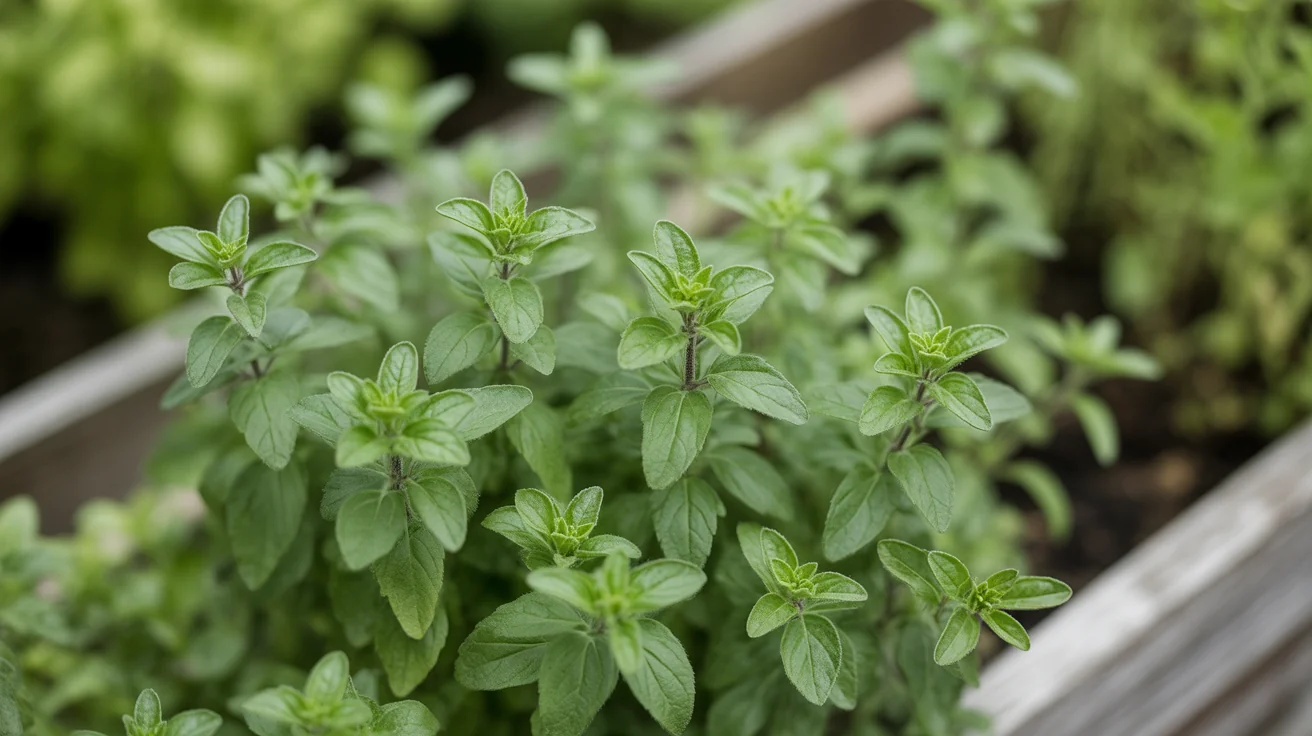
Oregano
Strong-flavored leaves from a bright sill
- Mature fit
- A 6-inch-deep pot suits one compact plant
- Main tradeoff
- It stretches without strong light and dislikes constantly wet mix
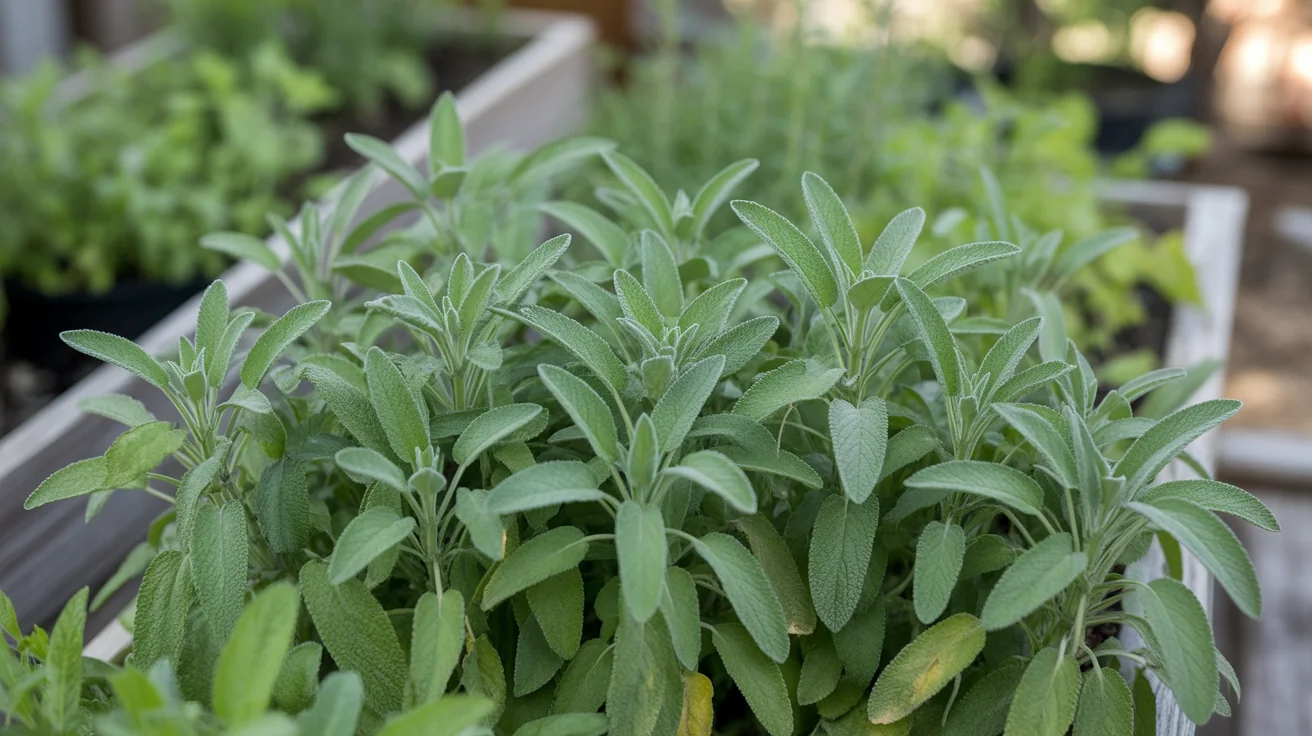
Sage
A woody herb for the brightest indoor spot
- Mature fit
- Use an 8-inch-deep pot with fast drainage
- Main tradeoff
- Allow drying between waterings and avoid cutting into bare wood
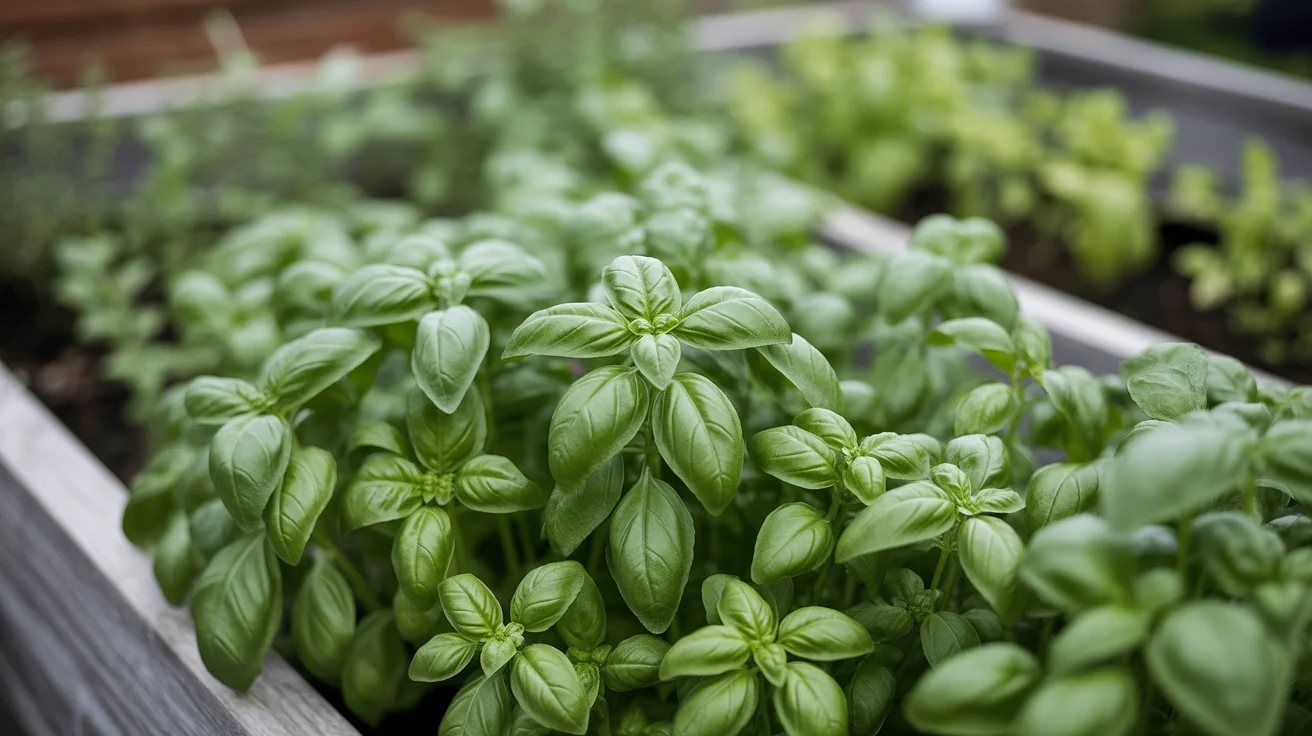
Basil
A fast soft-leaf harvest when you can supply direct light
- Mature fit
- An 8-inch-deep pot holds one separated supermarket clump
- Main tradeoff
- It stretches quickly in weak light and wants steadier moisture
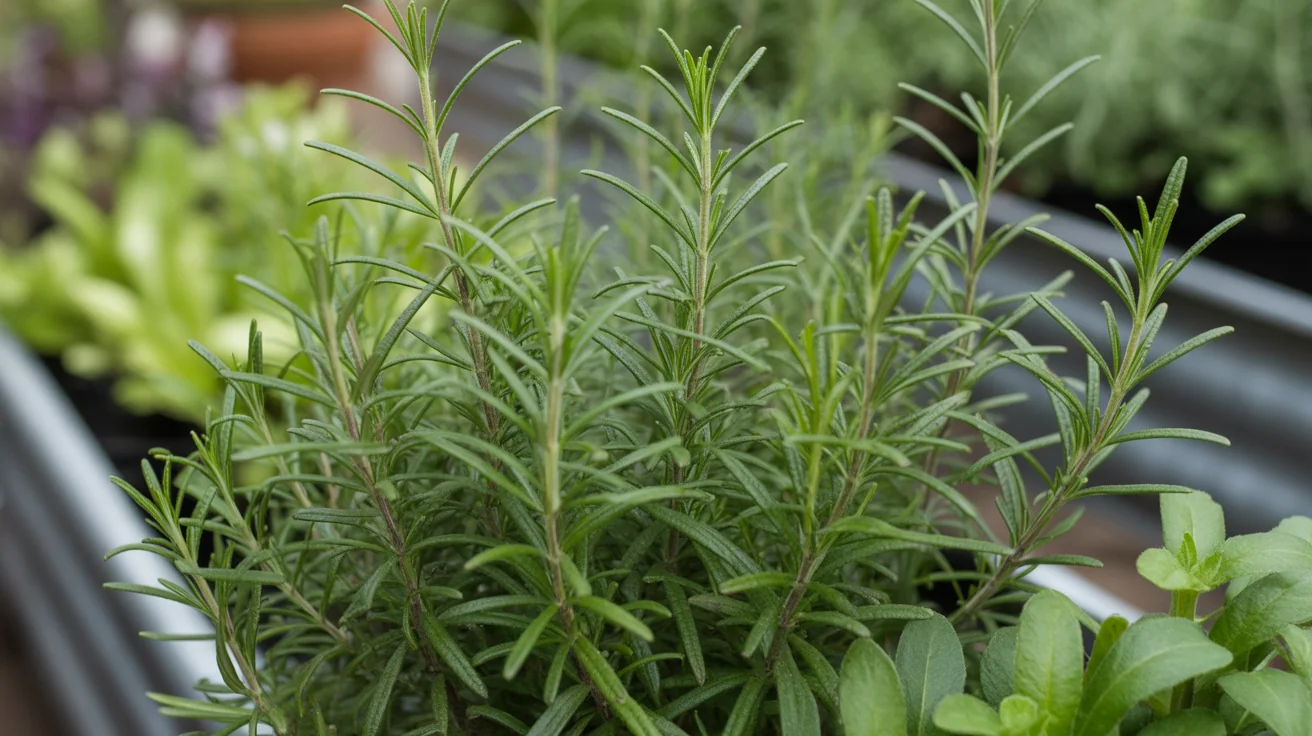
Rosemary
Evergreen sprigs from a south window or grow light
- Mature fit
- Use a pot about 10 inches deep with sharp drainage
- Main tradeoff
- Wet roots and cuts into old bare wood cause the main failures
What If the Window Is Not Bright Enough?
Add a light or change the list. Those are the two honest options.
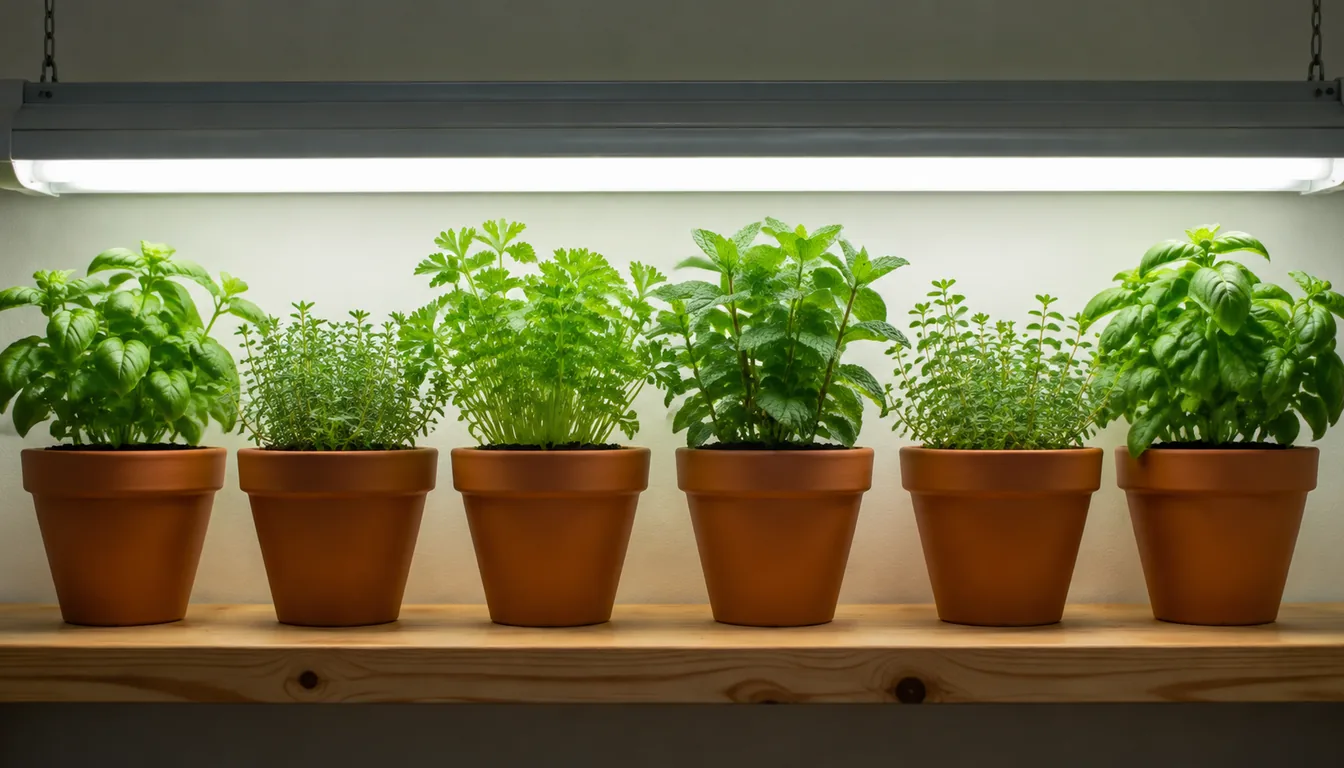
Distance matters more than wattage. Light falls off sharply, so a fixture two feet above the pots delivers a fraction of what the same fixture gives at eight inches, and raising it to look tidier is the usual way this gets set up wrong.
Put it on a timer. Fourteen hours managed by hand becomes eight hours within two weeks, and the plants respond to what actually happened rather than to the intention.
A light does not fix a cold drafty sill. Basil in particular sulks in a bright cold window, so if the glass is cold to the back of your hand on a winter evening, move the pot back and light it instead.
How Big Does the Pot Need to Be?
The small decorative pot is where most indoor herb plans quietly fail.
A shallow root zone dries fast, heats fast, and leaves the plant stalling after a few harvests, which reads as the herb being difficult rather than as the pot being small.
Parsley is the one people underestimate. Its roots run deeper than the standard herb pot allows, and it repays a container closer to ten inches deep.
One plant per pot. A combined planter of five herbs is five plants on one watering schedule, and the whole point of the table above is that they do not want the same one.
Check the base before buying. A container with no opening is a sleeve rather than a pot, and no amount of careful watering makes up for it indoors.
How Often Should You Water Indoor Herbs?
By the pot, not by the day.
How fast a pot dries depends on the light it stands in, so the same herb on a south sill and on an east one wants two different intervals and neither of them is Sunday.
Push a finger to the second knuckle before watering. The surface dries first and tells you almost nothing about the root zone underneath it.
Then split the sill in two. Soft-leaved herbs like basil and parsley want more even moisture, while rosemary, thyme and sage want the mix to dry noticeably in between.
That split is not a preference. A watering habit that suits basil kills a rosemary slowly, and the two plants can be six inches apart on the same windowsill.
Winter changes the interval again. Lower light means slower drying, and the summer routine carried into January is how a healthy pot goes over.
How Do You Cut Herbs So They Keep Producing?
Cut often and lightly. That is the whole principle, and it is the opposite of what most people do, which is to ignore the pot for weeks and then scalp it.
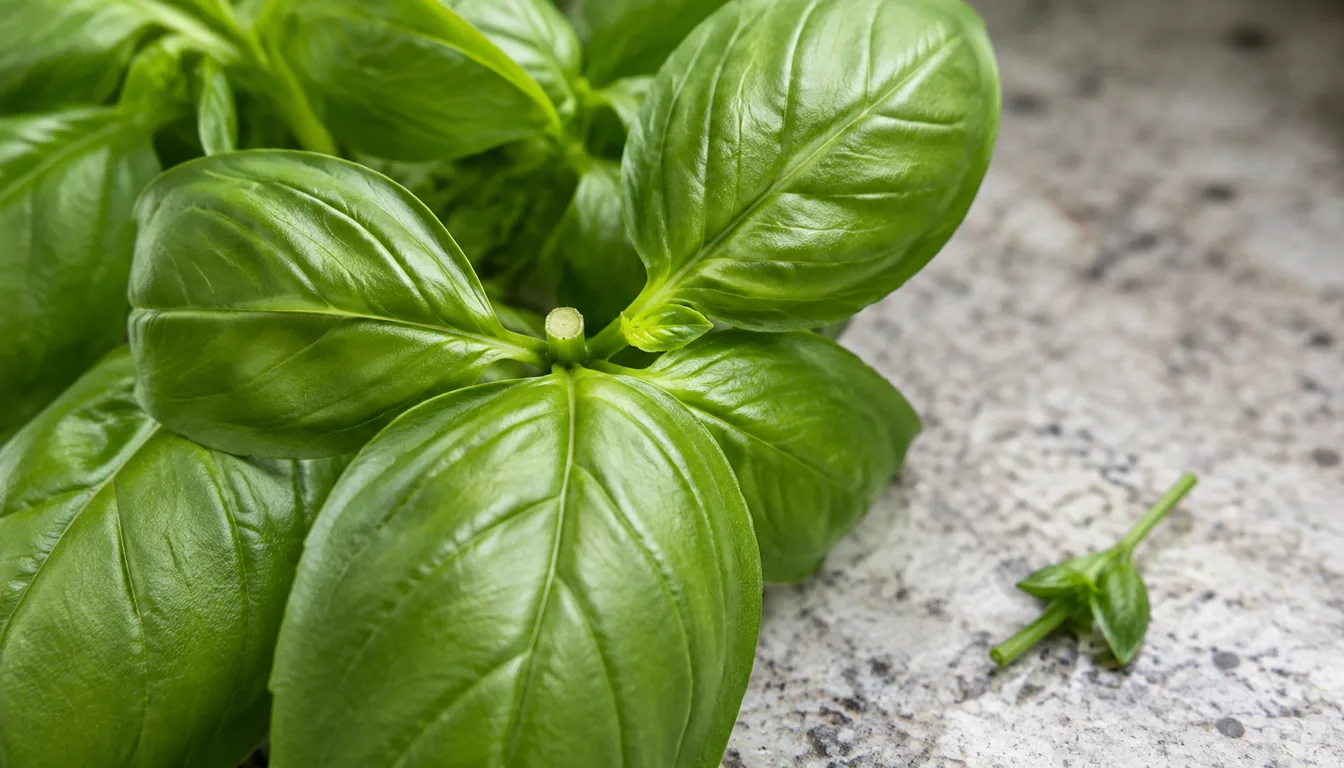
- Basil and soft herbs: Pinch just above a pair of leaves, and the stem forks into two shoots from that point.
- Chives: Cut the whole clump back to about an inch above the soil, since it regrows from the base rather than from a cut stem.
- Rosemary, thyme and sage: Cut in green growth only, because none of them reliably break from bare wood.
- Any of them: Take no more than about a third at once, so there is leaf left to power the regrowth.
Harvesting is what keeps an indoor herb compact. A plant cut every week branches and thickens, and a plant left alone puts its energy into height and then into flowering, at which point the leaves change and the harvest is effectively over.
Why Do Supermarket Herb Pots Die So Fast?
Because it is not one plant.
A supermarket herb pot is usually dozens of seedlings crowded into one small container, grown fast under strong light for a fortnight on a shelf rather than a season on a sill.
They compete each other into collapse. There is not enough root space or light in that pot for all of them, and the die-back that follows is the pot working exactly as it was designed to.
Split it the day it comes home. Knock the whole thing out, tease it into three or four clumps, and pot each one separately, and what was a bunch of herbs becomes plants.
It is also handling a light drop at the same time, from a bright greenhouse to an average kitchen, so expect it to look worse before it settles even when you do everything right.
Pro Tips
- Give each pot a quarter turn whenever you water. It costs nothing and it is the difference between an even plant and one leaning permanently at the glass.
- Keep a second pot of basil coming on from seed. Basil is a short-lived plant indoors and a replacement six weeks behind the first one means no gap.
- Move pots off the sill on the coldest nights. Glass gets far colder than the room, and a leaf pressed against it in January takes cold damage the rest of the plant does not.
Frequently Asked Questions
Can herbs grow indoors with no direct sun at all?
Only under a light. Chives and mint survive longest in a dim spot and they still stretch and lose flavor, so a north-facing room is a grow light question rather than a plant selection question.
Do LED grow lights work as well as fluorescent tubes?
Yes, and the same rule applies. What matters is the distance from the plants and the hours it runs, so a modern LED strip mounted a hand span above the pots on a timer does the job.
Why does my indoor basil flower so quickly?
It is either short of light or it has not been pinched. A basil that is left uncut runs to flower, and once it does the leaf flavor changes, so pinching the tips out weekly is what keeps it in leaf.
Should I feed indoor herbs?
Lightly and rarely. Herbs grown for leaf flavor do better slightly hungry than well fed, and pushing soft growth with fertilizer in a low-light window produces exactly the pale spindly growth you are trying to avoid.
Can I move indoor herbs outside in summer?
Yes, and they need hardening off first. A plant that has spent months in a window will scorch in a day of direct outdoor sun, so it goes out in shade first and moves into the sun over a week or two.
Sources & References
Related Guides
Best Butterfly Garden Plants for a Complete Habitat
The best butterfly garden plants do two different jobs. Host plants feed caterpillars, while nectar…
15 min read
Best Fall-Blooming Flowers for Color Near Frost
A bed that still carries flowers in October usually was planned before temperatures fell.
9 min read
Best Fast-Growing Trees for Shade and Privacy
The best fast-growing tree is the one whose mature crown, roots, climate range, and maintenance…
16 min read
Best Fragrant Flowers for Every Yard and Season
The best fragrant flowers depend on climate, light, space, and the hours you use the yard.
15 min read
Best Full-Sun Perennials for Hot, Bright Beds
The best full-sun perennials are the ones that match the bed's soil moisture and drainage, local…
14 min read
Best Ground Cover Plants for Sun, Shade, and Slopes
The best ground cover is a plant that survives the site and performs the job without escaping into…
18 min read