
How to Choose and Grow a Dracaena for Your Indoor Space
Dracaena spp. Asparagaceae
Woody Dracaena plants need useful indirect light and a root ball that loses moisture between waterings. Cane firmness, new leaf growth, and conditions below the soil help separate routine care from a problem that needs closer inspection.
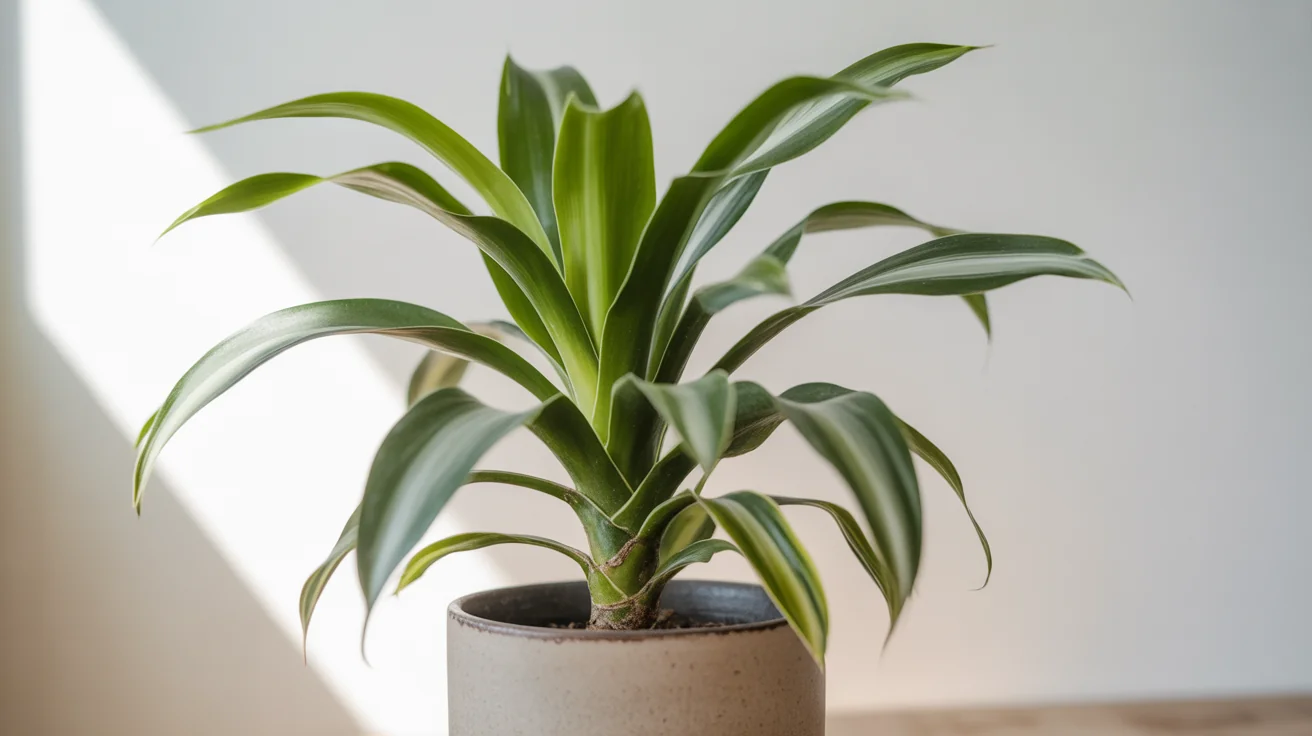
Care snapshot
Which Plants Count as Dracaena Now?
Dracaena includes woody plants with leafy crowns and succulent-leaved plants formerly called Sansevieria. The familiar corn plant and dragon tree belong to the first group. Snake plants share the genus but need a different watering approach.
This care guide concerns the woody indoor forms. Their roots benefit from a mix that drains and partly dries between waterings, while prolonged drying of the entire root ball can damage foliage. The thick leaves of a snake plant support a longer dry interval.
Lucky bamboo is another Dracaena, usually sold as slender stems in water or a small container. Its setup deserves separate care rather than a routine copied from a large soil-grown corn plant.
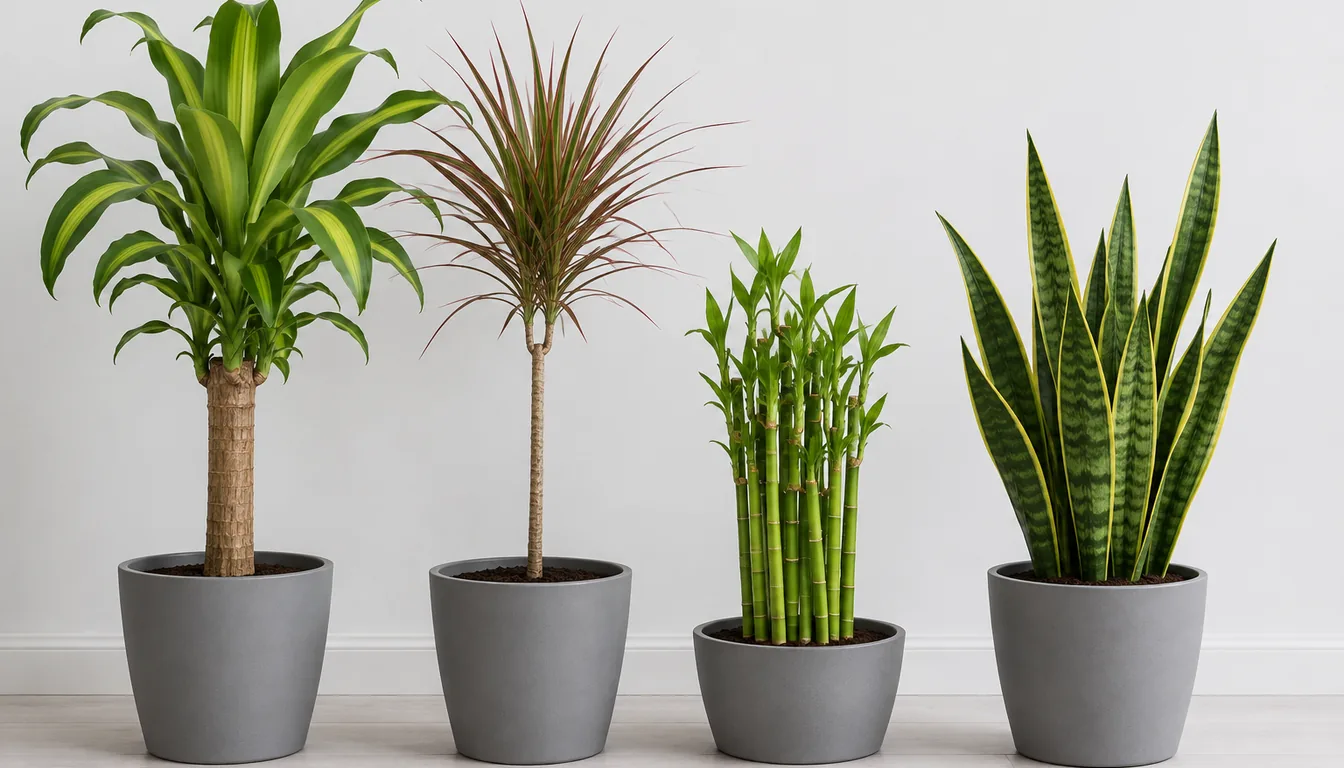
Species and cultivar determine leaf width, stripes, branching, and eventual size. A short nursery cane may become a tall plant with a crown well above the pot, so the current selling size is not a permanent height limit.
Choosing a Cane and Crown for the Room
The care on this page fits the woody Dracaena houseplants that hold leaf rosettes at the tops of canes. A broad-leaved corn plant, a narrow dragon tree, and a compact cane plant share that structure even though their mature silhouettes differ.
Broad leaves occupy sideways space as well as height, while a narrow-leaved dragon tree has a lighter outline. Clearance around a mature crown matters near a walkway, even when the pot itself fits easily into a corner.
A pot containing several cane heights stays visually full as the lower leaves age and fall, but it also deserves a careful root check because one weak cane can hide among healthy ones.
- Broad leaf on a thick cane
- A substantial floor plant with a wide crown. Corn plant forms belong here.
- Narrow leaf on a slim cane
- A lighter, more linear silhouette. Dragon tree forms suit limited floor width.
- Dense crown on a short cane
- Less vertical clearance needed at purchase; the cultivar and future growth still matter.
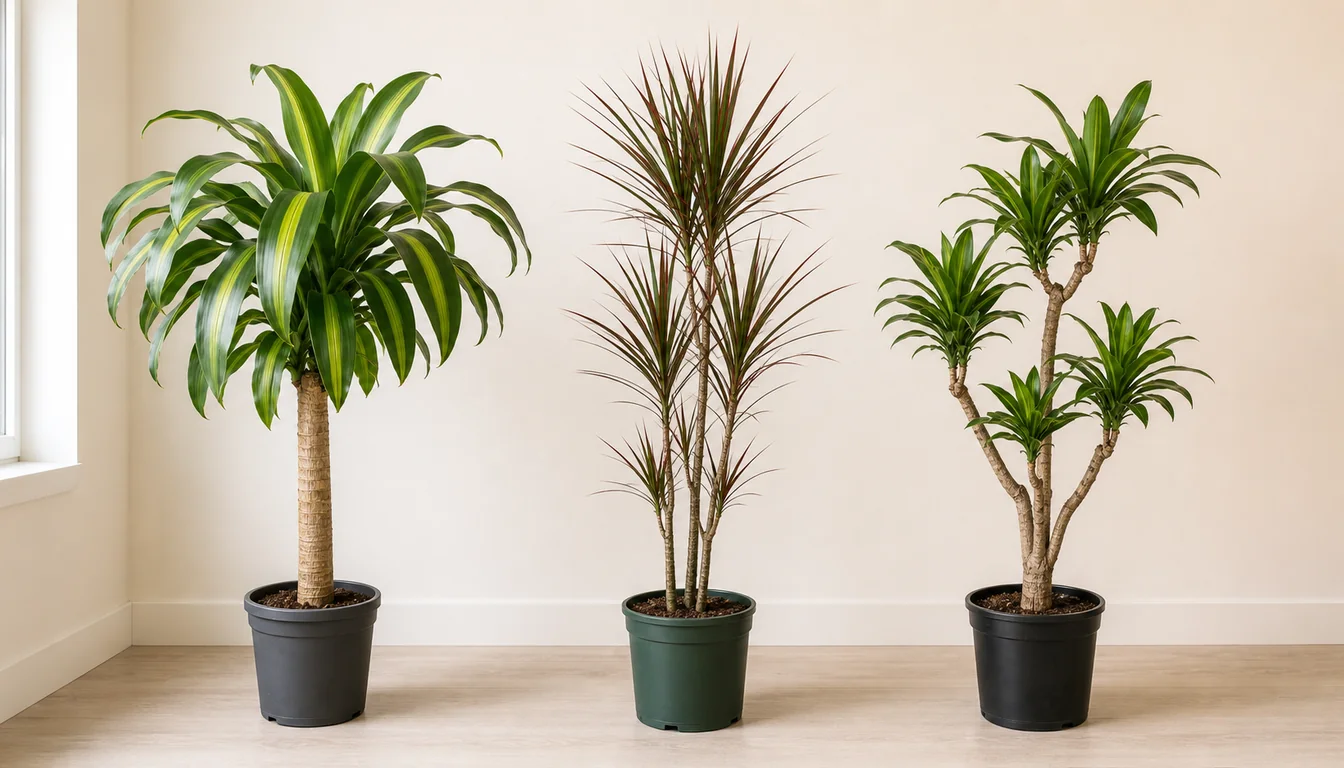
Branching changes the silhouette too. A dragon tree can make new crowns after pruning, while branching forms such as Dracaena reflexa can develop a shrubbier outline. A compact-looking nursery plant therefore needs a species or cultivar name as well as a size label.
What New Growth Can Tell You About Light
Bright indirect light is a useful starting point for woody Dracaena. A plant can tolerate a dimmer position without growing as strongly there, so the newest leaves provide more useful feedback than a crown formed before you bought it.
A strong lean toward the window, smaller new leaves, or sparse growth warrants a light check. None proves that light is the only problem. Root damage, cold, pests, and a recent move can also affect the crown.
Leaf color is cultivar-dependent. UF/IFAS reports different color responses among commercial Dracaena cultivars, so fading stripes do not support a universal instruction to add more sun. The plant name, prior appearance, and actual exposure help interpret a change.
A brighter position with protection from strong direct sun gives a weakly lit plant a gradual adjustment. Old stretched growth will not shorten, and damaged tissue will not turn green again. The next healthy leaves are better evidence of how the new position is working.
Hot window glass and intense direct light can injure foliage that was grown in shade. A light curtain or a position outside that direct beam can preserve useful daylight without exposing the crown to the same heat. Gentle rotation can distribute light, but it cannot replace an adequate light source.
Water the Root-Ball Center, Not the Dry Surface
A dry surface does not show how much water remains around the roots. The top layer can dry while the center of a deep plastic pot stays wet, particularly in a cool room or low light.
A finger check in the upper mix and a gentle deeper check in an open area provide different information. For a pot small enough to lift safely, its weight also changes as water leaves. A skewer samples one spot rather than the whole root ball and need not be forced through roots.
The useful balance is partial drying between waterings, with moisture still available to the roots. A wet center calls for more time, while a root ball that has dried throughout needs watering. The depth and composition of the mix explain why a fixed weekly interval fits some pots poorly.
When watering is due, moisten the root ball evenly and let excess leave through the drainage holes. Runoff collected in a saucer or outer pot needs emptying so the base does not stand in water. A quick stream down a gap beside dry mix does not prove the center absorbed enough.
Fluoride and accumulated fertilizer salts can contribute to damaged tips, but tip browning alone cannot identify either. Reviewing the water supply and fertilizer use is more useful than assuming every brown tip needs a different bottle of water.
Rainwater or distilled water can reduce the contribution from the tap. A filter is useful for fluoride only if its stated treatment capability includes fluoride removal. Changing water cannot correct a root ball that remains saturated, and the plant does not need experimental pH adjustments based on leaf color.
An indoor potting mix needs air spaces as well as moisture retention. Repotting is justified by substantial crowding, deteriorated mix, or a root problem that needs treatment. A healthy crowded plant may need a modestly larger pot, while damaged roots do not automatically need more container space.
Fertilizer supports growth when light, roots, and temperature are suitable. Product directions and any fertilizer already in the mix matter more than adding feed whenever a new leaf appears. More salts cannot correct a wet root zone or compensate for weak light.
What Temperature and Humidity Does a Dracaena Need?
Woody Dracaenas suit warm indoor conditions, with protection from cold drafts and concentrated radiator heat. Temperature guidance describes growing conditions, not a sharp boundary at which every cultivar stops growing or suffers the same injury.
- Cold glass or an exterior door
- Chilling can damage exposed leaves even while the rest of the room feels warm.
- Hot air from a vent or radiator
- Localized drying and heat may affect the nearest foliage. Moving the plant away addresses the exposure.
- Cooler room and less winter light
- The mix may dry more slowly. Recheck moisture before keeping the old watering interval.
- Persistently dry room air
- Humidity may contribute to damaged tips, but root moisture and other exposures still need checking.
Outdoor hardiness zones describe winter climate and do not set an indoor thermostat. A plant kept outdoors for part of the year needs protection from cold and an adjustment to stronger light, rather than assuming its indoor leaves can tolerate a sudden move into sun.
Higher humidity can suit these tropical plants, but misting is brief leaf wetting rather than reliable room-humidity control. Wet foliage also does not prove that infection will occur. Watering the mix and allowing air to circulate avoids keeping the crown continually wet while other causes of tip damage are investigated.
Brown Tips, Yellow Leaves, and Cane Damage
Crisp tips can follow dry roots, damaged wet roots, water chemistry, fertilizer salts, dry heated air, cold exposure, or excessive sun. The same visible result can therefore require different responses. Moisture and exposure history come before another watering or treatment.
One oldest lower leaf yellowing gradually may be normal turnover. Rapid yellowing across several crowns, new growth that deteriorates, or a cane becoming loose or soft deserves closer investigation. A firm cane is useful information, but it does not establish that the fine roots are healthy.
Crisp tips or margins
- Compare surface and deeper mix moisture.
- Review fertilizer, water supply, heat, and cold exposure.
- Add water only when the root zone needs it.
Several yellow leaves
- Note which crowns and leaf ages are affected.
- Check drainage and water trapped in the outer pot.
- Inspect roots if decline continues or the cane base deteriorates.
Soft or damaged cane
- Avoid squeezing or cutting healthy tissue just to test it.
- Inspect the base and roots if damage is progressing.
- Treat a firm top as a possible cutting, not proof of disease-free material.
Webbing, cotton, bumps, or stickiness
- Examine leaf undersides and crown bases.
- Keep a suspected infestation away from other plants.
- Identify the pest before selecting treatment.
Mites, mealybugs, and scale can damage Dracaena. Fine webbing with stippling, cottony clusters, or attached bumps help direct inspection, but residues and leaf mottling are not interchangeable proof of one insect. The pest and the product label must support any treatment.
Wrinkling can accompany water loss even when damaged roots caused that shortage. A soft or decaying base is a more serious warning, and a plant with extensive tissue collapse may be beyond recovery. Cutting into a healthy-looking cane to obtain a pale cross-section is not a reliable root-disease test.
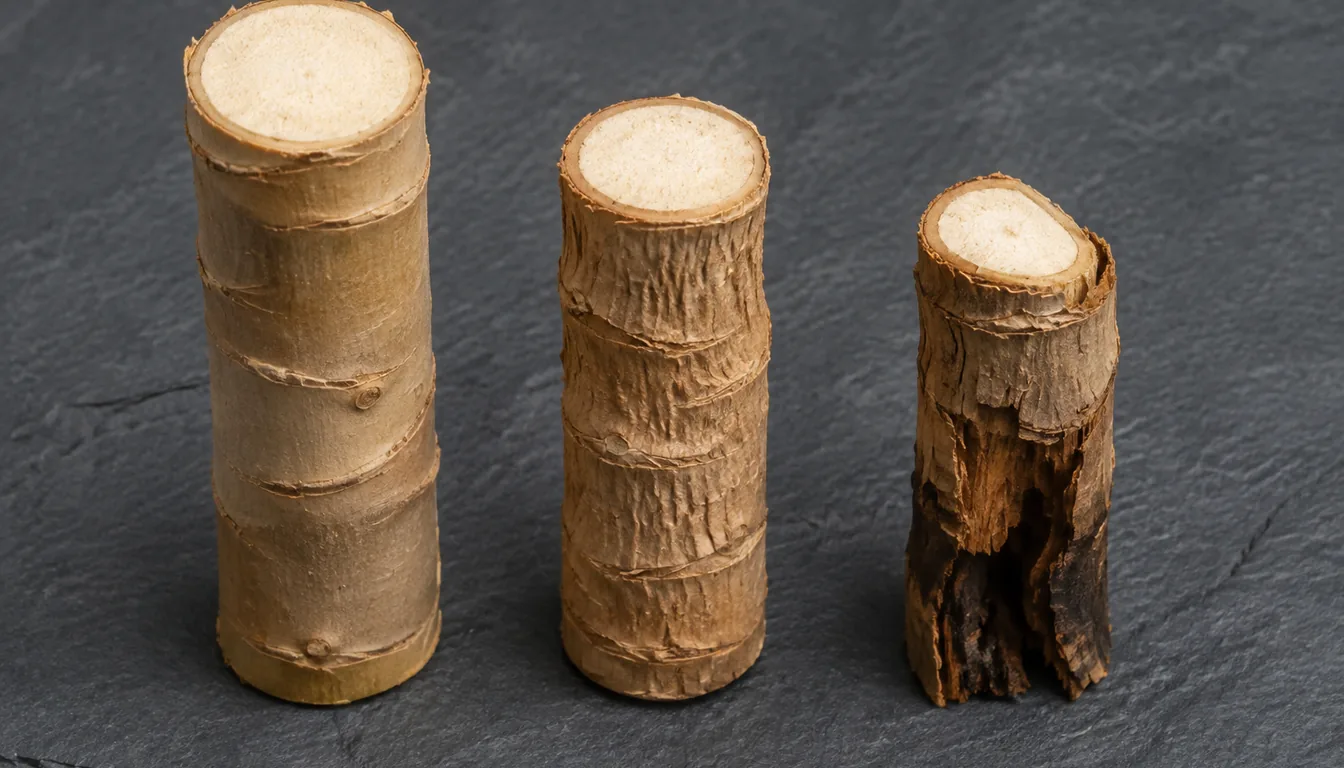
If excess fertilizer salts are supported by the application history and the pot drains freely, leaching may help remove some salts. Repeated flushing is a poor response to every brown tip, especially while the mix is already wet or roots are damaged.
Brown margins will remain brown after a successful correction. Stable surviving foliage and sound new growth help show whether the problem has stopped, without a fixed recovery deadline. Continued decline warrants a closer root or pest assessment, rather than repeatedly changing unrelated parts of the routine.
Cut a Tall Cane Where New Crowns Can Restart
Pruning can reduce a woody Dracaena that has outgrown its space. Dormant buds below a cut may develop into replacement crowns, so the chosen cut height leaves room for those crowns rather than setting the final leaf-tip height.
A healthy plant is a better candidate for shaping than one declining from root or stem damage. Removing the top changes how much foliage the roots support, so its previous watering interval may no longer fit.
- Clean and disinfect a sharp cutting tool according to the disinfectant directions.
- Choose a sound cane and a cut height that allows space for new crowns.
- Cut cleanly, collecting leaves and cane pieces away from pets and children.
- For upright cane cuttings, mark which end was originally uppermost before dividing the cane.
- Place suitable cuttings in an airy rooting medium with warmth, indirect light, and controlled moisture.
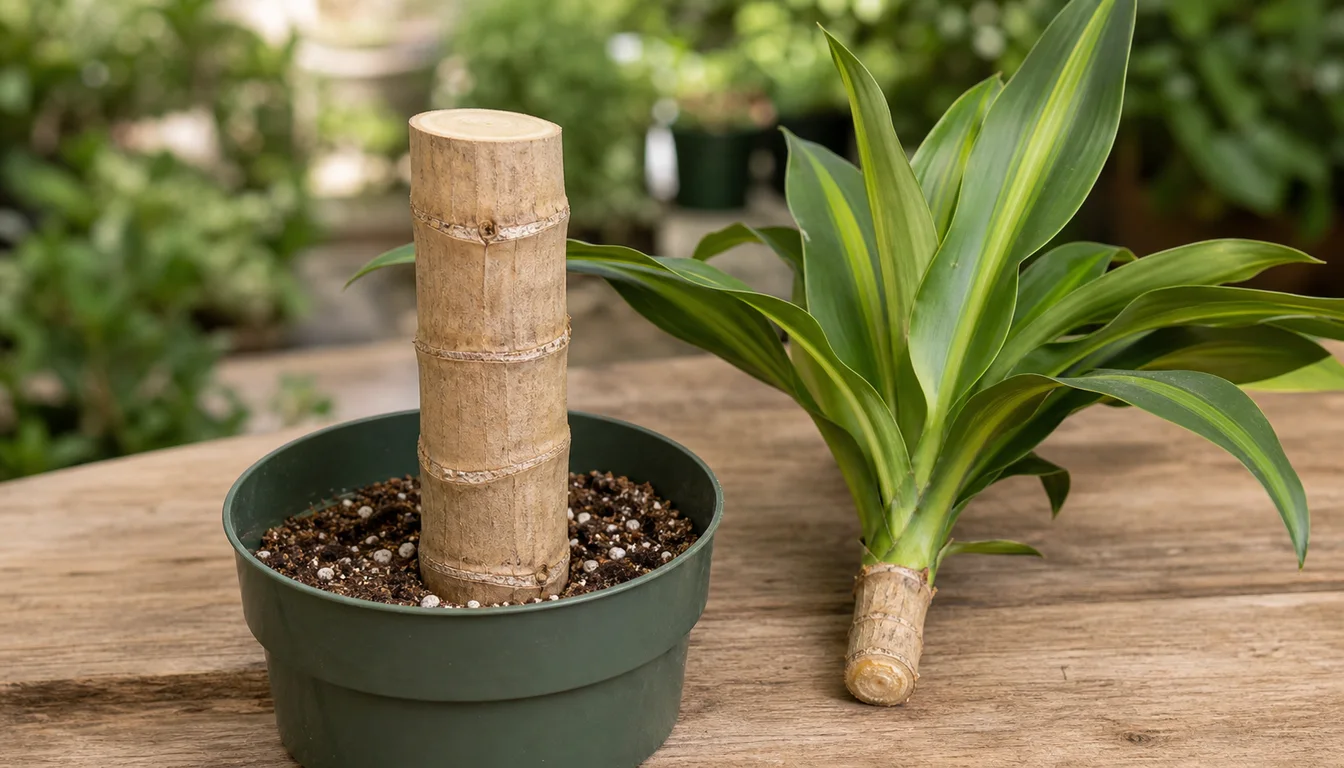
A leafy top and sections of sound cane can serve as cuttings. They need to form roots while avoiding prolonged saturation. Firm tissue is a starting observation rather than a guarantee of viability, and decaying pieces are unsuitable for continued propagation.
Air layering keeps a chosen crown attached to the parent while roots form around a prepared section of stem. It can be useful for a large top that you want to retain, though it requires a separate rooting setup and enough roots before detachment. It is not a cure for a diseased parent.
Leaf-cutting advice for former Sansevieria plants does not transfer to these woody canes. Some variegated snake-plant cultivars also fail to keep their pattern through leaf cuttings. Species and cultivar therefore matter when choosing a propagation method.
Keep Every Dracaena Cutting Away From Pets
ASPCA lists Dracaena species as toxic to dogs and cats because they contain saponins. Reported effects include vomiting, drooling, reduced appetite, and depression, with dilated pupils also reported in cats.
A high shelf may still be accessible to a climbing animal. The whole arrangement needs to stay beyond reach, including fallen leaves, cut cane pieces, and material set aside for propagation.
If a pet may have chewed the plant, remove access and contact a veterinarian or animal poison service promptly. The plant name or a clear photo helps them identify the exposure. Do not wait for the full list of symptoms to appear.
Houseplants listed as non-toxic can offer alternatives where access cannot be controlled. Their listing still has an animal and plant-species scope, and it does not mean plant material is food.
Sources & References
- North Carolina Extension Gardener Plant Toolbox - Dracaena
- ENH892/EP149: Cultural Guidelines for Commercial Production of Interiorscape Dracaena
- ASPCA - Dracaena Toxicity to Cats and Dogs
- Royal Horticultural Society - How to Grow Dracaena
- University of Minnesota Extension: Insects on Indoor Plants
- University of Georgia Extension, Growing Indoor Plants with Success, Bulletin 1318
Related Plants
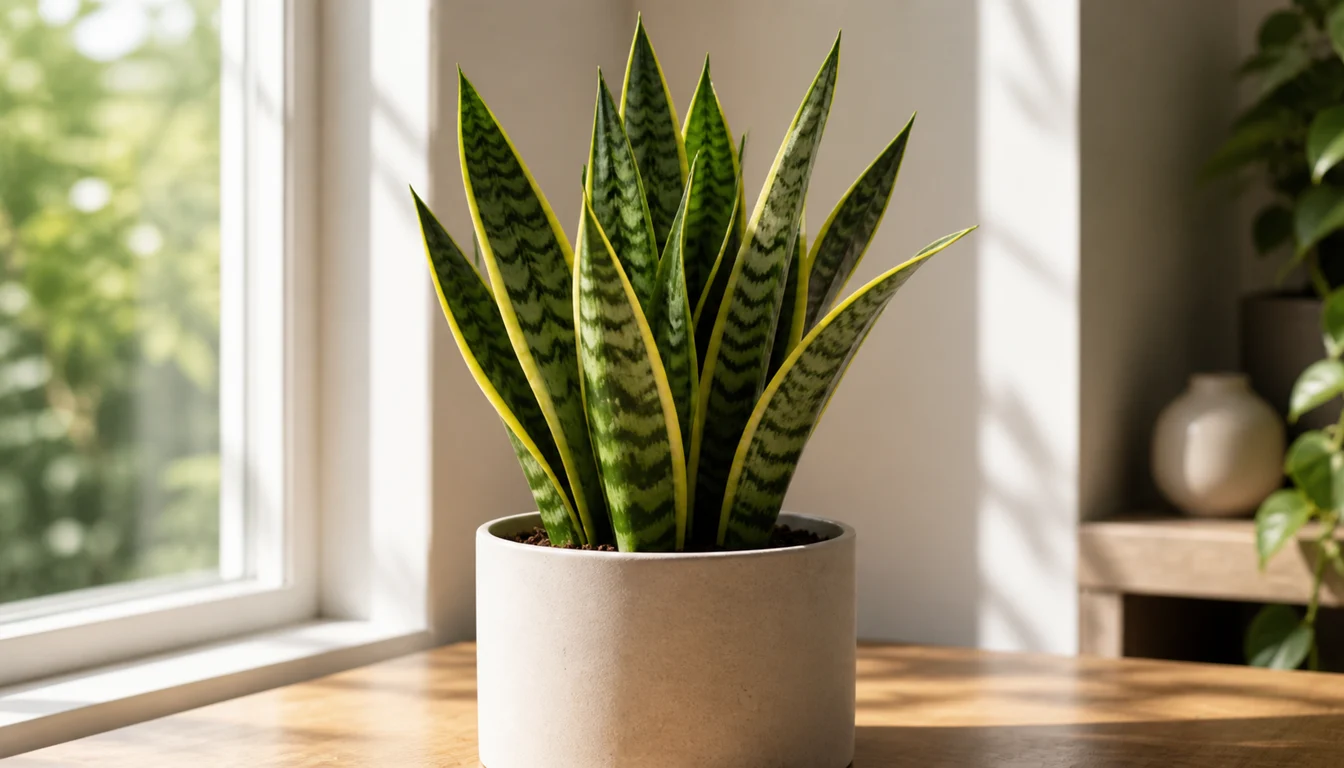
Snake Plant
A succulent-leaved member of the modern Dracaena group that needs a much drier care pattern.
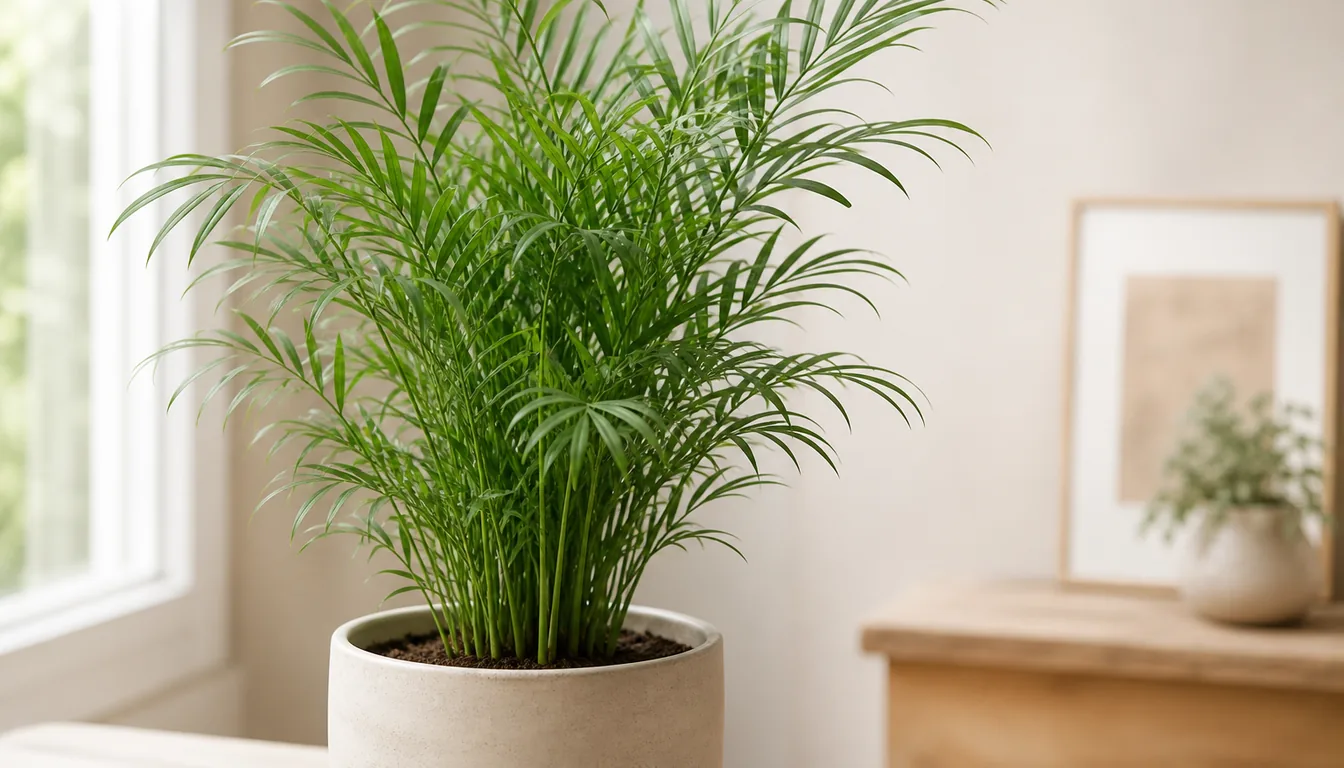
Parlor Palm
A finer-leaved alternative that ASPCA lists as non-toxic to dogs and cats. The listing does not make it edible.
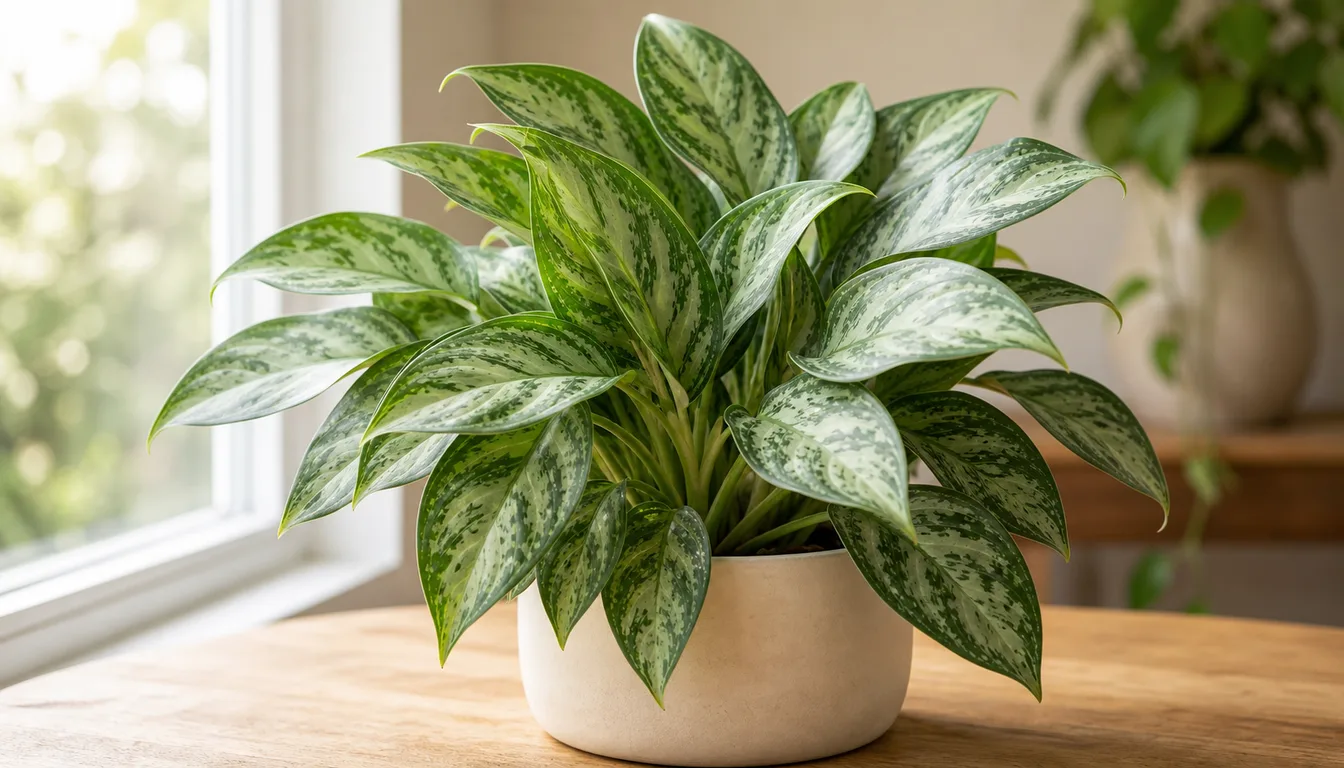
Chinese Evergreen
A broad-leaved option for a warm room where a tall cane shape is not wanted.
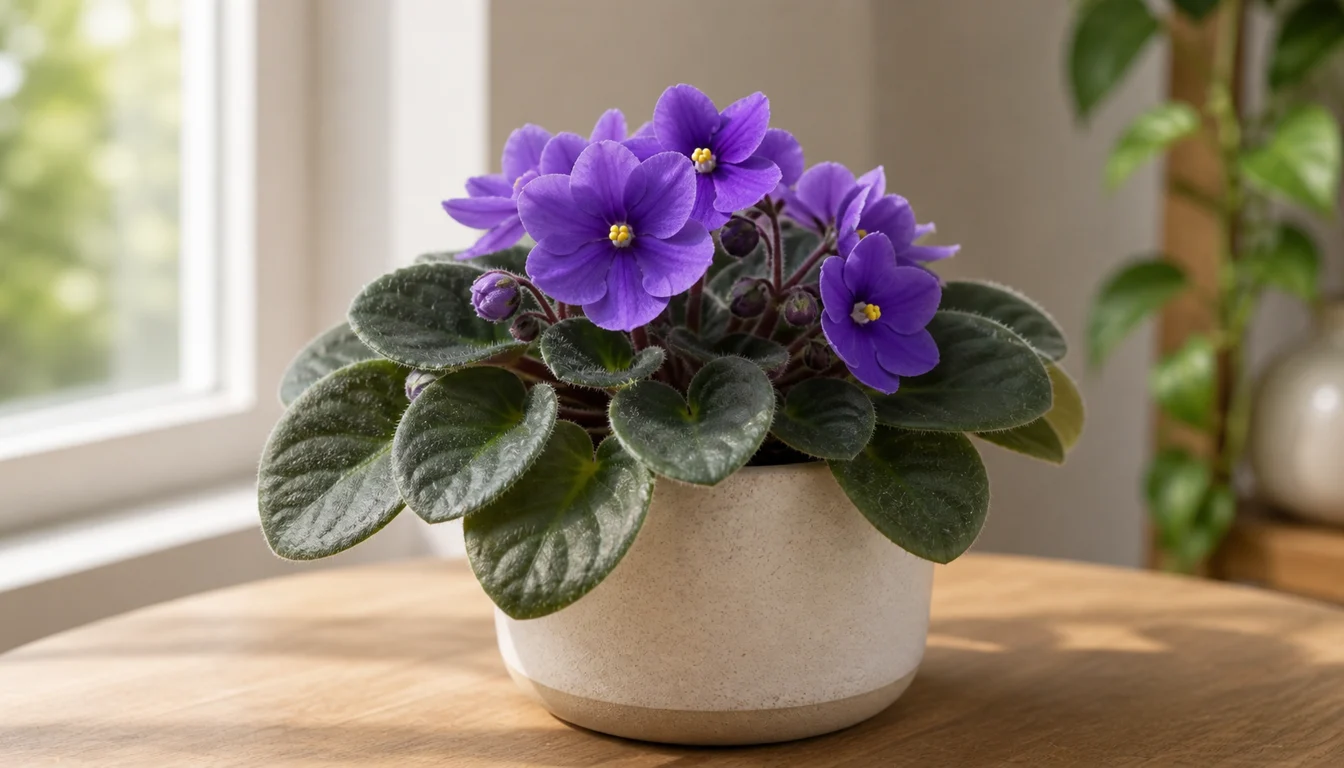
African Violet
African Violet is a windowsill bloomer that rewards steady, small-pot care.
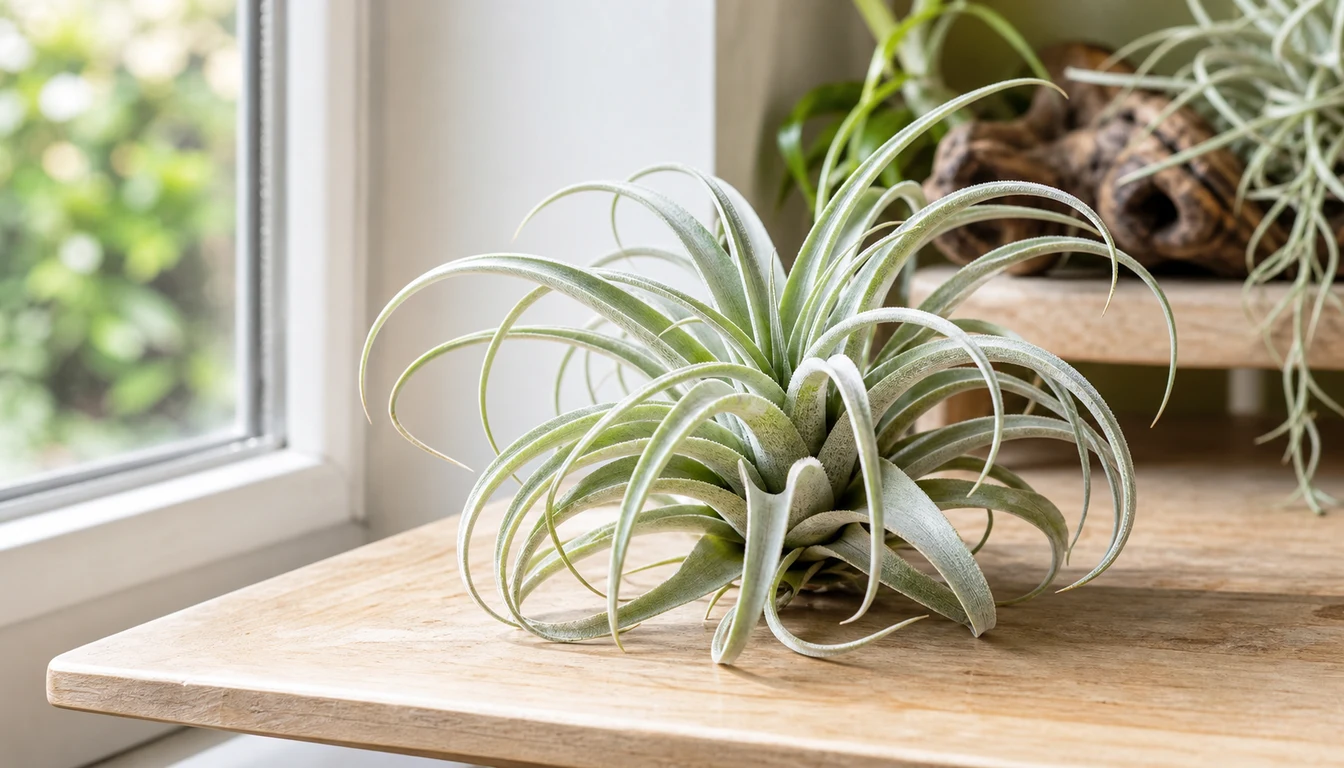
Air Plant
Air plants are living sculptures that thrive without soil, anchoring to driftwood, rocks, or shells while drawing…
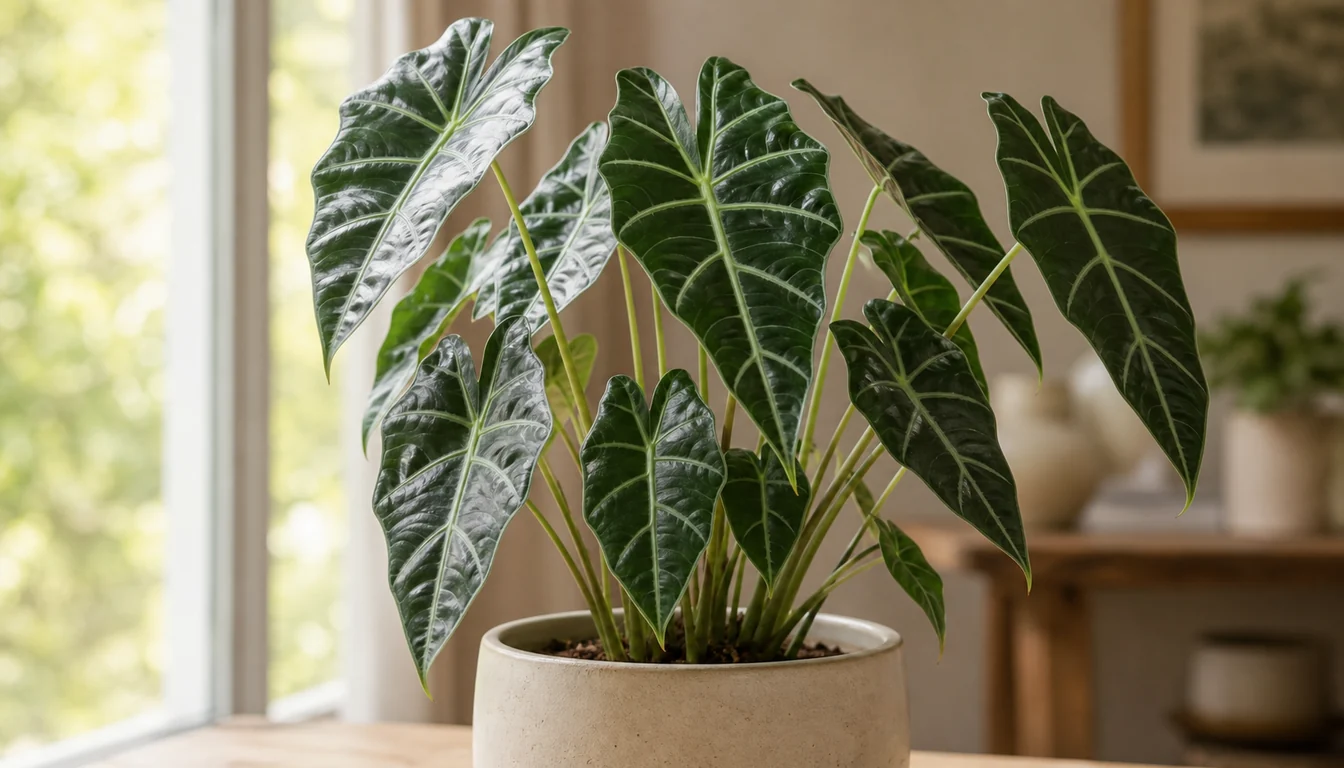
Alocasia
Alocasias include compact, textured houseplants and large elephant ears that need substantial floor space.