
Best Time to Water Indoor Plants for Healthy Growth
Most indoor plants die from watering at the wrong time, not from black thumbs. Timing affects how fast soil dries, how roots breathe, and how likely fungus shows up; once you match watering time to your home's light and routine, plants behave much better.
This guide breaks down morning vs evening watering, how timing shifts between winter radiators and summer AC, and what to do for thirsty plants like peace lilies. Tougher types like snake plant clumps can wait longer. For most houseplants, morning is the safest watering window because the root zone gets light, warmth, and airflow afterward.
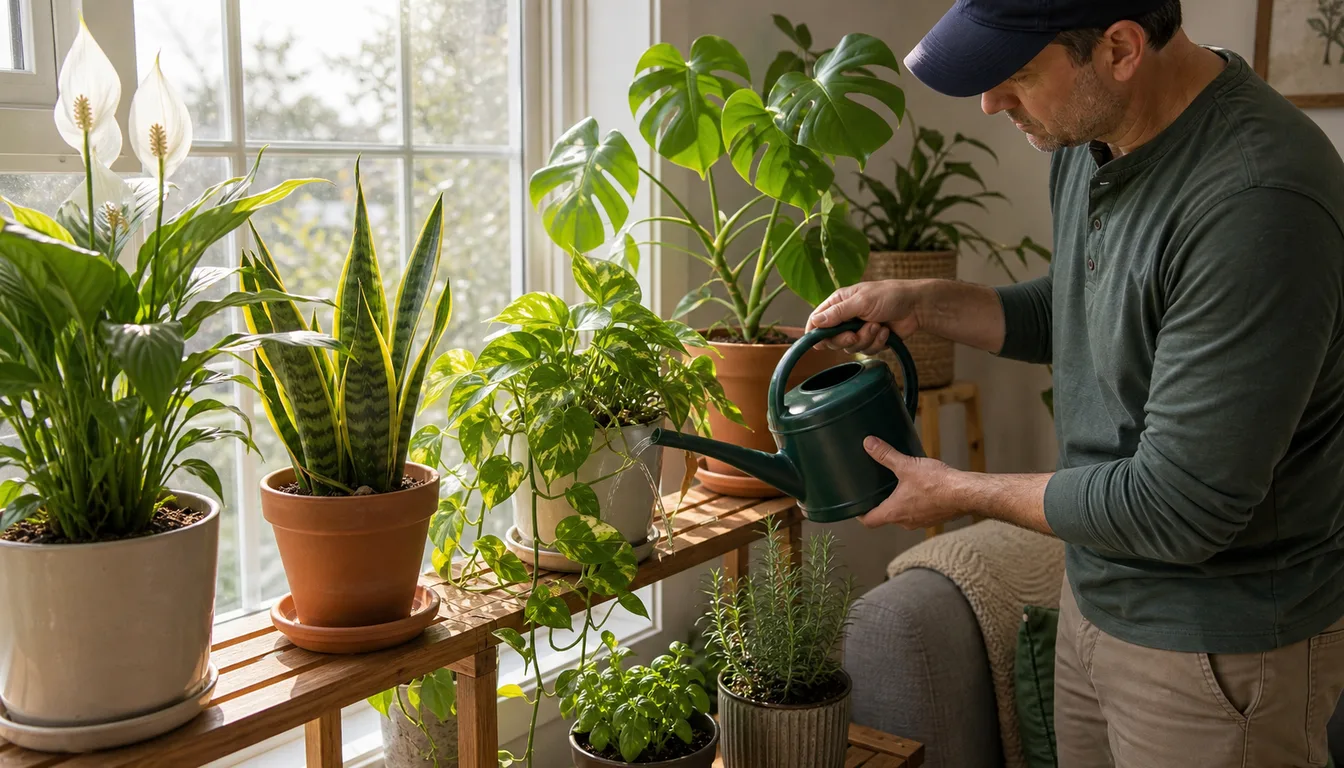
Why Time of Day Matters Indoors
The clock matters because roots need both moisture and oxygen. Right after watering, soil pores fill with water, then they slowly reopen as water drains and evaporates. Good timing means the soil spends more hours in that airy, 'just moist' zone.
Indoor air stays cooler and more humid overnight, so freshly watered soil dries very slowly. That sluggish drying is exactly what leads to root problems on plants like ZZ stems. Monstera vines react the same way when the pot stays wet too long.
During the day, sunlight and room activity warm the room slightly, even in winter. Warmer air pulls moisture out of the pot faster. That mild daytime drying keeps roots from sitting in cold, soggy soil for 12 straight hours.
More indoor plants rot from staying wet too long than from briefly drying out. Once you see watering as wet time vs air time, choosing the right part of the day becomes obvious.
- Root goal: Soil spends most hours barely moist, not soaked
- Problem window: Long stretches of cold, wet soil overnight
- Best window: When plants have light and air movement
- Worst combo: Heavy watering plus dark room for 10+ hours
Morning vs Evening: The Simple Rule
For almost every indoor plant, early to mid-morning is the safest time to water. The soil gets a full day to drain and warm slightly, while foliage dries before night. That combo keeps fungus gnats, mildew, and rot in check.
Watering late at night is riskier, especially for moisture lovers like peace lily clumps or big pots of fiddle leaf fig. Cold, wet soil with no light means roots sit stressed for hours. Do that several nights in a row and yellow leaves usually follow.
If mornings are chaotic, late afternoon works fine as long as your plants still get a few hours of light. Think 'before dinner,' not 'right before bed.' Aim to finish watering at least 3 hours before your room goes dark.
If you must water at night, give only a light drink and plan a deeper watering on your next morning window.
Use the window below as a risk scale, not a rigid alarm clock.
- Best: 7-11 a.m. while rooms are bright
- Good backup: 3-6 p.m. with curtains open
- Risky: After dark in cool rooms
- Skip: Cold basements with no windows
Adjusting for Seasons, Heat, and AC
Indoor seasons do not follow the calendar, they follow your heating and cooling. In winter, forced air heat and wood stoves dry rooms fast, so soil can swing from soaked to bone dry in a few days near a vent.
Summer AC cools and dries air differently. Some corners stay muggy and barely dry out, especially around big leafy plants like monstera pots. Hanging spider plant baskets can dry faster even in the same room.
In heated winters, morning watering is still best, but you should expect faster drying near vents and radiators. That means checking soil more often, not blindly watering more often. In summer, focus on spots that never see direct sun and feel cool to the touch.
Move any plant you just watered away from blasting heat or AC for 24 hours so the root zone changes slowly, not suddenly.
Start with the room condition, then decide whether the plant actually needs water.
- Winter near vents: Check soil every 2-3 days, water only when top inch is dry
- Shady summer corners: Feel soil 2 inches down before adding water
- Bright south windows: Expect quicker morning drying, especially for smaller pots
- Humid bathrooms: Extend time between full soakings
Matching Timing to Plant Type and Pot Size
Different indoor plants prefer different drying speeds. Succulent types such as snake plant clumps, ZZ plant canes, and air plants on shelves want their roots dry for long stretches. Thirstier foliage plants like pothos vines prefer shorter dry periods. Peace lilies do too.
Small pots dry faster than big ones, no matter what is growing in them. A 4-inch nursery pot might be ready for water again two or three days after a deep drink, while a 12-inch floor pot can stay wet for over a week even with perfect timing.
Morning watering is still the default, but you can tweak how often you use that morning window. Let drought tolerant types sit an extra day or two after the soil feels dry. For thirsty plants, hit the same time of day more often so their roots get a predictable rhythm.
Keeping a consistent time matters more than hitting a exact schedule. Your plants adjust to your routine if it is steady.
Match the timing to the plant's drying style before you group pots by looks.
- Succulents and cacti: Use the morning window, then wait until soil is dry all the way down
- Tropical foliage: Water mornings when the top 1-2 inches are dry
- Big floor pots: Expect slower drying, even with perfect timing
- Hanging baskets: Check more often; they dry quicker in warm air
Reading Your Plants After Watering
The first few hours after watering tell you if the timing worked. Check the top 1-2 inches of soil a few hours later and again the next morning.
If the surface is still soggy by midday, your plant either needs more light or a different watering time. Fast drying with drooping leaves means you watered too late or too lightly.
Different plants react at different speeds. A thirsty peace lily container may perk up within an hour, while a thick-stemmed rubber tree indoors can take most of the day to show changes.
Overwatering symptoms often show up days later, so keep notes on what you did rather than guessing.
Watch leaves the next morning. Standing water time plus low air flow around dense foliage, like a big monstera specimen, can cause yellowing and fungal spots if you always water late.
Healthy response looks similar across most houseplants. Leaves feel firm, stand more upright, and new growth at the tips looks slightly larger within a week.
A moisture meter can confirm your schedule. Aim for numbers in the middle of the scale for average foliage plants, and the low side for drought lovers like snake plant clumps.
Keep a simple log with date, time of watering, and how the plant looked two days later. A written log beats 'I think I watered last week' every single time.
- Check soil: 3-4 hours after watering and the next morning
- Watch leaves: Look for perkier growth within 24 hours
- Note changes: Record any yellowing or wilting by day 3
- Adjust time: Shift watering earlier if pots stay wet past noon
Troubleshooting Wilting and Yellowing
Sudden wilting right before your usual watering time usually means the plant is simply thirsty. Consistent wilting even on your watering day points to poor timing, wrong pot size, or root problems.
Check soil first. If it is dry 2 inches down and the pot feels light, dehydration is the likely cause. If soil is damp or smells sour, you are probably watering too late in the day and too often.
Soft stems with yellowing leaves on plants like pothos vines often trace back to evening watering and slow drying. That combination invites root rot far more than an occasional late drink.
If only the lower leaves are yellowing on a plant such as zz plant stems, look at frequency and timing together. These plants hold water in rhizomes and often suffer from water schedules meant for tropicals.
Never fix yellow leaves by adding more water unless the soil is clearly bone dry.
Distinct brown patterns can help you sort timing issues from other problems. Crisp brown tips on snake foliage are often from chronic underwatering or low humidity, not just bad timing.
Brown spotting on a plant like monstera foliage with still-damp soil hints at either overwatering or a separate disease issue. Check guidance on brown spots on monstera if you see patchy lesions.
If leaves yellow in streaks on trailing types like heartleaf philodendron, compare your schedule to this habit. Marble queen pothos follows the same pattern. These vines prefer morning watering and at least partial drying before sunset.
- Dry and limp: Water in the morning and increase volume slightly
- Wet and limp: Skip watering, increase airflow, and check drainage holes
- Yellow lower leaves: Reduce frequency, not just change time
- Spotted patches: Inspect for disease or pests as well as timing
Coordinating Watering With Fertilizer
Fertilizer days are where timing mistakes hurt most. Roots are more sensitive when fertilizer salts hit the soil surface, so you want strong light and airflow during the hours right after feeding.
Most indoor plants handle feeding best right after a normal morning watering. Think of it as rinsing fertilizer through evenly, not dumping concentrate on dry roots.
For foliage plants like Chinese evergreen leaves, use diluted liquid fertilizer on a slightly moist root ball. Dracaena canes respond better that way too. Dry soil plus midday fertilizer greatly raises burn risk.
You can match your schedule to a broader nutrient plan by following the same rhythm you use outdoors. If you already follow a structured month-by-month lawn care habit, carry that habit over to an indoor feeding calendar.
Never fertilize a stressed or wilting plant, even at your usual morning watering time.
Slow-growing or drought-tolerant plants such as snake plant groupings and ZZ plant clumps need far fewer fertilizer days. Tie feeding only to their active season and normal watering windows.
Flowering houseplants and fruiting pots, like indoor lemon trees in containers, benefit from steady moisture on fertilizer days. Water early enough that leaves dry before night, especially under grow lights.
If you are unsure how much to feed, use a dedicated houseplant product and follow timing advice in a focused guide such as picking indoor fertilizers. Good fertilizer timing never fixes bad watering habits, it only amplifies whatever you already do.
- Water first: Light watering, then apply diluted fertilizer
- Use mornings: Combine feeding with your earliest light window
- Skip sick plants: Wait until growth looks steady again
- Rinse occasionally: Every few months, water deeply to flush salts
Timing Around Pests, Fungi, and Humidity
High humidity and wet leaves late in the day can make pest and fungus problems far worse. Timing water to reduce leaf wetness hours is one of the simplest ways to keep indoor plants cleaner.
Many apartment growers keep plants packed together on shelves. That crowding, plus late watering, traps moisture around foliage on calathea foliage. Prayer plant leaves and ferns hate that stagnant dampness too.
If you have dealt with fungus gnats before, you already know their larvae thrive in constantly damp soil. Pair a morning schedule with the soil-drying tactics in controlling fungus gnats to cut them down.
Spider mites prefer hot, dry, and dusty leaves, often under afternoon sun through windows. You can water earlier and gently rinse foliage on plants like fiddle leaf fig leaves to reduce stress and wash mites away.
Avoid soaking foliage at night unless you are following a specific pest treatment plan.
If you are actively treating pests such as mites, mealybugs, or scale, time your sprays or washes for the start of your brightest period. This gives leaves time to dry and reduces any risk of leaf burn.
Check any plant-specific pest guides you follow, such as treating spider mites indoors, and line up their recommendations with your normal watering hour.
Humidity trays or pebble trays work best when filled in the morning alongside watering. The water has all day to evaporate slowly around humidity-loving plants like Boston fern fronds without making evenings too damp.
- Crowded shelves: Water early so leaves dry in shared air
- Gnat issues: Let the top inch dry longer between waterings
- Mite pressure: Rinse dusty foliage during morning light
- Humidity boosts: Refill trays at the same time as watering
Building a Simple Weekly Watering Routine
Consistent timing beats chasing perfect theory. A repeatable routine that fits your mornings or evenings makes it more likely every plant gets checked before there is a problem.
Start by picking two set days each week for inspection, not watering. On those days, you touch every pot, check soil, and only water those that are ready.
Group similar plants together. Put thirsty tropicals like peace lily pots near each other. Spider plant baskets and monstera leaves can sit in that same watering zone so you naturally check them together.
More drought-tolerant plants such as snake plant stands, ZZ plant clumps, and jade plant pots can sit elsewhere, where you are less tempted to water daily.
Consider tying your routine to another habit, like starting coffee or feeding pets. Many people water houseplants at the same time they check outdoor beds or inspect vegetable beds in warmer months.
If you grow indoor herbs like basil containers, build them into a kitchen-based schedule. Mint windowsill pots can follow that same quick-check rhythm. These small pots dry quickly and often need checking every 1-2 days.
You can also match routines to broader plant categories. If you are still building your collection, the options in choosing easy indoor plants include many that fit well with a once-a-week morning habit.
- Pick days: Choose two consistent inspection days per week
- Cluster pots: Group by thirst, not by color or pot style
- Link habits: Pair watering with an existing daily routine
- Review monthly: Adjust timing as light and temperatures change
Pro Tips
- Set a recurring morning reminder twice a week to walk through your plants and check soil, not just water everything.
- Group thirsty plants like Pothos clusters together so you can give that corner extra attention during your watering window.
- Use your finger as a depth gauge and only water in your chosen time slot when the top inch feels dry or slightly crumbly.
- Tilt cache pots and decorative sleeves after watering so no hidden water sits at the bottom overnight.
- Skip fertilizer on late evening waterings and feed during morning sessions using a balanced product from indoor plant fertilizer picks.
- If leaves droop by nightfall, move that plant closer to the window and keep using the same morning watering pattern.
- Track a week of drying times for one pot in each room to understand how light and vents change your best timing.
- Pair your watering round with quick grooming using ideas from pruning houseplants for shape so care becomes one simple habit.
Frequently Asked Questions
Is it always bad to water indoor plants at night?
Occasional late watering will not kill a healthy plant, but making it a habit keeps soil wet longer when light and airflow are lowest. That raises the risk of fungus, gnats, and root rot, especially in dense pots or cool rooms.
What time of day is best to water indoor succulents?
Aim for mid to late morning when the room is bright and warm. Water thoroughly, then let the soil dry completely before you water again. Guides like how to water succulents help match timing and soil for these plants.
Should I mist leaves at the same time I water?
If you mist, do it during bright, warm hours so leaves dry quickly. Avoid misting at night, since water that sits on foliage can encourage fungal spots on broad leaves, especially on tropical plants that already like high humidity.
Can I water all my houseplants on the same schedule?
You can inspect them on the same days, but only water those with dry soil. Thirsty plants like peace lilies need water more often than drought-tolerant types like snake plants, even if they sit near the same window.
How do I time watering with fertilizer for indoor plants?
Water first in the morning, then apply diluted liquid fertilizer to already moist soil. This spreads nutrients evenly and lowers root burn risk. Skip fertilizer on stressed or recently repotted plants until you see steady new growth.
Sources & References
Related Guides
Best Time to Water Flowers for Stronger Blooms
Watering flowers at the wrong time does more damage than skipping a day. Good timing gives you…
10 min read
Best Time to Water Plants for Healthier Roots
Watering at the wrong time wastes water and stresses plants, even if you are generous with the…
11 min readCan an Overwatered Plant Recover? Check the Roots First
Wilting leaves, soggy soil, and that swampy smell usually point to one problem, too much water. The…
11 min read