
How to Grow a Jade Plant Into a Shrub or Small Tree
Crassula ovata Crassulaceae
Jade Plant is a branching succulent that becomes woody with age. Bright light, a draining root zone and watering that follows actual drying support its growth, whether you prefer a low shrub or a small tree form.
Pruning changes the outline, while moisture, light and root condition determine whether new growth can support it. A thick trunk does not make the plant immune to drought or root damage.
Care snapshot
Woody Growth and the Shape of an Older Jade
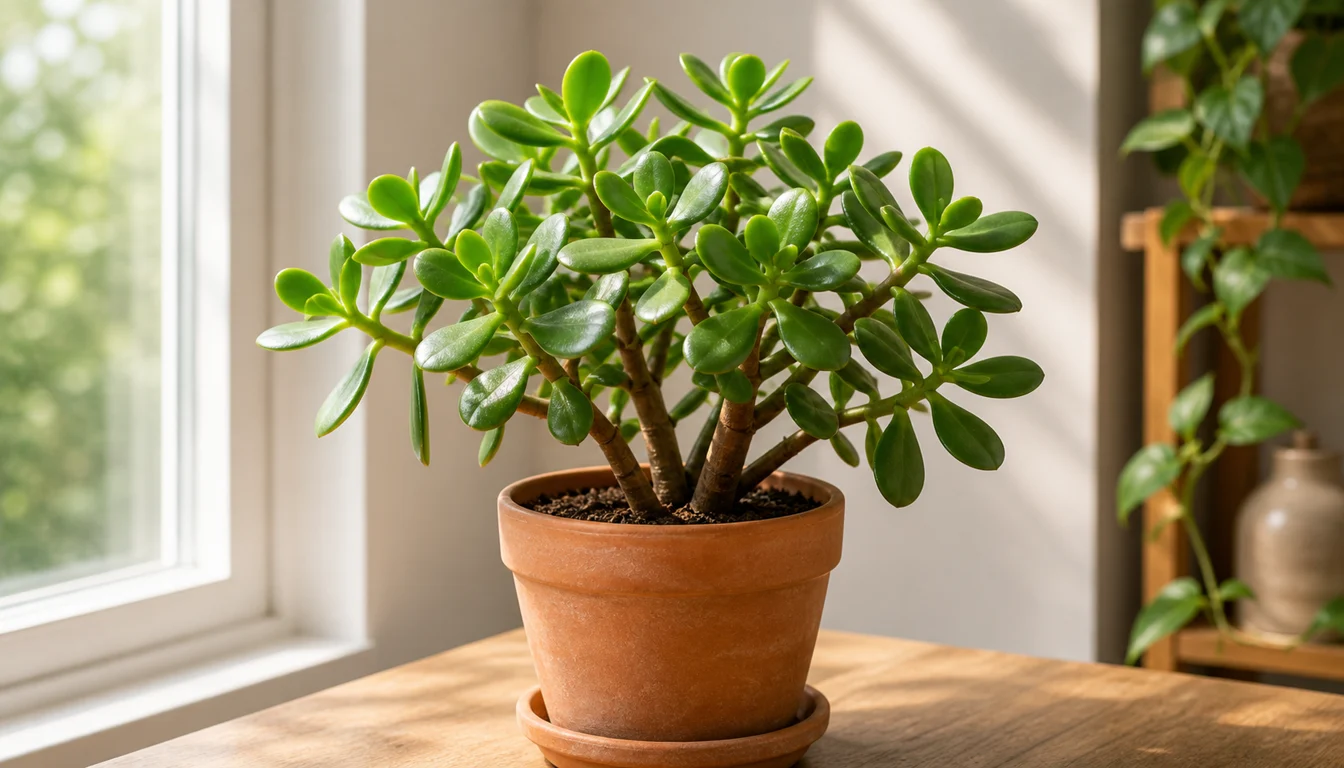
Crassula ovata is a South African succulent shrub in the stonecrop family. New stems are green and fleshy, then become brown and woody as they age. Older bark can peel in small strips, so a changing surface texture is not automatically decay.
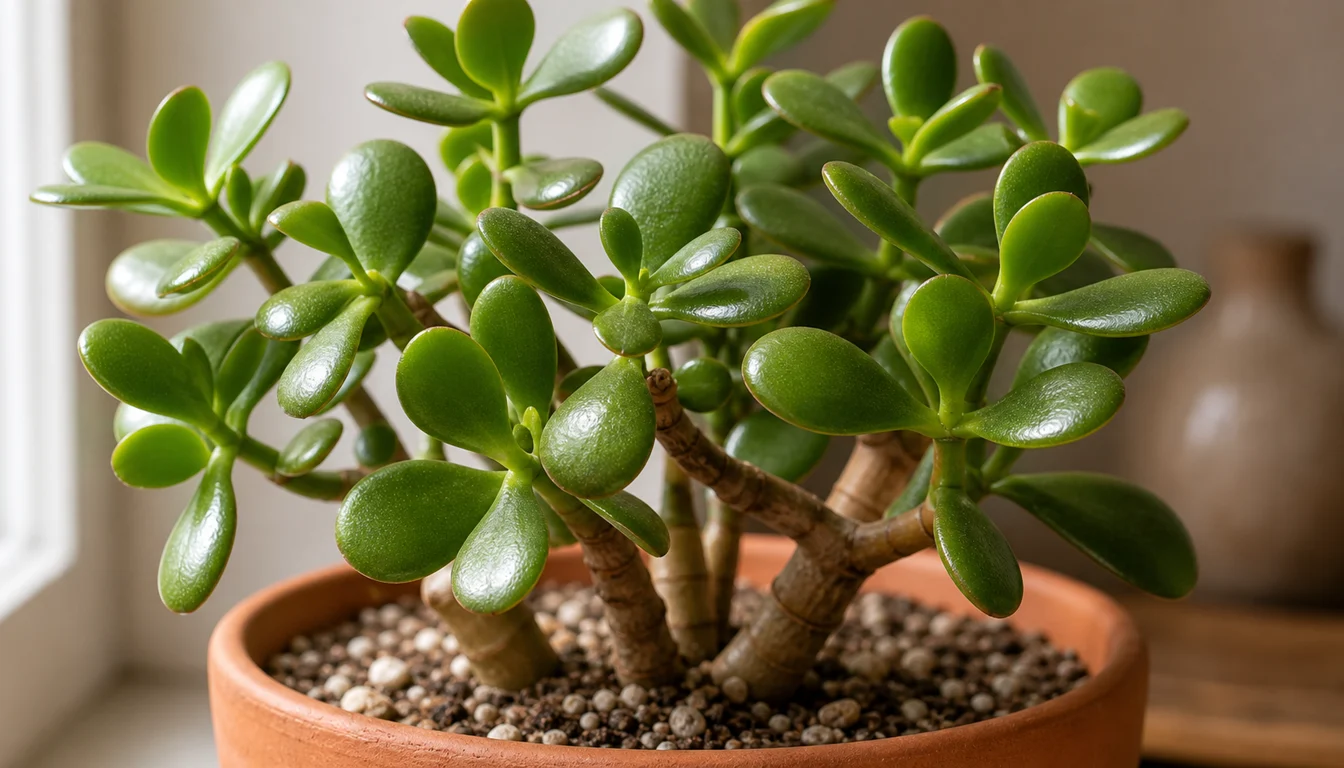
The thick leaves grow in opposite pairs, with successive pairs turned relative to one another. Older stems may lose lower leaves as foliage becomes concentrated near their tips. That normal development needs to be distinguished from sudden widespread leaf loss or collapsing tissue.
A tree-like specimen, a low branching shrub and a bonsai-style plant are all possible forms. The choice affects which branches are retained, but a bushy jade is not a failed tree. Pruning redirects the shape, while light and roots sustain the new growth that follows.
This upright framework differs from Donkey Tail, whose stems eventually hang beneath their pot. Both are succulents, but a jade owner must account for branch weight and canopy balance rather than protecting long hanging trails from contact.
- Standard oval-leaved forms
- Thick opposite leaves and a progressively woody framework make the branch structure visible.
- 'Hobbit' and 'Gollum'
- Curled or tubular leaves change the appearance without making these separate care categories.
- 'Sunset' and 'Tricolor'
- Colored or variegated foliage affects recognition. Leaf color also varies with growing conditions, so color alone does not establish a cultivar.
A young plant does not need an artificially thick trunk to be worth growing. Sound stems, an established root system and new growth suited to its position provide a more useful starting point than a dramatic shape that cannot be maintained in the available light.
Jade and Pachira Share a Common Name
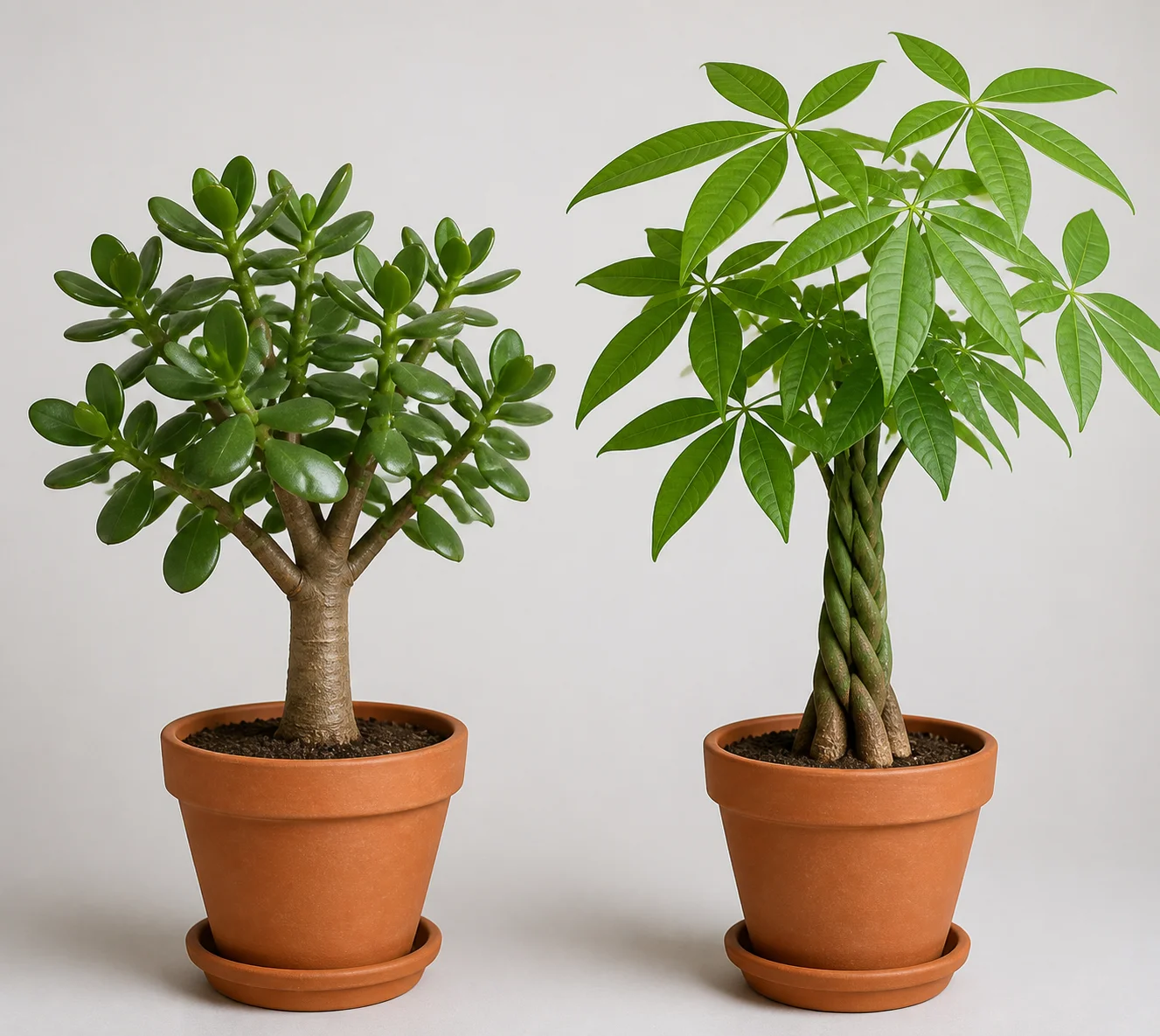
Jade is sometimes called money plant or money tree. Money Tree, Pachira aquatica, is a different species in the mallow family, so the shared nickname does not establish a shared watering routine.
Jade has thick individual leaves, usually oval in the familiar forms. Pachira has palmately compound leaves whose leaflets spread from a common point; NC State describes five to nine leaflets. Some Pachira plants have braided trunks, but an unbraided plant can still be Pachira.
Pachira's wetland habitat does not mean that a houseplant pot can remain waterlogged. NC State describes moist, well-drained container conditions and warns against standing water. Jade has a different drying cycle, so the useful comparison is each plant's root-zone condition rather than a shared day for watering.
The botanical name on a label helps resolve the overlap. Older jade labels may use Crassula argentea, which NC State lists as a synonym of C. ovata. That synonym also connects the ASPCA toxicity record to the plant described here.
Bright Light and Gradual Changes in Exposure
Jade grows best in bright light and can take direct sun after acclimation. Wisconsin Extension recommends several hours of direct light, while noting that it can grow in bright indirect light. A dim position may sustain the plant without producing the compact new growth wanted for a dense canopy.
A window's direction does not measure the light reaching the leaves. Nearby buildings, tree shade, glass treatments and the plant's distance from the window all matter. A broad canopy can also shade its own lower branches, so the top and interior may grow differently.
A plant brought from a shaded store into strong sun needs a gradual transition. A move outdoors changes exposure more abruptly than a small indoor adjustment, and leaves formed in the old conditions can be injured. New bleached or dry patches after that move deserve attention even if the plant is otherwise firm.
Red leaf margins can occur in strong light, and colored cultivars complicate the picture further. Recent exposure, tissue condition and new growth help distinguish ordinary color changes from a plant that is declining.
Spacing between newly formed leaf pairs can help compare growth before and after a light change. Existing stems do not become shorter when conditions improve. An older bare branch may reflect ordinary leaf loss with age, so it is worth tracing where the change began before cutting it back.
Supplemental lighting can help where a window is insufficient, but a universal distance and operating time would ignore the fixture's output and coverage. Its instructions and the actual canopy response are more useful than treating every lamp as equivalent.
For a room with less light, Snake Plant or ZZ Plant may offer a different fit. Their tolerance of lower light does not mean that any plant can grow without an adequate light source.
Watering Follows Drying and Root Function
Jade stores water in its leaves and stems, yet prolonged drought can cause leaf damage and loss. Wisconsin advises allowing the mix to dry slightly between waterings during active growth and restricting water in winter. The aim is a recurring drying interval, not keeping the plant desiccated until its leaves fall.
The same interval can be too short in a cool, shaded room and too long in a warm, bright one. Pot size, root volume and the mix also affect drying. A rough summer or winter schedule can conceal those differences rather than resolve them.
Moisture below the surface, pot weight and the plant's condition work together. A lighter pot with drying mix provides different evidence from wrinkled leaves above persistently wet roots. Root injury can reduce water uptake and produce drought-like symptoms even when more water is already available.
- Drying mix and an otherwise stable plant
- Water evenly through the root zone and let excess drain away. Severe shriveling is not a required trigger.
- Wet mix with yellowing or declining growth
- Check drainage and changes in conditions before adding more water. The symptoms do not identify a pathogen.
- Runoff while the center remains dry
- Water may be bypassing contracted mix. Effective wetting needs checking rather than assuming that runoff completed the job.
Leaf firmness is useful context but not a meter. A naturally thick leaf may remain firm through part of the drying cycle, and a damaged root system can leave leaves soft despite wet soil. The distinction between overwatering and underwatering therefore depends on the pot as well as the foliage.
Supporting the Canopy Without Oversizing the Root Zone
Older branches can make a jade top-heavy. A heavier draining container or a stable outer pot can improve balance, but canopy weight alone does not prove that the roots need more space. Extra unused mix can stay wet while a small root ball uses relatively little water.
Jade can remain root-bound for years. Root crowding, the condition of the mix and whether watering still works are relevant to repotting, rather than a rule that every visible root requires a larger pot. A modest change in root volume may be enough when more space is actually needed.
A porous mix needs both air space and some moisture retention. Coarse amendments can change those properties, but a fixed half-and-half recipe cannot account for every bagged base mix or room. A decorative gritty surface also says little about the material surrounding the roots below it.
- Inspect the root ball and drainage before deciding whether to increase pot size or simply improve stability.
- Prepare a container with drainage and a suitable porous mix, keeping the stem at an appropriate depth rather than burying a soft base.
- Support the canopy while placing the root ball so the trunk is not used as a handle.
- Water sparingly during reestablishment and check actual moisture. Wisconsin recommends repotting as new growth begins and avoiding persistently wet conditions around disturbed roots.
Unglazed clay can lose moisture through its walls, unlike a glazed or plastic container. That changes the drying rate, but material alone does not make a pot safe from overwatering. Drainage, mix volume and the watering response still determine what the roots experience.
Pruning and Two Ways to Start a New Plant
Pruning changes the balance between the trunk and its branches. Shortening a branch back to a suitable lateral branch preserves a direction for growth, while removing an entire branch opens a larger gap. A low shrub may need little shaping, and an older tree form may need only a specific overextended branch reduced.
Adequate light supports the growth that follows a cut. Pinching a young shoot can encourage branching, but neither pinching nor cutting above a leaf pair guarantees exactly two shoots. The plant's condition and available buds affect the response.
Stem and leaf cuttings are both valid propagation methods. A stem cutting retains a branch structure, whereas a leaf begins a much smaller plant. Choosing a stem makes sense when shortening an existing branch; a sound fallen leaf can provide a start without removing more growth.
- Select sound material and a clean cutting tool. Soft or decaying tissue is unsuitable, and an apparently normal cutting from a declining plant still needs observation.
- Let the cut or detached end dry for several days before planting, as described by Wisconsin Extension.
- Place a prepared stem in a well-drained propagation mix, or rest a leaf with its base contacting the surface. Deep burial is not needed for a leaf start.
- Keep the mix from remaining wet while roots develop. Watch for establishment and new growth rather than repeatedly lifting the cutting to check it.
Rooting can be quicker during active summer growth, but a promised number of weeks would hide differences in conditions and material. The first roots are also not the same as a fully established plant ready for a mature jade's watering routine.
The broader principles for pruning houseplants help with choosing cuts and keeping tools clean. For jade, retaining a balanced framework and useful foliage usually gives a clearer reason for a cut than shortening every branch to match.
Detached leaves remain a pet exposure risk even when they are being saved for propagation. A protected tray and prompt cleanup of discarded material are part of the procedure, not just a concern for the parent plant.
Interpreting Leaf Loss Before Choosing a Treatment
Some lower leaves drop as a jade ages. Sudden widespread loss, collapse or a change following cold, stronger light or a spray deserves a different response. The sequence of events can be more informative than sorting every fallen leaf into a single texture category.
- Recent handling and a few detached leaves
- Contact may explain the loss, especially if the remaining growth is stable.
- Wrinkling above dry mix
- Inadequate water is plausible. Check whether previous watering reached the root zone.
- Decline above persistently wet mix
- Poor aeration and impaired uptake need consideration. More water may worsen the conditions.
- Soft roots or tissue that slips away
- These findings are concerning, but root color alone cannot diagnose the cause or certify the remaining roots.
A first inspection can cover the leaves, exposed stem base, drainage and moisture without unpotting the plant. Continued decline or a soft base can justify examining the roots. Fine-root injury can occur beyond a stem base that still looks normal, so cutting into the trunk is not a useful first test.
If decay is severe, disposal may be more appropriate than trying to retain every part. Separate candidate cuttings from the affected plant and monitor them. Pale roots, a green cut surface or temporary leaf firmness do not establish that those cuttings are disease-free.
Mealybugs can collect at leaf joints, while scale may appear as attached bumps along stems. Mites and other pests are also possible. Visible insects and their pattern of damage help identify the target before treatment. Normal woody bark and leaf scars do not need pesticide.
A pesticide label must allow the intended use, and a small-area test helps reveal injury to the plant. Wisconsin notes that jade leaves can be damaged by insecticides, so an unexplained spot after spraying is not automatically evidence that the pest problem has intensified.
Cooler Seasons and the Possibility of Flowers
When light and growth decline, the same watering routine can keep the roots wet longer. That change calls for a slower response based on drying, while sustained drought can also damage the plant. Winter care is not a choice between constant moisture and withholding all water.
A bright position away from freezing temperatures protects the foliage. Outdoor plants need gradual acclimation to stronger light and a return to shelter before frost. A USDA zone cannot specify the temperature at a particular window or the date a movable pot needs to come indoors.
Mature jade can produce clusters of small white to pale pink star-shaped flowers. Wisconsin describes several weeks of cool fall conditions, restricted watering and long nights as conditions that may encourage bloom. It suggests nights around 55°F, but this is a flowering treatment, not a minimum temperature guarantee or a reason to expose a plant to frost.
Long nights are part of that flowering response. Indoor conditions may not provide them consistently, and not every mature plant blooms. A healthy jade kept for its foliage does not need to be stressed into flowering.
Feeding follows active growth and the product's directions. Adding fertilizer to compensate for dim light or declining roots does not correct either cause. Once growth resumes, watering and feeding can be adjusted to the plant's actual conditions.
Pet Toxicity Includes Fallen Leaves and Cuttings
ASPCA lists jade as toxic to dogs, cats and horses, using the name Crassula argentea. NC State documents that name as a synonym of Crassula ovata. The listing's toxic principle is unknown, and its reported signs include vomiting, depression and incoordination.
The listing does not establish a safe amount, a reliable time before symptoms begin or a guarantee that an exposure will be mild. Symptoms also do not identify the plant by themselves, so a common-name label is less useful than the botanical identity.
Fallen leaves, pruning debris and propagation trays can be within reach even when the parent pot is not. A location inaccessible to the animals in the household and cleanup after handling reduce those opportunities. Plant material should not be offered as food.
For a different succulent-like form, Christmas Cactus has a non-toxic animal listing within its own species scope. It also has different growth and watering needs, so replacing a jade involves a care decision as well as an exposure decision.
Sources & References
- University of Wisconsin Extension: Jade Plant, Crassula ovata
- NC State Extension: Crassula ovata
- ASPCA: Jade Plant (Crassula argentea)
- NC State Extension: Pachira aquatica
- University of Maryland Extension: Overwatered Indoor Plants
- University of Maryland Extension: Root Rots of Indoor Plants
- University of Illinois Extension: Watering Houseplants
Related Plants
Aloe Vera
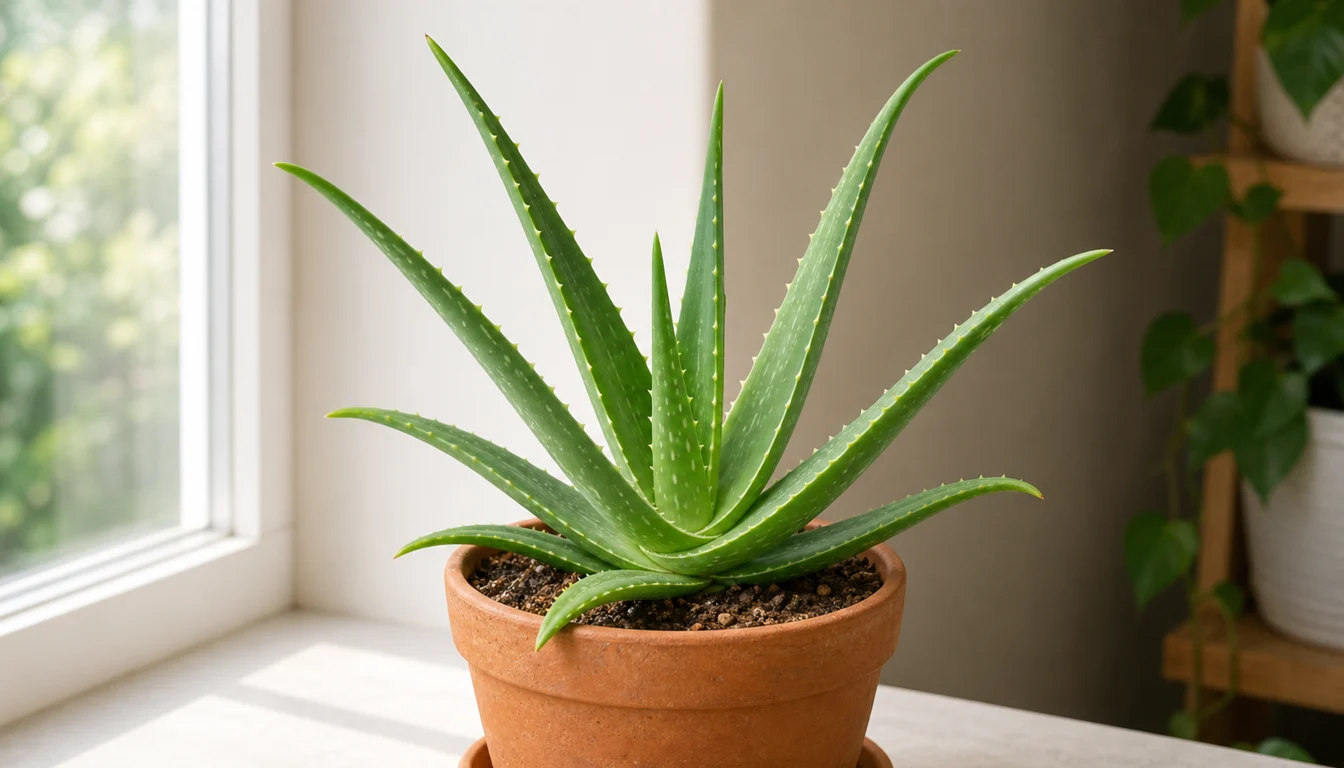
A rosette-forming succulent with a different leaf structure and exposure concerns.
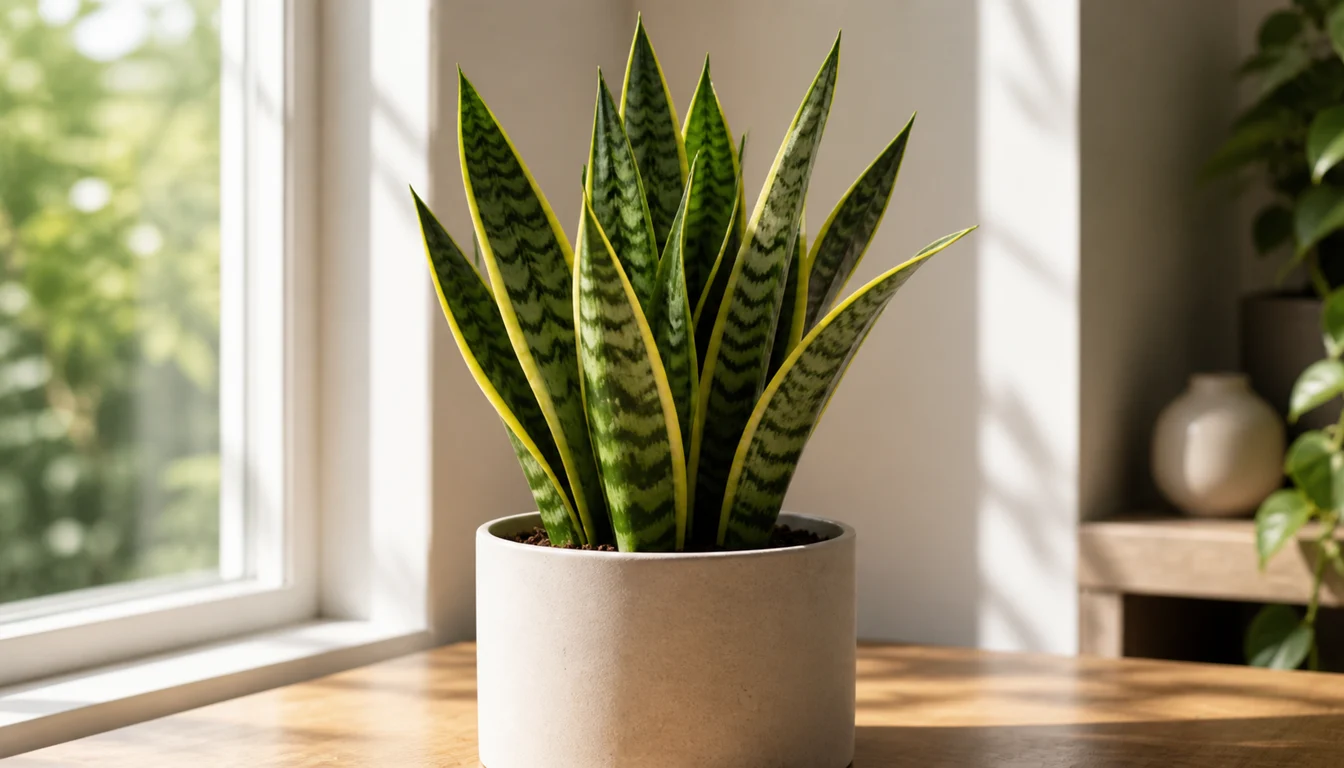
Snake Plant
An upright houseplant with strap-shaped leaves and tolerance of lower light.
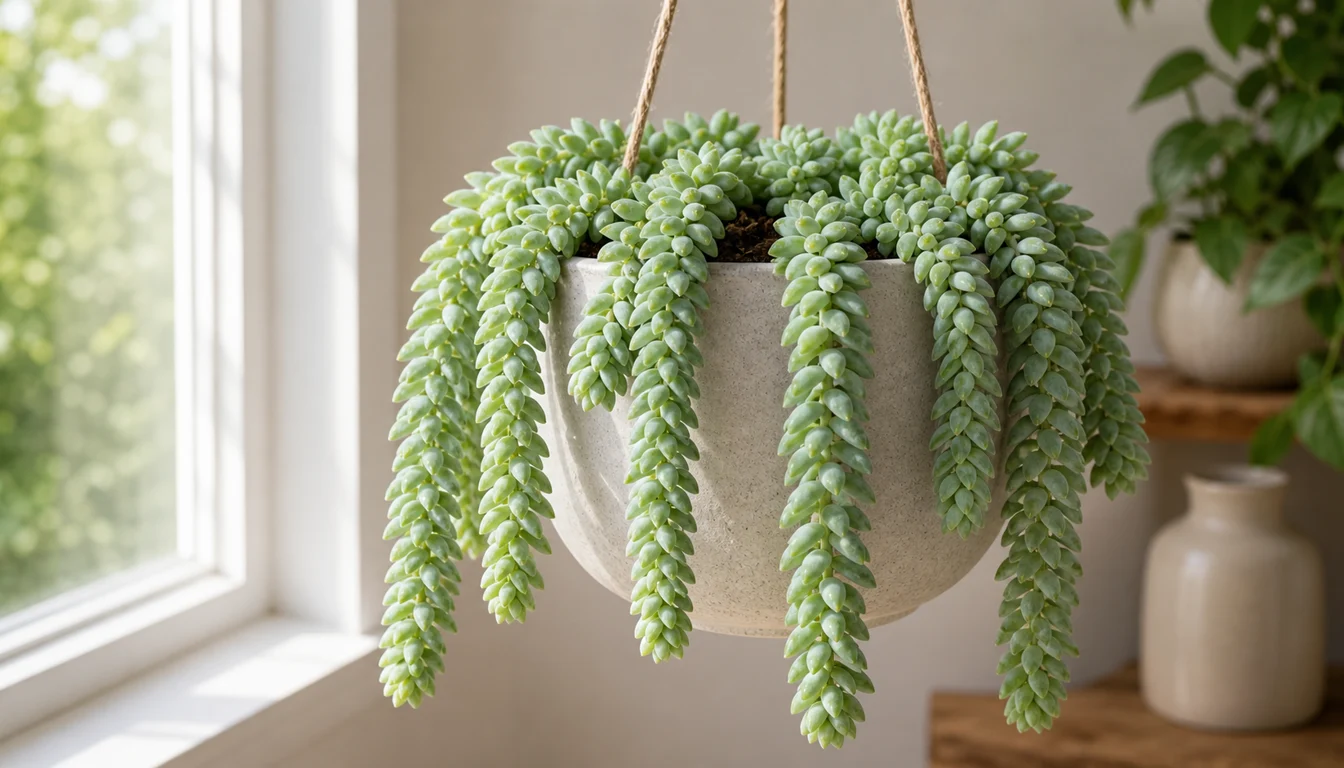
Donkey Tail
A Sedum with fragile hanging stems rather than an upright woody framework.
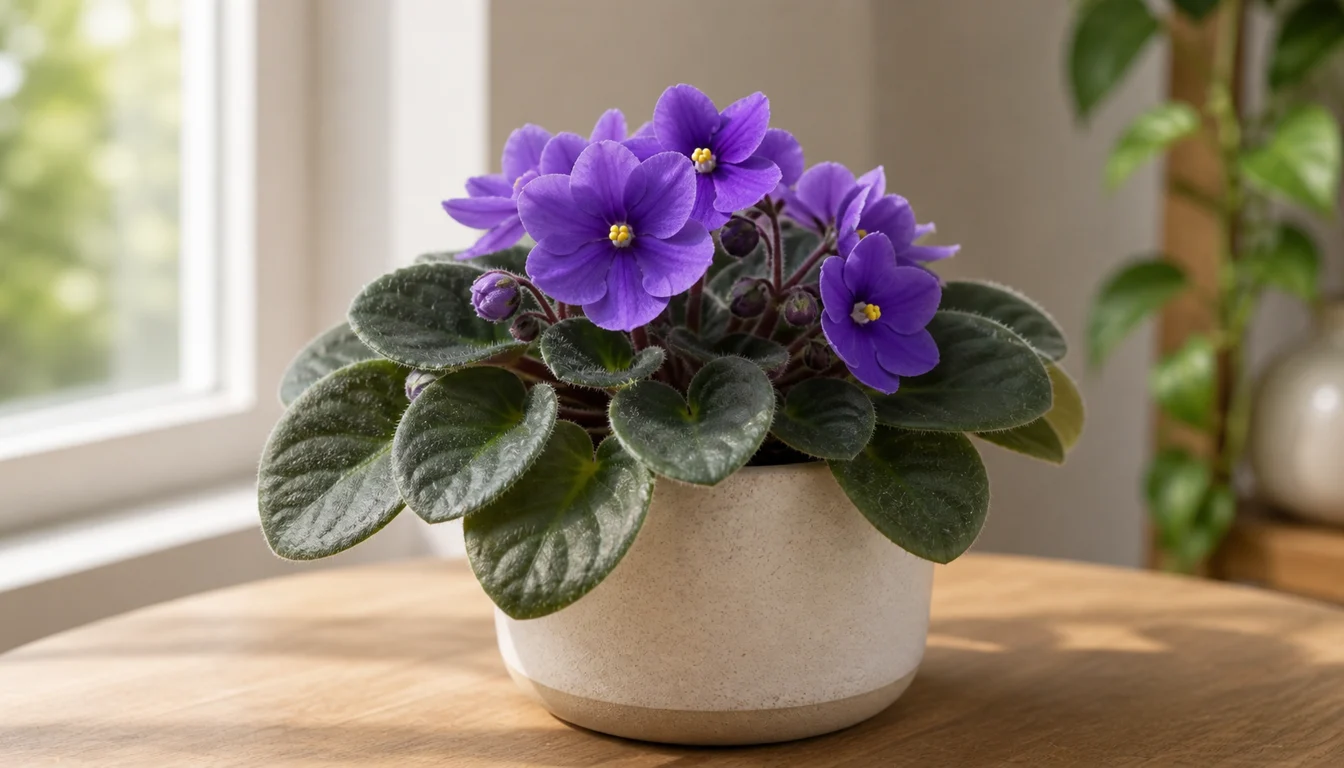
African Violet
African Violet is a windowsill bloomer that rewards steady, small-pot care.
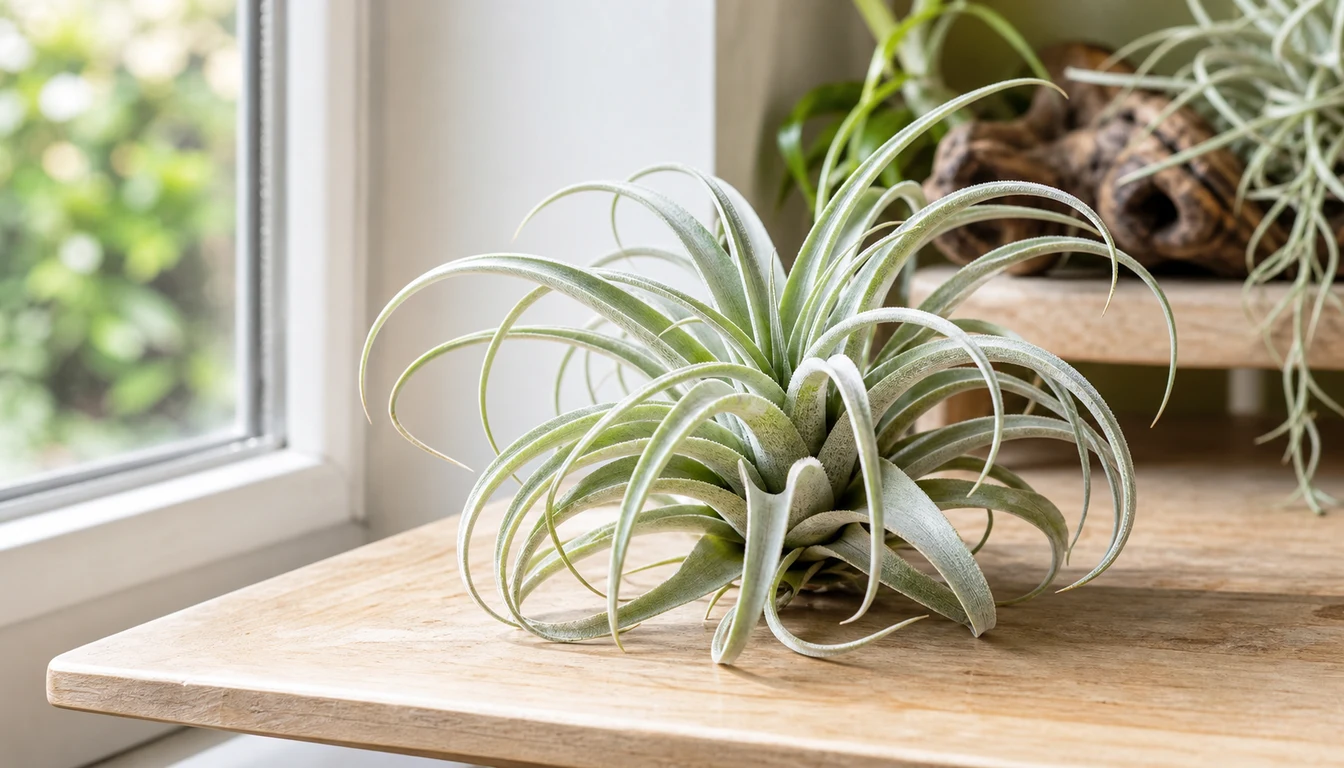
Air Plant
Air plants are living sculptures that thrive without soil, anchoring to driftwood, rocks, or shells while drawing…
Alocasia
Alocasias include compact, textured houseplants and large elephant ears that need substantial floor space.