
How to Grow a Prayer Plant and Read Its Moving Leaves
Maranta leuconeura Marantaceae
Prayer Plant, Maranta leuconeura, is a low, spreading houseplant whose patterned leaves change position between day and night. It grows best with filtered light, warm humid air, and moist potting mix that drains freely.
Leaf movement is normal, but it is not a complete health check. Persistent curling, wilting, or new brown patches need a closer look at moisture, roots, light, and pests before care changes.
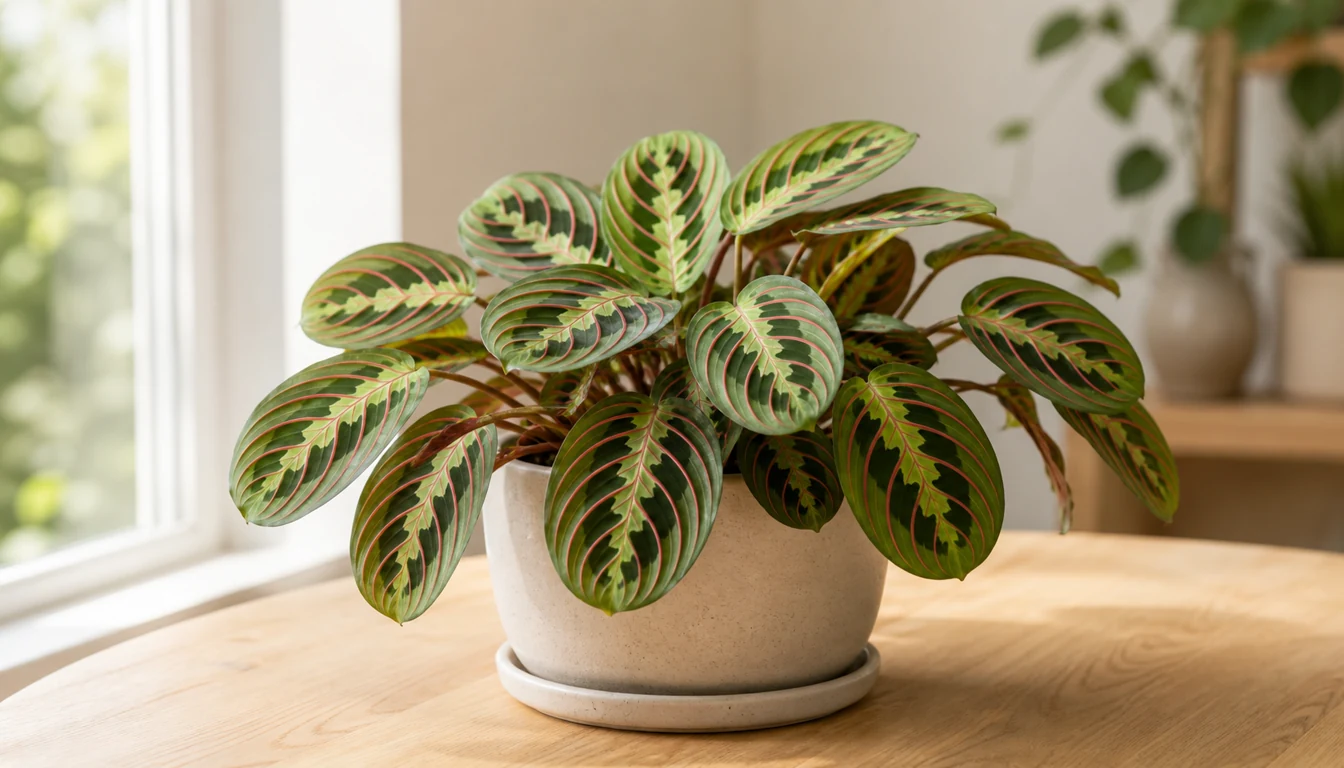
Care snapshot
Normal Leaf Movement and New Growth
Prayer Plant leaves tend to sit more horizontally during the day and rise toward an upright position at night. That changing angle is often called a sleep movement. It differs from a leaf blade that stays tightly curled, goes limp, or develops dead tissue.
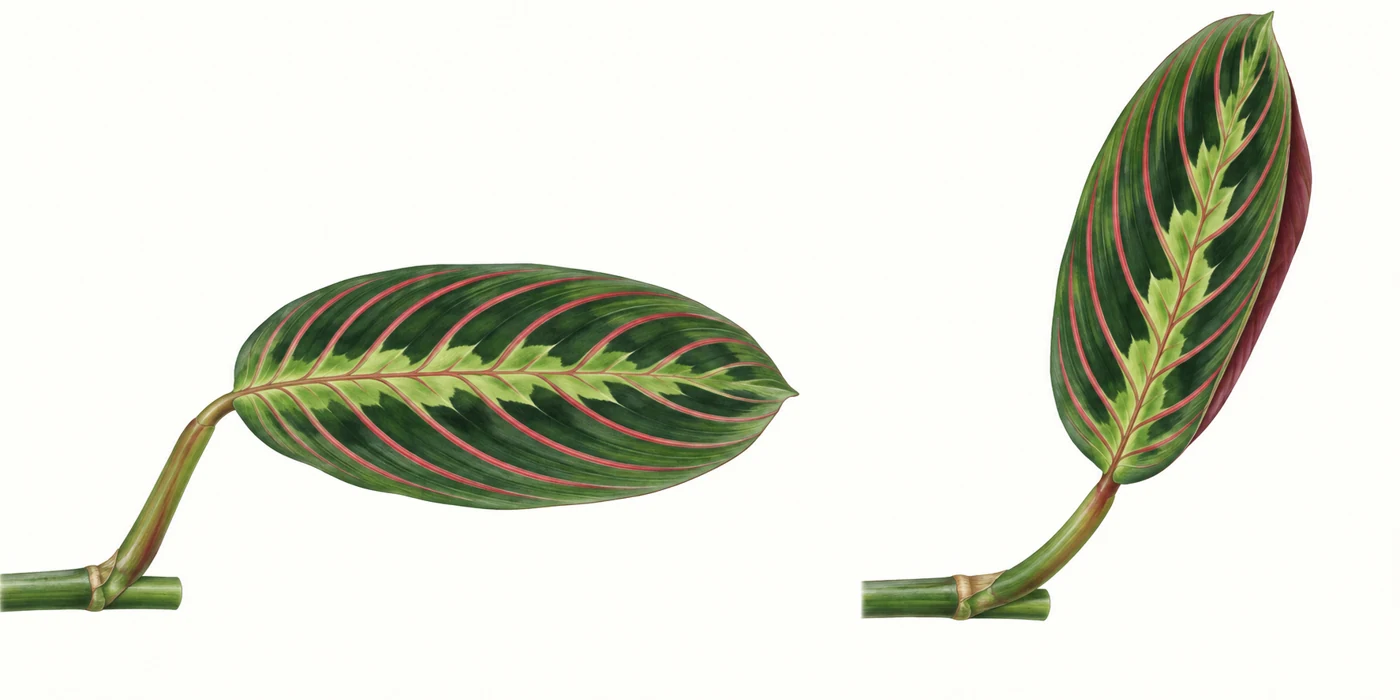
A new leaf opens from a rolled tube. Its temporary shape is a growth stage, so pulling it open can damage it. An older leaf that remains distorted deserves a different assessment from a new leaf gradually unfolding.
The useful comparison is the same leaf at different times, together with its texture and the rest of the plant. An upright evening leaf can be normal, while persistent wilt alongside a dry or waterlogged root ball calls for attention. One still photograph cannot establish that a plant has stopped its daily movement.
Maranta leuconeura is native to Brazil and spreads horizontally rather than developing a tall, upright trunk. Its short stature suits a shelf or hanging container where the stems have room to extend. New outward growth is not automatically a sign that it needs staking.
The common name “prayer plant” also appears on Calathea and related plants. These relatives share attractive foliage and leaf movement, but their growth forms and propagation options are not interchangeable. The botanical name matters when matching care or safety information.
Patterns Identify Choices, Not Light Rankings
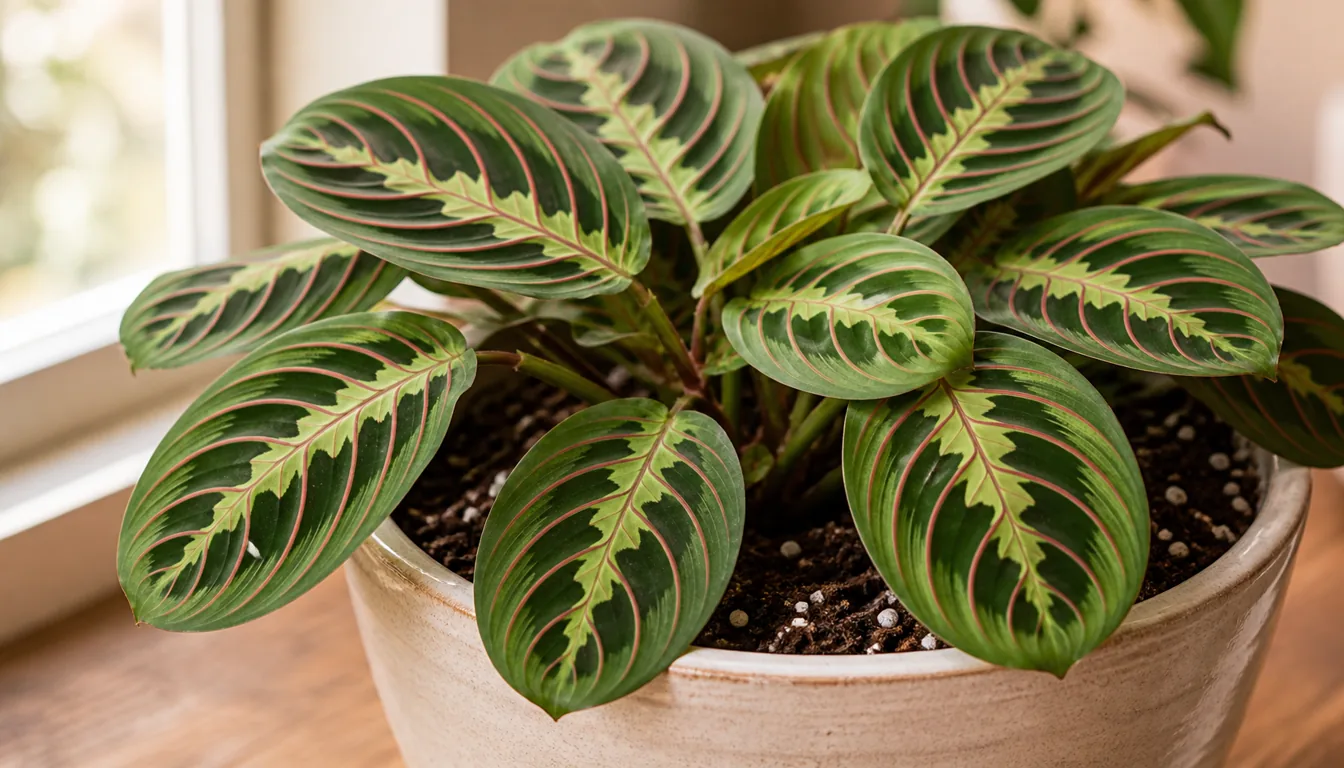
The red-veined and lemon-lime plants sold together are selections of the same species. Their markings help distinguish them, but a darker leaf does not establish that a cultivar will perform better in a dim room. Pattern, plant size, and the condition of the individual purchase are separate decisions.
- Fascinator Tricolor
- Dark green leaves with red veins, lighter margins, and a yellowish central area.
- Lemon or Lemon Lime
- Dark green leaves with yellow-green markings through the center and veins.
- Silver Band
- A broad silvery-green area through the middle of the leaf.
- Rabbit tracks or kerchoveana forms
- Paired dark blotches along the midrib. Older nursery labels may use variety names now treated as synonyms.
Normal markings usually repeat in a recognizable pattern across leaves. A new irregular pale patch, torn edge, or expanding brown area calls for closer inspection rather than an assumption that the plant is another cultivar. Leaf undersides and stem joints are useful places to look for pests before a new purchase joins other pots.
A full nursery pot can contain several rooted pieces. Fullness alone does not tell you whether those pieces are ready for division. A compact, clean-looking plant still needs roots and conditions that can support its foliage after it leaves the nursery.
Filtered Light and a Warm Position
Bright indirect light is a useful starting point for indoor Prayer Plant care. Direct strong sun can bleach its attractive colors, while weak light can reduce growth and color. A curtain-filtered window may provide the right exposure without placing the leaves in a hot beam.
Window direction is only part of that decision. Trees, overhangs, glass, season, and distance change the light that reaches the leaf. A sharp shadow is a clue about direct light, not a stand-alone test that proves the plant will scorch.
A change in pattern color is also not enough to identify a light problem. NC State notes effects from both low light and fertility, as well as leaf burn from excess fertilizer or high fluoride exposure. The history of the plant and the location of new damage narrow the possibilities more usefully than color alone.
Cold glass, drafts, and direct heater air add stress even where daylight is suitable. The outdoor USDA zone describes winter hardiness, not the temperature of a windowsill or the moisture in an indoor room. A warm, sheltered position with indirect light remains the relevant indoor choice.
Even Moisture Without Standing Water
During active growth, Prayer Plant benefits from evenly moist potting mix. Water becomes due as the upper mix begins to dry, before the entire root ball dries hard. A draining pot allows watering to moisten the roots without leaving them continuously submerged.
Leaf angle does not replace a moisture check. An evening lift is normal, and daytime drooping can occur with either a dry root ball or roots that are failing in wet conditions. The pot’s weight and moisture below the surface help distinguish those situations before more water is added.
Watering the mix evenly and allowing the excess to drain is straightforward in a nursery pot. An outer cachepot can hide standing water, so its base matters as much as the drainage holes. Illinois Extension specifically warns against water standing on Prayer Plant crowns because the stems rot readily.
Houseplant watering frequency changes with light, heat, plant growth, and the mix. Lower-light winter conditions often mean slower water use, but a calendar date does not establish dormancy in a warm room under grow lights. Reduced watering means following the slower drying, not deliberately leaving the plant desiccated.
If water runs down the sides while the root ball stays dry, the amount poured is a poor measure of successful watering. A careful check of the mix after it drains helps reveal uneven wetting. Repeatedly soaking an already wet pot because the leaves look unhappy can worsen the problem.
Potting Mix, Water Quality, and Brown Margins
A moisture-retentive houseplant potting mix with adequate aeration suits Maranta. It has to hold water between visits while allowing excess to leave the pot. Perlite or bark can change that balance, but a universal blend ratio is less useful than how the actual mix dries in the room.
Repotting houseplants is justified when roots need room or the mix has become compacted and difficult to wet or drain. A small increase in pot size avoids leaving a small root system surrounded by a large volume of wet mix. Brown tips alone do not establish a need to repot.
Water chemistry can matter. NC State identifies high fluoride and over-fertilization as possible causes of leaf burn in Maranta. Hardness, fluoride, chlorine, and dissolved salts are different properties, so calling water “clean” or “filtered” does not establish that the relevant substance has been removed.
Standing water overnight does not remove fluoride or dissolved minerals. Where the water supply is a plausible contributor, its published analysis or a test can guide a switch to a suitable lower-mineral source. A household filter needs a stated removal capability for the substance concerned.
A change of water may be informative, but a month of improved growth cannot by itself prove the old water caused the damage. Light, feeding, root condition, and growth rate may also have changed. Existing brown tissue will remain damaged, so the meaningful observations are whether new leaves develop the same injury and whether other symptoms continue.
Rooted Divisions and Stem Cuttings
Division and stem cuttings are both valid methods. NC State describes rhizomatous division, while Texas A&M lists Maranta among plants propagated from tip cuttings. The choice follows the material the plant actually has, rather than treating all leafy shoots as rooted crowns.
For division, a multi-shoot plant needs separable sections with their own roots and growing points. During repotting, gently loosen the root ball, identify those sections, and separate them with as little damage as practical. Each piece goes into fresh, draining mix in a container that fits its roots.
A stem tip cutting includes part of a shoot, with a growing tip and a node where a leaf attaches. A detached leaf stalk is a different piece of tissue. Keeping actual stem nodes on the cutting is more useful than relying on a leaf-count rule.
- Select a sound shoot and use a clean blade to take a stem tip that includes a node. Avoid material with unexplained wilt or spreading damage.
- Remove lower foliage that would sit in the rooting medium. Insert the lower stem into evenly moistened, aerated propagation medium with the remaining leaves above it.
- Keep the cutting warm in indirect light. A ventilated clear cover can limit moisture loss while roots form, but direct sun can overheat a covered container.
- Keep the medium moist without standing water. Once roots develop, pot the cutting carefully and maintain suitable moisture while it establishes.
A cutting initially lacks the roots that replace water lost through its leaves, which explains the need for humidity and gentle light. A division starts with roots but still experiences disturbance. Neither method has a reliable household deadline, and extra fertilizer does not substitute for an established root system.
Brown Edges Need More Than a Visual Diagnosis
A brown margin shows that tissue has been damaged. It does not identify dry air, mineral exposure, root trouble, or pests by itself. A clean-looking leaf surface can still have an environmental or root problem, and different problems can occur on the same plant.
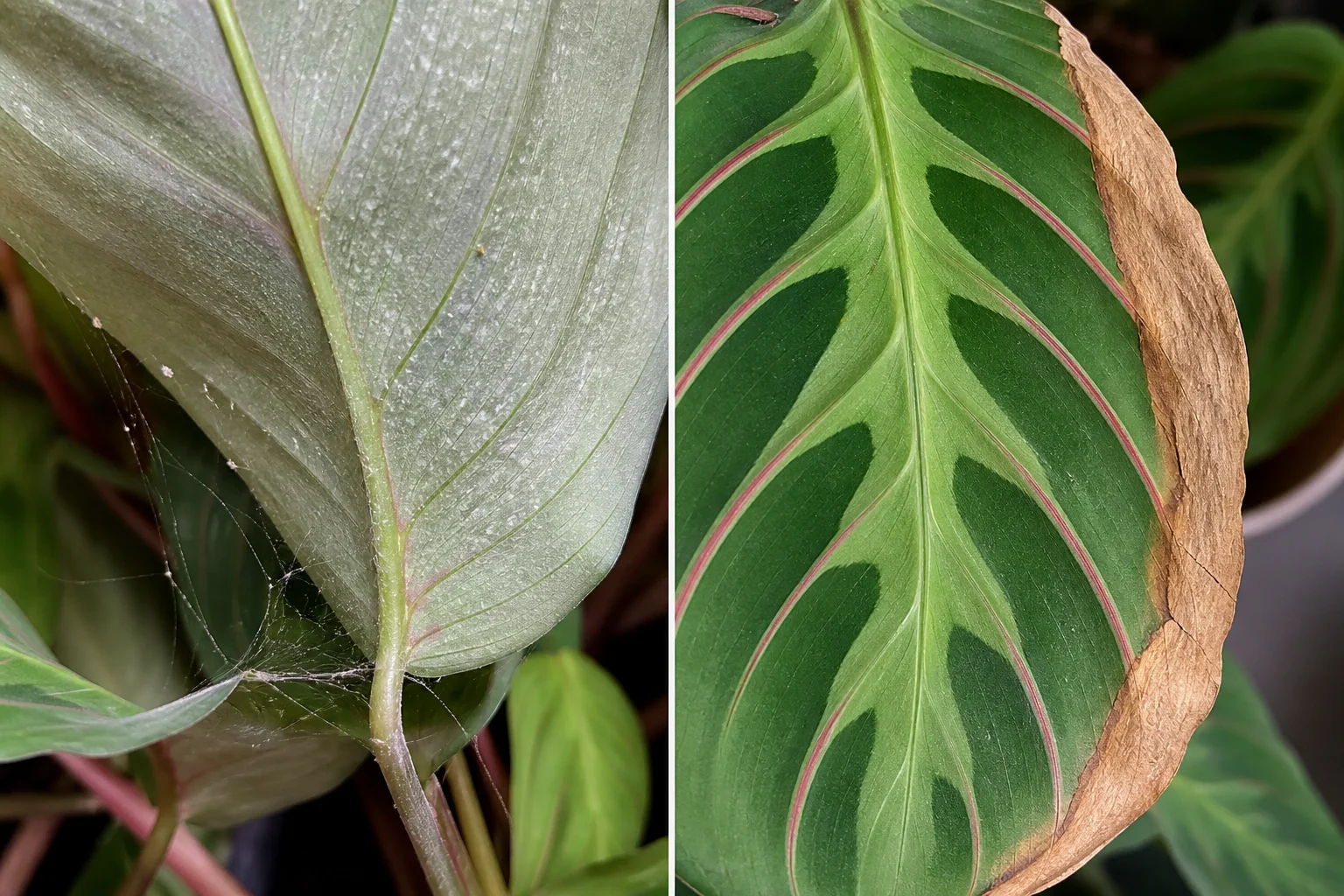
- Fine dots with webbing
- Inspect the undersides for moving spider mites. Treating spider mites on houseplants begins with confirming the pest.
- Cottony masses at joints
- Mealybugs are a possibility. Magnification helps distinguish insects and wax from other deposits.
- Brown edges without visible insects
- Review moisture history, drainage, water composition, feeding, and exposure. No one edge pattern proves a cause.
- Persistent wilt in moist mix
- Inspect drainage and root condition. More water or fertilizer can worsen the situation, and a specific disease may need professional diagnosis.
Pests are easier to manage before they spread through a collection. A suspect plant can be kept apart while its leaves and stems are inspected. Gentle cleaning or rinsing may remove some pests, but the pot still needs to drain and the plant should not remain persistently wet.
Where treatment is necessary, the product label must cover indoor use, the pest, and the plant. Insecticidal soaps or oils can injure leaves, so test-application instructions and repeat intervals matter. The formulation determines its dilution and use, making a universal spray recipe inappropriate.
New growth and the spread of damage are more useful follow-up observations than whether an old edge turns green again. Rapid decline, soft collapsing stems, or spreading lesions warrant diagnostic help. Photographs of the whole plant, leaf undersides, and its potting conditions can help an Extension service assess the problem.
Humidity, Feeding, and Changing Seasons
Prayer Plant prefers humid air, and a heated room can become much drier than the conditions in which a nursery grew it. A humidified room may help. The pot still needs drainage, and increasing room humidity does not require keeping its crown wet.
A bathroom is suitable only if its light and temperature also suit the plant. The humidity from occasional showers does not establish all-day conditions. Likewise, a pebble tray is not a measured guarantee that an entire room has reached a particular humidity.
Feeding follows active growth. Indoor plant fertilizer directions and any nutrients already supplied in the mix determine the amount and interval. NC State warns that over-fertilization can burn Maranta leaves, so more food is a poor response to unexplained crisping.
During darker periods, slower growth can reduce both water and fertilizer use. A bright, warm room may support growth at a different time of year, including in the opposite hemisphere. New leaf growth and the drying rate of the mix are more useful care signals than the speed of leaf movement.
The small white to purple flowers are incidental to its value as a foliage plant and may not appear indoors. Healthy new leaves are a more practical care goal than inducing flowers. An occasional aging leaf can be removed for appearance, while continuing loss of foliage needs a closer assessment.
What the Safety Sources Actually Cover
UConn Extension lists Maranta leuconeura as non-toxic in its general houseplant guidance. It also notes that sensitive individuals can react to plants. That is more limited than a claim that every child or animal can safely chew any part of this plant.
There is a naming complication in pet references. The ASPCA page titled “Prayer Plant” names Calathea insignis, a different plant, and lists that taxon as non-toxic to dogs, cats, and horses. A shared common name does not make it a species-specific assessment of Maranta leuconeura.
The sources above do not establish separate cat, dog, or horse results for Maranta leuconeura. Unconfirmed does not mean toxic. The general non-toxic listing is useful context, but it does not establish edibility, tolerance of unlimited plant material, or the safety of pesticides applied to the leaves.
A stable pot and a location that discourages chewing protect both the plant and the household. A non-toxic listing is not a reason to encourage a toddler or pet to eat ornamental foliage.
Sources & References
- NC State Extension – Maranta leuconeura
- Illinois Extension – Prayer Plant
- Texas A&M AgriLife – Propagating Foliage & Flowering Plants
- UConn Extension – Houseplants: Safe and Toxic Varieties
- ASPCA – Prayer Plant (Calathea insignis, not Maranta leuconeura)
- University of Georgia Extension, Growing Indoor Plants with Success, Bulletin 1318
- University of Minnesota Extension – Insects on Indoor Plants
- ASPCA – What to Do if Your Pet Is Poisoned
- National Capital Poison Center – Poison Help
Related Plants
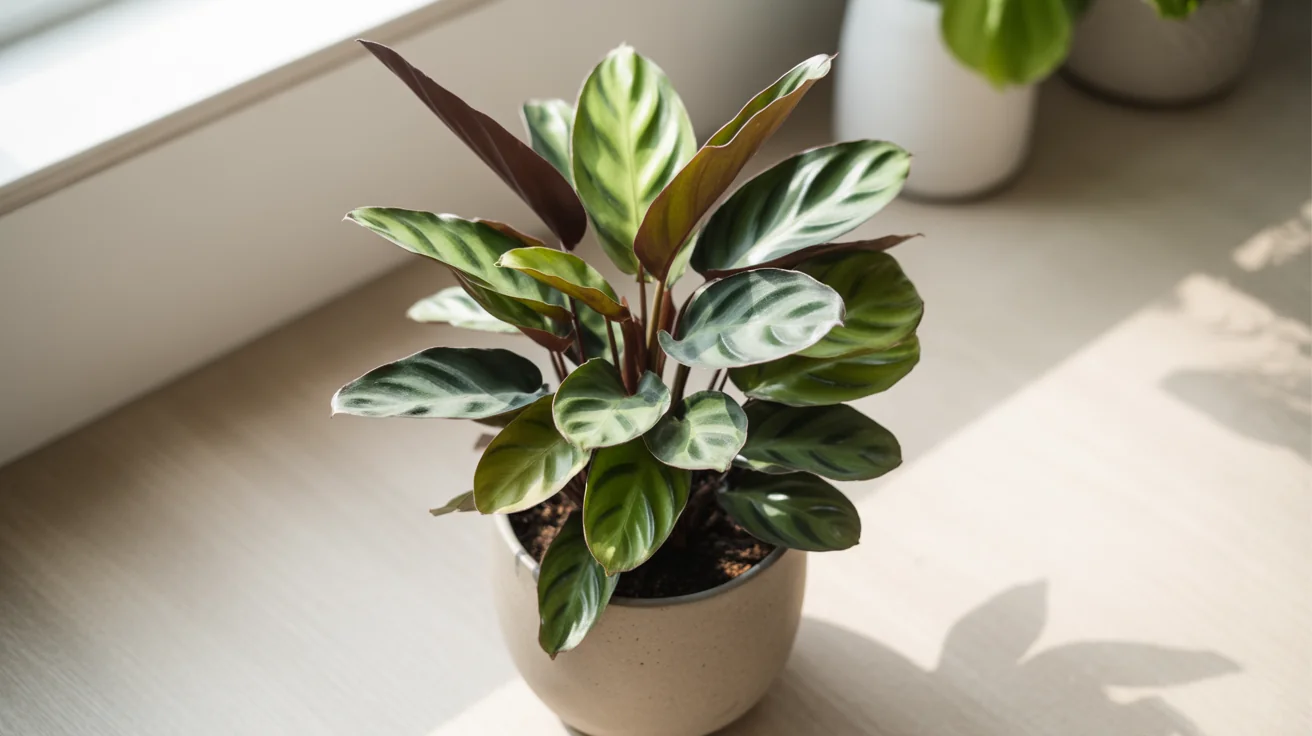
Calathea
Another patterned foliage houseplant that prefers similar soft light and higher humidity.
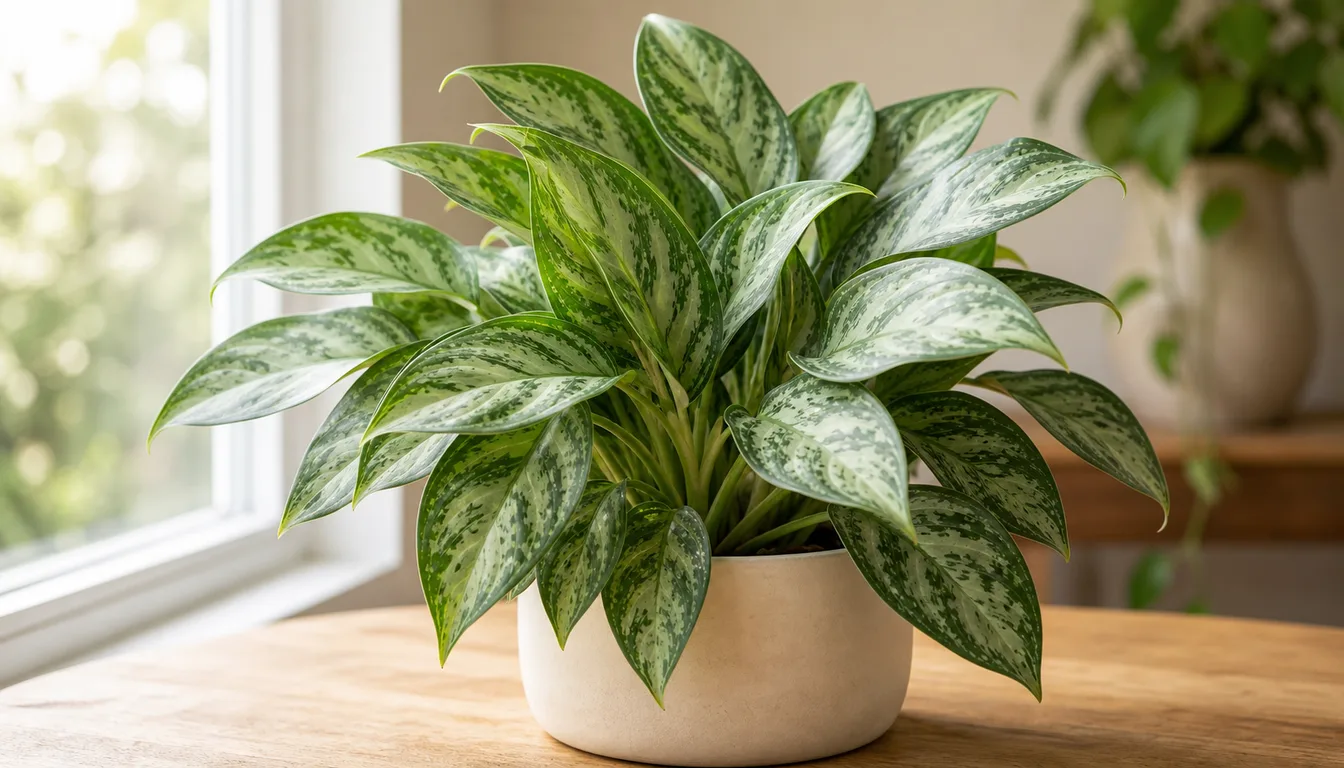
Chinese Evergreen
Upright patterned foliage in a different plant family.
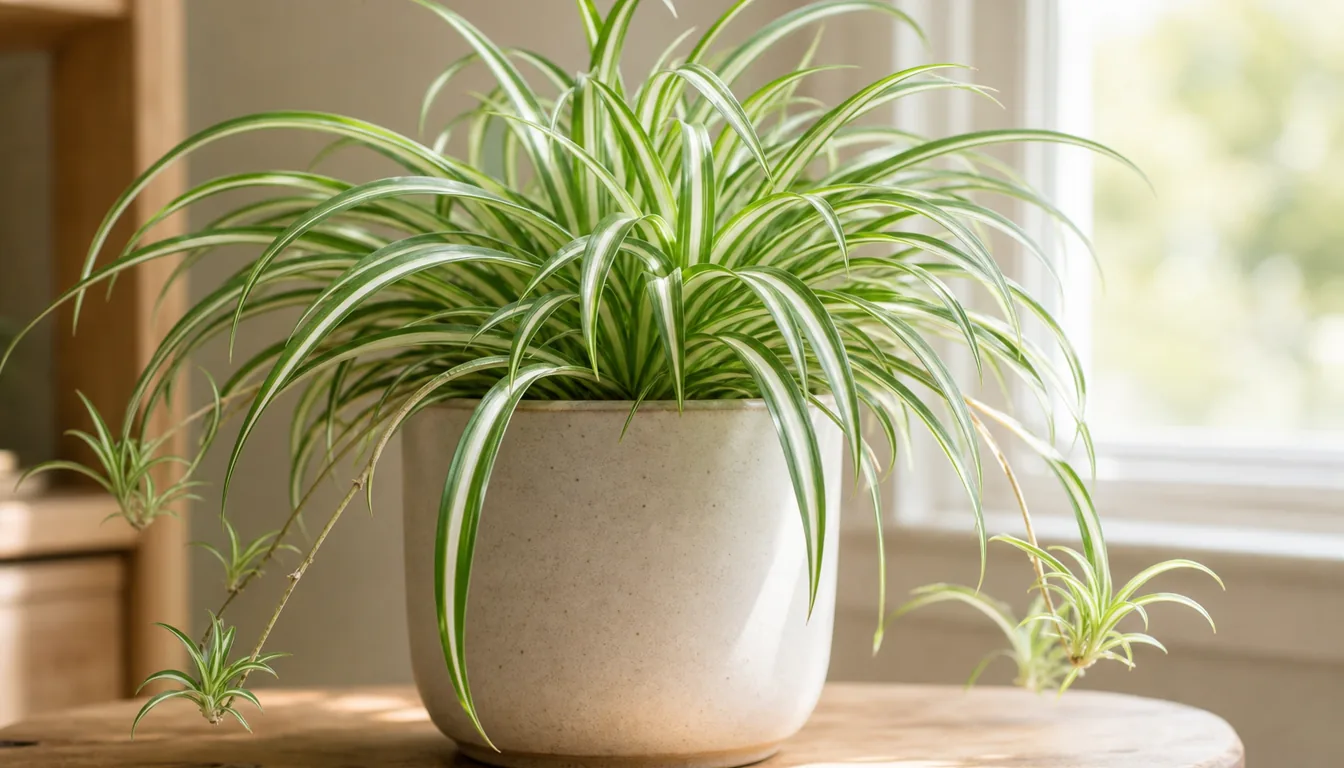
Spider Plant
A rosette of arching leaves with plantlets on long stems.
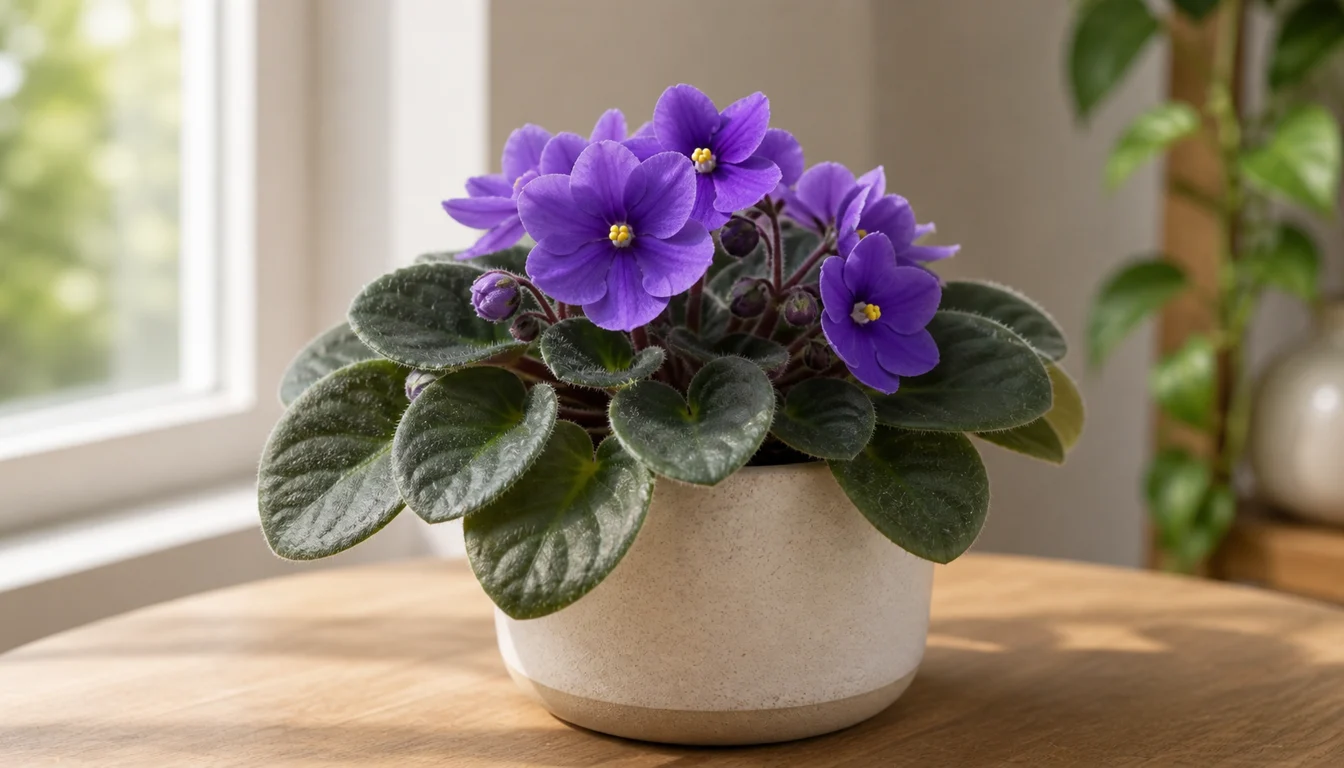
African Violet
African Violet is a windowsill bloomer that rewards steady, small-pot care.
Air Plant
Air plants are living sculptures that thrive without soil, anchoring to driftwood, rocks, or shells while drawing…
Alocasia
Alocasias include compact, textured houseplants and large elephant ears that need substantial floor space.